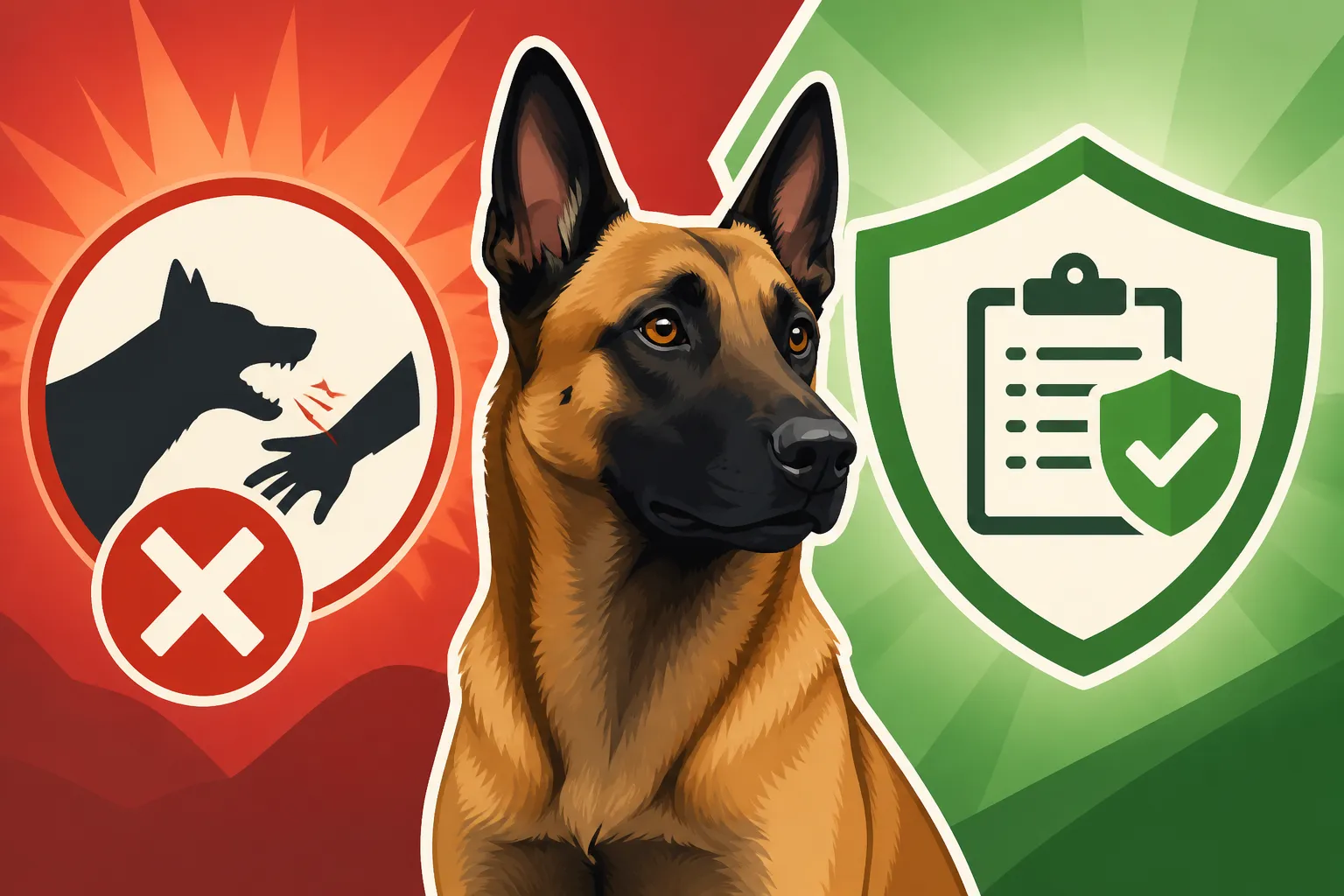
Whether a Bite History Voids a Malinois Policy
The fear of a bite incident is a heavy cloud that hangs over many Belgian Malinois owners, especially given the breed's intensity and drive. When such an unfortunate event does occur, one of the most immediate and gut-wrenching concerns, beyond the welfare of those involved, is how it will impact your ability to insure your beloved Malinois. This guide will walk you through the often-confusing landscape of canine liability and insurance policies after a bite history emerges, offering clear insights and practical steps you can take.
The Harsh Reality of a Bite History for Insurance
Let's be blunt: a bite history, no matter the circumstances, is a serious red flag for insurance providers. It immediately escalates the perceived risk associated with insuring your Belgian Malinois, and unfortunately, this often leads to complications you wouldn't typically face with a dog of a less powerful or driven breed. It's a frustrating situation because often these incidents are isolated, or provoked, but insurance companies operate on statistics and risk assessment, not on individual anecdotes.
The Insurer's Perspective on Risk
Insurance companies are in the business of calculating risk. When they underwrite a policy, they're essentially betting that the premiums you pay will cover any potential payouts for claims, plus a profit margin. A Belgian Malinois, by its very nature and reputation, already starts with a higher risk profile in the eyes of many insurers, even without a bite history. Their strength, intense prey drive, and protective instincts are well-known. When you add a documented bite incident to that equation, the risk calculation shifts dramatically.
They view a bite history as concrete evidence of a dog's potential to cause harm, regardless of the context. Was it a nip during play? A warning snap that didn't break skin? Or a full-on bite requiring medical attention? While you, as the owner, understand the nuances, an insurer often sees "bite history" as a binary event that has now moved your dog into a higher-risk category. This heightened risk translates directly into higher premiums, policy exclusions, or, in many cases, outright refusal to provide coverage. It's not personal; it's purely a business decision based on actuarial data. They have to protect their bottom line, and a dog with a bite history, especially a powerful breed like a Malinois, represents a significant financial liability. What It Costs to Rehome a Belgian Malinois is a stark reminder of the financial pressures owners face, and insurance complications can certainly contribute to such difficult decisions.
Immediate Policy Implications After an Incident
The moment a bite incident occurs, especially one that leads to a claim, the clock starts ticking on your existing insurance policies. For homeowners or renters insurance, which often provides general liability coverage for pet-related incidents, you're likely to face immediate scrutiny. Many policies have clauses allowing them to review or even cancel coverage if a "dangerous" dog is present, or if a significant claim is made.
Here's what you might expect:
- Policy Review: Your insurance provider will conduct a thorough review of the incident, your dog's history, and often the breed itself.
- Non-Renewal: Even if your policy isn't immediately canceled, it's very common for insurers to inform you that they will not renew your policy once it expires. This leaves you scrambling to find new coverage, which is incredibly challenging with a bite history.
- Exclusion of Coverage: Some insurers might offer to continue your homeowners or renters policy but will add a specific exclusion for your Belgian Malinois. This means that while your house might still be covered for fire or theft, any future incidents involving your dog will not be covered. You'd be personally liable for all damages, medical bills, and legal fees.
- Increased Premiums: If you're lucky enough to find an insurer willing to cover your Malinois, expect your premiums to skyrocket. This is simply the cost of the increased risk they are now taking on.
- Mandatory Requirements: They might demand specific actions, such as proof of professional training, muzzle use in public, or even the installation of secure kenneling, before offering or continuing coverage.
It’s a deeply upsetting scenario for any dedicated owner, who simply wants to ensure they’re responsible and protected. The emotional toll of an incident combined with the financial headache of insurance can be overwhelming.
Navigating the Aftermath: What Are Your Options?
Once your traditional homeowners or renters insurance has been impacted, it can feel like you've hit a wall. However, all is not lost. There are specific avenues and proactive steps you can explore to secure some form of protection, even with a Belgian Malinois that has a bite history. It requires persistence and often a willingness to adapt your lifestyle and training regimen.
Specific Breed Policies and Exclusions
It's a frustrating reality for Malinois owners that many insurance companies have "breed specific" restrictions, regardless of a dog's individual temperament or history. Your Malinois might already be on a "restricted breed" list for certain insurers, making coverage more difficult and expensive from the outset. A bite history simply compounds this.
Some states or municipalities even have breed-specific legislation (BSL) that can affect your insurance options. These laws might mandate specific types of containment, muzzling, or even special insurance policies for certain breeds. While Malinois aren't always explicitly listed alongside breeds like Pit Bulls or Rottweilers, their increasing popularity and reputation as working dogs mean they are sometimes included or considered on a case-by-case basis. You'll need to research your local regulations carefully.
For pet health insurance, which covers vet bills, companies like Healthy Paws operate differently. They generally don't deny coverage based on breed or bite history, but rather on pre-existing conditions. So, while a bite incident won't affect their willingness to cover future medical issues, it's your liability insurance that takes the hit. It's crucial to understand the distinction between general liability for incidents and health insurance for your dog's medical needs.
Exploring Canine Liability Insurance
When standard policies fail, dedicated canine liability insurance often becomes your best, and sometimes only, option. This is a specialized type of policy designed specifically to cover dog-related incidents, including bites.
Here’s how it typically works:
- Standalone Policy: Unlike a rider on your home insurance, this is a separate policy entirely.
- Covers Dog-Related Incidents: It specifically covers legal costs, medical expenses, and other damages if your dog bites someone or causes property damage.
- Underwriters for Higher Risk: These policies are often underwritten by companies that specialize in higher-risk situations, so they are more likely to offer coverage even with a bite history or for breeds on restricted lists.
- Variable Costs and Coverage: The cost can vary significantly based on your dog's breed, age, bite history, and the coverage limits you choose. Expect it to be more expensive than simply adding your dog to a homeowners policy.
- Muzzle Clauses: Some policies might require that your Malinois be muzzled in public or when around unfamiliar people, especially if there's a bite history.
Finding these specialized providers can take some digging. You might need to contact several independent insurance brokers who work with a variety of carriers, as these policies aren't always offered by the big-name insurance companies. This is where Whether a Multi Malinois Household Gets a Discount might become relevant, as some specialized insurers might offer multi-dog discounts, but the initial hurdle of a bite history remains paramount.
How to Work Towards Reinstatement or New Coverage
While challenging, it's not impossible to mitigate the impact of a bite history. Insurance companies are businesses, and if you can demonstrate a significant reduction in risk, you might improve your chances.
Here are proactive steps you can take:
- Professional Behavior Consultation: Engage a certified professional dog behaviorist (not just a trainer, but someone with qualifications in animal behavior). They can assess your Malinois, identify triggers, and develop a comprehensive behavior modification plan. A written report from a reputable behaviorist can be a powerful tool when approaching insurers. What a Behaviorist Charges to Assess a Malinois is a vital piece of information when considering this path.
- Advanced Obedience Training: Enroll your Malinois in advanced obedience classes, particularly those focusing on control around distractions and impulse control. A well-behaved, responsive Malinois is a safer Malinois.
- Muzzle Training: Desensitize and condition your Malinois to comfortably wear a muzzle, especially a basket muzzle. This demonstrates extreme responsibility and can be a non-negotiable requirement for some insurers. Muzzle training, as discussed in Muzzle Conditioning Before a Malinois Ever Needs One, is a crucial skill for any Malinois owner, bite history or not.
- Secure Containment: Review and upgrade your home and yard security. Ensure you have robust fencing that your Malinois cannot clear or dig under. If you use crates or kennels, ensure they are escape-proof and meet safety standards.
- Strict Management Protocols: Implement strict rules for your dog's interactions. This might mean no unsupervised time with children or strangers, always being on a leash in public, and carefully managing introductions to new people or animals.
- Veterinary Check-up: Rule out any underlying medical conditions that might contribute to behavioral issues. Pain or discomfort can sometimes lead to uncharacteristic aggression.
- Document Everything: Keep meticulous records of all training, behavior consultations, veterinary visits, and any measures you've taken to manage your Malinois's behavior. This documentation can be presented to potential insurers.
Consistency and dedication are key here. Rebuilding trust, both with your dog and with potential insurers, takes time and effort.
The Importance of Transparency and Proactive Measures
The path forward after a bite incident with your Malinois can feel daunting, but being upfront about the situation and taking genuine steps to manage your dog's behavior are paramount. It’s not just about satisfying an insurance company; it’s about responsible dog ownership and ensuring the safety of your community and the well-being of your Malinois.
Why Honesty with Your Insurer is Crucial
It might be tempting to downplay or omit a bite incident when seeking new insurance or dealing with your current provider. However, this is a dangerous game. Insurance policies are contracts based on full disclosure. If you withhold information about a bite history, and another incident occurs, your insurer can deny your claim outright, citing misrepresentation. This leaves you completely exposed to financial liability, which for a serious bite, can run into hundreds of thousands of dollars in medical bills, lost wages, and legal fees. What a Belgian Malinois Bite Costs an Owner truly highlights the severe financial consequences.
Being transparent, even if it leads to higher premiums or a more limited choice of providers, is always the safer and more ethical route. It builds a foundation of trust, and while it might be harder to get coverage initially, you'll have the peace of mind that your policy will actually protect you when you need it most. Many carriers have sophisticated ways to track claims and incidents, so trying to hide something is rarely successful in the long run.
Mitigating Future Risks Through Training and Management
The best "insurance" you can have, beyond any policy, is a well-trained, well-managed Belgian Malinois. This powerful breed thrives on structure and purpose. A bite incident, while regrettable, should serve as a wake-up call to redouble your efforts in training and management.
Consider these ongoing strategies:
- Consistent Training: Your Malinois needs a job. Whether it's advanced obedience, Detection Work Instead of Bite Work for a Malinois, or agility, consistent mental and physical stimulation is crucial. Dogs that are bored or under-exercised are more prone to behavioral issues.
- Continuous Socialization: While challenging with a bite history, controlled and positive socialization experiences under the guidance of a professional behaviorist can help your Malinois learn appropriate responses to triggers. This isn't about letting your dog run free at a dog park, but about careful, managed exposure.
- Environmental Management: Control your dog's environment to prevent opportunities for incidents. This might mean managing visitors carefully, keeping your Malinois in a secure area when guests are over, and avoiding high-stress situations. The Structure a Belgian Malinois Needs Every Day is not just a suggestion, it's a requirement for a balanced Malinois.
- Leadership and Boundaries: Maintain clear, consistent boundaries and reinforce your role as the leader. A Malinois needs to understand its place in the household and that you are in control.
- Consider Quality Food and Supplements: While not directly preventing bites, a healthy dog is often a happier, more settled dog. Quality nutrition from brands like Ollie or performance formulas found at retailers like Chewy can contribute to overall well-being. Ensuring your dog's physical needs are met supports their mental stability and resilience.
- Regular Veterinary Care: Ongoing health checks can catch any emerging medical issues that might affect behavior. A Malinois that isn't feeling well might be more irritable or reactive.
Here's a comparison of how different insurance types typically handle bite incidents:
| Insurance Type | Typical Coverage for Dog Bites | Impact of Bite History on Coverage | Recommendations for Malinois Owners |
|---|---|---|---|
| Homeowners/Renters Insurance | Usually covers liability up to policy limits (deductible applies) | High risk of non-renewal, cancellation, or breed/dog-specific exclusion | Check policy language before an incident. Expect issues after. |
| Umbrella Policy | Extends liability coverage beyond home/auto policy limits | May also be affected if primary policy excludes the dog; higher scrutiny | Good for added protection, but often secondary to primary policy issues. |
| Pet Health Insurance | Covers vet bills for illness/injury, not liability | Generally not affected by bite history (unless injury from bite) | Essential for medical care, but does not cover third-party liability. |
| Canine Liability Insurance | Specifically covers dog-related liability (bites, damage) | Designed for high-risk, more likely to offer coverage with bite history | Often the only option after a bite incident; research specialist providers. |
Ultimately, owning a Belgian Malinois, especially one with a bite history, means accepting a higher degree of responsibility. Insurance is a critical part of that, protecting both your financial future and demonstrating your commitment to responsible pet ownership. It's an investment in peace of mind, allowing you to continue enjoying your incredible companion while being prepared for any unforeseen circumstances.
Disclaimer
This article is for general informational purposes only and does not constitute professional advice. Laws, prices and regulations vary by location and change over time. Consult a qualified professional for guidance on your specific situation.