Whether an MRI Is Worth Running on a Seizing Malinois
The moment your beloved Belgian Malinois has a seizure is absolutely terrifying. One minute they might be their usual energetic self, and the next they're on the floor, convulsing, drooling, and completely unaware of their surroundings. It's a shocking, helpless feeling that leaves you reeling and desperate for answers. One of the most common, and often daunting, diagnostic paths suggested by veterinarians is an MRI. This guide aims to explore whether an MRI is truly a worthwhile step when your Malinois starts seizing, considering the emotional, financial, and diagnostic implications.
Understanding Malinois Seizures and the Diagnostic Journey
When your Malinois experiences a seizure, the first thing that hits you is usually panic. You rush them to the vet, hoping for a quick fix, only to be told that diagnosing the cause of seizures in dogs, especially a high-drive breed like the Malinois, is often a complex, multi-step process. It's not just about stopping the seizures; it's about understanding why they're happening.
The Initial Shock and Medical Assessment
After witnessing a seizure, many owners report feeling a profound sense of anxiety. You start to question everything: Did I miss something? Is my dog in pain? What does this mean for their future? Your veterinarian's initial role is crucial here. They’ll want a detailed history of the seizure—when it happened, how long it lasted, what it looked like, and how your Malinois recovered. This detailed account, often accompanied by videos if you were quick enough to capture one, provides vital clues. The vet will perform a thorough physical and neurological exam to check for any obvious signs of trauma or neurological deficits.
The first step in any seizure diagnosis is typically ruling out metabolic causes. This means comprehensive blood work. They'll be looking for things like liver disease, kidney failure, low blood sugar, electrolyte imbalances, or even exposure to certain toxins. These are often easier to identify and treat, offering immediate relief to both you and your dog. If these tests come back clean, and your Malinois continues to have seizures, the diagnostic journey deepens, and the term "epilepsy" starts to be used more frequently. It's a frustrating waiting game, hoping for clarity while your dog remains vulnerable.
When Epilepsy is Suspected
Once metabolic and toxic causes have been ruled out, and if your Malinois has experienced more than one seizure, especially if they follow a similar pattern, the vet will likely begin to suspect epilepsy. Canine epilepsy is generally divided into two main categories: structural (or symptomatic) and idiopathic. Structural epilepsy means there's an identifiable lesion or abnormality in the brain causing the seizures. This could be anything from a brain tumor, a cyst, inflammation (encephalitis), a past head injury, or a stroke. Idiopathic epilepsy, on the other hand, means there's no identifiable structural cause. It's often genetic, a diagnosis of exclusion—meaning we’ve ruled out everything else we can see.
For a breed like the Belgian Malinois, which is known for its intense drive and working capabilities, the thought of any neurological issue can be particularly distressing. The uncertainty of not knowing if it's something treatable or a lifelong condition that could impact their quality of life, their work, or even just their daily joy, weighs heavily. At this stage, your vet might suggest an MRI to investigate the structural side of things, as basic blood tests simply can't look inside the skull.
The Role of Advanced Imaging in Malinois Epilepsy
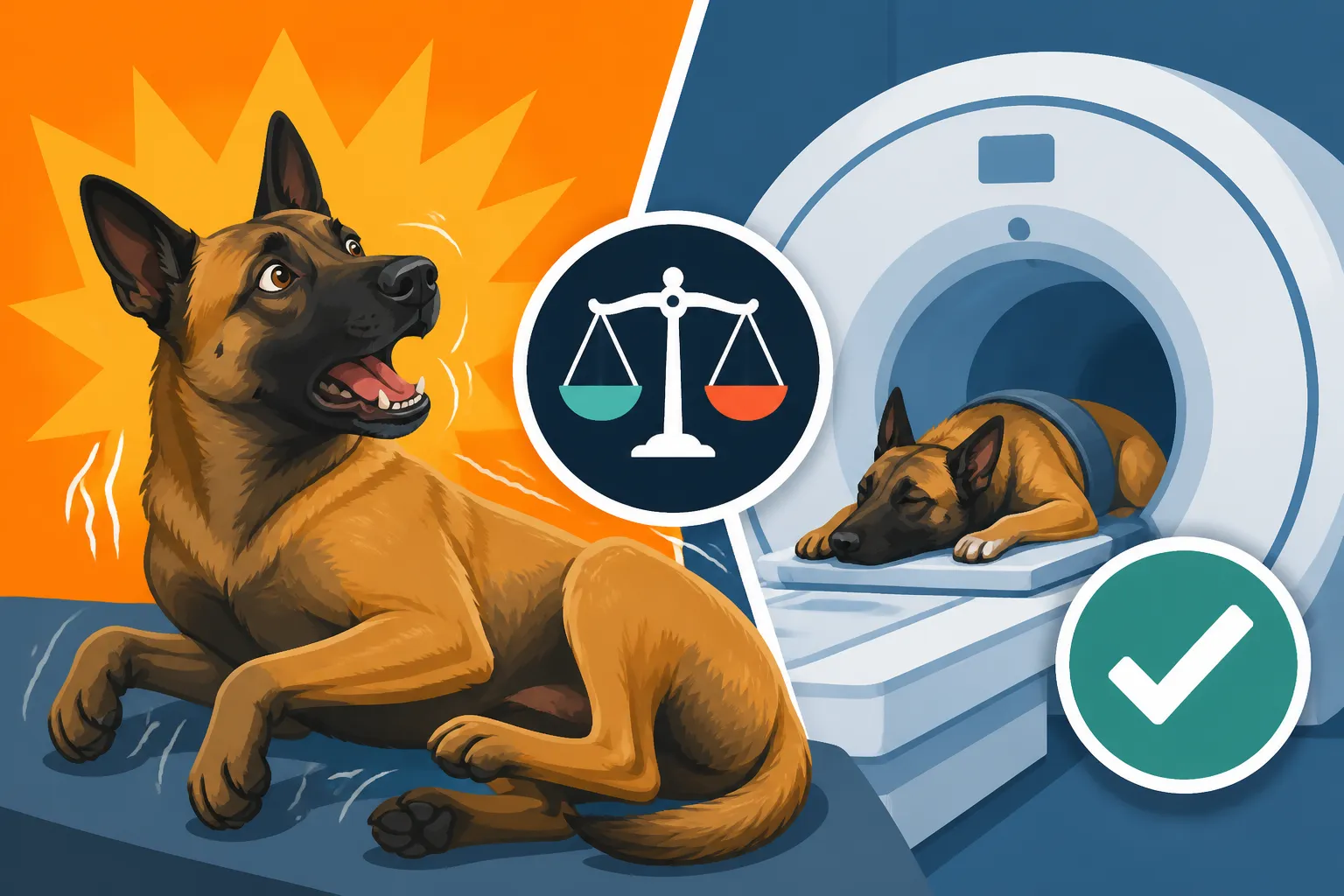
This is where the MRI comes into play. A Magnetic Resonance Imaging scan is a powerful diagnostic tool that creates detailed images of soft tissues, including the brain. Unlike X-rays which show bones, an MRI allows veterinarians to visualize the intricate structures of your Malinois's brain, looking for anything that shouldn't be there or anything that looks abnormal. It's often considered the gold standard for investigating seizure causes in dogs when metabolic issues have been excluded.
For a Malinois owner, considering an MRI means preparing for a significant step. It involves general anesthesia, as the dog must remain perfectly still for an extended period. This can be a source of anxiety in itself, given the general risks of anesthesia, though protocols have come a long way. Why Anesthesia Needs Discussing Before a Malinois Goes Under is a good read if you're concerned about this aspect. The aim of the MRI is to definitively determine if there's a visible problem causing the seizures, which then dictates the treatment plan.
The MRI: What It Shows and What It Doesn't for a Malinois
Navigating the world of advanced diagnostics for your beloved Malinois can feel like a labyrinth. You're presented with complex medical terms and expensive procedures, all while trying to make the best decision for your dog's health and your peace of mind. The MRI is a powerful tool, but it's important to understand both its capabilities and its limitations.
What an MRI Can Reveal
When a veterinary neurologist recommends an MRI for your seizing Malinois, they are primarily looking for structural abnormalities within the brain that could be triggering the electrical storms we call seizures. Imagine the brain as a complex electrical circuit. If a wire is frayed, or there's a foreign object interfering with the flow, it can cause a malfunction. An MRI helps them see those "frayed wires" or "foreign objects."
Here’s a breakdown of what an MRI can reveal:
- Brain Tumors: These are often a major concern, as tumors can press on brain tissue, causing irritation and seizures. An MRI can pinpoint the size, location, and sometimes even the likely type of tumor, which is critical for prognosis and treatment options (surgery, radiation, chemotherapy).
- Inflammation (Encephalitis): The brain can become inflamed due to infections (bacterial, viral, fungal, parasitic), autoimmune diseases, or other inflammatory conditions. An MRI can show areas of inflammation, edema (swelling), or lesions indicative of such conditions, guiding the use of anti-inflammatory medications or specific antimicrobial treatments.
- Strokes or Vascular Accidents: Just like in humans, dogs can suffer strokes. These occur when blood flow to part of the brain is interrupted, causing tissue damage. An MRI is excellent at identifying areas of past or recent stroke.
- Malformations and Cysts: Some dogs are born with structural abnormalities in their brain (congenital malformations) or develop fluid-filled sacs (cysts) that can later cause seizure activity. These are often clearly visible on an MRI.
- Trauma: If your Malinois has suffered a past head injury, even one you weren't fully aware of, it could have caused localized damage that might be identified on an MRI scan years later.
Getting a clear diagnosis of one of these conditions, while potentially scary, at least gives you a concrete path forward. It means you're dealing with a tangible problem that often has specific treatment protocols. This clarity, for many owners, is invaluable.
The Limitations of an MRI for Idiopathic Epilepsy
This is where the conversation often gets tricky, and where the most significant emotional and financial dilemmas arise for owners. While an MRI is excellent at detecting structural problems, it cannot visualize everything. If your Malinois has idiopathic epilepsy, by definition, their brain looks normal on an MRI scan.
Idiopathic epilepsy is a functional disorder, not a structural one. It’s believed to be caused by microscopic imbalances in brain chemistry or electrical activity that are not visible to the naked eye or even with advanced imaging like an MRI. It's like having a computer that's crashing frequently, but when you open it up, all the hardware looks perfectly fine. The problem is in the software, or how the components are communicating, not in a broken part.
For a Malinois owner who has gone through the stress and expense of an MRI, only to be told "it's normal," it can feel incredibly deflating. You spent all that money, put your dog under anesthesia, and you still don't have a clear cause. However, a "normal" MRI isn't a failure. It's a crucial piece of the puzzle. It allows your vet and neurologist to confidently diagnose idiopathic epilepsy, knowing they've ruled out the major visible threats. This distinction is vital because the treatment approach for idiopathic epilepsy (managing seizures with medication) is different from treating a tumor or inflammation. It helps to avoid unnecessary treatments or further invasive diagnostics if there's nothing structurally wrong. Managing an Epileptic Belgian Malinois on Medication offers more information on this aspect.
The Importance of a Neurologist's Interpretation
Performing an MRI is one thing; interpreting it correctly is another entirely. The images generated are complex and require a highly trained eye to discern subtle abnormalities. This is why, typically, an MRI for seizures is performed at a specialty veterinary hospital, often by or under the guidance of a board-certified veterinary neurologist or radiologist.
These specialists have years of dedicated training in identifying the nuances of brain anatomy and pathology. They can spot tiny lesions, areas of subtle swelling, or unusual patterns that a general practitioner might miss. Their expertise is paramount in making an accurate diagnosis, especially when dealing with such a critical organ. They don't just look at the pictures; they integrate the MRI findings with your Malinois's clinical signs, seizure history, and other test results to form a complete picture. This holistic approach ensures that if there's a treatable underlying cause, it's identified, and if it's idiopathic epilepsy, you have the confidence that no stone was left unturned.
Weighing the Costs, Benefits, and Emotional Toll
Deciding whether to pursue an MRI for a seizing Belgian Malinois is rarely straightforward. It's a decision loaded with emotional weight, significant financial implications, and the hope for answers. As an owner, you want to do what's best for your loyal companion, but you also have to be realistic about what that entails.
Financial Considerations of an MRI
Let's not sugarcoat it: an MRI for a dog is a substantial financial undertaking. This isn't a simple blood test or a routine X-ray. It requires specialized equipment, a trained veterinary team (including potentially an anesthesiologist and neurologist), and several hours of dedicated time. The cost can vary widely depending on your geographic location, the specific veterinary specialty hospital, and whether additional procedures (like a spinal tap or CSF analysis, often performed under the same anesthesia) are recommended.
It's a conversation that many owners dread, but it's essential to have a clear understanding of the potential expenses upfront. This is where pet insurance can be a game-changer. Companies like Healthy Paws often cover a significant portion of diagnostic tests and specialist consultations, provided the condition isn't pre-existing. If you've been proactive with pet insurance, it can dramatically ease the burden of these costs. Without it, owners often find themselves considering payment plans, veterinary credit lines, or even difficult decisions about how far they can stretch their budget for their beloved Malinois. It's a cruel reality that financial constraints can sometimes limit the care we wish to provide.
The Value of a Definitive Diagnosis (or Exclusion)
Despite the costs, the value of a definitive diagnosis (or the confident exclusion of structural disease) can be immeasurable.
For one, it brings peace of mind. The anxiety of not knowing if your Malinois has a brain tumor that could be growing, or an inflammatory condition that needs specific treatment, is immense. An MRI, even if it comes back "normal," eliminates that specific fear and allows you to focus on managing idiopathic epilepsy with appropriate medications. It changes the conversation from "what might it be?" to "this is what we're dealing with, and here's how we manage it."
Secondly, a diagnosis directly impacts treatment. If the MRI reveals a tumor, you might explore options like surgery, radiation, or palliative care. If it's inflammation, specific anti-inflammatory or immunosuppressive drugs might be prescribed. Without an MRI, you're essentially treating symptoms in the dark. While seizure medications can help control the frequency and severity of seizures, they don't address an underlying structural cause. Having a clear diagnosis ensures that your Malinois receives the most appropriate and targeted treatment, which can lead to better outcomes and a higher quality of life. For some conditions, early diagnosis can even be life-saving.
Quality of Life vs. Diagnostic Pursuit
This is a profoundly personal and ethical dilemma that many Malinois owners face. Your Malinois is a highly active, intelligent, and driven dog. If they are having frequent or severe seizures, their quality of life is already being impacted. The question then becomes: will the diagnostic pursuit, specifically the MRI and potential subsequent treatments, genuinely improve their quality of life, or will it add more stress, discomfort, and recovery time without a significant benefit?
For a young Malinois with a sudden onset of severe seizures, a comprehensive diagnostic workup, including an MRI, is often highly recommended. There's a higher chance of finding a treatable cause that could lead to many more years of good quality life. However, for an older Malinois, especially one nearing The Age Most Malinois Live To or experiencing other age-related health issues, the decision becomes more complex. Is the stress of anesthesia and potential recovery worth it if the prognosis for a detected condition is poor, or if the seizures are manageable with medication anyway? This is a conversation you need to have very openly and honestly with your veterinarian, discussing the potential outcomes for your specific dog. Sometimes, simply controlling the seizures symptomatically with medication is the kindest path.
Alternative Diagnostic Avenues and Management
If an MRI isn't feasible due to financial constraints or other reasons, it doesn't mean you're abandoning your Malinois. Your veterinarian will still work with you to manage the seizures. This usually involves starting anticonvulsant medications. The goal is to reduce the frequency, duration, and severity of the seizures, improving your dog's comfort and safety. Monthly Medication for an Epileptic Belgian Malinois is a topic that dives deeper into this.
Your vet might also suggest keeping a detailed seizure log to track patterns, potential triggers, and the effectiveness of medication. Dietary changes are sometimes explored as well, with some owners finding benefit in specialized veterinary prescription diets or high-quality fresh food options available from brands like Ollie or even certain quality kibbles found on sites like Chewy that are formulated for neurological support. While these aren't diagnostic tools, they can be part of a holistic management strategy. In these cases, the diagnosis remains "presumptive idiopathic epilepsy" because structural disease hasn't been definitively ruled out, but the focus shifts entirely to symptom control and supportive care.
| Factor | Pros of MRI | Cons of MRI | Considerations for Malinois Owners |
|---|---|---|---|
| Diagnosis | Identifies structural causes (tumors, inflammation). | May show "normal" for idiopathic epilepsy. | Crucial for targeted treatment if a cause is found. |
| Treatment | Guides specific treatments for underlying cause. | No specific structural treatment if idiopathic. | Avoids unnecessary treatments; focuses on medication if idiopathic. |
| Peace of Mind | Reduces anxiety of unknown structural disease. | Disappointment if MRI is normal after high cost. | Clear answers, even if it's "nothing visible," reduce owner stress. |
| Cost | Significant investment in health. | Very expensive; often requires specialist care. | Pet insurance (Healthy Paws) can mitigate; budget planning essential. |
| Procedure | Requires general anesthesia. | Anesthesia risks, recovery time. | Pre-anesthetic bloodwork is key; discuss risks with vet. |
| Prognosis | Can improve prognosis if treatable cause found. | Doesn't change prognosis for idiopathic epilepsy. | Helps set realistic expectations for long-term management. |
Ultimately, the decision to run an MRI on a seizing Malinois is a personal one, made in close consultation with your trusted veterinary team. It requires a careful balance of medical possibilities, financial realities, and your heartfelt desire to give your extraordinary companion the best possible life.
Disclaimer
This article is for general informational purposes only and does not constitute professional advice. Laws, prices and regulations vary by location and change over time. Consult a qualified professional for guidance on your specific situation.