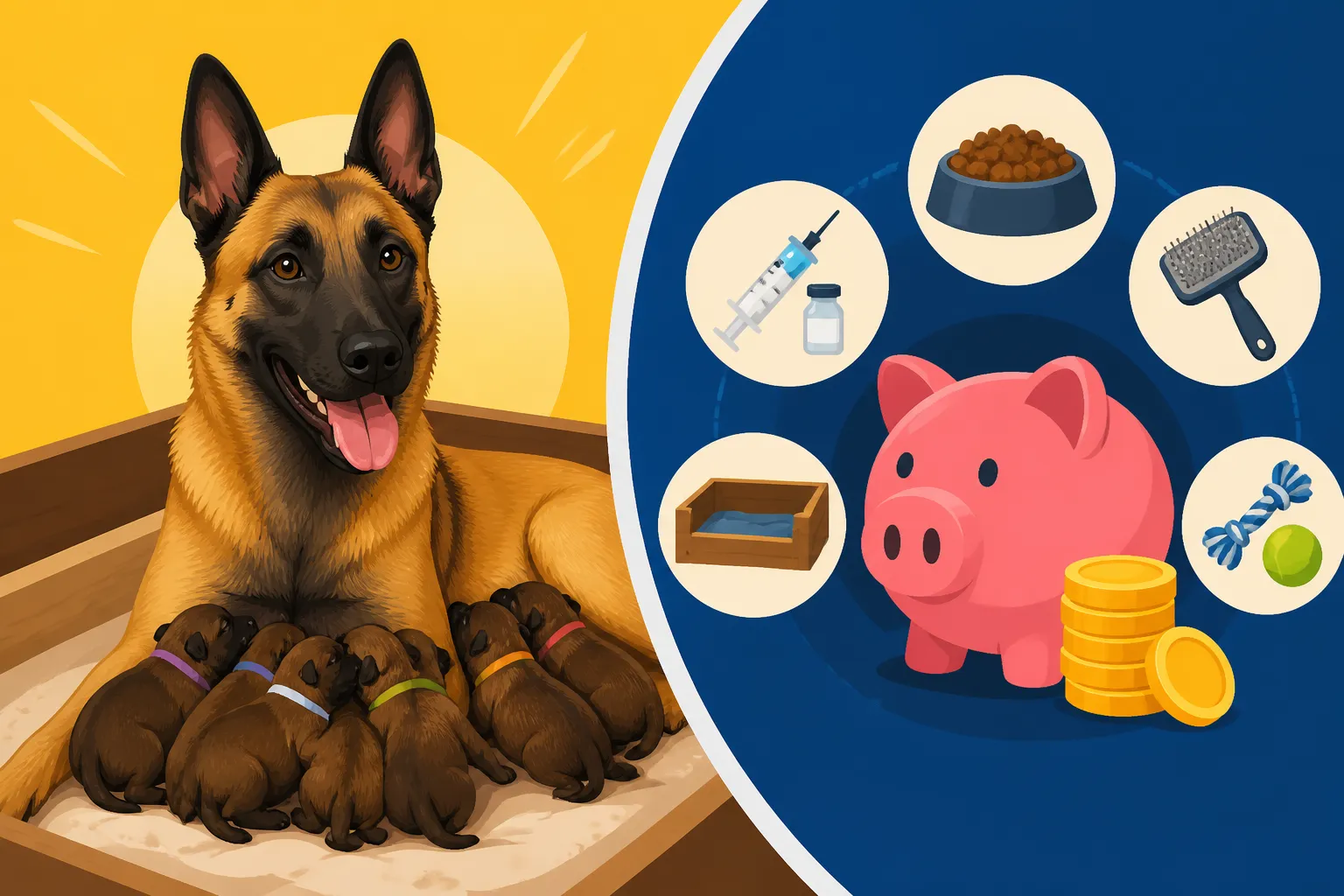
What Whelping a Belgian Malinois Litter Costs
Bringing a litter of Belgian Malinois puppies into the world is an incredibly rewarding experience, but let's be realistic from the start: it's rarely cheap. Many aspiring breeders or even those with an accidental litter quickly discover that the financial outlay for responsible breeding, from conception through to puppy placement, can be surprisingly substantial. This isn't just about covering food for a few extra mouths; it encompasses a complex web of veterinary care, specialized supplies, time commitment, and often, unexpected emergencies. This guide will walk you through the various financial aspects of whelping a Belgian Malinois litter, helping you understand the true costs involved so you can be fully prepared.
The Foundations: Pre-Whelping Costs and Preparation
Before a single puppy is even conceived, there's a significant financial investment that goes into ensuring a healthy litter. This isn't merely about pairing two dogs; it's about setting the stage for success and minimizing potential heartache down the line. Ignoring these initial steps to save money is a false economy and often leads to much greater expenses and risks later on.
Health Clearances for Both Parents
Any responsible breeder will tell you that the health of the parent dogs, especially the dam and sire, is paramount. This means thorough health testing long before any breeding even takes place. For Belgian Malinois, specific genetic conditions and structural evaluations are critical.
You're looking at things like hip and elbow certifications, typically done through organizations like OFA (Orthopedic Foundation for Animals) or PennHIP. These X-rays, evaluations, and associated vet fees can add up. Then there are eye clearances, usually performed by a veterinary ophthalmologist, to check for hereditary eye diseases. A Malinois might also need a thyroid panel to ensure proper endocrine function. Don't forget genetic DNA tests for conditions prevalent in the breed, such as ataxia (The Two Ataxia Genes Belgian Malinois Are Tested For). You might even need to consider a cardiac screen to rule out heart issues. If you're using a stud dog, you'll also be verifying all of their clearances, and hopefully, they've gone through the same rigorous testing. The cost of these screenings is not a one-time thing if you plan to breed regularly, as some certifications need to be renewed.
Stud Fees and Breeding Expenses
If you're not breeding two of your own Malinois, you'll be paying a stud fee for the male dog. This fee can vary dramatically based on the stud's pedigree, titles, health clearances, and proven progeny. A highly accomplished working line Malinois stud from Europe, for example, might command a significantly higher fee than a locally bred dog. Sometimes, the stud fee is a flat rate, while other times it might be a "pick of the litter" arrangement or a combination. Always have a clear contract outlining these terms.
Beyond the stud fee itself, there are often additional expenses associated with the breeding. If natural breeding isn't feasible or desired, you might need to factor in artificial insemination (AI). This involves veterinary procedures like semen collection, evaluation, and insemination, which adds further costs. Shipping cooled or frozen semen also involves specialized containers and overnight delivery fees. And before any breeding, there's usually progesterone testing for the dam to pinpoint the optimal breeding window, which involves multiple blood draws and lab analyses. These precise timings are crucial, and missed windows mean wasted time and money.
Supplies for the Expectant Mother and Whelping
As your Malinois approaches her due date, you'll need to gather essential supplies. A sturdy whelping box is a must-have, providing a safe, clean, and contained space for delivery and the first few weeks of the puppies' lives. These can range from DIY solutions to specially designed, easy-to-clean commercial models. Then there are disposable or washable whelping pads, which you'll go through quite a few of.
You'll need a heat source, like a heating lamp or a warming pad, to keep the newborn puppies at a critical optimal temperature, especially in cooler climates. A baby scale is indispensable for monitoring puppy weights daily – a key indicator of their health and whether they're nursing adequately. Other essentials include sterile gloves, a bulb syringe for clearing airways, clean towels, dental floss for tying off umbilical cords, antiseptic solution, and a notebook for tracking individual puppy progress. It’s a bit like preparing for a human baby, but multiplied by potentially a dozen!
And let's not forget about the dam's nutritional needs. A pregnant Malinois, especially in her last trimester, requires a significant increase in high-quality, calorie-dense food. Switching her to a performance puppy formula or a quality all-life-stages food might be necessary, and you'll notice her eating quite a bit more than usual. Brands like Ollie or Chewy offer high-quality options that can help support her through this demanding period.
The Big Day: Whelping and Delivery Expenses
The actual process of whelping, even when it goes smoothly, involves careful monitoring and can sometimes lead to expensive complications. This is where your emergency fund for the litter truly comes into play.
Routine Veterinary Checks During Pregnancy
Before the big day, your veterinarian will likely want to see your pregnant Malinois for at least one or two check-ups. An ultrasound can confirm pregnancy and give you an estimate of litter size, though it's not always 100% accurate for a count. Closer to term, usually around day 55-58, an X-ray is often recommended. This is vital for an accurate puppy count, which helps you know when the dam is finished delivering and ensures no puppy is retained. It also allows the vet to assess the size of the puppies relative to the birth canal, which can flag potential issues like oversized pups that might necessitate a C-section. These routine checks, while preventative, do come with their own set of consultation and imaging fees.
Emergency Interventions and C-Sections
This is often the largest and most unpredictable expense associated with whelping. Even with all the best preparation and health clearances, complications can arise during delivery. A Malinois, being a lean and active breed, generally has efficient muscle contractions, but dystocia (difficult birth) can still occur. This might be due to a puppy being stuck, the dam tiring out, or uterine inertia.
If your Malinois struggles or labor isn't progressing as it should, an emergency veterinary visit is crucial. This could mean after-hours fees, diagnostic tests, medications to stimulate contractions, or, in many cases, an emergency C-section. A C-section is a major surgical procedure that involves anesthesia, surgical staff, the procedure itself, and post-operative care for both the dam and puppies. The cost for an emergency C-section, especially late at night or on a weekend, can be substantial, and it's a cost that many new breeders are simply not prepared for. Having an established relationship with an emergency vet or a vet who offers after-hours services is invaluable, but the price tag will still be there.
Post-Delivery Care for Dam and Puppies
Once the puppies are born, the dam will need continued care. This might include medications for pain relief, antibiotics if there was a difficult birth or C-section, and supplements. Her nutritional needs remain incredibly high as she nurses a demanding litter of Malinois pups. You'll need to keep her on that high-quality, calorie-dense food, perhaps even increasing it further.
For the puppies, immediate concerns include making sure they are nursing well and staying warm. Sometimes, a puppy might be weaker than its littermates, requiring supplemental feeding with milk replacer (a significant cost itself) and careful monitoring. Sadly, some puppies might not make it despite your best efforts, which is both an emotional and, in terms of initial investment, a financial loss.
The Growing Family: Post-Whelping and Puppy Rearing Expenses
Once the initial hurdle of whelping is past, a new set of costs begins as the puppies grow from tiny newborns into rambunctious, curious Malinois pups. This phase is all about nurturing their health, growth, and development before they head to their new homes.
Puppy Veterinary Care
This is a non-negotiable expense for any responsible breeder. Puppies need a series of veterinary visits starting around 6-8 weeks of age. These appointments typically include:
- Initial Health Checks: A thorough examination by a vet to ensure all puppies are developing normally, checking heart, lungs, eyes, ears, and overall condition.
- Deworming: Puppies are often born with internal parasites, so a regular deworming schedule is essential, usually starting at two weeks and repeating every two weeks until they leave.
- Vaccinations: The core puppy vaccine series usually starts around 6-8 weeks, protecting them from common diseases like distemper, parvovirus, and adenovirus. Depending on when they go to their new homes, they might receive one or two rounds of these initial shots. What a Malinois Puppy's Vaccine Series Costs can be a significant part of your budget.
- Microchipping: Most reputable breeders microchip their puppies before they leave. This permanent identification is crucial for their safety and for their new owners to register them. Microchip and Registration Fees for a Malinois are typically part of the puppy package.
- Optional Procedures: While not as common for Malinois, some breeds have dewclaws removed shortly after birth or tails docked. Discuss with your vet if these are necessary or desired for your specific litter or goals.
These vet visits can quickly accumulate, especially with a large litter. Each puppy is essentially a new patient, incurring individual fees for examinations, vaccines, and other services.
Feeding the Growing Hoard
A litter of Malinois puppies transitioning from mother's milk to solid food means a huge increase in your grocery bill. Around 3-4 weeks of age, you'll start introducing a high-quality puppy kibble, often softened with warm water or puppy milk replacer. Brands like Chewy and Ollie offer excellent puppy-specific formulas designed for growth. As they grow, their appetites will explode. By 8 weeks, a litter of Malinois puppies can devour a significant amount of food daily. You need a formula that supports their rapid growth without pushing it too quickly, which can be detrimental to their developing joints. The Food a Malinois Puppy Should Grow On is a critical choice.
Registration and Administrative Fees
If you're breeding purebred Belgian Malinois, you'll want to register your litter with a reputable kennel club, such as the American Kennel Club (AKC) or a breed-specific organization. This involves litter registration fees, and sometimes individual puppy registration paperwork, which you'll either complete for the new owners or provide them with. These administrative costs, while not astronomical individually, add to the overall expense.
Marketing and Placement Costs
Finding responsible, well-vetted homes for Malinois puppies is a job in itself. You might incur costs for advertising your litter, whether that's through breed specific forums, working dog websites, or local classifieds. Time spent screening potential buyers, conducting interviews, and educating them about the breed's needs is also a significant investment, even if not directly monetary. Many breeders also provide a "puppy pack" with initial food, a toy, a blanket with the mother's scent, and health records, all of which contribute to the overall cost.
Unexpected Illnesses or Injuries
Even with the best care, puppies can be delicate, and unexpected health issues can arise. Fading puppy syndrome, digestive upsets, minor injuries from play, or even more serious congenital problems can necessitate emergency vet visits or specialized care. Pet insurance from providers like Healthy Paws might be something you consider for the dam, but typically not for individual puppies before they are sold. It's crucial to have a financial buffer for these unforeseen circumstances, as treating a sick puppy can be just as expensive as treating an adult dog.
The True Cost: Time, Effort, and Sleepless Nights
Beyond the tangible monetary costs, the time and effort involved in whelping and raising a Belgian Malinois litter are immense. You'll spend countless hours monitoring the dam, assisting with births, cleaning up messes, hand-feeding weaker puppies, socializing the litter, and screening potential homes. Sleep deprivation, especially during the first few weeks, is almost guaranteed. This isn't just a hobby; it's a demanding commitment that requires passion, patience, and a deep understanding of the breed.
Summary of Potential Costs
To give you a clearer picture, here's a simplified breakdown of the categories of expenses you might face. Remember, specific figures vary wildly by location, vet rates, and individual choices.
| Cost Category | Description | Typical Timing |
|---|---|---|
| Pre-Breeding | Health clearances (hips, elbows, eyes, DNA, cardiac, thyroid) for both parents | Months before breeding |
| Stud fees, progesterone testing, artificial insemination | Weeks leading up to breeding | |
| Pregnancy | Increased premium food for dam | Weeks 5-9 of pregnancy |
| Whelping box, heat lamps, pads, scales, cleaning supplies | Weeks 7-9 of pregnancy | |
| Vet check-ups, ultrasound, X-ray for puppy count | Mid to late pregnancy | |
| Whelping & Delivery | Emergency vet visits for complications | Day of delivery |
| C-section (if needed), associated medications, post-op care | Day of delivery | |
| Post-Whelping/Puppy Care | Increased premium food for lactating dam | Weeks 1-8 post-delivery |
| Puppy food (weaning formula) | Weeks 3-8 post-delivery | |
| Puppy vet visits (health checks, deworming, vaccinations) | Weeks 6-8 post-delivery | |
| Microchipping | Weeks 6-8 post-delivery | |
| Registration fees (AKC, etc.) | Weeks 6-10 post-delivery | |
| Puppy supplies (toys, bedding) | Weeks 4-8 post-delivery | |
| Potential treatment for unexpected puppy illnesses/injuries | Throughout puppyhood | |
| Cleaning supplies, utility costs (heating) | Ongoing | |
| Marketing/advertising, puppy packs | Weeks 8-12 post-delivery |
Ultimately, understanding The Cost of Shipping a Belgian Malinois Puppy to its new home, or even What a Malinois Rescue Asks in Adoption Donations if things don't go to plan, are just small pieces of a much larger financial puzzle. Whelping a Belgian Malinois litter is a labor of love, demanding significant financial planning and a deep commitment. It's an investment in the future of the breed and the well-being of each individual puppy.
Disclaimer
This article is for general informational purposes only and does not constitute professional advice. Laws, prices and regulations vary by location and change over time. Consult a qualified professional for guidance on your specific situation.