Microchip and Registration Fees for a Malinois
Bringing a Belgian Malinois into your life is an incredible commitment, and while everyone focuses on the puppy price, the true financial picture involves a host of smaller, often overlooked expenses. One area that can quickly add up, or simply cause confusion, is understanding the various microchip and registration fees you’ll encounter. This guide will meticulously break down these costs, helping you budget wisely and navigate the necessary paperwork to ensure your Malinois is safely and legally accounted for.
The Essential Costs of Microchipping Your Malinois
Microchipping is one of the most important things you can do for your Belgian Malinois's safety. It’s a tiny, permanent identification that can literally mean the difference between being reunited with your lost dog and a heartbreaking search. But there's often a bit of confusion about what exactly you're paying for when it comes to microchip-related expenses. It's not just the chip itself, but also the critical step of registering it.
Initial Microchip Placement: What to Expect
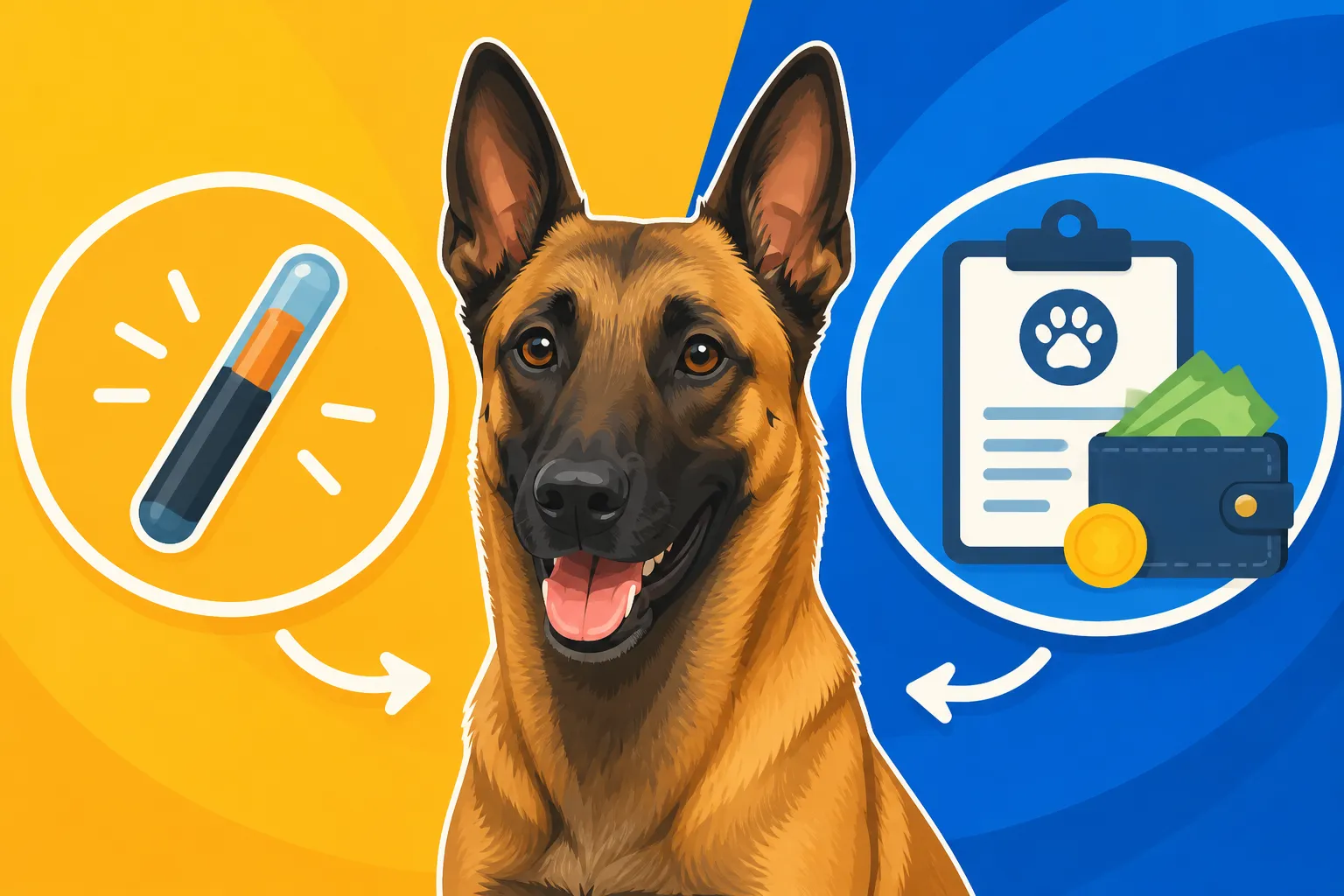
The microchip itself is a small, rice-sized device implanted painlessly under your Malinois's skin, usually between the shoulder blades. This procedure is typically performed by a veterinarian or a trained veterinary technician. It’s a very quick process, much like a routine vaccination, and most dogs barely react. Often, owners opt to have their Malinois microchipped during a scheduled visit for something else, like a puppy check-up, A Malinois Puppy's Vaccine Series Costs, or during a spay/neuter surgery. This can sometimes make the cost seem bundled or less noticeable.
The fee you pay at the vet's office covers the microchip itself and the professional service of implanting it. While I can't give specific figures, expect this to be a one-time charge from your veterinary clinic. It's a foundational expense for responsible dog ownership. Some breeders will even microchip puppies before they go to their new homes, in which case this initial placement cost might be rolled into the overall purchase price, a detail you'd find in The Guarantees in a Malinois Sale Agreement.
Registration with a Pet Recovery Database
Having a microchip implanted is only half the battle, and this is where many new owners sometimes falter. A microchip is useless if its unique ID number isn't registered with your contact information in a national pet recovery database. Think of the microchip as a car's VIN number; it identifies the car, but you need the registration to know who owns it. When a lost Malinois is found and scanned, the chip number will pull up information from the database, leading rescuers straight back to you.
There are several reputable pet recovery databases out there, and each has its own fee structure for registration. Some microchip brands include initial registration with their chip, but you still need to actively complete the registration process. Other services charge a separate fee. These fees can vary from a one-time "lifetime" registration to an annual renewal fee. It's crucial to understand this distinction. Failing to register, or letting an annual registration lapse, renders the microchip effectively useless for reunification purposes. This step is often done online after the microchip is implanted, and you'll receive a confirmation and usually a tag for your dog's collar with the database's information.
Lifetime vs. Annual Registration Plans
When you go to register your Malinois's microchip, you'll generally encounter two main types of payment plans: a one-time "lifetime" fee or an annual subscription.
A lifetime registration is often the preferred choice for many owners because it's a single payment that ensures your Malinois's information is accessible for the entirety of their life, The Fourteen to Sixteen Years a Belgian Malinois Lives. There's no need to remember annual renewals, worry about expired registrations, or incur late fees. While the initial cost for a lifetime plan might be higher than a single year's annual fee, it typically proves more economical and convenient in the long run. It provides peace of mind, knowing that even if your Malinois goes missing years down the line, their microchip information will still be active and readily available to help bring them home.
Annual registration plans, on the other hand, require you to renew your information each year. These plans usually have a lower upfront cost per year, which can be appealing if you're managing various pet expenses, perhaps including a fresh food delivery service like Ollie for their diet or regular orders from Chewy for toys and supplies. However, the downside is the necessity of remembering to renew. Life gets busy, and it's easy for these kinds of renewals to slip through the cracks. If your registration lapses, and your Malinois is found, the database may not be able to access your contact information, delaying or preventing their safe return. Many databases offer reminders via email or mail, but ultimately, the responsibility falls to the owner. Some databases might even charge a reactivation fee if your registration has expired.
Understanding these options and choosing the best one for your situation is key. For a high-drive, active breed like a Malinois, who might dart off during a training session or get separated during an outdoor adventure, an active microchip registration is non-negotiable.
Navigating Breed-Specific Registration and Licensing
Beyond the microchip, there are other layers of registration and licensing that come with owning a Belgian Malinois. These range from official breed registries that certify pedigree to local government requirements that ensure your dog is properly identified within the community. Each carries its own set of fees and rules.
National Breed Registry Fees
If you've acquired a purebred Belgian Malinois, especially one from a reputable breeder, you'll likely want to register them with a national breed registry. In the United States, the American Kennel Club (AKC) is the primary registry, while internationally, the Fédération Cynologique Internationale (FCI) governs many European pedigrees. These registrations serve to formally record your Malinois's lineage, recognizing them as a purebred of the Belgian Malinois breed. This is particularly important for those interested in dog sports, conformation shows, or responsible breeding programs.
The fees for national breed registration are typically a one-time cost for each individual dog. This usually covers the processing of paperwork that confirms the sire and dam of your Malinois puppy are also registered and that the litter meets the registry's standards. Sometimes a breeder will handle the initial registration or provide you with the necessary forms and information. You might pay a different fee for "full" registration (allowing breeding and showing) versus "limited" registration (for pet-only status, which can sometimes be a bit less expensive). For those involved in sport, Looking Up a Malinois Sire's OFA Record is part of ensuring good breeding practices and healthy lines, and these records are tied to national registries. These fees are distinct from microchip registration and confirm breed purity and lineage, not just ownership.
Local Licensing Requirements and Costs
Every city, county, or municipality has its own set of laws regarding pet ownership, and dog licensing is almost always a requirement. These local licenses are typically renewed annually and are separate from any microchip or breed registration. They serve several purposes: they help local animal control identify lost pets, track pet populations, and often fund local animal shelters and services.
The costs for local licensing vary significantly depending on where you live. For example, a dog license in a rural county might be quite different from one in a bustling city like Chicago or Los Angeles. You'll need to check your specific local ordinances for exact figures. Generally, there are often different fee tiers:
- Intact (unspayed/unneutered) dogs: These typically have the highest licensing fees, as municipalities often want to encourage responsible pet population control.
- Spayed/neutered dogs: Most jurisdictions offer a reduced licensing fee for altered dogs. This is a common incentive, recognizing the public health benefits of spaying and neutering.
- Senior owners or service animals: Some areas offer discounts or waivers for elderly pet owners or for certified service animals.
To obtain a license, you'll usually need to provide proof of rabies vaccination, and sometimes proof of microchipping is also required. Some local animal shelters or veterinarians might even issue licenses directly. Staying compliant with local licensing isn't just about avoiding fines; it's about being a responsible pet owner in your community.
Understanding "Dangerous Dog" Registration and Its Implications
Unfortunately, due to their impressive capabilities and sometimes unfair media portrayal, Belgian Malinois can sometimes fall under breed-specific legislation (BSL) or "dangerous dog" classifications in certain jurisdictions. While a well-trained and socialized Malinois is a loving family member or dedicated working dog, their power and drive mean some areas may impose stricter regulations. This is a frustrating reality for many responsible owners.
If your Malinois lives in an area with BSL or is, for whatever reason, deemed a "dangerous dog" (which often happens after a specific incident, regardless of breed), you could face significantly higher registration fees and additional, stringent requirements. These requirements might include:
- Special permitting or registration: Beyond the standard dog license, there could be an additional, much more expensive permit.
- Liability insurance: You might be mandated to carry specific liability insurance, a topic we touched on when discussing Whether Extra Liability Cover Reaches a Malinois Bite.
- Secure containment: Requirements for reinforced kennels, specific fencing, or even muzzling in public.
- Signage: Posting "Beware of Dog" or similar signs on your property.
It's vital to research your local laws thoroughly before acquiring a Malinois, and certainly if you move to a new area. The intent of these laws is usually public safety, but they can place a heavy burden on owners of breeds perceived as high-risk. This is an entirely separate category of registration and fees from standard licensing, and it's something every Malinois owner needs to be aware of, even if it never applies to them personally. For more general information on this aspect, you might want to read Whether a Malinois Requires a Dangerous Dog Registration.
| Registration Type | Purpose | Fee Structure | Common Requirements |
|---|---|---|---|
| Microchip Database | Reunitement of lost pets | One-time or Annual | Microchip ID number, owner contact info |
| National Breed Registry | Confirm pedigree, lineage, purebred status | One-time (per dog) | Proof of purebred parents, breeder info |
| Local Dog License | Community identification, animal control funding | Annual | Proof of rabies vaccination, (often microchip) |
| "Dangerous Dog" Permit/Reg | Public safety, breed-specific restrictions (if applicable) | Annual (often higher) | Specific insurance, secure containment, additional training proof |
Beyond the Basics: Hidden and Ancillary Fees
Just when you think you’ve got all the registration fees sorted, there can be a few other costs that crop up related to microchipping and identification. These aren't always upfront, but they're worth knowing about so you're not caught off guard. Owning a Belgian Malinois means being prepared for all eventualities, and that includes the administrative side of things.
Transferring Ownership and Updating Microchip Records
Life happens, and sometimes a Malinois needs to move to a new home. Perhaps you're adopting a rescue Malinois, or you've decided to rehome your own dog responsibly. When ownership changes, it's absolutely critical that the microchip registration is updated with the new owner's contact information. This isn't just a suggestion; it's a vital safety measure. If your Malinois were to get lost after a transfer of ownership, and the microchip still points to the previous owner, it could cause significant delays or even prevent a reunion.
Most microchip databases charge a fee to transfer ownership records. This fee is typically paid by the new owner, or sometimes split between the old and new owner as part of the rehoming agreement. While not a huge expense, it's a necessary one that needs to be factored into the overall cost of acquiring or rehoming a Malinois. Think of it as a small investment in ensuring your Malinois's safety and your peace of mind. Without this update, that tiny chip under their skin is providing incorrect information, which is almost as bad as no information at all. This is also a key point to confirm if you're adopting a What a Malinois Rescue Asks in Adoption Donations – ensure they facilitate the transfer or provide clear instructions on how to do it.
Replacement Tags and Lost Pet Services
While the microchip is permanent and internal, most owners also use external identification like collar tags. These tags often include the dog's name, your phone number, and sometimes the microchip registration number or the database's contact info. Over time, tags can get lost, become illegible, or break, especially with an active, energetic Malinois who loves to push through brush or engage in enthusiastic play.
Replacing these tags will incur a small fee, whether you order them online through a retailer like Chewy or get them from a local pet store. Beyond basic tags, many microchip databases offer optional, additional services. These might include:
- Lost pet alerts: Services that send out alerts to local shelters and vets when your pet is reported missing.
- Pet amber alerts: Wider-reaching alerts that can notify community members.
- Access to a 24/7 lost pet hotline: A direct line for anyone who finds your dog to call and get immediate contact information.
These extra services often come with an additional annual fee on top of the standard registration. While not strictly necessary, they can provide another layer of reassurance, especially for owners of high-drive Malinois who are prone to exploration or who work in diverse environments. Deciding whether these services are worth the extra cost comes down to your personal risk assessment and budget.
The Long-Term Value of Proper Registration
It's easy to view all these fees as just another expense, especially when you're already covering significant costs like What a Year With a Working Belgian Malinois Costs or specialized food from Ollie. However, proper microchip registration and local licensing offer immense long-term value that far outweighs their monetary cost.
First and foremost, it’s about safety and peace of mind. A properly registered and microchipped Malinois has the best chance of being reunited with you if they ever get lost. Think of the frantic worry if your dog disappeared; having these systems in place significantly reduces that anxiety. Secondly, it demonstrates responsible pet ownership. By complying with local laws, you're contributing to the well-being of the animal community and showing that you take your role as a Malinois owner seriously. It helps local authorities manage stray populations and support animal welfare initiatives.
Lastly, and sometimes overlooked, is the legal protection. In some situations, proof of ownership through registration can be critical. If your Malinois is ever stolen, injured in an accident, or involved in a dispute, official registration and microchip records provide concrete proof of ownership and identification. These administrative steps are small but mighty guardians for your beloved Malinois.
Strategies for Budgeting and Saving on Fees
Let's be real, owning a Belgian Malinois is an investment, both in time and finances. From the initial purchase, which could range into What a Belgian Malinois Puppy Costs by Bloodline, to ongoing training and care, the costs add up. While microchip and registration fees aren't the largest chunk of your expenses, every dollar counts. There are smart ways to approach these necessary fees to minimize their impact on your wallet.
Package Deals with Vet Services
When you get your Malinois, especially as a puppy, you'll be making frequent trips to the vet for vaccinations, deworming, and general check-ups. Many veterinary clinics recognize that microchipping is a standard, essential part of pet care, and they often offer it as part of a package deal. For example, a "puppy wellness package" might include the initial series of vaccinations, a few health exams, and the microchip implantation at a slightly reduced overall cost compared to getting each service individually.
When scheduling your Malinois's next vet visit, whether it's for a routine check-up or something more specific like discussing Whether Spay Timing Changes a Malinois's Joints, ask your veterinarian if they offer any such bundles. Sometimes, microchipping can even be done concurrently with a spay or neuter procedure, while your Malinois is already under anesthesia, which can simplify the process and potentially save you a separate appointment fee. Don't be shy about inquiring; a good vet understands the financial realities of pet ownership and wants to make essential care accessible.
Discounts for Spayed/Neutered or Senior Malinois
We touched upon this briefly, but it's worth emphasizing: altering your Malinois can lead to savings on annual local dog licensing fees. Most municipalities offer a significant discount for spayed or neutered animals as an incentive for responsible pet population control. This isn't just about reducing unwanted litters; it's also about the health benefits for your Malinois and fewer strays ending up in shelters. So, while you'll have to factor in Neuter and Spay Prices for a Belgian Malinois, the long-term savings on licensing can help offset that initial expense.
Additionally, some cities or counties extend discounts or even waive fees entirely for senior pet owners. If you're over a certain age and own a Malinois, check your local animal control or city clerk's office websites for senior citizen programs. Similarly, certain areas might offer reduced fees for certified service animals. These discounts are not universal, so a quick call or visit to your local government website is the best way to find out what applies in your area. Every little bit of savings can go towards ensuring your Malinois has access to quality food from Chewy or extra training tools.
Pet Insurance Considerations for Registration Costs
Pet insurance, like policies offered by Healthy Paws, is an increasingly popular way for owners to manage the unpredictable costs of veterinary care, especially for an active breed like the Malinois who might be prone to Injuries a Bite Sport Belgian Malinois Collects or unexpected illnesses. When considering pet insurance, it's natural to wonder if it covers administrative fees like microchip placement or registration.
Typically, standard pet insurance policies are designed to cover accidents, illnesses, and sometimes preventative care, depending on the plan. They generally do not cover routine administrative fees such as microchip registration, breed registry fees, or local dog licensing fees. These are considered standard costs of pet ownership, much like food or toys. However, some comprehensive wellness plans or premium tiers might include microchip implantation as part of their preventative benefits. It's essential to read the fine print of any pet insurance policy you're considering to understand exactly what is and isn't covered.
While pet insurance probably won't directly pay for your Malinois's registration fees, having a robust policy can save you thousands on unexpected vet bills, freeing up your budget for these essential administrative costs. It provides a financial safety net that allows you to confidently cover all aspects of your Malinois's care, from medical emergencies to mandatory registrations.
Disclaimer
This article is for general informational purposes only and does not constitute professional advice. Laws, prices and regulations vary by location and change over time. Consult a qualified professional for guidance on your specific situation.