Building a Run a Malinois Cannot Escape
It’s a tale as old as time for many Belgian Malinois owners: you turn your back for a moment, and suddenly, your highly intelligent, incredibly athletic dog has found a way out of what you thought was a secure enclosure. The heart-stopping moment you realize they're gone, followed by the frantic search, is a nightmare no one wants to live through repeatedly. This guide is here to tackle that very real frustration, offering comprehensive strategies and practical construction advice to help you build an outdoor run your Malinois genuinely cannot escape from, restoring your peace of mind and keeping your canine companion safe.
Understanding the Malinois Escape Artist
Let's be real, owning a Belgian Malinois is an experience unlike any other. These dogs are phenomenal, but their brilliance and athleticism often come with a knack for Houdini-level escapes. It's not usually about defiance; it's about their inherent drives and needs. Understanding why your Malinois tries to escape is the first crucial step in building a truly inescapable run.
The Drive to Work and Explore
Belgian Malinois were quite literally bred for a job. Their historical role as herding dogs, and more recently as police and military K9s, means they possess an incredibly high drive to work, explore, and problem-solve. When they’re not given a constructive outlet for this energy, that drive doesn't just disappear; it gets redirected. For many Malinois, escaping becomes their "job." They might be exploring their territory, looking for "intruders" (even if it's just a squirrel), or simply seeking a challenge to occupy their formidable minds. It's less about wanting to run away from you and more about a deeply ingrained need to do something. Think about how many hours a Belgian Malinois should work daily; if they're not getting that fulfillment, their minds will find other ways to engage.
This intense drive means a Malinois isn't content to simply "hang out" in a yard for hours. Their minds are constantly assessing, planning, and looking for opportunities. A flimsy fence or an insecure gate isn't just an obstacle; it's a puzzle waiting to be solved. They thrive on mental and physical engagement, and if the environment doesn't provide it, they'll create their own. This isn't naughtiness; it's instinct.
Athleticism and Problem-Solving Skills
If you've ever watched a Malinois work, you know their physical capabilities are astounding. They can jump incredible heights, scale walls, and squeeze through surprisingly small spaces. Couple this physical prowess with their sharp intelligence and innate problem-solving abilities, and you have a dog uniquely equipped for escape. They aren't just blindly pushing against a fence; they're often analyzing weaknesses, testing boundaries, and remembering what worked before. They learn incredibly quickly.
A Malinois might observe the smallest gap in a fence panel, notice a loose latch on a gate, or realize that enough pressure on a specific spot will create an opening. They're often relentless, applying their strength and endurance to exploit any vulnerability. This isn't just about speed or power; it's about calculated effort. Their ability to use their paws, nose, and even teeth to manipulate their environment is often underestimated until you see them in action, figuring out how to get through something that would baffle most other breeds.
Anxiety and Boredom as Triggers
While drive and athleticism are huge factors, sometimes escape attempts stem from less positive emotions: anxiety and boredom. A Malinois left alone for too long without adequate mental stimulation or physical exercise can quickly become bored, leading to destructive behaviors including escape attempts. They might dig, chew, or jump simply because there's nothing else to do. Furthermore, separation anxiety or general environmental stress can also fuel escape behaviors. A Malinois might try to escape to find their owner, or to get away from a perceived threat, like loud noises or unfamiliar stimuli.
It's crucial to distinguish between a dog driven by inherent instinct and one driven by stress. While both lead to escape attempts, the underlying solutions might differ. If your Malinois is one that screams rather than settles when left alone, it might be more than just high energy; it could be a sign of deeper anxiety that needs addressing in conjunction with a secure physical space. Enrichment is key, but so is understanding your dog's emotional state. A healthy and happy Malinois is less likely to feel the compulsive need to escape. Products from retailers like Chewy can offer a wide array of durable toys and puzzle feeders designed to combat boredom and provide mental stimulation, which can go a long way in reducing the urge to escape.
Essential Design Principles for Malinois Containment
Building a Malinois-proof run isn't just about throwing up the tallest fence you can find. It requires a strategic approach, considering every possible angle of escape. You need to think like a Malinois, anticipating their moves and fortifying against their particular brand of ingenuity.
Height is Might: Overcoming the Jumper
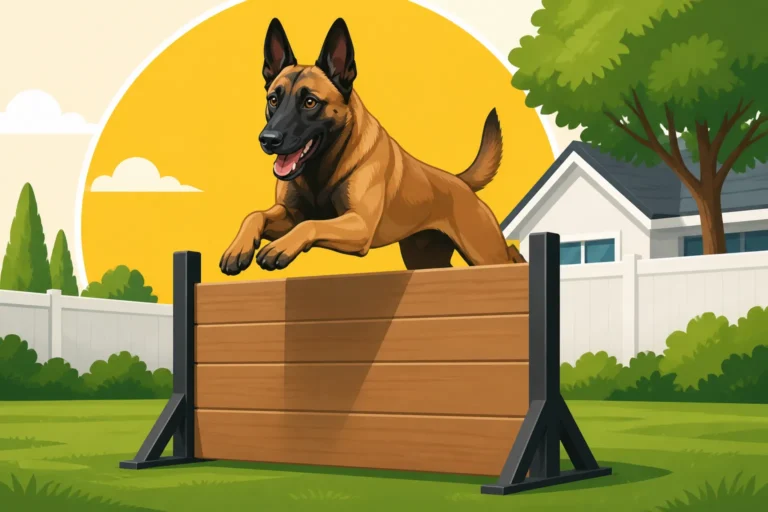
When it comes to Malinois, standard fence heights often just become another agility obstacle. These dogs are known to clear fences that would stop many other breeds cold. A six-foot fence, which is often considered adequate for larger dogs, can be easily scaled or jumped by a determined Malinois, especially if they have any kind of foothold or leverage. The general rule of thumb for a truly Malinois-proof run is to go much higher.
Eight-foot fencing is often recommended as a minimum for these incredible athletes. However, even an eight-foot fence isn't foolproof if the Malinois can get a grip on the top or use anything nearby as a launchpad. Consider adding an inward-facing "lean-in" or "coyote roller" at the top of the fence. These devices make it impossible for the dog to get a solid purchase on the top edge, preventing them from pulling themselves over. Without this extra security, your Malinois might just see the top of an eight-foot fence as a challenge to be conquered.
Digging Deep: Preventing the Underground Escape
While jumping gets a lot of attention, digging is another primary escape method for a Malinois, especially if they are left unattended for long periods or are bored. Their powerful paws and relentless determination mean they can excavate impressive tunnels in a surprisingly short amount of time. Simply burying the fence a few inches into the ground is rarely enough.
To truly dig-proof a run, you need to think about a solid, impenetrable barrier beneath the surface. One effective method is to pour a concrete footer underneath the entire perimeter of the fence. This creates a solid foundation that extends at least 12-18 inches below ground level, preventing any digging attempts. Another option is to embed hardware cloth or heavy-gauge welded wire fencing horizontally for several feet inward from the fence line, effectively creating an apron that discourages digging. This apron needs to be securely fastened to the bottom of the fence panels to prevent it from being lifted or chewed through. This underground fortification is just as critical as the fence height itself.
Beyond the Fence Line: Overhead and Material Choice
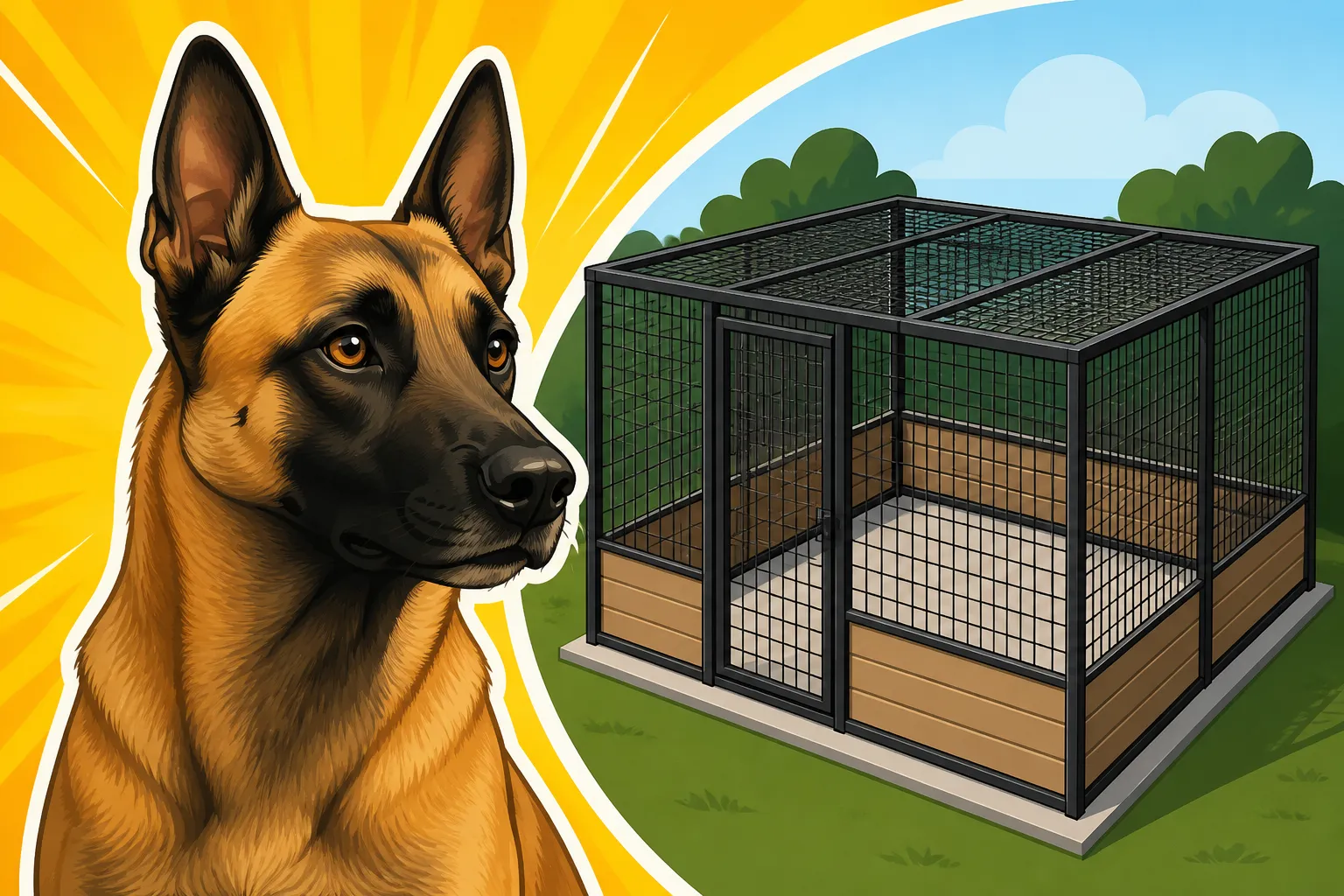
A truly secure Malinois run doesn't just address the sides and bottom; it also considers the top. Some Malinois, given enough motivation, can climb chain-link fences like a ladder, especially if the mesh is wide enough for them to get a toe-hold. For these extreme cases, or for owners who simply want maximum security, an overhead cover is essential. This can be a full roof structure or a heavy-gauge wire mesh canopy securely attached to the top of the fence panels.
Beyond height and overhead, the material choice for the fence itself is paramount. Weak, flimsy materials will quickly succumb to a Malinois's chewing or pushing power. Chain link, while seemingly strong, can often be climbed or even chewed through if it's a light gauge. For a truly robust solution, consider solid panel fencing, heavy-gauge welded wire mesh, or even pre-fabricated kennel panels. The mesh size of any wire fencing should be small enough that your Malinois cannot get a foothold to climb or chew through it easily.
Choosing the Right Materials and Construction Techniques
Once you understand the principles, it's time to get down to the nitty-gritty of construction. Selecting the right materials and employing sound building techniques will make all the difference in creating a run that stands up to the intelligence and power of a Belgian Malinois.
Fence Panel Selection: Gauge, Grid, and Strength
Forget the standard hardware store chain link. For a Malinois, you need industrial-grade. When looking at chain link, the "gauge" refers to the thickness of the wire: a lower gauge number means thicker, stronger wire. Aim for at least 9-gauge, but ideally 6-gauge for maximum security. The "grid" or mesh size also matters. Wider mesh provides footholds for climbing. Opt for a mesh size that is as small as possible to deny climbing opportunities, often 2×2 inches or smaller.
However, welded wire panels often offer superior strength and rigidity compared to chain link. Look for heavy-duty galvanized or powder-coated welded wire panels, typically 6-gauge or 8-gauge, with small square or rectangular mesh openings. These panels are much harder to climb, bend, or chew through. They also offer a more professional and robust appearance. Ensure all panels are securely attached to sturdy metal posts using heavy-duty hardware that cannot be easily pried open or unscrewed. Fasteners should be numerous and strategically placed to prevent any weak points.
Foundation and Dig-Proofing Solutions
As we discussed, going deep is as important as going high. The most secure dig-proof foundation is a concrete footer. This involves digging a trench around the perimeter of your run, at least 12-18 inches deep and wide enough for stability, and pouring concrete. The fence posts should be set into this concrete for maximum stability. This creates an unyielding barrier that a Malinois cannot dig under.
If concrete isn't feasible, a less permanent but still effective option is to install a heavy-gauge welded wire apron. This apron should be at least 2-3 feet wide and laid flat on the ground (or buried a few inches) extending inwards from the fence line. It must be securely attached to the bottom of the fence panels using strong U-nails, hog rings, or rebar clips every few inches. Overlap multiple sections of wire generously and secure them together. The idea is that as the dog attempts to dig near the fence, they quickly encounter the wire mesh, discouraging further efforts. You can then cover this wire with soil, gravel, or pavers to make it less visible and more comfortable for your dog. For those considering what a Malinois Kennel Run Costs to Build, investing in proper foundation is a significant, but worthwhile, portion of that budget.
Gate Security: The Often-Overlooked Weak Point
The gate is almost always the weakest link in any enclosure, and a Malinois will exploit it mercilessly. A simple latch or a weak spring-loaded gate is an open invitation for escape. You need multiple layers of security on your gate. First, the gate itself should be constructed from the same heavy-duty materials as your fence panels and be just as tall. It should swing freely without sagging, ensuring a tight fit when closed.
Next, implement multiple latching mechanisms. A robust, slide-bolt latch on the outside, secured with a carabiner or padlock, is a good start. On the inside, consider a spring-loaded latch that automatically engages when the gate closes, in addition to another manual latch or bolt. For ultimate security, a double-gate system or "air lock" vestibule can be invaluable. This creates an enclosed space between two gates, meaning if the dog gets past the first gate, they are still contained before they can reach the outside world. This gives you a critical second chance. Regularly check all latches and hinges for wear and tear, as a Malinois can quickly exacerbate any small weakness.
Adding Layers of Security and Enrichment
Building a strong physical barrier is vital, but a truly inescapable run also incorporates psychological elements and additional safeguards to keep your Malinois happy, healthy, and contained.
Overhead Protection and Kennel Tops
For the most athletic or determined Malinois, simply having tall sides might not be enough. They can be exceptional climbers. This is where overhead protection comes into play. A full kennel top made of heavy-duty wire mesh or a solid roof structure (like corrugated metal or wood sheeting) securely bolted to the top of the fence panels can prevent any aerial escapes. The mesh should be strong enough to withstand your dog's weight if they were to try and climb onto it, and small enough that they can't squeeze through.
Beyond escape prevention, an overhead cover also provides crucial shade from the sun and shelter from rain, making the run a more comfortable and usable space for your Malinois. This is especially important for breeds like Malinois who are sensitive to extreme weather, helping to regulate their body temperature and reduce discomfort that might otherwise lead to pacing and escape attempts.
Double Gating and Air Locks
As mentioned earlier, the concept of a double-gate system, or an "air lock," is a game-changer for Malinois owners. Imagine a small, enclosed vestibule with an outer gate and an inner gate. When you enter, you close the outer gate behind you before opening the inner gate to access your dog. When you leave, you close the inner gate, then the outer. This design ensures that even if your Malinois rushes the gate when you open it, they are still contained within the airlock and cannot bolt into the wider world.
This system provides a critical buffer, particularly when you're managing a high-drive dog who might be overly excited to greet you or try to follow you out. It eliminates those heart-stopping moments where you might accidentally leave a gate ajar or your dog pushes past you. It's a small investment in space and materials that pays huge dividends in peace of mind.
Enriching the Environment to Reduce Escape Attempts
A secure physical structure is only half the battle. A bored or under-stimulated Malinois will always look for ways to entertain themselves, and that often means escape. The most secure run in the world will still struggle to contain a dog whose mental and physical needs aren't met. So, once you've built the fortress, fill it with engaging activities!
Think about durable chew toys from brands like Chewy or your local pet store, puzzle feeders that dispense kibble slowly, and sturdy tug toys. Rotating these toys keeps things fresh. Install platforms or sturdy benches at varying heights to give your Malinois different vantage points and places to rest. Provide a digging pit filled with sand where they are allowed to dig, redirecting that natural instinct away from your fence line. Regularly hide treats or favorite toys for them to "hunt" using their incredible nose work skills. Consider the mental work that finally tires a Malinois out; incorporating elements of scent work or problem-solving into their run environment can make a world of difference. A well-exercised and mentally stimulated Malinois is a much happier, and therefore more contained, Malinois. Even daily meals can be turned into an enrichment activity if you feed a high-quality food like Ollie in a puzzle feeder rather than a bowl.
Addressing Common Malinois Escape Scenarios
While the general principles cover most bases, Malinois have specific escape tactics that require targeted solutions. Let's look at how to directly counter these common behaviors.
The Jumper's Dilemma: How to Raise the Bar
The Malinois's ability to jump is legendary, and it's one of the first things owners struggle with. If your Malinois is clearing fences, merely adding height vertically might not be enough, especially if they are using objects near the fence (like sheds, dog houses, or even snowdrifts) as stepping stones. First, clear the perimeter: remove anything within several feet of the fence that could offer a boost.
Then, go beyond simple height. Install an inward-slanting fence extension, sometimes called a "hot wire" or "coyote roller" system. This isn't necessarily about electricity (though a low-voltage wire can be an option for severe cases); it's about making the top of the fence impossible to get a purchase on. A lean-in extension essentially creates an L-shape at the top of the fence, extending inwards over the run. This angle prevents the dog from getting their front paws over the top edge. Alternatively, a "coyote roller" is a PVC pipe or similar smooth, round object installed horizontally along the very top of the fence. When a dog tries to jump and grab the top, the roller spins, denying them a grip and causing them to fall back into the run. This effectively raises the barrier both physically and psychologically, making it seem impossible to scale.
The Digger's Demise: Fortifying the Perimeter
For the determined digger, those who leave their Malinois alone for a while and come back to a freshly excavated tunnel, traditional burying of the fence bottom just won't cut it. They’ll find a way. You might think about putting down a concrete barrier, which is the most robust solution for those able to invest in it. This involves digging a trench around the entire perimeter, deep enough (at least 18 inches) to dissuade even the most enthusiastic excavator, and then filling it with concrete. The fence posts should ideally be set into this concrete for immovable stability.
If pouring concrete isn't feasible, consider an L-footer or a wire apron. An L-footer involves burying a section of wire mesh (like heavy gauge welded wire or hardware cloth) horizontally along the inside base of the fence, extending at least 2-3 feet inwards. The vertical part of the mesh is attached to the bottom of the fence panels, and the horizontal section is then covered with soil, gravel, or pavers. When the Malinois starts digging, they immediately hit this underground barrier, which acts as a deterrent. This strategy is highly effective because dogs rarely dig straight down; they typically dig out from the base of the fence. Encountering the L-footer or apron makes them give up before they create an escape route. Remember, checking whether a Belgian Malinois is built for bloat or other health issues is part of keeping them healthy enough to thrive in their secure environment, so ensuring they don't ingest foreign objects while digging is also important.
The Chewer's Challenge: Material Resistance
Some Malinois aren't jumpers or diggers; they're chewers. Given enough time and a vulnerable material, they can chew through wood, plastic, and even lighter gauge wire. This is especially true for young dogs during the shark phase every Malinois puppy goes through, or for adults who are intensely bored or anxious. The solution here lies in material selection and reinforcement.
Avoid wooden fences or any plastic components within the dog's reach. For wire fencing, ensure it's heavy-gauge welded wire, not flimsy chicken wire or lightweight chain link. The individual strands should be too thick and strong for your Malinois to bend or break with their teeth. If you have existing wooden elements, such as posts or a kennel wall, consider cladding the lower section with chew-proof materials like sheet metal, sturdy wire mesh, or even heavy-duty rubber matting. All fasteners should be on the exterior of the enclosure or otherwise inaccessible to your dog. For the truly destructive chewer, even gate latches can be targets, so ensure they are metal and heavy-duty, ideally recessed or covered. The durability of materials is paramount, as a Malinois will relentlessly test every weak point.
| Escape Method | Malinois Behavior | Prevention Strategy | Key Materials |
|---|---|---|---|
| Jumping/Climbing | Leaping over fences, scaling chain-link, using objects as boosts. | Increase height to 8-10 feet; install inward-slanting lean-ins or coyote rollers; clear perimeter of climbable objects. | Heavy-gauge welded wire panels, 6-gauge chain link, metal posts, PVC pipe, angle iron for lean-ins. |
| Digging | Tunneling under fence lines, excavating rapidly. | Concrete footer around entire perimeter (12-18 inches deep); heavy-gauge wire apron (2-3 feet wide) buried or laid flat inside fence. | Concrete, rebar, heavy-gauge welded wire mesh, landscape fabric, gravel/soil. |
| Chewing/Breaking | Destroying fence materials, widening gaps, breaking latches. | Use heavy-duty, chew-resistant materials; reinforce vulnerable spots with sheet metal; secure all fasteners. | 6-gauge welded wire, sheet metal, robust metal latches, industrial-strength bolts and screws. |
| Gate Breaching | Pushing through weak gates, opening simple latches, darting out. | Double-gate (airlock) system; multiple heavy-duty, locking latches; inward-opening gates. | Heavy-duty gate frames, industrial slide bolts, carabiners, padlocks, spring-loaded latches. |
Building a run a Malinois cannot escape from is a significant undertaking, but it’s an investment in your dog’s safety and your peace of mind. By combining robust physical barriers with thoughtful mental and physical enrichment, you can create a secure and stimulating environment where your high-drive companion can thrive. Remember, your Malinois isn't trying to be difficult; they're just being a Malinois, and it's up to us to anticipate their brilliance and channel it constructively.
Disclaimer
This article is for general informational purposes only and does not constitute professional advice. Laws, prices and regulations vary by location and change over time. Consult a qualified professional for guidance on your specific situation.