Vehicle Heat Alarms for a Belgian Malinois in a Car
It's a fear that every Belgian Malinois owner knows all too well: the brief moment you need to step away from your vehicle, leaving your high-drive companion inside, even just for a few minutes. The invisible threat of rapidly rising temperatures, especially on what seems like a mild day, can turn a quick errand into a life-threatening emergency. This guide is here to walk you through the essential role of vehicle heat alarms, offering peace of mind and crucial protection for your Malinois when they're in the car.
The Unique Vulnerability of a Belgian Malinois to Heatstroke in Vehicles
Belgian Malinois are incredible dogs, known for their relentless drive, boundless energy, and often, their preference for being right in the thick of whatever you're doing. But these very qualities that make them exceptional working dogs and companions also make them incredibly susceptible to heat-related illnesses, especially when confined in a vehicle. It's a cruel irony that the same dogs built for extreme performance can so quickly succumb to something as insidious as rising temperatures.
Why Malinois Overheat So Quickly
When we talk about a Malinois, we're talking about an athlete, a dog with a powerful engine designed for sustained activity. Their metabolism is often higher, and their natural inclination is to be "on" and ready to go. This high internal heat production, combined with their dense double coat (even if short), makes them efficient at generating heat. However, they are not as efficient at dissipating it, particularly in enclosed spaces without good airflow. They primarily cool themselves by panting, which relies on evaporating moisture from their tongue and respiratory tract. If the ambient air is hot and humid, this evaporative cooling becomes far less effective.
Imagine your Malinois, eager and alert, even when parked in the car. They're watching everything, ready to spring into action. This constant state of low-level arousal, perhaps pacing or shifting around, further elevates their body temperature. They aren't just passively sitting there; their minds and bodies are often still "working." This internal heat generation combined with the rapid external temperature rise in a vehicle creates a perfect storm. It's not just a concern for those with police or sport dogs; even a pet Malinois can quickly become a victim.
The Rapid Rise of Vehicle Temperatures
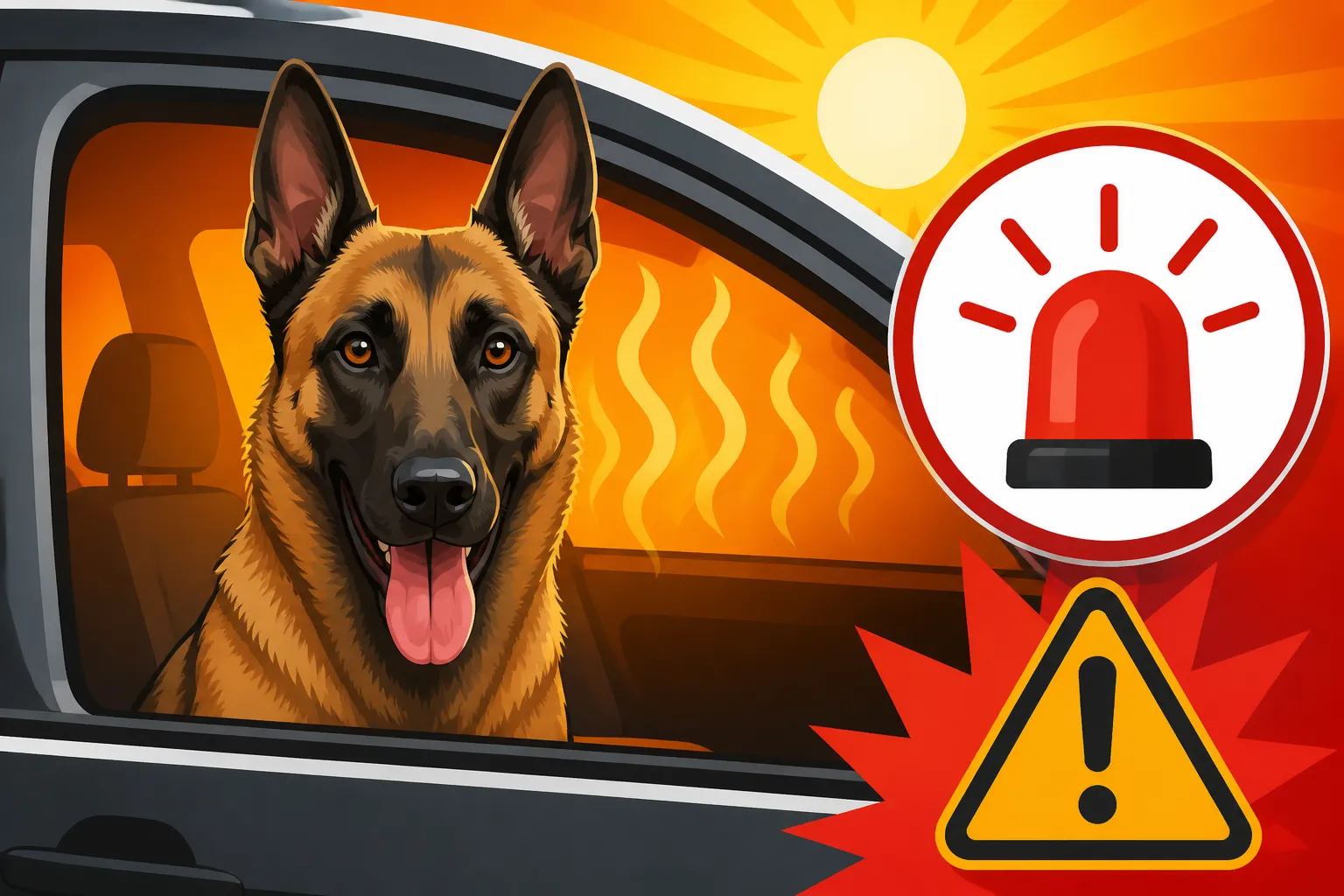
The speed at which a vehicle's internal temperature can skyrocket is truly alarming and often underestimated. Even on a seemingly mild 70-degree Fahrenheit day, the temperature inside a car can reach 90 degrees in just 10 minutes, and over 100 degrees within 30 minutes. Crack a window? Studies have shown that it makes very little difference to the internal temperature. The sun's rays entering the car through the windows are absorbed by the seats and interior surfaces, quickly turning your vehicle into an oven. This effect is compounded if your car is dark-colored.
For a Belgian Malinois, who might already be running a slightly higher body temperature due to their metabolism or recent activity, these rising temperatures are catastrophic. They don't have the luxury of stripping off layers or pouring a glass of cold water. They are trapped, and their core temperature can rise to dangerous levels, leading to organ damage, brain injury, and even death. It's a stark reminder that even a short absence can have devastating consequences, making tools like vehicle heat alarms indispensable. This is a primary reason why we stress the importance of understanding The Temperature a Belgian Malinois Should Not Train In.
Understanding Vehicle Heat Alarms and Their Operation
Vehicle heat alarms are purpose-built devices designed to monitor the temperature inside your car and alert you, often remotely, if it reaches a dangerous level for your canine companion. They are not just fancy gadgets; they are critical safety tools that can literally be the difference between life and death for a Belgian Malinois. Think of them as a vigilant sentinel, always on watch, even when you can't be.
How These Alarms Work
At their core, vehicle heat alarms utilize sensors to measure the ambient temperature and, in many advanced models, the humidity within your vehicle. These sensors are incredibly sensitive and are designed to provide accurate readings even as conditions fluctuate. When the temperature (or humidity, if applicable) crosses a pre-set threshold – a level deemed unsafe for dogs – the alarm is triggered. This isn't a silent alert; it's designed to get your attention immediately.
The most common method of alert is a notification sent directly to your smartphone via a dedicated app. Some systems also include an audible alarm that sounds from the device itself or even flashes lights, drawing attention to your vehicle in public. Many professional-grade systems integrate with the vehicle's electrical system, offering features like automatic window lowering or fan activation, although these are more common in specialized police K9 units. For the average owner, the primary goal is that immediate, undeniable alert on your phone.
Components of a Typical Heat Alarm System
A standard vehicle heat alarm system generally consists of a few key components working in tandem. First, there's the main sensor unit, which is typically placed inside the vehicle, often in the dog's immediate vicinity or where it can get an accurate ambient reading. This unit houses the temperature and humidity sensors and often includes its own display for local readings. Second, there's the receiver/transmitter, which communicates the data from the sensor unit to your personal device. This communication usually happens via Bluetooth for close proximity or cellular networks for remote monitoring, the latter often requiring a subscription plan.
Finally, there's the smartphone application. This app is your control center, allowing you to view real-time temperatures, customize alert thresholds, receive notifications, and review historical data. Some systems also include a GPS tracker, which is an invaluable feature. Not only does it help you locate your vehicle, but it can also provide crucial context if your dog is in a remote location and you need to direct emergency services. Knowing where your vehicle is, combined with immediate heat alerts, provides a comprehensive safety net.
Types of Vehicle Heat Alarms for Malinois Owners
Just like there are different types of Malinois – some bred for police work, some for sport, some as active companions – there are different types of vehicle heat alarms, each with varying features and levels of sophistication. Choosing the right one depends on your specific needs, how frequently your Malinois is in the car, and your budget.
Basic Temperature-Only Alarms
These are often the most straightforward and affordable options. A basic temperature-only alarm monitors exactly what its name suggests: the internal temperature of your vehicle. When the temperature exceeds a predefined safe limit, it sends an alert to your phone. These devices are excellent for owners who need a reliable, no-frills solution to prevent heatstroke. They usually operate on internal batteries, making them easy to move between vehicles, and connect to your phone via Bluetooth within a reasonable range.
For example, if you're attending a local club meeting or a training session, and your Malinois is waiting in your parked car a short distance away, a Bluetooth-enabled temperature-only alarm can be perfectly adequate. You'll get an immediate notification on your phone if the temperature starts to climb, allowing you to return to your vehicle and check on your dog. While they don't offer the comprehensive data of more advanced models, their simplicity and effectiveness in their core function make them a popular choice for many owners looking for essential protection against overheating, and you can often find a good selection of these on sites like Chewy.
Advanced Temperature and Humidity Alarms with GPS
Stepping up in sophistication, these alarms add humidity monitoring to the mix. Why is humidity important? Because it directly impacts a dog's ability to cool itself through panting. High humidity makes evaporative cooling far less efficient, meaning a dog can suffer heatstroke at lower temperatures if the humidity is also high. These alarms give you a more complete picture of the heat stress your Malinois is experiencing. Coupled with GPS tracking, these systems offer a robust safety package.
Imagine you're at an IGP trial in a new town, and your Malinois is crated in the car. A GPS-enabled alarm not only tells you the temperature and humidity, but also exactly where your vehicle is in that large parking lot if you get disoriented or need to direct someone. Many of these more advanced systems, like those used by professional K9 handlers, come with a separate receiver that clips to your belt, providing an additional layer of immediate alerts even if your phone isn't constantly in hand. They often require a cellular data plan for remote monitoring and GPS functionality, which is an ongoing cost but offers unparalleled peace of mind when your Malinois's safety is on the line.
Professional-Grade and Integrated Systems
At the top end of the spectrum are professional-grade systems, often used by law enforcement or serious competitors who spend extensive time with their dogs in vehicles. These systems are typically hardwired into the vehicle's electrical system and can offer a multitude of features beyond simple alerts. This might include automatic electric fan activation, window lowering, or even remote activation of the vehicle's air conditioning system to maintain a safe internal temperature. They also often feature prominent external display lights to warn passersby if a vehicle's interior temperature becomes dangerous, attracting help even if the handler is out of range.
These fully integrated solutions represent a significant investment and usually involve professional installation, but for those whose Malinois are working partners or frequently travel for high-stakes events, they provide the ultimate in vehicle safety. Such systems are designed for extreme reliability and can even monitor battery voltage to ensure consistent power. While perhaps overkill for a casual pet owner, they demonstrate the pinnacle of vehicle heat protection and highlight the seriousness with which working dog handlers approach canine safety.
| Alarm Type | Key Features | Primary Alert Method | Typical Power Source | Best For |
|---|---|---|---|---|
| Basic Temperature-Only | Monitors temperature only, often Bluetooth range. | Smartphone app notification (Bluetooth). | Internal rechargeable battery. | Local use, short errands, owner staying within close proximity. |
| Advanced Temp + Humidity + GPS | Monitors temperature & humidity, GPS tracking, remote monitoring (cellular). | Smartphone app notification (cellular), sometimes dedicated receiver. | Internal rechargeable battery or USB charging; may require cellular plan. | Longer absences, trials, shows, remote locations, comprehensive data. |
| Professional Integrated | Hardwired, temp/humidity, GPS, auto fan/window control, external alerts, battery monitoring. | Smartphone app, dedicated receiver, vehicle's horn/lights, external display. | Vehicle's electrical system; may require cellular plan. | Police K9, intensive sport handlers, frequent long-duration vehicle use. |
Essential Features to Consider When Choosing a Heat Alarm
Selecting the right vehicle heat alarm for your Belgian Malinois isn't a decision to take lightly. It's about securing the well-being of your canine partner. Just like you wouldn't skimp on quality training equipment, you shouldn't compromise on a device that protects against such a grave danger. There are several key features you’ll want to scrutinize to ensure you get a system that truly meets your needs and provides reliable protection.
Accuracy and Reliability of Sensors
This is, without a doubt, the most critical feature. An alarm is only as good as its ability to accurately read the temperature and humidity. Look for devices that boast high-quality, calibrated sensors. Some brands will provide specifications on their sensor accuracy, which can be a good indicator of their commitment to precision. You don't want a system that gives you false readings, either too low (leading to a false sense of security) or too high (causing unnecessary panic). The ideal alarm provides consistent, truthful data that you can trust.
Consider user reviews and testimonials, particularly from other working dog handlers or Malinois owners. They often provide valuable real-world insights into a product's performance under various conditions. A sensor that performs well in a lab might struggle with the extreme temperature fluctuations found inside a parked vehicle. Your Malinois's safety depends on receiving timely and accurate information, so prioritize devices with a proven track record for dependability, even if it means a slightly higher initial investment.
Alert Mechanisms and Remote Monitoring Capabilities
What good is an alarm if you don't hear it? The effectiveness of a vehicle heat alarm hinges on its ability to get your attention immediately, no matter where you are. Look for systems that offer multiple alert mechanisms. A loud, distinct alarm on your smartphone is paramount, often differentiating between a standard notification and a critical alert. Some systems also include an auditory alarm directly from the in-car unit, which can alert passersby who might be able to help.
Remote monitoring via a cellular connection is a game-changer, especially for those who attend trials or events where you might be far from your vehicle. Bluetooth-only systems are fine if you stay within a hundred feet or so, but a cellular-connected system ensures you receive alerts whether you're across the field, inside a building, or even miles away. This capability usually comes with a monthly or annual subscription fee, but for the peace of mind it offers, many owners consider it a worthwhile expense. Additionally, some alarms offer "loss of signal" alerts, notifying you if the device disconnects, which is an important failsafe.
Battery Life and Power Options
A dead battery renders any heat alarm useless. When evaluating systems, pay close attention to the stated battery life. For devices running on internal rechargeable batteries, consider how long they last on a single charge and how easy they are to recharge. Can they be charged via USB, or do they require a proprietary charger? It's also worth investigating if the device has a low-battery warning system, so you're never caught off guard.
Many robust systems for working dogs will offer the option to be hardwired into the vehicle's electrical system, providing continuous power. This eliminates battery concerns entirely but typically requires professional installation. For other systems, consider external power banks or car chargers as backup. Remember, power reliability is non-negotiable. You can't afford to have your heat alarm fail in the middle of a hot day. This is a critical piece of equipment, and knowing your options for continuous power supply, whether through internal batteries, external packs, or direct vehicle integration, is essential for a worry-free experience with your Malinois.
Setting Up and Using Your Vehicle Heat Alarm Effectively
Having a vehicle heat alarm is a fantastic step toward keeping your Malinois safe, but simply owning one isn't enough. Proper setup and consistent use are vital to its effectiveness. A heat alarm is a tool, and like any tool, it needs to be wielded correctly. Getting into a routine with your alarm can prevent costly mistakes and ensure your peace of mind.
Proper Placement for Accurate Readings
Where you place the sensor unit within your vehicle matters immensely. The goal is to get the most accurate representation of the temperature your Malinois is experiencing. Avoid placing the unit directly in sunlight, as this will give you an artificially high reading and potentially trigger false alarms. Conversely, don't hide it under a blanket or in a cooler, as that will give you an artificially low reading, defeating the purpose. A good spot is typically near your Malinois's crate or bed, out of direct sun, and in an area with good air circulation.
Many handlers choose to place the sensor unit on the top of the crate or securely mounted to the interior of the vehicle, perhaps near the window but shielded from direct rays. If you use a vehicle fan or circulation system, ensure the sensor isn't directly in the airflow, which could also skew readings. Test different placements on moderately warm days and compare the alarm's readings to an independent thermometer in the same location to ensure consistency. A little experimentation upfront can prevent a lot of anxiety later on.
Setting Appropriate Thresholds and Alerts
Most heat alarms allow you to customize the temperature (and humidity) thresholds at which alerts are triggered. For a Belgian Malinois, you want to set these conservatively. Dogs generally start to feel uncomfortable when the ambient temperature is in the 80s Fahrenheit, but for a high-drive Malinois, stress can begin even earlier. A good starting point might be an initial alert at 75-80°F, with a critical alert at 85-90°F. Remember, heatstroke isn't just about the temperature; it's about the duration and the dog's individual tolerance. It’s important to know the signs of Heat Stroke in a Belgian Malinois in a Patrol Car.
Don't forget to configure your phone's notification settings to ensure you receive these alerts immediately and prominently. Make sure the app is allowed to send critical alerts or has notification priority, even when your phone is locked or other apps are running. Test the system by artificially raising the temperature (perhaps by leaving the car briefly with the unit inside on a warm day, staying nearby) to ensure alerts come through as expected. This proactive testing builds confidence in your system and helps you understand its nuances.
Daily Checks and Maintenance
Like any electronic device, your vehicle heat alarm needs regular attention to ensure it's functioning optimally. Make it a habit to check the device's battery level before every outing with your Malinois. If it's a rechargeable unit, charge it nightly. If it uses disposable batteries, keep spares on hand. A quick visual inspection of the sensors to ensure they're clean and unobstructed is also a good practice. Software updates for the app are also important, as they often include bug fixes and performance enhancements.
Think of it as part of your pre-flight checklist before heading out with your dog. Just as you'd check your lead, your tugs, and your water bottle, add a quick check of your heat alarm. This ritualistic approach ensures that the alarm is always ready to protect your Malinois. Consistent maintenance and checking mean your alarm will be a reliable guardian for your dog for years to come, giving you peace of mind during all your adventures together.
Beyond the Alarm: Holistic Heat Safety for Your Malinois
While vehicle heat alarms are an indispensable tool, they are just one component of a comprehensive heat safety strategy for your Belgian Malinois. True responsibility means layering multiple protective measures to ensure your dog's well-being, whether they're in the car, on the training field, or just enjoying a day out. Think of it as building a robust defense system, where each layer backs up the others.
Environmental Control and Best Practices
The first line of defense is always prevention. On warm days, whenever possible, avoid leaving your Malinois in the car at all. If you must, plan your errands around cooler parts of the day, early morning or late evening. Always park in the shade, but be mindful of how the sun shifts throughout the day. Using reflective sunshades on your windows can help significantly reduce internal temperatures. For those with working dogs, consider specialized vehicle crates designed for better airflow, or even a professionally installed kennel fan system.
Hydration is also key. Always provide fresh, cool water before and after any car ride, especially on warm days. Some handlers even bring along a cooler with ice packs and extra water. Remember, a Malinois will run itself into heat exhaustion if given the chance, so it's up to you to manage their environment. Understanding Why a Malinois Runs Itself Into Heat Exhaustion is crucial. If you're at an event, look for designated cool-down areas or offer your dog a wet towel or even a splash in a kiddy pool if available.
Cooling Gear and Hydration Strategies
There's a wealth of cooling gear available that can help your Malinois stay comfortable and safe. Cooling vests, bandanas, and mats work by evaporating water, drawing heat away from the dog's body. These can be particularly effective when your Malinois is relaxing in their crate in the car, or after a strenuous training session. You can find a good range of these products from online retailers like Chewy, which makes it easy to compare options and find what works best for your dog.
Beyond simply offering water, think about how your Malinois drinks. Some dogs guzzle, others are more finicky under stress. Consider adding ice cubes to their water bowl to keep it cooler longer, or even offering electrolyte-enhanced water if they've been working hard. For dogs that are reluctant to drink, a small amount of low-sodium broth can often entice them. Always have a spill-proof water bowl or two available in the vehicle, especially for longer trips. Remember, constant hydration is a non-negotiable part of heat safety.
Emergency Preparedness and Pet Insurance
Even with all the precautions and the best vehicle heat alarm, accidents can happen, or unforeseen circumstances can arise. Being prepared for a heat emergency is vital. Know the signs of heatstroke: excessive panting, drooling, lethargy, red gums, vomiting, and staggering. Have a plan of action: immediately move your dog to a cooler area, apply cool (not ice-cold) water to their body, especially paws and groin, and get them to a veterinarian immediately.
It's also wise to consider pet insurance. While you hope you never need it, an emergency vet visit for heatstroke can be incredibly expensive. Companies like Healthy Paws offer coverage that can help offset these costs, allowing you to focus on your Malinois's recovery without the added financial stress. Check their policies, as well as policies from other providers, to understand what emergency care is covered and what the deductibles and reimbursement rates look like. This is part of responsible ownership and knowing What Pet Insurance Runs on a Working Malinois. Having a plan for the worst-case scenario empowers you to act swiftly and decisively, which can be life-saving for your beloved Malinois.
The Peace of Mind and Responsibility of Ownership
Owning a Belgian Malinois is a commitment, a partnership built on trust, training, and unwavering care. Their boundless energy and intense drive are what we love about them, but these very traits also place a tremendous responsibility on our shoulders. Providing a safe environment, especially when it comes to vehicle safety, is not just a recommendation; it’s a fundamental aspect of responsible Malinois ownership.
Investing in Your Malinois's Safety
Think of a vehicle heat alarm not as an expense, but as an investment in your Malinois's lifespan and well-being. It's akin to investing in quality food, proper training, or regular vet check-ups. It's a layer of protection that acknowledges their unique needs and vulnerabilities. The cost of a good quality heat alarm pales in comparison to the emotional and financial cost of a heatstroke emergency, not to mention the potential for irreversible damage or loss. You invest so much time and effort into your Malinois, whether they are a working partner, a sport dog, or a cherished family member; this is just another way to show that dedication.
For those who rely on their Malinois for work, this investment is even more critical. A police K9, a search and rescue dog, or a detection dog is a vital team member whose safety directly impacts their ability to perform their duties. Ensuring their comfort and safety in transport is paramount to their long-term career and overall health. Furthermore, for serious competitors, an alert system protects their athlete, allowing them to focus on their performance, knowing their partner is safe.
Embracing the Role of a Vigilant Advocate
As a Malinois owner, you are your dog's primary advocate. No one else will look out for their safety with the same dedication and understanding as you. A vehicle heat alarm empowers you to be that vigilant advocate, providing real-time data and immediate alerts that allow you to intervene long before a situation becomes critical. It allows you to make informed decisions about when it's safe to leave your dog in the car and when it's not, rather than relying on guesswork or hope.
This commitment extends beyond just purchasing the device. It means understanding how to use it, maintaining it, and integrating it into your daily routine. It means being proactive about heat safety, not reactive. It means continuing to learn about your Malinois's specific needs and adjusting your practices accordingly. In return for your vigilance, you gain the profound peace of mind that comes from knowing you've done everything you can to protect your incredible companion. This dedication to their well-being is truly what defines a responsible Malinois owner.
Disclaimer
This article is for general informational purposes only and does not constitute professional advice. Laws, prices and regulations vary by location and change over time. Consult a qualified professional for guidance on your specific situation.