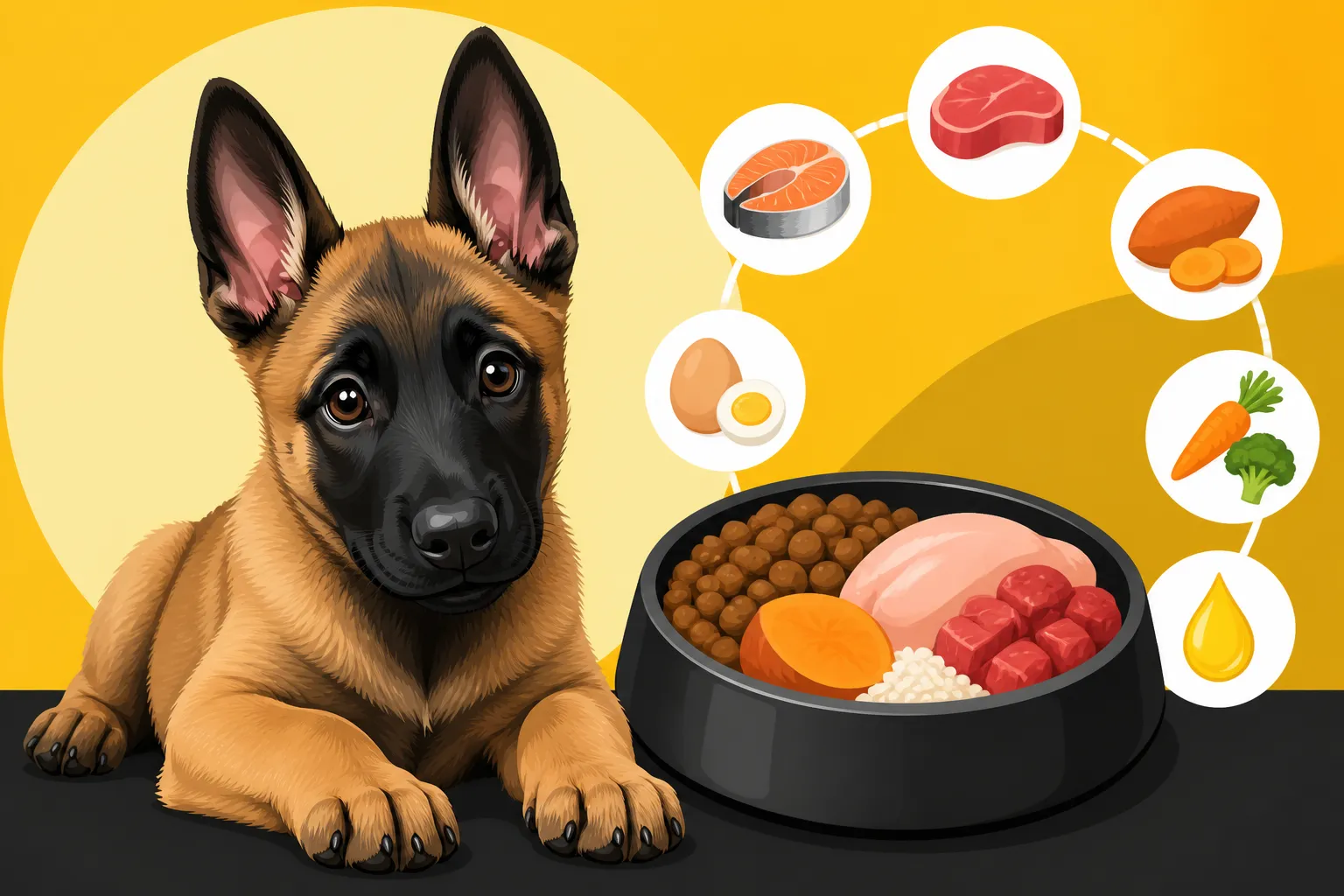
The Food a Malinois Puppy Should Grow On
Bringing home a Belgian Malinois puppy is an incredibly exciting time, but it often comes with a heap of questions, especially when it comes to what they should eat. Many new Malinois owners worry they’re either not feeding enough to support that incredible energy and rapid growth, or that they might be too generous, potentially setting their high-drive companion up for future health issues. This guide is here to walk you through the specifics of what a Malinois puppy needs in their bowl to grow into a strong, healthy adult without unnecessary risks.
Understanding Your Malinois Puppy's Unique Growth Needs
Belgian Malinois puppies are not like other puppies. They are often described as being born with a motor that's always running, and that intensity applies to their physical development too. They grow incredibly fast, but this rapid growth isn't without its caveats. Unlike some slower-maturing breeds, a Malinois puppy’s skeletal system develops at a breakneck pace, which makes proper nutrition absolutely crucial. Getting it wrong during these early, formative months can have long-lasting consequences for their joints and overall soundness.
The Rapid Development Phase
From the moment you bring your little land shark home, typically around eight weeks, until they reach maturity, usually between 12 and 18 months, your Malinois puppy is undergoing an astonishing transformation. Their bones are lengthening, their muscles are developing, and their internal organs are rapidly maturing. This intense period of growth requires a consistent supply of high-quality nutrients, but it’s not just about quantity; quality and balance are paramount. We're talking about a breed that will demand immense athleticism and durability throughout its life, whether in sport, work, or as a highly active companion. Laying down a solid foundation during puppyhood is non-negotiable for their long-term health and performance.
It's a delicate dance, supporting this explosive growth without encouraging it to happen too quickly. Think of it like building a skyscraper – you want strong, well-integrated materials, not a rushed, flimsy structure. The goal is steady, moderate growth, not maximum size as fast as possible.
The Pitfalls of Over-Nourishment
One of the biggest mistakes well-meaning owners make is overfeeding their Malinois puppy, or providing a diet with too many calories or an incorrect mineral balance. The thought process often goes, "My puppy is so active, it must need more food!" While their energy levels are off the charts, simply piling more calories into the bowl can be detrimental. Excessive weight gain during puppyhood places undue stress on rapidly developing joints, particularly the hips and elbows. This can exacerbate genetic predispositions to conditions like hip or elbow dysplasia, even in puppies from health-tested lines.
Beyond joint health, over-nourishment can also lead to other issues, such as uneven growth of bone and cartilage, which can manifest as lameness or other orthopedic problems later on. It’s a common misconception that a fat puppy is a healthy puppy; for a Malinois, a lean, athletic build is always the goal, even in puppyhood. As we often discuss, Why Pushing Growth Hurts a Malinois Puppy is a critical concept for any dedicated owner to grasp. Keeping them lean during this crucial growth period helps ensure their skeletal structure develops optimally, giving them the best chance for a sound, active life.
Essential Nutritional Components for Malinois Puppies
When choosing a food for your Malinois puppy, it’s vital to understand the key nutritional players. It's not just about "puppy food"; it's about large breed puppy food or formulas specifically designed for active, fast-growing breeds. These foods are formulated with specific nutrient profiles to support their unique developmental needs, aiming for controlled growth rather than accelerated bulk. Ignoring these specifics can inadvertently set your puppy up for health challenges.
High-Quality Protein: Building Blocks
Protein is the cornerstone of any growing puppy's diet, and for a Malinois, it's especially critical. These dogs are bundles of muscle and drive, and protein provides the amino acids necessary to build and repair those muscles, develop strong organs, and support a robust immune system. Look for foods where high-quality animal proteins are the first few ingredients. We’re talking about real meat sources like chicken, beef, lamb, turkey, or fish meal, not vague "meat by-products" or excessive plant-based proteins that aren't as bioavailable for carnivores.
The protein percentage in a good large breed puppy food will typically be in the high 20s to low 30s. This provides ample fuel for growth without being excessively high, which some theories suggest can contribute to accelerated growth. The key is quality and digestibility. A highly digestible protein source means your puppy's body can efficiently use the nutrients, leading to better muscle development and overall health.
Balanced Fats: Energy and Development
Fats often get a bad rap, but they are absolutely essential for a Malinois puppy. They are a concentrated source of energy, vital for a breed with such high caloric demands. More importantly, healthy fats provide essential fatty acids like Omega-3s and Omega-6s, which play crucial roles in brain development, vision, skin and coat health, and reducing inflammation. DHA (Docosahexaenoic Acid), a specific Omega-3 fatty acid, is particularly important for cognitive development in puppies.
Look for fat sources like chicken fat, salmon oil, flaxseed, or sunflower oil in the ingredient list. The fat content in a large breed puppy formula usually falls in the mid-teens to low 20s. This provides the necessary energy and essential fatty acids without making the food overly dense in calories, which could contribute to rapid weight gain. A good balance of fats will support their boundless energy, keep their coat gleaming, and aid in the development of a sharp mind.
The Critical Calcium-Phosphorus Ratio
This is perhaps the most crucial and often misunderstood aspect of feeding a large breed puppy like a Malinois. Calcium and phosphorus are minerals essential for bone growth, but their ratio and total amount are far more important than just high levels of either. For large breed puppies, a calcium-to-phosphorus ratio of around 1.1:1 to 1.4:1 is generally recommended, with a maximum calcium content of about 1.5% on a dry matter basis. Too much calcium, or an imbalance in the ratio, can severely interfere with proper bone development, leading to conditions like osteochondritis dissecans (OCD) and other skeletal abnormalities.
This is why feeding an "all life stages" food or an adult dog food to a Malinois puppy is a big no-no. Adult foods often have lower calcium levels suitable for maintenance, while some generic puppy foods might have calcium levels that are too high for rapid-growing large breeds. Similarly, supplementing calcium unnecessarily is extremely dangerous; remember, Why Extra Calcium Hurts a Malinois Puppy is not just a warning, it's a fundamental principle of Malinois puppy nutrition. Stick to a high-quality large breed puppy food specifically formulated to manage these critical mineral levels.
Navigating the World of Puppy Food Options
The pet food aisle, or the online shopping experience through places like Chewy, can be overwhelming. There are countless brands, formulas, and buzzwords. Understanding how to critically evaluate your options is key to making the best choice for your Malinois puppy’s health and future. Don’t just grab the first bag labeled "puppy food"; dig a little deeper.
Decoding AAFCO Statements and Labels
Every reputable dog food in the United States will have an AAFCO (Association of American Feed Control Officials) statement on its label. This statement is your assurance that the food meets certain nutritional standards. For a Malinois puppy, you want to see a statement that says the food is "Formulated to meet the nutritional levels established by the AAFCO Dog Food Nutrient Profiles for growth of large size dogs." If it only says "all life stages" or "growth," it might not be specifically tailored to the unique growth rate and mineral needs of a large, fast-growing breed.
Beyond the AAFCO statement, scrutinize the ingredient list. Ingredients are listed in descending order by weight. As mentioned, look for named animal protein sources at the top. Be wary of foods with excessive fillers like corn, wheat, or soy as primary ingredients, though some carbohydrates are necessary for energy. While these ingredients aren't inherently "bad," their prominence might indicate a lower overall nutritional density, which isn't ideal for a growing Malinois.
Kibble, Wet, Raw, and Fresh: Pros and Cons
The debate over food types is ongoing, and each has its proponents and detractors.
- Kibble: This is the most common and often the most convenient option. High-quality kibbles designed for large breed puppies are nutritionally complete and balanced. They're easy to store, measure, and tend to be more cost-effective. Many excellent brands offer specific large breed puppy formulas that adhere to the critical calcium and phosphorus ratios needed. For busy Malinois owners, the practicality of kibble is a major plus.
- Wet Food: While sometimes used as a topper or for palatability, wet food alone for a Malinois puppy can be quite expensive due to its high moisture content and lower caloric density. It's generally not recommended as the sole diet due to the sheer volume required to meet their nutritional needs.
- Raw Food: Some owners opt for a raw diet (BARF – Biologically Appropriate Raw Food). Proponents argue it's more natural and digestible. However, formulating a balanced raw diet for a rapidly growing large breed puppy is incredibly challenging and risky. It requires extensive knowledge to ensure the correct calcium-phosphorus ratio and other nutrient balances are met, which is often difficult without professional veterinary nutritional guidance. Incorrectly balanced raw diets can lead to severe developmental orthopedic diseases. The risk of bacterial contamination is also a significant concern. While Whether Raw Feeding Suits a Malinois in Training might be a question for adults, it's a very different consideration for puppies.
- Fresh Food (Cooked): Services like Ollie offer pre-portioned, human-grade cooked meals. These can be excellent options, often formulated by veterinary nutritionists. They offer the benefit of fresh ingredients while often providing balanced nutrition. The main drawback is typically the higher cost and the need for refrigeration. If considering a fresh food option, ensure it explicitly states it meets AAFCO guidelines for large breed puppy growth.
Selecting a Breed-Appropriate Formula
Given the Malinois's specific needs, a formula specifically labeled as "large breed puppy" is almost always the safest bet. These foods are designed to:
- Promote controlled growth: Preventing excessively rapid weight gain.
- Provide appropriate calcium and phosphorus levels: To support sound skeletal development.
- Offer balanced protein and fat: To fuel their high energy and muscle development without overdoing calories.
When in doubt, consult with your veterinarian. They can provide brand recommendations based on your puppy's individual needs, your budget, and their professional expertise. Remember, a cheap food now can lead to expensive vet bills later if it compromises their health during this critical growth period.
| Food Type | Pros | Cons | Key Consideration for Malinois Puppy |
|---|---|---|---|
| Kibble | Convenient, cost-effective, easily accessible, often nutritionally complete | Can be less palatable for some, quality varies greatly between brands | Must be a large breed puppy formula with controlled calcium/phosphorus. |
| Wet Food | Highly palatable, high moisture content | Expensive as sole diet, low caloric density means huge volumes needed | Rarely suitable as a primary diet. |
| Raw Food | "Natural," often high digestibility claims | Risk of nutrient imbalance (especially calcium/phosphorus), bacterial contamination, expensive | Highly discouraged without expert vet nutritionist guidance due to growth risks. |
| Fresh Food | High quality, fresh ingredients, often vet-formulated, palatable | Higher cost, requires refrigeration, often needs online subscription | Ensure it's balanced for large breed puppy growth and AAFCO compliant. |
Implementing a Controlled Feeding Schedule
Once you've chosen the right food, how you feed your Malinois puppy is just as important as what you feed them. A consistent, controlled feeding schedule is crucial for digestion, house training, and managing their energy levels. Free-feeding is generally not recommended for Malinois puppies, as it makes it harder to monitor intake and can contribute to overeating and rapid growth.
Portion Control: More Art Than Science
The feeding guidelines on the back of any dog food bag are just that: guidelines. They provide a starting point, but every Malinois puppy is an individual. Their metabolism, activity level, and growth rate will vary. You might have a puppy who burns through calories like a furnace, or one who is slightly less active during a particular growth spurt. The goal is to feed enough to maintain a lean body condition, where you can easily feel their ribs but not see them prominently, and they have a visible waist.
It truly is more art than science, requiring daily observation. If your puppy seems too thin, increase the portion slightly. If they're looking a bit chunky, reduce it. It's often better to slightly underfeed than overfeed, especially during rapid growth phases. This meticulous approach helps prevent excessive weight gain that can stress developing joints.
The Importance of Regular Weight and Body Condition Checks
Regularly weighing your Malinois puppy is a good habit to get into, especially in the first year. This helps you track their growth and ensure they're on a healthy trajectory. For example, knowing what a Malinois puppy weighs at four months and then The Weight a Malinois Hits by Six Months can help you gauge if they're growing at an appropriate rate. However, a scale doesn't tell the whole story. Body condition scoring is equally, if not more, important.
Learn to assess your puppy's body condition by sight and touch. You should be able to feel their ribs easily without pressing hard, see a distinct waist when viewed from above, and a tuck-up when viewed from the side. If you can see their ribs, they might be too thin. If you have to press to feel them, they're likely carrying too much weight. Your vet can show you how to accurately assess body condition. This ongoing assessment is key to adjusting food portions and ensuring healthy development. This is where Judging a Malinois's Condition by Hand truly comes into its own as a valuable skill.
Meal Frequency and Timing Considerations
Most Malinois puppies benefit from being fed three times a day until they are around 4-6 months old, then transitioning to two meals a day. This helps regulate their blood sugar, supports consistent energy levels, and is easier on their digestive system than one large meal. Splitting their daily ration into multiple meals also reduces the risk of bloat (gastric dilatation-volvulus), though Malinois are not considered as high risk as some other deep-chested breeds, it's always a consideration for any active dog.
Timing also matters, particularly if your Malinois is already showing signs of their high drive and engagement. Feeding around training sessions can be a strategic tool. For instance, feeding a portion after a rigorous training session can help them refuel effectively. Conversely, you generally don't want to feed immediately before intense exercise to avoid digestive upset. Understanding Meal Timing for a Malinois Puppy in Training can greatly enhance both their performance and their comfort.
Common Feeding Challenges and Solutions
Even with the best intentions and the right food, raising a Malinois puppy comes with its share of feeding challenges. Their intense nature can sometimes manifest in unusual eating habits or digestive sensitivities. Being prepared for these common issues can save you a lot of stress and ensure your puppy stays on track.
Picky Eaters and Food Refusal
While many Malinois are food-motivated machines, some can be surprisingly picky, especially if introduced to a wide variety of "human foods" or constantly offered different kibbles. A Malinois that refuses food might be testing boundaries, or they might genuinely not be feeling well. If your puppy skips a meal or two, offer the food again at the next scheduled feeding time. Most healthy puppies won't starve themselves. If they refuse food for more than 24 hours, or show other signs of illness (lethargy, vomiting, diarrhea), contact your vet immediately.
Avoid falling into the trap of constantly switching foods or adding tempting toppers. This can create a truly picky eater. Instead, stick to a consistent, high-quality large breed puppy food. If you must make a change, do it gradually over 7-10 days to avoid digestive upset, as detailed in Transitioning a Malinois to a Different Kibble. Sometimes, a little bit of plain warm water mixed into kibble can enhance its aroma and palatability without creating bad habits.
Managing Growth Spurts and Energy Demands
Malinois puppies experience rapid growth spurts where their caloric needs can temporarily increase. During these times, it might seem like they're a bottomless pit. While you shouldn't drastically increase their portions, it's okay to slightly adjust upwards if their body condition starts to look too lean. Monitor closely and return to their standard portion once the spurt subsides. These dogs are incredibly efficient at burning calories, and sometimes it feels like you're pouring food into a black hole. But remember, the goal is lean, controlled growth, not bulk.
It's also important to differentiate between genuine hunger and boredom or attention-seeking behaviors. A Malinois puppy needs immense mental and physical stimulation. If they're constantly looking for food, ensure their other needs are being met, including structured training, play, and mental puzzles. Their high energy, as described in How Much Exercise a Belgian Malinois Puppy Should Get, means they're burning a lot, but endless food isn't the answer to endless energy.
Avoiding Nutritional Imbalances
Beyond the calcium-phosphorus ratio, other nutritional imbalances can arise, particularly if owners try to home-cook meals without expert guidance or rely too heavily on supplements. Vitamins, trace minerals, and macronutrients all need to be present in appropriate amounts. For instance, too much fat can lead to pancreatitis, while deficiencies in certain vitamins can impact immune function or skin health.
The simplest way to avoid nutritional imbalances is to feed a complete and balanced commercial large breed puppy food from a reputable manufacturer. These foods are scientifically formulated to provide everything your puppy needs. If you're ever concerned about a specific nutrient or your puppy displays unusual symptoms, your veterinarian is the best resource for guidance. Don't self-diagnose or self-treat with supplements without professional advice.
Beyond the Bowl: Hydration and Supplementation
Feeding your Malinois puppy isn't just about the food in the bowl; it's also about what they drink and whether they need anything extra. Proper hydration is fundamental to every bodily function, and a high-drive, active puppy will need access to fresh water constantly. When it comes to supplements, the general rule of thumb for a well-fed puppy is "less is more."
Ensuring Adequate Water Intake
Access to fresh, clean water at all times is non-negotiable for a Belgian Malinois puppy. Their high energy levels, active metabolism, and tendency to run hot mean they can dehydrate quickly, especially after intense play or during warmer weather. Always have multiple water bowls available in different locations, both indoors and outdoors. Keep bowls clean to prevent bacterial growth, and refresh the water frequently.
If you're using a kennel or crate, ensure there’s a way for them to access water, such as a spill-proof bowl or a water bottle attached to the crate side. When traveling or during training sessions, always bring a portable water source. Dehydration can lead to lethargy, loss of appetite, and more serious health issues. A well-hydrated puppy is a healthy puppy, and it helps with proper digestion and nutrient absorption.
When Supplements Might Be Considered (and often, when not)
For a Malinois puppy eating a high-quality, AAFCO-compliant large breed puppy food, additional supplements are rarely necessary and can often be harmful. As discussed, adding calcium can upset the delicate mineral balance crucial for bone development. Most reputable puppy foods already contain appropriate levels of vitamins, minerals, and fatty acids.
There are a few exceptions where a veterinarian might recommend a specific supplement:
- Probiotics: If your puppy experiences digestive upset or Soft Stools in a Malinois Under Training Stress, a probiotic might be recommended to help rebalance gut flora. Many good quality foods now include prebiotics and probiotics.
- Omega Fatty Acids: While good foods contain these, if your puppy has specific skin conditions or your vet identifies a need, a fish oil supplement might be suggested.
- Joint Supplements: Generally, these are not recommended for puppies on a proper large breed puppy diet, as the focus is on controlled growth rather than adding more joint-supporting ingredients to an already balanced diet. Excessive supplementation can sometimes do more harm than good, especially if it interferes with mineral absorption or other dietary balances.
Always consult your veterinarian before adding any supplement to your Malinois puppy's diet. They can assess whether there's a genuine need and recommend appropriate dosages, preventing accidental overdoses or imbalances. Stick to the basics, focus on quality food and water, and your Malinois puppy will have the best foundation for a long, healthy life.
Disclaimer
This article is for general informational purposes only and does not constitute professional advice. Laws, prices and regulations vary by location and change over time. Consult a qualified professional for guidance on your specific situation.