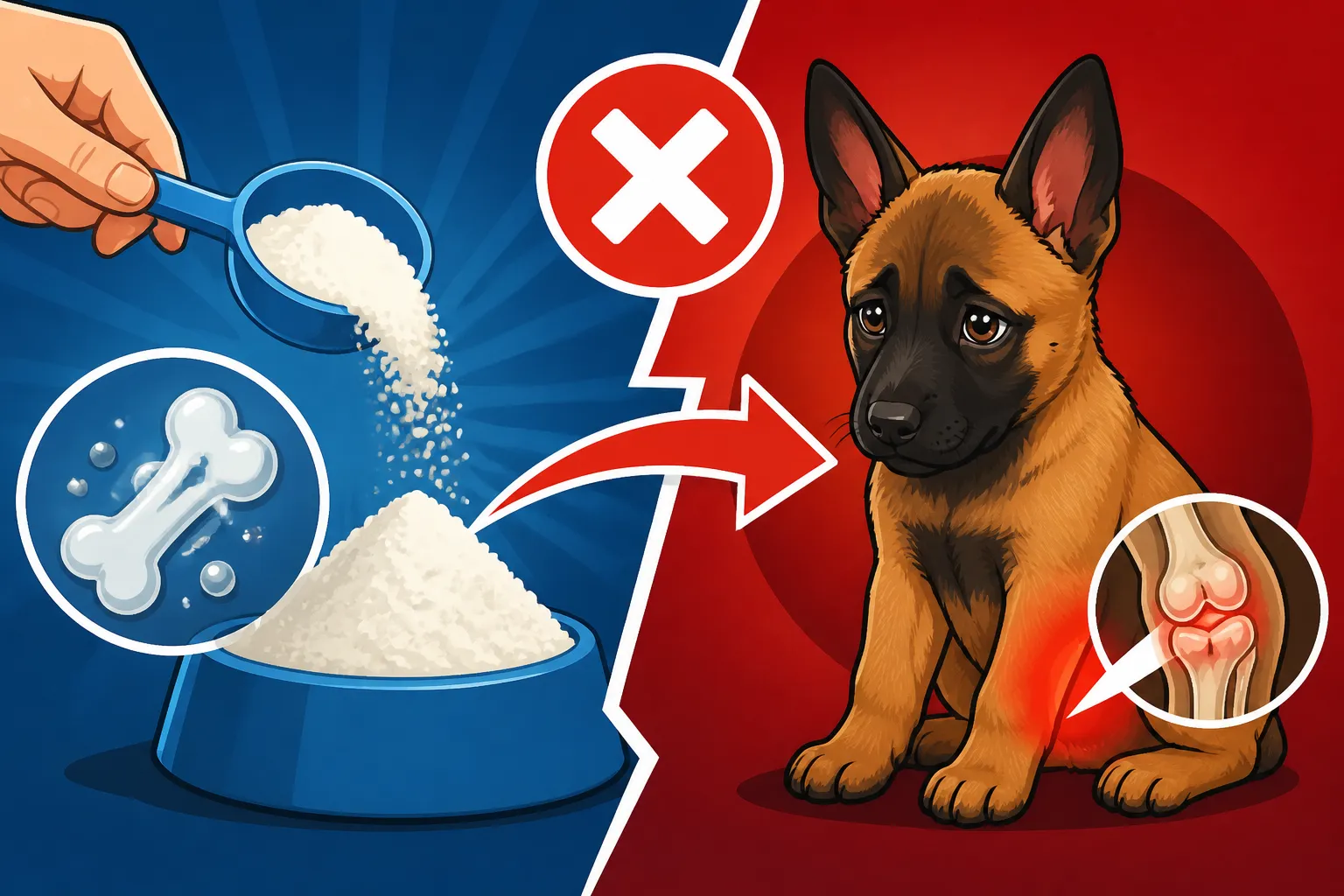
Why Extra Calcium Hurts a Malinois Puppy
It's completely natural to want to give your Belgian Malinois puppy the absolute best start in life. Many well-meaning owners, thinking more is better, might be tempted to add calcium supplements or certain human foods to their growing pup's diet, hoping to build stronger bones. However, for a fast-growing, large-breed dog like a Malinois, this approach can actually cause more harm than good, leading to serious developmental orthopedic issues. This guide will explain why extra calcium can hurt your Malinois puppy and how to ensure they get precisely what they need for healthy growth.
The Delicate Dance of Calcium and Puppy Growth
You might imagine strong bones need lots of calcium, and you wouldn't be wrong in principle. Calcium is crucial for bone development, nerve function, muscle contraction, and a host of other bodily processes. The problem isn't calcium itself, but rather the amount and balance of calcium, especially for a rapidly growing breed like the Belgian Malinois. These dogs grow incredibly fast in their first year, often going from a tiny fluffball to a powerful, athletic dog in a matter of months. This rapid growth period is a critical window where nutritional imbalances, particularly with minerals like calcium and phosphorus, can have long-lasting, detrimental effects.
Think of it like building a house. You need strong materials, but if you rush the process or use too much of one ingredient, the structure might become weak or malformed rather than solid. A puppy's body is constantly remodeling bone, depositing new bone tissue, and removing old. This process is highly regulated by hormones, primarily parathyroid hormone and calcitonin, which respond to the levels of calcium in the blood. If these levels are too high or too low, the system can go awry. Puppies, especially large breeds, are particularly sensitive to dietary calcium levels because their bodies are less able to regulate calcium absorption from the gut compared to adult dogs. They'll absorb almost all the calcium you give them, regardless of their actual needs, which is where the trouble begins.
The ideal puppy food is formulated to provide the precise balance of nutrients for growth, including calcium and phosphorus, and their ratio. When you start adding extra calcium, you throw off this delicate balance, bypassing the careful work done by veterinary nutritionists who design these diets. This often leads to an excessive intake of calcium, which the puppy's body is ill-equipped to handle, setting the stage for significant health problems down the road. It's a classic case of too much of a good thing turning bad.
The Hidden Dangers of Excess Calcium for Growing Malinois
For a Belgian Malinois puppy, the consequences of too much dietary calcium can be severe, primarily manifesting as developmental orthopedic diseases (D.O.C.s). These are conditions that affect the bones, cartilage, and joints as the puppy grows, and they can lead to chronic pain, lameness, and a shortened working life. It's a heartbreaking reality for owners who only wanted to help their dogs.
One of the most common issues is Osteochondritis Dissecans, or OCD. This happens when the cartilage and underlying bone fail to develop properly. Instead of smooth, healthy joint surfaces, pieces of cartilage can separate and float freely within the joint, causing inflammation, pain, and lameness. It often affects the shoulders, elbows, hocks, and stifles. Imagine trying to run and jump with a pebble constantly rubbing inside your knee joint – that's what your Malinois might be experiencing. Another concern is an increased risk of hip and elbow dysplasia. While genetics play a significant role in these conditions, diet, particularly excess calcium, can exacerbate their severity in genetically predisposed individuals. The cartilage can't keep up with the rapid bone growth, leading to poor joint formation.
Moreover, excessive calcium can interfere with the absorption of other vital minerals, such as zinc, which can lead to other health issues. It's a cascade effect: what seems like a simple addition to the diet can upset the entire physiological equilibrium needed for robust, coordinated growth. This is especially critical for a breed like the Malinois, which is built for intense physical activity and demands sound, healthy joints throughout its life. Why Pushing Growth Hurts a Malinois Puppy delves deeper into how over-nutrition in general can negatively impact your pup's development, and calcium is a major part of that equation.
Feeding Your Malinois Puppy for Optimal Bone Health
The best way to ensure your Malinois puppy receives the correct amount of calcium is to feed a high-quality, complete, and balanced puppy food specifically formulated for large breeds. These diets are carefully crafted by veterinary nutritionists to contain the optimal calcium-to-phosphorus ratio and appropriate overall mineral levels to support controlled, healthy growth. Look for foods that state they meet AAFCO (Association of American Feed Control Officials) nutritional standards for "growth of large breed dogs." Many reputable brands, available through retailers like Chewy or Amazon, offer such formulas. Some specialty fresh food services, such as Ollie, also formulate balanced puppy diets, though it's still crucial to confirm they are suitable for large breed growth and discuss any concerns with their nutritionists.
Avoid free-feeding your Malinois puppy. Instead, feed measured meals according to the guidelines on the food packaging, adjusting as needed to maintain a lean body condition. A lean puppy is a healthy puppy when it comes to joint development. You should be able to easily feel their ribs without them being visible. If your puppy seems hungry, increase their regular food ration slightly, rather than adding supplements or other foods that might disrupt their nutritional balance. You can learn more about appropriate puppy diets in The Food a Malinois Puppy Should Grow On.
Resist the temptation to add calcium supplements, milk, yogurt, cottage cheese, or raw bones to their diet, unless specifically instructed and monitored by a veterinarian. Even small amounts of these items, when added to an already balanced diet, can push calcium levels into the danger zone. Remember, your puppy's body is already working hard to manage its rapid growth; introducing variables without professional guidance is risky. If you're considering a raw diet, it's absolutely vital to work with a board-certified veterinary nutritionist to ensure it's balanced for a growing large breed puppy, as homemade raw diets are notoriously difficult to balance correctly and often contain dangerous calcium and phosphorus imbalances.
Recognizing the Signs of Calcium Imbalance and When to Seek Help
While prevention is key, it's important to be aware of the signs that your Malinois puppy might be experiencing issues related to dietary imbalances, including excessive calcium. These signs often manifest as lameness or gait abnormalities, but they can be subtle at first and progress over time. Remember, early intervention can make a significant difference in outcomes.
Look out for:
- Intermittent or shifting lameness: Your puppy might favor one leg, then another, or seem fine one day and limping the next. This can sometimes be a sign of developmental issues like panosteitis, which can be exacerbated by rapid growth and dietary imbalances.
- Stiffness or reluctance to play: If your normally energetic Malinois puppy seems stiff after resting, struggles to get up, or doesn't want to engage in typical puppy play, it could be a red flag.
- Pain responses: Yipping or crying when touched in certain areas, particularly around joints.
- Abnormal gait: A wobbly gait, an awkward way of running, or bunny hopping (using both back legs together) could indicate underlying joint discomfort or improper bone formation. The article The Shifting Limp in a Six Month Malinois might offer further insights into early lameness issues.
- Swelling in joints: Though less common with calcium excess, any noticeable swelling around joints should always warrant a vet visit.
If you observe any of these symptoms, do not hesitate to contact your veterinarian immediately. They will likely perform a thorough physical examination, potentially recommend X-rays to assess bone and joint development, and discuss your puppy's diet in detail. Be completely honest about everything you've been feeding, including treats, table scraps, and any supplements you might have added. Your vet can provide specific guidance on adjusting your puppy's diet and may recommend diagnostics like Screening a Belgian Malinois Puppy for Hip Laxity or The Age a Malinois Is Ready for Final Hip Films if joint issues are suspected. Remember, proactive veterinary care is your best ally in ensuring your Malinois grows into a healthy, capable adult.
Here's a quick reference for optimal calcium management in your Malinois puppy:
| Aspect | Optimal Practice for Malinois Puppy | Potentially Harmful Practice |
|---|---|---|
| Diet | High-quality large-breed puppy food (AAFCO certified) | Adult dog food, generic puppy food not specified for large breeds |
| Calcium Sources | Nutritionally balanced kibble, veterinary-approved fresh food | Dairy products (milk, yogurt), cottage cheese, calcium supplements, raw bones |
| Feeding Method | Measured meals, portion control for lean body condition | Free-feeding, overfeeding to encourage rapid growth |
| Supplements | None, unless prescribed by a vet for specific medical need | Over-the-counter calcium supplements, multi-vitamins with added calcium |
| Growth Rate | Steady, moderate growth to reach adult size over time | Rapid, accelerated growth encouraged by high-calorie, high-calcium diet |
| Vet Consultation | Regular puppy check-ups, immediate visit for lameness or stiffness | Self-diagnosing, delaying vet visits, adjusting diet without professional advice |
Conclusion: Balanced Nutrition is Your Puppy's Best Friend
Raising a Belgian Malinois puppy is an incredibly rewarding experience, but it comes with unique responsibilities, especially when it comes to their health and development. While your intentions might be pure, providing extra calcium to a growing Malinois puppy is a common mistake that can have serious, long-term health consequences. The best thing you can do for your athletic companion is to provide a meticulously balanced, large-breed puppy food and let their body grow at its natural, healthy pace. Trust the science behind the food, consult your veterinarian for any concerns, and focus on consistent training and socialization. By doing so, you'll be setting your Malinois up for a lifetime of sound joints and peak performance. The First Week With a Belgian Malinois Puppy and How Much Exercise a Belgian Malinois Puppy Should Get also cover crucial aspects of their early development and well-being that complement proper nutrition.
Disclaimer
This article is for general informational purposes only and does not constitute professional advice. Laws, prices and regulations vary by location and change over time. Consult a qualified professional for guidance on your specific situation.