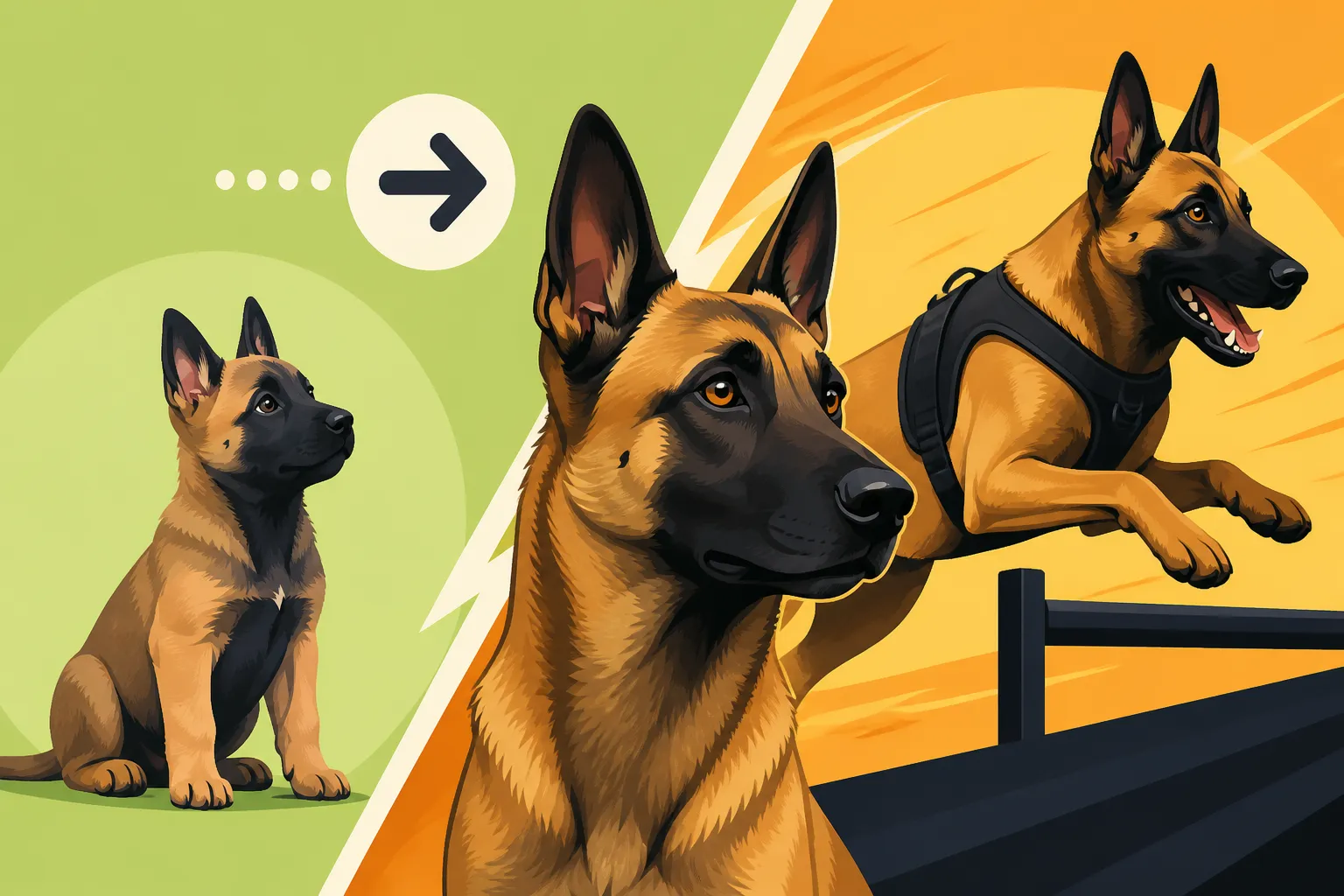
The Age a Belgian Malinois Can Start Real Conditioning
It's a question that weighs heavily on the hearts and minds of every Belgian Malinois owner, especially those of us with those little land sharks running around: when can I really start putting this dog to work? You see that boundless energy, that incredible drive, and you just want to harness it, to sculpt it into the magnificent athlete you know your Malinois is destined to be. But there's always that nagging fear – pushing too hard, too fast, and risking long-term injury to those precious joints and growing bones. This guide is all about navigating that tricky timeline, understanding the crucial stages of your Malinois's physical development, and knowing exactly when it's truly safe to ramp up into serious conditioning work.
Understanding Malinois Growth Plates: Why Patience is Key
When you look at your gangly Malinois puppy, all legs and ears, it's hard to imagine they'll ever be the finely tuned athletes you see in videos. But that growth, that incredible transformation, happens because their bones are still developing. And at the end of each long bone, there are these areas of cartilage called growth plates, or epiphyseal plates. Think of them as soft, vulnerable zones where new bone is being created, gradually hardening and fusing as your dog matures.
These growth plates are much weaker than the surrounding bone, ligaments, or tendons. They're basically the Achilles' heel of a growing dog's skeletal system. If you apply too much stress, too much impact, or too much repetitive motion before these plates have completely closed and ossified (turned into solid bone), you risk causing irreversible damage. This isn't just a minor tweak; it can lead to permanent lameness, abnormal bone growth, and debilitating arthritis down the line. We want our Malinois to have a long, healthy, working life, not be retired with chronic pain at a young age.
The Vulnerable Stages of Puppy Development
From the moment they're born until well into their adolescence, Malinois puppies are a whirlwind of growth and change. Their bones are growing rapidly, and those growth plates are wide open. In large, fast-growing breeds like the Belgian Malinois, these plates typically don't fuse completely until they're much older than smaller breeds. While a small terrier might have fully closed growth plates by six to eight months, a Malinois often won't reach full skeletal maturity until 18 to 24 months of age, sometimes even a bit later for larger males.
This means that during their first year, and often well into their second, your Malinois is surprisingly fragile beneath that tough, driven exterior. Everything from jumping off high surfaces, repetitive hard running on pavement, or intense agility work can put undue strain on these vulnerable areas. It’s a huge temptation to get them ripping and tearing because their minds are so ready, but their bodies simply aren’t. It's a real test of a Malinois owner's patience, knowing your dog is ready to go but needing to hold them back for their own good.
It's also important to remember that genetics play a role. A puppy from a line known for slower maturation might need even more time. Always keep an eye on The First Year of a Belgian Malinois's Growth to understand the typical milestones.
The Risks of High-Impact Work Too Soon
So, what exactly happens if you push a young Malinois too hard, too soon? The consequences can be heartbreaking and costly, both emotionally and financially. One common issue is epiphyseal fractures – a fracture through the growth plate itself. Because these plates are still soft, they can shear or separate under stress, leading to immediate pain and often requiring surgery. Even if it heals, it can lead to a limb that is shorter or deviates in angle from the other, causing gait issues and joint strain for life.
Beyond acute fractures, repetitive microtrauma from high-impact activities can also cause problems. Imagine tiny, repeated stresses on those delicate growth areas. This can lead to conditions like osteochondrosis dissecans (OCD), where cartilage fails to develop properly and can detach, causing pain and lameness, particularly in the shoulders, elbows, and hocks. Many Malinois are predisposed to joint issues like hip and elbow dysplasia, and while genetics are a primary factor, environmental influences, including excessive stress on developing joints, can exacerbate these conditions. This is why discussions around The Hip and Elbow Numbers Behind a Malinois Clearance are so critical for breeders and owners alike.
It's a common frustration to see a dog with so much energy and drive seemingly "wasting" their puppyhood on walks and basic obedience. But truly, you're investing in their future health and longevity. Avoid things like forced long-distance running, intense jumping over hurdles, or prolonged, high-speed sprints on hard surfaces. These activities, while seemingly harmless for an adult dog, are exactly the kinds of stressors that can damage a growing Malinois. Believe me, you do not want to deal with the chronic pain and limited mobility that can result from a poorly managed puppyhood. Understanding Why Pushing Growth Hurts a Malinois Puppy can really drive home the importance of this restraint.
Safe Conditioning: Building Foundation Before Intensity
So, if intense work is off the table, what can you do with that whirlwind of a Malinois puppy? The answer lies in building a strong foundation through low-impact, controlled activities that strengthen muscles, improve coordination, and build stamina without stressing delicate growth plates. Think of it like building a house: you don't start with the roof; you meticulously lay the foundation.
This phase is actually incredibly important for developing body awareness and proprioception – the sense of where their body parts are in space. These are critical skills for any working dog, preventing injuries later on. Plus, it's a fantastic opportunity to deepen your bond and teach your Malinois impulse control, which is invaluable for a breed known for its intense drive.
Low-Impact Activities for Young Malinois
For puppies under 12-18 months, focus on activities that allow them to move naturally and choose their own pace.
- Controlled Leash Walks: Regular, moderate-length walks on varied, soft terrain like grass or dirt trails are excellent. These build muscle and stamina without the jarring impact of pavement or forced speed. Let them sniff and explore, allowing them to engage their minds as well as their bodies.
- Off-Leash Exploration in Safe, Contained Areas: If you have access to a securely fenced yard or field, allowing your puppy to run and play at their own discretion is perfect. They'll self-regulate their activity levels, taking breaks when they need to. Just ensure the surface isn't slippery or uneven to avoid awkward falls.
- Swimming: This is gold for young Malinois! Swimming is a non-weight-bearing exercise that builds incredible muscle strength, cardiovascular fitness, and joint flexibility without any impact. Start slowly, make it fun, and ensure safety with a well-fitting life vest, especially for puppies. How Much Exercise a Belgian Malinois Puppy Should Get dives into this further.
- Gentle Hill Work: Short, gentle inclines can build hindquarter strength without high impact. Walk up and down hills at a slow, controlled pace. Avoid steep, slippery slopes.
- Puzzle Toys and Mental Stimulation: Don't forget the mental component! A tired mind is just as important as a tired body for a Malinois. KONGs stuffed with treats (perhaps some high-quality food from a brand like Ollie or Chewy), snuffle mats, and basic obedience training sessions tire them out mentally without any physical risk. This builds engagement and focus, which are critical for any future training.
- Body Awareness Exercises: Introduce things like walking over cavalettis (low bars on the ground), weaving through cones, or stepping over low objects. These teach coordination and how to place their feet deliberately. You can even find basic agility equipment like low tunnels or pause tables on platforms like Amazon, but keep jumps very low or non-existent for young dogs.
A key principle here is controlled activity. Avoid scenarios where your Malinois is forced into extreme exertion or high-impact maneuvers that they haven't chosen themselves. This is a crucial distinction between healthy play and potentially damaging "conditioning."
Gradual Progression to Intermediate Training
Once your Malinois hits that 12-18 month mark, and ideally, after a vet confirms good joint health, you can slowly start to increase the intensity and duration of their activities. However, "slowly" is the operative word. Don't go from zero to sixty overnight.
- Lengthening Walks/Hikes: You can start extending the duration of your walks and hikes, venturing onto more challenging, but still soft, terrain. A good rule of thumb is to increase duration by no more than 10-15% per week.
- Introducing Jogging: If you're a runner, you can start to introduce short, controlled jogs on soft surfaces. Again, build up gradually. A few minutes at a slow pace, then increase duration as your dog builds stamina. Always watch for signs of fatigue or discomfort.
- Basic Agility/Obedience Work: If you plan on engaging in sports like agility, IGP, or French Ring, this is the time to start more structured, but still low-impact, foundational work. Focus on body mechanics, tight turns, and obstacle familiarity without the speed and height of competitive work. For example, jump bars should remain on the ground or just barely off it.
- Cavaletti and Ladder Work: These tools become even more valuable now. They help strengthen core muscles, improve stride length, and enhance body control, which are all vital for preventing injuries in high-speed sports.
- Short, Controlled Sprints: On soft, even ground, you can introduce very short, controlled sprints (e.g., chasing a favorite tug or ball for a short distance). Always warm up thoroughly and cool down. Avoid sudden stops or sharp turns on hard surfaces.
Remember, the goal is progressive overload – gradually increasing the demand on the body so it adapts and gets stronger. But with a Malinois, because their minds are so willing, it's easy to push their bodies too far. Always err on the side of caution. Consider that a strong foundation built over time will serve them far better than a rushed start. Many people wonder When a Malinois Finishes Growing and Fills Out, and understanding this helps manage expectations for intense work.
When to Amp Up the Intensity: Signs of Maturity
The real turning point for "serious" conditioning for a Belgian Malinois usually falls between 18 and 24 months of age. This is a general guideline, not a hard-and-fast rule written in stone. Every dog is an individual, and some may mature faster or slower than others. What we're looking for are clear signs of both physical and mental maturity.
It's tempting to think that because your Malinois looks full-grown at 12-14 months, they are ready for anything. But while they might reach their adult height by then, their bones are still remodeling and strengthening, and those crucial growth plates are still sealing up. Think of it like a freshly poured concrete slab – it might look solid, but it needs time to fully cure and reach maximum strength.
Physical Maturity: More Than Just Height
The most important indicator of readiness for intense conditioning is the closure of growth plates. While only X-rays can definitively confirm this, vets typically advise waiting until 18-24 months for large breeds like Malinois. At this age, the dog's skeleton is generally considered fully mature and robust enough to handle the stresses of higher-impact, repetitive, or strenuous activities.
Beyond growth plate closure, observe these physical indicators:
- Muscle Development: Your Malinois should have a well-developed, lean, and athletic musculature. They shouldn't look gangly or like a puppy anymore. You should feel dense muscle over their frame.
- Coordination and Balance: An adult Malinois should move with purpose, precision, and grace, demonstrating excellent coordination. They should be able to navigate varied terrain without stumbling and perform movements cleanly.
- Stamina: By this age, with appropriate foundational exercise, your Malinois should have developed significant stamina, able to sustain moderate activity for extended periods without tiring excessively.
- Soundness: Crucially, your dog should be moving soundly, with no limping, stiffness, or signs of discomfort after exercise. If you notice any of these, it's a red flag to consult your vet before increasing intensity.
It's also highly advisable to have a full veterinary check-up, including discussion of their joint health. If you haven't already, getting preliminary or final hip and elbow clearances around 18-24 months can give you valuable insight into their skeletal structure. This is a good time to consider specific joint supplements, especially for dogs headed into demanding sports. You can find quality options on Chewy or Amazon, but always consult your vet about the right formula and dosage. Joint Supplements for a Working Belgian Malinois is a good read on this topic.
Mental Maturity and Readiness for Advanced Work
Physical readiness is only half the battle; mental maturity is just as important. A truly mature Malinois will possess a level of focus, impulse control, and emotional regulation that allows them to perform complex tasks safely and effectively.
- Sustained Focus: They should be able to maintain focus on tasks for longer periods, even with distractions. This is crucial for precise movements and executing commands in dynamic environments.
- Impulse Control: A mature Malinois can control their impulses, waiting for cues rather than anticipating them. This is vital in any sport or working discipline where a premature move can lead to injury or failure.
- Problem-Solving Skills: Their ability to think through challenges, whether it's navigating an obstacle course or solving a complex scent puzzle, indicates a mind ready for advanced training.
- Resilience and Recovery: They should be able to handle pressure and setbacks without shutting down or becoming overly stressed. And after a demanding session, they should be able to settle and recover appropriately.
Bringing a Malinois to this level of mental readiness is a journey that starts in puppyhood with consistent, positive reinforcement training, socialization, and clear boundaries. The Age a Belgian Malinois Puppy Starts Training provides more insights into establishing these early foundations. You'll find yourself reaching for quality training treats and durable toys, often available in bulk from places like Chewy or Amazon, to keep that intense mind engaged.
Monitoring Your Malinois and Adjusting the Program
Even when your Malinois has reached full physical and mental maturity, the conditioning journey isn't a "set it and forget it" kind of deal. It's an ongoing process of observation, adjustment, and careful management. Just like human athletes, dogs can have off days, experience minor strains, or just not be feeling their peak. You are their coach, their trainer, and their biggest advocate.
Ignoring subtle signs of discomfort or pushing through fatigue can quickly derail all your careful planning and lead to serious injury. Remember, Malinois are incredibly stoic and often driven to please, sometimes to their own detriment. They will push themselves until they drop if you ask them to, so it’s your responsibility to know when to ease up.
Listening to Your Dog's Body Language
Your Malinois will tell you when something isn't right, but you have to know how to listen. Here are some key things to watch for:
- Changes in Gait: Is there a subtle limp, a shorter stride, or a shift in weight? Is one leg lagging? Any change in how they move is a red flag. Pay attention after rest, as stiffness can be more noticeable then.
- Reluctance to Perform: If your usually eager Malinois seems hesitant to jump, run, or engage in an activity they normally love, don't dismiss it. This can be a sign of discomfort.
- Excessive Licking or Chewing: Is your dog repeatedly licking or chewing at a specific limb, joint, or area of their body? This self-grooming can indicate pain or irritation.
- Behavioral Changes: Are they more irritable, withdrawn, or vocal than usual? Pain can manifest as behavioral changes.
- Swelling or Heat: Visually inspect and gently palpate (feel) your dog's joints and muscles regularly. Any swelling, heat, or tenderness to the touch should prompt concern.
- Decreased Performance: A sudden drop in speed, stamina, or coordination during a training session or trial could be a sign that something is amiss.
Keep a training log! Note down the type, duration, and intensity of workouts, as well as how your dog felt afterwards. This helps you spot patterns and identify what might be causing issues. This diligent observation can save you a lot of heartache and vet bills. If you do notice something, it's better to pause and assess rather than push through. Muscle Strains in a Belgian Malinois details common issues that can arise.
Working with Professionals for a Tailored Plan
While you know your dog best, don't underestimate the value of professional guidance. A team approach will yield the best results for conditioning your Malinois safely and effectively.
- Veterinarian: Regular check-ups are non-negotiable. Discuss your training goals with your vet. They can help monitor your dog's overall health, recommend appropriate preventive care, and address any concerns promptly. They can also advise on supplements or diet adjustments as needed.
- Canine Sports Medicine Vet or Physical Therapist: If you're serious about high-level sport, consider consulting a veterinarian specializing in sports medicine or a certified canine rehabilitation therapist. These professionals can design a conditioning program tailored to your dog's specific needs, identify any subtle imbalances or weaknesses, and help prevent injuries. They can also provide guidance on proper warm-up and cool-down routines, which are vital for any working dog. If an injury does occur, they are invaluable for guidance on rehabilitation. Physical Therapy Prices for a Belgian Malinois can give you an idea of the investment involved in proper rehab.
- Experienced Trainers/Decoys: Work with trainers who understand the nuances of conditioning for working breeds. They can help you implement exercises safely, correctly, and progressively. A good decoy in bite work, for example, knows how to protect a young dog's body while still building drive and technique.
By combining your keen observation skills with professional expertise, you can create a conditioning plan that not only maximizes your Belgian Malinois's athletic potential but also safeguards their long-term health and well-being. It's a journey of dedication and patience, but the reward is a sound, healthy, and happy working partner by your side for many years.
| Age Range | Recommended Activities (Low Impact) | Activities to Avoid (High Impact) | Key Focus |
|---|---|---|---|
| 8 weeks – 12 months | Controlled walks, short play sessions, swimming, mental games, body awareness exercises | Forced running, jumping, intense agility, hard stops/turns, prolonged fetch on hard surfaces | Foundation building, mental engagement, socialization, gentle muscle development |
| 12 months – 18 months | Longer walks/hikes, gentle jogging on soft surfaces, basic obedience with body control, low-height agility obstacles | High jumps, sustained sprints, aggressive bite work, repetitive impact activities | Gradual increase in duration and controlled intensity, continued mental stimulation |
| 18 months – 24 months+ | Progressive conditioning (after vet clearance), agility at full height/speed, structured bite work, advanced endurance activities | Over-training, pushing through pain, ignoring warning signs, abrupt changes in intensity | Peak conditioning, sport-specific training, injury prevention, maintenance |
Disclaimer
This article is for general informational purposes only and does not constitute professional advice. Laws, prices and regulations vary by location and change over time. Consult a qualified professional for guidance on your specific situation.