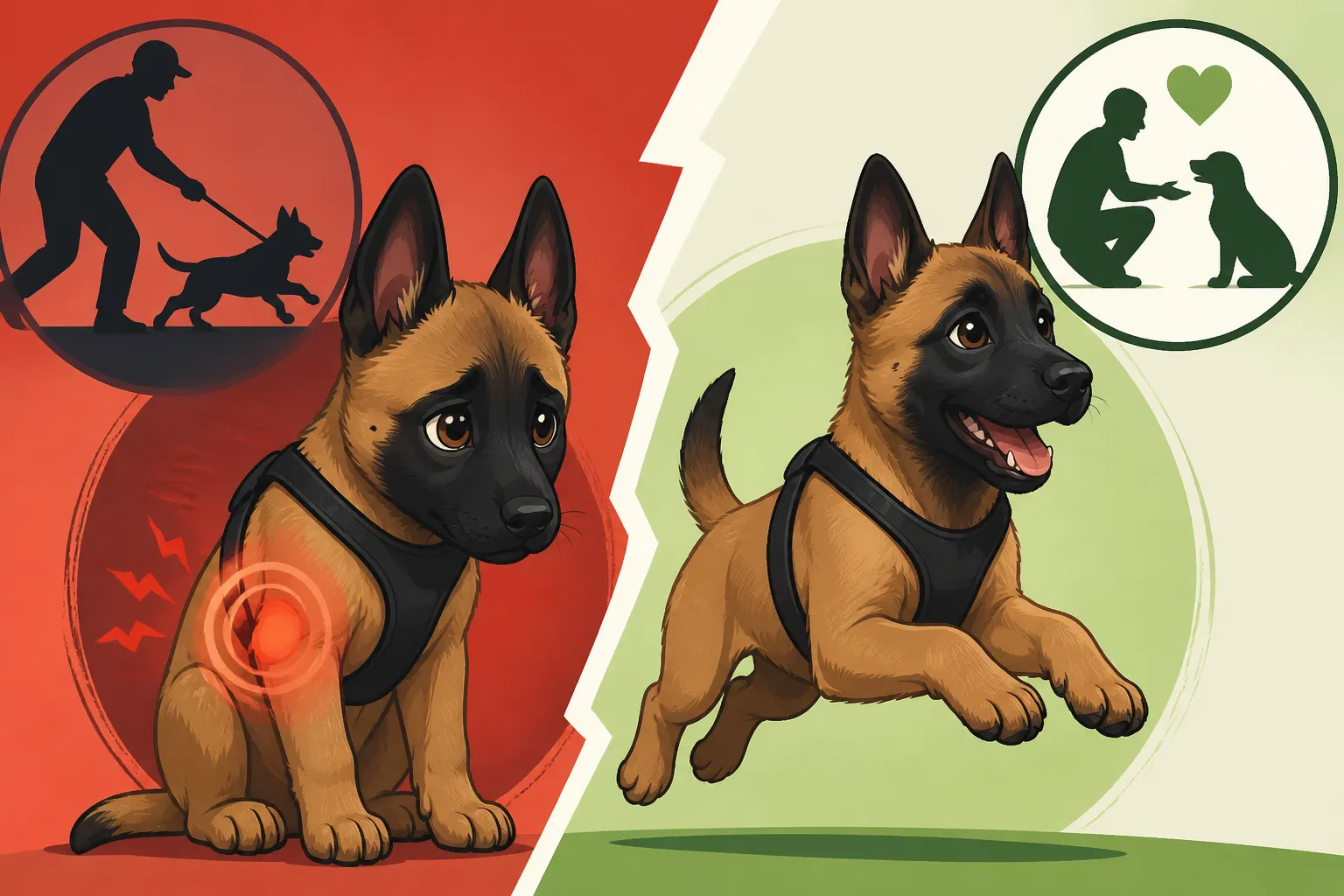
Why Pushing Growth Hurts a Malinois Puppy
It's incredibly exciting to watch a Belgian Malinois puppy grow, transform from a gangly bundle of energy into that powerful, athletic dog you know they're meant to be. We all want to give our pups the absolute best start in life, and it's easy to think that means feeding them generously to get them big and strong as quickly as possible. However, this well-intentioned eagerness to "push" their growth can actually lead to significant, long-term health problems. This guide is here to explain why accelerating a Malinois puppy's growth can be detrimental and how you can support their healthy development at a natural, steady pace.
The Intricate Process of Malinois Puppy Growth
A Belgian Malinois puppy’s development is a marvel, but it’s a marathon, not a sprint. Their bodies are designed for rapid early growth followed by a more gradual, steady progression towards maturity. Understanding this natural timeline is crucial for proper care.
Rapid Early Development From Birth to Four Months
The first few months of a Malinois puppy’s life are a period of explosive growth. Their bones are elongating quickly, muscles are starting to develop, and their internal organs are rapidly maturing. At this stage, they are essentially miniature versions of their adult selves, but with incredibly vulnerable systems. Their growth plates, the soft areas at the ends of long bones where new bone tissue forms, are wide open and incredibly susceptible to injury or abnormal development. The nutritional demands are high, but it's about providing the right kind of nutrition, not just more of it. Overfeeding during this rapid phase can put undue stress on these delicate structures. Imagine trying to build a skyscraper without letting the concrete properly cure between floors – it might go up fast, but the integrity will be compromised.
Steady Adolescent Growth From Four to Twelve Months
As your Malinois puppy moves into its adolescent phase, typically from four months up to a year, the lightning-fast growth rate of early puppyhood begins to taper off. While they'll still gain height and weight, the growth is less dramatic. Their bodies are starting to consolidate and strengthen, with bone density increasing, and muscle mass building. However, those crucial growth plates are often still open, sometimes not closing completely until 14-18 months of age for a large, active breed like the Malinois. This means that even during this steadier growth period, excessive weight gain or over-nutrition can still predispose them to orthopedic issues. It's a critical window for balanced nutrition and appropriate exercise, allowing their skeletal system to mature without excessive strain. They might appear to be filling out rather than just shooting up in height.
Maturation and Filling Out Beyond One Year
Many owners might think their Malinois is "done" growing around 10-12 months when they reach their adult height. However, a Malinois, especially a working line dog, continues to mature and fill out for quite some time after that. They may not gain much more height, but their chest will deepen, muscles will broaden, and bone density will continue to improve. This process can extend well into their second year, sometimes even closer to two and a half or three years old for full structural maturity. This "filling out" phase is less about rapid growth and more about developing the lean, powerful physique characteristic of the breed. It's why a dog can look quite gangly at 12 months and then suddenly appear much more substantial at 18 or 24 months, even without gaining excessive weight.
The Temptation to "Grow Them Big" and Its Pitfalls
It’s a natural inclination to want a big, impressive dog, and for a powerful breed like the Belgian Malinois, that desire can be even stronger. However, this mindset often leads to practices that are counterproductive to long-term health.
Misconceptions About Size and Strength
There's a common misconception that a bigger Malinois is automatically a stronger, more capable dog. We look at impressive adults and want our puppies to get there yesterday. However, what we truly want in a Malinois is lean, athletic strength and soundness, not simply mass. An oversized Malinois, especially one that has grown too quickly, often carries excess weight and can be prone to joint stress and structural problems. The breed standard, for example, calls for a male Malinois to typically fall within The Sixty to Eighty Pounds a Male Malinois Carries, and a female within The Forty to Sixty Pounds a Female Malinois Carries, always emphasizing a strong, agile build. Pushing a puppy past its natural genetic potential for size can lead to a dog that struggles with its own weight, impacting its agility, endurance, and overall well-being throughout its life. It's about proportion and structural integrity, not just numbers on a scale.
Influences From Marketing and Peer Pressure
In today's world, we're constantly bombarded with images of impressive dogs and marketing that suggests certain foods will make our puppies grow faster, stronger, and healthier. High-protein, high-calorie puppy foods, while sometimes appropriate for certain breeds or situations, can be problematic for a Malinois if not carefully selected. Then there's the peer pressure: comparing your puppy's size or weight with littermates or other puppies in your training class. "Oh, your pup is smaller than mine at this age!" or "He's not gaining as fast as he should." These comments, however well-meaning, can lead owners to increase food portions unnecessarily. It's vital to remember that every puppy grows at its own rate, and the goal isn't to win a size contest, but to nurture a healthy, well-developed dog. Don't let external pressures dictate your puppy's nutritional plan; your veterinarian and a reputable breeder are your best resources for guidance.
The Skeletal and Joint Risks of Accelerated Growth
This is where the real danger lies. The skeletal system of a growing Malinois puppy is incredibly vulnerable, and rushing its development can have devastating consequences for its future mobility and health.
Understanding Growth Plates and Their Vulnerability
Think of a puppy's bones as unfinished construction. At the end of each long bone, there are areas of cartilage called growth plates (epiphyseal plates). These are where the bone grows longer. As the puppy matures, these cartilage plates gradually harden into bone and "close." For a highly active, medium-to-large breed like the Belgian Malinois, these growth plates remain open for a relatively long time, often not fully fusing until 14 to 18 months of age, or even later depending on the individual.
If a puppy grows too rapidly, especially if coupled with excessive weight, these soft growth plates can be subjected to abnormal forces. Instead of healthy, linear growth, they can become inflamed, damaged, or grow unevenly. This can lead to a host of orthopedic problems that might not manifest until later in life, but the damage is done during those crucial puppy months. Ignoring this delicate phase is like asking a child to lift heavy weights before their bones are fully developed – you're setting them up for injury.
Orthopedic Diseases Linked to Rapid Growth
When growth is pushed too hard, the risks for specific orthopedic conditions skyrocket. Hip and elbow dysplasia are probably the most well-known. These are conditions where the joints don't develop properly, leading to looseness, pain, and eventually arthritis. While genetics play a huge role, environment, especially nutrition, can either mitigate or exacerbate these genetic predispositions. A puppy with a genetic tendency for dysplasia might live a relatively normal life if grown slowly and lean, but could develop severe, debilitating symptoms if its growth is accelerated. Understanding The Hip and Elbow Numbers Behind a Malinois Clearance from parents is a start, but proper puppy rearing is the follow-through.
Another significant concern is Osteochondrosis Dissecans (OCD), a condition where cartilage in a joint doesn't properly convert to bone. This can lead to flaps of cartilage detaching, causing pain, lameness, and chronic arthritis. Shoulders, elbows, and stifles are common sites. These conditions are incredibly painful for the dog and expensive to treat, often requiring surgery. It's a heartbreaking situation to see a young, otherwise vibrant Malinois crippled by a condition that could have been lessened or avoided with careful management. This can also lead to issues like Elbow Problems in a Jumping Belgian Malinois down the line, affecting their ability to perform.
Long-Term Impact on Performance and Longevity
The consequences of pushing growth aren't just about immediate pain or vet bills; they profoundly affect a Malinois's entire life. A dog that develops early joint problems due to rapid growth will likely have a shorter working career, if they can even have one at all. Their ability to engage in high-impact sports, police work, or even just long, vigorous hikes will be compromised. Imagine training a dog for years, only to have its career cut short because of chronic lameness that began in puppyhood.
Furthermore, chronic joint issues lead to early onset arthritis, requiring lifelong medication and management. This not only impacts the dog's quality of life but also the owner's financial and emotional well-being. A Malinois is bred for longevity and durability, designed to work for many years. Undermining that potential in puppyhood means a lifetime of managing pain and limiting activity, rather than enjoying the full, vibrant life your Malinois was meant to live. It can even affect when you might face Retiring a Working Belgian Malinois From the Job much earlier than expected.
Digestive System Stress and Nutritional Imbalances
It's not just the bones that suffer from over-nutrition; a Malinois puppy's developing digestive system and delicate metabolic balance can also be thrown into disarray.
Overfeeding Versus Appropriate Caloric Intake
The difference between feeding a Malinois puppy enough and feeding it too much can be subtle, but the impact is profound. Puppy food, especially quality large-breed puppy formulas, is calorie-dense and nutrient-rich. This is good, but it also means it’s easier to overdo it. Many owners, seeing an active puppy, assume it needs more food than the bag recommends. However, those recommendations are often starting points, and they don't account for individual metabolism, activity levels, or even the dog's genetic predisposition to grow larger or smaller.
When a puppy consumes more calories than its body can efficiently utilize for healthy growth, the excess energy is converted to fat, and the body grows larger than its skeletal system can optimally support. This puts strain on all systems. Instead of looking at the feeding guide as a strict rule, consider it a guideline to be adjusted based on your puppy's body condition. You want a lean puppy, one where you can easily feel the ribs without seeing them sharply, and where there's a distinct waist. If your puppy starts looking chunky, it’s not a sign of health; it’s a red flag for overfeeding.
The Critical Role of Calcium and Phosphorus Balance
This is perhaps one of the most overlooked, yet crucial, aspects of puppy nutrition, especially for large, fast-growing breeds. Calcium and phosphorus are essential minerals for bone development, but their ratio and overall intake must be carefully balanced. Too much calcium, in particular, can be incredibly detrimental. While it sounds counter-intuitive ("calcium builds strong bones, right?"), excessive calcium intake can interfere with the body's ability to properly develop bone and cartilage.
Specifically, it can lead to skeletal deformities and conditions like osteochondrosis. Puppy foods are formulated with an appropriate calcium-to-phosphorus ratio. Supplementing with extra calcium, whether through raw bones, dairy products, or mineral supplements, without veterinary guidance, is a huge risk. This is why Why Extra Calcium Hurts a Malinois Puppy is such a critical topic. You could be sabotaging your puppy's bone health with the best of intentions. Always choose a complete and balanced large-breed puppy food and avoid adding supplements unless explicitly directed by your vet to address a diagnosed deficiency.
Stomach Upset and Sensitivity
A puppy's digestive system is still maturing, and it can be quite sensitive. Overfeeding, especially with rich, calorie-dense foods, can lead to digestive upset. This might manifest as diarrhea, vomiting, or excessive gas. Not only is this unpleasant for everyone involved, but chronic digestive issues can hinder nutrient absorption, paradoxically leading to deficiencies even when consuming large amounts of food. Stress from rapid growth can also exacerbate a sensitive stomach. Soft Stools in a Malinois Under Training Stress might indicate both dietary and environmental stressors acting in concert. A healthy gut is fundamental for overall health and robust immune function. Keeping meals consistent, avoiding sudden food changes, and ensuring appropriate portion sizes can help maintain a healthy digestive tract.
Behavioral Implications of Over-Nutrition and Lack of Appropriate Exercise
It's easy to focus on the physical consequences, but an accelerated growth rate, often coupled with inappropriate exercise, can also have a profound impact on your Malinois puppy's behavior and temperament.
Increased Energy and Restlessness
A Malinois puppy is already a high-energy dynamo. When you fuel that with excessive calories, you’re essentially creating a super-charged engine in a chassis that isn't fully built to handle it. Over-nutrition often translates to excess energy that needs an outlet. If this energy isn't channeled appropriately through structured training and mental stimulation, it often comes out as undesirable behaviors.
Imagine a puppy that can't settle, constantly pacing, nipping, or engaging in destructive chewing simply because it's wired and physically uncomfortable. This isn't just about being a "Malinois being a Malinois"; it's about a physiological imbalance. A physically robust, but still developing, puppy with an overabundance of energy can become a tornado of destruction indoors, contributing to scenarios where you might find yourself asking What a Malinois Destroys in One Unsupervised Hour. Their bodies might feel ready for more than their still-forming joints can actually handle safely.
Impact on Trainability and Focus
An over-stimulated, restless puppy is a very difficult puppy to train. Malinois thrive on focus and engagement, but if their internal system is buzzing with too much energy from overfeeding, their ability to concentrate on you, absorb new commands, or even stay calm in a crate can be severely compromised. They become easily distracted, overwhelmed by stimuli, and less receptive to learning.
This can create a frustrating cycle: the puppy is "bad" because it can't focus, the owner gets frustrated, and training becomes a chore rather than a bonding experience. It can even lead to more forceful training methods being used to try and control the puppy, which can damage a young Malinois's confidence and willingness to work. Proper nutrition contributes to a balanced state of mind, allowing the puppy to be receptive to learning and channel its incredible drive into productive work, rather than frantic energy.
How to Support Healthy, Moderate Growth
So, how do you ensure your Malinois puppy grows into the magnificent dog it's meant to be, without the risks of accelerated growth? It comes down to thoughtful choices and consistent care.
Choosing the Right Food
This is foundational. For a Belgian Malinois, you absolutely want a high-quality puppy food specifically formulated for large breeds. These formulas are designed with a controlled calorie density and a carefully balanced calcium-to-phosphorus ratio to promote slower, more steady growth. They acknowledge that large breed puppies need to grow slower than smaller breeds to protect their developing joints.
Read labels carefully. Look for foods that emphasize quality protein sources, moderate fat, and complex carbohydrates. Brands that focus on nutritional science for large breeds are key. You can find a wide variety of excellent options on platforms like Chewy or Amazon, but always research the specific nutritional analysis and ensure it meets appropriate AAFCO statements for large breed growth. If you're considering fresh food options, services like Ollie focus on balanced, human-grade ingredients, which can be beneficial, but always discuss with your vet to ensure it meets your Malinois puppy's specific growth needs and doesn't inadvertently introduce nutritional imbalances. The Food a Malinois Puppy Should Grow On is specifically one that supports steady development.
Portion Control and Feeding Schedule
Once you have the right food, portion control is paramount. Don't just scoop blindly or free-feed. Use a measuring cup and stick to the recommended guidelines on the food bag as a starting point. Then, adjust based on your puppy's individual body condition and activity level. You want to feel, but not prominently see, your puppy’s ribs. They should have a defined waist when viewed from above and the side. If they're gaining too much weight, subtly reduce the portion. If they're looking too lean (and not just naturally athletic), you might need a slight increase.
A consistent feeding schedule, usually 2-3 meals a day for a puppy (depending on age), is also beneficial. This helps with digestion, metabolism, and house training. Meal Timing for a Malinois Puppy in Training can be especially important to ensure they are fueled for work but not overly full or prone to bloat. Always provide fresh water alongside their meals.
Balanced Exercise and Rest
While a Malinois needs a lot of exercise, over-exercising a growing puppy is just as detrimental as overfeeding. High-impact activities like repetitive jumping, long-distance running, intense agility work, or extended forced runs on hard surfaces should be avoided until their growth plates have closed. This usually means waiting until at least 12-18 months of age, depending on the individual dog and veterinary advice.
Focus instead on controlled, purposeful activity. Short, frequent walks on varied terrain (grass, soft trails), puzzle toys, scent work, and positive reinforcement training sessions are excellent ways to burn energy and engage their minds without stressing their joints. Free play in a secure yard is great, but ensure it's not overly strenuous or uncontrolled. Remember, a tired puppy is often a well-behaved puppy, but that tiredness should come from mental work and appropriate physical activity, not exhaustion that risks injury. Learning How Much Exercise a Belgian Malinois Puppy Should Get is vital.
Regular Veterinary Check-ups
Your veterinarian is your most important partner in ensuring your Malinois puppy's healthy development. Regular check-ups are essential for monitoring weight, growth rate, and overall health. Your vet can assess your puppy's body condition score, listen to its heart, palpate its joints, and discuss any concerns you might have.
They can advise you on appropriate feeding amounts, help you interpret your puppy's specific growth curve, and recommend when it's safe to introduce more strenuous activities. They might also discuss genetic predispositions to conditions like hip and elbow dysplasia, especially if your puppy's parents have clearances, and how best to support healthy development given that information. A vet can also guide you on when your Malinois is truly ready for more advanced evaluations, such as The Age a Malinois Is Ready for Final Hip Films. Don't hesitate to ask questions; an open dialogue with your vet is invaluable for your Malinois's long-term health.
Comparing Healthy vs. Accelerated Puppy Growth
Let's break down the key differences in managing your Malinois puppy's growth.
| Feature | Healthy, Moderate Growth | Accelerated Growth (Pushing Growth) |
|---|---|---|
| Nutritional Intake | Balanced large-breed puppy food, controlled portions, lean body condition. | High-calorie, high-protein food without careful selection, overfeeding, chunky body condition. |
| Growth Rate | Steady, gradual weight and height gain, fills out over 1.5-2 years. | Rapid, fast weight gain, often appears "chunky" or overly large for age. |
| Joint Health | Reduced risk of orthopedic diseases (hip/elbow dysplasia, OCD). | Increased risk of hip/elbow dysplasia, OCD, early arthritis. |
| Skeletal Maturation | Growth plates close naturally and at an appropriate age. | Growth plates stressed, potential for uneven or premature closure. |
| Exercise Regime | Low-impact play, short structured walks, mental stimulation. | High-impact activities, forced running, excessive jumping at young age. |
| Body Condition | Lean, athletic, ribs easily felt but not seen, defined waist. | Overweight, bulky, difficulty feeling ribs, no defined waist. |
| Behavior | Focused, trainable, settles well with appropriate stimulation. | Restless, over-stimulated, easily distracted, potentially destructive. |
| Long-Term Health | Better joint health, longer active lifespan, reduced chronic pain. | Higher risk of chronic pain, reduced mobility, shorter working career. |
Disclaimer
This article is for general informational purposes only and does not constitute professional advice. Laws, prices and regulations vary by location and change over time. Consult a qualified professional for guidance on your specific situation.