Elbow Problems in a Jumping Belgian Malinois
It’s a sight familiar to any Belgian Malinois owner: that incredible leap, the seemingly effortless scaling of a fence, or the powerful launch over an agility jump. Our Mals are built for explosive movement, their very essence tied to that stunning athleticism. But with all that incredible drive and physical prowess comes a lurking worry for many of us – what are all those impacts doing to their joints, especially their elbows? This guide is here to shed light on common elbow problems in these phenomenal jumping dogs, helping you understand the risks, spot the signs, and keep your high-flying companion sound for as long as possible.
Understanding the Malinois's Athletic Nature and Joint Stress
Living with a Belgian Malinois means living with a blur of motion. Their energy levels aren't just high; they're in a league of their own, often leaving even experienced dog owners scratching their heads. This innate drive is what makes them so good at what they do, but it also puts specific demands on their bodies.
The Unrelenting Drive to Jump and Climb
If you own a Malinois, you know "staying still" isn't a natural state for them. They are always on, always looking for a job, and often, that job involves vertical challenges. Whether it's clearing a six-foot fence without a second thought, launching themselves over a broad jump in IGP, or simply scrambling onto the kitchen counter to "investigate" a forgotten snack, jumping is an intrinsic part of their daily life. This isn't misbehavior as much as it is an expression of their incredible prey drive and physical capability. They see a challenge, and their instinct is to conquer it. You've probably felt that pang of worry watching them launch themselves seemingly carelessly, knowing that gravity always wins in the end. It's a testament to their spirit, but it's also a constant reminder of the physical stress they put on themselves.
Why Jumping Puts Unique Strain on Elbows
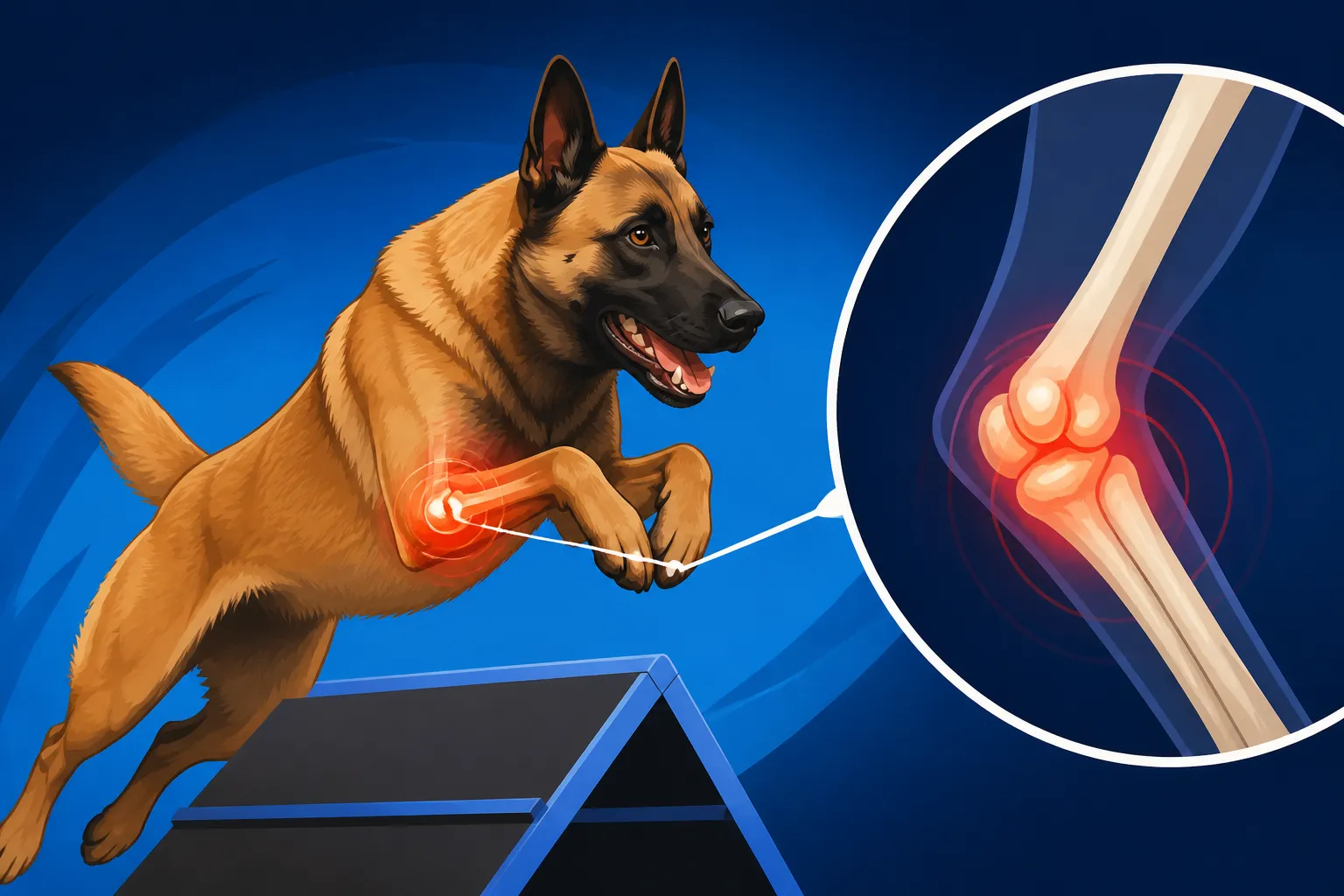
Every time your Malinois jumps, especially from a height, the landing involves significant impact absorption through their front limbs. The elbow joint, a complex hinge with a rotating component, bears a substantial portion of this force. Think about a human athlete repeatedly landing from a jump; the knees, ankles, and hips are often the focus, but the elbows and shoulders also take a beating, just in a different way. For a Malinois, the rapid deceleration and impact forces can lead to microtraumas that accumulate over time. Each jump might seem insignificant, but hundreds or thousands of these landings throughout their life can put immense strain on the cartilage, ligaments, and bones within the elbow. This repetitive stress can exacerbate underlying genetic predispositions or simply wear down healthy joints over many years of intense activity.
Common Elbow Conditions Affecting Jumping Malinois
While our Malinois feel invincible, their joints are not. There are several common elbow conditions that can plague these highly active dogs, some genetic, others acquired through trauma or overuse. Understanding these conditions is the first step in protecting your dog.
Elbow Dysplasia: A Genetic Predisposition
Elbow dysplasia (ED) is one of the most disheartening diagnoses for any owner, especially when you have an active Malinois. It's a developmental condition, meaning it often begins during the rapid growth phase of puppyhood, typically showing signs by four to seven months of age, though symptoms can sometimes appear later. ED isn't a single disease but a complex syndrome encompassing several specific abnormalities in the elbow joint. These can include:
- Fragmented Coronoid Process (FCP): A small piece of bone breaks off one of the two main bones of the forearm (ulna) and floats in the joint, causing pain and inflammation.
- Ununited Anconeal Process (UAP): Another piece of bone, the anconeal process, fails to fuse correctly with the ulna during growth, leading to instability.
- Osteochondritis Dissecans (OCD) of the Elbow: This is when a piece of cartilage, and sometimes the bone beneath it, detaches from the surface of the joint.
- Elbow Incongruity: The bones forming the elbow joint don't fit together perfectly, leading to abnormal pressure and wear.
While genetics play a significant role in ED, environmental factors like rapid growth from over-nutrition and excessive, high-impact exercise in youth can exacerbate the condition. This is why responsible breeders diligently screen their breeding stock for elbow health, aiming to reduce the incidence of ED in future generations. Checking for The Hip and Elbow Numbers Behind a Malinois Clearance on parent dogs is crucial, as is understanding Whether PennHIP Tells a Malinois Buyer More about a puppy's potential for good joint health.
Osteochondritis Dissecans (OCD) in the Elbow Joint
While OCD can occur in various joints, it's a specific manifestation of elbow dysplasia when it affects the elbow. OCD is primarily a condition of young, rapidly growing dogs, often large and giant breeds, including our Malinois. It occurs when cartilage in the joint doesn't mature and harden into bone correctly. Instead, a thick flap of cartilage forms and can eventually detach from the underlying bone. This loose flap acts like a pebble in a shoe, causing pain, inflammation, and further damage to the joint surfaces with every movement.
Imagine your Malinois puppy, full of boundless energy, jumping and playing hard. If there's an OCD lesion in their elbow, each impact, each twist and turn, puts stress on that fragile cartilage flap. The body tries to heal, but the continuous movement often prevents proper fusion, leading to persistent discomfort. This is often one of the conditions that makes you realize that Why Pushing Growth Hurts a Malinois Puppy can have lifelong consequences, as rapid growth and heavy exercise can worsen genetic predispositions.
Traumatic Injuries: Sprains, Fractures, and Ligament Tears
Beyond developmental issues, our dynamic Malinois are also susceptible to acute traumatic injuries. Their fearlessness in training and play can sometimes lead to missteps or accidents that result in sudden, painful damage to the elbow joint.
Think of a Malinois making a sharp turn during a high-speed chase or landing awkwardly after a high jump, perhaps on uneven terrain or after slipping on a slick surface. These scenarios can cause:
- Sprains: Stretching or tearing of the ligaments that stabilize the elbow joint. Depending on the severity, this can range from mild discomfort to significant lameness.
- Fractures: A bone within or around the elbow joint can break. This is an immediate and severe injury, often accompanied by intense pain, swelling, and an inability to bear weight. Common sites include the anconeal process (even if it had fused) or the condyles (ends) of the humerus.
- Ligament Tears: While less common than in knees (like a torn cruciate), ligaments in the elbow can be partially or completely torn due to extreme force or hyperextension.
These types of injuries often happen during peak activity or a specific incident you can usually recall. Unlike the gradual onset of dysplasia, traumatic injuries usually present with sudden, acute lameness. This is especially relevant in sports like IGP, French Ring, or even just intense fetch sessions where dogs push their physical limits. For these situations, having a good pet insurance plan like those offered by Healthy Paws can be a lifesaver, helping to cover unexpected and often costly veterinary care.
Recognizing the Signs of Elbow Pain in Your Active Malinois
Malinois are incredibly stoic animals. They're bred to work, to push through discomfort, and they often hide pain until it becomes severe. This makes it crucial for owners to be highly observant and attuned to subtle changes in their dog's behavior and movement.
Subtle Changes in Gait and Performance
The earliest signs of elbow pain in a Malinois are rarely dramatic. They're often so subtle that they can be easily missed if you're not looking for them. You might attribute them to a hard training day, a little stiffness from sleeping funny, or just your dog "being a Malinois." However, these seemingly minor shifts are often your dog's first cries for help.
Look for things like:
- A slight hesitation before jumping: Instead of a fluid, confident launch, you might notice a fractional pause, a brief assessment, or a slightly different angle of approach to obstacles they used to clear effortlessly. They might still jump, but the sheer joy or ease seems diminished.
- Stiffness after rest: After waking up from a nap or first getting out of their crate, they might be stiff for a few minutes. This stiffness often works itself out once they've been moving for a bit, but it's a classic sign of joint inflammation.
- Reduced enthusiasm for certain activities: Perhaps they're not quite as eager to retrieve the ball as they once were, or they're skipping some of the higher jumps in an agility course. This isn't laziness; it's a dog trying to avoid pain.
- Subtle head bob or uneven gait: When trotting or running, you might notice their head dipping slightly when they put weight on the affected leg. It’s not an obvious limp, but an asymmetrical movement pattern.
- Lying down differently: They might avoid putting pressure on the affected elbow when resting, adopting an unusual posture.
These are the moments when your keen eye as an owner truly matters. Don't dismiss these minor changes; they are valuable clues that something might be amiss.
Overt Lameness and Behavioral Shifts
When elbow pain progresses, the signs become more obvious and demand immediate attention. At this stage, your Malinois is likely experiencing significant discomfort, and it's no longer something they can easily hide or mask with their high drive.
More overt signs include:
- Obvious limping or favoring a limb: This is the most common and undeniable sign. They may hold the affected leg up, hop, or put minimal weight on it while moving. The lameness might be intermittent, worse after heavy exercise, or constant.
- Swelling or warmth around the elbow joint: Visually inspect and gently palpate their elbows. Any noticeable swelling, tenderness to the touch, or warmth indicates inflammation.
- Vocalization or flinching when touched: If your dog cries out, growls, or pulls away when you touch or manipulate their elbow, they are telling you in no uncertain terms that it hurts.
- Reluctance to use the stairs, jump into the car, or get on furniture: Activities that involve flexing and extending the elbow become painful, and your dog will actively try to avoid them.
- Changes in temperament: A dog in chronic pain can become irritable, withdrawn, or even snappy. If your usually happy-go-lucky Malinois is suddenly grumpier, less tolerant of handling, or seeking solitude, pain could be the underlying cause.
- Muscle atrophy: Over time, if your Malinois is consistently favoring one leg, the muscles in that limb will begin to waste away. You might notice a visible difference in muscle mass compared to the healthy limb.
If you observe any of these overt signs, it's crucial to seek veterinary attention promptly. Early diagnosis and intervention can significantly improve the prognosis and quality of life for your Belgian Malinois. Ignoring these symptoms can lead to more severe, irreversible joint damage.
Diagnostic Approaches and Treatment Options
Once you suspect an elbow issue, getting an accurate diagnosis is paramount. Your vet will employ a combination of physical examination and imaging techniques to pinpoint the problem. From there, a tailored treatment plan, which can range from conservative management to surgical intervention, will be discussed.
Veterinary Examination and Imaging Techniques
Your journey to diagnosis will always begin with a thorough veterinary examination. Your vet will:
- Observe your Malinois's gait: They'll watch how your dog walks, trots, and perhaps even runs, looking for subtle lameness, asymmetry, or changes in how they bear weight.
- Palpate and manipulate the limb: They will gently feel the elbow joint, checking for swelling, warmth, pain responses, and any abnormal movement or crepitus (a grinding sensation). They’ll also assess the range of motion, noting any limitations or pain points during flexion and extension.
If an elbow issue is suspected, imaging is the next crucial step:
- X-rays (Radiographs): These are usually the first line of diagnostic imaging. Multiple views of both elbows (even if only one seems affected) are typically taken to assess bone structure, joint space, and look for signs of arthritis, bone fragments, or incongruity. While good for initial screening, X-rays can sometimes miss subtle cartilage lesions or early stages of some ED components.
- Computed Tomography (CT) Scan: For complex joints like the elbow, a CT scan is often considered the gold standard. It provides highly detailed, 3D images of the bones and soft tissues, allowing the vet to see much more clearly if there's a fragmented coronoid process, ununited anconeal process, or subtle OCD lesions that might be missed on X-rays. This detailed view is essential for surgical planning.
- Magnetic Resonance Imaging (MRI): While less commonly used for primary elbow dysplasia diagnosis, an MRI can be invaluable for evaluating soft tissue injuries, such as ligament damage, or for identifying other causes of lameness that aren't bone-related.
Your vet might also recommend specific blood tests to rule out other inflammatory conditions or to assess overall health before anesthesia, especially if imaging or surgery is anticipated. Getting a definitive diagnosis is key, as different elbow conditions require different treatment strategies.
Conservative Management Strategies
For less severe cases of elbow pain, particularly those involving early-stage arthritis, mild sprains, or when surgery isn't an option, conservative management can be very effective in controlling pain and improving quality of life. The goal is to reduce inflammation, alleviate discomfort, and support joint health.
These strategies often include:
- Rest and activity modification: This is often the hardest part for a high-drive Malinois! It doesn't necessarily mean complete kennel rest but often involves strict leash walks, no jumping, no intense play, and avoiding stairs for a period. Gradually, activity can be reintroduced, but the intensity of jumping activities may need to be permanently curtailed. This can be a huge adjustment for both you and your dog, especially if you're used to them being constantly active.
- Anti-inflammatory medications (NSAIDs): Non-steroidal anti-inflammatory drugs like Carprofen, Galliprant, or Meloxicam are commonly prescribed to reduce pain and inflammation. These can make a significant difference in your dog's comfort and mobility. Always use these under veterinary guidance, as long-term use requires monitoring for side effects.
- Joint supplements: Oral supplements containing ingredients like glucosamine, chondroitin sulfate, MSM, and omega-3 fatty acids can help support cartilage health and reduce inflammation. While not a cure, many owners find them beneficial for long-term joint support. There's a lot to consider when looking at Joint Supplements for a Working Belgian Malinois, and your vet can help you choose the best options.
- Weight management: Keeping your Malinois at an ideal body weight is paramount. Excess weight puts additional strain on already compromised joints. Even a few extra pounds can make a big difference in pain levels. Maintaining The Lean Condition a Belgian Malinois Should Carry is not just for aesthetics; it's vital for joint longevity.
- Physical therapy and rehabilitation: Once the initial pain is controlled, a vet or certified canine rehabilitation therapist can guide you through exercises to strengthen supporting muscles, improve range of motion, and maintain flexibility. This might include hydrotherapy, therapeutic exercises, and massage. These techniques are often crucial for a full recovery and preventing re-injury, much like Rehabbing a Belgian Malinois After Knee Surgery is critical for successful outcomes.
Conservative management is a long-term commitment, often requiring ongoing adjustments based on your dog's response. It’s about managing a chronic condition and optimizing comfort.
Surgical Interventions for Severe Elbow Conditions
When conservative management isn't enough, or for specific conditions like severe fragmented coronoid processes, ununited anconeal processes, or significant OCD lesions, surgical intervention may be the best course of action. The goal of surgery is to remove or stabilize problematic joint components, alleviate pain, and prevent further deterioration of the joint.
Common surgical procedures for elbow problems include:
- Arthroscopy: This minimally invasive technique is often preferred. A small incision is made, and a tiny camera (arthroscope) is inserted into the joint, allowing the surgeon to visualize the interior, remove bone fragments (like FCP or OCD flaps), and smooth rough cartilage surfaces. It results in less pain, faster recovery, and better visualization compared to traditional open surgery.
- Fragment Removal: For FCP or OCD, simply removing the offending piece of bone or cartilage can significantly reduce pain and inflammation.
- UAP Repair: For an ununited anconeal process, the procedure might involve reattaching the bone fragment with a screw or removing it entirely if it's causing severe issues.
- Sliding Humeral Osteotomy (SHO) or Proximal Ulna Osteotomy (PUO): These more advanced procedures are sometimes performed for elbow incongruity or severe FCP. They involve cutting and repositioning bones to improve joint alignment and reduce abnormal pressure.
The recovery period after elbow surgery can be extensive, often involving several weeks or months of restricted activity, pain management, and a dedicated rehabilitation program. Adhering strictly to your vet's post-operative instructions and engaging in prescribed physical therapy is absolutely critical for the best possible outcome. Without proper rehabilitation, even the most successful surgery might not yield the desired results. Pet insurance providers like Healthy Paws often cover these significant surgical costs, making it a more manageable option for owners.
Prevention and Long-Term Joint Health for Jumping Malinois
While we can't completely eliminate the risk of elbow problems in our athletic Malinois, we can take proactive steps to minimize risk and support their long-term joint health. Prevention starts even before you bring your puppy home and continues throughout their active lives.
Responsible Breeding and Early Screening
One of the most impactful preventive measures you can take is to choose your Malinois puppy from a responsible, health-conscious breeder. This is non-negotiable for a breed with known genetic predispositions to joint issues.
A reputable breeder will:
- Perform health clearances on breeding stock: This means both the dam and sire will have current OFA (Orthopedic Foundation for Animals) or PennHIP certifications for elbows and hips. OFA rates elbows as Normal or Dysplastic, while PennHIP focuses on hip laxity but good breeders usually do both. Demand to see these certificates; don't just take a breeder's word for it. Understanding these clearances is crucial when Asking a Breeder for Malinois Ataxia Results or joint health.
- Be transparent about their lines: They should be open about any known history of elbow dysplasia in their breeding lines and explain how they are working to mitigate it.
- Offer health guarantees: Many reputable breeders provide a health guarantee against severe, crippling hip or elbow dysplasia.
By investing in a puppy from health-tested parents, you significantly reduce the likelihood of your Malinois developing inherited elbow conditions, setting them up for a healthier life from day one.
Controlled Growth and Appropriate Exercise Regimen
The period of puppyhood and adolescence is critical for joint development. While it's tempting to unleash your Malinois puppy's boundless energy, too much high-impact activity too soon can be detrimental, especially when growth plates are still open. This is where the concept of "controlled growth" comes in.
- Avoid over-feeding: Rapid weight gain and excessive calorie intake during puppyhood can contribute to orthopedic problems. Feed a high-quality, large-breed puppy food designed for slow, steady growth, and avoid pushing them to be "big" too quickly. This reinforces the warning that Why Pushing Growth Hurts a Malinois Puppy can create long-term problems.
- Limit high-impact activities: Until your Malinois is fully grown (typically 18-24 months for large breeds), activities like repeated jumping from heights, long-distance running on hard surfaces, or intense agility work should be limited or avoided entirely. Controlled, shorter periods of exercise on softer surfaces, like grass, are much better. Many trainers advise waiting until at least 18 months, often two years, before introducing rigorous jumping or wall work, aligning with advice about The Age a Belgian Malinois Can Start Jumping Walls. You might also want to look into Whether Jumping Damages a Young Malinois's Joints for more detailed information.
- Focus on mental stimulation and low-impact exercise: Channel your puppy's energy into obedience training, scent work, short walks, and appropriate socialization rather than hours of high-intensity physical exertion. This allows their bones and joints to mature without undue stress.
Ongoing Maintenance and Lifestyle Adjustments
Even with a healthy genetic background and careful rearing, lifelong joint care is essential for a jumping Malinois. Their active lifestyle will always put some degree of stress on their joints, so ongoing support is key.
- Maintain ideal body weight: As mentioned before, keeping your Malinois lean and fit throughout their life is perhaps the single most important factor in preventing and managing joint issues. Every extra pound increases the load on their elbows.
- Warm-ups and cool-downs: Before any intense training session or vigorous play, incorporate a 5-10 minute warm-up with light trotting and stretching. Similarly, end with a cool-down walk. This helps prepare muscles and joints for activity and aids in recovery.
- Appropriate surfaces: Whenever possible, encourage play and training on softer surfaces like grass, dirt, or rubber matting, rather than concrete or asphalt, which provide minimal shock absorption.
- Joint supplements: Discuss with your vet whether a daily joint supplement is appropriate for your Malinois, even if they aren't currently showing signs of pain. These can be a proactive measure to support cartilage health.
- Regular veterinary check-ups: Annual or bi-annual check-ups allow your vet to monitor your dog's overall health and catch any subtle signs of joint pain early. This is especially important as they age, as Arthritis in a Belgian Malinois at Nine is a common concern.
- Provide good traction: Inside your home, consider runners or rugs on slippery hardwood or tiled floors to prevent slips and falls that can jar joints.
- Consider pet insurance: For a breed as active as the Malinois, the potential for unexpected injuries or chronic conditions is real. A good pet insurance policy, like those from Healthy Paws, can help cover the costs of diagnostics, medications, and even surgery, providing peace of mind. Thinking about what a Malinois owner should bank each month might also include a pet insurance premium.
By implementing these preventive strategies, you can significantly contribute to your Belgian Malinois's long-term joint health, allowing them to continue their incredible leaps and bounds for many happy years.
Comparison of Common Elbow Conditions in Belgian Malinois
| Condition | Onset Age | Primary Cause | Common Symptoms | Treatment Approaches |
|---|---|---|---|---|
| Elbow Dysplasia (ED) | 4-7 months (often) | Genetic predisposition, rapid growth | Intermittent lameness, stiffness after rest, reluctance to play/jump, pain on elbow manipulation. Can be unilateral or bilateral. Often worsens with exercise. | Conservative (NSAIDs, supplements, rest, weight management, rehab) or Surgical (arthroscopy to remove fragments, osteotomy for incongruity) |
| Osteochondritis Dissecans (OCD) | 4-12 months | Developmental cartilage growth defect, genetics | Lameness, pain, swelling in the elbow joint. Often worse after exercise. Joint stiffness, reluctance to extend limb. | Conservative for mild cases (rest, pain meds). Surgical removal of cartilage flap is often recommended to prevent progression and arthritis. |
| Traumatic Injury (Sprains/Fractures) | Any age | Acute event (bad landing, fall, impact) | Sudden, acute lameness, often non-weight-bearing. Swelling, warmth, intense pain on palpation. Visible deformity if fracture is severe. | Immobilization (splint/cast) for sprains or minor fractures. Surgical repair (pins, plates, screws) for more complex fractures or severe ligament tears. |
Disclaimer
The information provided in this article is for educational purposes only and is not a substitute for professional veterinary advice. Always consult with a qualified veterinarian for any health concerns or before making any decisions related to your Belgian Malinois's care.