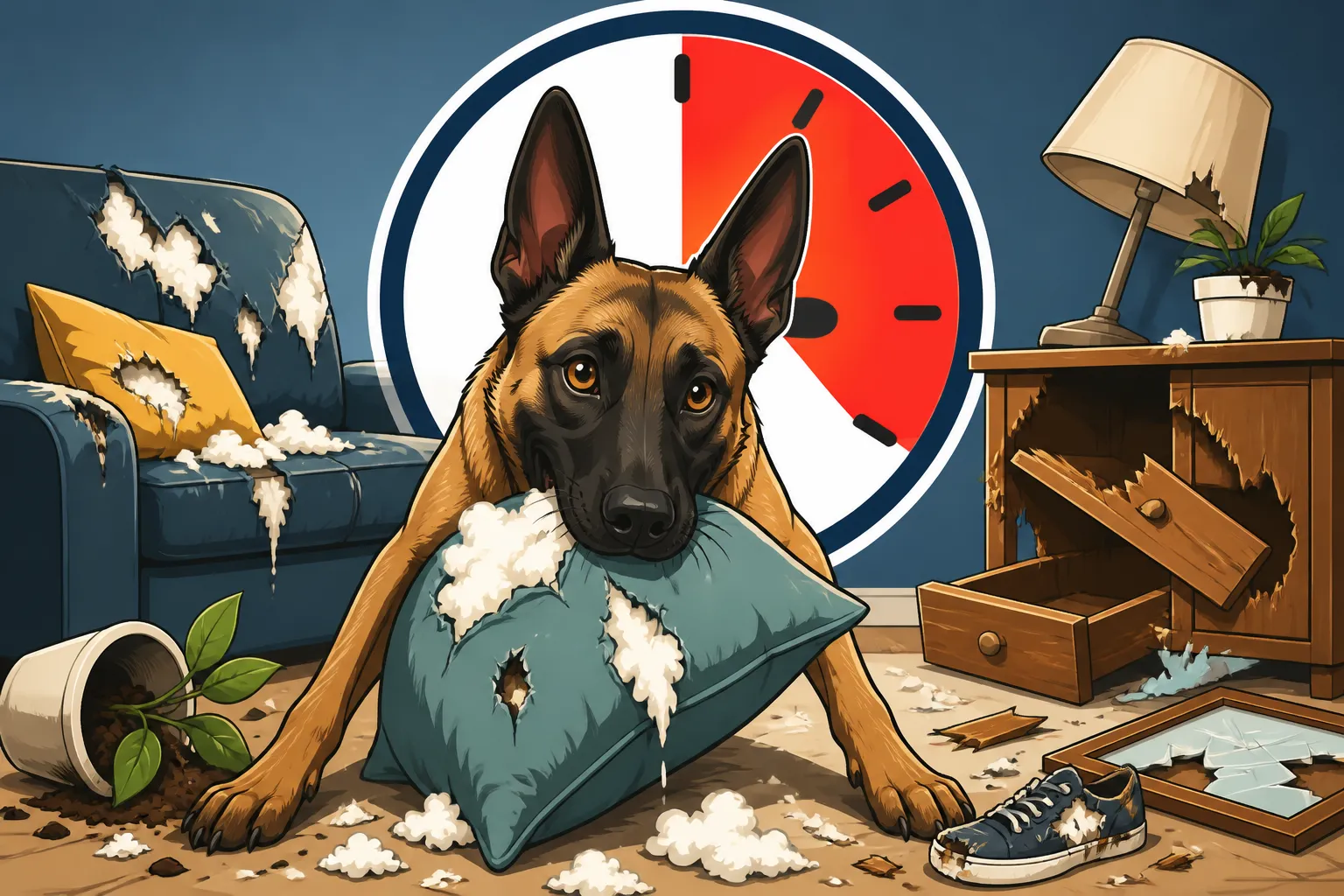
What a Malinois Destroys in One Unsupervised Hour
It's a familiar scenario for many Belgian Malinois owners: you leave your highly driven, intelligent companion alone for what seems like mere moments, only to return to a scene of absolute, bewildering devastation. That fleeting hour can feel like an eternity when your home has been systematically redesigned by a furry wrecking ball. This guide is here to deeply explore not just what a Malinois can destroy in one unsupervised hour, but why they do it, and what proactive steps you can take to prevent the chaos.
The Raw Power Behind the Malinois Wrecking Crew
The sheer capacity for destruction in a Belgian Malinois is often underestimated by those unfamiliar with the breed. It's not just mischief; it's a testament to their incredible physical and mental prowess when channeled incorrectly or left idle. Understanding this raw power is the first step in safeguarding your home and your sanity.
Unmatched Drive and Energy Levels
Let's be real: a Malinois isn't your average couch potato. These dogs were quite literally bred for demanding work—herding, police, military, protection sports—roles that require ceaseless energy, stamina, and an intense drive to perform. When that inherent drive isn't given a productive outlet, it will find one, and often, that outlet is your living room. An hour of unsupervised time for a Malinois with pent-up energy is akin to giving a toddler a hammer in a china shop; they're going to use it, and they're going to use it vigorously. They don't just "go for a walk" and come back tired; they need purpose, a job, and consistent, high-intensity engagement. Two Hours and a Job a Belgian Malinois Demands Daily isn't just a suggestion, it's a minimum requirement for keeping these dogs sane.
Imagine a Malinois whose morning walk was too short, whose mental games were skipped, and who was left in a quiet house. Their internal motor is still running at top speed, buzzing with anticipation for something to do. This isn't laziness or spite; it's the manifestation of their genetic blueprint demanding action. That overflowing cup of energy spills over into exploring, digging, chewing, and disassembling anything within reach, driven by an instinct to problem-solve and exert themselves physically.
This isn't about blaming the dog; it's about acknowledging the fundamental needs of the breed. A Malinois isn't breaking things out of malice, but out of an overwhelming, unfulfilled need to engage their bodies and minds. They operate at such a high frequency that what might be a minor inconvenience for another breed—a bit of boredom—becomes a catastrophic event for a Malinois.
The Intelligence That Fuels Creative Destruction
What makes Malinois destruction particularly frustrating is that it's often not mindless. These dogs are incredibly intelligent problem-solvers. If there's a weakness in your containment, a puzzle to be solved, or an object to be disassembled, a Malinois will likely figure it out within minutes, not hours. They learn quickly what they can and cannot manipulate, and they are incredibly persistent once they set their minds to something.
Consider a gate or a crate. Many dogs might push or whine. A Malinois, however, will methodically test every latch, every seam, every weak point. They’ll use their paws, their nose, their teeth, and their body weight, calculating leverage and weak spots with an almost uncanny precision. They aren't just chewing; they're experimenting with force and friction, learning the properties of different materials. This intellectual drive to overcome obstacles can turn a simple barrier into a short-lived challenge.
This keen intelligence extends to their environment. They don't just randomly chew; they might target items associated with your scent (shoes, clothing), or objects that provide interesting textures or sounds when manipulated. They can become quite adept at opening cupboards, unzipping bags, or even flipping latches on certain types of kennels. It's not just a destructive act, but often a highly focused, intelligent endeavor, making them formidable opponents for any piece of household property.
The Jaw Strength and Chewing Capacity
Beyond their drive and intelligence, Belgian Malinois possess formidable physical tools for destruction: incredible jaw strength and an insatiable need to chew. Their bites are powerful, designed for gripping and holding, whether it's a decoy's sleeve or a piece of furniture. A Malinois isn't just gnawing; they're working an object with intent, leveraging their strong necks and bodies to tear, shred, and dismantle.
Imagine a chew toy that lasts days for a Labrador. For a Malinois, that might be gone in an hour, sometimes less. This immense chewing capacity means that softer materials like wood, fabric, plastic, and even drywall stand little chance against a determined Malinois. They can splinter doorframes, shred couches down to the stuffing, and make quick work of anything that can be punctured and torn. This isn't just teething for puppies; it's a lifelong behavioral outlet for the breed.
This physical capability means that even seemingly durable items are merely temporary obstacles. They can chew through thick leashes, destroy reinforced beds, and warp metal crate bars if given enough time and motivation. It’s a powerful combination of physical strength and mental tenacity that makes them truly effective wrecking machines when left undirected.
Common Targets of Malinois Mayhem
Given their formidable capabilities, what exactly are the prime targets for a Malinois left unsupervised for even an hour? The list is often extensive and expensive, hitting everything from the structural integrity of your home to your most cherished possessions.
Household Furnishings and Fixtures
The biggest, most stationary items in your home are often the first to bear the brunt of Malinois boredom or anxiety. Furniture, especially anything upholstered, is a prime target. A couch can go from pristine to de-stuffed in under sixty minutes. The corners of coffee tables, chair legs, and even dining room sets are irresistible to a dog driven to chew and investigate.
Think about the sheer force involved: a Malinois might methodically strip fabric, pull out foam, and then begin to splinter the wooden frame underneath. Baseboards along walls, especially near entryways or windows, are another common casualty. They provide a satisfying texture to chew and often mark the boundary of their confinement, making them a target for exploration or an attempt to escape. Doors and doorframes are also vulnerable; scratches from frantic digging or gnawing marks around the handle or lower panel are not uncommon when a Malinois is trying to "get out."
Even things you might not consider "chewable," like curtains, throw rugs, or decorative items, can be pulled down, shredded, or otherwise vandalized. Anything within reach, anything that offers an interesting texture, or anything that blocks their perceived path can become a victim of their exploratory and destructive tendencies.
Personal Belongings and Valuables
It’s not just the big stuff; small, personal, and often valuable items are also at high risk. Shoes, for instance, are almost universally appealing—they carry your scent, are an interesting shape, and offer various textures to chew. A favorite pair of leather boots can be reduced to an unrecognizable pulp in moments. Clothing left on a bed or floor can be shredded into confetti.
Electronics are another common, and devastating, target. Remote controls, charging cables, headphones, or even a laptop left on a low table can be irrevocably damaged. The plastic and wires offer an intriguing tactile experience, and the Malinois's powerful jaws make short work of them. Important documents, books, or children's toys left within reach also face the shredder. This isn't just about property damage; it can involve the destruction of irreplaceable items or critical information.
The frustration is compounded by the knowledge that these items are often exactly what we value, and their destruction feels personal. But to a Malinois, it's just another object in their environment that they are exploring or processing. The scent, the texture, the way it breaks apart—it's all part of their unchanneled drive.
Kennels, Crates, and Containment Systems
Perhaps the most astonishing and disheartening destruction occurs when a Malinois decides to break out of its confinement. Many owners invest in heavy-duty crates, secure kennels, or even entire rooms, only to find them compromised. A standard wire crate, often sufficient for other breeds, can be bent, chewed, or completely disassembled by a determined Malinois in a surprisingly short amount of time.
They will find the weak points: latches, hinges, wire welds, or plastic trays. They’ll work at them with their teeth and paws, applying immense force and persistent effort. Crate Work With a Malinois Puppy That Screams often needs to address not just the vocalizations, but also the physical attempts to escape. Even heavy-duty, reinforced crates designed for powerful breeds can sometimes be breached, leading owners to joke about needing military-grade containment. This isn't just about property damage, but also about the safety implications if they escape and potentially injure themselves or others.
For outdoor kennels or fenced yards, the challenges are similar. These dogs can jump fences that seem impossibly high, dig tunnels with surprising speed, or find and exploit loose panels or gates. Why an Invisible Fence Will Not Stop a Malinois is a critical lesson many learn the hard way: these dogs are driven by physical barriers, not static corrections. The urge to explore, to follow a scent, or to simply be free can override any deterrent when their natural drives are left unfulfilled.
Mitigating the Risk: Prevention and Management Strategies
So, what's a Malinois owner to do when facing such a formidable opponent? The good news is that prevention and strategic management can drastically reduce, though perhaps never entirely eliminate, the risk of hourly home demolition. It’s all about meeting their needs proactively.
The Importance of Structured Exercise and Mental Stimulation
The absolute cornerstone of preventing Malinois destruction is ensuring they receive adequate, structured exercise and mental stimulation. A tired Malinois is a good Malinois, but "tired" for this breed means deeply satisfied physically and mentally, not just worn out from a leisurely stroll. Free-running in a yard alone won't cut it. They need a job.
This means daily, intense physical outlets like running, fetch, agility, or flirt pole work. These activities should be structured, engaging their prey drive and requiring them to think. Beyond physical exhaustion, mental stimulation is paramount. Puzzle toys, scent work (even simple hide-and-seek with treats), obedience training, or learning new tricks are vital to burning off that intense mental energy. The Mental Work That Finally Tires a Malinois Out isn't a luxury; it's a necessity. Even BAXTER & Bella, known for comprehensive online puppy training, emphasizes the crucial role of mental engagement right from a young age to prevent destructive habits from forming.
The goal is to provide so much appropriate output that when they are left alone, they are genuinely content to rest. This proactive approach tackles the root cause of much destruction: unfulfilled energy and intelligence. If they've had two hours of hard physical work and another hour of mental challenges, that one unsupervised hour might actually be spent napping.
Indestructible Chews and Enrichment Toys
Since chewing is an inherent and healthy Malinois behavior, the key is to redirect it to appropriate, durable outlets. Forget the plush toys; they'll be confetti in minutes. You need "Malinois-proof" chews. Think solid rubber toys, natural antlers (if safe for your dog), or heavy-duty nylon bones. Variety is also important to keep their interest.
When it comes to toys, rotate them frequently. A toy that's always available quickly loses its novelty. Consider interactive puzzle feeders that dispense kibble slowly, or strong chew toys that can be stuffed with peanut butter or frozen treats to increase their longevity and engagement. Kong Extreme toys, for example, are a popular choice for their durability and the mental challenge they offer when stuffed. You can find a huge variety of these durable, problem-solving toys on platforms like Amazon, often with reviews from other high-drive dog owners. What a Chew Proof Malinois Bed Costs is another important consideration, as even their beds can become chew targets.
It’s about making the "right" chewing options far more appealing and satisfying than your furniture. Always supervise new chews initially to ensure they are safe and durable enough for your specific Malinois, as even "indestructible" items can sometimes meet their match.
Strategic Confinement and Proofing Your Space
No matter how well-exercised and mentally stimulated your Malinois is, there will be times when they must be left unsupervised. This is where strategic confinement and meticulous space proofing come into play. A solid, escape-proof crate is often the safest bet. Look for heavy-gauge wire, reinforced corners, and secure, multiple latching mechanisms. Plastic airline crates, if sturdy enough, can also be effective as they offer fewer "grab points" than wire.
Beyond the crate, consider the room itself. If you must leave them in a room, ensure it is completely "Malinois-proofed." Remove anything that can be chewed, pulled down, or damaged. This includes rugs, curtains, shoes, remotes, and even low-hanging artwork. Consider using baby gates or solid barriers to restrict access to certain areas of the house. Remember their intelligence; they will find the weakest link.
For some, an outdoor kennel run (securely fenced with a solid top and anti-dig measures) is the best option for periods of absence. However, this also requires protection from the elements and ensuring they have access to water. The ultimate goal is to create an environment where the most exciting thing they can do is sleep, because all other tempting objects have been removed or made inaccessible.
Recognizing the Red Flags and Seeking Help
While a certain level of exploratory chewing is normal for any dog, especially a Malinois, persistent, severe, or self-destructive behavior can indicate deeper issues that warrant professional attention.
When Destruction Becomes Compulsive
It's one thing for a Malinois to chew a slipper out of boredom; it's another for them to shred their own bedding until they're lying on the bare floor, or to frantically dig at a doorframe until their paws are raw. When destructive behavior escalates beyond mere energy release and into what appears to be compulsive, anxious, or self-injurious acts, it's a red flag. Signs might include excessive drooling, pacing, frantic attempts at escape, self-mutilation (like licking or chewing their fur raw), or a complete inability to settle even when tired.
This type of destruction often points to underlying anxiety, separation distress, or even an unmet physiological need. A Malinois who paces and whines incessantly before ripping apart their crate might not just be bored, but genuinely distressed by your absence. It's important to observe how they behave before and during these destructive episodes to differentiate between playful exploration and genuine anxiety. An Old Malinois That Paces the House at Night could be experiencing cognitive decline, which can manifest in new destructive patterns.
Understanding the difference is crucial because the solutions are vastly different. Addressing anxiety requires a much more nuanced approach than simply providing more exercise or chews; it often involves desensitization, counter-conditioning, and sometimes even veterinary intervention.
Professional Guidance and Training Interventions
If you're struggling with severe or persistent destruction, especially if it seems tied to anxiety, don't hesitate to seek professional help. A qualified dog trainer or a veterinary behaviorist has the expertise to assess your Malinois's behavior, identify the underlying causes, and develop a tailored modification plan. They can help distinguish between normal high-drive behavior and true behavioral disorders.
Training methods and interventions often include detailed desensitization protocols, teaching independent calm, and using management tools effectively. For instance, the BAXTER & Bella online puppy training program provides extensive resources and live support that can be invaluable for new Malinois owners in setting up their dogs for success and preventing destructive habits. They emphasize foundational obedience and confidence-building exercises that can help mitigate anxiety.
A professional can also help you understand if there are any underlying medical conditions contributing to the behavior. Sometimes, a dog might act out due to pain, discomfort, or an undiagnosed health issue. This holistic approach ensures that all potential factors are considered, leading to the most effective and humane solutions for your highly capable, but sometimes challenging, Belgian Malinois.
| Item Type | Typical Malinois Outcome (1 Hour Unsupervised) | Malinois-Proof Alternative / Strategy |
|---|---|---|
| Soft Chew Toys | Shredded, ingested parts | Solid rubber toys (e.g., Kong Extreme), natural antlers (if safe), hard nylon chews |
| Couch Cushions, Upholstery | De-stuffed, ripped fabric, splintered frame | Crate confinement, secure room, heavy canvas kennel beds |
| Shoes, Clothing, Remotes | Chewed beyond recognition, ingested | Put away in high cupboards, locked closets, use heavy-duty storage bins |
| Standard Wire Crates | Bent bars, broken latches, escaped dog | Heavy-duty impact crates, reinforced steel kennels, secure outdoor runs |
| Door Frames, Baseboards | Splintered wood, scratched paint | Crate training, environmental enrichment, bitter apple spray (temporary deterrent) |
| Books, Papers, Mail | Shredded confetti | Keep off counters and tables, secure in drawers |
| Plants, Garden Hoses | Dug up, chewed, ingested | Supervised outdoor time, secure fencing (dig-proof), chew-proof hose covers |
Disclaimer
This article is for general informational purposes only and does not constitute professional advice. Laws, prices and regulations vary by location and change over time. Consult a qualified professional for guidance on your specific situation.