Whether a Prong Has Any Place on a Malinois
Let's be real for a moment. If you own a Belgian Malinois, you know the sheer power and relentless drive packed into that lean, athletic frame. Walking your Malinois can feel less like a leisurely stroll and more like being dragged behind a runaway freight train, especially if they haven't quite mastered loose-leash walking. This guide is here to openly and honestly discuss a training tool that often sparks heated debate: the prong collar, and whether it has a place in your Malinois's training regimen to achieve calm, controlled walks.
The Unique Challenges of Leash Training a Belgian Malinois
Owning a Belgian Malinois is an experience unlike any other. These dogs are intelligent, energetic, and possess an incredible work ethic. However, these very traits can make leash training a true test of wills and strength for even the most seasoned handler.
Understanding the Malinois Drive to Pull
Imagine a dog bred for generations to work, to herd livestock, to pursue and protect with unwavering focus and boundless energy. That's your Malinois. Their default setting often isn't "calm companion"; it's "let's go, let's work, let's explore that intriguing scent or moving object with all my might!" This innate drive means that when they hit the end of a leash, their powerful neck and shoulder muscles are built to lean into that pressure and pull. It's not usually defiance; it's simply their genetic programming and an outlet for their immense energy. They want to be doing something, and if that something is pulling you down the street, so be it.
Many Malinois owners find themselves with aching shoulders, bruised arms, and a sense of dread whenever it's time for a walk. The struggle is real, and it's not a reflection on your love for your dog, but rather the intensity of the breed. This pulling isn't just uncomfortable; it can be dangerous for both you and your dog. A sudden lunge after a squirrel or another dog can easily lead to falls or even injuries. It also makes it incredibly difficult to truly enjoy your time together outside, turning what should be a bonding experience into a daily battle. You're trying to Teaching a Malinois to Walk Without Dragging You, but their sheer force often feels insurmountable.
Why Standard Collars Often Fail
Given the Malinois's strength and tendency to pull, many standard collars simply aren't up to the task or create more problems than they solve. A flat buckle collar, while perfectly fine for ID tags and well-behaved dogs, offers little to no leverage or clear communication when a Malinois decides to forge ahead. When they pull on a flat collar, the pressure is distributed across the trachea and neck muscles, which can lead to coughing, gagging, and potentially long-term damage if done repeatedly. It can also encourage them to pull harder because they learn to brace against the pressure.
Harnesses are another popular option, and while they can prevent some of the neck strain associated with flat collars, many regular harnesses actually enable pulling by distributing the pressure across the dog's chest and shoulders, which are their strongest points. Think of a sled dog harness – it's designed to allow them to pull with maximum efficiency. Front-clip harnesses can offer more control for some dogs by redirecting their momentum, but even these can be quickly figured out and overcome by a strong, determined Malinois. Martingale collars can prevent a dog from slipping out, but they still rely on throat pressure and don't provide the precise communication many Malinois need to understand "walk beside me calmly." When a Malinois is constantly pulling, it's almost impossible to Building Engagement With a Belgian Malinois during your walks because their focus is entirely on forward momentum.
Demystifying the Prong Collar: What It Is and How It Works
The prong collar, often called a "pinch collar" or a "Herm Sprenger collar" after a well-known manufacturer, is arguably one of the most misunderstood and controversial tools in dog training. Yet, for many owners of high-drive dogs like Belgian Malinois, it becomes an invaluable aid in achieving safe and calm leash walks.
The Mechanics of a Properly Used Prong Collar
At its core, a prong collar is designed to mimic the natural communication that dogs use with each other: gentle pressure. Think of a mother dog correcting her puppy with a nip on the neck, or dogs communicating boundaries with a subtle push or grab. The prongs, which are dull and smooth, are designed to create even pressure around the dog's entire neck, rather than just on the trachea or a single point. When gentle pressure is applied to the leash, the prongs create a mild, uniform sensation that signals to the dog to ease up. It's a communication device, not a choke device. The key is even pressure and communication, not pain.
A well-fitted prong collar allows for clear, instantaneous feedback. When your Malinois tightens the leash, they feel the gentle, encircling pressure. The moment they relax or loosen the leash, the pressure immediately releases. This clear cause-and-effect relationship is incredibly effective for dogs who are prone to pulling, as it provides them with direct feedback in a language they can understand without constant corrections or physical struggles from the handler. It helps them understand the threshold of acceptable tension.
Addressing Common Fears and Misconceptions
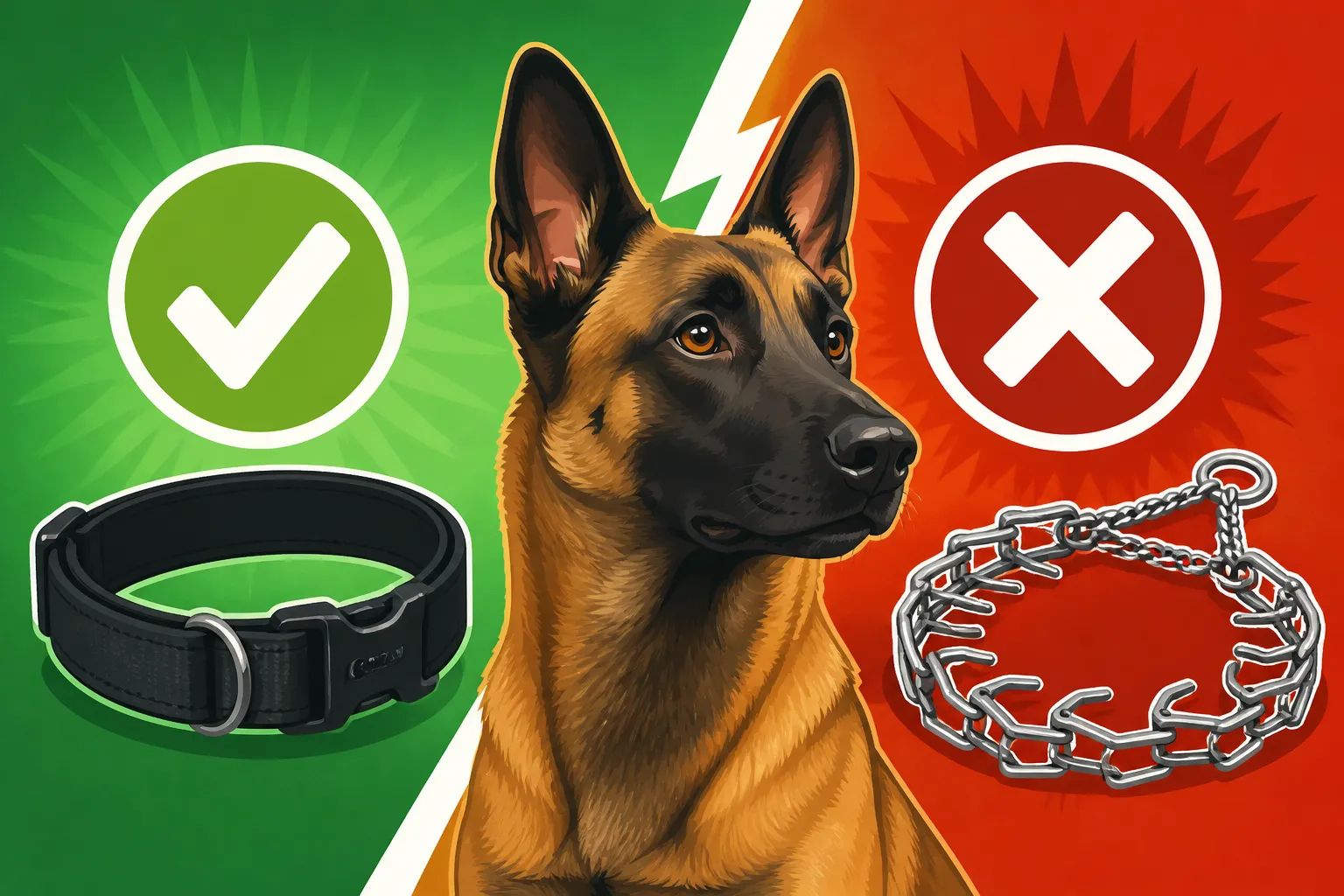
Let's tackle the elephant in the room. Many people hear "prong collar" and immediately envision something cruel or harmful. This is often due to misunderstanding its design and proper use. The prongs are not sharp; they are rounded and polished to prevent skin puncture. When fitted correctly, the collar sits high and snug on the neck, just behind the ears, not low on the throat where it could compress the trachea. It should not be used for yanking or jerking; instead, it's about applying and releasing steady, gentle pressure.
Another misconception is that it's a "quick fix" that bypasses actual training. This couldn't be further from the truth. A prong collar is a training tool, meaning it's meant to facilitate learning, not replace it. It allows for clearer communication, which then allows you to teach your Malinois the desired behavior, such as walking politely on a loose leash. It gives you the ability to get through to a high-drive dog who might otherwise be too distracted or powerful to listen to other cues. The goal is always to teach, reinforce, and eventually transition to a less restrictive tool as your dog masters the skill. For a Malinois that pulls A Belgian Malinois That Pulls Toward Every Distraction, the clear communication of a prong can be a breakthrough.
Responsible Application: Fitting and Using a Prong Collar
Using a prong collar effectively and humanely hinges entirely on proper fitting and educated application. It's not a tool to just clip on and hope for the best; it requires understanding and finesse.
The Critical Importance of Correct Fit
This cannot be stressed enough: a prong collar must be fitted correctly to be safe and effective. It should sit high on your Malinois's neck, just behind their ears and under their jaw, not low down near the throat. When properly positioned, it should be snug enough that it doesn't slip down, but not so tight that it pinches the skin when at rest. You should be able to fit one or two fingers comfortably between the collar and your dog's neck, but no more. If it's too loose, it can slide down and press on the trachea, or even become entangled. If it's too tight, it will be uncomfortable and could cause irritation.
Most prong collars come with removable links, allowing you to customize the fit perfectly for your dog's neck size and shape. Don't be afraid to add or remove links until you achieve that ideal snug, high fit. Remember, the goal is even distribution of pressure, and that only happens when the collar is sitting correctly. A collar that is too low or too loose can actually be more detrimental and uncomfortable for your dog, defeating its purpose. Always check the fit before every walk, as coats can change or links can shift. You can find quality prong collars from reputable brands like Herm Sprenger easily on Amazon, but make sure to size it properly.
Step-by-Step Introduction and Initial Training
Introducing a prong collar to your Malinois should be a calm, positive experience, not a confrontational one. Start by letting your dog wear the collar for short periods without the leash attached, perhaps for a few minutes while playing or giving treats, to let them get used to the feel. Once they're comfortable, attach the leash and take a few steps. The first interaction should be brief and positive. Avoid long, stressful walks initially.
The communication should be a gentle "pop and release" motion. When your Malinois starts to pull, give a quick, light tug on the leash and immediately release the pressure. The moment they respond by slowing down or coming back to your side, instantly release the pressure and praise them enthusiastically. This immediate release is key – it teaches them that relaxing the leash stops the sensation. The duration of the pressure should be fractions of a second. This isn't about constant tension; it's about clear, intermittent signals. For a young Malinois, understanding these nuances is critical, especially since The Age a Belgian Malinois Puppy Starts Training is a crucial period for foundational leash manners.
Developing Your Leash Communication Skills
Using a prong collar effectively is as much about your technique as it is about the collar itself. It requires you to be observant and responsive. Pay attention to your Malinois's body language and anticipate when they might pull. A subtle shift in their weight, a stiffening of their body, or a fixated stare can all be precursors to a lunge. Your correction should come at the moment they initiate the unwanted behavior, not after they've already started pulling full force. This precision is what makes the communication so clear.
Hold the leash with a loose grip, allowing slack when your dog is walking nicely. Only engage the collar when a correction is needed, and release immediately. Think of it like a gentle tap on the shoulder – a clear signal, not a sustained hold. Practice walking in a quiet area, focusing on consistency. Reinforce good behavior with verbal praise and treats. Remember, the goal is to teach your Malinois what to do, not just what not to do. This tool enhances your ability to communicate that clear expectation. It allows you to move beyond simply struggling with them and instead actively Teaching a Malinois to Walk Without Dragging You.
Benefits and Considerations for High-Drive Dogs
The decision to use a prong collar is a personal one, but for many owners of high-drive dogs like the Belgian Malinois, it offers distinct advantages, alongside important considerations.
When a Prong Collar Can Be an Effective Tool
For a Belgian Malinois, whose default mode is often "go, go, go," a prong collar can be a game-changer. Its effectiveness lies in its ability to provide immediate, clear, and consistent communication that is often difficult to achieve with other tools, especially for a dog with immense physical strength and a high pain threshold for traditional collar pressure. Here’s why it can be so beneficial:
- Enhanced Safety and Control: This is paramount. A Malinois can easily pull an unsuspecting owner off their feet, especially if they are smaller or elderly. A prong collar provides a level of control that allows the handler to safely manage their dog, preventing dangerous lunges towards other dogs, cyclists, or children. This control reduces the risk of injury to both the dog and the handler, and to others. It allows you to walk with confidence, rather than anxiety, which greatly improves the quality of life for both you and your Malinois.
- Clearer Communication: Malinois are highly intelligent and thrive on clear expectations. The immediate pressure-and-release mechanism of the prong collar provides unambiguous feedback. Unlike flat collars where constant pulling can lead to desensitization, the prong's pressure is felt more distinctly, making it easier for the dog to understand that their action (pulling) causes the pressure, and their action (loosening the leash) releases it. This clarity accelerates learning loose-leash walking, which is often a fundamental part of Structured Work Against Random Running for a Malinois.
- Reduced Physical Strain: For the handler, a prong collar can dramatically reduce the physical strain of walking a strong dog. Instead of constantly bracing against a pulling dog, the handler can use light, precise corrections. For the dog, because the pressure is distributed evenly around the neck, it reduces the risk of tracheal damage or neck strain that can occur with continuous pulling on a flat or choke collar. This means more comfortable walks for both parties.
- Faster Learning: Many Malinois learn loose-leash walking more quickly with a prong collar because of the immediate feedback. This isn't about punishment; it's about efficient communication. Once the dog understands the expectation, they are often much happier and more confident on walks, as they aren't constantly in conflict with their handler. This efficiency can be particularly useful when you're trying to achieve The Mental Work That Finally Tires a Malinois Out, as you can focus on the mental engagement rather than just managing physical pulling.
Potential Pitfalls and When to Reconsider
While effective, prong collars aren't a magic bullet and certainly aren't for every dog or every handler. It's crucial to understand their limitations and potential downsides:
- Misuse and Abuse: The biggest pitfall is improper use. If the collar is ill-fitted, used with harsh, constant yanking, or applied out of anger rather than as a precise communication tool, it can cause physical harm or psychological damage. A dog subjected to constant, painful corrections can become fearful, develop neck injuries, or even become aggressive as a defensive mechanism. This is why education is absolutely paramount. If you're not committed to learning proper technique, this isn't the tool for you.
- Dependency: Some handlers become overly reliant on the prong collar, failing to transition their dog to other tools or truly solidifying the learned behaviors through positive reinforcement. The goal should always be to teach the dog, not just manage them. While a Malinois might always need a strong tool due to their drive, the ideal is for them to understand and respond to lighter pressure.
- Not for Every Dog: While many Malinois benefit, some highly sensitive dogs might find the collar too aversive, even with gentle use. It’s also generally not recommended for very young puppies, as their necks are still developing, or for dogs with pre-existing neck injuries. Dogs who are already fearful or aggressive might also require a different approach, potentially worsening their anxiety if not introduced and used with extreme care and professional guidance. For these dogs, building confidence through purely positive methods might be the initial step, perhaps with resources from programs like BAXTER & Bella.
- Public Perception: Be prepared for judgment. Unfortunately, due to widespread misunderstanding, some people view prong collars negatively. While you shouldn't let others dictate your responsible training choices, it's something to be aware of. It might mean having conversations or simply choosing to train in less populated areas initially.
Alternative Training Tools and Methods
It's important to remember that the prong collar is one tool in a vast toolbox. It's never the only answer. For some Malinois, or for owners who prefer alternative approaches, there are other strategies and tools that can be effective, although they may require more patience or a different skill set:
- Front-Clip Harnesses: As mentioned, these can redirect a dog's pulling force by attaching the leash at the chest, turning them to the side when they pull. Brands like Easy Walk or Freedom No-Pull Harness are popular options found on Amazon. While they don't offer the same level of precise communication as a prong, they can be a good starting point for managing moderate pulling and are generally well-received by the public.
- Head Halters (Haltis or Gentle Leaders): These collars fit over the dog's muzzle and behind their ears, similar to a horse halter. They give the handler control over the dog's head, and where the head goes, the body follows. For some Malinois, this can be highly effective in controlling pulling and redirecting focus. However, some dogs intensely dislike them and may try to paw them off, and they require careful introduction to avoid creating negative associations.
- Positive Reinforcement and Engagement Training: Regardless of the physical tool, foundational positive reinforcement training is non-negotiable. Teaching a strong "watch me" command, reinforcing proximity, and rewarding loose-leash walking with high-value treats are crucial. Building genuine engagement with your Malinois means they want to pay attention to you, even in distracting environments. This involves making yourself more interesting than the environment, something that requires consistent effort and forms the basis of Building an Off Switch Into a Belgian Malinois.
- E-collars (Electronic Collars): These are another controversial tool, but when used correctly for communication (not punishment), they can be incredibly effective for off-leash reliability and distance control. They work by delivering a mild, non-painful stimulation that serves as a tap or a vibrate, much like a pager. Like prong collars, e-collars require extensive education and proper conditioning to be used humanely and effectively. If you're considering this, also look into Conditioning a Belgian Malinois to an E-Collar for ethical use.
- Professional Guidance: For a Malinois, no matter which tool you choose, working with a qualified, experienced professional trainer is always the best advice. They can assess your dog's individual temperament, your handling skills, and help you implement the most appropriate tools and techniques safely and effectively.
Beyond the Tool: A Holistic Approach to Malinois Training
Ultimately, any tool, including a prong collar, is just that—a tool. It's what you do with it, and the philosophy behind your training, that truly matters. For a Belgian Malinois, a holistic approach that integrates various methods and prioritizes understanding the breed's unique needs will always yield the best results.
Integrating Prongs with Positive Reinforcement
The idea that you must choose between a prong collar and positive reinforcement is a false dichotomy. In fact, the most effective training for a high-drive dog like a Malinois often involves a seamless integration of both. The prong collar can provide the clear, immediate feedback needed to interrupt an unwanted behavior (like pulling) and redirect your dog's attention, creating a window of opportunity for you to then positively reinforce the desired behavior (loose-leash walking, looking at you).
For example, when your Malinois starts to pull, a quick, gentle correction from the prong collar gets their attention. The instant they yield to the pressure and look back at you, that's when you offer enthusiastic praise and a high-value treat. This teaches them that listening to the pressure, and then looking to you, results in a reward. This method is incredibly effective because it leverages both clear consequence for unwanted actions and strong motivation for desired ones. It's about clear communication, not punishment. Your goal is to foster a dog who willingly chooses to be with you, not just one who is compelled. This builds a foundation for advanced work, ensuring your Malinois remains focused even when A Belgian Malinois That Reacts to Other Dogs.
The Goal of Transitioning to Lighter Equipment
While a prong collar can be a valuable aid, it shouldn't necessarily be a permanent fixture. The ultimate goal for many handlers is to teach their Malinois to walk politely on a loose leash using a less restrictive tool, such as a martingale or even a flat buckle collar. The prong collar serves as a teaching bridge, offering the clarity needed during the learning phase.
As your Malinois consistently demonstrates good leash manners, you can start practicing in less distracting environments with the prong collar, then gradually switch to a martingale collar for short periods. If they maintain their polite walking, slowly increase the duration and distraction levels. Some Malinois, especially those involved in high-level sport or protection work, might always perform best with a prong collar for safety and precision, and there's nothing wrong with that if it's used correctly. However, for a pet Malinois, the aim is often to build such strong habits and engagement that the more advanced tool becomes less necessary for day-to-day walks. This ongoing process helps solidify your bond and trust, proving that you have truly instilled self-control and clear communication with your dog.
| Collar Type | Primary Function | Malinois Suitability (Initial) | Malinois Suitability (Advanced/Pet) | Pros | Cons |
|---|---|---|---|---|---|
| Flat Buckle | ID & basic restraint | Low (pulling) | High (well-trained) | Comfortable, universally accepted, basic ID holder | No control for pulling, can cause tracheal damage if pulled |
| Martingale | Prevents slipping out | Medium | Medium-High | Prevents escape, gentle tightening without continuous choke | Still relies on throat pressure, limited control for strong pullers |
| Front-Clip H. | Redirects pulling | Medium-High | Medium-High | Reduces pulling force, less neck strain, generally well-accepted | Can tangle, less precise communication, some dogs still pull effectively |
| Head Halter | Head control/redirect | High | Medium | Excellent control, good for strong pullers, prevents biting | Many dogs dislike it, requires careful introduction, can look like a muzzle |
| Prong Collar | Precise communication/control | High (with proper use) | High (for ongoing precision/safety) | Clear communication, reduces pulling with minimal force, safe when fitted | Often misunderstood, requires proper fitting & technique, public perception |
| E-Collar | Off-leash/distance communication | High (with proper use) | High (for off-leash work) | Excellent for recall/off-leash, long-distance communication | Highly misunderstood, requires extensive education, potential for misuse |
Remember, your Malinois is an incredibly intelligent and capable animal. They crave structure, mental stimulation, and clear leadership. The right tools, used with knowledge and empathy, can help you provide that, leading to a much more harmonious and enjoyable life together.
Disclaimer
This article is for general informational purposes only and does not constitute professional advice. Laws, prices and regulations vary by location and change over time. Consult a qualified professional for guidance on your specific situation.