The Age a Belgian Malinois Puppy Starts Training
Many new Belgian Malinois puppy owners face a common dilemma: when exactly should you start formal training? It’s easy to feel overwhelmed, perhaps thinking a tiny puppy is too young, or that you should let them "just be a puppy" for a while. This often leads to missed opportunities and a more challenging road later with a breed known for its intense drive and intelligence. This guide is here to clarify the absolute best time to initiate training with your Malinois puppy, laying down concrete steps to ensure a strong, positive foundation from day one.
Why Starting Early is Non-Negotiable for a Malinois Puppy
When you bring home a Belgian Malinois puppy, you're not just getting a cute, fuzzy bundle of joy. You're bringing in a canine athlete, a thinking machine, and a dog bred for intense work. Waiting to start training is a disservice to both you and your puppy, as it squanders critical developmental windows and sets the stage for potential behavioral challenges down the line. This breed thrives on structure, learning, and engagement, and providing it early on is key to harnessing their incredible potential in a positive way.
The Critical Window of Opportunity
Believe it or not, your Malinois puppy is absorbing information and forming associations the moment they open their eyes, even before they come home to you. The most critical period for development and learning, often referred to as the "sensitive period" or "socialization window," typically runs from about 3 to 16 weeks of age. For a Malinois, whose brain is constantly on high alert, this window is especially vital. During this time, puppies are highly impressionable and open to new experiences, sights, sounds, and interactions. Every positive exposure during this phase helps build resilience and confidence, while missed opportunities can lead to fear, anxiety, or reactivity later in life.
Think of it like this: a sponge absorbs liquid best when it's new and hasn't dried out. Your Malinois puppy's brain is precisely that kind of sponge. Every interaction, every new person met (positively!), every sound heard, every texture felt, contributes to their understanding of the world. Waiting until they are four or five months old to start active training means you've let half, if not more, of this crucial window close. It doesn't mean you can't teach them later, but it means you'll be working against ingrained habits and a more cautious outlook on new stimuli, rather than building on an eager, open mind. This is why many experienced handlers stress the importance of immediate, gentle, and consistent exposure and training.
Laying the Foundation for Drive and Control
A Belgian Malinois possesses an incredible amount of drive—drive to chase, drive to bite, drive to work, drive to do. If this drive isn't channeled appropriately from a young age, it will find its own outlets, and those outlets are often not ones you appreciate, like chewing your furniture, barking incessantly, or herding your children. Early training isn't just about teaching commands; it's about teaching your puppy how to learn, how to focus, and how to offer calm, controlled behaviors even when their instincts are screaming otherwise.
Starting basic obedience, such as a strong "sit," "down," and "stay" with a reward-based system, begins to build that crucial foundation. It teaches the puppy that engaging with you is rewarding and that listening to your cues brings good things. This early engagement is the bedrock for everything else you'll want to teach them, whether it's advanced bite work, agility, or just being a well-mannered companion. When you introduce concepts like focus and impulse control during their puppyhood, you're essentially installing a "pause button" that you can build upon as they mature and their natural drives intensify. This also starts to lay the groundwork for understanding The Job a Pet Belgian Malinois Can Be Given and channeling their energy constructively.
Preventing Undesirable Behaviors Before They Start
It's far easier to prevent a bad habit from forming than it is to break one that's deeply ingrained. This is especially true for intelligent and persistent breeds like the Belgian Malinois. For instance, if a Malinois puppy learns that jumping up on people gets attention, they will continue to do it, and a 60-pound adult Malinois jumping on guests is a serious problem. If they discover that counter-surfing yields tasty rewards, you'll have a perpetual food thief on your hands.
Early intervention means you can guide their behavior from the start. For example, if your puppy starts to mouth and bite too hard (which Malinois puppies are infamous for, often dubbed the "shark phase"), you can immediately implement bite inhibition training. This involves teaching them appropriate mouth pressure and redirecting their attention to suitable chew toys rather than your hands or clothing. You can learn more about managing this by reading A Malinois Puppy That Bites Everything Including You. Similarly, if you start Crate Work With a Malinois Puppy That Screams from day one, you establish a positive association with their safe den, preventing separation anxiety or destructive tendencies when left alone. Without this early structure, you're essentially letting your Malinois write its own rules, and trust me, their rules are probably not going to align with yours. This proactive approach saves you a significant amount of stress, time, and potential damage down the road, preventing scenarios like What a Malinois Destroys in One Unsupervised Hour.
Practical First Steps: Training Your Young Malinois Puppy
So, you understand why early training is vital. Now, let's talk about how to actually do it. Training a young Malinois puppy isn't about rigid obedience drills or harsh corrections; it's about gentle guidance, positive reinforcement, consistent routines, and building a strong bond. The goal is to make learning fun and rewarding, encouraging their natural desire to engage with you.
Immediate House and Crate Training
The moment your Belgian Malinois puppy steps foot in your home, house and crate training should begin. These aren't just about convenience; they're about teaching essential life skills and providing security. A crate, when introduced correctly, becomes a safe, comfortable den where your puppy can rest, feel secure, and avoid getting into trouble when unsupervised. Start with short, positive experiences, feeding meals inside the crate and offering high-value treats. Never use the crate as punishment.
House training goes hand-in-hand with crate training. Malinois puppies, like all puppies, have tiny bladders. You need to be vigilant. Take them out frequently – every 30-60 minutes initially, immediately after waking up, after eating or drinking, and before bedtime. Reward them enthusiastically with praise and a small, tasty treat the instant they potty outside. Consistency is the golden rule here. Avoid scolding for accidents; simply clean them up thoroughly with an enzymatic cleaner and resolve to be more proactive next time. With diligence, a Malinois puppy can house train surprisingly fast. For more detailed advice, check out How Fast a Malinois Puppy House Trains and The First Week With a Belgian Malinois Puppy. Utilizing products from a platform like Amazon can help you find enzymatic cleaners and appropriate crates quickly.
Early Socialization Beyond Just Other Dogs
Socialization is arguably the most crucial aspect of early Malinois puppy training, and it extends far beyond just playing with other puppies. It's about exposing your puppy to a wide variety of novel, positive experiences in a controlled and safe manner. This includes different people (men, women, children, people wearing hats, people with glasses, people on bikes, people with umbrellas), different environments (parks, stores where dogs are allowed, busy streets, quiet neighborhoods), different surfaces (grass, concrete, gravel, tile), and different sounds (traffic, sirens, vacuums, thunderstorms played softly).
The key is positive exposure. Don't force your puppy into scary situations. Instead, pair new experiences with high-value treats and praise. For example, if you see a person with a skateboard, let your puppy observe from a distance, feeding treats, gradually getting closer as they remain calm and curious. Consider enrolling in a well-run puppy class, which offers structured opportunities for safe puppy play and exposure to new people and sounds. Programs like BAXTER & Bella offer online resources that can guide you through comprehensive socialization protocols, even before your puppy has completed all vaccinations, by focusing on safe, controlled exposures without direct contact with unknown dogs. Remember to prioritize quality over quantity in these interactions. You want your puppy to view the world as a safe and interesting place, not one to be feared. Socializing a Belgian Malinois Puppy Safely provides more in-depth guidance on this.
Building Bite Inhibition and Basic Manners
Malinois puppies are oral. They explore the world with their mouths, and their bite can be surprisingly painful, even if it's just puppy nipping. Teaching bite inhibition is paramount. When your puppy nips too hard, yelp loudly (like a littermate would), and immediately withdraw your attention and hand. If they persist, initiate a short "time-out" by leaving the room for 30-60 seconds. The goal is for them to learn that hard bites make the fun stop.
Simultaneously, redirect their biting onto appropriate chew toys. Always have a variety of sturdy, safe chew toys readily available. When they go for your hand, offer a toy instead and praise them for taking it. This teaches them what is acceptable to chew. Additionally, start teaching basic manners with positive reinforcement. "Sit" is usually the easiest command to start with, followed by "down" and "come." Use high-value treats (tiny pieces of chicken, cheese, or specialized training treats) and short, fun sessions. Keep sessions brief (2-5 minutes), positive, and end on a high note. Teaching a Malinois Puppy to Take Food Gently is another good read that can help manage their intense drive for resources, which often manifests as snatching or hard mouthing.
| Age Range (Weeks) | Key Training Focus | Core Activities | Desired Outcome |
|---|---|---|---|
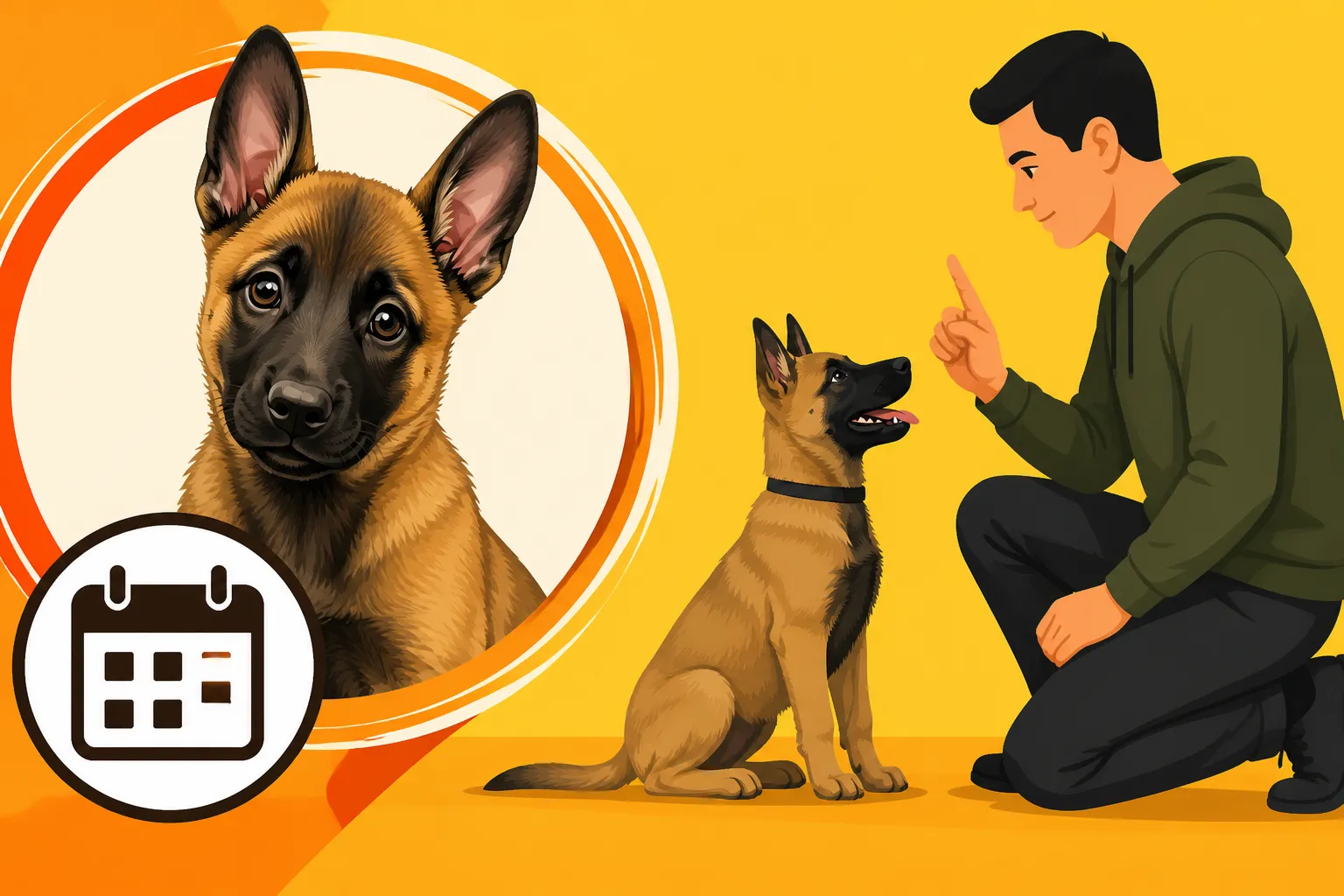
| 8-12 Weeks | Critical Socialization & Foundation | House/Crate Training, Gentle Handling, Bite Inhibition, Name Recognition, Short "Sit/Down/Come" | Confident, resilient puppy; good house manners; understanding of basic cues; soft mouth |
| 12-16 Weeks | Expanded Socialization & Impulse Control | Continued Basic Obedience (Stay, Heel), Leash Manners, "Out/Drop It," Exposure to varied environments, Puppy Classes | Tolerant of handling; beginning impulse control; walking politely on leash; enjoying new places |
| 4-6 Months | Adolescent Structure & Proofing | Reinforcing all commands in distractions, Introducing more complex behaviors, Continued Socialization, Building engagement, Building an Off Switch Into a Belgian Malinois | Reliable recall; strong focus on handler; navigating distractions; beginning to understand boundaries |
Common Pitfalls and How to Avoid Them
Even with the best intentions, it's easy to fall into common traps when training a high-drive breed like a Belgian Malinois. Understanding these pitfalls ahead of time can save you frustration and ensure a smoother, more effective training journey. This isn't a breed where you can wing it; intentionality and consistency are your greatest assets.
The Myth of "Waiting Until They're Older"
This is perhaps the biggest and most damaging misconception when it comes to Belgian Malinois puppies. Some people believe that puppies need to be a certain age, often 4-6 months, or even older, before formal training can begin. They might say, "Let them be a puppy first," or "They're too young to learn anything serious." This mindset is particularly detrimental for a Malinois. As discussed, their critical socialization window closes rapidly, and their capacity for learning is at its peak during those early weeks.
Waiting means you're missing out on vital opportunities to shape their worldview and behavior. It means a rambunctious, high-energy puppy will develop habits—both good and bad—without your guidance. By the time they hit 4-6 months, they're often entering adolescence, a period where they naturally push boundaries and test limits. Trying to start from scratch then is significantly harder than building a solid foundation when they were sponges. You'll be dealing with an already strong-willed, intelligent dog who has learned how to get what they want on their terms. Remember, for a Malinois, training isn't just about obedience; it's about building a language and a relationship that thrives on structure and mutual understanding. Don't hesitate; start the moment that puppy comes home.
Overwhelm Versus Structured Learning
Another pitfall is either overwhelming your puppy with too much, too soon, or providing too little structured learning. Some eager owners might try to cram too many commands or expose their puppy to too many intense situations in a short period. This can lead to stress, shutdown, or a puppy that just tunes you out. Conversely, some owners underestimate the Malinois's need for mental stimulation and structure, thinking that simply letting them run in the yard is enough. For a Malinois, Why Walks Alone Do Nothing for a Belgian Malinois is a profound truth.
The key is short, frequent, and positive training sessions. Think 2-5 minutes, several times a day, rather than one long, hour-long session. Focus on one or two new concepts at a time, reinforcing known behaviors. For example, you can practice "sit" before every meal, before going outside, and before getting a toy. Use positive reinforcement exclusively—treats, praise, and appropriate play. These small, consistent efforts build confidence and a strong work ethic without causing stress. The online courses from BAXTER & Bella can be incredibly helpful here, as they provide structured, step-by-step guidance that prevents both under-stimulation and overwhelm, ensuring a balanced approach to learning. They help you understand how to introduce new concepts in a manageable way, even covering topics like What Puppy Classes Cost a Belgian Malinois Owner and how online resources can supplement traditional classes.
Avoiding Aversives in Young Puppies
In the past, training methods often relied heavily on punishment or aversive tools, even with puppies. However, with a high-drive, sensitive, and intelligent breed like the Belgian Malinois, using harsh corrections or fear-based methods with a young puppy can have disastrous consequences. It can damage your bond, create fear of the handler, suppress natural behaviors, or even lead to aggression as the puppy learns to defend itself from perceived threats. A Malinois needs to trust its handler completely, especially if it's destined for serious work.
Focus instead on positive reinforcement. Reward desired behaviors generously. If your puppy makes a mistake, figure out why and adjust the environment or your expectations, rather than punishing the puppy. For instance, if your puppy is having accidents inside, it's likely your management failure (not taking them out often enough), not a deliberate act of defiance. For a Malinois puppy, the world is their oyster, and they are testing boundaries and learning consequences constantly. You want those consequences to be clear, fair, and primarily positive. Tools like prong collars or e-collars, if used at all, should only be introduced by highly experienced trainers, and never on a young puppy where the goal is solely to build trust, confidence, and a love for learning. You can learn more about how to approach corrections in Whether a Belgian Malinois Puppy Should Be Corrected for Biting.
Establishing a Lifelong Learning Journey
Bringing home a Belgian Malinois puppy and starting early training is just the beginning of a remarkable journey. This breed thrives on having a job, on learning, and on engaging with its human partner. The foundation you lay in puppyhood is critical, but it's the continuous commitment to their education and enrichment that truly allows them to flourish into the magnificent, capable dogs they are meant to be.
Continuing Education Beyond Puppyhood
Training a Belgian Malinois is not a finite project with a clear end date. It's a lifelong commitment. As your puppy transitions into adolescence and then adulthood, their physical and mental capabilities will grow exponentially. What started as basic obedience needs to be proofed and generalized in increasingly distracting environments. They will challenge boundaries, test your consistency, and require new, stimulating outlets for their boundless energy and intelligence. The Age a Belgian Malinois Can Start Real Conditioning is often when owners consider more physically demanding activities, but mental conditioning should never stop.
Consider enrolling in advanced obedience classes, scent work, agility, or even introductory protection sports if that aligns with your goals and your dog's temperament. Many Malinois excel in multiple disciplines because they love to work and learn. Regular refreshers of known commands, introducing new tricks, and complex problem-solving games should become a regular part of your routine. Think of it as keeping their mind sharp and engaged, much like you would continue to learn and challenge yourself throughout your life. A well-trained Malinois is a joy; an under-stimulated Malinois can be a destructive force.
The Role of a Consistent Training Program
Inconsistent training is often worse than no training at all, especially for a Belgian Malinois. This breed thrives on predictability and clear communication. If one day "sit" means sit, and the next day you allow them to jump, you're confusing them and eroding their trust in your leadership. Every family member must be on the same page regarding rules, commands, and expectations. A comprehensive, step-by-step training program can be invaluable for maintaining this consistency.
This is where a resource like BAXTER & Bella's online training program can make a significant difference. It offers a structured curriculum that you can follow at your own pace, ensuring that all family members are using the same language and methods. Such a program helps you systematically introduce new concepts, troubleshoot challenges, and ensure that your Malinois receives consistent guidance throughout its developmental stages. Consistency in training builds clarity for your dog and reinforces your role as a reliable leader. Without it, your Malinois will quickly figure out who they can push around and whose rules are optional.
Embracing the Malinois Drive for Work
Ultimately, the best way to ensure a well-adjusted, happy Belgian Malinois is to embrace their inherent drive and desire to work. This isn't a breed content to be a couch potato, even if they occasionally enjoy a snuggle. They were bred for demanding tasks, and that instinct is deeply ingrained. Your training journey is about guiding that drive into productive and mutually enjoyable activities.
Whether it's advanced obedience, detection work, tracking, agility, or even just complex puzzle toys and vigorous games of fetch, providing your Malinois with mental and physical challenges is paramount. Learn how to Building Engagement With a Belgian Malinois so they see working with you as the most rewarding thing in the world. They want to be your partner, your teammate. The more you engage their incredible intellect and athleticism, the more fulfilled they will be, and the better companion they will become. Failing to provide this mental stimulation and structured activity is often the root cause of behavioral issues in the breed, such as anxiety, excessive chewing, or reactivity. By starting training early and committing to it for life, you unlock the full potential of your extraordinary Malinois.
Disclaimer
This article is for general informational purposes only and does not constitute professional advice. Laws, prices and regulations vary by location and change over time. Consult a qualified professional for guidance on your specific situation.