Why Walks Alone Do Nothing for a Belgian Malinois
Many Belgian Malinois owners quickly discover that simply walking their dogs, even for miles, does little to curb their boundless energy and intense drive. It's a common, frustrating realization: the leash walks that exhaust other breeds leave a Malinois looking for more, often leading to undesirable behaviors at home like chewing, barking, or pacing. This guide will delve into why walks alone fall short for this unique breed and what truly satisfies their complex needs.
The Unseen Energy of a Belgian Malinois: More Than Just Physical
It's a common misconception that a long walk equates to a tired dog. While true for many breeds, the Belgian Malinois operates on a different plane of energy and drive. Their physical stamina is legendary, but their mental engine is equally, if not more, robust. Ignoring this crucial distinction is often where owners hit a wall, feeling like they're doing everything right, yet still facing a dog that seems to bounce off the walls.
Not Just a Physical Drain
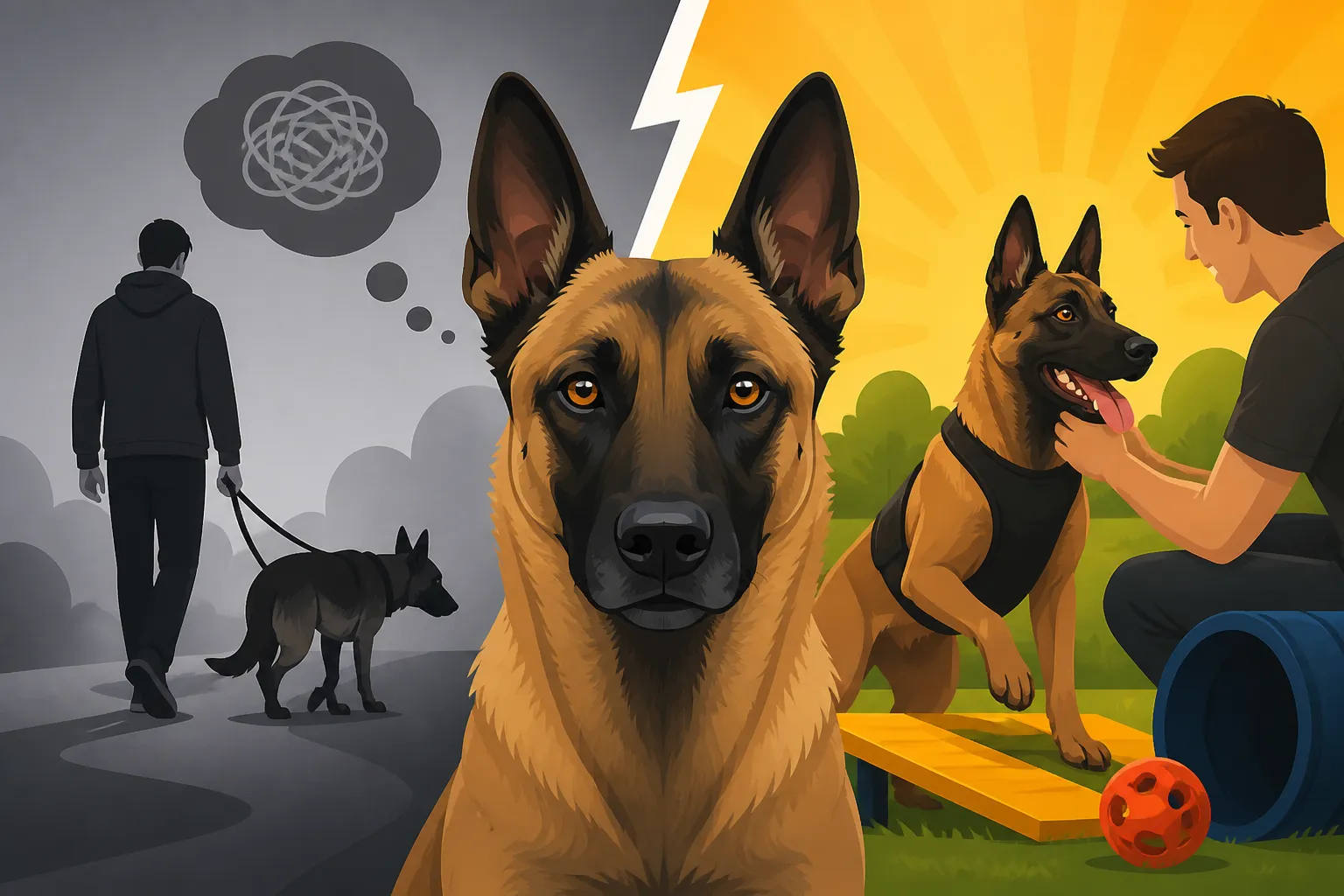
Think of it this way: a human athlete might run a marathon, burning immense physical energy. But if that same athlete is then expected to sit still in a quiet room with no mental engagement, they'll likely feel restless and unfulfilled, even if physically tired. A Malinois is much the same. While their physical body might be able to cover incredible distances, merely moving forward on a leash for an hour or two does little to engage their keen intellect or satisfy their intrinsic drives. They might be panting, sure, but their brain is still buzzing, scanning the environment, searching for a job, a problem to solve, or something to do. This is why a Malinois can come back from a five-mile hike and immediately start tearing up the couch or demanding attention with relentless nudges. The physical exertion was there, but the mental satisfaction was conspicuously absent.
The Genetic Imperative to Work
The Belgian Malinois was not bred for casual strolls in the park. They were developed for intense, demanding work: herding livestock, protecting property, and later, for military and police applications. These roles require a dog that is intelligent, agile, resilient, and possesses an unwavering drive to perform tasks. They needed to think on their feet, problem-solve, and maintain focus under pressure. This deep-seated genetic programming means that simply "being a dog" and going for a walk isn't enough. Their ancestors were problem-solvers, strategists, and partners in high-stakes activities. When these innate abilities are left dormant, they don't just disappear; they manifest in ways we often perceive as "bad behavior." They are wired for purpose, and if we don't provide that purpose, they will invent their own, usually to our detriment. Understanding this fundamental aspect of their heritage is the first step toward truly fulfilling their needs, as explored in articles like The Herding Job the Belgian Malinois Was Built For.
A Perpetual Motion Machine
The phrase "perpetual motion machine" often comes to mind when describing a Malinois. They seem to have an inexhaustible supply of energy, and a significant portion of that energy is directed towards mental activity. Their minds are always "on," observing, processing, and anticipating. A walk, particularly a passive one where the dog is simply walking beside you without much interaction, does not tap into this mental reservoir. It's like having a supercomputer that you only use to run a simple calculator program. The hardware is incredible, but the software isn't being challenged. This can lead to a dog that's physically present but mentally bored, making them agitated and prone to seeking out their own stimulation through less desirable means. They need to use their brains just as much as their legs, perhaps even more so, to achieve true contentment and a state of calm.
The Critical Role of Mental Stimulation and Engagement
For a Belgian Malinois, mental stimulation isn't a luxury; it's a necessity as vital as physical exercise. Without it, their incredible intelligence and drive can become liabilities, turning them into restless, anxious, and destructive companions. Engagement is the key, meaning activities that require their active participation, thought, and problem-solving, rather than passive observation.
Problem-Solving Engages the Brain
Imagine giving a toddler a picture book versus a complex Lego set. The picture book is passive; the Lego set requires active engagement, critical thinking, and the satisfaction of creation. For a Malinois, sniffing out hidden treats, navigating an agility course, or learning a new, complex obedience routine are their equivalent of that Lego set. These activities demand focus, memory, and strategic thinking. They burn mental energy in a way that walking cannot. Interactive puzzle toys, like those you can find on Amazon, can offer a quick hit of problem-solving during downtime, but structured training sessions are paramount. Teaching new tricks, refining existing commands with increased distraction, or even participating in scent work all challenge their brain, giving them a constructive outlet for their inherent intelligence and satisfying their need for a job. This is crucial for building a strong "off switch," something that can be incredibly challenging for this breed without proper mental outlets. For more on this, see Building an Off Switch Into a Belgian Malinois.
The Drive to Learn and Perform
Malinois thrive on learning and the satisfaction of a job well done. They are eager to please their handlers and possess an almost insatiable desire to understand what is being asked of them and then execute it flawlessly. This isn't just about simple obedience; it's about the partnership, the communication, and the feeling of accomplishment. When a Malinois learns a complex chain of commands or successfully tracks a scent, they are experiencing profound mental fulfillment. This drive to perform is a powerful tool for owners. Instead of just walking, incorporate mini-training sessions into your outings. Practice recalls, send-outs, or stays in novel environments. Make the walk a training opportunity, not just a physical excursion. Online platforms, like those offered by BAXTER & Bella, can provide structured courses and guidance for engagement-based training, helping owners tap into this drive and build a stronger bond through learning.
Boredom Leads to Destruction
An unengaged Malinois is a destructive Malinois. Their high drive, coupled with a lack of appropriate mental outlets, often manifests as undesirable behaviors. Chewing furniture, digging up the yard, excessive barking, or even self-mutilation can all stem from profound boredom and frustration. When their intelligent minds aren't given productive work, they will find their own, and usually, it involves your favorite pair of shoes or the drywall. This isn't out of spite; it's a desperate attempt to stimulate themselves and alleviate mental pressure. A long walk might physically tire them for a short time, but if their brain hasn't been engaged, they'll quickly rebound to their destructive tendencies. It's vital to recognize that these behaviors are often a cry for help, a signal that their fundamental needs for mental stimulation are not being met. Ignoring these signals only exacerbates the problem, leading to a dog that becomes increasingly difficult to live with.
Channeling Instincts: Prey Drive Beyond the Leash
One of the most defining characteristics of the Belgian Malinois is their intense prey drive. This isn't just a casual interest in squirrels; it's a powerful, ingrained instinct that significantly impacts their behavior and needs. Understanding and appropriately channeling this drive is crucial, as a simple walk offers little in the way of satisfying this fundamental aspect of their nature.
The Instinct to Hunt and Chase
A Malinois's prey drive is an inherent desire to chase, catch, and "kill" (in a simulated sense) moving objects. This instinct is what makes them phenomenal working dogs in areas like protection sports, detection, and search and rescue. When on a walk, every rustling bush, every distant jogger, and every bird fluttering by can trigger this powerful drive. For a Malinois, a walk is often a frustrating parade of missed opportunities to engage with their primal instincts. They see things they are compelled to pursue, but a leash prevents them. This constant arousal and inhibition can be incredibly stressful and unsatisfying. The sight of a rabbit might turn an otherwise calm walk into a frantic struggle, leaving both dog and owner stressed and unfulfilled. Articles like Channeling a Belgian Malinois's Prey Drive Into a Tug offer great insights into how to work with this powerful instinct.
Walking as a Frustrating Experience
For a Malinois, a walk can be a perpetual tease. They are surrounded by stimuli that ignite their prey drive—cars, bikes, other animals, even falling leaves—but are constantly restrained. This creates a state of chronic frustration. While other dogs might enjoy the smells and the leisurely pace, a Malinois often experiences a walk as a series of near misses and denied fulfillments. They're constantly "working" mentally, assessing targets and yearning to engage, but never getting the release of the chase or the satisfaction of the "catch." This often translates into pulling on the leash, lunging, barking, and hyper-vigilance, making the walk an unpleasant experience for everyone involved. It's not a relaxed outing; it's an exercise in self-control for the dog, often to its mental detriment.
Practical Outlets for Predatory Behavior
Instead of frustrating their prey drive on a walk, owners must provide safe, structured outlets for it. This is where activities involving tuggies, flirt poles, and specific bite work training become invaluable. A good game of tug, where the dog is encouraged to grip, shake, and "kill" the toy, followed by a clear "out" command, provides immense satisfaction. Flirt poles mimic the erratic movement of prey, allowing the Malinois to chase and capture a toy on a string. For those serious about channeling this drive, dog sports like IGP (formerly Schutzhund) or Ring Sports are designed specifically to harness and refine these natural instincts into a highly controlled, constructive activity. These sports give the Malinois a legitimate "job" that involves chasing, biting, and problem-solving, providing an unparalleled level of fulfillment that no amount of walking could ever offer. This is what What Bite Sport Actually Asks of a Belgian Malinois delves into in detail.
The Indispensable Value of Structure and a "Job"
The Belgian Malinois is a creature of purpose. Unlike breeds content with being pampered companions, a Malinois thrives when given clear structure and a defined role. Simply being a family pet, even a much-loved one, is not enough to satisfy their deep-seated need for utility and direction. A walk, by its very nature, often lacks this crucial element of structured work.
Consistency Builds Canine Confidence
In the world of a Belgian Malinois, consistency isn't just a training preference; it's the foundation of their confidence and stability. They need to know what's expected of them, when it's expected, and what the consequences (positive or negative) will be. This predictability creates a secure mental framework within which they can operate. A walk that meanders without purpose or clear commands, where the dog is intermittently allowed to sniff and pull, offers very little in terms of structure. In contrast, a training session, even a short one, provides explicit rules, boundaries, and clear communication, which the Malinois brain craves. This structure helps them understand their place in the world and reduces anxiety, leading to a more balanced and confident dog. Consistency in routine and expectations is key to managing a high-drive breed, particularly during challenging periods like Surviving a Belgian Malinois's Second Year.
Purposeful Activity Over Random Exertion
A walk is often seen as a form of random exertion – just moving the body. While it has its place, for a Malinois, purposeful activity is far more beneficial. "Purposeful" means there's a goal, a task to accomplish, and a clear measure of success. This could be anything from a structured obedience routine where they learn to heel perfectly, perform a series of drops and stays, or retrieve specific objects, to more advanced activities like tracking a scent trail or navigating an agility course. These aren't just exercises; they are mental challenges that require focus, decision-making, and often, partnership with their handler. Compare a dog running aimlessly in a yard to one engaged in a complex obedience pattern: both are physical, but only one is truly taxing the Malinois's mind and fulfilling its inherent drive for a job. This distinction is critical for understanding The Mental Work That Finally Tires a Malinois Out.
Why Casual Play Just Isn't Enough
While a Malinois certainly enjoys a good romp or a game of fetch, casual play, much like a casual walk, often falls short of meeting their deep-seated needs. These activities can provide some physical exertion and a release of energy, but they rarely offer the sustained mental engagement and structured problem-solving that a Malinois truly craves. A game of fetch, for instance, might be fun for a few minutes, but unless it's incorporated into a larger training session with specific commands and expectations (e.g., retrieving different objects on command, bringing them to hand, waiting for release), it quickly becomes just another way to burn off physical steam without engaging their formidable intellect. For these dogs, every interaction is an opportunity for learning and working, and if we treat every interaction as purely recreational, we miss out on vital opportunities to shape and fulfill them. Even the most enthusiastic game of frisbee on an Amazon-purchased disc won't replace the depth of engagement found in structured work.
The Fallout of Under-Stimulation: When a Malinois Goes Rogue
When the specific, intense needs of a Belgian Malinois for mental and physical work are not met, the consequences are often far-reaching and deeply frustrating for owners. These are not minor inconveniences; they are deeply rooted behavioral issues that stem from a profound lack of fulfillment.
Anxiety and Destructive Tendencies
An under-stimulated Malinois is a deeply anxious dog. Their constant internal drive, when left without an appropriate outlet, can create a state of perpetual stress. This anxiety often manifests in destructive behaviors: chewing through crates, tearing up furniture, incessant digging, or even self-harm. They're not being "bad" out of spite; they are trying to cope with an overwhelming sense of frustration and unmet needs. Imagine being highly intelligent and constantly energized, but having absolutely nothing meaningful to do. It would drive anyone to distraction, and for a Malinois, that distraction often involves destroying things. Their intelligence and problem-solving skills, when misdirected, can be incredibly effective at dismantling your home. This is why addressing their underlying need for mental work is far more effective than simply punishing destructive acts. Owners often find themselves overwhelmed and considering rehoming, something discussed in What Happens to an Unemployed Belgian Malinois.
Over-Arousal and Reactivity
Without proper outlets, a Malinois can easily become over-aroused and reactive to their environment. Every new sight, sound, or smell can trigger an intense, disproportionate response. A passing dog might elicit lunging and barking, a ringing doorbell might send them into a frenzied state, or a guest's movement might be met with an intense stare and resource guarding. These behaviors stem from a lack of self-regulation, which is developed through structured work and the learning of an "off switch." When a dog is always operating at a high level of alert and excitement, they struggle to process stimuli calmly. This makes walks, interactions with other dogs, and even simple household activities incredibly challenging. It's a common issue that often leads owners to seek professional help, as the dog's constant state of agitation makes daily life difficult for everyone.
| Behavior Symptom | Common Cause in Malinois | Why Walks Alone Don't Help | Effective Alternative Actions |
|---|---|---|---|
| Destructive Chewing | Boredom, anxiety, unmet drive | No mental challenge, physical exertion too mild | Puzzle toys, structured chew time, advanced obedience tasks |
| Incessant Barking | Lack of mental stimulation, territoriality | Does not engage their "watchdog" brain constructively | Scent work, boundary training, guard work with clear "out" command |
| Leash Reactivity/Pulling | Frustration of prey drive, over-arousal | Creates constant frustration, no outlet for drive | Obedience drills on walks, specific bite/tug work, desensitization |
| Hyperactivity Indoors | Unspent mental and physical energy | Physical exertion insufficient, no brain drain | The Mental Work That Finally Tires a Malinois Out, agility, tracking |
| Nipping/Biting | Unchanneled prey drive, lack of impulse control | Doesn't teach bite inhibition or appropriate outlets | Structured tug, bite sports, specific "out" training |
Dispelling the "Maligator" Myth
The term "Maligator" is often used to describe a Belgian Malinois, highlighting their intense mouthiness and tendency to bite. While cute in a puppy, this characteristic, if left unmanaged, can become a serious problem. However, this isn't simply an inherent aggression; it's often a manifestation of an unchanneled prey drive and lack of appropriate bite inhibition training. When a Malinois doesn't have a structured outlet for their natural biting instincts – whether it's through tug games, bite sports, or even learning to retrieve objects gently – they will use their mouths on whatever is available, be it hands, clothing, or furniture. A walk alone does nothing to teach a dog appropriate bite pressure or provide a constructive outlet for their powerful jaws. The "Maligator" is often a creation of misunderstanding and under-stimulation, rather than an innately vicious animal, a point often emphasized in discussions around The Shark Phase Every Malinois Puppy Goes Through. With proper guidance and training, this intense trait can be honed into a precision tool for performance.
Effective Strategies for a Truly Fulfilled Malinois
So, if walks alone don't cut it, what does? For a Belgian Malinois, fulfillment comes from a multi-faceted approach that addresses their physical, mental, and instinctual needs. It's about engagement, structure, and providing them with a meaningful "job" that taps into their profound capabilities.
Engagement-Based Training: Building Connection
Engagement-based training is paramount for a Malinois. This isn't just about teaching commands; it's about building a strong, communicative relationship where your dog is actively invested in working with you. It involves making yourself the most exciting and rewarding thing in their environment. This kind of training uses positive reinforcement, high-value rewards, and dynamic play to keep the dog focused and motivated. Instead of monotonous repetitions, it involves making training a fun, challenging game. Techniques like "focus games" and "pattern games" teach the dog to look to you for direction and reward, even amidst distractions. Online resources, like training programs offered by BAXTER & Bella, often emphasize these engagement techniques, providing a structured approach for owners to connect with their high-drive dogs. This connection is essential for everything from reliable recall in high-distraction environments (see Recall on a Belgian Malinois in Full Drive) to everyday household manners.
The World of Dog Sports and Working Disciplines
For a Belgian Malinois, dog sports and working disciplines are not just hobbies; they are the ultimate expression of their genetic potential and the most effective way to provide profound fulfillment. These activities are specifically designed to challenge a Malinois on multiple levels – physically, mentally, and instinctually.
- IGP (International Gebrauchshund Prüfung, formerly Schutzhund): This sport involves tracking, obedience, and protection work. It demands immense discipline, focus, and drive, tapping into the Malinois's natural prey and protection instincts in a highly controlled environment.
- Ring Sports (Belgian Ring, French Ring, Mondioring): These are intensely physical and mentally demanding sports involving obedience, jumping, and bite work against decoys. They require incredible athleticism, nerve, and precise control, providing an unparalleled outlet for their drives.
- Agility: While not a bite sport, agility tests a Malinois's speed, athleticism, and ability to follow complex sequences of commands. It's a fantastic mental and physical challenge.
- Scent Work/Detection: Malinois excel at using their powerful noses to locate specific odors. This is a mentally exhausting activity that can be a fantastic alternative or supplement to bite sports, as discussed in Detection Work Instead of Bite Work for a Malinois. It requires intense focus and problem-solving, without the physical demands of protection work.
- Canicross/Bikejoring: For extreme physical output, these activities involve the dog pulling a human on a bike or running alongside them. They provide immense physical exertion but must be paired with mental work to be truly effective.
These activities are not just about burning energy; they are about giving the Malinois a purpose, a challenge, and a structured way to utilize their incredible gifts. They build confidence, reinforce the bond with their handler, and provide a deep sense of satisfaction.
Daily Routine and Rest: The Importance of Balance
Even the most driven Malinois needs a structured daily routine that includes not just intense work, but also periods of calm and rest. A common mistake is to constantly stimulate them, thinking more activity equals a more tired dog. However, without teaching them how to settle and relax, you can inadvertently create a dog that is always "on" and unable to self-regulate.
A balanced routine might look something like this:
- Morning: A short, intense training session (obedience, scent work, tug) followed by a structured walk where commands are practiced.
- Midday: A period of enforced calm, perhaps in a crate or on a "place" mat, with a long-lasting chew or puzzle toy from Amazon.
- Afternoon: Another structured session, perhaps a trip to the training club for sport practice, or a focused fetch game with specific "out" commands.
- Evening: A final short walk, combined with some gentle grooming and quiet time with the family, reinforcing the "off switch."
Teaching a Malinois to relax is just as important as teaching them to work. Crate training is invaluable for this, providing them with a safe, quiet space to decompress. Without this balance, even a highly worked Malinois can remain restless. It's about quality over quantity when it comes to exertion, and ensuring that mental engagement is always a part of the equation, as highlighted in articles like Two Hours and a Job a Belgian Malinois Demands Daily and The Job a Pet Belgian Malinois Can Be Given.
Disclaimer
This article is for general informational purposes only and does not constitute professional advice. Laws, prices and regulations vary by location and change over time. Consult a qualified professional for guidance on your specific situation.