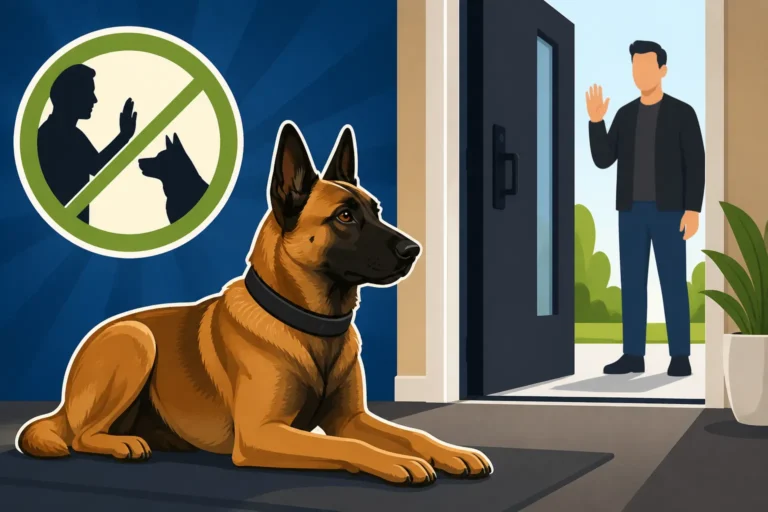
What Happens to an Unemployed Belgian Malinois
The problem with bringing a Belgian Malinois into your life is that many prospective owners simply don't grasp the sheer volume of drive and intelligence packed into these incredible dogs. When a Malinois doesn't have a job to do, a purpose to fulfill, or an outlet for their boundless energy, things can go sideways, fast. This guide is here to shed light on exactly what happens when a Belgian Malinois finds itself "unemployed" and, more importantly, how you can prevent these common pitfalls and ensure your Malinois thrives.
The Core Needs of a Belgian Malinois
Let's be honest, a Belgian Malinois isn't just a dog you take for a couple of walks a day and expect to be content. These dogs were bred for intense work, for herding sheep with unmatched focus and endurance, and later, for police and military roles requiring extreme vigilance, problem-solving, and physical prowess. Ignoring this fundamental truth is the first step towards an "unemployed" Malinois.
Innate Drive and Intelligence
From the moment they open their eyes, Malinois puppies possess an intrinsic drive that sets them apart. They are wired to do, to engage, to solve. This isn't just about physical activity; it's deeply ingrained mental hunger. When you see a Malinois locked onto a ball, a sleeve, or even a treat puzzle, you're witnessing generations of selective breeding for unwavering focus and relentless pursuit. Their intelligence isn't just about learning commands quickly; it's about anticipating, strategizing, and pushing boundaries. If this powerful engine isn't given a positive direction, it will absolutely find its own. It's like having a supercomputer sitting idle on your counter; it might look sleek, but its true potential is going to waste, and frankly, it might start overheating or looking for ways to entertain itself that you won't appreciate.
This inherent drive means a Malinois doesn't just want a job; they need a job for their mental well-being. Think of a Malinois as a professional athlete who's suddenly confined to a sedentary lifestyle – the physical discomfort is obvious, but the mental frustration, the feeling of unfulfillment, is just as profound. They are constantly processing information, assessing their environment, and looking for patterns. Without constructive tasks, their brilliant minds can turn these abilities inward, often manifesting as destructive or obsessive behaviors. Many owners describe it as having a furry, four-legged genius in their home, and if that genius isn't challenged, they'll find challenges for themselves, often at your expense.
High Physical and Mental Energy
It's common knowledge that Malinois are high-energy dogs. People often joke they have an "off switch" that's permanently stuck in the "on" position. But this energy isn't just about running around the yard for an hour. It's about sustained, intense effort, both physically and mentally. A brief walk or a casual romp in the park isn't going to cut it for these dogs; it’s barely a warm-up. They thrive on structured activity that demands their full attention and tires them out in a meaningful way. This often means Two Hours and a Job a Belgian Malinois Demands Daily, not just general exercise.
Beyond the physical, their mental energy is equally demanding. A Malinois can be physically exhausted and still be mentally buzzing, looking for the next thing to engage its mind. This is where many owners miss the mark. They might provide plenty of physical exercise but neglect the intricate puzzle-solving, strategic thinking, and obedience challenges that truly drain a Malinois's mental battery. Without this crucial mental workout, the physical exercise becomes less effective at achieving overall contentment. Imagine spending hours on a treadmill without ever engaging in a challenging project at work; you'd be tired, sure, but your brain would still be restless.
Common Manifestations of Under-Stimulation
When a Malinois's profound needs for physical and mental engagement aren't met, their intelligence and drive don't simply vanish. Instead, they get redirected, often into behaviors that can be incredibly frustrating, damaging, and even dangerous for owners. This is the real-world consequence of a Malinois being "unemployed."
Destructive Behaviors
Perhaps the most common and immediate sign of an under-stimulated Malinois is widespread destruction. This isn't just a puppy chewing on a shoe; this is systematic dismantling of your home. A Malinois isn't content with just a corner of the couch; they might decide to renovate the entire armrest, right down to the springs. Doors, doorframes, drywall, baseboards – nothing is truly safe. Their powerful jaws, bred to hold onto a decoy's sleeve or manage livestock, can make short work of most household items. You might come home to find your carefully arranged living room looking like a tornado swept through, all because your dog was bored and decided to create its own entertainment. We often hear tales of owners returning to find entire kennels bent out of shape, or holes chewed through solid wood doors. This kind of behavior isn't malicious; it's a desperate attempt to burn off pent-up energy and mental frustration. It's not uncommon for owners to realize What a Malinois Destroys in One Unsupervised Hour, leading to significant financial costs.
Beyond chewing, digging can become an obsessive outlet, even indoors. While you might not have a crater in your living room, you could find your garden transformed into a lunar landscape. This is often an extension of their natural prey drive, a simulation of hunting or burying treasures, and it provides a strong physical and mental outlet. Without proper guidance, these destructive tendencies can escalate, moving from nuisance to genuine property damage, making daily life stressful and expensive. Many owners try to find super-durable toys, perhaps from online retailers like Amazon, but even these can succumb to a truly bored and determined Malinois.
Nuisance Behaviors
An unemployed Malinois often develops a suite of nuisance behaviors that can wear down even the most patient owner. Excessive barking is a classic example. This isn't just a dog alerting you to the mailman; it's often incessant, high-pitched, and seemingly without purpose, other than to demand attention or vent frustration. They might bark at shadows, at sounds only they can hear, or simply because they're bored and vocalizing their need for engagement. This can quickly lead to neighbor complaints and stress for everyone in the household.
| Behavior Type | Common Manifestation | Underlying Need | Solution |
|---|---|---|---|
| Destructive | Chewing furniture, digging, tearing up items | Physical outlet, mental stimulation, stress relief | Provide structured exercise, robust chew toys (e.g., KONG, Nylabone), puzzle feeders, supervise closely, crate training. |
| Nuisance | Excessive barking, demand barking, pacing | Attention, mental stimulation, communication of boredom | Teach "quiet" command, ignore demand barking, provide mental tasks (e.g., scent work), consistent routine, ensure sufficient exercise. |
| Hyperactivity | Inability to settle, constant movement, frantic energy | Inadequate mental and physical exertion, lack of "off switch" training | Implement structured play, advanced obedience, dog sports (e.g., agility, IGP), Building an Off Switch Into a Belgian Malinois, relaxation protocols. |
| Anxiety/Stress | Pacing, compulsive licking, self-mutilation, fear-based reactivity | Security, appropriate coping mechanisms, predictable environment | Establish routine, positive reinforcement training, address triggers, possibly consult a veterinary behaviorist, provide safe spaces. |
Demand barking is another classic Malinois trait when they're not adequately challenged. They'll bark at you, nudge you, whine, and paw until they get what they want, whether it's attention, food, or a game of fetch. This quickly teaches them that annoying you is an effective way to get their needs met, reinforcing the very behavior you want to stop. Similarly, constant pacing, panting, and an inability to relax are clear indicators of a dog that's desperately seeking an outlet for its energy. They simply cannot turn off, a problem that often highlights how poorly equipped an owner is for The Age a Working Malinois Starts to Slow, let alone a young, vibrant one. These behaviors aren't just annoying; they're a cry for help from a dog that's trying to cope with an unfulfilled existence.
Hyperactivity and Inability to Settle
One of the most defining characteristics of an unemployed Belgian Malinois is an almost perpetual state of hyperactivity and a complete inability to settle. This isn't just about being energetic; it's a dog that truly cannot "turn off" its motor, even when inside the house. You might find your Malinois constantly pacing, circling, whining, or twitching with restless energy, even after a long walk. They might follow you from room to room, never quite lying down, always on alert, always looking for the next thing. This constant movement is incredibly draining for both the dog and the human inhabitants of the home.
Many owners mistakenly believe that more physical exercise is the sole answer, but often, the problem stems from a lack of mental exertion and the absence of a trained "off switch." Without the cognitive effort required by training or problem-solving, their brains remain in overdrive. Teaching a Malinois to truly relax and settle on command, like a "place" command, is crucial, but it requires consistent effort and understanding of the breed's fundamental nature. If you've never trained Building an Off Switch Into a Belgian Malinois, your home life can feel like living with a perpetual motion machine, making calm moments a rarity. This constant state of arousal can make it difficult for the dog to actually get restorative rest, perpetuating the cycle of hyperactivity and restlessness.
Behavioral and Emotional Decline
The impact of unemployment on a Belgian Malinois isn't limited to just property damage or annoying habits. Over time, the sustained lack of appropriate stimulation can lead to significant behavioral and emotional decline, affecting their mental health and their ability to function happily within a family unit. These issues are often far more complex and heartbreaking to address.
Anxiety and Stress-Related Issues
When a Malinois's needs are consistently unmet, they can develop profound anxiety and stress-related behaviors. This might manifest as obsessive-compulsive disorders, such as relentless tail chasing, flank sucking, or excessive licking to the point of creating hot spots or skin lesions. These are often coping mechanisms, ways for the dog to self-soothe in an environment that is otherwise overwhelming due to under-stimulation. They are trying to find some outlet, even if it's a destructive one, for their pent-up energy and frustration.
Separation anxiety is also rampant in unemployed Malinois. Because they haven't been taught how to be calm and independent, and their internal engines are always revving, being left alone can trigger extreme panic. This can lead to destructive escape attempts from crates or rooms, intense vocalization (howling, barking, whining), and inappropriate elimination. It’s a vicious cycle: the more anxious they become, the more difficult they are to leave, and the less trained they are, exacerbating the problem. Understanding Whether a Belgian Malinois Ever Truly Relaxes is key to addressing these deep-seated anxiety issues.
Reactivity and Aggression
A Malinois that isn't provided with appropriate outlets can quickly become reactive or even aggressive. This isn't necessarily due to an inherently aggressive temperament, but rather a build-up of frustration, over-arousal, and a lack of proper socialization and impulse control. If a dog never learns how to appropriately interact with the world because its handler can't manage its drive, every novel stimulus can become overwhelming. This might appear as leash reactivity towards other dogs or people, lunging, barking, and snarling out of sheer over-excitement, fear, or frustration.
In some severe cases, this can escalate to resource guarding (of toys, food, or even their owner) or redirected aggression, where a frustrated Malinois might snap at a family member if they can't get to the external stimulus causing their arousal. This is a particularly dangerous path for a powerful breed like the Malinois. Without consistent, clear guidance and appropriate outlets for their drive, these dogs are prone to misinterpreting social cues and reacting poorly, posing a risk to themselves and others. This is why Why a Belgian Malinois Is the Wrong First Dog is such a critical piece of advice; inexperienced owners often find themselves quickly out of their depth.
Relationship Strain and Potential Rehoming
The continuous stress and frustration caused by an unemployed Malinois can severely strain the relationship between the dog and its owners, and even among human family members. Living with a constantly destructive, noisy, and restless dog can lead to exasperation, resentment, and a feeling of being overwhelmed. Owners might become frustrated, leading to inconsistent training or, worse, punitive measures that further damage the dog's trust and behavior. The dream of a loyal companion can quickly devolve into a nightmare of constant management and repair.
This strain often culminates in the painful decision to rehome the dog. Many Malinois end up in shelters or breed-specific rescues, often between the ages of one and three, precisely when their drives are at their peak and their behavioral issues have become unmanageable. This is heartbreaking for everyone involved, but it's a direct consequence of failing to meet the breed's fundamental needs. The statistics on Malinois in rescue paint a clear picture of what happens when these dogs are brought into homes unprepared for their unique demands. It's a testament to their demanding nature that Why So Many Belgian Malinois Are Rehomed is a frequently discussed topic among breed enthusiasts.
Providing Productive Outlets for an "Unemployed" Malinois
The good news is that "unemployment" for a Belgian Malinois isn't a life sentence. With dedication, understanding, and consistent effort, you can transform a frustrated, destructive Malinois into a well-adjusted, fulfilled companion. It all comes down to providing appropriate and productive outlets for their immense energy and intelligence.
Structured Exercise Regimens
Forget casual strolls around the block. A Malinois needs work to be truly exercised. This means more than just physical movement; it needs to be mentally engaging. Activities like running alongside a bicycle (once cleared by your vet and after proper conditioning), long-line training in an open, safe area where they can sprint, or even structured fetch sessions where the dog learns to wait, retrieve, and "out" on command are far more beneficial than just letting them run aimlessly. Consider incorporating varied terrains and obstacles into their exercise to challenge both their body and mind. This kind of structured physical exertion helps build muscle, endurance, and mental focus. Running a Belgian Malinois Beside a Bike or utilizing a flirt pole can tap into their prey drive in a controlled manner, providing a significant physical and mental workout.
Furthermore, consider incorporating interval training where you alternate between high-intensity bursts and periods of calm, focused attention. This mimics the stop-and-go nature of real work and teaches them to regulate their arousal. Think about activities like springpole work, which can be a fantastic way to build physical strength and endurance while also providing a mental challenge as they learn to engage and disengage. It's about quality over quantity, though with a Malinois, quantity is also pretty important! They need consistency, so building these sessions into a daily routine is paramount.
Mental Stimulation and Training
Physical exercise alone is rarely enough for a Malinois. Their intelligent minds crave challenges. Regular, consistent obedience training is non-negotiable, but it needs to go beyond basic commands. Think about advanced obedience, precision work, and incorporating proofing in highly distracting environments. This demands intense focus and mental effort. Puzzle feeders, especially those that require multiple steps or problem-solving, can be excellent for meal times. Filling a durable KONG toy (available on Amazon, for instance) with frozen treats can keep a Malinois engaged for a significant period.
Scent detection work is another phenomenal way to engage a Malinois's powerful nose and brain. Even if you're not training for competition, teaching your dog to find specific scents around the house or yard is incredibly fulfilling. This low-impact, high-mental-effort activity can truly exhaust a Malinois in a way that physical exercise alone cannot. Enroll in a virtual training program, like those offered by BAXTER & Bella, which can guide you through structured learning for these types of activities. The Mental Work That Finally Tires a Malinois Out is often more effective than hours of physical exertion for achieving a calm, settled dog. Regularly introducing new tricks and complex sequences also keeps their minds sharp and engaged.
Exploring Dog Sports and Activities
For many Malinois, a dedicated dog sport is the ultimate antidote to unemployment. These sports are designed to channel their natural drives and abilities into structured, challenging activities.
- Protection Sports (IGP, Ring Sport, KNPV): These sports fully utilize a Malinois's prey drive, defensive instincts, and intelligence, combining obedience, tracking, and bite work. It's a serious commitment but incredibly rewarding for the right dog and handler. What Bite Sport Actually Asks of a Belgian Malinois is immense, but the fulfillment is unparalleled.
- Agility: A fast-paced sport that combines athleticism, speed, and precision, requiring the dog to navigate an obstacle course with its handler. It's a fantastic physical and mental workout.
- Tracking/Nose Work: As mentioned, detection work is incredibly stimulating. This can be pursued competitively or just for fun at home. Detection Work Instead of Bite Work for a Malinois offers a fantastic alternative outlet for their drive.
- Obedience/Rally: For those who love precision and teamwork, competitive obedience or rally can provide ongoing goals and mental challenges.
Finding a good club or trainer who understands the Malinois breed is crucial here. They can help you assess your dog's drives and guide you toward the most suitable activity. Not every Malinois needs to be a world champion, but participating in a structured activity provides purpose and a strong bond with their handler, which is what these dogs crave above all else.
Preventing Unemployment from the Start
The best way to address an unemployed Malinois is to prevent it from happening in the first place. This requires a deep understanding of the breed before you even bring a puppy home, and a commitment to providing the right environment and training from day one.
Realistic Assessment of Your Lifestyle
Before you even consider a Belgian Malinois, you need to conduct a brutally honest assessment of your lifestyle, time commitment, and energy levels. Are you truly prepared to dedicate multiple hours every single day to structured exercise, training, and mental engagement for the next 10-14 years? Do you have the financial resources for proper training, potential sport involvement, and specialized care? Many people fall in love with the look or reputation of the Malinois but fail to grasp the day-to-day reality. Why a Belgian Malinois Is the Wrong First Dog for many individuals often comes down to this mismatch of expectations and reality.
A Malinois thrives with an active, experienced owner who is ready to be a leader and provide consistent structure. If your idea of a perfect evening is quiet relaxation, and your weekend involves casual strolls, a Malinois is likely not the right fit. It's vital to research the breed thoroughly, talk to experienced Malinois owners, and ideally, observe them working in real-life scenarios (like at a training club or trial) before making such a significant commitment. Understanding The Kind of Owner a Belgian Malinois Requires is the first, most important step.
Early Training and Socialization
From the moment a Malinois puppy comes home, training and socialization must begin. These aren't just optional extras; they are foundational necessities. Early, positive socialization helps the puppy learn to navigate the world confidently and appropriately, reducing the likelihood of reactivity later on. This means controlled exposure to a variety of sights, sounds, people, and appropriate dogs, always ensuring positive experiences. However, avoid overwhelming the puppy; quality over quantity is key.
Training, especially building a strong foundation of impulse control and basic obedience, is paramount. Malinois puppies go through a notorious "shark phase" where they are incredibly mouthy and seem to bite everything. The Shark Phase Every Malinois Puppy Goes Through can be managed with consistent redirection, teaching bite inhibition, and providing appropriate chew toys. Enroll in puppy classes or work with a professional trainer immediately. The sooner you start shaping their behavior and teaching them how to learn, the better equipped they will be to handle their inherent drives in a positive way. Online resources like BAXTER & Bella can provide excellent puppy training guides and support for new owners.
Establishing a Routine and Clear Expectations
Malinois thrive on routine and clear expectations. They are intelligent dogs who will test boundaries, and if those boundaries are inconsistent or non-existent, they will quickly create their own rules. Establish a consistent daily schedule for feeding, exercise, training, potty breaks, and rest. This predictability provides a sense of security and helps the dog understand what is expected of them throughout the day. Consistency is the cornerstone of successful Malinois ownership.
Every interaction is a training opportunity. Whether it's teaching them to wait patiently at the door, settle on their mat while you eat dinner, or retrieve a specific toy, reinforce desired behaviors constantly. Define what their "job" is, even if it's just being an incredibly well-behaved family companion who participates in dog sports on the weekends. Giving them specific tasks, even simple ones like carrying a toy or fetching the newspaper, helps fulfill their innate desire for purpose. A clear structure, combined with ample appropriate outlets, is the best defense against the destructive and frustrating behaviors of an unemployed Belgian Malinois. Without it, you are almost guaranteed to be Surviving a Belgian Malinois's Second Year rather than enjoying it.
Disclaimer
This article is for general informational purposes only and does not constitute professional advice. Laws, prices and regulations vary by location and change over time. Consult a qualified professional for guidance on your specific situation.