Why a Belgian Malinois Is the Wrong First Dog
Many people, captivated by the stunning athleticism and intelligence of the Belgian Malinois they see in movies or working alongside military and police handlers, start to dream of owning one. They fall in love with the idea of a dog that seems to do it all, a loyal, protective companion who is also incredibly smart and capable. But the harsh reality is that the Belgian Malinois is almost universally the wrong choice for a first-time dog owner, or even an owner who has only ever had "easy" dogs. This guide is here to shed light on precisely why this incredible breed is not suitable for novice handlers, and what significant challenges an inexperienced owner will inevitably face, often leading to heartache for both dog and human.
The Unrelenting Drive and Energy Levels
When people talk about a dog needing "exercise," their mind often goes to a leisurely walk around the block, maybe a trip to the dog park on weekends. With a Belgian Malinois, that understanding of exercise is akin to bringing a race car to a scooter convention. This breed was genetically engineered for high-level, continuous work, herding sheep all day, patrolling vast areas, and responding to complex commands under pressure. Their energy reserves are not just high; they are seemingly infinite, and their drive to do something is an intrinsic part of their being.
Beyond a Simple Walk in the Park
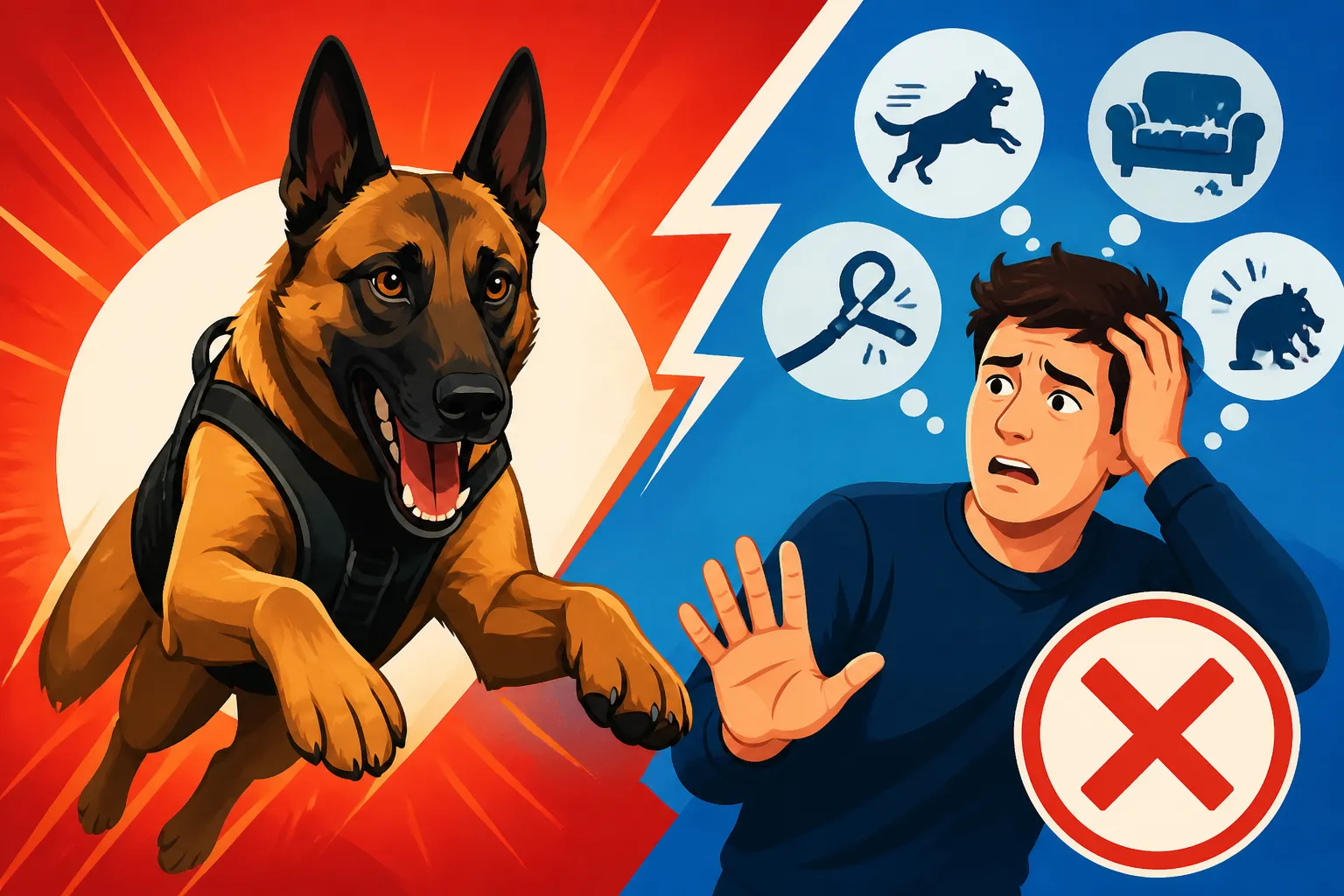
A casual twenty-minute stroll on a leash, no matter how brisk, barely registers as a warm-up for a Belgian Malinois. These dogs require not just physical exertion, but intense physical exertion, often for several hours a day. We're talking about running alongside a bike for miles, high-impact agility work, advanced retrieve games that involve sprinting and jumping, or dedicated training in protection sports or scent detection. Without this level of physical outlet, that boundless energy doesn't just dissipate; it transforms into destructive, anxious, and often frantic behaviors within the home. A Malinois cooped up with insufficient exercise will quickly turn its environment into its personal playground, which often means shredded furniture, chewed walls, or incessant barking. It’s a common story: a new owner brings home a Malinois puppy, assumes daily walks are enough, and then finds their home slowly being dismantled by a dog who simply has too much drive with nowhere to put it.
Consider the sheer physical endurance of these dogs. They were bred to work a full day, herding livestock over rugged terrain, sometimes covering many miles. This genetic predisposition means their bodies are built for sustained output, and their minds crave the engagement that comes with such work. Expecting a Malinois to be content with less is like buying a high-performance sports car and only ever driving it at 20 mph in neighborhood traffic; it's capable of so much more, and that untapped potential will manifest in frustration for both the car and, in this case, the dog's owner. Two Hours and a Job a Belgian Malinois Demands Daily touches on this reality.
The Mental Marathon, Not Just a Physical Sprint
Beyond the physical, a Belgian Malinois possesses an incredibly sharp, fast-thinking mind that requires constant challenge and stimulation. They are problem-solvers by nature, and if you don't give them appropriate problems to solve, they will invent their own. These "problems" often involve finding ways to escape, opening doors, getting into cabinets, or systematically dismantling toys and household items. A bored Malinois is not a calm Malinois; it's a Malinois actively seeking engagement, and if you're not providing it, they will find it in ways you probably won't appreciate.
Mental exercise might include complex obedience routines, advanced trick training, scent detection games, or puzzle toys that require real brainpower to unlock treats. Imagine setting up a scavenger hunt around your house daily, or engaging in multiple short, intense training sessions that challenge their intellect. These aren't optional extras for a Malinois; they are as crucial as physical exercise. Many first-time owners are simply not prepared for the sheer dedication required to keep such a brilliant mind occupied, leading to frustration when their dog appears "stubborn" or "misbehaved" – when in reality, it's simply under-stimulated. They aren't trying to be naughty; they're trying to think. For example, engaging with interactive feeding toys or brain games from a retailer like Amazon can help, but these are just supplementary tools, not replacements for dedicated engagement.
Intense Training Requirements and Handler Experience
The intelligence and drive of a Belgian Malinois are double-edged swords. While they are incredibly capable of learning complex tasks, that same intelligence means they learn everything – good and bad – with astonishing speed and consistency. They are not forgiving of handler errors, and a new owner's lack of experience, confidence, or consistency can quickly lead to deeply ingrained behavioral issues that are incredibly difficult to undo.
Not a Breed for "Figure It Out As You Go"
A Belgian Malinois needs clear, consistent leadership and boundaries from the moment it enters your home. This is not a dog you can "figure out as you go" or learn basic training principles with. Their critical socialization windows are short and intense, and their learning capacity is always on. If you don't know how to teach them what you want, they will default to what works for them, which rarely aligns with polite household manners. For instance, a novice owner might struggle with The Shark Phase Every Malinois Puppy Goes Through, not understanding how to redirect intense puppy biting effectively. This can lead to a dog that believes biting is an acceptable form of interaction.
Experienced handlers understand canine body language, timing of corrections and rewards, and how to structure training sessions to maximize learning and minimize frustration. A first-time owner often lacks this intuition and knowledge, leading to miscommunications, confusion for the dog, and ultimately, a breakdown in the human-canine bond. They might inadvertently reinforce undesirable behaviors or fail to address critical issues before they become deeply rooted habits. The Malinois thrives on structure and predictability, and an inexperienced handler often struggles to provide that reliably.
The Importance of a Firm, Fair, and Consistent Hand
The Belgian Malinois respects a confident, clear, and fair leader. They are not dogs that respond well to wishy-washy commands or inconsistent expectations. If you say "stay," you need to mean "stay" every single time, under every single distraction. If you allow them to break a command once, they will test that boundary repeatedly. This requires a level of consistency that can be challenging even for seasoned dog owners, let alone someone navigating dog ownership for the first time.
Furthermore, while modern dog training emphasizes positive reinforcement, a high-drive Malinois often benefits from a balanced approach that includes clear consequences for undesirable behaviors, delivered with impeccable timing. A novice owner might struggle with this concept, fearing they are being "mean" or inadvertently causing harm. However, a well-timed, fair correction can be crucial for redirecting a Malinois from a dangerous path or reinforcing a non-negotiable command like "leave it" when their prey drive kicks in. Without this kind of clarity, a Malinois can become a self-directed missile, making its own choices regardless of your wishes. Whether Corrections Work on a High Drive Malinois further explores this dynamic. Programs like BAXTER & Bella, while fantastic for building foundational obedience with positive methods, will still require a huge commitment and a fast learning curve from the owner to keep pace with a Malinois.
High-Stakes Socialization and Environmental Management
Socialization is important for all dogs, but for a Belgian Malinois, it's not merely a pleasant outing; it's a critical, ongoing mission that requires careful planning and constant vigilance. Their inherent protective instincts and high arousal levels mean that improper or insufficient socialization can lead to reactivity, fear, or aggression, especially towards strangers and other dogs.
Early, Purposeful Socialization is Non-Negotiable
The window for effective socialization is narrow and crucial, primarily between 3 to 16 weeks of age. During this time, a Malinois puppy needs controlled, positive exposure to a wide variety of sights, sounds, people, and environments. This isn't about letting your puppy run rampant in a dog park; it's about structured introductions where every experience is managed to be positive and non-overwhelming. A first-time owner often doesn't understand the nuance involved in this, or they might think "socialization" means simply letting the puppy meet everyone. The danger here is that a negative experience, or too much overwhelming stimulation, can easily imprint fear or defensive behaviors that are incredibly hard to undo in such a sensitive, high-drive breed.
Without this deliberate, careful early exposure, a Malinois can quickly develop an intense suspicion of anything new, leading to barking, lunging, or even biting out of fear or territoriality. They need to learn that the world is a safe place, that strange noises aren't threats, and that unfamiliar people aren't automatically dangerous. This requires an owner who is confident, proactive, and knowledgeable about canine behavior, able to read their dog's subtle cues and intervene appropriately. Socializing a Belgian Malinois Puppy Safely highlights the delicate balance required.
Navigating a Malinois in the Real World
Once a Malinois reaches adolescence and adulthood, managing them in public or even in varied home environments becomes a skill set in itself. Their prey drive can be triggered by a squirrel, a child running, or even a blowing leaf, demanding an instantaneous and reliable recall or a rock-solid "leave it" command. Their protective instincts mean that if they perceive a threat to their family or territory, they will act on it, and mitigating this requires sophisticated training and boundary setting.
A novice owner might find themselves overwhelmed by a lunging, barking Malinois on a walk, unable to control their dog in the face of distractions, or constantly worried about how their dog will react to a new visitor. This isn't just stressful; it can be dangerous. Without the ability to calmly and effectively manage their dog's intense reactions, a Malinois can quickly become a liability, leading to isolation for both dog and owner. Understanding how A Belgian Malinois That Reacts to Other Dogs develops and how to manage it is crucial, and it's a monumental task for someone new to dog ownership.
The Puppy Stage: A Land Shark on Steroids
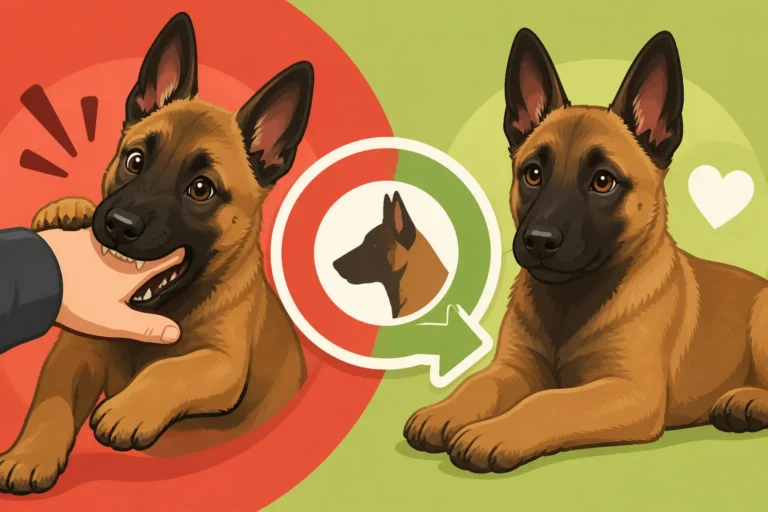
Every puppy nips and bites, it's a normal part of their development. But a Belgian Malinois puppy takes this to an entirely different level. Their biting isn't just cute little nips; it's often hard, persistent, and can be genuinely painful. This "shark phase" can be incredibly alarming and frustrating for an unprepared owner, leading to fear and confusion about their puppy's intentions.
The Unforgiving Reality of Malinois Puppy Biting
Imagine a tiny velociraptor with needle-sharp teeth, seemingly intent on dissecting anything within reach – your hands, your ankles, your clothing. That's a Malinois puppy. Their desire to mouth and bite is intense, a manifestation of their strong prey drive and natural exploration of their world. They don't just gently mouth; they clamp down and hold on, often shaking their heads like they've caught prey. For a first-time owner who expects sweet, gentle puppy kisses, this can be a shocking and distressing experience.
This isn't aggression, but it feels like it, and it requires a level of patience, consistency, and toughness that many novice owners simply don't possess. You have to teach them bite inhibition, redirection, and impulse control, all while your hands are being shredded. If not handled correctly, this phase can either lead to an owner becoming fearful of their own dog or inadvertently teaching the dog that biting is an effective way to get attention or control interactions. A Malinois Puppy That Bites Everything Including You captures the essence of this challenging period.
Surviving the Destructive Puppy Phase
Beyond the biting, Malinois puppies are also incredibly adept at destruction. Their high energy, combined with powerful jaws and an insatiable curiosity, means that anything left within reach is fair game. Couch cushions, table legs, shoes, remote controls – nothing is safe. This isn't out of malice; it's simply what an under-stimulated or unsupervised Malinois puppy does. They explore with their mouths and release pent-up energy through chewing.
Managing this requires constant vigilance, comprehensive puppy-proofing, and effective use of crates and playpens to manage their environment. A first-time owner, often unaware of the extent of this destructive potential, might leave the puppy unsupervised for too long, only to return to a ruined home. This constant battle against destruction adds another layer of stress to an already demanding puppy stage, which for a Malinois can feel like it lasts for years. Providing appropriate, durable chew toys – perhaps even heavy-duty ones found on Amazon – is essential, but even then, a Malinois can often make short work of them.
The Need for an "Off Switch" and Calmness Training
One of the most misunderstood aspects of the Belgian Malinois is the expectation that they will naturally settle down indoors. Many first-time owners assume that if they just exercise the dog enough, it will magically transform into a calm, quiet house companion. The reality is that an "off switch" is not an inherent trait; it is a meticulously trained behavior, and without it, a Malinois can be a relentless, high-strung presence in the home.
Beyond Constant Motion: Teaching a Malinois to Settle
A Belgian Malinois's natural state is "on." They are alert, observing, and ready to spring into action at a moment's notice. To teach them to settle, you must deliberately train calmness. This often involves specific exercises like "place" work, where the dog learns to go to a designated spot (like a mat or bed) and remain there calmly for extended periods, even amidst household activity. It's about teaching them to relax, to disengage from stimuli, and to simply exist quietly.
This training takes time, consistency, and a deep understanding of how to reinforce calm behavior. For a novice owner, it can be incredibly challenging to manage a dog that paces, whines, barks at every sound, or constantly demands attention. They might unknowingly reinforce these demanding behaviors, creating a dog that literally never stops asking for something. Without a trained "off switch," the home environment can quickly become a stressful, chaotic place, not the peaceful sanctuary most first-time dog owners envision. Teaching a Belgian Malinois to Lie Down and Do Nothing delves into this critical training.
The Impact on Household Dynamics
An inability to settle has profound impacts on daily life. Imagine trying to host guests, have a quiet dinner, or simply relax on the couch with a dog that is constantly moving, sniffing, pushing, or demanding attention. A Malinois without an off-switch can become a persistent nuisance, jumping on visitors, counter-surfing, or creating a constant buzz of anxiety in the home. This is especially true in homes with children, where the dog's high energy and arousal can lead to accidental knocks or even protective guarding behaviors if not managed properly.
The psychological toll on the owner is also significant. The constant need to manage, redirect, and entertain an always-on dog can lead to severe burnout and resentment. Owners might find themselves avoiding social gatherings at home, feeling trapped, or experiencing constant low-level stress. This breeds a cycle of frustration where both dog and owner are unhappy, often culminating in the difficult decision to rehome the dog. The idea that a Belgian Malinois ever truly relaxes, without concerted training effort, is a common misconception that plagues new owners.
Unique Breed Traits and Potential Challenges
Beyond the general high drive, the Belgian Malinois possesses specific breed traits that, while valuable in working contexts, can pose significant challenges in a typical pet home, especially for someone new to dog ownership. These include an intense prey drive and pronounced herding instincts, as well as a sensitivity that can manifest as reactivity.
Intense Prey Drive and Herding Instincts
The Belgian Malinois was originally bred as a herding dog, and those instincts are deeply ingrained. This means they have a natural inclination to chase, nip, and gather anything that moves. In a working scenario, this is invaluable for managing livestock. In a suburban home, it can translate to an uncontrollable urge to chase joggers, bicycles, cars, small children, or other pets. Their prey drive is not easily suppressed; it needs to be carefully channeled and managed through structured training.
For a first-time owner, this can be terrifying. A dog that bolts after a squirrel into traffic, or that constantly nips at children's heels, or even relentlessly "herds" family members, can be a source of immense stress and potential danger. Introducing a Malinois into a home with cats, small dogs, or other small animals requires extreme caution and often professional guidance, as their natural instincts can be overwhelming for less experienced owners to manage. A Malinois That Herds Children Around a Yard is a scenario that many unprepared owners face.
Sensitivity and Potential for Reactivity
Despite their tough exterior and high drive, Malinois can also be surprisingly sensitive dogs. They are highly attuned to their environment and their handler's emotions. While this sensitivity makes them excellent partners for experienced trainers who can leverage it for precision work, it also means they can easily become overwhelmed or reactive if not handled with confidence and consistency. Loud noises, sudden movements, or even perceived threats can trigger a strong response.
A novice owner might misinterpret this sensitivity, thinking their dog is "stubborn" or "aggressive" when it's actually fearful or overstimulated. Without the ability to read these subtle cues and intervene proactively, a Malinois can quickly develop reactivity issues – barking, lunging, or freezing in response to various triggers. This is not a "bomb-proof" temperament that can just roll with anything; they need careful guidance and a predictable environment to thrive. For instance, Spotting the Moment a Malinois Goes Over Threshold is a skill an inexperienced owner might struggle to develop.
Financial and Time Investment
Getting a dog is always an investment, but bringing home a Belgian Malinois as a first dog is like signing up for an intensive, high-cost, full-time commitment that many people simply aren't prepared for. The financial outlay extends far beyond the initial purchase price, and the time commitment required is immense.
More Than Just Food and Vet Bills
A Belgian Malinois requires high-quality food to fuel its incredible energy levels, which can be more expensive than standard kibble. Then there are the training costs: while group classes might be sufficient for some breeds, a Malinois often requires private sessions with experienced trainers or enrollment in specialized protection or detection sports clubs. These programs can easily run into thousands of dollars annually. Durable toys and equipment, often quickly destroyed by a high-drive Malinois, also add up. We're talking about heavy-duty tugs and chew items that can withstand their powerful jaws, not the average squeaky toy.
And then there are the potential vet bills. A working-line Malinois is prone to injuries associated with their intense activities, from torn ligaments to pad injuries. They also benefit from regular check-ups and potentially joint supplements, all of which add to the ongoing costs. Consider that Emergency Care After a Malinois Training Injury is not uncommon. Many owners find themselves unprepared for the cumulative financial burden of keeping a healthy, well-adjusted Malinois, especially when factoring in specialized care or behavioral interventions that a novice owner might inevitably need.
A Full-Time Commitment, Not a Part-Time Hobby
Owning a Belgian Malinois is not a hobby you can pick up on weekends; it's a lifestyle. Their daily needs for physical exercise and mental stimulation demand hours of dedicated time every single day. This means structuring your entire schedule around your dog's needs: morning training, midday exercise, evening sessions, and constant management in between. This isn't just a matter of "making time"; it requires a fundamental shift in how you live your life.
For a first-time owner, this can be an overwhelming realization. Spontaneous trips, long workdays, or even just a lazy Sunday can become sources of guilt and stress if the dog's needs aren't met. They might find themselves constantly playing catch-up, leading to an under-exercised, under-stimulated dog and an exhausted, frustrated owner. The amount of time dedicated to Keeping an Old Belgian Malinois Mentally Busy is something to consider even years down the line. Most novice owners simply cannot sustainably provide the intensive, daily, unwavering commitment a Malinois requires to thrive, both physically and mentally.
| Trait / Need | Belgian Malinois | Typical "First Dog" (e.g., Lab, Golden) |
|---|---|---|
| Energy Level | Extremely high, requires 2+ hours intense activity daily | Moderate to high, satisfied with walks and play |
| Mental Need | Requires constant, complex mental challenges | Benefits from training, but less prone to destructive boredom |
| Training Pace | Learns incredibly fast, but also bad habits | Learns well, more forgiving of handler errors |
| Handler Skill | Experienced, confident, highly consistent handler needed | Patient, consistent handler sufficient |
| Puppy Biting | Intense, painful, requires diligent redirection | Nips, but generally less severe and easier to redirect |
| Socialization | Crucial, meticulous, highly managed exposure needed | Important, but generally more forgiving |
| Prey Drive | Very high, requires strong impulse control training | Present, but often more manageable |
| Home Life | Needs structured "off switch," always alert | Generally settles easily indoors |
| Destructive Tendency | Very high without proper outlet/management | Moderate, usually linked to boredom or anxiety |
| Financial Cost | High (training, specialized equipment, potential vet bills) | Moderate (standard food, basic training) |
| Time Commitment | Full-time lifestyle change, daily dedication | Significant, but often more flexible |
The Psychological Toll on a Novice Owner
It's not just the dog that suffers when a Malinois is placed in the wrong home. The psychological burden on a first-time owner can be immense, leading to feelings of failure, guilt, and severe stress. The dream of a perfect companion quickly gives way to a challenging, often overwhelming, reality.
Overwhelm, Frustration, and Burnout
Imagine bringing home a dog you adore, only to find yourself constantly battling its intense energy, destructive tendencies, and seemingly endless demands. For a novice owner, this can quickly lead to feelings of overwhelm and frustration. They might question their abilities, feel like they're doing everything wrong, and experience constant anxiety about their dog's behavior. The sheer intensity of the Malinois can wear down even the most well-intentioned individual.
This constant stress often leads to burnout. The joy of dog ownership is replaced by a sense of dread, and the bond with the dog suffers. Owners might try various training methods, sometimes desperate ones, but without the foundational knowledge and experience, these efforts often fall short, further exacerbating the problem. The heartbreaking reality is that many Belgian Malinois end up in rescues or shelters precisely because their first-time owners were simply unprepared for the profound commitment required. Why So Many Belgian Malinois Are Rehomed is a testament to this issue.
The Importance of Realistic Expectations
Before considering a Belgian Malinois, especially as a first dog, it is crucial to engage in a brutally honest self-assessment. Are you prepared to dedicate several hours every single day to physical exercise and mental training, rain or shine, even when you're tired or sick? Do you have the financial resources for potentially extensive training, specialized equipment, and vet care? Do you possess the confidence, consistency, and patience to lead a highly intelligent, strong-willed, and sensitive dog?
It's okay to admit that this breed might not be the right fit for your current lifestyle or experience level. There are countless wonderful dog breeds out there that are much more forgiving for a first-time owner, offering companionship without the extreme demands of a Malinois. Gaining experience with a more manageable breed first, or shadowing an experienced Malinois handler, can provide invaluable insight and prepare you for the unique challenges of this exceptional, but incredibly demanding, canine partner. If you're unsure if you possess The Handler Experience a Belgian Malinois Needs, it's a strong indicator that this breed is not for you as a first dog.
Disclaimer
This article is for general informational purposes only and does not constitute professional advice. Laws, prices and regulations vary by location and change over time. Consult a qualified professional for guidance on your specific situation.