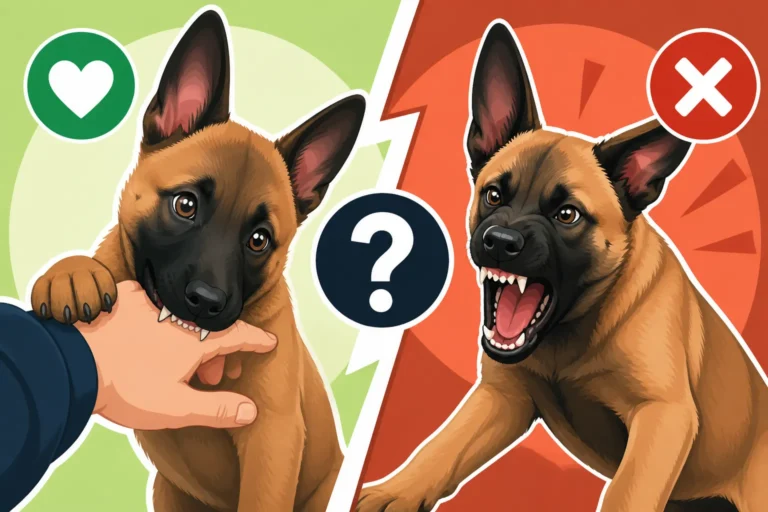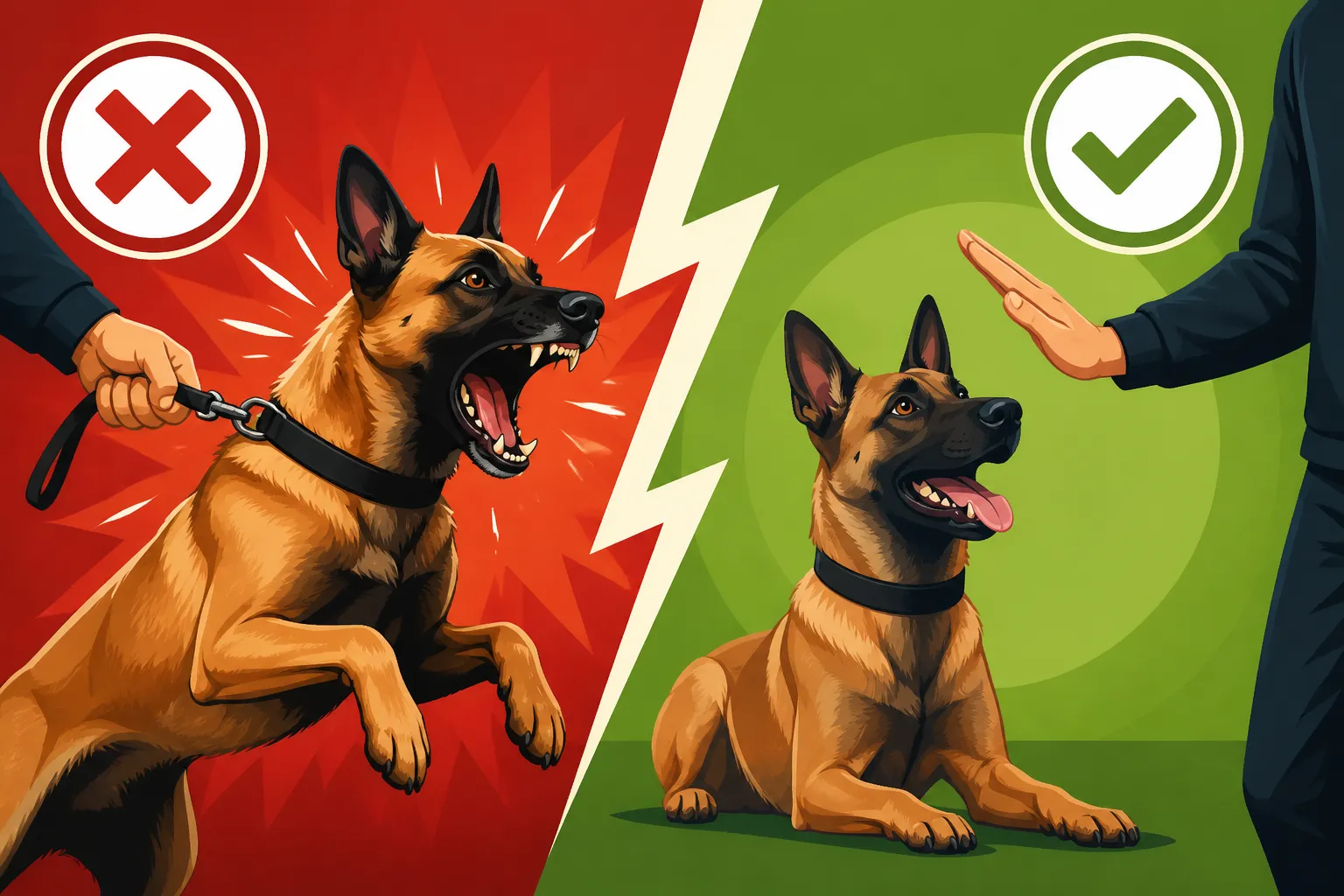
Whether Corrections Work on a High Drive Malinois
It's a question that echoes through every Malinois owner's mind at some point: "Will corrections actually work on this high-drive dog, or am I just fighting a losing battle?" Many of us have faced that moment when our highly driven Belgian Malinois seems to be operating on a different wavelength entirely, completely oblivious to our attempts at correction. This guide aims to demystify corrections for the Malinois owner, helping you understand when and how they can be effective, and perhaps more importantly, when other strategies are needed to truly shape your dog's intense energy into a cooperative partnership.
Understanding "High Drive" in a Belgian Malinois
Before we can even talk about corrections, we need to genuinely grasp what "high drive" means when you're talking about a Belgian Malinois. It's not just a cute descriptor; it's a fundamental aspect of their being, influencing everything from their learning style to their daily needs. To ignore this foundational truth is to set both yourself and your Malinois up for endless frustration.
What "High Drive" Truly Means for This Breed
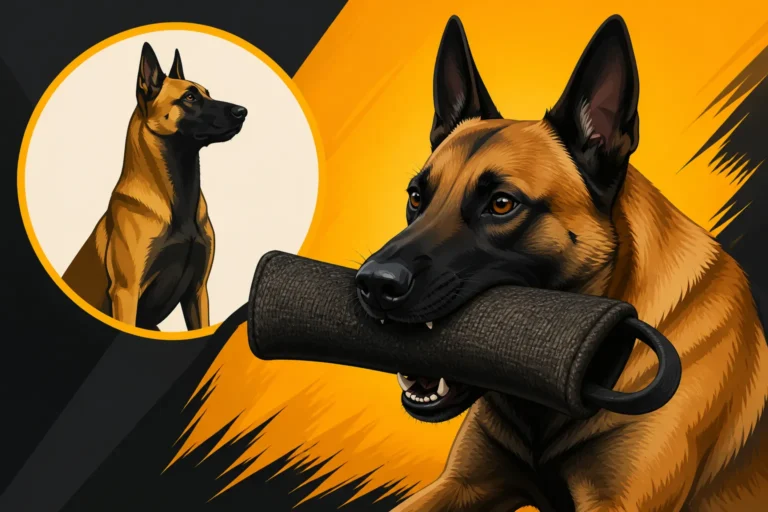
When we say a Malinois is "high drive," we're not simply saying they have a lot of energy, though that's certainly a part of it. It's a complex cocktail of genetic predispositions, primarily a profoundly strong prey drive, often coupled with a significant defense drive and an almost insatiable need for mental and physical engagement. These dogs were quite literally bred to work, to patrol, to respond with incredible speed and focus to perceived threats, and to engage relentlessly with a task until it's completed. Their nervous systems are wired differently, with a lower threshold for arousal and a higher capacity for sustained intensity. This means a rustling leaf can trigger a full-blown chase sequence, or a sudden noise can shift them into a hyper-vigilant state in an instant. It's an internal engine that's always running, often at high RPMs, making them incredibly potent partners in sport and work, but equally challenging in a pet home. An "unemployed" Malinois often finds its own (usually destructive) job. What Happens to an Unemployed Belgian Malinois
This inherent drive means their perception of the world is often colored by opportunity for engagement. A simple walk isn't just a stroll; it's a sensory explosion, a chance to hunt, to observe, to react. Their ability to focus can be legendary on a specific task, but their ability to disengage from a self-selected task can be almost nonexistent without expert guidance. This deep-seated intensity can make common household scenarios feel like high-stakes training exercises. Imagine trying to get your dog to "leave it" when a squirrel dashes across the yard, or to settle when the neighbor's kids are playing loudly next door. For a Malinois, these aren't minor distractions; they are primal calls to action that require a significant amount of self-control, something they aren't born with, but must be diligently taught.
The Malinois's Threshold and How It Affects Training
Every dog has a threshold, which is the point at which they become too overstimulated, stressed, or excited to learn effectively or respond to cues. For a high-drive Malinois, this threshold is often much lower and can be reached much faster than with many other breeds. When a Malinois crosses that threshold, their cognitive brain essentially takes a backseat to their reactive, emotional brain. They stop thinking and start doing, often driven by instinctual urges. This state might manifest as frantic spinning, obsessive barking, lunging, or even a sudden inability to hear or process familiar commands. It's like trying to have a calm conversation with someone who's just won the lottery or narrowly escaped a car crash – their system is flooded, and rational thought is secondary.
Attempting to apply corrections when your Malinois is already "over threshold" is often futile and can even be detrimental. At best, the correction simply won't register, adding to your frustration. At worst, it can create conflict, fear, or a sense of unfairness, eroding the trust you've worked so hard to build. The dog might learn to suppress the external expression of the behavior in your presence, but the internal arousal remains, waiting for an opportunity to explode elsewhere. A key part of training a Malinois, therefore, isn't just about applying corrections, but about understanding and managing their arousal levels to prevent them from reaching that point of no return. This proactive approach involves recognizing the subtle signs of escalating stress or excitement and intervening before they completely lose their marbles. Spotting the Moment a Malinois Goes Over Threshold
The Role of Corrections in Malinois Training
The word "correction" itself often carries a lot of baggage and misunderstanding in the dog training world. For a high-drive breed like the Malinois, clarity on what we mean by correction, and how it fits into a broader training philosophy, is absolutely critical.
Defining "Correction" in Modern Dog Training
Let's clear the air: when we talk about corrections for a Malinois, we're generally not talking about harsh, physical punishment. Modern, ethical training, especially for a sensitive yet powerful breed, views a correction as a precisely timed, minimal intervention designed to interrupt an undesirable behavior and redirect the dog towards a desired one. It's about clear communication, not retribution. Think of it less as "punishing" the dog and more like saying "no, that's not what I want, try this instead." The goal is to make the undesirable behavior less rewarding or less appealing than the desired one, without breaking the dog's spirit or causing undue fear.
A well-applied correction, for a Malinois, should be just enough to grab their attention and break their focus on the wrong behavior, allowing you to re-engage them and guide them. This might involve a verbal marker ("Ah-ah!"), a specific leash pop, or a vibration/low-level stimulation from an e-collar. The effectiveness hinges entirely on the dog understanding why the correction occurred and what the alternative behavior should be. Without that clear connection, a correction is just noise or discomfort, which can quickly lead to a Malinois becoming either "hard" (ignoring you) or "soft" (shutting down) – neither of which is conducive to a good working relationship.
When Traditional Corrections Fall Short with a Malinois
For a high-drive Malinois, simply saying "no" or giving a generic leash tug often isn't enough, and in some cases, it can actually make things worse. Because of their intense drive, traditional corrections can fall short in several ways:
- Suppression vs. Understanding: A Malinois might learn to suppress a behavior when you're present to avoid the correction, but they haven't truly learned why the behavior is undesirable or how to manage their internal drive. The moment you're not looking, or the stakes are higher, the behavior often re-emerges with full force. This isn't true learning; it's simply evasion.
- Increased Drive or Conflict: Sometimes, for a truly high-drive Malinois, a correction can inadvertently fuel their drive or create a conflict situation. If they perceive your correction as an obstacle to their goal (e.g., getting to a squirrel), they might push harder against it, essentially seeing it as part of the "game." This can escalate into a power struggle rather than a teaching moment. They might even become frustrated or fearful, leading to defensive behaviors.
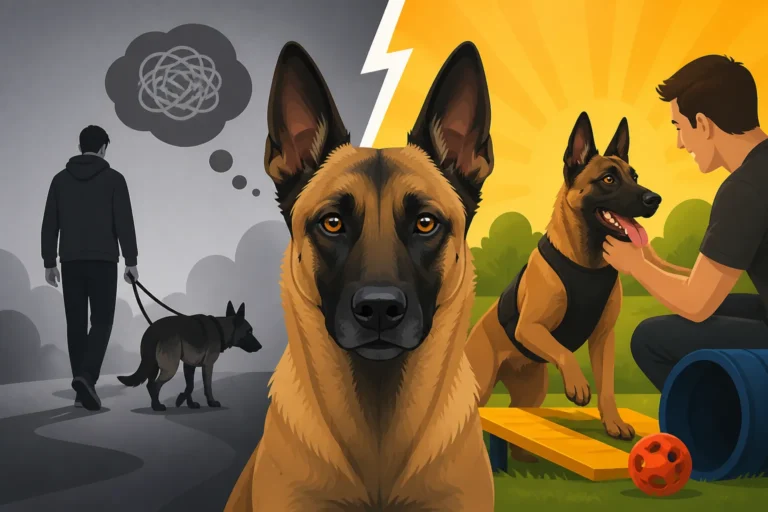
- Creating a "Hot Dog": Inconsistent or overly harsh corrections, especially without teaching a clear alternative, can turn a Malinois into what's sometimes called a "hot dog" – a dog that's constantly on edge, anxious, and reactive because they're unsure of what's expected or when a correction might come. This erodes their confidence and can lead to a dog that's less willing to try new things or offer behaviors for fear of being wrong. A Belgian Malinois That Shuts Down Under Correction Their natural intensity needs to be channeled, not squashed.
The Art of Effective Correction for High-Drive Malinois
Effective corrections for a Belgian Malinois are less about brute force and more about finesse, timing, and a deep understanding of your individual dog. It's a nuanced dance, not a bludgeoning.
Precision and Timing: The Keys to a Malinois's Understanding
The single most critical factor in making a correction work for a Malinois is absolute precision and impeccable timing. These dogs process information incredibly fast. A correction that comes even a second too late will be disconnected from the behavior it's intended to address in your dog's mind. They won't understand why it happened, only that something unpleasant occurred. This can lead to confusion, anxiety, or even resentment, rather than a clear learning experience.
Imagine your Malinois is about to lunge at a passing car. The correction needs to happen the instant they begin to fixate, before the lunge, or even the subtle shift in their body language that indicates the lunge is coming. It's about interrupting the thought or intent to perform the unwanted behavior, not punishing the fully executed action. This requires handlers to be incredibly observant, anticipating their dog's next move. Many experienced Malinois handlers develop an almost telepathic connection with their dogs, reading micro-expressions and body shifts to intervene at just the right moment. The correction should be swift, clear, and immediately followed by an opportunity for the dog to perform the correct behavior, which is then heavily rewarded. This sequence—undesired behavior (interrupted) -> desired behavior (rewarded)—is how a Malinois truly learns.
Matching the Correction to the Malinois's Drive Level
One size does not fit all when it comes to corrections, especially with a Malinois. The intensity and type of correction must be carefully matched to the dog's current drive level, their individual temperament, and the context of the situation. A light verbal "no" that might work for a calm Malinois reaching for a dropped crumb will be completely ignored by the same dog when a rabbit streaks across the field. In high-arousal situations, a more tangible interruption is often necessary to break their focus.
This doesn't mean resorting to harshness. It means understanding that for a dog with an exceptionally high pain or distraction tolerance due to adrenaline and drive, a very mild correction may literally not register. The key is to use the lowest level of correction necessary to achieve the desired interruption. For some Malinois, this might be a sharp verbal "Hey!", for others, it could be a swift, firm leash pop, or a precise, low-level e-collar stimulation. The goal is always to get their attention, not to inflict pain or fear. The effectiveness comes from the clarity and consistency of the communication, not the sheer force. A correction that causes too much fear or pain will only teach avoidance or create conflict, making your Malinois wary of you, rather than a more attentive student.
The Importance of a Strong Foundation and Relationship
Corrections, no matter how precise or well-timed, are merely one tool in the vast toolbox of dog training. For a high-drive Malinois, they are almost meaningless without a bedrock of trust, clear communication, and a strong relationship between dog and handler. If your Malinois doesn't respect you as a leader, isn't engaged with you, or doesn't understand your basic expectations, corrections will be seen as arbitrary punishments rather than guiding signals.
Building this foundation means investing heavily in positive reinforcement from day one. It means teaching solid obedience commands through reward-based methods, creating high value for working with you, and building enthusiasm for training. When your Malinois views you as the source of all good things—food, toys, praise, opportunities for work—they are far more likely to listen and respond positively to an interruption. Building Engagement With a Belgian Malinois They want to please you because your relationship is valuable to them. Think of it like a coach and an athlete: the athlete respects the coach's critical feedback because there's a foundation of trust, shared goals, and past successes. Without that, the criticism is just discouraging. For a Malinois, this relationship is paramount. Without it, corrections become punitive, not instructive.
Alternative and Complementary Strategies to Corrections
While corrections can be a vital component of training a high-drive Malinois, they should never be the only tool in your arsenal. In fact, relying solely on corrections is often a recipe for disaster. A truly effective training program for a Malinois heavily integrates proactive strategies that channel their drive, build self-control, and reinforce desirable behaviors.
Building an "Off Switch" and Self-Regulation
One of the greatest challenges, and triumphs, with a Malinois is teaching them how to be calm. Their default setting is often "on," and an owner's success often hinges on their ability to Building an Off Switch Into a Belgian Malinois. This isn't about crushing their spirit; it's about teaching them self-regulation and control. Exercises like "place" command, where the dog learns to calmly stay on a mat for extended periods amidst distractions, are invaluable. Structured relaxation protocols, where you actively reward calm behavior in various settings, help them understand that stillness is also a desirable state.
Teaching an "off switch" also involves managing their arousal during activities. Rather than letting them get to a frenzied state, you might introduce breaks during play, asking for a sit or down before resuming. This teaches them that engaging with you or a toy requires a moment of control first. This kind of mental work is just as, if not more, exhausting than physical exercise for a Malinois, and it helps them build the neural pathways for impulse control that might not come naturally to them. The Mental Work That Finally Tires a Malinois Out
Redirection and Management of Drive
Since you can't eliminate a Malinois's drive, the smartest approach is to redirect it into productive, acceptable channels. This means being incredibly proactive about managing their environment and offering appropriate outlets for their energy. If your Malinois is prone to chasing squirrels, teach them to Channeling a Belgian Malinois's Prey Drive Into a Tug instead. When they see a squirrel, cue them to focus on you and reward them with a high-value tug toy or a quick game of fetch, diverting that explosive energy.
Environmental management is also key. Can you prevent your Malinois from practicing unwanted behaviors in the first place? If they jump on guests, keep them on a leash when people enter. If they counter-surf, ensure nothing tempting is left on counters. These are not permanent solutions, but they buy you time to train the desired behavior without the dog practicing the undesirable one. This proactive approach minimizes the need for corrections by setting your dog up for success. Understanding what a Belgian Malinois destroys in one unsupervised hour can be a stark reminder of the importance of management.
Leveraging Positive Reinforcement for Desired Behaviors
For all their intensity, Belgian Malinois are incredibly intelligent and eager to work for things they value. This makes them excellent candidates for positive reinforcement training. Instead of constantly correcting what they do wrong, focus heavily on rewarding what they do right. Did they offer a calm sit when the doorbell rang? Jackpot with treats! Did they walk politely past another dog without reacting? Shower them with praise and a favorite toy.
The sheer power of positive reinforcement lies in building a strong positive association with desired behaviors. When a Malinois learns that performing a certain action (like settling down, walking nicely, or coming when called) earns them a highly valued reward, they become intrinsically motivated to offer that behavior more often. This creates a dog that wants to work with you, rather than one that simply avoids doing wrong. Companies like BAXTER & Bella offer online puppy and dog training programs that heavily emphasize positive reinforcement and building engagement, which can be an excellent resource for laying this critical foundation from a young age, teaching your Malinois to choose the right path because it's rewarding.
Tools and Techniques for Implementing Corrections (Carefully)
When corrections are deemed necessary for a high-drive Malinois, the choice of tools and the technique of their application are paramount. These aren't just "things you put on your dog"; they are communication devices that, when used correctly, can provide clarity and safety.
E-Collars: Precision Communication, Not Punishment
The e-collar, or electronic collar, is perhaps one of the most misunderstood and controversial tools in dog training. For a high-drive Malinois, however, when used correctly by an experienced handler, it can be an incredibly precise and effective communication tool, offering a "tap on the shoulder" that breaks focus without causing fear or pain. The goal is to use the lowest possible level of stimulation that your individual dog perceives, often feeling like a mild vibration or a TENS unit sensation, not a shock.
The key to its effectiveness with a Malinois lies in timing and consistency. An e-collar allows for instantaneous correction, even at a distance, which is crucial for a dog that moves as quickly and thinks as fast as a Malinois. It can be used to interrupt an unwanted behavior the moment it begins, such as chasing a deer or failing a recall, allowing the handler to immediately guide the dog to the correct response. For instance, if your Malinois is blowing off a recall cue, a timely, low-level stimulation paired with the recall cue can help them connect the cue to the action, breaking their focus on the distraction. Without proper conditioning and an understanding of E-Collar Timing on a Belgian Malinois, an e-collar can indeed be misused and cause harm, so seeking guidance from a professional who understands high-drive working breeds is essential. When considering an e-collar, be mindful of the cost involved for a quality unit that offers precise control and reliability. What a Quality E-Collar Costs for a Belgian Malinois
Prong Collars: For Clarity, Not Crushing
Like e-collars, prong collars often illicit strong reactions, but they too can be a valuable tool for communicating clear boundaries to a high-drive Malinois when used properly. A well-fitted prong collar distributes pressure evenly around the dog's neck, mimicking the corrective nip a mother dog might give her puppies. Its design means that only minimal leash pressure is needed to provide a clear, undeniable signal to the dog, making it far less likely to cause damage to the trachea than a flat buckle collar or even some choke chains if a dog pulls excessively.
For a Malinois that pulls relentlessly on a leash, a prong collar can provide the immediate feedback needed to teach loose-leash walking. The correction is not meant to hurt but to provide a consistent, clear physical reminder that pulling creates pressure, and slack leash removes it. This allows the handler to communicate "no pulling" without having to use significant physical strength, which is often a losing battle with a powerful Malinois. Again, proper fit and technique are paramount. The collar should sit high on the neck, directly behind the ears. Misuse can certainly cause discomfort or even injury, so professional instruction on Whether a Prong Has Any Place on a Malinois is highly recommended before incorporating this tool into your training. Many reputable brands are available on platforms like Amazon, but always prioritize quality and proper sizing.
The Handler's Body Language and Voice as a Correction
Beyond physical tools, the most powerful and immediate corrective tool you possess as a Malinois owner is your own body language and voice. These dogs are incredibly attuned to their handlers, often reading subtle shifts in posture, eye contact, and vocal tone with remarkable accuracy. A sharp, firm verbal cue (a "No!" or "Ah-ah!") delivered with conviction can be an effective interruption. The tone should be authoritative and clear, not angry or fearful.
Similarly, your physical presence can act as a boundary. Stepping into your dog's space, blocking their path, or even a sudden change in your posture can communicate disapproval or a need for them to cease an action. For a Malinois, who thrive on clear leadership, these non-verbal cues reinforce your role and expectations. This form of correction relies heavily on the handler's ability to be calm, confident, and consistent. A hesitant or unclear signal from you will only create confusion for your Malinois. Cultivating The Handler Experience a Belgian Malinois Needs involves mastering these subtle, yet potent, forms of communication.
Common Pitfalls and What to Avoid
Even with the best intentions, it's easy to fall into common traps when using corrections with a high-drive Belgian Malinois. Avoiding these pitfalls is as important as understanding how to apply corrections effectively.
Inconsistent Corrections and Mixed Signals
Inconsistency is the bane of all dog training, but it's especially damaging when working with a Malinois. These intelligent dogs are masters at pattern recognition, and if a behavior is sometimes corrected and sometimes ignored, they quickly learn that the correction is arbitrary or only applies under specific circumstances. This creates an unpredictable environment, leading to confusion, anxiety, and a dog that is less likely to respond reliably. For example, if you sometimes correct jumping on guests but other times allow it because you're busy, your Malinois will struggle to understand the rule. They might just jump more cautiously, or only on certain people, or only when you're distracted.
Mixed signals are equally problematic. If one family member uses a specific correction for a behavior, but another uses a different one, or worse, rewards the behavior, the Malinois receives conflicting information. This undermines the clarity of the correction and makes it incredibly difficult for the dog to generalize rules across different situations or people. Consistency across all handlers and situations is non-negotiable for a Malinois. Every single time the behavior occurs, there needs to be a clear, consistent response.
Over-Correcting and Suppressing Drive
While corrections are about interrupting unwanted behavior, there's a fine line between providing clarity and stifling a Malinois's natural exuberance. Over-correcting—using corrections that are too frequent, too intense, or applied without sufficient positive reinforcement—can have severe negative consequences. A Malinois thrives on drive and motivation; it's what makes them such incredible working partners. If corrections consistently suppress this drive, the dog can become shut down, hesitant, or even robotic in their responses.
An over-corrected Malinois might perform tasks, but without the joyful enthusiasm and independent problem-solving that makes the breed so special. They might become fearful of offering behaviors for fear of being wrong, leading to a loss of confidence and initiative. In extreme cases, it can even lead to learned helplessness, where the dog simply gives up trying. The goal is to channel and sculpt their drive, not extinguish it. When your Malinois is corrected, you want them to think, "Oops, wrong answer, let me try something else," not "Oh no, I'm scared to do anything." This requires a careful balance and a deep understanding of your individual dog's temperament.
Relying Solely on Corrections Without Teaching
Perhaps the biggest mistake an owner can make with a high-drive Malinois is to rely exclusively on corrections without actively teaching and rewarding desired alternative behaviors. Corrections alone only tell the dog what not to do; they don't teach the dog what to do instead. This leaves a powerful, intelligent dog in a state of perpetual uncertainty, trying to guess the right answer while being corrected for the wrong ones.
Imagine trying to navigate a maze where every wrong turn results in a small shock, but you're never shown the correct path. You'd quickly become stressed, frustrated, and possibly refuse to move at all. A Malinois is no different. Every correction for an unwanted behavior must be immediately followed by an opportunity to perform the desired behavior, which is then heavily reinforced. For instance, if you correct a Malinois for lunging at another dog, you immediately ask for a "look at me" or a "heel" and reward that calm, focused behavior. Corrections should always be part of a balanced training approach that prioritizes positive reinforcement and clear guidance, making it clear to your Malinois what is expected of them.
| Scenario | Undesired Behavior | Common Correction Approach | Desired Behavior | Reinforcement Example |
|---|---|---|---|---|
| Greeting Guests at Door | Jumping, barking excessively | Verbal "No," body block, leash pressure | Four paws on floor, calm sit/down | High-value treat, calm praise, toy if calm |
| Walking Past Distraction (Dog/Squirrel) | Lunging, fixating, pulling | Sharp leash pop/e-collar tap, directional change | Focused heel, "look at me," calm ignore | Treat, praise, continuation of walk, tug |
| Counter Surfing/Stealing Food | Sniffing, placing paws on counter | Verbal "Ah-ah!", physical block, "leave it" cue | Disengaging from counter, walking away | Treat tossed on floor, praise, toy distraction |
| Over-Arousal During Play | Nipping, frantic biting of leash/clothes | Sudden stop of play, turning away, brief time-out | Calm sit/down, soft mouth on toy | Resumption of play, toy reward, praise |
| Ignoring Recall in High Drive | Continuing to chase/engage | E-collar stimulation paired with recall cue | Immediate turn and return to handler | Huge party with treats/toy, excited praise |
In conclusion, for a high-drive Belgian Malinois, corrections absolutely can work, but not in the way many people initially imagine. They are not a shortcut, a punishment, or a substitute for foundational training. Instead, they are precise, timely pieces of communication designed to interrupt unwanted behavior and redirect a dog towards what is expected. The effectiveness of corrections with a Malinois is directly tied to the handler's skill, consistency, and the strength of the dog-handler relationship. When woven into a comprehensive training program that prioritizes engagement, positive reinforcement, and a deep understanding of the breed's innate drives, corrections become a powerful tool for clarity, safety, and shaping the incredible potential of these remarkable dogs.
Disclaimer
This article is for general informational purposes only and does not constitute professional advice. Laws, prices and regulations vary by location and change over time. Consult a qualified professional for guidance on your specific situation.