Teaching a Belgian Malinois to Lie Down and Do Nothing
One of the biggest frustrations I hear from new Belgian Malinois owners, and even some seasoned ones, is the sheer inability of these incredible dogs to just… settle. You want them to lie down and relax, to just exist quietly, but it feels like they’re wound tighter than a spring, constantly scanning, twitching, and ready to launch at a moment’s notice. This guide is all about tackling that exact problem: how to truly teach your Belgian Malinois the elusive art of "doing nothing" and finding genuine calmness.
Understanding the Malinois Drive to "Do Something"
It’s easy to look at your Malinois, bouncing off the walls or pacing endlessly, and feel like you've somehow failed them, or worse, that they're intentionally being difficult. But the truth is, their natural inclination isn't to be a couch potato. Understanding this fundamental aspect of the breed is the first step toward effective training.
Why "Doing Nothing" Is a Foreign Concept
Let's be real: Belgian Malinois were not bred for idleness. These dogs come from a lineage of intense working animals, originally herding sheep with incredible focus and agility, and later excelling in police, military, and protection sports. Their genetic makeup is hardwired for vigilance, drive, and constant readiness. Imagine asking a marathon runner to sit still and watch paint dry after their training session—it’s just not how they're built to operate.
Every twitch of an ear, every slight shift of weight, every intense stare isn't defiance; it's often their brain trying to process information, anticipate a command, or find the next "job." This breed thrives on having a purpose, a task to complete, and that deep-seated drive makes passive relaxation incredibly challenging for them. When you ask a Malinois to lie down and do nothing, you're literally asking them to override centuries of selective breeding. It's a massive ask, and it requires a methodical, patient approach. Many owners discover that even after two hours of intense work, their Malinois is still ready for more. It’s why we often talk about Two Hours and a Job a Belgian Malinois Demands Daily.
The Difference Between Resting and Settling
Here's a crucial distinction many owners miss: your Malinois might rest for a bit, but that's very different from truly settling. Resting often looks like a dog lying down, perhaps even with their eyes closed, but their body language tells a different story. Their ears are still swiveling, their nose is working overtime, and there's a certain tension in their muscles. They're not truly disengaged from their surroundings. They're essentially on standby, conserving energy for the next potential burst of activity.
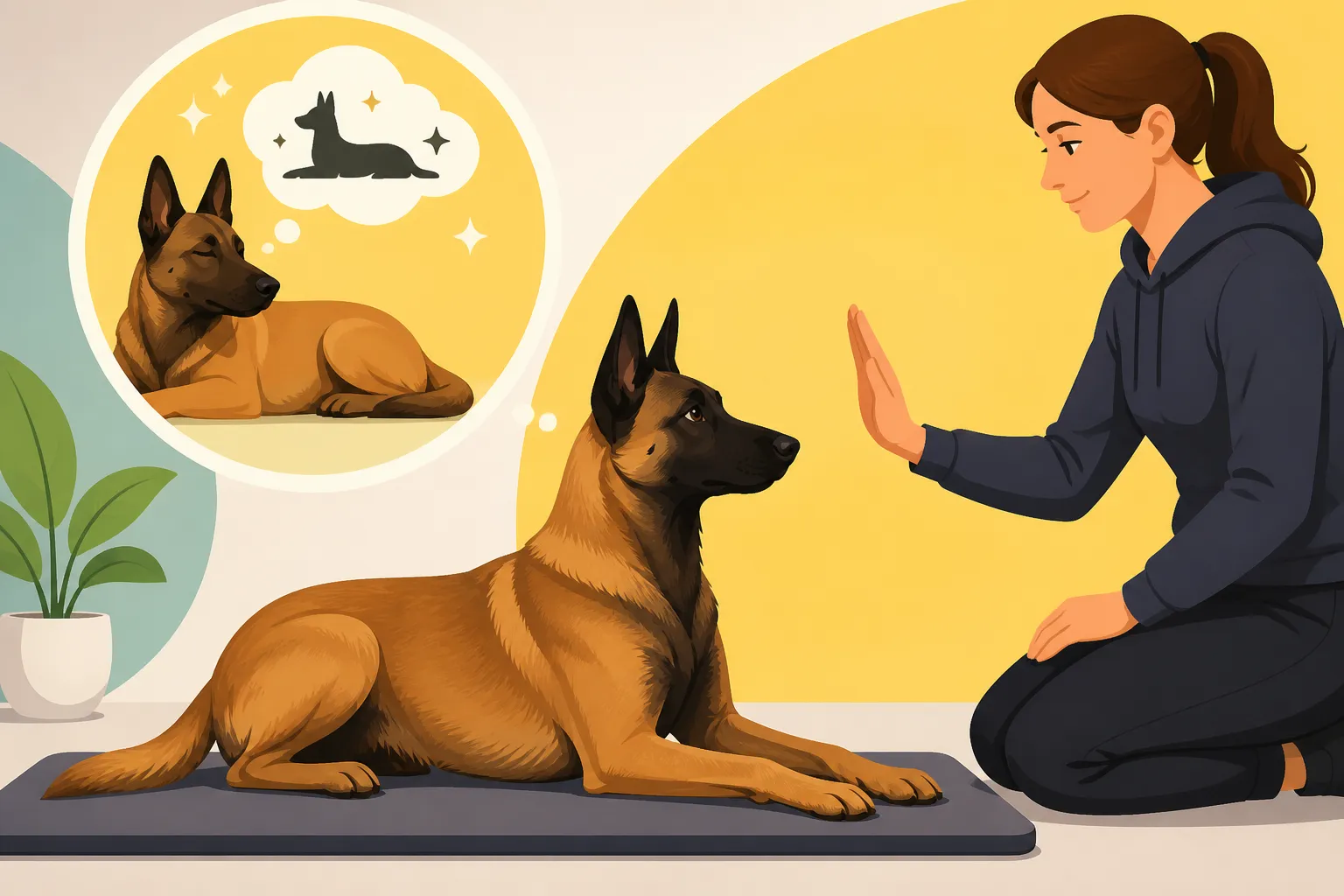
True settling, however, involves a deep state of relaxation. Their muscles are loose, their breathing is slow and even, and their attention isn't fixed on every minute sound or movement. They’ve mentally checked out, in a good way. This is the difference between simply pressing the "pause" button and actually turning the machine off. For a Malinois, achieving this level of mental disengagement is incredibly difficult, and it's a skill that must be explicitly taught and reinforced. It takes concerted effort to help a Malinois develop an Building an Off Switch Into a Belgian Malinois.
Foundations for a Solid "Down-Stay"
Before we can even dream of a Malinois doing "nothing," we need to establish a rock-solid "down-stay." This is the cornerstone upon which all calm behavior will be built. Think of it as teaching them the position for doing nothing, and then gradually layering on the mindset.
Building Initial Duration and Distance
You absolutely cannot expect your Malinois to lie down for thirty minutes in a busy park on day one. We start small, very small, and build up.
- Lure-and-Reward Basics: Begin in a quiet, low-distraction environment. Use a high-value treat to lure your Malinois into a down position. As soon as their elbows hit the ground, mark it with a verbal cue like "yes!" or a clicker, and reward. Repeat this many times until the "down" command is fluid and consistent.
- Adding the "Stay" Cue: Once the "down" is solid, introduce the "stay" command. Say "Stay," take one tiny step back, then immediately step forward and reward before your dog moves. If they move, no reward, just gently guide them back into position and try again.
- Gradually Increasing Duration: Start with just one second of stay, then two, then three. Use a timer if you need to! If they break, shorten the duration on the next repetition to ensure success. Aim for success 80-90% of the time before moving on. A great tool here is a dedicated mat or dog bed; it helps define their "spot." You can find excellent, durable options on platforms like Amazon.
- Increasing Distance: Once duration is building (e.g., 10-15 seconds), start increasing your distance from them. One step, then return and reward. Two steps, return and reward. Always return to your dog to reward them, rather than calling them to you, as this reinforces the "stay" even as you move away. Your eventual goal is to be able to walk completely away and have them hold the position until you release them with a clear "Okay!" or similar cue.
Remember, patience is paramount. Each session should be short and positive, ending on a high note. These early stages are critical for building confidence and understanding.
Introducing Environmental Distractions
Once your Malinois can hold a down-stay for a minute or two with you out of sight in a quiet room, it's time to layer in distractions. This is where the rubber meets the road for a Malinois, as their default is to react to everything.
- Controlled, Low-Level Distractions:
- Sounds: Start with soft background noise, like quiet music or a TV in another room. Gradually increase the volume or introduce more stimulating sounds (e.g., a doorbell sound played softly on your phone).
- Movement: Have a family member walk across the room, then walk closer, then walk around your dog. Don't let them interact with your Malinois; they are simply a distraction.
- Smells: Place a tempting toy or treat a few feet away, then gradually closer. The goal isn't for them to ignore it completely, but to choose to stay despite the temptation.
- Public Settings (Gradual Exposure):
- Quiet Public Spaces: Start in a very quiet corner of a park or an empty parking lot, far away from people and other dogs. Practice your down-stays there, rewarding heavily for success.
- Increasing Stimuli: Over many, many sessions, slowly move closer to activity. A bench further away from the walking path, then one closer. A quiet coffee shop patio at an off-peak hour, then during a slightly busier time. The online training platform BAXTER & Bella often provides excellent modules on how to safely introduce your dog to various public environments, breaking down socialization and distraction work into manageable steps.
- Long Line for Safety: Always use a long line (15-30 feet) when practicing in distracting environments, especially around other dogs or people. This allows you to enforce the stay with a gentle, consistent correction if your Malinois breaks, without having to rush back to them. Long Line Work With a Malinois in Open Ground is essential for reliability.
- Other Dogs: This is often the hardest distraction. Start with a very calm, known dog far in the distance, slowly decreasing the distance over many sessions. If your Malinois reacts, you've gone too far, too fast. Reset and try again at a greater distance.
The key is to always set your Malinois up for success. If they are consistently failing, the environment is too challenging, or your expectations are too high for their current skill level. Reduce the distraction, shorten the duration, or increase your proximity.
The Art of Teaching True Settling and Calmness
Beyond the mechanics of the down-stay, the real goal is to cultivate a mindset of calm. This means teaching your Malinois to genuinely relax their brain, not just their body, even amidst activity.
The "Place" Command as a Stepping Stone
A "place" command is invaluable for teaching a Malinois to settle. It gives them a clear, defined boundary where the expectation is to lie down and relax.
- Designating a "Place": Choose a comfortable mat, raised bed, or dog cot that belongs solely to your Malinois. This isn't just a random spot; it's their spot for calm.
- Teaching the Command: Use luring to guide your Malinois onto their place, then cue "Place!" or "Bed!" and then "Down" and "Stay." Reward them for staying on the place.
- Extending Duration and Introducing Distractions (on Place): Just like with the general down-stay, gradually increase the time they spend on their place. Start with you right next to them, then move further away, walk around the room, do chores, or watch TV. When they break, use a neutral "Uh-oh" or "Nope" and calmly lead them back to their place, starting the timer again. Never reward a break.
- Generalizing the Place: Once they understand their primary place, introduce other designated settling spots around the house, and eventually portable mats you can take to friends' houses or cafes. This helps them understand that "place" means to settle, regardless of the specific item. A sturdy, chew-resistant mat like those often reviewed well on Amazon can be a great investment here.
The "place" command provides structure and predictability, which can be very calming for a high-drive dog. It gives them a clear directive: "This is where you go when it's time to be quiet." Building a Malinois's Place Command is a powerful tool in your training arsenal.
Incorporating Relaxation Protocols
While obedience commands teach what to do, relaxation protocols teach how to feel. These are specific exercises designed to intentionally build a dog's ability to be calm.
- Karen Overall's Relaxation Protocol: This is a widely respected, structured program that systematically teaches dogs to relax in various situations. It starts with very simple "down" and "stay" exercises in a quiet room, gradually adding minor distractions (you taking a step, you opening a book, you eating a snack) over many days and weeks. The key is to reward the calmness, not just the position. You can often find this protocol available online or in training books purchased through platforms like Amazon.
- Rewarding Calmness, Not Just Obedience: Be vigilant about recognizing and rewarding moments of genuine calm throughout the day. If your Malinois is quietly chewing a toy, resting their head, or simply staring off into space without tension, casually walk by and drop a small, high-value treat. This isn't about giving a command; it's about reinforcing desired behavior when it occurs naturally. This helps build the understanding that a quiet state is also a rewarding state.
- Crate Rest as a Tool: For many Malinois, their crate can become a sanctuary of calm, especially if introduced positively. It limits their options, reduces sensory input, and encourages them to settle. Crate Rest as Training for a Belgian Malinois is an excellent way to teach them to be okay with confinement and downtime. Just ensure the crate is always a positive place, never used for punishment.
Managing High Drive While Teaching Stillness
You can't expect a Malinois with pent-up energy to suddenly become a zen master. Pre-empting their need to "do something" is critical.
- Adequate Exercise Before Settling Sessions: This doesn't mean exhausting them into submission. It means giving them a fulfilling outlet for their physical and mental energy before you ask for stillness. A vigorous run, a demanding obedience session, or a focused game of fetch can drain some of that boundless energy. Then, when you ask them to settle, they are more capable of complying. Think about The Mental Work That Finally Tires a Malinois Out – it’s not always just physical.
- Mental Stimulation as an Energy Drain: Engage their incredible brains with puzzle toys, scent work, or short training sessions that require intense focus. A puzzle toy filled with their kibble can keep them occupied and mentally satisfied for a period, making them more amenable to settling afterward. Many excellent puzzle toys are available from various brands via Amazon, offering different levels of difficulty.
- Handler Calmness and Consistency: Your energy directly impacts your Malinois. If you're stressed or frantic, they will pick up on that and reflect it. Approach settling sessions with a calm, confident, and patient demeanor. Consistency in your cues, expectations, and reinforcement schedule is also paramount. A Malinois thrives on structure; The Structure a Belgian Malinois Needs Every Day extends to their downtime as well.
Common Pitfalls and Troubleshooting
Even with the best intentions, teaching a Malinois to settle can present unique challenges. It’s important to anticipate these and have strategies ready.
When Your Malinois Breaks the Stay
It will happen. Your Malinois, in their boundless enthusiasm, will break a down-stay. How you react is crucial.
- Avoid Scolding or Punishment: A Malinois is sensitive and highly attuned to their handler. Harsh corrections can shut them down or make them fearful of the command, associating "down-stay" with negative experiences.
- Neutral Correction and Reset: When they break, calmly say "Nope" or "Too bad," or simply make a low, neutral sound. Immediately and gently guide them back to the exact spot and position they were in. Don't reward the reset; simply put them back and restart the timer for the stay. This teaches them that breaking the stay doesn't get them out of the job; it just means they have to start over. For dogs who are very resistant to returning, a slip lead or gentle leash pressure can be very helpful in guiding them back without being overly forceful.
- Re-evaluate Your Expectations: If your Malinois is consistently breaking the stay, it's a sign that you're asking too much, too soon. Make the task easier: shorten the duration, reduce the distance, or decrease the distractions. Success builds confidence; repeated failure builds frustration for both of you.
Overcoming Alertness During Downtime
The Malinois default setting is "alert." This means even when they are physically down, their brain might still be pinging every sound and movement.
- Desensitization to Environmental Triggers: Identify what specifically triggers your Malinois's alertness (e.g., mail carrier, squirrels outside the window, children playing next door). Systematically expose them to these triggers at a low intensity while they are on their place, rewarding them for remaining calm and ignoring the stimulus. This is a slow process, often requiring many repetitions over weeks or months.
- Teaching the "Look" or "Focus" Command: Reinforce a strong "look at me" or "focus" command. When they become overly fixated on something, use this command to redirect their attention to you for a moment, reward, and then release them. Over time, they learn to check in with you before reacting. This is part of Building Engagement With a Belgian Malinois.
- Visual Barriers: Sometimes, simple management tools can help. If they constantly stare out a window, close the blinds or put up a temporary barrier during their designated settle time. This removes the visual stimulus and allows them to practice relaxing without constant triggers.
Consistency, Patience, and Realistic Expectations
This is the biggest takeaway when training a Belgian Malinois, especially for something that goes against their inherent nature.
- This is a Marathon, Not a Sprint: Teaching a Malinois to truly settle and "do nothing" is a lifelong endeavor. They will have good days and bad days. Don't get discouraged if progress seems slow or if they regress. Consistency is your superpower. Every day, practice short sessions.
- Daily Integration: Don't relegate "down-stay" practice to specific training sessions. Integrate it into your daily life. Ask them to stay on their place while you eat dinner, work at your desk, or read a book. These real-world scenarios are where the behavior truly becomes reliable.
- Celebrate Small Victories: A five-minute calm down-stay in a slightly distracting environment is a huge win for a Malinois! Acknowledge and celebrate these successes, even if they seem minor. They are proof that your hard work is paying off.
- Realistic Outlook: Understand that your Malinois may never be the dog who curls up at your feet and sleeps through a noisy party. Their innate vigilance will always be there to some degree. The goal is to manage that drive and teach them how to choose calm, not to fundamentally change their breed characteristics. Asking Whether a Belgian Malinois Ever Truly Relaxes is a valid question, and the answer is usually "yes, but it takes work." They can achieve deep relaxation, but it’s a learned behavior, not a given. Many Malinois owners also wonder Whether a Belgian Malinois Can Live in an Apartment – with dedicated settling training, it becomes much more feasible.
Teaching a Belgian Malinois to lie down and do nothing is one of the most challenging, yet rewarding, aspects of owning this incredible breed. It demands patience, consistency, and a deep understanding of their unique drive. But by building a strong foundation, introducing distractions carefully, and actively teaching relaxation, you can transform your constantly "on" dog into one who genuinely knows how to find their calm.
Disclaimer
This article is for general informational purposes only and does not constitute professional advice. Laws, prices and regulations vary by location and change over time. Consult a qualified professional for guidance on your specific situation.