Building a Malinois’s Place Command
Owning a Belgian Malinois is an incredible journey, but let's be honest, it's also a high-octane adventure that can sometimes feel like living with a canine tornado. One of the biggest frustrations many Malinois owners face is the sheer inability of their dog to simply settle down when asked. They're always on, always moving, always looking for a job, which can make a quiet evening at home or managing visitors feel utterly impossible. This comprehensive guide is dedicated to mastering the "Place" command, a foundational skill that will not only provide your Malinois with a vital "off switch" but also bring a much-needed sense of calm and structure to your household.
Why the "Place" Command is a Game-Changer for Your Malinois
The "Place" command is often misunderstood as simply asking your dog to lie on a bed. For a Belgian Malinois, it's so much more profound than that. It’s an exercise in impulse control, a mental workout, and a foundational brick in building a well-mannered, settled dog in a chaotic world. Without this kind of structured calm, that high drive can easily turn into frantic energy or unwanted behaviors.
More Than Just a Settle: Control and Calmness
Think about your Malinois's natural state: alert, active, always scanning for something to do. While this drive is what makes them incredible working dogs, it can be overwhelming in a home environment. The "Place" command teaches them to actively choose to be calm and stay put, even when their instincts are screaming at them to engage. It's not just about lying down; it's about holding that position, mentally disengaging from surrounding stimuli, and waiting patiently for a release cue. This mental effort is surprisingly tiring for them, often more so than a long walk, tapping into their cognitive abilities rather than just their physical stamina.
For a dog like a Malinois, this command helps them develop what we often call an "off switch." It gives them a designated spot where they know they are expected to be calm and quiet, allowing their high-arousal nervous system to decompress. This is crucial for their overall well-being, preventing them from living in a constant state of hyper-vigilance, and equally important, preserving your sanity as their handler. It provides them with a job: the job of doing nothing until released, which is a surprisingly difficult task for many intelligent, driven dogs. Building an Off Switch Into a Belgian Malinois is a lifelong endeavor, and "Place" is a cornerstone of that work.
Essential for Household Harmony
Imagine having guests over, and instead of your Malinois excitedly jumping on them or constantly seeking attention, they are calmly resting on their designated "Place" bed, observing quietly. Or perhaps you're trying to eat dinner without a persistent nose nudging your hand. The "Place" command provides a clear boundary and expectation, reducing stress for both you and your dog. It teaches them that there are times and places for interaction, and times for calm, independent self-control.
This command is invaluable for managing a busy household, especially one with children or other pets. It can prevent unwanted resource guarding, manage over-excitement, and simply give everyone some breathing room. Instead of constantly managing an overstimulated Malinois, you can direct them to their "Place" and know they will stay there, developing a predictable rhythm to your home life. It's a critical tool in preventing the common scenarios where a Malinois's intensity can lead to frustrations or even accidents. When thinking about A Belgian Malinois in a House With Kids and Dogs, having a reliable "Place" command is non-negotiable for safety and peace.
Setting Up for Success: Choosing Your "Place" and Tools
Before you even begin the actual training, careful preparation is key. Selecting the right "place" and having your tools ready will streamline the process and set your Malinois up for a positive learning experience. Remember, consistency is king, especially with a breed as discerning and observant as the Belgian Malinois.
Selecting the Right "Place" Platform
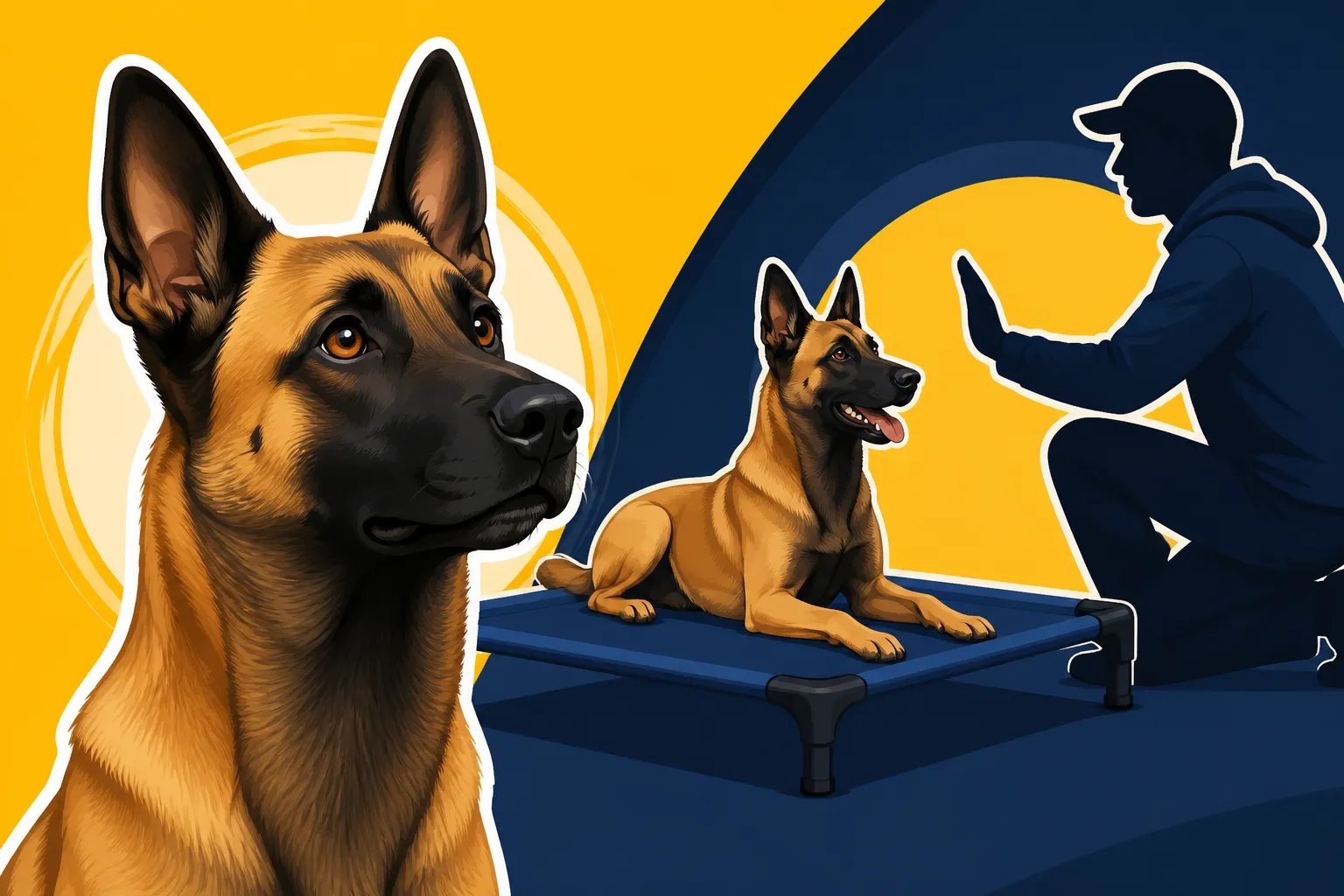
The "place" itself should be clearly defined and easily recognizable to your dog. It's not just any spot on the floor; it needs to be a specific object. Many handlers find that an elevated dog cot or a sturdy, distinct mat works best for a Malinois. An elevated cot, often available from retailers like Amazon, provides a clear physical boundary, making it distinct from the surrounding floor. This elevation helps the dog understand that they are on something separate, rather than just lying down generally. It also helps keep them cooler in warmer climates and offers a comfortable, supportive surface.
Alternatively, a sturdy, non-slip mat or a dedicated dog bed can work, as long as it's something your dog won't mistake for just another patch of carpet. The key is that it's always the same object when you give the "Place" command. Avoid using their main sleeping bed if possible, especially in the early stages, as you want this "Place" to be associated with active calm and waiting, not necessarily deep sleep. The platform should be large enough for your Malinois to comfortably lie down in various positions, but not so large that they can roam around on it.
Gathering Your Training Arsenal
To make your "Place" training sessions effective and positive, you'll want to have a few essential items on hand.
- High-Value Treats: For a Belgian Malinois, motivation is paramount. Skip the bland biscuits and opt for small, soft, incredibly high-value treats. Think cooked chicken, cheese, or specialized training treats that your Malinois absolutely loves. These treats will act as powerful motivators, reinforcing that staying on "Place" is a rewarding experience.
- Leash: Even if you plan to eventually work off-leash, start with your Malinois on a leash. This gives you gentle control to guide them onto the platform initially and to prevent them from wandering off prematurely. A standard six-foot leash is usually sufficient for initial training in a controlled environment.
- Clicker (Optional): If you already use a clicker in your training, this can be an excellent tool for precision. The click marks the exact moment your Malinois performs the desired behavior (all four paws on the platform, settling down). If you don't use a clicker, a consistent verbal marker like "Yes!" or "Good!" works just as well.
- Clear Marker Words: Beyond your primary marker, choose a consistent verbal cue for "Place" (e.g., "Place," "Bed," "Mat") and a distinct release cue (e.g., "Free," "Okay," "Break"). Consistency in these words is vital for your Malinois to understand what you're asking.
For those who are just starting out or want a more structured approach, considering online training programs can be incredibly beneficial. Resources like BAXTER & Bella offer comprehensive guidance that can walk you through complex commands like "Place" with clear, progressive steps. Such structured programs often include video demonstrations and troubleshooting tips, which can be a huge asset when working with a driven breed.
The Core Training Protocol: From Lure to Independent Performance
Teaching the "Place" command is a progressive journey, not a single event. You'll move through stages, gradually building up duration, distance, and the ability to ignore distractions. Patience and consistency are your best friends here. Remember, a Malinois thrives on clear communication and predictable outcomes.
The Initial Lure and Reward Phase
This is where you introduce the concept of "Place" to your Malinois. Start with short, positive sessions in a quiet environment with minimal distractions.
- Introduce the Platform: Place your chosen "place" platform on the floor. With your Malinois on leash, stand close to it, holding a high-value treat.
- Lure Onto the Platform: Use the treat to lure your Malinois onto the platform. Hold the treat at their nose level and slowly move it towards and over the platform, encouraging them to step onto it. The moment all four paws are on the platform, even if they're just standing, mark the behavior (with your clicker or verbal marker) and immediately reward them with the treat.
- Repeat and Refine: Repeat this process several times. Lure them off, then lure them back on. The goal here is to establish the idea that being on this specific platform earns them a reward. Keep these sessions very short—a minute or two at most—to keep their motivation high. Always end on a successful note.
- Introduce the Cue: Once your Malinois is reliably stepping onto the platform with a lure, start adding your verbal cue, "Place," just as they are stepping onto the platform. Mark and reward as before. Over time, they will associate the word with the action.
- Encourage a Settle: After they're consistently going to "Place," start waiting a split second before you mark and reward, encouraging them to at least sit, then eventually lie down. The moment their rear hits the platform or they settle into a down, mark and reward generously. For a highly energetic Malinois, Teaching a Belgian Malinois to Lie Down and Do Nothing is a huge step, and "Place" provides the framework for that.
Adding Duration and Distance
Once your Malinois understands the basic concept of going to "Place" and settling, you'll start to introduce the two D's: Duration and Distance. This is where the magic really begins to happen, as your dog learns to stay put for longer periods and even when you're not right next to them.
- Building Duration: Start by increasing the time they must stay on "Place" before receiving a reward. After they go to "Place" and settle, count to one second, then mark and reward. Gradually increase this to two seconds, then three, and so on. If they break before you mark, simply reset them, shorten the duration slightly, and try again. Don't scold, just guide them back to the correct behavior. Remember to keep the rewards high and frequent in these early stages of duration.
- Introducing Distance: Once they can hold "Place" for 5-10 seconds reliably, start adding small amounts of distance. Take one tiny step away from the platform, then step back, mark, and reward. If they stay, take two steps, then step back, mark, and reward. Gradually increase the number of steps you take away. The key is to always return to the platform to deliver the reward initially, reinforcing that the platform is the place of reward. If your Malinois breaks, immediately guide them back to "Place," reset, and reduce the distance.
- Intermittent Reinforcement: As they become more consistent, you can start to vary when you deliver the reward. Sometimes reward after 5 seconds, sometimes after 10, sometimes after 3. This builds stronger anticipation and makes them more likely to continue performing, even if a reward isn't immediate. This also helps to build Building Engagement With a Belgian Malinois, as they learn to look to you for direction and reward.
Introducing the Release Cue
Just as important as teaching your Malinois to go to "Place" and stay, is teaching them a clear release cue. This signals to them that their job on "Place" is over and they are free to move. Without a clear release, dogs can become confused, self-release, or even feel trapped.
- Choose Your Cue: Select a distinct word or phrase that you will only use for release, such as "Free," "Okay," or "Break." Make sure it's not a word you use frequently in normal conversation.
- Practice the Release: After your Malinois has held "Place" for a successful duration, say your release cue in an upbeat, encouraging tone. Immediately, and enthusiastically, encourage them to step off the platform. You can toss a treat a short distance away to encourage movement off the platform.
- Reinforce the Release: Sometimes, reward them as they step off "Place" or after they've moved a step or two away. This reinforces that the release cue means they are free to engage with the world again. It also helps to prevent them from "self-releasing" when they think the duration is over but haven't heard your cue yet.
- Consistency is Key: Always use your release cue. Never let your Malinois jump off "Place" without hearing it. If they do, calmly and immediately guide them back to "Place," reset, and then give the release cue properly. This teaches them to wait for your instruction. A consistent release builds trust and clarity in your communication.
| Training Phase | Primary Focus | Key Behaviors Targeted | Common Challenges for Malinois |
|---|---|---|---|
| Lure & Initial Cue | Association of "Place" with platform & reward | Stepping onto platform, settling briefly, understanding cue | High arousal, quickly distracted, premature dismount |
| Duration Building | Staying put for increasing time | Maintaining position (sit/down), patience, impulse control | Short attention span, desire to move, breaking early |
| Distance Building | Staying put while handler moves away | Holding position without direct supervision, visual focus | Following handler, anxiety if handler leaves sight |
| Distraction Proofing | Staying put despite environmental stimuli | Ignoring sounds, movement, other dogs/people, maintaining calm | Over-arousal, fixating on distractions, breaking due to excitement |
| Generalization | Performing "Place" in new environments | Adapting to different settings, consistent response | Novelty seeking, environmental awareness taking priority |
Mastering the Three D's: Duration, Distance, and Distraction
Once your Malinois has a solid grasp of the basic "Place" command, it's time to elevate their skills by mastering the "Three D's": Duration, Distance, and Distraction. This is where the command truly becomes reliable and functional in real-world scenarios, turning a neat trick into an indispensable life skill.
Building Unwavering Duration
Developing duration means your Malinois can stay on their "Place" for extended periods, remaining calm and still. This isn't just about passive waiting; it's about active mental engagement in being still.
Start by gradually increasing the time you ask them to stay. Go from seconds to minutes, always returning to reward on the platform initially. Use a timer if it helps you keep track. As they improve, vary the duration—sometimes reward after 30 seconds, sometimes after a full minute, sometimes after 15 seconds. This keeps them guessing and more engaged, rather than just waiting for a predictable time to pass. Gradually, you can ask for them to hold "Place" for 5, 10, or even 30 minutes.
During these longer durations, encourage them to truly settle: sitting, then lying down, then eventually resting their head. Reward particularly calm behaviors, like a sigh or a relaxed posture. If your Malinois typically struggles to relax, you might find that extended "Place" sessions, combined with a chew toy, help them understand that stillness can be rewarding. For a Malinois that never seems to stop moving, this focused work on duration is incredibly taxing in a good way, promoting a deeper sense of calm. Whether a Belgian Malinois Ever Truly Relaxes is a question many owners ask, and structured commands like "Place" are key to achieving it.
Expanding Distance and Proofing Positions
Once duration is strong, systematically increase the distance you move away from your Malinois while they are on "Place." Start by simply walking around the room, then moving to another room for a few seconds. Eventually, you should be able to leave the house briefly while your Malinois remains on "Place."
Remember to always return to your dog to reward them, reinforcing the idea that staying on "Place" always pays off, regardless of where you are. If they break, calmly guide them back to "Place," reset, and reduce the distance. Don't make it a chase; make it a quiet, firm correction to the boundary. Practice having them go to "Place" from different starting positions in the room. Can they go from a sit at your side? From a stay across the room? Can you give the verbal cue from another room and have them seek out their "Place"? This generalization of the command ensures they understand "Place" isn't just about a specific setup but about the command itself.
Conquering Distractions
This is often the most challenging, yet most crucial, aspect of the "Place" command for a Belgian Malinois. Their environmental awareness and high prey drive mean they are naturally attuned to every sight, sound, and movement. Introducing distractions must be done gradually and thoughtfully.
Start with very low-level distractions:
- You walking past them.
- Dropping a quiet item nearby.
- Someone else briefly walking through the room.
As they become more consistent, slowly escalate the intensity of distractions. This might include:
- Having a family member walk by.
- Playing a quiet TV show.
- Bouncing a low-value ball (without letting them chase it initially).
- Later, introducing other dogs on leash in the same area.
The goal is for them to ignore these stimuli and maintain their "Place" until released. If they break, it means the distraction level was too high. Reduce it and try again. Management is key here: don't set them up to fail. Keep them on a long line initially if needed, so you can gently correct them back to "Place" if they start to break. For a Malinois, fixating on moving things is common; "Place" helps them learn to disengage from those fixations. The more you practice in varied environments and with controlled distractions, the more reliable their "Place" command will become in real-life, high-distraction situations.
Troubleshooting and Integrating "Place" into Daily Life
Even with the best intentions and consistent training, you're bound to hit a few snags. Belgian Malinois are intelligent and can be persistent, sometimes pushing boundaries just to see what happens. The key is to understand why your Malinois might be struggling and how to seamlessly weave the "Place" command into the fabric of your everyday life.
Common Pitfalls and How to Overcome Them
It's completely normal for a Malinois, especially a high-drive one, to test the limits of any command. Don't view these as failures, but as opportunities to strengthen their understanding.
- Malinois Popping Off Early: This is perhaps the most common issue. It usually means you've either asked for too much too soon (duration or distraction-wise), or your reinforcement isn't high enough. Solution: Go back to basics. Shorten the duration, reduce distractions, and ensure your treats are absolutely irresistible. Reward frequently for even short successful stays. Make it so consistently rewarding that staying on "Place" is a no-brainer. If they break, immediately and calmly (no anger, no yelling) guide them back to the platform without releasing them. Wait for them to settle, then give your release cue. This teaches them that the only way off "Place" is through your release.
- Refusing to Go to "Place": If your Malinois digs in their heels or seems resistant, it might be that the command has become associated with punishment or boredom. Solution: Re-inject the fun and motivation. Go back to heavy luring and high-value rewards. Make going to "Place" a game where they win every time. Use an excited tone, make it clear it's a positive request. Check if the "Place" platform itself is comfortable. For some Malinois, especially those sensitive to pressure, an uncomfortable surface can be a deterrent.
- Stress or Anxiety on "Place": Sometimes, a Malinois might whine, pant, or show other signs of stress while on "Place." This often happens if the command is used exclusively as a punishment or if the duration/distraction level is truly overwhelming. Solution: Ensure "Place" is always a positive experience. Pair it with long-lasting chews or puzzle toys. Use a calm, reassuring tone. Never use "Place" as a "time-out" in an angry way. If the stress is persistent, you might need to desensitize them to the "Place" by making it a default relaxation spot even without a command, just for positive association. Crate Rest as Training for a Belgian Malinois is another excellent way to build a calm "safe space" which can support "Place" training.
Making "Place" a Lifestyle for Your Malinois
The true power of the "Place" command comes when it's seamlessly integrated into your daily life. It's not just a training exercise; it's a functional tool that creates structure and calm.
Start using "Place" during routine activities:
- Meal Times: Send your Malinois to "Place" before you put their food down. Make them wait calmly until you give their release cue to eat. This builds immense impulse control.
- Visitors: When someone comes to the door, direct your Malinois to "Place." This prevents jumping, excessive barking, and keeps them from bottlenecking the entrance. They can still observe, but from a calm, designated spot.
- Cooking or Cleaning: Use "Place" to keep your Malinois out from underfoot while you're busy in the kitchen or moving around the house. It's much safer for everyone.
- Relaxing Evenings: If you want to watch TV or read, send your Malinois to "Place" with a favorite chew. This teaches them that evenings are for quiet relaxation, not constant demand for attention.
By making "Place" a regular part of your daily routine, you reinforce the command in countless real-world scenarios. Your Malinois learns that "Place" is a valuable skill that earns them rewards and privileges, and it becomes a reliable default behavior rather than something they only do when specifically asked in a training session. This consistent application builds a strong foundation for your Malinois, transforming that high-drive energy into focused, controlled behavior that benefits everyone in the home. It gives your Malinois the clear job of "being calm" during specific times, which helps fulfill their need for purpose and structure, making for a much happier, well-adjusted companion and a much calmer home. This ongoing practice is a huge part of The Structure a Belgian Malinois Needs Every Day to thrive.
Disclaimer
This article is for general informational purposes only and does not constitute professional advice. Laws, prices and regulations vary by location and change over time. Consult a qualified professional for guidance on your specific situation.