A Belgian Malinois in a House With Kids and Dogs
Bringing a Belgian Malinois into a home that already has children and other pets is a journey many envision as harmonious, yet it often presents unique challenges that can quickly overwhelm even the most prepared families. The reality is, these incredible dogs possess an intensity and a suite of natural drives that, if not understood and managed proactively, can create significant friction and stress within the household. This guide is here to walk you through the real considerations, potential pitfalls, and actionable strategies needed to successfully integrate a Belgian Malinois into your bustling family life, ensuring safety and sanity for everyone involved.
Understanding the Belgian Malinois Temperament in a Family Setting
Let's be honest, the Belgian Malinois is not your average family dog. They weren't bred for lounging on the couch, though they certainly appreciate a good cuddle once their needs are met. These are working dogs, through and through, originally developed for herding sheep, and later refined for police, military, and protection work. This heritage manifests as incredible intelligence, boundless energy, and intense drives that require specific outlets and management, especially in a home with impressionable children and established canine residents. Failing to acknowledge this fundamental truth is often the first step towards a struggling household.
The Inherent Drives of a Malinois and Family Dynamics
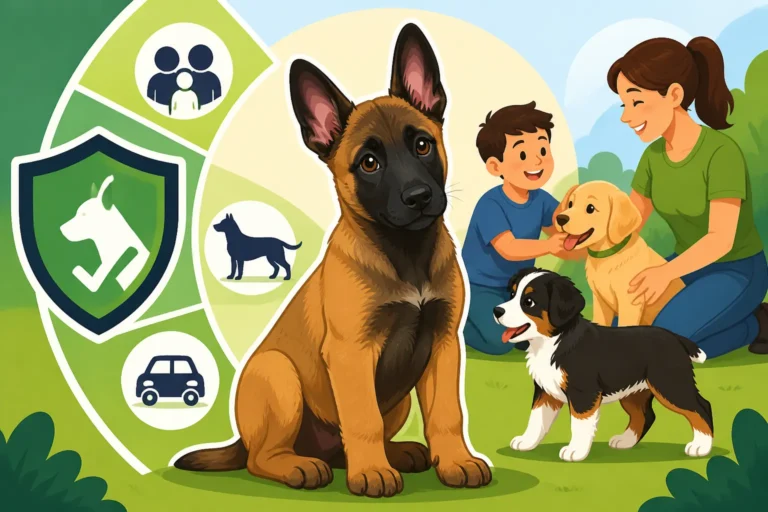
A Malinois comes hardwired with a potent combination of prey drive, defensive drive, and herding instinct. These aren't just cute quirks; they are powerful motivators that dictate much of their behavior. Prey drive, for instance, can mean that a child running or squealing might inadvertently trigger a chase response. It's not malice; it's instinct. Similarly, their herding tendencies might cause them to nip at heels or body-slam smaller children or pets, attempting to "gather" them. This is often misread as aggression, when in reality, it's an unchanneled natural behavior. Then there's their innate protective instinct, which can be a double-edged sword. While it's comforting to have a dog that will stand by its family, an untrained or improperly socialized Malinois might perceive innocent interactions from friends or even family members as threats, leading to unwarranted guarding or defensive displays. It's a lot to manage, and it's vital to recognize these drives not as flaws, but as core components of the breed that need direction.
Energy Levels and the Reality of a Busy Household
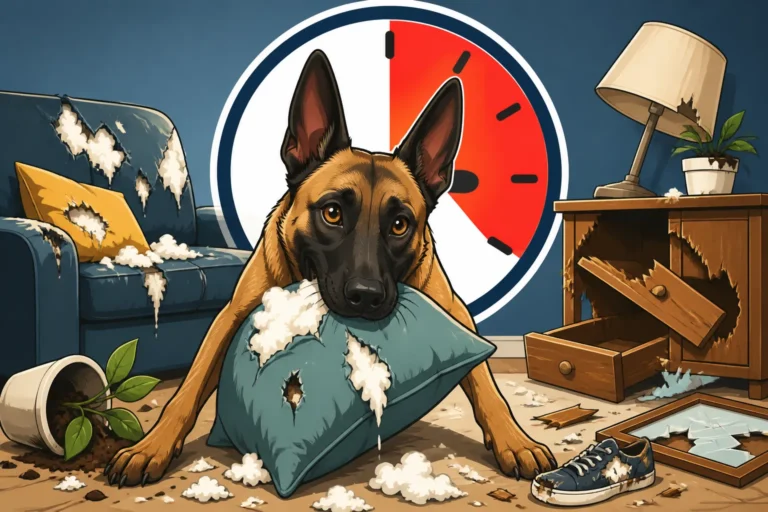
We talk a lot about the Malinois's energy, but it's hard to truly grasp until you live with it. This isn't just "likes to play fetch"; this is a dog that needs a job, often for hours a day. A few walks around the block and some yard play simply won't cut it. In a busy household already juggling school runs, meals, and other responsibilities, finding the two to three hours of dedicated, structured mental and physical exercise a Malinois demands can feel impossible. An under-exercised Malinois isn't just bored; they're often destructive, anxious, and prone to finding their own jobs, which frequently involves remodeling your furniture, harassing the cat, or becoming a nuisance to the kids. Imagine trying to get dinner on the table with a high-strung, bored Malinois weaving between your legs or jumping at the counter – it adds a whole new layer of stress to an already hectic day. Many owners underestimate Two Hours and a Job a Belgian Malinois Demands Daily dramatically.
Malinois Sensitivity and Environmental Awareness
Despite their tough exterior in working roles, many Malinois are surprisingly sensitive dogs, especially when it comes to their environment and the emotions of their handlers. They absorb energy, both good and bad, like sponges. A chaotic home with frequent shouting, unpredictable movements, or constant high-energy interactions can be incredibly stressful for a Malinois, potentially leading to anxiety, reactivity, or heightened arousal. They thrive on consistency and predictability. Furthermore, their acute environmental awareness means they notice everything. A new squeaky toy on the floor, a child dropping a crumb, or even a subtle shift in someone's body language can capture their full attention, sometimes to the exclusion of everything else. This sensitivity, combined with their drive, can make them prone to fixating on moving objects, including children or smaller pets, if not properly managed. This isn't a dog you can just "put in a corner" and expect to ignore the chaos; they're fully immersed.
Introducing a Malinois to Children: Safety First
The thought of a powerful working dog and a vulnerable child in the same space can be daunting, and for good reason. It requires an unwavering commitment to safety, constant supervision, and consistent training for both the dog and the children. This isn't about hoping for the best; it's about actively creating a safe and respectful environment where both can coexist without fear.
Educating Children on Malinois Interaction
One of the biggest mistakes families make is assuming children instinctively know how to interact with a dog, especially one as intense as a Malinois. Kids, by nature, are often loud, unpredictable, and prone to quick movements – all things that can easily overstimulate or trigger a Malinois's drives. It's not enough to tell them "be nice." Children need explicit, consistent lessons on how to behave around the dog. This means no running or screaming indoors, no teasing, no pulling tails or ears, no sudden approaches, and absolutely no disturbing the dog while it's eating, sleeping, or playing with its toys. Teach them to ask permission before petting, to offer a hand for sniffing first, and to understand the dog's body language. For younger children, this education is an ongoing process, not a one-time lecture. They need to understand that the Malinois is a sensitive animal, and respecting its space is paramount.
Supervision and Management Strategies
When it comes to a Malinois and children, supervision isn't optional; it's mandatory, especially in the early stages and whenever the dog is not actively crated or separated. This means an adult must be physically present and actively engaged whenever the dog and children are in the same room. A brief moment of inattention is all it takes for an accident to happen. This isn't a knock on your dog; it's simply acknowledging the breed's power and potential. Using physical barriers like baby gates, crates, or even a tether can be invaluable. Consider a solid, secure crate, perhaps like those found on Amazon, for planned "down time" for your Malinois. This allows the dog to relax away from the stimulation of the children, and it gives the children a break from the dog's intense presence. These management tools are not punishments; they are essential safety mechanisms. Teaching a Building a Malinois's Place Command can also be incredibly useful here, providing a reliable spot for your dog to settle.
Setting Boundaries and Safe Spaces for Both
Every member of the household, canine and human, needs their own designated "safe space" where they can retreat and be undisturbed. For the Malinois, this might be a crate in a quiet room, a designated bed, or a specific spot away from the main traffic flow. Children should be taught unequivocally that when the dog is in its space, it is off-limits. Similarly, children need their own areas where the dog is not allowed to bother them, such as their bedroom (with the door closed) or a playpen for toddlers. These boundaries are crucial for preventing misunderstandings and giving everyone a chance to decompress. The clearer and more consistent these boundaries are, the less likely conflicts are to arise. It helps reduce stress for both parties, as they learn what to expect and where they can find peace.
Integrating a Malinois with Other Dogs: A Balanced Pack
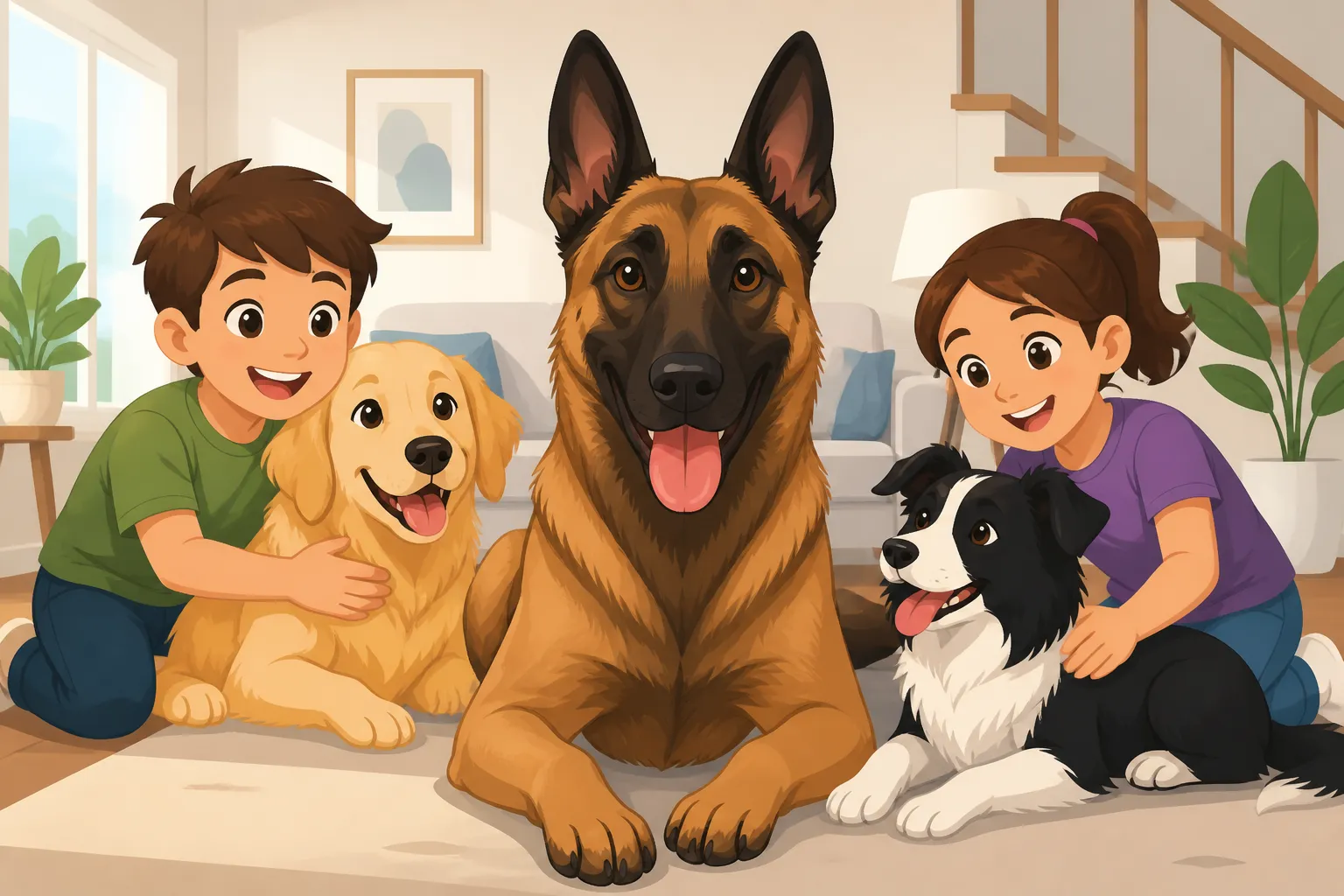
Adding a Belgian Malinois to a multi-dog household introduces its own set of complexities. Malinois are often intense in their interactions, sometimes lacking the subtle social cues of other breeds, or simply being too much dog for a more mellow companion. Success here hinges on thoughtful introductions, understanding potential pitfalls like same-sex aggression, and establishing clear household rules for all canine residents.
The Delicate Art of Canine Introductions
You can't just throw a Malinois into the mix with your existing dogs and expect them to sort it out. Introductions should be slow, controlled, and positive. Start on neutral territory, such as a park, with both dogs on leash. Keep the initial interactions short and focused on parallel walking, allowing them to acclimate to each other's presence without direct, high-pressure interaction. Avoid face-to-face greetings initially. Look for relaxed body language: loose tails, soft eyes, gentle sniffing. Any signs of tension – stiff bodies, direct stares, raised hackles – mean you need to increase distance or end the session. Once they seem comfortable on neutral ground, move to a securely fenced yard, still supervised, before bringing them indoors. Inside, manage their interactions carefully, ensuring high-value items like food and toys are put away to prevent resource guarding. Consistency and patience are key; some dogs take days, others weeks, to truly accept a new pack member. Introducing a New Malinois to the Dog You Have is an art, not a science.
Navigating Same-Sex Aggression in Belgian Malinois
It's a tough topic, but it's one we can't ignore: same-sex aggression can be a very real concern with Belgian Malinois, particularly between two females, or sometimes between two males (though male-female pairs often fare better). This isn't a universal truth for every Malinois, but the intensity, strong personalities, and protective instincts of the breed can sometimes clash dramatically with a dog of the same sex, especially as they mature. This isn't necessarily a failure of socialization; it can be an inherent trait. If you're bringing a Malinois into a home with an existing dog of the same sex, be extra vigilant during introductions and thereafter. Look for subtle signs of dominance, competition, or intolerance. Often, what starts as a small disagreement can escalate rapidly. In some cases, management will need to be lifelong, requiring separate feeding, crating, and even training sessions to prevent conflict. Understanding Same Sex Aggression in Belgian Malinois is critical.
Managing Multiple Dog Households with a Malinois
Once introduced, maintaining harmony in a multi-dog home with a Malinois requires ongoing management and clear leadership. Establish a consistent routine for feeding, exercise, and training. Feed dogs separately to prevent any tension over food. Provide ample individual attention to each dog to prevent jealousy or perceived favoritism. Ensure there are enough toys and resting spots for everyone to avoid competition. Structured play is often better than free-for-all roughhousing, especially initially, as a Malinois's play style can be too intense for other dogs. Pay close attention to subtle shifts in dynamics. Sometimes, the Malinois may try to assert dominance, or conversely, an existing dog might feel threatened by the new arrival's energy. Early intervention is crucial to nip potential issues in the bud. A solid foundation of individual obedience training for all dogs is non-negotiable, ensuring you can call them away from conflict or manage situations effectively.
| Interaction Type | Ideal Scenario | Potential Challenges | Proactive Solutions |
|---|---|---|---|
| Malinois & Children | Gentle play, respectful boundaries, mutual affection. | Nipping/mouthiness, herding, jumping, resource guarding. | Constant supervision, child education, safe spaces, strong obedience. |
| Malinois & Other Dogs | Harmonious coexistence, respectful play, shared space. | Same-sex aggression, intense play, resource guarding, reactivity. | Slow introductions, separate feeding, management of high-value items, structured exercise. |
| Malinois & Cats/Small Pets | Tolerant indifference, learned respect. | High prey drive, chasing, potential injury. | Extreme management, leash training, secure barriers, professional guidance. |
Training Essentials for a Harmonious Home
Without a doubt, training is the cornerstone of a successful life with a Belgian Malinois, especially in a family environment. This isn't about teaching cute tricks; it's about instilling reliable obedience, fostering impulse control, and helping your Malinois navigate the complexities of a human-centric world respectfully and safely. A well-trained Malinois is a joy; an untrained one is a liability.
Foundation Obedience and Impulse Control
Before you even think about advanced commands, your Malinois needs rock-solid foundation obedience. This includes a reliable "sit," "down," "stay," "come," and a loose-leash walk. These aren't just commands; they are tools for managing your dog in real-life situations. A solid "stay" can keep your dog from bolting out the door when a child opens it, or from approaching a guest uninvited. A strong "come" (recall) is literally a lifesaver. Beyond basic commands, impulse control is paramount. Malinois are driven and reactive, meaning they often act on instinct rather than thought. Training "leave it" and "wait" in various scenarios helps them learn to pause, process, and then respond appropriately, rather than impulsively chasing the cat or snatching a dropped toy from a child. This teaches them to delay gratification, which is crucial for living politely in a busy home. Utilizing positive reinforcement methods, perhaps with guidance from an online program like BAXTER & Bella, can lay a fantastic groundwork for this critical learning.
Building an Off Switch Into a Belgian Malinois
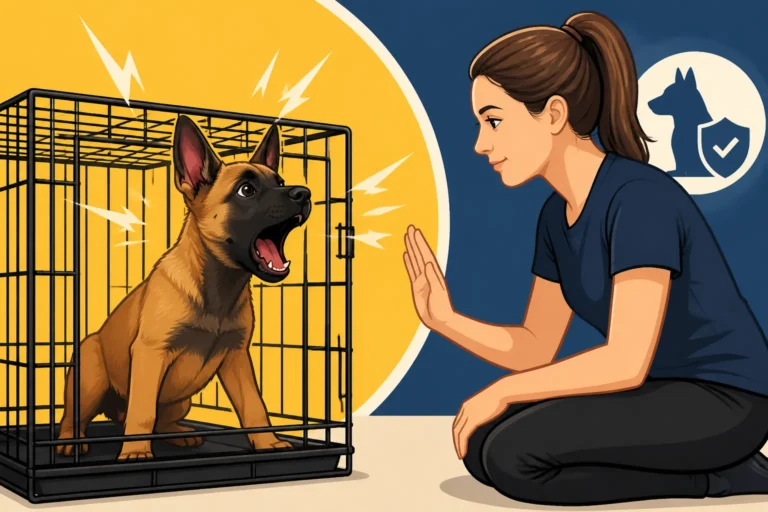
One of the biggest struggles new Malinois owners face is the dog that never seems to turn off. They're constantly on, pacing, observing, demanding attention, or looking for something to do. This high arousal state is exhausting for everyone and can lead to overstimulation and reactivity. Building an "off switch" is about intentionally teaching your Malinois to settle and relax. This isn't something they naturally do in a busy household; it needs to be trained. Building an Off Switch Into a Belgian Malinois involves rewarding calm behavior heavily. Use a "place" command to send them to a designated bed or mat, and reward them for staying there quietly. Practice "capturing calm" by rewarding them whenever you see them lying down and relaxing on their own. Crate training is also an invaluable tool here, providing a quiet, secure space where they learn to settle. Over time, with consistent effort, your Malinois can learn that being calm and quiet also brings rewards and peace, allowing them to truly integrate into the family rhythm rather than constantly disrupting it.
Socialization Beyond Just Meeting Others
When we talk about socialization, many people think it simply means letting their puppy meet a lot of other dogs and people. While exposure is part of it, true socialization, especially for a Malinois, goes much deeper. It's about teaching your dog to calmly observe and appropriately respond to a wide variety of sights, sounds, textures, and situations without becoming overstimulated, fearful, or reactive. This means exposing them to children of different ages, people with hats or strange gaits, loud noises, busy street environments, and even different types of flooring. Crucially, it's about positive experiences that build confidence and neutrality, not just exposure. A well-socialized Malinois is one that can be present in a chaotic family setting – with kids screaming or other dogs playing – and remain calm, or at least be easily redirected by you. This is an ongoing process that extends far beyond puppyhood; it's a lifelong commitment to ensuring your Malinois is a confident, well-adjusted member of society. Without proper, continuous socialization, a Malinois can easily become overwhelmed or reactive in novel situations, making family outings or having guests over a nightmare.
Managing the Malinois's Drive Around Family
The inherent drives of a Belgian Malinois are powerful, and while they make them exceptional working dogs, they can also create significant challenges in a family home, especially when children and other pets are involved. Learning to manage and redirect these drives is paramount for safety and harmony.
Channeling Prey Drive Away from Children and Pets
The Malinois's intense prey drive, if left unmanaged, can unfortunately be directed towards running children, small pets like cats or hamsters, or even fast-moving objects in the house. This isn't aggression, but a hard-wired instinct to chase and capture. To channel this safely, you need appropriate outlets. Tug games (with clear "out" commands), fetch with a favorite ball, or flirt pole play are fantastic ways to satisfy this drive in a controlled manner. Never allow your Malinois to "play" with children or other pets in a way that involves chasing or nipping. Instead, explicitly teach them that children and small pets are not toys. This often involves keeping the Malinois on a leash indoors when children or small pets are present, especially in the early stages. Constant supervision and immediate redirection are key. If your Malinois fixates on a child or cat, interrupt the behavior immediately with a firm "leave it" and redirect them to an appropriate toy or a "place" command. A Malinois that fixates on moving things needs careful management.
Addressing Herding Behavior Towards Family Members
Many Malinois retain strong herding instincts, which can manifest as nipping at heels, body-slamming, or trying to 'collect' children or other pets, especially if they are running. Again, this is not aggression but an attempt to control movement, much like they would a flock of sheep. While endearing in a herding trial, it's unacceptable and potentially dangerous in a family home. The key is to redirect this drive into appropriate activities. Consider enrolling in herding lessons if available and suitable for your dog's temperament, or engaging in urban herding games with specific toys. Indoors, prevent the behavior from starting. If a child runs, call the child to stop or immediately redirect the Malinois to a sit-stay or a toy. Teach the "off" command for when the dog is trying to herd. Consistent training is vital to show the Malinois that you are in control of the "flock" and that nipping or bumping family members is never allowed.
Managing Natural Protective Instincts
The protective nature of a Belgian Malinois is one of its most defining traits, and while it's often sought after, it needs careful management in a family home. An overly protective or untrained Malinois might perceive everyday interactions as threats, guarding family members from visitors, or becoming suspicious of strangers. This can be especially problematic if the dog decides to "protect" a child from another child or even an adult. To manage this, strong leadership and clear communication from you are essential. Your Malinois needs to understand that you are the protector, and it's your job to decide who is a friend and who is a foe. Early and broad socialization is critical to teach them to be neutral to strangers and guests. When guests arrive, your Malinois should be on a leash, in a crate, or on a "place" command until you've assessed the situation and given them permission to interact, or simply to ignore. Never encourage guarding behavior unless it's for specific, highly controlled protection training with a professional. Unchecked protective instincts can easily lead to reactivity and potential aggression towards innocent parties.
Creating a Structured and Predictable Environment
For a breed as intelligent and high-strung as the Belgian Malinois, consistency, structure, and predictability are not luxuries; they are fundamental requirements for mental stability and appropriate behavior. In a chaotic family home, creating this environment requires deliberate effort.
The Importance of Daily Routines and Predictability
Belgian Malinois thrive on routine. They are creatures of habit and knowing what to expect throughout their day helps them feel secure and reduces anxiety. A consistent schedule for feeding, potty breaks, exercise, training sessions, and downtime provides a framework that helps them regulate their energy and emotions. Imagine your Malinois knowing that after breakfast, it's time for a training session, then a long chew in their crate, followed by an afternoon walk. This predictability reduces their need to constantly seek out engagement or create their own (often destructive) activities. It also helps children and other family members understand the dog's schedule, making it easier to manage interactions and avoid disturbing the dog during its quiet times. The Structure a Belgian Malinois Needs Every Day cannot be overstated.
Designated Safe Spaces for the Malinois and Family
Just as important as routine are designated safe spaces for every member of the family, including your Malinois. For the dog, this might be a comfortable crate in a quiet corner of the living room, a dog bed in your bedroom, or an outdoor kennel run. This is a place where they can retreat, rest, and feel secure without being bothered by children, other pets, or general household commotion. Children must be taught that this space is sacred; when the dog is there, it is not to be disturbed. Conversely, children need their own dog-free zones, such as their bedrooms (with doors closed), or a play area safely gated off from the dog. These physical boundaries are critical for preventing accidental negative interactions, giving both dog and children necessary breaks from each other, and fostering a sense of mutual respect for personal space.
Meeting the Malinois's Exercise and Mental Stimulation Needs
An under-exercised and under-stimulated Malinois is a recipe for disaster in any home, let alone one with kids and other pets. Physical exercise needs to be vigorous and consistent – running, long hikes, structured fetch sessions. But physical exercise alone is rarely enough. These dogs also need significant mental stimulation to tire their minds. This can include daily obedience training sessions, puzzle toys (you can find a wide variety of these on Amazon), scent work, or enrolling in dog sports like agility, obedience, or nose work. These activities not only burn mental energy but also strengthen your bond with your Malinois and give them an appropriate "job" to do. A Malinois that has had its physical and mental needs met is far more likely to be calm and settled indoors, less prone to destructive behaviors, and generally more tolerant of the comings and goings of a busy family. Remember, a tired Malinois is a good Malinois, but mind tired is even better. Many owners find that The Mental Work That Finally Tires a Malinois Out is a game changer.
Common Challenges and Proactive Solutions
Living with a Belgian Malinois means being prepared for certain challenges that are inherent to the breed's intense nature. Proactive management and consistent training are your best tools for navigating these issues before they escalate.
Navigating Nipping, Mouthing, and Biting
Malinois puppies are notoriously mouthy, often going through what's affectionately called "the shark phase" where everything is fair game for their needle-sharp teeth. This is normal puppy behavior, but with a Malinois, its intensity can be overwhelming. It's crucial to teach bite inhibition early. When a puppy nips too hard, yelp loudly (like a littermate would) and withdraw attention immediately. Resume play only when the puppy is calm. Redirect all unwanted biting onto appropriate chew toys. For older dogs, any nipping or mouthing should be immediately corrected and redirected. A Malinois must learn that teeth on human skin are never acceptable, even in play. If nipping persists or escalates to more serious biting, this is a red flag that requires immediate professional intervention. Don't wait; seek help from a qualified trainer or behaviorist who understands working breeds. The Shark Phase Every Malinois Puppy Goes Through requires a consistent approach.
Addressing Resource Guarding Early On
Resource guarding – where a dog protects its food, toys, bed, or even its owner from others – can be a serious issue with any breed, but with a Malinois, its intensity can be particularly concerning. This behavior, if left unchecked, can lead to aggression towards children or other pets. The key is prevention and proactive training from a young age. Teach your Malinois that humans approaching their resources means good things happen. For example, while they are eating, walk by and drop an even higher-value treat into their bowl. Practice trading toys: offer a high-value treat in exchange for a toy, then give the toy back. This teaches them that giving things up is rewarding, not a threat. Never try to snatch things away, especially from a Malinois. If guarding behavior is already present, implement strict management (e.g., feeding separately, no toys on the floor) and seek professional guidance immediately. Do not attempt to "fix" serious resource guarding on your own.
Dealing with Hyperactivity and Overstimulation
A Malinois's high energy can often tip into hyperactivity or overstimulation, especially in a busy family environment. This can look like frantic pacing, incessant barking, destructive chewing, jumping on people, or an inability to settle. This isn't just "being energetic"; it's a sign that the dog is overwhelmed, under-exercised, or lacks an "off switch." The solution isn't just more physical exercise, though that's important. It's about combining intense physical exertion with structured mental work and intentional relaxation training. Implement consistent "place" commands, long-lasting chews (like those often found on Amazon), and quiet crate time. Teach them that calm behavior is rewarded. Recognize the signs of overstimulation – dilated pupils, rapid panting, frantic movements – and intervene by creating a calm environment, perhaps by moving them to their crate or a quiet room. A Malinois needs to learn to self-regulate and manage its arousal levels, and you are their primary teacher in this process.
When to Seek Professional Guidance
Sometimes, despite your best efforts, you might encounter challenges that feel beyond your scope. This is not a failure on your part; it's a recognition that some behaviors require the expertise of a professional. Knowing when and where to seek help can make all the difference for your Malinois and your family's well-being.
Identifying When You Need External Support
There are several clear indicators that it's time to call in the cavalry. If your Malinois exhibits any form of aggression – snapping, growling, lunging, or biting – towards children, other pets, or even adults, professional help is non-negotiable. If you're constantly living in fear of your dog's behavior, or if the dog's actions are causing significant stress and disruption to your family life, that's another sign. Chronic issues like severe resource guarding, intractable hyperactivity, extreme separation anxiety leading to destruction, or reactivity that you can't manage are also reasons to seek expert advice. If you feel like you're losing control, or if your relationship with your dog is strained to the point of frustration and resentment, it's definitely time to get help. Early intervention is always better than waiting until the problem becomes deeply ingrained or dangerous.
Finding a Qualified Professional for Your Malinois
Not all dog trainers are created equal, and for a Belgian Malinois, you need someone with specific experience and understanding of working breeds. Look for trainers who specialize in high-drive dogs, protection sports, or behavioral modification, rather than just basic obedience classes. They should emphasize positive reinforcement techniques while also understanding the importance of structure, clear boundaries, and appropriate corrections for a Malinois. Avoid anyone who promises quick fixes, uses overly harsh or aversive methods, or dismisses your concerns. Ask for references and observe their training style. A good professional will involve the entire family in the training process, providing clear instructions and strategies that you can implement in your daily life. They should be able to offer a comprehensive plan tailored to your specific situation, helping you build a safer, more harmonious relationship with your powerful and intelligent companion. Look for certified professional dog trainers (CPDT-KA) or certified applied animal behaviorists (CAAB) who have a proven track record with Malinois. If you are struggling to find a trainer locally, online consultation or programs like those offered by BAXTER & Bella can be a great starting point for foundational training and behavioral understanding, which can then be supplemented with local, in-person help if needed.
Disclaimer
This article is for general informational purposes only and does not constitute professional advice. Laws, prices and regulations vary by location and change over time. Consult a qualified professional for guidance on your specific situation.