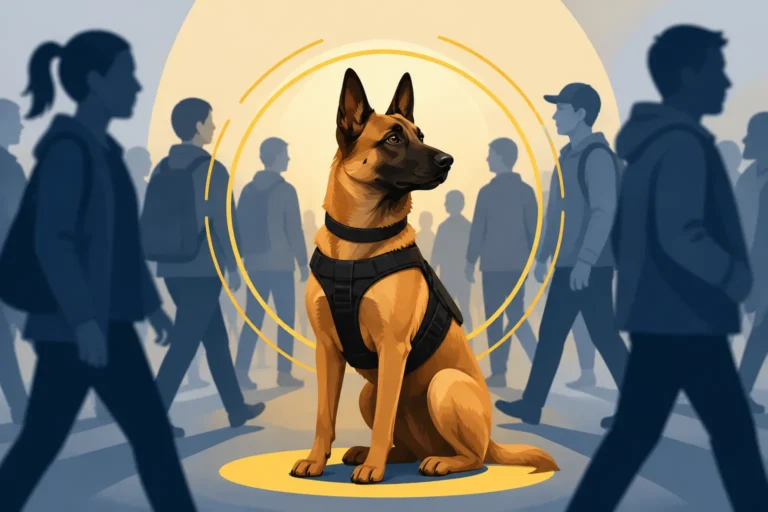
Whether a Belgian Malinois Ever Truly Relaxes
If you're a Belgian Malinois owner, you've probably found yourself staring at your dog, who's ostensibly "resting," but with one ear twitching, eyes scanning, and a general air of coiled readiness. It’s a common frustration to wonder if these incredible dogs ever truly unwind. This guide aims to shed light on what "relaxation" means for a Malinois, how their unique nature influences it, and what you can do to cultivate a semblance of calm in your intensely driven companion.
Understanding the Malinois's Default State
The idea of a Belgian Malinois simply flopping onto the couch and melting into a puddle of blissful unawareness, like some other breeds might, is often a pipe dream for their owners. These dogs operate on a different frequency, one that's constantly buzzing with awareness, energy, and an intrinsic need to be engaged. It’s not that they don't want to relax, but their very being is wired to be alert and active.
The Hardwired Drive and Energy Reserves
Belgian Malinois were originally bred as herding dogs in Belgium, tasked with long days of working sheep, moving livestock, and guarding property. This historical role instilled in them an incredible amount of physical and mental stamina. They possess an energy reservoir that seems bottomless, a stark contrast to many other breeds. This isn't just a physical attribute; it's a deep-seated drive that manifests in everything they do.
Imagine a Malinois in its ancestral environment: it needed to be constantly aware of its surroundings, ready to spring into action at a moment's notice to gather a stray sheep or deter a perceived threat. This genetic blueprint means that even when they appear still, their internal motor is often idling, ready to rev. They are not dogs designed for idleness; they are built for purpose and perpetual motion, which means their default state is often one of readiness, not repose. Two Hours and a Job a Belgian Malinois Demands Daily is often just the beginning of what they require to feel truly satisfied.
This profound drive is what makes them exceptional working dogs in police, military, and sport capacities, but it's also what makes domestic life challenging if not managed correctly. Their inherent "on" switch is far more robust than their "off" switch, and it takes deliberate effort from their handler to help them understand when it's okay to power down. They don't just naturally transition from high-intensity work to serene relaxation without guidance.
A Mind That Never Stops Working
Beyond their physical energy, the Belgian Malinois possesses a highly intelligent and active mind that rarely switches off. These aren't dogs content to simply chew a bone and stare into space. Their brains are constantly processing information, analyzing their environment, and looking for a "job" or a problem to solve. This mental intensity is a double-edged sword: it makes them highly trainable and eager to learn, but it also means boredom can quickly set in, leading to destructive or anxious behaviors.
A Malinois will scan its surroundings even from a resting position. It will notice every creak, every shadow, every subtle shift in the air pressure. This hyper-vigilance isn't necessarily anxiety, but rather a manifestation of their innate intelligence and problem-solving drive. They're constantly anticipating, trying to figure out what's next, and how they can be involved. This mental engagement, while valuable for work, makes true, deep relaxation a rare commodity for many Malinois.
When a Malinois's mental needs aren't adequately met, that constant mental churning can turn inward, leading to obsessive behaviors, pacing, whining, or even self-harm. They are always looking for an outlet for that brilliant, busy mind. Without proper mental stimulation, that brain doesn't just rest; it finds unproductive ways to entertain itself, often to the detriment of your furniture or sanity. The Mental Work That Finally Tires a Malinois Out isn't just a suggestion; it's a necessity for their well-being and for any hope of a calm moment.
What "Relaxation" Looks Like for a Malinois
Given their intense nature, expecting a Malinois to relax in the same way a Basset Hound or a Cavalier King Charles Spaniel might is setting yourself up for disappointment. For a Malinois, relaxation is often a nuanced state, a controlled calm rather than a complete surrender to slumber.
Active Calm Versus Passive Rest
For many Malinois, what we observe as "relaxation" is actually closer to an "active calm." This means they might be lying down, seemingly resting, but their senses are still highly engaged. Their eyes might be half-closed, but they're still tracking movement. Their ears might be relaxed, but they're still picking up distant sounds. This active calm is a state where they are physically still but mentally alert, ready to spring up at the slightest cue or perceived need.
A truly relaxed dog, in the conventional sense, might be completely oblivious to its surroundings, deep in sleep, twitching with dreams, and unresponsive to minor stimuli. For a Malinois, this level of passive rest is often only achieved after truly intense physical and mental exertion, or when they feel absolutely secure and have zero responsibilities. It’s a moment of reprieve, not their default state. When they settle into an active calm, they often choose a spot where they can still monitor the household, perhaps with a chew toy from Amazon nearby, but they aren't truly 'off'.
You might see a Malinois in an "active rest" posture, perhaps sprawled out but with its head up, eyes constantly surveying the room, or positioned near a door. They are conserving energy, yes, but they are far from mentally disengaged. Understanding this distinction is key to managing expectations and appreciating the unique way your Malinois interacts with the world. It’s not that they can’t settle, but their version of settling is often a high-definition version of "chilling out" compared to other breeds.
The Role of a "Place" Command and Crate
One of the most effective tools for cultivating relaxation in a Malinois is the consistent use of a "place" command or a well-conditioned crate. These aren't just about control; they are about teaching your dog how to turn off, even if it's just for a structured period. By giving them a designated spot and clear instructions, you're providing a framework for calm.
A solid "place" command teaches your Malinois to go to a specific mat or bed and stay there until released, regardless of distractions. This isn't just about obedience; it's about enforcing a period of mental and physical downtime. When they are on their place, they learn that it's not their job to monitor everything or be ready for action. It's their job to simply exist calmly in that spot. This structured rest is invaluable for preventing over-arousal and helping them practice the art of settling. Building a Malinois's Place Command is foundational for this kind of work.
Similarly, a crate, when introduced positively, becomes a safe, comfortable den where your Malinois can truly unwind without external stimuli or the pressure to be "on." It's their personal sanctuary. Consistent crate training allows them to associate the crate with relaxation, security, and quiet time. This is especially crucial for puppies, but it remains a vital tool throughout a Malinois's life. Crate Rest as Training for a Belgian Malinois helps them understand that this space means calm. Many owners find crash-tested crates essential for safe travel and enforced downtime, and these can be found on platforms like Amazon.
Cultivating an "Off Switch" (Or the Closest Thing To It)
While a Malinois might never be a couch potato in the traditional sense, you absolutely can cultivate a reliable "off switch" that allows them to truly decompress. It's a matter of proactive training, consistent management, and a deep understanding of their needs.
Meeting Physical and Mental Needs First
The absolute foundation for any semblance of relaxation in a Malinois is ensuring their profound physical and mental needs are met first. Trying to enforce calm on an under-exercised, under-stimulated Malinois is like trying to hold back a tidal wave with a teacup. It simply won't work, and it will only lead to frustration for both you and your dog.
This doesn't mean just letting them run around in the yard for an hour. It means structured, intentional exercise that taps into their drives. Activities like long, brisk walks, running alongside a bike, flirt pole play, or dedicated sessions of fetch that involve full-speed sprints are essential. But don't forget the mental workout! Puzzle feeders, advanced obedience training, scent work, or even just long sniff walks engage their brilliant minds and are often far more tiring than pure physical exercise. Puzzle Work for a Belgian Malinois Indoors can be a lifesaver on rainy days.
When a Malinois's physical and mental tanks are adequately drained, they are far more receptive to settling. They’ve had their fill of "work" and are more likely to appreciate the opportunity for downtime. Without this prerequisite, any attempts at teaching relaxation will feel like trying to calm a whirlwind. It's a continuous cycle: fulfill their drive, then teach them to rest.
Deliberate Training for Calmness
Beyond meeting their foundational needs, deliberate and consistent training is crucial for teaching a Malinois to relax. This involves actively shaping and rewarding calm behaviors, making "doing nothing" a highly valued skill. Start in low-distraction environments and gradually increase the challenge.
One highly effective method is "duration down-stays" or "mat work." Teach your Malinois to lie down on a specific mat or bed and stay there for extended periods, even as you move around. Reward them for staying calm, quiet, and in position. This teaches them to settle even when things are happening around them. A comfortable, durable mat (often found on Amazon) can become their dedicated "calm zone." The online training platform, BAXTER & Bella, emphasizes building foundational behaviors and an "off switch" early, which can be incredibly beneficial for Malinois owners. They understand the importance of making calm a learned behavior. Teaching a Belgian Malinois to Lie Down and Do Nothing is a skill you'll use daily.
You can also incorporate calm greetings, where your Malinois learns not to jump or become overly excited when people enter the home, instead greeting calmly after being told to "place" or "settle." Practice environmental desensitization, exposing them to various sights and sounds in a controlled manner, always rewarding calm responses. The goal is to build a dog that can observe the world without feeling the need to react to every stimulus, and instead choose a relaxed posture. The Structure a Belgian Malinois Needs Every Day provides the framework for these training endeavors.
Common Pitfalls and Misconceptions
When dealing with a breed as unique as the Belgian Malinois, it's easy to fall into traps or believe common myths that can actually hinder your progress in achieving a calmer companion.
Mistaking Exhaustion for Calm
A frequent mistake owners make is to believe that an exhausted Malinois is a relaxed Malinois. While intense physical exercise is necessary, pushing a Malinois to the point of overtiredness or hyper-arousal can be counterproductive to true relaxation. An overtired Malinois might crash for a bit, but they can also become overstimulated, cranky, or even more prone to problematic behaviors.
Think of it like an overstimulated child: they might eventually pass out from sheer exhaustion, but their body and mind aren't truly calm or regulated. The same can happen with a Malinois. If you consistently push them past their physical or mental limits, you might create a dog that is physically depleted but still mentally frantic. They might be too tired to move, but their eyes are still darting, and their breathing is shallow. True relaxation comes from a sense of fulfillment and security, not just physical collapse. It’s a fine line between adequate exercise and over-doing it.
The goal isn't to tire out your Malinois to the point of collapse every single day, but to satisfy their drives and provide appropriate outlets for their energy. A satisfied Malinois is far more likely to settle into an active calm than one that is perpetually pushed to the brink of physical exhaustion. Always aim for a balance that leaves them tired but content, ready for a constructive rest rather than a forced shutdown.
The Myth of "Outgrowing" High Energy
Another common misconception, especially with Malinois puppies and adolescents, is the hope that they will simply "outgrow" their intense energy and settle down with age. While a Malinois will mature and their raw, chaotic puppy energy will refine, their fundamental high-drive nature remains a defining characteristic throughout their lives. The Year a Malinois Stops Being Frantic refers to a shift in intensity, not a complete personality overhaul.
An adult Malinois might be more focused and capable of longer periods of work, but that inherent drive, intelligence, and need for purpose will not diminish significantly. They won't magically transform into a low-key companion simply because they've celebrated their fifth birthday. The management and training you put in during their younger years will dictate how well they channel that energy, not whether the energy itself disappears. Whether a Belgian Malinois Calms Down at All is a question many owners ask, and the answer is nuanced. They learn how to be calm, but their core drive is a permanent fixture.
This means that owning a Malinois is a lifelong commitment to providing appropriate outlets for their energy and continuing to reinforce calm behaviors. Don't wait for them to "calm down"; actively teach them how to be calm within the framework of their genetic predispositions. This ongoing dedication is what transforms a frantic, high-energy dog into a well-adjusted, actively calm companion.
Here’s a quick overview of what "relaxation" often looks like for a Malinois:
| Characteristic | Traditional Dog Relaxation (e.g., Labrador) | Belgian Malinois "Active Calm" |
|---|---|---|
| Physical State | Deep sleep, limp, unresponsive, soft breathing. | Lying down, often observing, sometimes napping lightly, ready to move. |
| Mental Engagement | Low, often in deep sleep, dreaming. | High, processing sounds/sights, attentive, problem-solving. |
| Response to Stimuli | Slow to react, might ignore minor sounds. | Quick to react, ears twitch, eyes track movement, highly alert. |
| Body Language | Loose, floppy, often sprawled out. | Collected, often in a semi-ready position, might have a chew toy. |
| Achieved By | Natural predisposition, comfortable environment. | Structured training (Place, Crate), fulfillment of drives. |
| Duration | Can be long, uninterrupted periods. | Often shorter, punctuated by moments of re-engagement. |
Ultimately, a Belgian Malinois might not ever "truly relax" in the way many other dogs do, but that doesn't mean they can't achieve a state of active calm and contentment. It's about recognizing their unique hardwiring, fulfilling their profound needs, and deliberately teaching them how to exist peacefully in a world that constantly begs for their attention. With consistent effort, understanding, and love, you can help your Malinois find their version of tranquility.
Disclaimer
This article is for general informational purposes only and does not constitute professional advice. Laws, prices and regulations vary by location and change over time. Consult a qualified professional for guidance on your specific situation.