Conditioning a Belgian Malinois to an E-Collar
Let's be honest, living with a Belgian Malinois can often feel like trying to harness a hurricane in a teacup. Their intelligence, drive, and boundless energy are incredible assets, but they can also make training a monumental challenge, especially when distractions hit. If you've ever felt frustrated by a perfect recall in the living room that vanishes the moment a squirrel appears outdoors, you're not alone. This comprehensive guide is here to shed light on conditioning your Belgian Malinois to an e-collar, offering a pathway to clearer communication and more reliable responses, even in the most tempting environments.
Understanding the E-Collar: More Than Just a "Shock Collar"
It's natural to have reservations when you first consider an e-collar for your beloved Malinois. The term "shock collar" carries a lot of negative baggage, conjuring images of harsh, painful corrections. For many, it feels counterintuitive to use such a tool with a dog they adore. However, the world of e-collars has evolved dramatically, and responsible use is miles away from the punitive methods often imagined. It's about opening a new line of communication with your highly intelligent, highly driven dog, not inflicting discomfort.
Dispelling Myths and Misconceptions
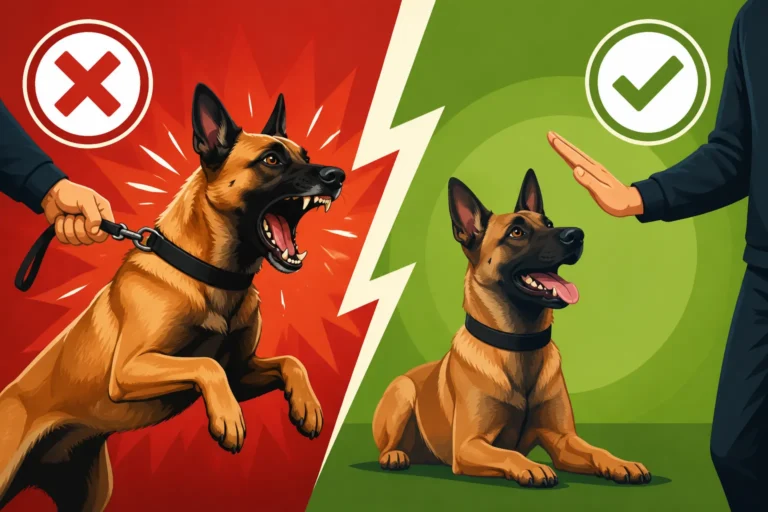
One of the biggest hurdles is overcoming the myths surrounding e-collars. Many people picture a dog yelping in pain, or cowering from a trainer wielding a remote. This simply isn't how modern, well-designed e-collars are intended to be used, especially with a sensitive, intelligent breed like the Malinois. The goal isn't to scare your dog into submission, but to provide a consistent, clear signal that gets their attention, even when their prey drive is at full throttle or they're absorbed in a task. Imagine trying to get your dog's attention over the sound of a jackhammer – a consistent, undeniable tap on their neck can cut through that noise in a way your voice never could.
These tools are not a replacement for traditional training, nor are they a shortcut around building a solid relationship based on trust and positive reinforcement. Instead, they are an enhancement to that training, a way to extend your communication reach and ensure your Malinois understands what's expected, even when you're a hundred yards away or they're highly stimulated. The Handler Experience a Belgian Malinois Needs often includes understanding and implementing various tools effectively, and the e-collar is one such tool in a skilled handler's kit.
How Modern E-Collars Actually Work
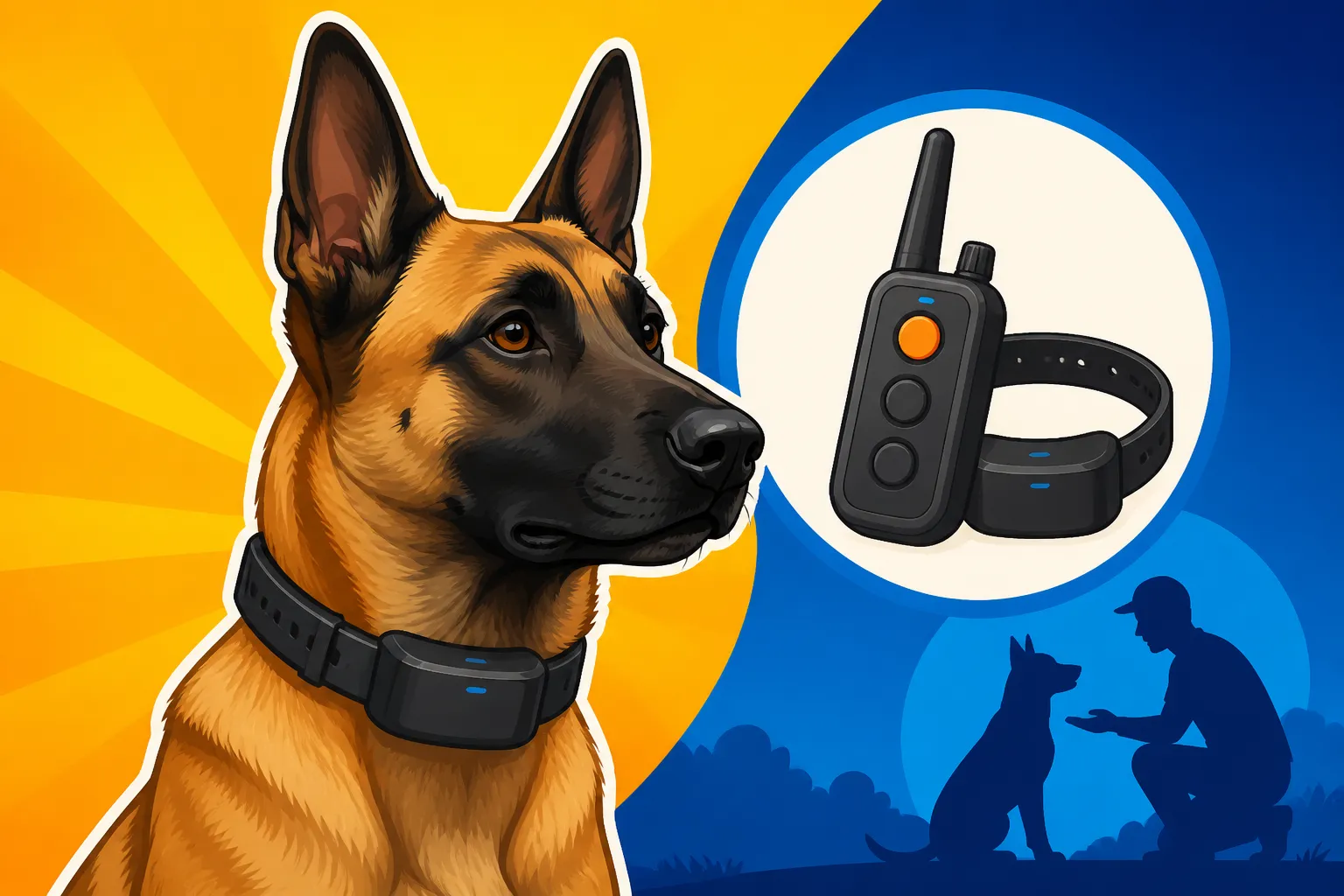
Forget the antiquated notions; modern e-collars are sophisticated pieces of equipment. They don't deliver a single, jolting "shock." Instead, they offer a range of customizable stimulations, from subtle vibrations and audible tones to very low-level static sensations. Think of it more like a TENS unit or a muscle stimulator used in physical therapy – a muscle contraction, not a painful jolt. The key is finding your dog's "working level," which is often so low that humans can barely feel it.
Most quality e-collars have dozens, sometimes hundreds, of stimulation levels, allowing for incredibly fine-tuned adjustments. They also often include a "nick" (momentary stimulation) button and a "constant" (continuous, but increasing in intensity until released) button, along with vibration and tone options. This versatility allows you to tailor the feedback precisely to your dog and the situation. Brands available on platforms like Amazon offer a wide array of choices, from basic models to advanced ones with GPS tracking and multiple dog capabilities. It’s critical to choose a reputable brand that prioritizes safety and adjustability.
Why a Malinois Owner Might Consider an E-Collar
For a Belgian Malinois owner, the e-collar can be a game-changer for several reasons. First and foremost, safety. A Malinois with an unreliable recall can be a danger to themselves and others, especially given their speed and prey drive. Imagine your dog bolting after a deer near a busy road; an e-collar can be the difference between a minor scare and a tragedy. Second, it offers unparalleled off-leash freedom. With a properly conditioned e-collar, you can confidently allow your Malinois to explore and run in appropriate, safe environments, knowing you have a reliable way to communicate with them.
Furthermore, these dogs thrive on clear communication and consistent expectations. The e-collar provides just that. It's a consistent, impersonal "tap" that doesn't carry the emotional baggage of your voice, which can fluctuate with frustration or excitement. This allows your Malinois to learn faster and respond more reliably, reducing confusion and anxiety for both of you. It's about gaining control in situations where your voice command simply won't cut through the noise or distraction, helping your Malinois navigate the world safely and with greater freedom.
Essential Preparations Before Introducing the E-Collar
Before you even think about putting an e-collar on your Malinois, there are crucial foundational steps you need to take. Rushing into e-collar training without these prerequisites is a recipe for disaster, potentially creating a dog that fears the collar or becomes confused. This isn't a magical device that fixes problems instantly; it's a tool that amplifies existing communication.
Building a Foundation of Basic Obedience
This is non-negotiable. Your Malinois absolutely must have a solid understanding of basic obedience commands on a leash before you introduce an e-collar. Commands like "sit," "stay," "come" (recall), and "down" should be reliable in low-distraction environments, using a traditional leash and collar. The e-collar's purpose is to layer over these known commands, adding reliability and distance, not to teach them from scratch. If your dog doesn't understand "come" on a long line with verbal cues, they certainly won't understand it with an e-collar alone.
Think of it this way: the e-collar will eventually become your "long leash." You wouldn't try to teach a puppy to sit for the first time by yanking on a long line from fifty feet away. Similarly, you shouldn't use the e-collar to introduce new concepts. Spend ample time building a strong rapport and a clear understanding of what each command means. This foundational work will ensure that when you introduce the e-collar, your Malinois associates the stimulation with the command they already know, rather than with confusion or punishment. A resource like BAXTER & Bella often emphasizes these foundational steps in their online programs, advocating for a strong positive reinforcement base.
Choosing the Right E-Collar for Your Malinois
Selecting the right e-collar is paramount. Not all e-collars are created equal, and what works for a smaller, less driven dog might not be sufficient for a powerful Malinois. Here's what to look for:
- Adjustable Stimulation Levels: Look for a collar with a wide range of levels, preferably 0-100 or more, with small increments. This allows you to find that perfect "working level" without over-stimulating your dog.
- Momentary (Nick) and Continuous Stimulation: Both are valuable. Momentary is for quick corrections or attention-getters, while continuous can be used to hold a command (like a "place" command) until released.
- Vibration and Tone Options: These can be invaluable as pre-signals or for very sensitive dogs. Some dogs respond beautifully to just a vibration.
- Waterproof/Water-Resistant: Malinois are often active, outdoors dogs. A waterproof collar is a must for training in various conditions or if your dog enjoys swimming.
- Fit and Contact Points: The collar needs to fit snugly high on the neck, behind the ears, with the contact points touching the skin consistently. Different lengths of contact points are often included for various coat types. For a Malinois with its short coat, standard contact points are usually fine, but ensure good skin contact.
- Range: Consider how far you plan to work your dog off-leash. Ranges typically vary from a few hundred yards to a mile or more.
Don't skimp on quality here. This is a critical training tool. While Amazon offers many brands, research thoroughly and read reviews from other working dog owners.
Here's a quick comparison of key e-collar features:
| Feature | Description | Ideal for Malinois | Avoid if |
|---|---|---|---|
| Adjustable Levels | Wide range (0-100+), fine increments. | Essential for finding precise "working level" without over-correction. | Only a few broad settings; too harsh or too weak. |
| Momentary (Nick) Stim | Brief, quick pulse. | Good for attention-getting or reminding of a command. | Only continuous stimulation; less nuanced control. |
| Continuous Stim | Sustained pulse, duration controlled by handler. | Useful for holding commands (e.g., "stay") or guiding through a behavior. | No continuous option; limited ability to apply sustained pressure. |
| Vibration/Tone | Non-static feedback options. | Can serve as a warning or pre-cue; often effective on sensitive dogs. | No alternative feedback; only static stimulation. |
| Waterproof | Withstands submersion or heavy rain. | Critical for active, outdoor Malinois or those who enjoy water. | Only splash-proof; limits training environments. |
| Range | How far the remote can communicate with the collar. | 1/2 mile to 1 mile+ is ideal for off-leash work in open areas. | Short range (e.g., 100-200 yards); restricts off-leash freedom. |
| Contact Points | Metal probes that touch the skin; various lengths. | Ensure good contact without irritation; usually standard length works for Malinois. | Poor contact, or causes skin irritation due to improper fit or material. |
Getting Your Malinois Comfortable with Wearing the Collar
Before you ever turn the e-collar on, your Malinois needs to be completely comfortable wearing it. Treat it like any new piece of equipment. Introduce it gradually, letting them sniff it, then putting it on for short periods while they're engaged in positive activities – feeding, playtime, short training sessions. The goal is for them to associate the collar with good things, not with the upcoming stimulation.
Start with just a few minutes a day, alongside their regular collar, then gradually increase the duration. Wear it during walks, during play, during quiet time in the house. You want it to become a neutral, even positive, part of their daily routine, just like their leash or harness. Crucially, never leave the e-collar on for more than 8-10 hours at a time, and always reposition it to prevent "pressure necrosis" – skin irritation or sores from constant contact in one spot. This pre-conditioning phase might take a few days to a week, but it's essential for preventing fear or aversion to the collar itself.
The Conditioning Process: Gentle Introduction to Low-Level Stimulation
Once your Malinois is comfortable wearing the e-collar and has a solid grasp of basic obedience, you're ready to begin the actual conditioning. This process is all about pairing the e-collar stimulation with commands your dog already knows, building a clear understanding that the subtle "tap" is a signal, not a punishment. Patience and precision are your best friends here.
Finding Your Dog's "Working Level"
This is arguably the most critical step. The "working level" is the lowest possible stimulation level your dog perceives. It's not a punishment; it's just enough to get their attention, like a tap on the shoulder. For a Malinois, this level can be surprisingly low. Start with the collar on, turned on, and your dog in a quiet, low-distraction environment. Begin at level 1 and press the "constant" button (or "nick" repeatedly) for a second or two. Watch your dog closely. Are they twitching an ear? Shaking their head? Lifting a paw? Showing any subtle indication they feel something?
If not, increase the level by one and try again. Continue this process, going up one level at a time, until you see that first subtle reaction. This is your dog's working level. It might be 5, it might be 15, it might be 30. Every dog is different. This low level is what you will primarily use for communication. It's important to understand that if your dog yelps, jumps, or acts like they've been stung, the level is too high. You're looking for a curiosity, a slight acknowledgement, not discomfort. E-Collar Timing on a Belgian Malinois is paramount, and finding this base level ensures your timing starts right.
Pairing the E-Collar With Known Commands
Now that you've found the working level, it's time to teach your Malinois what the stimulation means. We do this by pairing the e-collar pressure with leash pressure and known verbal commands. Let's use "sit" as an example:
- Preparation: Have your Malinois on a regular leash, in a low-distraction area. Hold the remote in one hand and the leash in the other.
- Verbal Command + E-Collar + Leash Pressure: Say "Sit." Simultaneously, apply gentle upward leash pressure and press the continuous stimulation button on the e-collar at your dog's working level.
- Release and Reward: The instant your dog's rear touches the ground, release the leash pressure, release the e-collar stimulation, and offer enthusiastic praise and a high-value treat.
- Repetition: Repeat this many, many times. The goal is for your dog to learn: "When I feel that tap and hear 'sit,' if I sit, the tap goes away, and I get a reward!"
Do this for every basic command: "come," "down," "heel," "place." The sequence is always: verbal command, then e-collar stimulation and traditional leash/hand pressure together, then immediate release and reward when the dog performs the desired action. The release of pressure is the dog's reward, followed by praise and treats. This is called "pressure-release" training. Building a Marker System With a Malinois can be integrated here, using a verbal marker or clicker at the exact moment of compliance.
Moving from Leash Pressure to E-Collar Pressure
Once your Malinois is reliably performing commands with the combined leash/e-collar pressure, it's time to gradually fade the leash pressure. The e-collar should become the primary source of communication for distance and distraction.
Continue working in a low-distraction environment. Give the verbal command, then apply the e-collar stimulation at your working level. Wait a second or two. If your dog doesn't respond, then add the leash pressure to guide them into position. The goal is to quickly get to a point where the e-collar stimulation alone prompts the known response.
As your dog becomes more proficient, you can gradually increase distractions. Start with mild distractions, like another person walking by, then move to higher distractions, like another dog far away, or a rolling ball. The beauty of the e-collar is that you can often use the same working level to cut through distractions that would render your voice command useless. Always start small and build up. Remember, the e-collar is extending your leash, allowing you to communicate reliably when you're further away or when your Malinois is highly focused on something else. This step is crucial for achieving reliable off-leash control, which is often a primary goal for Malinois owners. Long Line Work With a Malinois in Open Ground is an excellent precursor to this stage, building the reliability of commands over distance before transitioning to the e-collar for off-leash work.
Common Pitfalls and Troubleshooting During E-Collar Training
Even with the best intentions and careful preparation, you might encounter bumps in the road when training your Malinois with an e-collar. Their high drive, intelligence, and sensitivity mean that mistakes can have a greater impact. Understanding common challenges and how to address them is key to successful and humane training.
Avoiding Aversive Associations and Fear
One of the worst outcomes of improper e-collar use is a dog that develops a fear of the collar, the remote, or even you. This usually happens if the stimulation level is too high, applied inconsistently, or used punitively without clear communication. The key is to always pair the stimulation with a known command and immediate release/reward.
If your Malinois starts to show signs of fear (cowering, cringing, avoiding eye contact when the collar is on), immediately stop. Re-evaluate your working level – it's likely too high. Go back to basics: lower the stimulation, revisit known commands in low-distraction settings, and ensure your timing is impeccable. Make sure the collar is only ever associated with clear, actionable requests, and always followed by positive reinforcement. You don't want your dog to think the "tap" means "something bad is happening," but rather "listen to me now, and relief and reward are coming." Whether an E-Collar Damages a Soft Malinois is a common concern, and proper conditioning prevents this by focusing on communication over correction.
When Your Malinois "Blows Through" the Stimulation
It's not uncommon for a high-drive Malinois, especially when in full prey drive or highly stimulated, to appear to "blow through" the e-collar stimulation. They might ignore it completely, acting as if they didn't feel it. This usually happens for one of two reasons:
- The working level is too low for the distraction: The subtle "tap" that works in your quiet backyard isn't strong enough to cut through the adrenaline rush of chasing a rabbit. In this case, you might need to temporarily increase the level slightly to regain their attention, then immediately drop it back down once they've responded. This isn't about punishing them, but about ensuring the communication is clear enough to be heard above the noise.
- The dog hasn't generalized the command: They understand the command with the e-collar in easy settings, but haven't learned to apply it in novel or highly distracting environments. If this is the case, you've moved too quickly. Go back to a less distracting environment, reinforce the command with the e-collar at your normal working level, and gradually increase the difficulty again. Don't rush the process; a Malinois needs hundreds, if not thousands, of repetitions in varied environments to truly generalize a command. A Belgian Malinois That Pulls Toward Every Distraction highlights the need for consistent communication in varied settings.
Maintaining Consistency and Generalization
Consistency is the bedrock of all dog training, and e-collar training is no exception. Every time you give a command with the e-collar, you must be prepared to follow through and ensure your dog complies. Inconsistency teaches your dog that sometimes they can ignore the command, which erodes reliability. This means if you give the "come" command, and your dog doesn't respond to the e-collar, you must either increase the stimulation until they do, or physically go and guide them to you.
Generalization is also key. Your Malinois might be perfect with e-collar recall in your park, but completely blow you off at the beach. That's because they haven't learned that "come" (and the e-collar signal) means the same thing everywhere. You need to practice in a wide variety of locations, with different distractions, gradually increasing the challenge. Start with a relatively easy level of distraction, achieve success, then move to slightly more distracting scenarios. Think about enrolling in advanced obedience classes or working with a trainer experienced in e-collar use to help proof commands in novel settings. The consistent structure provided by training programs like those from BAXTER & Bella can be immensely helpful here, providing step-by-step guidance for generalizing behaviors.
Advanced Applications and Responsible E-Collar Use
Once your Malinois is thoroughly conditioned to the e-collar and reliably responds to commands in various situations, you can begin to explore its more advanced applications. Remember, the e-collar is a tool for communication and reinforcement, not a substitute for training or relationship building.
Proofing Commands in High-Distraction Environments
This is where the e-collar truly shines for a Belgian Malinois. Their intense drive and focus can make them seemingly deaf to verbal commands when something exciting catches their attention. The e-collar allows you to cut through that focus and regain their attention, even when they're fixed on a squirrel, another dog, or a moving object. Recall on a Belgian Malinois in Full Drive is a common struggle that the e-collar can address.
Start proofing in environments where distractions are present but manageable. For example, a park with other dogs on leash, but not directly interacting with your Malinois. As your dog responds reliably, slowly increase the level of distraction. This might mean working near a dog park fence, then eventually inside a quieter section of the dog park. Always be prepared to back up to an easier environment if your dog struggles. The goal is to build such a strong association between the e-collar stimulation and the desired action that your Malinois chooses to perform the command, even when their instincts are screaming otherwise.
For example, when working on a "leave it" command with a high-value distraction, you might give the verbal "leave it," apply a momentary e-collar stimulation if they hesitate, and then reward heavily when they disengage. This consistent, clear communication empowers your Malinois to make the right choices, even when faced with significant temptation.
Addressing Specific Behavioral Challenges
Beyond general obedience, the e-collar can be an invaluable tool for addressing specific behavioral challenges common to Malinois, such as reactivity or persistent pulling on a leash.
- Leash Reactivity: For a Malinois that reacts strongly to other dogs or people on leash, the e-collar can provide a precise and immediate interruption. When your dog begins to fixate or show pre-reactive behaviors, a low-level continuous stimulation can be used to interrupt that focus while you simultaneously give a "look at me" or "heel" command. The instant they break focus and engage with you, the stimulation is released, and they are rewarded. This teaches them to break fixation and re-engage with you rather than escalating. Teaching a Malinois to Walk Without Dragging You is a behavior that can greatly improve with e-collar work.
- Off-Leash Reliability: For Malinois who struggle with coming when called, the e-collar is a lifesaver. Once conditioned, you can use a low-level continuous stimulation as a "come" signal. As you apply the stimulation, give your verbal "come" command and encourage your dog towards you. The moment they turn towards you and start to come, release the stimulation. This creates a strong motivator for them to come quickly, as coming turns off the uncomfortable (but not painful) sensation. This is especially useful for a Malinois who, in their adolescence, might test boundaries and The Age a Malinois Starts Ignoring Known Cues.
Knowing When to Seek Professional Guidance
While this guide provides a solid framework, e-collar training, especially with a highly driven breed like the Belgian Malinois, is complex. There will be times when you encounter issues that you can't quite resolve on your own, or when you feel unsure about progression. This is absolutely normal, and it's a sign of a responsible owner to know when to seek help.
Consider working with a professional dog trainer who has extensive experience with e-collars and working breeds. Look for trainers who emphasize positive reinforcement alongside e-collar use, and who can demonstrate humane and effective techniques. They can help you fine-tune your timing, troubleshoot specific behavioral issues, and provide personalized guidance tailored to your individual Malinois. A good trainer will help you ensure that you are building a stronger bond and clearer communication with your dog, not creating fear or confusion. The Structure a Belgian Malinois Needs Every Day often benefits from professional input to integrate all training tools effectively.
Disclaimer
This article is for general informational purposes only and does not constitute professional advice. Laws, prices and regulations vary by location and change over time. Consult a qualified professional for guidance on your specific situation.