Building a Marker System With a Malinois
It’s a common frustration for Belgian Malinois owners: you know your dog is smart, capable, and eager to please, but sometimes it feels like there’s a communication gap. You want to mark precise behaviors, reward them effectively, and build solid understanding, but the sheer drive and speed of a Malinois can make timing tricky. This guide will walk you through building a robust marker system, a powerful communication tool that creates crystal-clear understanding between you and your high-octane Malinois, turning confusion into confident cooperation.
Understanding the Core of a Marker System
When you’re working with a Belgian Malinois, every second counts. These dogs operate at such an incredibly high speed, both physically and mentally, that vague communication just won't cut it. A marker system is your secret weapon for bridging that gap, offering unparalleled clarity in a way that traditional praise or treats alone simply cannot.
What is a Marker and Why is it Essential for a Malinois?
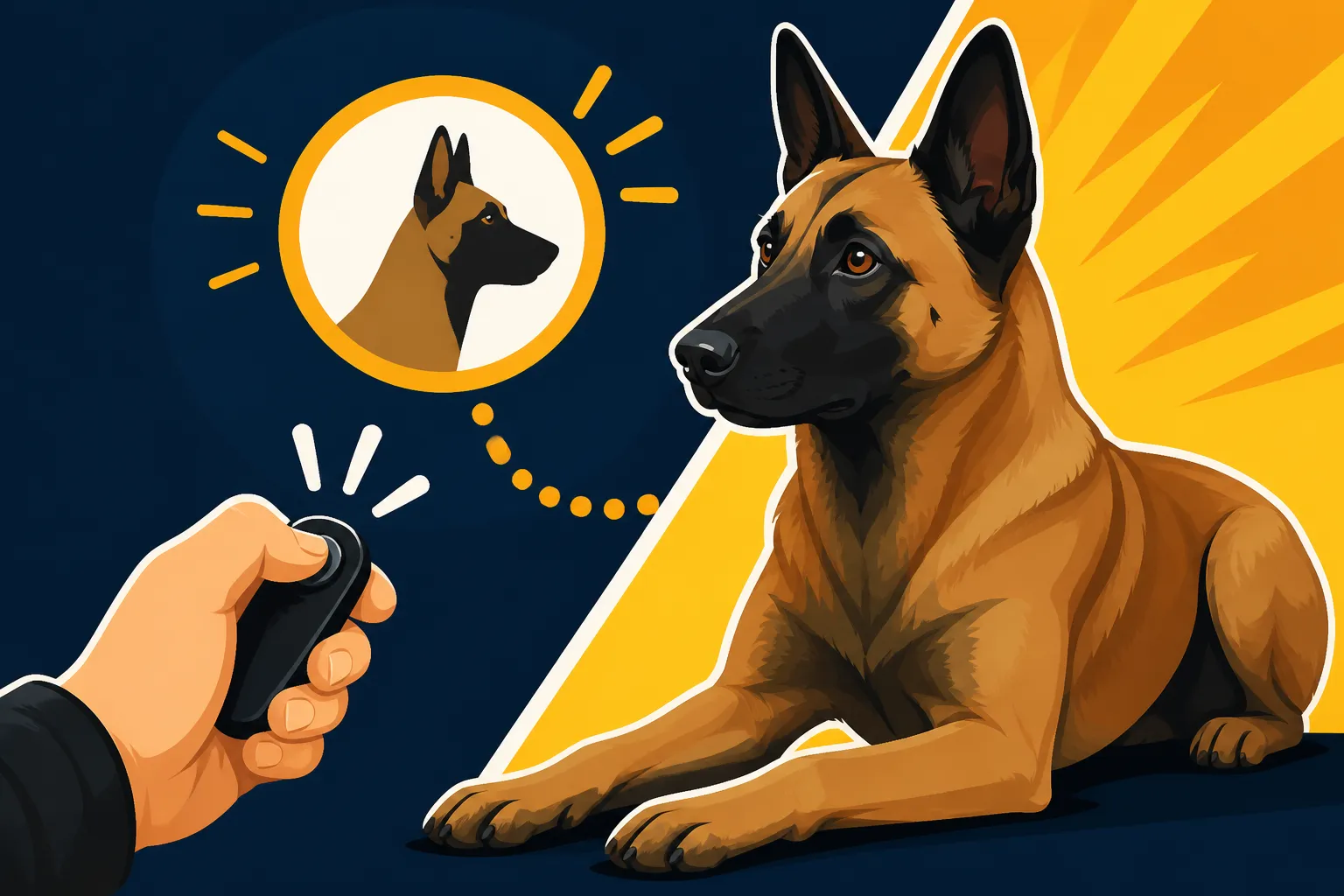
At its heart, a marker is a signal – a sound or a word – that tells your dog, "Yes! That exact thing you just did, right there, is what I want." Think of it as taking a snapshot of a desired behavior. For a Malinois, whose brain is constantly whirring and processing, this immediate and precise feedback is invaluable. They need to know exactly which split-second action earned them the reward. Without a marker, you might praise or offer a treat a moment too late, and your Malinois could easily associate the reward with the subsequent action, leading to confusion and slower learning.
Imagine trying to teach your Malinois a complex obedience routine or a specific nuance in bite work. If you wait until they've completed a full sequence to reward, they might not know which part of the sequence was truly outstanding. A well-timed marker allows you to pinpoint and reinforce even the slightest approximation of the desired behavior, shaping it step by step. This precision is absolutely critical for such an intelligent and driven breed, allowing them to dissect and understand complex commands faster and with greater confidence. It transforms their training experience from a guessing game into a clear dialogue, fostering a deeper bond and a more reliable working partnership.
The Difference Between a Primary and Secondary Reinforcer
To truly grasp the power of a marker system, we need to distinguish between two types of reinforcers: primary and secondary. A primary reinforcer is something inherently rewarding to your dog, something they instinctively desire. Think of high-value food, a favorite tug toy, or even enthusiastic praise from you. These items satisfy a biological or innate need or desire. For a Malinois, this often means a delectable piece of chicken, a frantic game of tug, or a short, intense retrieve of a cherished ball. These are the "paychecks" that motivate them to work.
A secondary reinforcer, on the other hand, is something that becomes rewarding because it has been consistently paired with a primary reinforcer. This is where your marker comes in. Whether it's the click of a clicker or a specific verbal cue like "Yes!", the marker itself has no inherent value to your Malinois initially. Its power comes from the fact that it predicts the imminent arrival of a primary reinforcer. Over time, your Malinois learns that the marker means, "Good job! A reward is coming right now!" This makes the marker incredibly powerful because it can be delivered much faster and more precisely than a primary reinforcer. It bridges that tiny, crucial gap between the desired behavior and the delivery of the tangible reward, making your communication lightning-fast and unambiguous for your eager, intelligent companion.
Choosing Your Marker: Clicker vs. Verbal
Once you understand the 'why' behind a marker system, the next step is deciding on the 'what'. For most Malinois owners, this boils down to two main choices: a mechanical clicker or a specific verbal cue. Both have their merits, and the best choice often depends on your personal preference, your dog's sensitivity, and the specific training context.
The Precision of a Clicker for a High-Drive Dog
The clicker is often the preferred choice for many working and sport dog handlers, especially those with high-drive breeds like the Belgian Malinois. Its primary advantage is its incredible precision and consistency. A clicker produces a sharp, distinct, and always identical sound every single time. This lack of variation is crucial for a Malinois. There's no emotional inflection, no accidental elongation of a word, no change in pitch based on your mood or the situation. It's a pure, unadulterated signal.
Because it's a very brief, distinct sound, the clicker allows you to mark the exact split-second a behavior occurs, even fleeting ones. When your Malinois executes a perfect send-out or offers a quick, clean "out" on a toy, that precise click instantly freezes the moment, telling them, "That was it!" This precision is invaluable for shaping complex behaviors and achieving high levels of accuracy in sports like IGP or French Ring. You can find a wide variety of reliable clickers on Amazon, often bundled with training pouches for convenience. The distinct nature of the clicker also means it cuts through distractions more effectively than a verbal cue, making it ideal for proofing behaviors in busy environments. For a dog that lives for clarity and speed, the clicker can be an unparalleled communication tool.
Advantages and Disadvantages of a Verbal Marker
While the clicker offers undeniable precision, a verbal marker, such as a short, sharp "Yes!" or "Good!", has its own set of advantages. The most obvious benefit is convenience – you always have your voice with you. There's no fumbling for a clicker if your hands are full, no worrying about dropping it, or having it malfunction. This makes verbal markers incredibly practical for everyday life and spontaneous moments of reinforcement, like when your Malinois offers a calm "down" in a busy cafe or looks to you instead of chasing a squirrel.
However, the human voice, while versatile, inherently lacks the mechanical consistency of a clicker. Our tone, volume, and inflection can vary day-to-day, or even moment-to-moment. A tired "Yessss…" isn't as clear as a crisp "YES!" or a sharp click. This potential for inconsistency can sometimes lead to minor confusion for a highly perceptive Malinois, making it slightly harder for them to pinpoint the exact moment of desired behavior. Some handlers choose to use both: a clicker for initial teaching and complex shaping, and a verbal marker for everyday maintenance and when the clicker isn't practical. The key, regardless of your choice, is to make your verbal marker as short, sharp, and consistent as possible to mimic the precision of a clicker.
Here's a quick comparison to help you weigh your options:
| Feature | Clicker | Verbal Marker (e.g., "Yes!") |
|---|---|---|
| Consistency | Mechanically identical sound every time | Prone to human variation in tone, volume, pitch |
| Precision | Excellent for marking split-second behaviors | Good, but requires conscious effort to be sharp |
| Convenience | Requires carrying an object; can be dropped | Always available; hands-free |
| Sound | Distinct, novel, cuts through distraction | Can be easily confused with other speech |
| Initial Use | Often preferred for initial teaching/shaping | Good for maintenance and everyday reinforcement |
| Distractions | High effectiveness in noisy environments | Can be less effective if handler is distracted |
The Crucial Process of Loading the Marker
Choosing your marker is only the first step; making it meaningful to your Malinois is the next, and arguably most critical, part of building a solid marker system. This is what we call "loading the marker" or "charging the clicker." Without this foundational step, your chosen sound or word will be just that—a sound or a word—and won't convey any specific meaning to your dog.
The Foundation: Creating a Positive Association
Loading the marker is about creating an infallible positive association: the marker always means a treat is coming. This isn't about training a specific behavior yet; it's purely about teaching your Malinois the meaning of the marker itself. To start, find a quiet, low-distraction environment where your Malinois can focus solely on you. Have a supply of high-value treats ready – small, soft, and easy for them to swallow quickly.
The process is simple: Mark (click or say your verbal cue), then immediately follow with a treat. Repeat this sequence many, many times. Click, treat. Click, treat. Click, treat. Do this in short bursts, perhaps 10-20 repetitions, several times a day for a few days. Don't ask your Malinois to do anything. They don't need to sit, lie down, or make eye contact. They just need to be present and hear the sound, then receive the reward. The goal is for your Malinois to eventually hear the marker and visibly anticipate the treat, perhaps perking their ears, looking expectantly at your hand, or even getting a little excited wiggle. That's how you know the marker is starting to be "loaded." This is also a fantastic way to Building Engagement With a Belgian Malinois, as it teaches them that paying attention to you brings good things.
Practicing in Various Environments
Once your Malinois reliably anticipates a treat after the marker in a quiet setting, it's time to generalize that understanding. The real world isn't a silent, distraction-free bubble, and your Malinois needs to understand that the marker's meaning is universal, regardless of where you are or what else is happening. This involves practicing the "mark-and-treat" sequence in increasingly distracting environments.
Start in slightly different areas of your home, then move to the backyard, a quiet park, or even during a walk. The key is to introduce distractions gradually and ensure success. If your Malinois is too overwhelmed by an environment to register the marker-treat connection, you've moved too fast. Go back to a less distracting spot. Continue with the simple click-treat (or verbal marker-treat) sequence, without asking for any behaviors. Just reinforce the connection. This consistent repetition across various settings solidifies the marker's meaning, making it a reliable communication tool you can use anywhere. This robust foundation is essential before you even think about Recalling a Belgian Malinois Off a Moving Target or tackling complex sport routines, as it ensures your signal will cut through any environmental noise or drive.
Implementing the Marker System in Training
With your marker fully loaded and understood by your Malinois, you're ready to unleash its full potential in actual training. This is where the magic happens, transforming your marker from a simple signal into a powerful tool for shaping, reinforcing, and ultimately, building complex behaviors.
Timing is Everything: Marking the Exact Behavior
The cornerstone of effective marker training is impeccable timing. For a Belgian Malinois, who moves and thinks at incredible speeds, your marker needs to be delivered at the exact peak of the desired behavior. It’s like pressing the shutter button on a camera to capture a perfect still shot. If you click too early, you mark an incomplete action. If you click too late, you might mark the start of an unintended behavior or the dog’s reaction after the desired action.
Consider teaching a "sit." As your Malinois's rear end just touches the ground, that's the moment to click or say your verbal marker. Not as they are moving into the sit, and not after they've been sitting for a second. That precise timing tells your dog, "This specific body position, at this exact moment, is what earned you the reward." This allows you to shape behaviors with incredible precision, gradually asking for more complete or refined actions. This sharp timing is what helps a Malinois understand subtle cues in advanced Obedience a Malinois Needs Before Protection Work, allowing them to execute with flawless accuracy. Practice makes perfect here. Don't be afraid to record yourself training to review your timing. Many handlers start by "capturing" behaviors their dog offers naturally, like a spontaneous sit or a polite four-on-the-floor greeting, to hone their timing skills before moving to more formal cues.
Phasing Out Constant Marking and Introducing Variable Reinforcement
While continuous marking and rewarding are essential during the initial teaching and shaping phases, you don't want your Malinois to become reliant on a marker for every single repetition of a known behavior. The goal is for the behavior itself to become strong and reliable, even without constant marking. This is where variable reinforcement comes into play.
Once your Malinois consistently performs a behavior on cue, you can start to transition from marking every single successful repetition to marking intermittently. This means sometimes they perform the action, get the marker and a treat, but other times they perform the action, get only verbal praise, or a treat without the marker, or perhaps nothing for a few repetitions before a jackpot reward. The key is unpredictability. Your Malinois quickly learns that if they keep performing the behavior well, the marker (and the high-value reward it predicts) might come, which actually makes the behavior stronger and more resistant to extinction. This is often referred to as a "gambler's payout" – they keep trying because they know a big win could be just around the corner. This approach keeps your Malinois engaged and motivated, ensuring they don't lose interest or become dull. It also teaches them to work for the intrinsic reward of performing the behavior itself, rather than solely for the immediate marker. This strategy is crucial when you’re Building an Off Switch Into a Belgian Malinois, as it teaches them to sustain attention and effort.
Common Challenges and Troubleshooting
Even with the best intentions and a clear understanding of marker systems, you might run into a few bumps along the road, especially with a dog as intense and perceptive as a Belgian Malinois. It's not uncommon to encounter issues, but most can be successfully navigated with a little patience and adjustment.
A Malinois That Ignores the Marker or Becomes Overstimulated
One common challenge is a Malinois that seems to "tune out" the marker or becomes so overstimulated that they can't process the information. If your Malinois isn't responding to the marker, the first thing to check is if the marker is sufficiently "loaded." Have you consistently paired it with a high-value treat in a distraction-free environment enough times? If not, go back to basics and reinforce that fundamental connection. Sometimes, handlers rush through the loading phase, assuming their Malinois understands, when in reality, the association isn't strong enough.
Another factor might be the value of your primary reinforcer. A regular piece of kibble might not be enough to get a Malinois's attention when there's an exciting smell or a moving object nearby. Experiment with higher-value treats: boiled chicken, hot dogs, cheese, or specialized training treats from brands you can find on Amazon. If your Malinois becomes too aroused or overstimulated by the environment, making them unable to focus, you need to reduce the difficulty. Move to a quieter area, increase the distance from distractions, or shorten your training sessions. A Malinois in a state of high arousal often can't learn effectively. If you're consistently struggling with focus or overstimulation, online dog training platforms like BAXTER & Bella can offer structured courses and community support that often address these common Malinois quirks. Remember, consistency in a calm environment is key to rebuilding that connection.
Inconsistent Timing from the Handler
The human element is often the trickiest part of marker training. Inconsistent timing from the handler is a very common issue, and it can inadvertently confuse your Malinois. As we discussed, the click or verbal marker needs to be delivered at the exact moment of the desired behavior. If your timing is off, even by a fraction of a second, your Malinois might struggle to understand what earned them the reward. They might offer extra behaviors, look confused, or simply not progress as quickly as you'd expect.
Sometimes, in our enthusiasm, we might accidentally click after the dog has moved on from the perfect position, or we might say "Yes!" while they are still in the process of sitting, rather than right when their rear hits the floor. This tiny delay can feel like an eternity to a fast-thinking Malinois. The best way to troubleshoot inconsistent timing is to practice, practice, practice! Ask a friend to observe your timing, or even better, record your training sessions with your phone. Watching yourself back can be incredibly illuminating. You might realize you're consistently a beat too slow or too fast. Focus on small, clear behaviors initially, and keep your primary reinforcer ready and quickly accessible so you can deliver it promptly after the marker. The quicker the treat arrives after the marker, the stronger the connection. This precision will also be critical when working on commands like Teaching a Belgian Malinois to Out, where the release of the object must be marked precisely.
Advanced Marker System Applications
Once your Malinois is fluent in the language of your marker system, its utility extends far beyond basic obedience. This precise communication tool becomes indispensable for tackling complex tasks, chaining behaviors, and building bulletproof reliability, which is exactly what a high-performing Malinois is built for.
Using Markers for Complex Chains and Discriminations
The beauty of a marker system truly shines when you start teaching complex chains of behaviors or fine discriminations. A chain is a sequence of individual actions linked together, where the completion of one action cues the start of the next. For a Malinois, this could be anything from an agility course to a multi-step detection sequence. With the marker, you can break down these complex tasks into manageable micro-behaviors.
For example, if you're teaching your Malinois to fetch a specific item from a group (discrimination), you can mark the moment they orient towards the correct item, then mark when they approach it, then when they touch it, and finally, when they pick it up and bring it back. Each mark provides clear feedback on the success of that tiny step, building confidence and understanding without overwhelming the dog. Similarly, for Channeling a Belgian Malinois's Prey Drive Into a Tug with a precise retrieve, you can mark the pickup, the return, and then the "out" command, building a seamless flow. The marker helps your Malinois understand which part of the action is important, allowing them to link these smaller pieces into one fluent, reliable chain, eventually fading the individual marks for a smoother execution.
Proofing Behaviors and Fading Prompts
Proofing a behavior means teaching your Malinois to perform it reliably under various distractions, in different environments, and with different handlers. The marker system plays a critical role here. When you introduce distractions, your Malinois might initially struggle. The marker becomes a clear beacon of "right!" amidst the noise and excitement, helping them maintain focus on the desired action.
For example, if you're working on a "down-stay" in a busy park, and your Malinois holds position despite a passing jogger, a precisely timed marker tells them, "Yes! Staying down even with that distraction was exactly right!" This reinforcement under distraction builds resilience and strengthens the behavior. Concurrently, the marker helps in fading prompts. Initially, you might use a lure or a hand gesture to get your Malinois into a "sit." As they start to offer the sit more readily, you can mark the action when it's performed with less and less of your physical prompt, eventually relying only on your verbal cue. The marker reassures them they are still performing the correct action even as your guidance fades away. This systematic approach ensures that behaviors become truly reliable and independent, empowering your Malinois to perform consistently, whether they are in a busy urban environment or participating in advanced competition trials where Whether a Malinois Is Ever Safe Off Leash hinges on such reliability.
Disclaimer
This article is for general informational purposes only and does not constitute professional advice. Laws, prices and regulations vary by location and change over time. Consult a qualified professional for guidance on your specific situation.