A Belgian Malinois That Starts Guarding at Two
It can be incredibly disorienting and frustrating when your Belgian Malinois, who perhaps seemed perfectly friendly as a younger dog, suddenly starts exhibiting strong guarding behaviors around the age of two. This shift isn't just a nuisance; it can be genuinely concerning, making you question everything you thought you knew about your dog. This guide is here to shed light on why these guarding instincts often surface during this critical developmental period and, more importantly, equip you with practical strategies to manage and redirect these powerful traits.
Understanding the Malinois Maturation Timeline
The "terrible twos" aren't just for human toddlers; for a Belgian Malinois, this age often marks a significant period of behavioral development and maturation. Unlike many other breeds that might settle into their adult personalities much earlier, Malinois often take longer to fully mature both physically and mentally. This extended adolescence can be a trying time for owners, as the dog's innate drives and instincts become more pronounced. What you might have interpreted as quirky puppy behavior can suddenly morph into intense, protective displays as their adult brain fully kicks in.
From Puppy Play to Adult Purpose
When your Malinois was a young pup, their world was primarily about exploration, play, and learning basic house rules. They were focused on you, on toys, and on safe interactions with the world you presented them. Their guarding instincts, if present, were likely nascent, perhaps showing up as mild toy possessiveness or a bark at a new sound. However, as they transition from a gangly, often goofy adolescent into a formidable young adult, their genetic blueprint starts to assert itself more fully. They begin to understand their role in the "pack" (your family) and their territory (your home) with a new level of seriousness. The fun-loving puppy is still there, of course, but now it's overlaid with the ancient instincts of a guardian and protector.
This is often the point where owners realize just how different a Malinois is from other breeds. Their intelligence, coupled with their inherent drive, means they're constantly assessing their environment. They're not just reacting; they're processing. And at two years old, that processing power, previously directed at learning tricks or tearing up toys, now extends to monitoring boundaries and protecting perceived resources. It's a natural evolutionary step for a breed built for demanding work, but it can catch an unprepared owner off guard.
The "Adolescent Malinois" Extended Period
Many people assume that once a dog reaches a year old, they're pretty much "grown up." For a Belgian Malinois, this couldn't be further from the truth. The period from one to three years old is often referred to as extended adolescence, a phase where they are physically mature but still developing mentally and emotionally. It's a time of testing boundaries, pushing limits, and figuring out where they stand in the world. During this phase, their confidence grows, their drives intensify, and any gaps in their early socialization or training can become glaringly apparent.
This extended adolescence is crucial because it's when their innate guarding tendencies, which might have been dormant or subtle earlier on, begin to fully manifest. They start to take their perceived responsibilities more seriously. A casual glance from a stranger might now be seen as a threat. A friend reaching for your hand might be interpreted as an infringement on their human. This isn't necessarily aggression in the malicious sense, but rather an intense, often misguided, attempt to fulfill what they believe is their job: keeping you and your shared space safe. It's why early, consistent, and clear training is so vital for this breed. This is also why having a solid foundation through something like The Handler Experience a Belgian Malinois Needs is so critical.
Why Guarding Instincts Emerge
Guarding behavior in Belgian Malinois isn't random; it's a complex interplay of genetics, environment, and past experiences. Understanding these underlying factors is key to effectively addressing the issue. It's not about blaming the dog, but understanding the powerful forces at play within them.
Genetic Predisposition and Herding Roots
At its core, the Belgian Malinois is a working dog, bred for generations to be intelligent, watchful, and highly protective. While they are renowned for police and military work, their roots are in herding and guarding livestock. This means they were selectively bred for traits like vigilance, territoriality, and a strong protective instinct towards their flock and their shepherd. These aren't behaviors that can simply be "trained out"; they are deeply ingrained in their DNA.
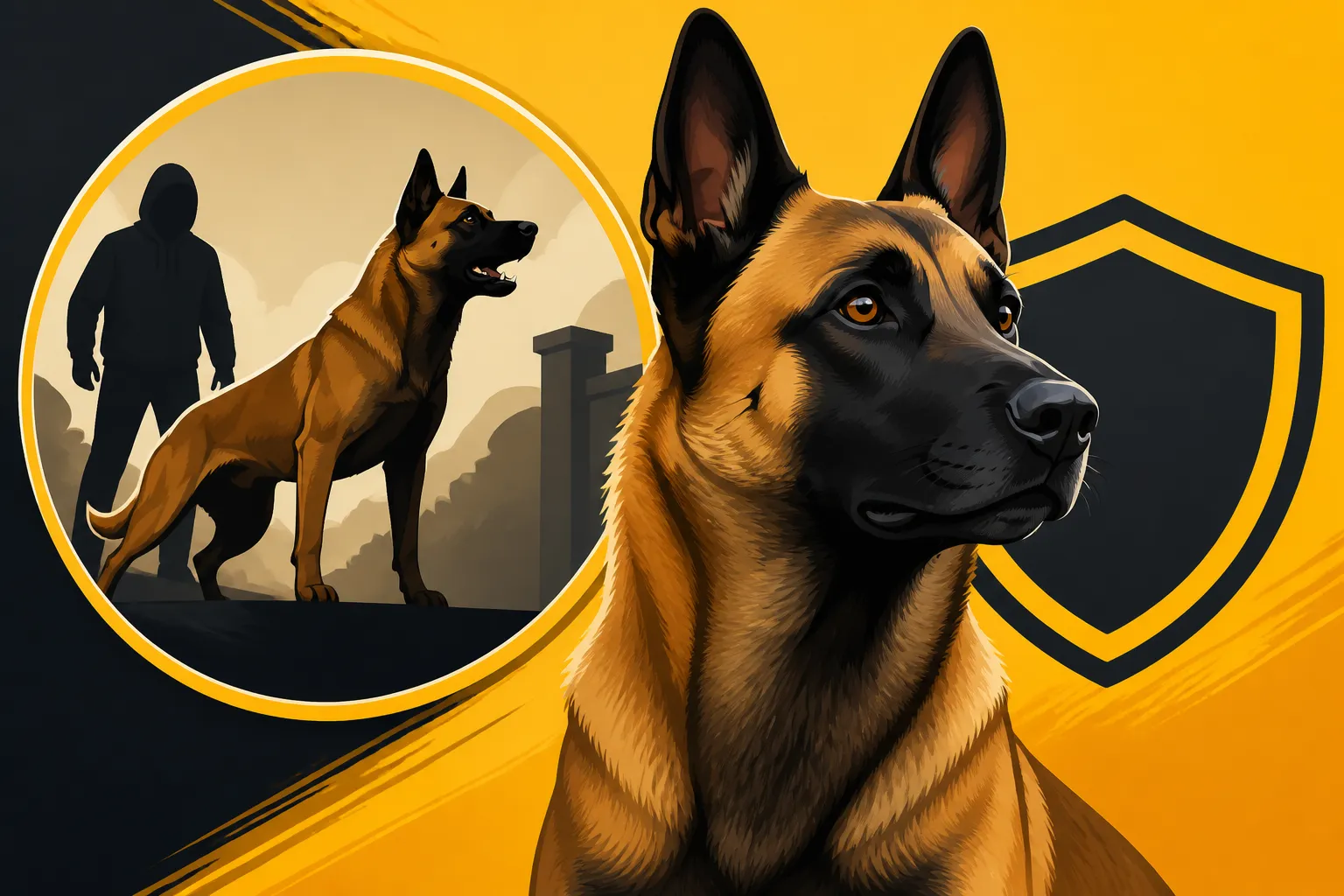
When a Malinois starts guarding at two, it's often these genetic predispositions kicking in with full force. They've reached a maturity level where their perception of their environment and their role in it becomes sharpened. They might feel an inherent need to manage resources, whether that's their food, their toys, their space, or even you. It's their heritage speaking. They are literally wired to be highly observant of their surroundings and to act as a deterrent to perceived threats. This can be a huge asset in the right hands, but without proper guidance, it can become a serious problem. You can explore more about their innate abilities in The Herding Job the Belgian Malinois Was Built For.
Lack of Early Socialization and Training
While genetics lay the groundwork, early socialization and consistent training are the sculptors of a Malinois's behavior. A common pitfall is assuming that exposing a puppy to a few new things is enough. For a Malinois, "socialization" means carefully orchestrated, positive exposures to a wide variety of people, dogs, sounds, environments, and objects throughout their critical developmental periods. Without this extensive and ongoing process, they might develop an apprehension or suspicion towards novelty, which can then manifest as guarding or reactivity as they mature.
If a Malinois wasn't properly exposed to different types of people (kids, men with hats, people in uniforms), dogs of various sizes and temperaments, or loud urban noises during their formative months, their natural protective instincts can become overactive. When they encounter something unfamiliar, instead of seeing it as neutral or positive, they might perceive it as a threat that needs to be "managed" through guarding behavior. This isn't just about walks in the park; it's about structured introductions and positive reinforcement in diverse situations. Resources like online puppy programs, such as those offered by BAXTER & Bella, can provide a structured curriculum for early training and socialization, helping to build a solid foundation before these instincts fully bloom.
Learned Behaviors and Handler Influence
Dogs, especially intelligent ones like Malinois, are constantly learning from their environment and their handlers. If a guarding behavior, even a subtle one, was accidentally reinforced in the past, it's likely to re-emerge and intensify. For example, if your Malinois barked at a stranger approaching your car, and you then moved away, the dog might associate its barking with successfully "driving off" the perceived threat. Over time, this becomes a learned and reinforced behavior.
Furthermore, a handler's anxiety or lack of confidence can inadvertently fuel a Malinois's guarding tendencies. Dogs are incredibly perceptive of our emotions and body language. If you tense up every time a stranger approaches, your Malinois will pick up on that and might interpret it as a signal that there is something to be worried about, prompting them to step up their protective efforts. Your influence, both direct and indirect, plays a massive role in shaping how these instincts are expressed. It's about setting clear boundaries and consistently demonstrating that you are in control of the situation. The Handler Experience a Belgian Malinois Needs emphasizes this control.
Recognizing the Signs of Resource Guarding and Territoriality
Understanding what guarding looks like in a Belgian Malinois is the first step toward addressing it effectively. It's not always overt aggression; sometimes, it's subtle body language cues that, when ignored, can escalate.
Body Language Cues
Before a Malinois escalates to growling or snapping, they will almost always give a series of more subtle body language cues. Learning to read these signals is paramount. These can include:
- Stiffening of the body: Their posture might become rigid, and their tail, which is normally active, may become still or only wag in a very tight, low arc.
- Hard stare: They fix their gaze on the perceived threat, often without blinking. Their pupils might dilate, and their brow can furrow.
- Low growl or subtle rumble: This is often the first audible warning, sometimes so quiet you barely hear it. It's a clear "back off" signal.
- Lip licking or yawning: In stress-inducing situations, these can be appeasement signals or signs of discomfort, often preceding a more overt warning.
- Head or body blocking: Physically placing themselves between you and another person or between a valuable resource and someone approaching it.
- Raised hackles: The hair along their spine may stand up, indicating arousal or fear.
It's crucial to respect these early warnings. Punishing a dog for growling can suppress the warning, leading to a dog that bites without prior notice, which is far more dangerous. Instead, the growl should be seen as valuable communication, telling you that your dog is uncomfortable and needs your help to manage the situation.
Guarding Specific Resources
Resource guarding is when a dog protects items they value from being approached or taken by others. For a Malinois, this can extend beyond the usual food bowl or toy.
- Food and bowls: The classic scenario. They might eat faster when approached, growl, or even snap if someone gets too close to their meal.
- Toys and chews: Particularly high-value items like durable chews or favorite balls. They might hide them, posture over them, or become agitated if you try to retrieve them.
- Sleeping spots/beds: Their crate or a favorite bed might be considered their personal space, which they will defend.
- People: This is a common and concerning form of resource guarding in Malinois at two. They might "guard" their primary handler from other family members, strangers, or even other pets. This can involve barking, lunging, or physically blocking access to you. They see you as their most valuable resource.
- Space: A specific room, a couch, or even the entire house can become a guarded space.
It’s important to remember that resource guarding is often rooted in insecurity, not malice. The dog feels a need to protect what it deems vital because it fears losing it. Our goal isn't to take away their resources, but to teach them that human approach means good things happen, and that their resources are secure.
Territorial Displays
Territoriality is closely related to guarding and often becomes more prominent as a Malinois matures. This is about protecting their perceived domain from intruders.
- Barking at the fence line: Alerting to anything or anyone outside their property boundaries. This can quickly escalate from an alert bark to an aggressive display if not managed.
- Charging the door/window: When someone approaches the house, they may race to the point of entry and bark intensely. This is their way of saying, "This is my house, and you're not welcome."
- Protecting the car: For many working breeds, the car becomes an extension of their home territory. They may bark or react strongly to people walking past the vehicle.
- Escalated reactions to unfamiliar people: Where they might have been merely reserved as a puppy, a two-year-old Malinois might now actively challenge or intimidate strangers who enter their space without an appropriate, guided introduction.
Recognizing these territorial displays means understanding that your Malinois is taking its role as a sentinel very seriously. While the instinct to protect is admirable, indiscriminate or excessive territoriality can be dangerous and needs careful, consistent management.
Strategies for Managing and Redirecting Guarding Behavior
Dealing with a Belgian Malinois that has started guarding requires a multi-faceted approach focusing on management, behavior modification, and sometimes professional intervention. This isn't a quick fix; it's a commitment to consistent training and understanding your dog's unique needs.
Management First: Preventing Opportunities
Before you can even begin to change the behavior, you need to manage the environment to prevent your Malinois from practicing the guarding behavior. Every time they successfully guard something, the behavior is reinforced, making it harder to extinguish.
- Identify Triggers: What specifically causes your Malinois to guard? Is it certain people, objects, locations, or situations? Keep a journal to track these.
- Remove or Secure Valuables: If your dog guards a particular toy or chew, put it away when not actively supervised or when guests are present. If they guard their food bowl, feed them in a secure, quiet area where they won't be disturbed. Consider a slow feeder bowl from Amazon to extend mealtime enjoyment without frantic eating.
- Manage Access to "Guarded" People: If your Malinois guards you, manage interactions. When guests are over, keep your dog on a leash or behind a baby gate in another room. Use a crate, perhaps a sturdy, crash-tested one suitable for a Malinois, which can be found on Amazon. This prevents them from practicing the guarding behavior and allows you to control introductions. Crate Work With a Malinois Puppy That Screams offers more insight into crate training.
- Control the Environment: Use opaque window film or blinds if your dog guards windows. Keep them on a leash when outdoors, even in a fenced yard, if they guard the fence line. A long line can be a valuable tool for working on recall and boundaries in a controlled setting.
- Supervised Interactions: All interactions with children or unfamiliar guests must be closely supervised. Never leave a guarding Malinois unsupervised with someone they might perceive as a threat.
The goal of management is to set your dog up for success by eliminating opportunities for them to practice the unwanted behavior. This isn't a long-term solution, but it buys you time to implement behavior modification.
Behavior Modification Techniques
Once management is in place, you can start actively working to change your dog's emotional response to guarding triggers. This often involves classical and operant conditioning.
- "Trade Up" for Resources: For resource guarding of objects, teach your Malinois that a human approaching their valuable item means something even better is coming. Start with a low-value item and approach, dropping a high-value treat as you get closer. Then, offer to trade the low-value item for an even higher-value treat. Gradually work up to higher-value items. The goal is for your dog to happily give up their item because they expect a better reward.
- Positive Associations with Approaching People (for person guarding): If your Malinois guards you, work on desensitization and counter-conditioning. Have a trusted friend or family member approach you while your Malinois is on a leash, but before they show any guarding signs. As the person approaches, shower your Malinois with high-value treats (think cooked chicken or cheese). The person should stop, and the treats stop. When they move away, treats stop. The dog learns that people approaching you means good things for them. The key is to stay below the dog's "threshold" where they would react.
- "It's Your Choice" for Food Guarding: For food guarding, stand a safe distance from their bowl while they eat. If they look up at you, drop an even better treat into their bowl from a distance. The dog learns that looking at you while eating is rewarding, reducing the need to guard. Gradually decrease the distance.
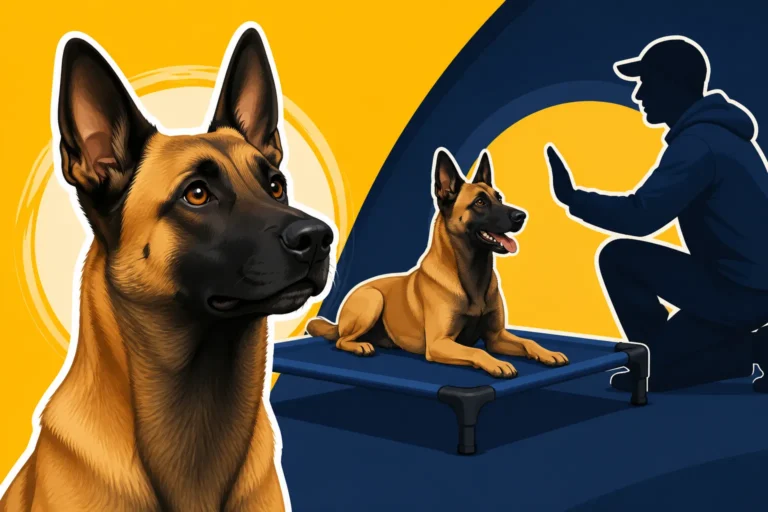
- "Go to Place" for Door/Window Guarding: Teach your Malinois a solid "place" command. When someone approaches the door or rings the bell, send them to their place with a high-value chew or toy. Reward heavily for staying on place until the "intruder" has passed or entered safely. This gives them a job and a constructive outlet for their alertness, rather than letting them self-reinforce territorial barking. Building a Malinois's Place Command can help you get started.
- Professional Guidance: For serious guarding issues, especially those involving aggression, always seek guidance from a certified professional dog trainer or veterinary behaviorist. A Malinois is a powerful dog, and mismanaging guarding can have severe consequences. They can assess the specific triggers, intensity, and risks, and develop a tailored training plan. Look for professionals experienced with working breeds and behavior modification, not just basic obedience.
Seeking Professional Guidance
Let's be unequivocally clear: if your Belgian Malinois is exhibiting intense guarding, growling, snapping, or biting in relation to people or other animals, you must enlist the help of a qualified professional. This isn't just about tweaking a bad habit; it's about safety and liability.
- Certified Professional Dog Trainers (CPDT-KA): These individuals have demonstrated knowledge and skills in dog training and behavior. They can help you implement management strategies and basic behavior modification.
- Certified Applied Animal Behaviorists (CAAB) or Veterinary Behaviorists (DACVB): For more complex or aggressive guarding, a veterinary behaviorist is often the best choice. These are veterinarians with specialized training in animal behavior, who can rule out underlying medical causes and prescribe medication if necessary, alongside a behavior modification plan.
- Experience with Working Breeds: When choosing a professional, specifically ask about their experience with Belgian Malinois or other high-drive working breeds. A trainer who primarily works with golden retrievers might not have the specific insights or tools needed for a Malinois.
A professional can help you understand the nuances of your dog's body language, refine your timing with rewards and corrections (if appropriate for the specific behavior), and ensure that you're not inadvertently making the problem worse. They can also help you develop a safe and effective training plan, which might include specific equipment like a well-fitted muzzle for safety during initial training phases. For information on handling the breed, consider Why Most Belgian Malinois Owners Underestimate the Breed.
Guarding behavior in a two-year-old Belgian Malinois is a common, yet challenging, manifestation of their genetic heritage and maturation. It demands patience, consistency, and a deep understanding of the breed. By recognizing the signs, implementing effective management, and engaging in targeted behavior modification—ideally with professional guidance—you can help your Malinois channel their powerful instincts into appropriate, constructive behaviors, ensuring a safer and happier life for everyone involved.
Common Guarding Scenarios and Initial Responses
Here’s a quick overview of some common guarding situations you might encounter with your two-year-old Malinois and how to react. Remember, these are initial responses, and consistent training is always necessary.
| Scenario | Malinois Behavior | Initial Handler Response | Why This Works (or doesn't) |
|---|---|---|---|
| Food Bowl Guarding | Growls/snaps if approached while eating. | Management: Feed in a secure room, close door. Training: Practice "It's Your Choice" (drop high-value treat from distance when dog looks at you). | Prevents reinforcement of guarding; teaches positive association with handler approaching food. |
| Toy/Chew Guarding | Stiffens, growls when you try to take a specific toy. | Management: Remove high-value items when not directly supervising. Training: "Trade Up" with higher-value treats for the item. | Avoids conflict, teaches dog that giving up an item leads to a better reward. |
| Person Guarding (e.g., you) | Blocks access to you, barks at others who approach you. | Management: Leash dog, or place behind a gate/in crate when guests are present. Training: Positive association with others approaching you (treats from "threat"). Seek professional help immediately. | Prevents dog from practicing behavior. Teaches that others approaching you equals good things for them. Professional guidance is critical for safety. |
| Door/Window Guarding | Charges and barks intensely when people pass outside. | Management: Use opaque window film/blinds. Training: Teach a "Place" command away from the door/window. Reward heavily for going to place when triggers appear. | Blocks visual triggers. Gives dog a constructive, calm alternative behavior to focus on, interrupting the self-reinforcing barking cycle. |
| Bed/Crate Guarding | Growls if you reach into their bed or crate. | Management: Avoid reaching into their space. Call them out of the bed/crate for interaction. Training: Use high-value treats to lure them out, then reward heavily. Make going into their space a positive event. | Respects their perceived safe space. Teaches them that coming out is rewarding, reducing the need to guard their "sanctuary." |
Disclaimer
This article is for general informational purposes only and does not constitute professional advice. Laws, prices and regulations vary by location and change over time. Consult a qualified professional for guidance on your specific situation.