Whether a Malinois’s Ball Drive Can Be Overdone
It's a familiar scenario for many Belgian Malinois owners: you throw the ball, your Malinois races after it, retrieves it with laser focus, and drops it expectantly at your feet, ready for the next toss. This intense ball drive is one of the hallmarks of the breed, a testament to their incredible energy and work ethic. But it's also a double-edged sword, and many handlers find themselves wondering if it's possible for this powerful drive to actually become too much, leading to obsessive behaviors or even detrimental effects on their dog's well-being. This guide is here to explore the nuances of ball drive in the Belgian Malinois, helping you understand when it's a valuable asset and when it might be veering into unhealthy territory.
The Allure and Intensity of Malinois Ball Drive
There's something truly captivating about watching a Belgian Malinois in full pursuit of a ball. Their agility, speed, and unwavering focus are legendary, and for many, this intense prey drive is precisely why they chose the breed. It's a powerful tool in training, a reliable motivator, and a seemingly endless source of exercise. But understanding why this drive is so potent is the first step in managing it effectively.
Why Ball Drive is So Strong in the Belgian Malinois
The Belgian Malinois was originally bred for herding, a job that required immense focus, quick reflexes, and the ability to chase and control livestock. These innate traits, specifically the prey drive component, have been further honed and amplified over generations, especially in working lines, to create a dog supremely capable in protection sports, detection work, and police K9 roles. A ball, to a Malinois, isn't just a toy; it's a substitute for prey. The chase, the capture, the retrieval – it all taps into their fundamental instincts.
This isn't merely about physical exertion; it's a deep-seated mental engagement. The anticipation, the strategic thinking involved in predicting the ball's trajectory, the reward of a successful "capture" – it's a complete mental and physical workout. For many Malinois, the ball represents the ultimate prize, making it an incredibly powerful reinforcer in training. When you're trying to Build Engagement With a Belgian Malinois, a ball can be your secret weapon, forging an unbreakable bond and making training sessions incredibly productive.
The Early Signs of Developing Ball Drive in a Puppy
Even in tiny Malinois puppies, you can often see the precursors of intense ball drive. They might pounce on rolling objects, chase after a piece of kibble, or display that characteristic intense stare at anything that moves quickly. As they grow, this natural curiosity and chase instinct rapidly develop into a full-blown obsession with balls, frisbees, or any other throwable item.
During the infamous The Shark Phase Every Malinois Puppy Goes Through, where everything becomes a target for their needle-sharp teeth, a soft retrieve toy or a ball on a rope can be an invaluable redirect. It teaches them appropriate chewing and biting outlets, and simultaneously starts to channel that burgeoning prey drive. You'll notice them becoming increasingly focused, their ears perking up at the sound of a bouncing ball, and their body language tensing in anticipation. This early development is crucial, as it's the perfect time to start shaping how they engage with the ball, rather than just letting it become an uncontrolled frenzy.
When "Ball Drive" Becomes "Ball Obsession"
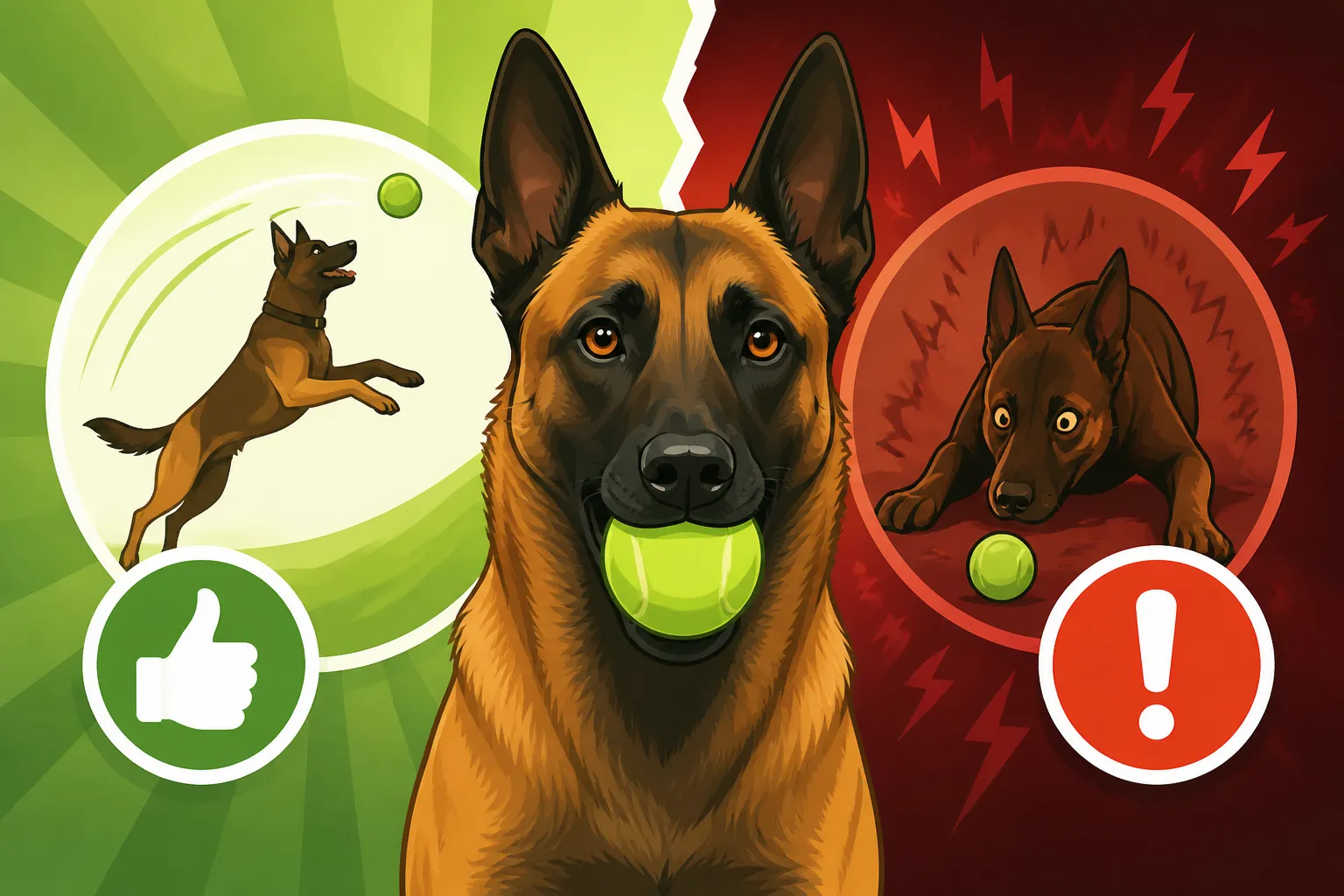
While a strong ball drive is often celebrated, there's a fine line between a healthy, manageable drive and an unhealthy, obsessive fixation. When the ball becomes the only thing that matters, or when its pursuit overrides everything else, it can start to cause problems for both the dog and the handler. This isn't just about semantics; it's about the dog's overall well-being and their ability to function as a balanced member of the family or working team.
Recognizing the Red Flags of an Overdone Ball Drive
An overdone ball drive manifests in several ways, often making the dog seem perpetually agitated or stressed. One common sign is an inability to settle unless a ball is present, or even an inability to settle with a ball present, as they just keep nudging it for more play. They might ignore other dogs, people, or environmental stimuli in favor of scanning for a ball. Imagine taking your Malinois to a new park, and instead of exploring or sniffing, their head is on a swivel, looking for that familiar round object to appear. This isn't curiosity; it's fixation.
Another red flag is a dog that becomes aggressive or possessive over the ball, snapping at other dogs or even their handler if they try to take it. The ball becomes too high-value, too sacred. This can make training difficult, as their focus is solely on the retrieve, not on the commands or the handler. You might also notice them pacing, whining, or barking excessively when they see a ball, unable to contain their anticipation in a healthy way. This intense, unwavering focus can sometimes make it incredibly difficult to get a Recalling a Belgian Malinois Off a Moving Target if that target happens to be a ball rolling away.
The Physical Toll of Relentless Ball Chasing
The constant, high-impact movements associated with ball chasing can take a serious toll on a Malinois's body, especially if not properly managed or if the dog is still young. Repetitive jumping, sudden stops, quick turns, and hard landings put immense strain on joints, ligaments, and tendons. We often hear about Torn Cruciates in a Jumping Belgian Malinois and other orthopedic injuries that can arise from this kind of intense, unvaried activity. It's not just the big, dramatic injuries either; chronic micro-traumas can accumulate, leading to early onset arthritis or persistent lameness.
Think about the sheer number of times your Malinois launches themselves into the air or skids to a halt during a single fetch session. Without proper warm-ups, cool-downs, and a varied exercise routine, their athletic bodies, while incredibly robust, aren't immune to wear and tear. Joint Supplements for a Working Belgian Malinois can help, but they are not a substitute for sensible exercise planning. It's vital to remember that even the most driven Malinois needs their body to last a lifetime, not just through their peak working years.
Behavioral Indicators of an Unhealthy Fixation
Beyond the physical, an overdone ball drive can create significant behavioral imbalances. A Malinois whose entire world revolves around the ball can become anxious, stressed, and unable to cope with situations where the ball isn't present or available. This anxiety might manifest as destruction, excessive vocalization, or even self-mutilation (like excessive licking or chewing) when deprived of their ball fix. They may struggle to relax in the house, constantly searching for something to chase.
This singular focus can also hinder their ability to engage with other forms of enrichment or training. If the only thing that motivates your Malinois is a ball, it becomes incredibly difficult to teach new skills that require a different type of reward. It can also lead to a lack of environmental exploration; rather than sniffing new smells or investigating novel objects, they're always looking up, scanning for the throw. This limits their cognitive development and can make them less adaptable to new situations, creating a dog that is highly skilled at one very specific task but less well-rounded overall. If you rely too heavily on fetch, you might find that Whether Fetch Alone Satisfies a Belgian Malinois is a resounding "no" in the long run, even if it seems to in the short term.
The Hidden Dangers of an Unmanaged Ball Drive
Allowing a Malinois's ball drive to become unchecked isn't just about physical injury or a dog that's a bit too enthusiastic. It carries broader implications for their overall training, socialization, and even the handler's relationship with the dog. It's a subtle shift, but one that can profoundly impact a Malinois's quality of life and the harmony within a household.
Impact on Overall Training and Other Drives
When ball drive becomes all-consuming, it tends to overshadow and even diminish other crucial drives. For a working Malinois, this can be problematic. While prey drive is foundational, a successful working dog also needs strong defense drive, fight drive, and curiosity. If the ball is the only thing that motivates, it can be hard to develop these other, equally important components of their character. A dog that is only interested in chasing a ball might struggle with scenario-based training that requires them to engage with a threat or problem-solve in different ways.
In a pet home, this over-reliance on the ball can make obedience training feel like a battle. If your Malinois only performs commands when a ball is visible, or if they rush through tasks just to get back to the retrieve, then the underlying understanding and respect for the command itself haven't been truly established. It creates a dog that works for the ball, not with the handler. This is why it's so important to have a diverse range of motivators and to balance activities like ball play with other types of mental and physical stimulation. Exploring options like Whether a Belgian Malinois Needs Bite Work to Be Fulfilled or engaging in scent detection can provide mental and physical outlets that don't solely rely on chasing.
The Risk to Socialization and Environmental Engagement
A ball-obsessed Malinois might struggle significantly with socialization. They often view other dogs as obstacles to their ball or as potential competitors for it. Instead of engaging in appropriate play or sniffing, they might ignore other dogs, stare them down, or even become reactive if another dog approaches their prized possession. This can lead to altercations and make dog parks or group training sessions incredibly stressful for everyone involved.
Furthermore, their ability to engage with their environment suffers. A Malinois should be an intelligent, curious, and adaptable dog. But if their brain is constantly on "ball patrol," they miss out on so much sensory information. They might not notice new sounds, smells, or interesting objects. This can make them less confident in novel environments because they haven't learned to process the world around them in a balanced way. Their world shrinks to the size of that ball, limiting their experiences and potentially leading to a more anxious or one-dimensional dog.
Owner Burnout and the Stress of a Ball-Addicted Malinois
Let's be honest, living with a ball-addicted Malinois can be incredibly draining. Their relentless energy and singular focus can feel like a constant demand. You might find yourself feeling guilty if you don't throw the ball for what feels like hours every day. The constant whining, pacing, and nudging can wear on your patience, turning something that should be fun and bonding into a chore.
This burnout is real. Owners can feel trapped by their dog's intense needs, unable to enjoy walks or outings without the pressure of "the ball." It limits where you can go and what you can do together. The stress of managing a dog that's always on edge, always looking for their next fix, can erode the joy of ownership. It can also lead to resentment, which is the last thing you want in your relationship with your canine partner. It's crucial to find ways to provide The Mental Work That Finally Tires a Malinois Out that isn't solely physical, to give both you and your dog a much-needed break from the endless chase.
Strategies for Channeling and Balancing Ball Drive
Recognizing an overdone ball drive is the first step; the next is actively working to create a healthier, more balanced approach to play and training. It's not about eradicating the drive, but rather sculpting it into a useful, controllable asset.
Integrating Ball Play into a Broader Training Regimen
Instead of simply throwing the ball repeatedly, integrate it into structured training. Make the ball a reward for performing other behaviors. For example, have your Malinois complete a short obedience sequence (sit, down, stay, come) before earning a throw. This teaches them that the ball isn't just freely given; it's earned. You can also incorporate short bursts of fetch into a long line walk, using it as a reward for successful loose-leash heeling or ignoring distractions.
Use the ball as a motivator for other activities, like tracking or scent work. A short game of fetch can be the reward at the end of a successful track. This helps your Malinois understand that their high-value reward is tied to a variety of productive activities, not just the act of chasing. This makes the ball a powerful tool, rather than a master.
Teaching an "Off Switch" and Self-Control
This is perhaps one of the most critical aspects of managing a high-drive Malinois. They need to learn that "playtime" has a beginning and an end, and that they can be calm and relaxed even when exciting things are happening. This involves teaching a solid "out" or "drop" command, where they release the ball on cue, even at the peak of their excitement. Work on this diligently, rewarding them with praise or another favorite toy (but not immediately with the same ball) for a clean release. Teaching a Belgian Malinois to Out is fundamental for responsible ball play.
Another vital skill is the "place" command or teaching them to settle on a mat. Practice having them lie down quietly on their mat while you hold the ball, or even roll it a short distance away without allowing them to chase it until released. This builds impulse control and demonstrates that they don't always get to chase. Programs like BAXTER & Bella often emphasize these foundational impulse control exercises, helping owners establish a strong "off switch" from a young age. These practices directly contribute to Building an Off Switch Into a Belgian Malinois, making for a more balanced companion.
Introducing Variety Beyond the Fetch
Don't let the ball be the only game in town. Diversify your Malinois's activities to engage different aspects of their brain and body.
- Tug Play: Tug is an excellent way to engage prey drive in a controlled manner. It builds muscle, satisfies their bite instinct, and allows for direct interaction with you. Make sure you have clear Tug Rules for a Belgian Malinois to prevent resource guarding.
- Flirt Pole: A flirt pole is like a giant cat toy for dogs. It allows you to simulate the chase and capture without as much high-impact running for your dog, or as much throwing for you. This can be great for controlled bursts of intense activity. See how beneficial Flirt Poles and a Belgian Malinois's Drive can be!
- Scent Work/Nose Work: This is incredibly mentally stimulating and can tire a Malinois out faster than physical exercise. Hiding treats or specific odors for them to find engages their powerful nose and problem-solving skills.
- Obedience/Trick Training: Short, engaging training sessions that teach new commands or fun tricks provide mental exercise and reinforce your bond.
- Agility/Canicross/Bikejoring: These sports offer structured, high-energy outlets that use their natural athleticism in varied ways, reducing the repetitive strain of endless fetch.
- Springpole: If appropriate and under supervision, a springpole can provide a controlled outlet for bite work and strength building. You can read more about Springpole Work for a Belgian Malinois for details.
Tools and Techniques for Responsible Ball Play
Having the right gear and a smart approach to play sessions can make a huge difference in managing your Malinois's ball drive and preventing it from becoming an obsession.
Selecting the Right Equipment
Not all balls are created equal, especially for a powerful chewer like a Malinois. Avoid flimsy tennis balls, which can be easily shredded, ingested, or even become choking hazards. Opt for durable, solid rubber balls designed for strong chewers. Brands like KONG or Jive by West Paw offer excellent options that stand up to the Malinois bite. For dogs with an overdone drive, a ball on a rope or a "flirt pole" toy (like those found on Amazon) can be beneficial, as it allows you to control the movement and retrieve without having to handle the ball directly, which can sometimes escalate fixation.
Consider using multiple balls of different sizes and textures. This adds variety and prevents your dog from becoming fixated on one specific object. A Chuckit! launcher, also widely available on Amazon, can save your arm and allow you to throw balls further with less effort, making structured retrieve sessions more manageable for you.
Structured Play Sessions and Clear Rules
The key to preventing obsession is structure. Don't just leave balls lying around for your Malinois to self-entertain. Play should be on your terms. Start and end sessions with a clear cue, like "Let's play!" and "All done!"
A structured play session might look like this:
- Warm-up: A short walk or some basic obedience to get muscles ready.
- Engagement: Use the ball to reward obedience commands or as part of a retrieve drill. Throw the ball, let them retrieve, ask for a "sit" and "out" before the next throw.
- Vary the retrieve: Don't just throw. Hide the ball and make them search for it. Roll it slowly. Bounce it off a wall.
- Introduce an "out" or "drop": Practice taking the ball away and having them release it calmly. Reward with praise or a different treat, not immediately another throw.
- Cool-down: End the session before your Malinois is completely exhausted or overstimulated. Put the ball away out of sight. Follow up with a quiet activity or a chew toy to help them settle.
Consistency is paramount. If you sometimes let them fetch for an hour straight and other times only for ten minutes, they won't learn to anticipate the end of the game. A predictable routine helps them understand the boundaries and can reduce anxiety around playtime.
| Behavior Indicator | Healthy Ball Drive | Overdone Ball Drive / Obsession |
|---|---|---|
| Focus | Engages with handler, responds to commands. | Fixates solely on the ball, ignores surroundings/handler. |
| Settling | Can relax and disengage when play ends. | Paces, whines, or nudges ball constantly for more. |
| Interaction | Shares the ball willingly, takes breaks from play. | Guards the ball, snaps at others who approach it. |
| Engagement | Enjoys other activities, seeks varied enrichment. | Shows little interest in anything not ball-related. |
| Physical Condition | Maintains healthy weight, recovers well. | Shows signs of joint strain, exhaustion, or agitation. |
| Environmental Aware. | Explores new scents, sights, sounds. | Scans constantly for the ball, misses other stimuli. |
Seeking Professional Guidance
Sometimes, even with the best intentions and consistent effort, a Malinois's ball drive can be so deeply ingrained and intense that it feels overwhelming. In these situations, seeking help from a qualified professional isn't a sign of failure; it's a responsible and proactive step towards a more balanced dog and a happier household.
When to Consult a Trainer or Behaviorist
If you notice any of the red flags mentioned earlier becoming persistent problems, it's time to reach out. These include:
- Aggression or resource guarding: If your Malinois snarls, growls, or snaps over the ball with you or other dogs, it's a serious issue that needs immediate attention.
- Inability to settle: If your dog seems constantly agitated, unable to relax, or paces endlessly even after physical exercise, their mental state is being affected.
- Damage to physical health: If you suspect joint pain, limping, or excessive wear and tear on their body due to repetitive play.
- Training stagnation: If their ball drive is actively hindering progress in other areas of training, making them unresponsive to other motivators.
- Your own burnout: If you feel overwhelmed, frustrated, or resentful of your dog's constant demands, a professional can help you navigate strategies for both of you.
A certified professional dog trainer with experience in high-drive working breeds can provide invaluable insight and create a tailored plan to address your specific situation. They can help you fine-tune your techniques, introduce new management strategies, and ensure you're setting your Malinois up for success.
Realistic Expectations for Modifying Drive
It's important to approach this process with realistic expectations. A Belgian Malinois will always have a high drive. The goal isn't to eliminate their ball drive entirely – that would be like asking a fish not to swim. Instead, the aim is to channel, manage, and balance it. You want to transform an all-consuming obsession into a controllable, enthusiastic asset.
This journey requires patience, consistency, and dedication. You might not see overnight changes, but with persistent effort, you can teach your Malinois impulse control, introduce them to a wider world of enrichment, and help them find calmness outside of the ball chase. Remember, a well-managed drive is a powerful tool; an unmanaged one can become a burden. With the right approach, you and your Malinois can enjoy a fulfilling life together, where the ball is a fun part of the equation, not the entire sum.
Disclaimer
This article is for general informational purposes only and does not constitute professional advice. Laws, prices and regulations vary by location and change over time. Consult a qualified professional for guidance on your specific situation.