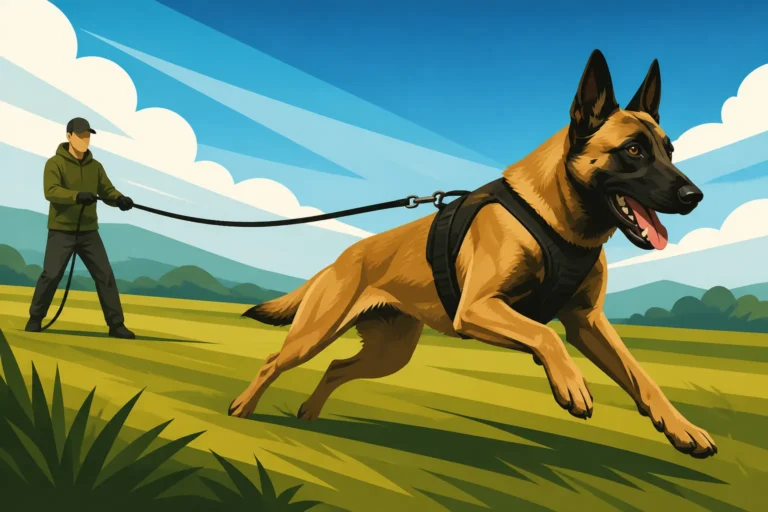
Whether a Belgian Malinois Needs Bite Work to Be Fulfilled
It's a common worry for Belgian Malinois owners, especially those new to the breed, to feel like they must pursue bite work or protection sports to truly fulfill their dog. You see these incredible Mals on social media, working decoys, flying over jump walls, and it's easy to think, "Is my Malinois missing out if we're not doing that?" The truth is, while bite work certainly can be a fantastic outlet for a Malinois, it's not the only path to a truly fulfilled and happy dog. This guide will help you understand what real fulfillment looks like for your Belgian Malinois and how to achieve it, even if bite work isn't in your future.
Understanding the Belgian Malinois Drive
Let's be real, the Belgian Malinois isn't just "a dog." They are a highly specialized, intensely driven animal bred for demanding work. Their intelligence, athleticism, and relentless energy are what make them so capable, but these same traits can feel overwhelming if not properly understood and channeled. This isn't a breed you can just walk around the block once a day and expect to be content. Their minds and bodies need constant engagement, and without it, you're going to see behaviors that most owners find incredibly frustrating, from destructive chewing to obsessive pacing and even reactivity.
The Innate Need for a Job
Belgian Malinois were originally developed in Belgium as herding dogs, tasked with managing flocks of sheep for long hours, often without direct human supervision. This created a dog with incredible independent problem-solving skills, immense stamina, and an intrinsic desire to do something. They weren't bred to sit quietly on a couch all day, observing the world. They were bred to interact with it, to manipulate it, and to use their bodies and brains to achieve a goal. This deep-seated drive manifests in their need for a "job," a purpose that engages them mentally and physically. Without it, that incredible drive becomes undirected energy, often leading to a What Happens to an Unemployed Belgian Malinois.
Think of it like this: imagine a brilliant, highly motivated person who is confined to a room with no tasks, no stimulation, and no way to use their talents. They wouldn't be happy; they'd become bored, frustrated, and might even start creating their own "work," which might not be what you want for your furniture or garden. Your Malinois is no different. They crave structure, challenges, and the opportunity to use their formidable capabilities. This isn't about simply "burning off energy" with endless fetch; it's about providing meaningful mental and physical engagement that taps into their genetic predispositions.
This inherent need for a job means that ignoring their mental stimulation is just as detrimental as ignoring their physical exercise. A Malinois can run for miles and still have energy left if their brain hasn't been engaged. They thrive on learning, problem-solving, and having a purpose within their pack (your family). The concept of "fulfillment" for this breed is intrinsically linked to this deep-seated desire to work and contribute.
What "Fulfillment" Truly Means for a Malinois
So, what exactly is fulfillment for a Belgian Malinois? It's not just physical exhaustion. A Malinois can be physically tired but still mentally buzzing and unfulfilled. True fulfillment comes from a combination of appropriate physical exercise, consistent mental stimulation, and a clear understanding of their role within the family structure. They need to feel like they are contributing, that their efforts are valued, and that they have a purpose. This often translates into regular training sessions that challenge them, opportunities to solve problems, and a structured routine that provides predictability and security.
For many Malinois, this means activities that engage their prey drive, their guarding instincts, or their incredible scenting abilities. It means activities where they get to use their mouths, their powerful bodies, and their sharp minds. The feeling of success and accomplishment, whether it's finding a hidden toy, acing an obedience routine, or working through a complex scent puzzle, is deeply rewarding for them. It's about tapping into those natural instincts in a controlled and productive way.
It's also about the relationship. A Malinois thrives on a strong bond with their handler, built on trust, clear communication, and consistent leadership. When they feel understood and guided, they are much more likely to be settled and happy. This means investing time not just in formal training, but in daily interactions, grooming, and simply spending quality time together. They are intensely people-oriented dogs, and feeling connected to their human is a huge part of their overall well-being.
Beyond the Bite: Alternative Outlets for High Drive
Given that bite work isn't for everyone, either due to access, personal preference, or local regulations, it's crucial to explore the many other avenues available to provide a Malinois with the mental and physical satisfaction they need. You might be surprised at the variety of engaging activities that exist. The key is finding something that truly resonates with your individual dog's drives and gives them a meaningful "job."
Channeling Prey Drive Safely
One of the most defining characteristics of a Belgian Malinois is their intense prey drive. This isn't just about chasing squirrels; it's a deep, innate desire to pursue, catch, and "kill" (in a simulated sense) moving objects. In bite sports, this drive is directed towards a decoy in a suit or sleeve. But you can channel this powerful instinct in many other safe and constructive ways. Flirt poles are fantastic tools, mimicking the chase and capture of small prey, allowing your dog to expend bursts of energy and satisfy that hunting instinct. Long lines in open, safe areas can allow for controlled "hunts" with toys, where you can work on Recalling a Belgian Malinois Off a Moving Target. Tug games, when played with rules and structure (like a clear "out" command), are also incredibly fulfilling, allowing them to use their powerful mouths and bodies in a cooperative game with you. You can find robust tugs and other drive-building toys on platforms like Amazon, ensuring they hold up to your Malinois's intensity.
Another excellent way to channel prey drive is through fetch, but not just mindless throwing. Make fetch a structured training exercise. Incorporate retrieves over obstacles, send-aways, and controlled releases. This adds a mental layer to a physically demanding activity. Flirt Poles and a Belgian Malinois's Drive is a fantastic read for those looking to delve deeper into harnessing this natural instinct. Building engagement through these games also strengthens your bond and makes you the most exciting thing in their world, which is crucial for a breed that can easily become fixated on environmental stimuli.
Remember, the goal is not to suppress prey drive, but to direct it. When a Malinois learns that engaging with you and your chosen activities is the most rewarding way to satisfy their natural urges, they become a more balanced and cooperative partner. This redirection is fundamental to their training and well-being.
Scent Work and Detection Activities
If there's one area where a Malinois truly shines, it's their nose. Their olfactory capabilities are astonishing, and engaging them in scent work can be profoundly fulfilling, often more so than pure physical exercise. Scent detection, or "nose work," taps directly into their natural ability to hunt for odors. You can start with simple games at home, hiding treats or favorite toys and encouraging them to find them. This can quickly progress to formal training, where dogs learn to identify specific scents, like essential oils, in various environments. Many organizations offer classes and trials in nose work, providing a structured progression and a community of like-minded enthusiasts.
Think about it: a dog on a scent trail is completely absorbed, using their brain, problem-solving skills, and natural instincts. This kind of intense focus is incredibly tiring for them, in the best possible way. Whether it's competitive nose work, tracking, or even search and rescue, giving your Malinois a "scent job" can provide immense satisfaction. Starting Scent Detection With a Belgian Malinois is an excellent resource for beginners. Online programs, like those offered by BAXTER & Bella, can also provide foundational scent work exercises you can do from home, making it accessible to everyone.
The beauty of scent work is that it's low impact physically, making it suitable for dogs of all ages, including those who might have joint limitations that preclude high-impact sports. It’s also an activity you can do almost anywhere, from your living room to a local park, which offers incredible flexibility. This focused mental effort burns a surprising amount of energy and builds confidence, as your Malinois gets to feel successful at a task that comes naturally to them.
Agility, Obedience, and Other Canine Sports
Beyond scent work, there's a whole world of canine sports that can provide incredible fulfillment for a Belgian Malinois. Agility, with its combination of speed, precision, and handler communication, is a fantastic outlet for their athleticism and intelligence. They love flying over jumps, weaving through poles, and navigating tunnels. The rapid changes in direction and the need to follow complex sequences keep their minds sharp and their bodies moving. Of course, it's vital to ensure The Age a Belgian Malinois Can Start Real Conditioning to protect their developing joints.
Competitive obedience, while perhaps not as visually thrilling as bite work, demands incredible focus, precision, and a strong working relationship with the handler. A Malinois that excels in obedience is a dog that is deeply engaged and understands its handler's every cue. This type of structured work helps to build an Building an Off Switch Into a Belgian Malinois and teaches them impulse control, which is invaluable in everyday life. Even something as simple as mastering complex tricks can be a form of fulfilling mental engagement.
Other sports like Rally Obedience, Flyball, Dock Diving, or even Herding Trials (given their history) can be incredibly rewarding. The key is to find something that you both enjoy and that challenges your Malinois appropriately. Many local dog clubs offer introductory classes for various sports, allowing you to sample different activities to see what clicks for your dog. Remember, the goal is engagement and partnership, not necessarily winning championships, although that can be a fun bonus!
| Activity Type | Description | Benefits for Malinois | Equipment Needed (Examples) |
|---|---|---|---|
| Scent Detection | Finding hidden target odors (e.g., essential oils, treats) | Mental fatigue, builds confidence, low physical impact | Scent kits, small containers, leashes (available on Amazon) |
| Agility | Navigating obstacle courses with speed and accuracy | Physical exercise, mental challenge, builds teamwork | Jumps, tunnels, weave poles (club equipment) |
| Competitive Obedience | Performing precise commands on cue (heel, sit, stay, recall) | Impulse control, focus, strong handler bond, builds structure | Leashes, collars, training treats (BAXTER & Bella online courses helpful) |
| Flirt Pole/Tug | Chasing and capturing a lure or playing structured tug | Channels prey drive, bursts of energy, mouth work | Flirt pole, durable tug toys (Amazon for variety) |
| Tracking | Following a human scent trail over varying terrain | Intense mental focus, independent problem-solving, stamina | Long line, harness, scent articles |
The Misconception of Mandatory Bite Work
There's a prevailing idea, particularly among those less familiar with the full spectrum of Malinois capabilities, that without bite work, a Malinois cannot be truly fulfilled. This is a narrow view that often stems from the breed's prominent role in police and military K9 units, where bite work is indeed a critical component of their job. However, the attributes that make them excellent bite dogs—drive, courage, and athleticism—are precisely the same attributes that make them excel in many other disciplines.
Addressing Safety Concerns and Public Perception
One significant factor that contributes to the "bite work only" misconception is often a concern for public safety and liability. The sheer power and intensity of a Malinois can be intimidating, and many owners feel that structured bite work is the only way to safely channel this. While it's true that an untrained, high-drive Malinois can be a handful, channeling that drive into other sports is equally safe, if not more so, for the general public. A Malinois excelling in agility, for example, is displaying incredible athletic prowess and focus, but without direct engagement in protection scenarios.
Moreover, the public perception of bite work can be a double-edged sword. While some understand the sport, many view it with suspicion, associating it with aggression. For pet owners, navigating this perception can be challenging. Choosing alternative sports, like nose work or competitive obedience, often garners more positive reactions from neighbors and strangers, allowing your Malinois to be an ambassador for the breed rather than fueling stereotypes. It's about finding what works for your lifestyle and community while still providing your dog with appropriate mental and physical outlets.
It's crucial to understand that "bite work" is a highly specialized sport with its own strict rules, ethics, and training methodologies. It requires a dedicated commitment to a club, a skilled decoy, and a deep understanding of canine behavior. It's not a casual hobby. For many owners, the time, financial commitment, and specific facilities required simply aren't feasible. And that's perfectly okay; there are plenty of other ways to keep your Malinois happy and engaged.
When Bite Work Isn't the Right Fit
There are many reasons why bite work might not be the right fit for you or your Malinois. Perhaps you don't have access to a reputable training club with experienced decoys. High-quality bite work training is not something to dabble in lightly; improper training can have serious behavioral consequences. Or perhaps your personal comfort level doesn't align with protection sports. It's a demanding activity, both physically and mentally, for both dog and handler. Some Malinois, despite their inherent drives, might not have the specific temperament desired for protection sports—they might be too soft, or conversely, too handler-sensitive.
Furthermore, a significant number of Malinois are acquired by individuals who, while loving, simply aren't prepared for the sheer intensity and specific demands of the breed. For these owners, forcing a bite work agenda could be counterproductive and even dangerous if not handled by true professionals. It's far better to succeed and build confidence in alternative sports than to struggle and potentially create behavioral issues in a sport that isn't a natural fit for the team. Whether a Belgian Malinois Needs Bite Work to Be Fulfilled is a question best answered by considering your specific situation and your dog's individual personality.
Another consideration is the potential for injury. While all dog sports carry some risk, the physical demands of bite work, with high-impact bites and often rough handling from the decoy, can put significant strain on a dog's body. If your Malinois has any underlying structural issues or a history of injury, pursuing such a demanding sport might not be advisable. There are plenty of Injuries a Bite Sport Belgian Malinois Collects that can impact their long-term health.
The Importance of a Tailored Training Approach
Ultimately, true fulfillment for a Belgian Malinois comes from a tailored training approach that recognizes their individual drives, temperament, and your capabilities as a handler. There is no one-size-fits-all answer. Some Malinois might thrive on the challenge and intensity of bite work, while others might find their deepest satisfaction tracking a scent, clearing agility courses, or performing complex obedience routines. The goal is to provide a consistent, structured, and engaging environment where your dog feels understood and valued.
This means being observant of your dog's preferences. Do they live to chase? Are they obsessed with their nose? Do they love learning new things and performing for you? By paying attention to what truly excites and engages your Malinois, you can craft a program that truly fulfills them. This personalized approach is far more effective than simply following a generic expectation based on the breed's reputation. Programs like BAXTER & Bella offer personalized guidance and a wealth of resources, helping owners find the right fit for their dog, whether that's advanced obedience, trick training, or intro to scent work.
Remember, a Malinois wants to please its handler and thrives on partnership. The method you choose to build that partnership is less important than the consistency and dedication you bring to it. Whether it's the thrill of the bite sleeve or the quiet satisfaction of a successful scent find, the ultimate goal is a happy, balanced, and well-adjusted canine companion.
Creating a Fulfilling Life Without Protection Sport
So, you've decided bite work isn't for you, and that's perfectly fine! The next step is actively designing a life for your Malinois that provides all the necessary outlets for their considerable drive. This isn't just about avoiding undesirable behaviors; it's about fostering a confident, engaged, and joyful companion. It takes effort, consistency, and creativity, but the rewards are immeasurable.
Daily Structure and Mental Engagement
A cornerstone of a fulfilled Malinois life is a predictable daily structure. These dogs thrive on routine. They want to know what's coming next, which helps them feel secure and reduces anxiety. This means regular feeding times, consistent potty breaks, and, most importantly, scheduled periods of mental and physical work. Don't leave their day to chance. Plan out when they'll have their training sessions, their walks, and their designated "thinking" activities. This structure provides a framework within which their energy can be channeled productively.
Mental engagement is paramount. This can take many forms beyond formal sport training. Interactive puzzle toys are a fantastic way to make them work for their food, engaging their problem-solving skills. Snuffle mats and treat-dispensing toys can keep them occupied and thinking. Regular short training sessions throughout the day, focusing on obedience cues, new tricks, or proofing known behaviors, are also highly valuable. Even everyday activities, like waiting politely at the door or going to their "place" when guests arrive, can become opportunities for mental work and impulse control. For those who need inspiration, Keeping an Old Belgian Malinois Mentally Busy offers some great ideas that are applicable to all ages.
Consider incorporating tasks around the house or yard. Can your Malinois help carry groceries (in a dog backpack)? Can they find specific items on command? Could they learn to put away their toys? Turning chores into games that engage their intelligence and desire to help can be incredibly rewarding for them. This not only provides mental stimulation but also reinforces their role as a contributing member of your family, which is deeply fulfilling for a breed like the Malinois.
The Role of Consistent Training and Relationship Building
Consistent, clear, and fair training is the bedrock of a successful relationship with a Belgian Malinois. These dogs are always learning, always observing, and always testing boundaries. If you're not actively teaching them what you do want, they will find ways to entertain themselves, often in ways you don't want. This means daily reinforcement of obedience commands, practicing good manners, and consistently addressing any emerging behavioral quirks. A well-trained Malinois is a happy Malinois because they understand the rules of their world and feel confident in their ability to navigate it with you. Online training platforms, like BAXTER & Bella, offer structured programs that can guide you through everything from puppy basics to advanced obedience, providing consistency and expert advice right in your home.
Building a strong, trusting relationship is just as important as formal training. Your Malinois needs to see you as a consistent, fair leader who provides guidance and security. This bond is forged through mutual respect, clear communication, and shared activities. Spend time just being with your dog, whether it's cuddling on the couch after a demanding training session, or simply grooming them while talking softly. These moments reinforce the connection and help them decompress. A strong bond means your Malinois looks to you for direction and finds joy in working collaboratively, which is the ultimate fulfillment for a social, working breed.
This relationship building also extends to socialization. While not all Malinois need to be best friends with every dog they meet, appropriate and controlled socialization is crucial for them to be comfortable and confident in various environments. This means exposing them to different sights, sounds, people, and appropriate dogs from a young age, always ensuring positive experiences. A well-socialized Malinois is less likely to be reactive or anxious, contributing greatly to their overall well-being.
Resources for the Dedicated Malinois Owner
For the dedicated Malinois owner, there's a wealth of resources available to help you craft a fulfilling life for your dog, no bite work required. Start by exploring local dog clubs that offer classes in agility, obedience, rally, or nose work. These clubs often have experienced trainers who understand high-drive breeds and can guide you. Look for organizations like the American Kennel Club (AKC) or United Kennel Club (UKC) in the States, or their international equivalents, as they certify many different dog sports.
Online resources are also invaluable. Websites like BAXTER & Bella provide comprehensive online dog training programs that can be accessed from anywhere, offering structured lessons, live Q&A sessions, and a community of support. For specific equipment needs, from durable chew toys to specialized training gear, Amazon offers an unparalleled selection. Researching different dog sports and finding what truly sparks your Malinois's interest is a rewarding journey in itself. Consider specialty books on topics like canine fitness, advanced trick training, or scent detection to deepen your knowledge.
Remember, the journey with a Belgian Malinois is an active partnership. It demands commitment, creativity, and a willingness to learn. But by investing in their physical and mental well-being through varied and engaging activities, you will find that your Malinois will be a deeply fulfilled, happy, and incredibly rewarding companion, whether they ever touch a bite sleeve or not. The possibilities for enriching their lives are truly endless when you tap into their incredible potential.
Disclaimer
This article is for general informational purposes only and does not constitute professional advice. Laws, prices and regulations vary by location and change over time. Consult a qualified professional for guidance on your specific situation.