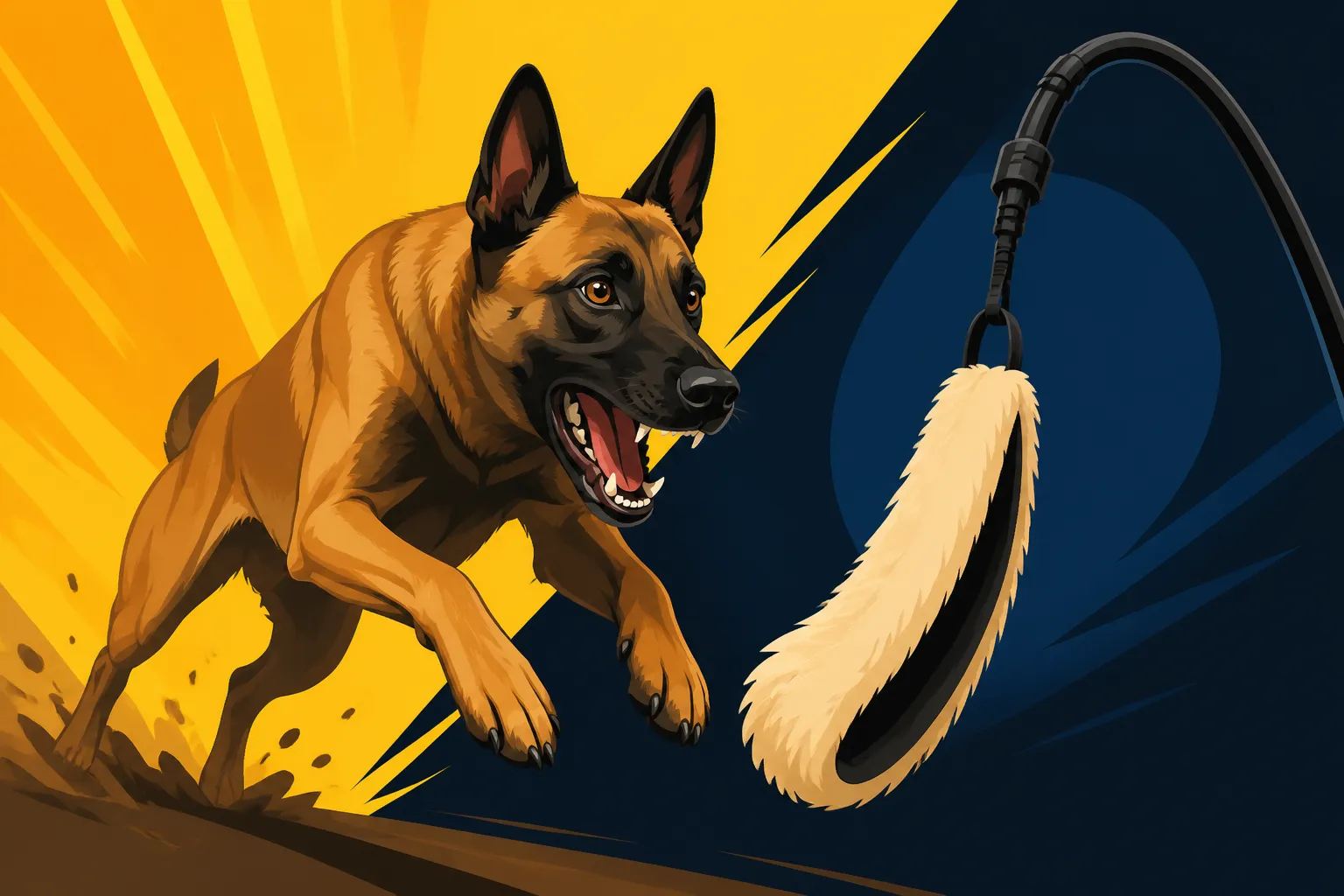
Flirt Poles and a Belgian Malinois’s Drive
Many Belgian Malinois owners find themselves in a constant battle to sufficiently exercise and mentally stimulate their highly driven companions. It’s a common frustration to walk miles, play endless rounds of fetch, and still feel like your Malinois has an overflowing well of energy, often leading to undesirable behaviors born out of boredom or unmet instinct. This comprehensive guide will show you how to harness the power of the flirt pole, transforming it into a powerful tool for channeling your Malinois's incredible drive and providing the focused, enriching activity they desperately need.
Understanding Your Malinois's Intense Drive
If you live with a Belgian Malinois, you already know that "high energy" barely scratches the surface of their being. These dogs are athletes, thinkers, and partners all rolled into one incredibly intense package. Understanding why they possess such a relentless drive is the first step in effectively managing and fulfilling their needs. Without this foundational understanding, it's easy to fall into the trap of thinking more of the same type of exercise will solve everything.
What Fuels the Belgian Malinois's Drive?
The Belgian Malinois was meticulously bred for a purpose: working. Historically, they were valued herding dogs, tasked with controlling livestock across vast Belgian landscapes, and their genetics still hum with that inherent work ethic. This isn't just about physical strength; it's about a deep, instinctual drive to engage, pursue, and control. Their exceptional intelligence, coupled with their physical prowess, means they need complex outlets for these drives. Think of their intense focus and tenacity – these aren't quirks; they are ingrained traits that made them superior working partners.
Their prey drive, in particular, is often exceptionally strong. This isn't necessarily about hunting to kill, but about the urge to pursue, catch, and manipulate a moving object. Whether it's a frisbee, a ball, or even a dust bunny floating across the floor, that instinct kicks in. This drive is a powerful motivator, but if left unchanneled, it can lead to chasing cars, bikes, or even small animals, which poses significant safety risks. Understanding the origins of this drive, tracing back to The Herding Job the Belgian Malinois Was Built For, helps us appreciate the depth of their needs today.
Beyond prey drive, Malinois possess a profound sense of territoriality and a protective instinct, combined with an alert nature. They are constantly aware of their surroundings, processing information at lightning speed. This combination of physical and mental intensity is what makes them exceptional at tasks like protection work, detection, and competitive dog sports. However, it also means that their minds and bodies are always on, requiring thoughtful engagement to prevent that intensity from bubbling over into anxiety or destructive habits within the home environment.
Why Regular Play Isn't Always Enough
Many well-meaning Malinois owners try to wear their dogs out with endless games of fetch or long walks. While these activities are certainly better than nothing, they often fall short of truly satisfying a Malinois's complex needs. Fetch, for instance, can become repetitive and, for some Malinois, can actually heighten their arousal without providing enough mental challenge or an appropriate "off-switch" mechanism. It's often just raw physical output without much directed thought.
Similarly, a leisurely walk around the neighborhood, while good for sniffing and basic exercise, doesn't engage the Malinois's powerful prey drive or their problem-solving intellect in a structured way. They might still be pulling on the leash, scanning for squirrels, or reacting to every passing dog, indicating that their deeper drives remain unaddressed. Structured Work Against Random Running for a Malinois is a concept that truly applies here; random, undirected activity often reinforces a dog's natural tendencies rather than teaching them control and focus.
What these dogs truly crave is purpose. They need to feel like they are working, solving a puzzle, or engaging their instincts in a controlled and rewarding manner. A simple romp in the yard, while fun, often lacks the structure and mental component that a Malinois requires to feel genuinely fulfilled and calm afterwards. It’s like giving a highly intelligent person a coloring book when they really need a complex novel or a challenging engineering problem to solve. Their brains are wired for more.
Recognizing When Drive Becomes Destructive
When a Belgian Malinois's profound drive and energy are not adequately met, the consequences can be significant and, frankly, quite challenging for owners. What often starts as simple boredom can quickly escalate into destructive behaviors that can wreak havoc on a home and strain the owner-dog relationship. These aren't malicious acts; they're simply the dog finding its own, often inappropriate, outlets for pent-up energy and an unfulfilled need to work.
One of the most common signs of unmet drive is destructive chewing. This isn't just a puppy exploring; an adult Malinois with unmet needs can chew through furniture, drywall, or doorframes, sometimes in a surprisingly short amount of time. You might come home to find that What a Malinois Destroys in One Unsupervised Hour is far more extensive than you ever imagined. This behavior stems from frustration and an attempt to self-soothe or find mental engagement through oral stimulation.
Beyond chewing, you might see excessive barking, especially at sounds or sights outside, as the dog tries to "work" its territory in a non-productive way. Digging, pacing, or even frantic self-licking can also be indicators of chronic stress and under-stimulation. Some Malinois might develop reactivity towards other dogs or people on walks, as their heightened arousal has nowhere positive to go, leading to an inability to cope with external stimuli calmly. Recognizing these behaviors isn't about blaming the dog, but understanding that they are desperate for an appropriate outlet for their inherent intensity.
Introducing the Flirt Pole: A Game-Changer for Malinois
For owners grappling with the relentless energy of a Belgian Malinois, the flirt pole can feel like discovering a secret weapon. It’s not just another toy; it's a highly effective training and exercise tool specifically designed to tap into and channel a dog's natural prey drive in a structured, safe, and incredibly engaging way. Many who have struggled to "tire out" their Malinois find that a well-used flirt pole can achieve profound results in a fraction of the time.
What Exactly Is a Flirt Pole?
At its core, a flirt pole is a simple yet ingenious device. Imagine a long pole, often made of durable, lightweight material like PVC or fiberglass, with a strong cord attached to one end. At the end of that cord is a tempting lure – typically a tough, soft toy like a bite rag, a fleece tug, or a stuffed animal. The magic happens when you hold the pole and drag the lure across the ground, mimicking the erratic, enticing movements of fleeing prey. This movement triggers a dog's chase instinct, encouraging them to pursue, pounce, and "catch" the lure.
These tools come in various designs, from simple homemade versions to commercially produced, highly durable ones. Many owners find suitable options by searching on platforms like Amazon, where you can find different lengths, materials, and attached lures. Some are even extendable, allowing for more variation in the lure's path. Unlike just tossing a ball, the flirt pole allows the handler to control the speed, direction, and evasiveness of the "prey," making it a dynamic and interactive experience that's far more mentally engaging for your Malinois than a static toy.
The genius of the flirt pole lies in its ability to harness that powerful prey drive and redirect it into a controlled, handler-directed activity. It's not just a physical workout; it's a mental game where the dog is constantly observing, anticipating, and strategizing to "catch" the lure. This engagement is crucial for a Malinois, whose keen intelligence needs as much exercise as their body. It allows you to simulate a hunt in a safe environment, satisfying a deeply rooted instinct without any real-world consequences.
The Benefits for a High-Drive Malinois
The advantages of incorporating a flirt pole into your Malinois's routine are truly transformative for dogs with intense drive. First and foremost, it provides an unparalleled combination of physical and mental stimulation. Your Malinois isn't just running; they are problem-solving, anticipating the lure's next move, and focusing intently on the task at hand. This intense engagement can exhaust a Malinois in a way that miles of running sometimes can't, because it's engaging their entire being, not just their legs.
Crucially, the flirt pole is an exceptional tool for building impulse control, a skill that every Malinois needs to master. Because you control the movement of the lure, you can introduce "waits," "stops," and "releases," teaching your dog to manage their excitement and respond to commands even in a highly arousing situation. This structured play directly contributes to Building an Off Switch Into a Belgian Malinois, a vital component of living harmoniously with these high-energy dogs. They learn that control leads to reward, rather than frantic, uncontrolled pursuit.
Furthermore, flirt pole play significantly enhances focus and engagement with the handler. Your Malinois learns to watch you and the pole for cues, strengthening your bond and making them more responsive in other training contexts. It's also fantastic for conditioning, allowing for quick bursts of speed, changes in direction, and controlled pounces that build muscle, agility, and body awareness without the sustained impact of long-distance running. For active Malinois, this targeted exercise can contribute greatly to their overall fitness and coordination.
Essential Safety Considerations Before You Start
While a flirt pole is an incredible tool, responsible use is absolutely paramount, especially with a dog as powerful and agile as a Belgian Malinois. Ignoring safety can lead to injuries for your dog or even for you. The first rule of flirt pole safety is always to perform a proper warm-up and cool-down. Just like any athlete, your Malinois needs a few minutes of brisk walking or light jogging to get their muscles ready before intense bursts of speed and tight turns, and then a similar cool-down period afterward to prevent stiffness and reduce injury risk.
Next, consider your play surface carefully. Never use a flirt pole on hard, unforgiving surfaces like concrete or asphalt. The sudden stops, starts, and sharp turns can put immense strain on your dog's joints, leading to sprains, strains, or more serious injuries. Always opt for a softer surface such as grass, dirt, or sand. This provides better traction and absorbs impact, protecting those hardworking joints. It's also important to consider your dog's age and physical condition. Very young puppies, whose growth plates are still open, or older dogs with existing joint issues, may not be suitable candidates for high-impact flirt pole play. For puppies, it's essential to understand When a Malinois Puppy's Joints Can Take Impact to avoid long-term damage.
Finally, regularly inspect your equipment. Check the pole for cracks, the cord for fraying, and the lure for tears. A broken cord during play can send the lure flying, potentially hitting your dog or you, or allowing your dog to ingest pieces of a torn toy. Remember, flirt pole play should be about controlled, intense bursts, not extended, frantic sessions that push your dog past their physical limits. Keep sessions short, typically 5-10 minutes, and focus on quality and control over quantity.
How to Effectively Use a Flirt Pole with Your Malinois
A flirt pole is more than just swinging a toy around; it's a dynamic training exercise that requires technique and intention. When used correctly, it can dramatically improve your Malinois's focus, impulse control, and physical conditioning. The key is to introduce it thoughtfully and integrate obedience commands into the play, ensuring that your dog is learning and not just wildly chasing.
Starting Slow and Building Foundation
When you first introduce the flirt pole, don't just immediately swing it around at full speed. Allow your Malinois to sniff and investigate the pole and the lure while it's still. This helps build positive associations. Begin with slow, controlled movements of the lure across the ground, keeping it low and easily catchable. The goal initially is to build interest and teach your dog the rules of the game. Let them "catch" the lure frequently in the beginning to build confidence and reinforce the idea that their effort is rewarded.
As your Malinois understands the game, you can gradually increase the speed and evasiveness of the lure, making it a bit more challenging. However, always ensure they are still having success. The point isn't to frustrate them, but to engage their chase drive. Use a clear marker word or a clicker (like those often discussed in BAXTER & Bella's online training resources) the moment your dog’s mouth touches the lure, followed by immediate praise. This helps them understand precisely what action earns the reward. Consistency in your cues and rewards is paramount in these early stages, laying a strong foundation for future, more complex play.
Remember, this is about engagement and control. Don't let your Malinois simply run laps around you with the pole. Encourage them to stay focused on the lure, changing direction yourself to make them work harder to anticipate the movement. Reward calm interactions even during the chase, such as pausing on command or waiting for your release cue. The more structured you make the initial introduction, the better your Malinois will understand the expectations for later, more exciting play.
Incorporating Obedience into Flirt Pole Play
This is where the flirt pole transcends simple exercise and becomes a powerful training tool. Before you even allow your Malinois to chase, ask for a "Sit" or "Down" and a "Stay." Only release them to chase with a clear cue like "Get it!" or "Chase it!" This teaches crucial impulse control – that they must wait for your permission before engaging their high drive. You are building anticipation and focus on you as the source of the fun.
During the chase, don't be afraid to pause the lure and ask for another obedience command, like a "Down" or a "Stop." When they respond, reward them with another burst of chase. This reinforces that listening to you, even in high arousal, leads to more fun. Also, practice a reliable "Come" or "Here" command. When your Malinois catches the lure, call them back to you with the toy before asking for an "Out" or "Drop." This teaches them to bring their prize back to you, making the retrieve a team effort rather than a solo triumph.
The most critical command to incorporate is a solid "Out" or "Release" command. Your Malinois needs to learn to let go of the lure willingly. Start by offering a high-value treat in exchange for the lure the moment they release it, reinforcing the trade. Never pull the lure out of their mouth forcefully, as this can lead to resource guarding or a harder grip. Teaching a Belgian Malinois to Out during flirt pole play is foundational for safety and control, ensuring that you can always safely disengage your dog from the toy when needed. Consistency with these commands ensures that your Malinois is not just chasing, but actively thinking and obeying during exhilarating play.
Teaching a Clean "Out" and "Leave It"
These two commands are absolutely non-negotiable for safe and effective flirt pole play with a Belgian Malinois. A strong "Out" command ensures that your dog will release the lure on cue, preventing resource guarding, accidental nips, or continued frantic play when you're ready to stop. Start by letting your Malinois catch the lure. As soon as they have it in their mouth, present a higher-value treat right to their nose. Most dogs will drop the lure to take the treat. The moment they drop it, say "Out!" and give the treat. Repeat this many, many times in low-distraction environments until the word "Out" itself signals the release.
Once your Malinois reliably "outs" the lure, you can introduce "Leave It." This command teaches them to ignore the lure even if it's sitting enticingly on the ground, or if you're wiggling it slightly, until you give them the "Chase It!" cue. Begin with the lure on the ground, cover it with your hand, and say "Leave It." When your dog looks away from the lure and at you, reward with a treat and praise. Gradually work up to them leaving the lure uncovered, then leaving it as you move it slightly, always rewarding eye contact with you. This command builds incredible impulse control, reinforcing that the fun happens on your terms and with your permission.
| Command | Purpose | Benefit for Malinois | Training Tip |
|---|---|---|---|
| "Sit/Stay" | Builds impulse control before the chase | Prevents over-arousal, reinforces handler control | Require this before every "Chase It!" cue. |
| "Chase It!" | Releases for the chase | Signals appropriate time to engage | Use a clear, enthusiastic cue to mark the start of fun. |
| "Out" | Release the lure/toy | Essential for safety, prevents resource guarding | Exchange for a high-value treat the moment the toy drops. |
| "Leave It" | Ignore the lure until cued | Reinforces impulse control, focus on handler | Practice with the lure stationary, then with slight movement. |
| "Here/Come" | Return to handler with the lure | Strengthens recall, makes retrieve a team effort | Reward generously upon return, before asking for "Out." |
Consistency is the single most important factor. Every single time you play with the flirt pole, you must enforce these commands. This constant repetition, especially in a high-drive context, solidifies your Malinois's understanding and response, making them a safer, more controlled, and ultimately happier companion. Many owners find structured online courses, such as those offered by BAXTER & Bella, helpful for building a systematic approach to these foundational obedience skills.
Troubleshooting Common Flirt Pole Challenges
Even with the best intentions and proper technique, working with a high-drive Belgian Malinois on a flirt pole can present unique challenges. Their intensity, while a blessing for performance, can sometimes become a hurdle if not managed effectively. Anticipating these issues and knowing how to address them can ensure that flirt pole play remains a positive and beneficial activity for both you and your dog.
When Your Malinois Becomes Over-Stimulated
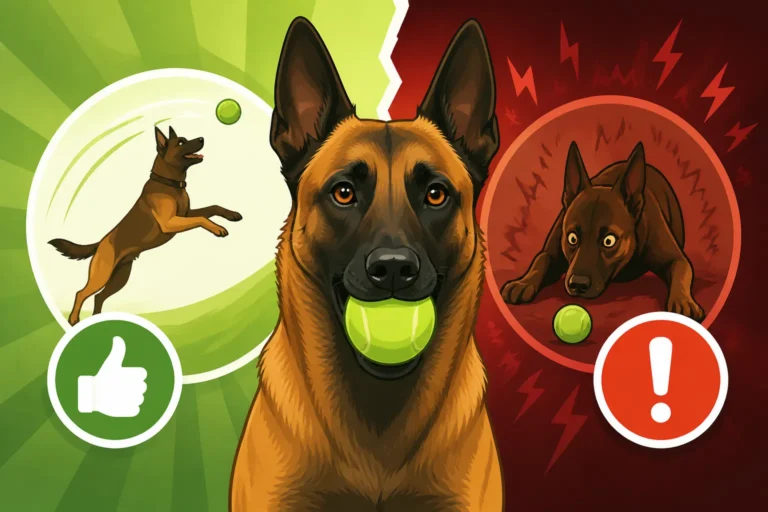
It’s a common scenario: your Malinois starts out focused, but a few minutes into flirt pole play, they become a frenzied blur of teeth and paws, ignoring your commands and perhaps even nipping at the pole or your hand. This is a clear sign of over-stimulation. Their prey drive has taken over, and their ability to think and respond to cues has plummeted. Recognizing the signs is crucial: frantic, high-pitched barking, a vice-like grip on the lure they won't release, ignoring "Out" or "Sit," or even jumping and mouthing at you.
When this happens, the best course of action is to stop play immediately, even if it feels like you're cutting off the fun prematurely. Do not engage in a tug-of-war. If they have the lure, calmly but firmly ask for "Out" while offering a trade. If they won't release, simply stand still and wait them out, avoiding eye contact. Once they calm down, even slightly, try again. The goal is to teach them that frantic behavior stops the game, while calm control continues it. You want to always end the session before they hit this peak level of over-arousal.
Regularly integrating commands like "Sit" or "Down" during play, even for a few seconds, can help break the cycle of escalating arousal. If your Malinois consistently struggles with over-stimulation, shorten your play sessions dramatically and focus more on controlled, slow movements with frequent obedience breaks. The aim is to Building an Off Switch Into a Belgian Malinois even during high-drive activities, teaching them to regulate their own intensity. This takes time, patience, and unwavering consistency from you.
Protecting Your Dog's Joints During High-Impact Play
The explosive power and agility of a Belgian Malinois are incredible, but they also mean their joints are subjected to significant stress during activities like flirt pole play. While the game itself is fantastic for conditioning, improper use can lead to injuries. The most critical aspect of joint protection is ensuring your Malinois executes controlled turns and jumps. Avoid having them slam into walls or make extremely tight, uncontrolled pivots that twist their body. Encourage broader, sweeping turns rather than sharp, abrupt changes in direction.
Similarly, be mindful of vertical jumps. While Malinois can jump impressively high, repeated, uncontrolled leaps can be hard on their hips, knees, and shoulders. Keep the lure low to the ground for most of the session, only occasionally allowing for a low, controlled jump. Always ensure the landing surface is soft and even. Regular veterinary check-ups are also crucial to monitor joint health, especially as your Malinois ages or if they participate in other demanding sports. Discussions about hip and elbow clearances, like those in The Age a Malinois Is Ready for Final Hip Films and Reading a Belgian Malinois Hip Result, highlight the importance of understanding your dog's structural integrity.
Many active Malinois owners also consider adding joint supplements to their dog's diet, especially as they mature or if they engage in consistent high-impact activities. Look for supplements containing ingredients like glucosamine, chondroitin, and MSM, which support cartilage health and reduce inflammation. However, always consult with your veterinarian before starting any new supplement regimen to ensure it's appropriate for your specific dog. Proactive measures, combined with careful play technique, are essential for keeping your Malinois sound and agile for years to come.
Integrating Flirt Pole Play into a Balanced Training Routine
While the flirt pole is an exceptionally powerful tool for a Belgian Malinois, it's crucial to remember that it's just one component of a holistic, balanced training and exercise routine. Relying solely on the flirt pole, or any single activity, will not fully satisfy the complex needs of this breed. A Malinois thrives on variety, purpose, and a blend of physical and mental challenges that engage their whole being. The flirt pole is a fantastic way to burn intense energy and build impulse control, but it doesn't replace structured obedience, calm mental work, or real-world socialization.
Think of flirt pole play as a high-intensity interval training session. It's excellent for bursts of energy and focus, but it needs to be complemented by other activities. Incorporate regular obedience sessions that focus on precision and duration, not just speed. Engage your Malinois in scent work or puzzle toys, which provide quiet, focused mental stimulation that can be incredibly tiring. The Mental Work That Finally Tires a Malinois Out is often overlooked, but it's just as important as physical exertion. Long, structured walks in varied environments, allowing for sniffing and exploration, also contribute to overall well-being.
Your Malinois needs Two Hours and a Job a Belgian Malinois Demands Daily, and the flirt pole can certainly contribute to that quota, but don't let it become the only item on the list. A well-rounded Malinois is one who is challenged physically, engaged mentally, and taught self-control in a variety of contexts. Use the flirt pole to channel their incredible drive, then build on that focus with other forms of training and enrichment, ensuring you are developing a truly balanced and fulfilled companion.
Disclaimer
This article is for general informational purposes only and does not constitute professional advice. Laws, prices and regulations vary by location and change over time. Consult a qualified professional for guidance on your specific situation.