Handling Neighbor Complaints About a Malinois
Owning a Belgian Malinois is an incredible journey, but let's be honest, it's not always smooth sailing, especially when your dog's boundless energy and intense nature start to rub your neighbors the wrong way. That sinking feeling in your stomach when you see a note on your door, or hear a snarky comment over the fence, is something many Malinois owners unfortunately know all too well. This guide is here to help you navigate those tricky waters, offering practical strategies to both prevent neighbor complaints and effectively address them when they inevitably arise, ensuring peace on your block and harmony with your high-drive companion.
Common Sources of Neighbor Complaints from Malinois Ownership
When you live with a Belgian Malinois, what you consider normal Malinois behavior can often be misinterpreted or simply not tolerated by those living nearby. It’s crucial to understand the most frequent issues that lead to neighbor complaints so you can be proactive. These aren't just minor annoyances; they can seriously strain relationships and even lead to legal trouble.
Barking, Alerting, and Vocalizations
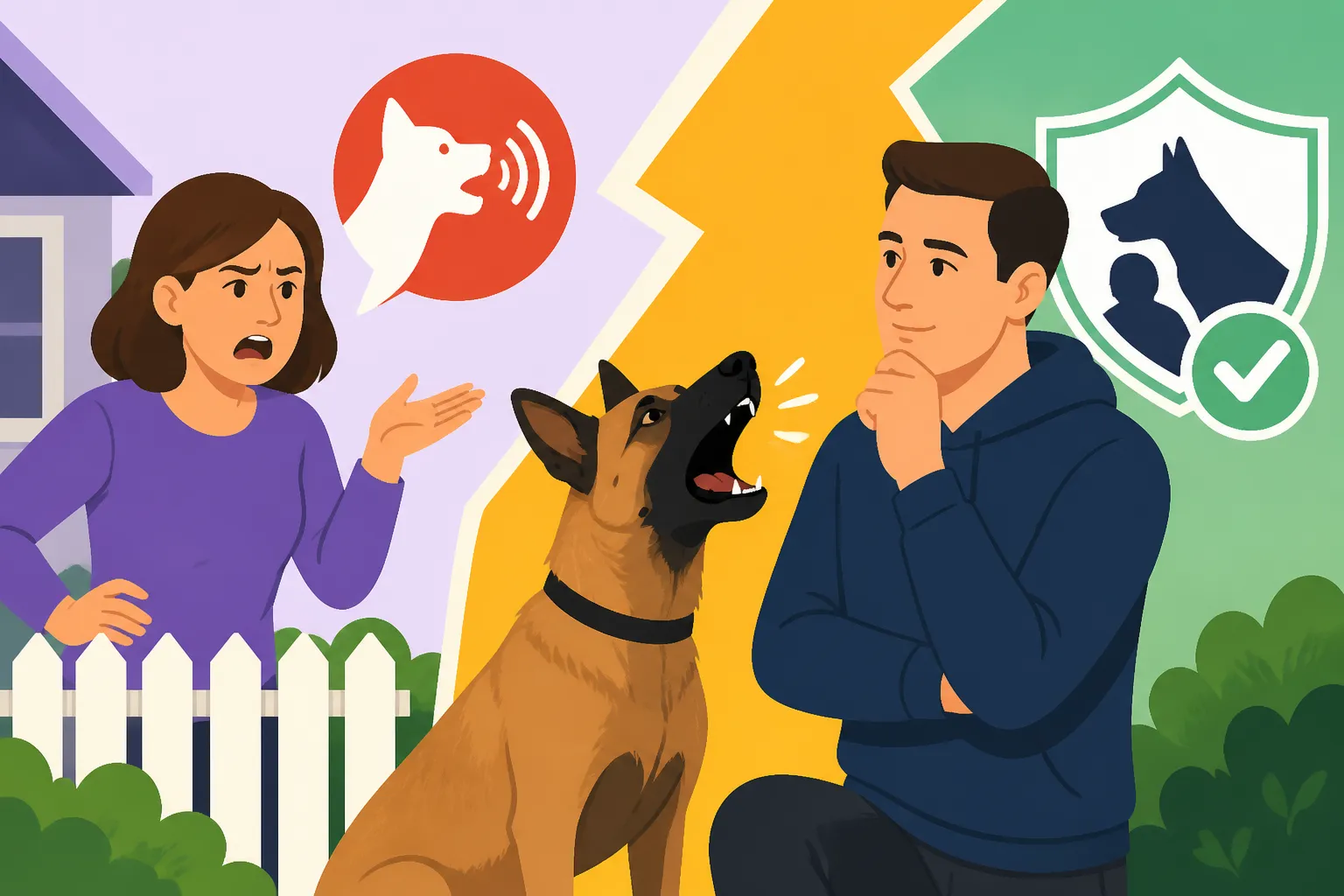
Let’s face it, Malinois are often vocal dogs. They're bred to be alert and observant, and in a home environment, that often translates to a lot of barking. This isn't usually malicious; it's just their way of communicating every perceived anomaly. A leaf blowing down the street, a squirrel daring to enter the yard, or the mail carrier's daily rounds can trigger an intense, sustained vocal response.
This constant stream of noise can be incredibly disruptive to neighbors. Imagine trying to enjoy a quiet evening on your patio or trying to put a baby down for a nap, only to be met with a Malinois sounding the alarm every few minutes. Your dog might bark out of boredom, frustration, or even excitement, especially if they are under-exercised or under-stimulated. An unemployed Malinois will find a job, and often that job becomes "neighborhood watch," which to your neighbors sounds like an unceasing racket. For more on what happens when they lack a job, see What Happens to an Unemployed Belgian Malinois. This is one of the quickest ways to sour neighbor relations and can even lead to official noise complaints with local authorities.
Escapes and Containment Issues
A Belgian Malinois is an athlete, pure and simple. They possess incredible agility, jumping ability, and problem-solving skills, which means standard fencing often isn't enough to keep them contained. A six-foot privacy fence might be a gentle suggestion for some breeds, but for a Malinois with a strong drive to investigate or chase, it's often seen as merely a challenge. They can jump, climb, dig under, or even chew through fences if left to their own devices and sufficiently motivated.
When your Malinois escapes, even if they're friendly, it can be terrifying for neighbors. An unfamiliar dog, especially one with the powerful presence of a Malinois, running loose in the neighborhood can cause genuine fear. They might chase children, other pets, or simply dart into traffic, creating a dangerous situation for everyone involved. Even if no harm comes of it, the mere sight of a loose Malinois can lead to immediate calls to animal control and complaints from concerned residents about safety and property damage. Ensuring proper containment is not just for your dog's safety, but for the community's peace of mind. You might want to consider Fencing That a Belgian Malinois Cannot Clear.
Perceived Aggression or Intimidation
Malinois carry themselves with an intensity that can be intimidating, even when they are perfectly friendly and well-adjusted. Their direct stare, their explosive movement, and their strong physical presence can be misinterpreted as aggression by people who aren't familiar with the breed or high-drive dogs in general. A Malinois on a leash, pulling with all its might to get to a perceived threat or exciting stimulus, can look menacing. Even a Malinois playing in their own yard with a toy can appear aggressive if they are making hard bites on a tug or "killing" a favorite ball with a vigorous shake.
Neighbors might not understand the nuances of bite work or high prey drive. They see a powerful dog moving with purpose, possibly making eye contact, and their natural instinct might be to feel threatened. This can lead to complaints about the dog being "dangerous" or "aggressive," even if your Malinois has never harmed a fly. These perceptions can be incredibly difficult to overcome, and it's essential to manage your dog's interactions and appearance in public carefully to avoid feeding into these fears. Considering Muzzle Conditioning Before a Malinois Ever Needs One can be a useful proactive measure for public spaces, even if your dog isn't considered aggressive.
Destructive Behaviors and Property Damage
An under-stimulated Malinois is a destructive Malinois. If they aren't given adequate physical and mental outlets, they will find their own entertainment, and often that means chewing, digging, or scratching at things they shouldn't. This destructive energy can extend beyond your own property and affect neighbors. Imagine your Malinois digging under a shared fence and tearing up your neighbor's prize-winning rose garden, or chewing on a garden hose that hangs just over the property line.
While these might seem like minor incidents, they can quickly escalate. Property damage, even small amounts, can cause significant friction and expense. It's not just about the monetary cost; it's about the invasion of space and the feeling of disrespect. Neighbors don't want their property damaged, and they certainly don't want to live next to a dog that seems to be constantly looking for ways to cause trouble. Preventing these behaviors often comes down to providing enough appropriate outlets for your Malinois’s energy and drive. What a Malinois Destroys in One Unsupervised Hour can give you a chilling insight into their potential.
Proactive Strategies to Prevent Complaints
The best offense is a good defense, especially when it comes to living harmoniously with your neighbors and your Belgian Malinois. Taking deliberate steps from day one can drastically reduce the likelihood of complaints.
Early and Consistent Training and Socialization
This is the cornerstone of responsible Malinois ownership. From the moment your puppy comes home, you need to be actively shaping their behavior and exposing them to the world in a positive, controlled manner. A well-socialized and trained Malinois is far less likely to exhibit the behaviors that lead to neighbor complaints. Start early with puppy classes, obedience training, and exposure to various sights, sounds, and people. Programs like those offered by BAXTER & Bella can be incredibly helpful for new puppy owners, providing structured online guidance for socialization and basic obedience right from the start.
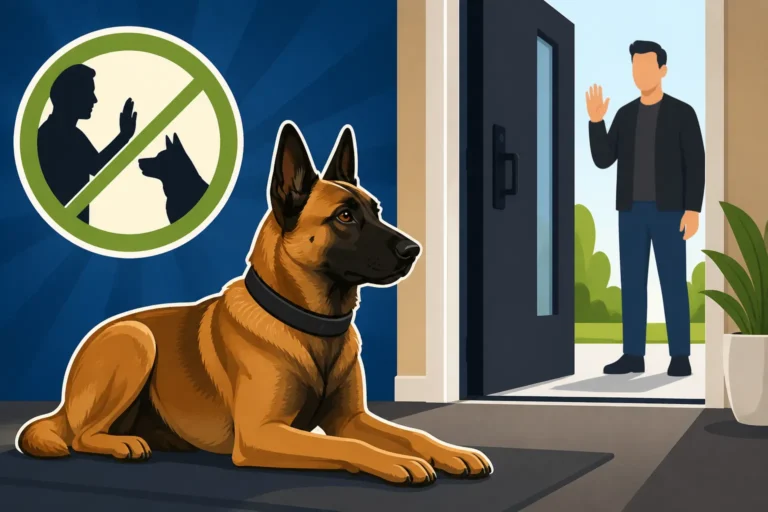
A Malinois that understands basic commands like "sit," "stay," "leave it," and a solid recall is a safer and more manageable dog in any environment. If your dog has a reliable "place" command, you can direct them to a designated spot when guests arrive or when external stimuli trigger an alert. This also includes desensitizing them to common neighborhood sounds like children playing, lawnmowers, or other dogs. The goal is not to suppress their natural alertness entirely, but to teach them to process these stimuli without going into full alarm mode every single time. Consistent positive reinforcement training builds a strong foundation. For insights into starting early, check out The Age a Belgian Malinois Puppy Starts Training and Socializing a Belgian Malinois Puppy Safely.
Ensuring Adequate Exercise and Mental Stimulation
Let me tell you, a tired Malinois is a good Malinois. This breed is not content with a casual stroll around the block. They need intense, structured exercise that taps into their working dog genetics. We're talking about running, biking, agility work, or dedicated play sessions involving tug and retrieve. Two hours of physical activity a day is often a minimum, but even that might not be enough if it's not the right kind of activity. Your dog needs to truly burn off that incredible energy store.
Beyond physical exertion, mental stimulation is absolutely vital. A Malinois needs a job for their brain, not just their body. Engaging in puzzle toys, scent work, obedience drills, or even advanced trick training can be incredibly tiring for them. Interactive feeders that dispense kibble slowly, or snuffle mats for sniffing out treats, can keep their minds busy during downtime. Consider rotating toys to keep things interesting and using durable chew toys to redirect any urge to chew on inappropriate items. Online retailers like Amazon offer a vast selection of durable puzzle toys, scent work kits, and high-quality chews that can stand up to a Malinois's intensity. If you find your Malinois still restless after a run, it’s usually their brain that hasn’t been worked enough. Read Two Hours and a Job a Belgian Malinois Demands Daily and Puzzle Work for a Belgian Malinois Indoors for more in-depth guidance.
Secure Containment and Supervision
This might sound obvious, but it bears repeating: your Belgian Malinois needs bomb-proof containment. This means fencing that is not only tall enough (often 6 feet or more), but also secure at the bottom (dig-proof) and potentially at the top (to prevent climbing). If your dog is a jumper or climber, you might need creative solutions like coyote rollers or inward-facing extensions. Never underestimate their ability to find a weakness in your perimeter.
When outdoors, even in a secure yard, your Malinois should ideally be supervised. This isn't just about preventing escapes; it's about interrupting nuisance behaviors like fence-line barking or digging before they become ingrained habits. If you cannot actively supervise, your dog should be in a secure kennel or crate. For outdoor kennels, ensure they are constructed with heavy-gauge chain link or welded wire, with a secure top and concrete base to prevent digging out. Inside the home, a well-conditioned crate can be a sanctuary for your dog and a means of preventing destructive behaviors when you can't watch them. Look for sturdy, crash-tested crates on Amazon that can withstand the strength of a Malinois.
Addressing Complaints When They Arise
Despite your best efforts, a complaint might still land at your door. How you respond in these moments is critical to resolving the issue and preserving your relationships.
Open and Empathetic Communication
When a neighbor approaches you with a complaint, whether it's about barking, digging, or perceived aggression, your first reaction should be to listen without getting defensive. It's incredibly frustrating to feel judged about your dog, especially when you know you're doing your best, but remember that your neighbor's experience is valid from their perspective. Start by apologizing sincerely for any disruption or concern your dog has caused. A simple, "I'm so sorry that [dog's name] has been disturbing you. I really want to be a good neighbor, and I appreciate you bringing this to my attention," can de-escalate the situation immediately.
Ask for specific details: when does the barking occur? What triggers it? Has the dog damaged anything? The more information you gather, the better equipped you'll be to address the root cause. This isn't an interrogation; it's a conversation. Let them know what steps you are already taking and what you plan to do to mitigate the issue. Being transparent and showing genuine concern goes a long way. It builds trust and demonstrates that you are a responsible pet owner committed to finding a solution. If you refuse to engage or become defensive, it will only solidify their negative impression and potentially lead to more formal complaints.
Documenting Efforts and Progress
In any potential dispute, documentation is your best friend. Start keeping a log of all interactions with neighbors regarding your Malinois. This should include the date, time, nature of the complaint, who you spoke with, and what was discussed. More importantly, document all the steps you are taking to address the issues. This includes:
- Training sessions: Dates, duration, what was worked on, and the trainer's name if applicable.
- Exercise routine: Daily logs of walks, runs, play, and mental enrichment.
- Behavioral interventions: Specific strategies you've implemented to reduce barking, digging, or other issues. For instance, if you bought a new puzzle toy from Amazon, note it down.
- Veterinary visits: Especially if they relate to anxiety or other behavioral health concerns.
- Any improvements observed: Even small victories are worth noting.
This log serves several purposes. Firstly, it helps you track your own progress and identify what's working and what isn't. Secondly, if a complaint escalates to animal control or local authorities, you have concrete evidence of your proactive and responsive efforts. This demonstrates due diligence and can protect you from fines or more severe consequences. It shows you're not ignoring the problem but actively working to solve it.
Seeking Professional Help and Mediation
Sometimes, despite your best efforts, you might need an outside perspective or intervention. If neighbor complaints persist, or if you feel a behavioral issue is beyond your current training capabilities, don't hesitate to consult a professional. A certified professional dog trainer or a veterinary behaviorist can assess your Malinois's behavior, identify underlying causes, and recommend a tailored training plan. They can often spot things you've missed and offer strategies specific to the Malinois breed's unique drives. They can also provide an expert opinion that might hold weight with concerned neighbors or authorities. To understand the costs involved, you might read What a Behaviorist Charges to Assess a Malinois.
If communication with your neighbor has broken down, or if the situation feels tense and confrontational, consider a third-party mediator. Some communities offer free or low-cost mediation services for neighbor disputes. A neutral third party can facilitate a conversation, help both sides express their concerns, and guide you towards a mutually agreeable solution. This can be much more effective than trying to hash things out when emotions are running high. The key is to demonstrate that you are committed to finding a resolution, even if it means bringing in reinforcements.
Legal and Community Considerations for Malinois Owners
Beyond neighborly etiquette, there are legal frameworks and community perceptions that can significantly impact Malinois owners. Understanding these can help you avoid serious trouble.
Understanding Local Ordinances and Nuisance Laws
Every city, county, and homeowner's association has its own set of rules regarding pet ownership. Before you even bring a Malinois home, it's vital to research your local ordinances. These typically cover:
- Noise complaints: What constitutes excessive barking, and what are the quiet hours? Many areas have specific rules about how long a dog can bark continuously before it's considered a nuisance.
- Leash laws: Are there strict leash laws in your area? Most places require dogs to be leashed in public, and a Malinois's strong prey drive makes this particularly important.
- Waste removal: Rules about picking up after your dog are universal, but fines can vary.
- Number of pets: Some areas limit how many animals you can own.
- "Dangerous dog" designations: Understand the criteria your local animal control uses to classify a dog as dangerous and what the repercussions are.
Ignorance of these laws is not an excuse. Fines, mandated training, muzzling orders, or even seizure of your dog can result from repeated violations. Make sure you're compliant in every aspect. Knowing these rules allows you to proactively train your Malinois to avoid infractions, such as teaching A Malinois That Alerts to Every Sound Outside to settle.
Navigating Breed-Specific Legislation (BSL)
While Belgian Malinois are not as commonly targeted as breeds like Pit Bulls or Rottweilers, breed-specific legislation (BSL) is a reality in some areas. BSL can impose restrictions on certain breeds, such as mandatory muzzling in public, increased liability insurance requirements, or even outright bans in residential areas. These laws are often enacted in response to public incidents and can be influenced by perceptions of breed "danger."
Even if your area doesn't have BSL, a series of local incidents or an accumulation of complaints against Malinois owners could prompt the creation of such legislation. This is why responsible ownership by all Malinois owners is so crucial. Your individual dog's behavior contributes to the breed's overall public image. Stay informed about proposed legislation in your community and consider joining local dog owner advocacy groups to speak out against unfair BSL if it arises. It's a heavy burden, but the reputation of the breed rests on our collective shoulders.
Homeowners Insurance and Liability
This is a critical, yet often overlooked, aspect of Malinois ownership. Many homeowners' insurance policies have clauses that exclude or raise premiums for certain dog breeds, often labeled as "dangerous" or "aggressive." While the Malinois is a working dog, not inherently aggressive, their powerful reputation can unfortunately place them on these lists. If your dog causes injury or damage to a neighbor's property or person, and your insurance policy has a breed exclusion, you could be held personally liable for significant costs.
Before you find yourself in such a situation, review your homeowners' insurance policy carefully. Be honest with your insurance provider about your dog's breed. If your current insurer excludes Malinois, seek out providers who offer policies that cover all breeds or offer specific canine liability insurance riders. It's an added expense, but it provides essential peace of mind and financial protection. This is an area where being proactive can save you from immense financial and emotional stress. Understanding your options here is paramount, and you may find Homeowners Policies and the Belgian Malinois sheds more light on the topic.
Table: Common Neighbor Complaints and Proactive Solutions
| Complaint Type | Common Malinois Behavior | Impact on Neighbors | Proactive Solutions |
|---|---|---|---|
| Excessive Barking | Alert barking at passersby, boredom barking, frustration | Noise disturbance, interrupted sleep/peace | Training: Teach "quiet" command, desensitize to triggers. Enrichment: Provide ample mental stimulation (puzzle toys from Amazon, scent work). Management: Supervise outdoor time, bring indoors if barking. Work on A Malinois That Screams Rather Than Settles to teach calm behavior. |
| Escapes/Roams | Jumping/climbing fences, digging out, strong prey drive | Fear of loose dog, property damage, traffic hazard | Containment: Secure, tall, and dig-proof fencing. Supervision: Constant monitoring in yard. Training: Rock-solid recall, teach impulse control. See Fencing That a Belgian Malinois Cannot Clear. |
| Perceived Aggression | Intense stare, fast movement, strong physical presence | Intimidation, fear, feeling unsafe | Socialization: Early positive exposure to people/dogs. Training: Focus on loose-leash walking, "leave it" command. Management: Keep leashed, use a muzzle in public if needed (after Muzzle Conditioning Before a Malinois Ever Needs One). Explain your dog is working if appropriate. |
| Destructive Behavior | Digging, chewing, scratching at property/fences | Property damage, nuisance, perceived lack of control | Exercise & Mental Work: Meet daily requirements. Chew Outlets: Provide appropriate, durable chew toys (found on Amazon). Supervision: Crate or supervise when unsupervised. Address What a Malinois Destroys in One Unsupervised Hour by providing appropriate outlets. |
| Unruly Public Behavior | Pulling on leash, reactivity to other dogs/people | Disruption, embarrassment, perceived lack of control | Training: Consistent obedience, focus on engagement. Management: Avoid known triggers, use appropriate tools (e.g., proper harness or head collar). BAXTER & Bella's courses can help build foundational obedience. |
Disclaimer
This article is for general informational purposes only and does not constitute professional advice. Laws, prices and regulations vary by location and change over time. Consult a qualified professional for guidance on your specific situation.