Whether a Rescue Belgian Malinois Can Be Retrained
Bringing a rescue Belgian Malinois into your home can be a truly rewarding experience, but let's be honest, it often comes with its own unique set of challenges. Many of these incredible dogs end up in rescue situations because their previous environments weren't right for them, or they simply weren't given the foundational training and structure they desperately need. This guide is here to walk you through whether retraining a rescue Malinois is truly possible and, more importantly, how to approach it with realistic expectations and the right strategies.
Understanding the Rescue Malinois's Background
When you open your home to a rescue Malinois, you're also often opening it to a history you know very little about. This can feel like trying to solve a puzzle with half the pieces missing, and it's a completely valid frustration to feel overwhelmed.
The Weight of an Unknown History
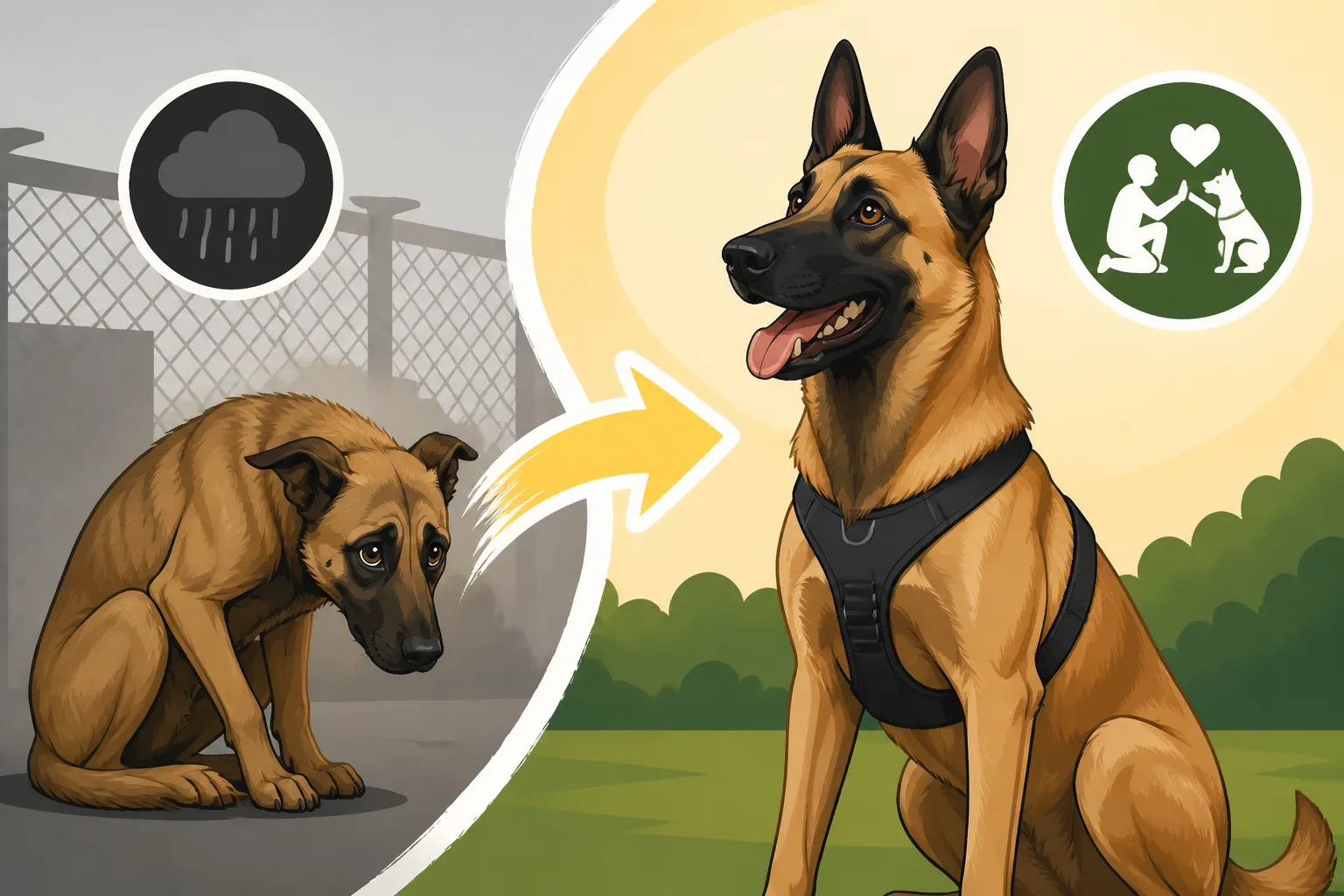
It's common for rescue Malinois to come from backgrounds where they lacked consistent training, proper socialization, or even basic care. Some might have been surrendered multiple times, leading to insecurity and a deep distrust of new environments or people. Others might have experienced neglect, abuse, or simply have been misunderstood by owners unprepared for their intense drive and intelligence. You might not know if they were bounced between several homes, spent time kenneled in a way that left them undersocialized, or if they had early negative experiences that shaped their current behavior. This lack of a clear history makes pinpointing the root cause of certain behaviors incredibly difficult, and it's a challenge every rescue owner faces.
Sometimes, a rescue Malinois might have been purchased by someone who admired the breed's impressive capabilities from afar, without truly understanding the commitment required. When that high drive and constant need for a job became too much, the dog was surrendered. This means you might get a physically sound dog with zero formal training, leaving you to build everything from the ground up. It’s a huge undertaking, and it's important to be honest with yourself about the dedication it will demand.
Common Behavioral Challenges in Rescue Malinois
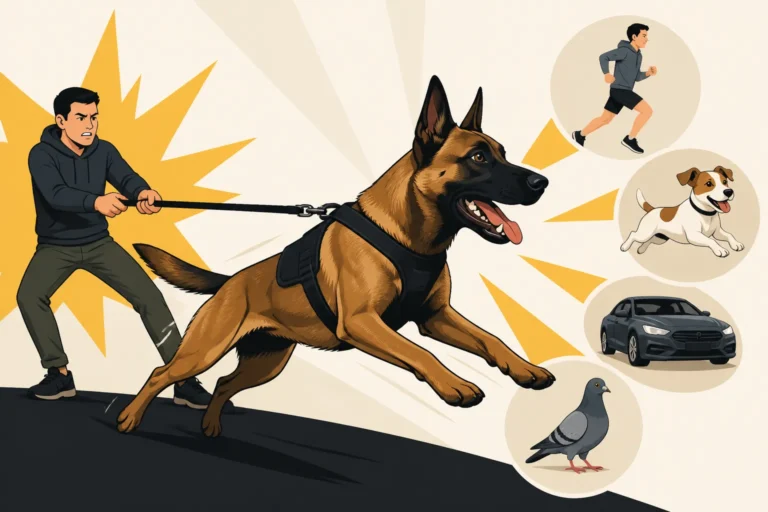
Due to these varied and often difficult pasts, rescue Malinois frequently exhibit a range of behavioral issues that require patience and expert guidance. Reactivity, whether towards other dogs, strangers, or even moving objects like bicycles, is a big one. They might lunge, bark, or growl in an effort to create distance or to communicate their discomfort. Resource guarding, where they protect food, toys, or even their favorite person, can also be a significant concern, often stemming from past deprivation or competition. Imagine a dog that has had to fight for every meal; that instinct doesn't just disappear overnight.
Separation anxiety is another common issue, manifesting as destructive chewing, excessive barking, or house-soiling when left alone. This breed forms incredibly strong bonds, and the trauma of being abandoned or rehomed can exacerbate their natural inclination to be with their person constantly. A rescue Malinois might also display a general lack of manners, jumping on guests, counter-surfing, or constantly seeking attention in an overly exuberant way because they were never taught appropriate behaviors. These aren't necessarily signs of aggression, but rather a profound lack of guidance and boundaries. You might also encounter a dog who struggles with The Age a Malinois Starts Ignoring Known Cues if they were previously trained but their environment or stress levels caused them to "forget" their lessons.
Assessing the Individual Dog's Needs
Before you can even begin to think about retraining, you absolutely must take the time to truly understand the dog in front of you. This isn't a one-size-fits-all breed, and a rescue Malinois is even more of an enigma, making a thorough assessment paramount.
The Importance of a Professional Evaluation
While your heart might tell you to dive right in and start "fixing" things, resist the urge to go it alone, especially with a breed as complex as the Belgian Malinois. The first, and arguably most critical, step is to engage an experienced professional. This isn't just a generic dog trainer; you need someone who truly understands working breeds, their drives, and their potential behavioral pitfalls. A certified professional dog trainer (CPDT-KA), a certified behavior consultant (CBCC-KA), or even a veterinary behaviorist can provide an invaluable assessment. They can help you decipher your Malinois's body language, identify specific triggers, and gauge their temperament, drives, and potential for rehabilitation.
A professional evaluation isn't just about identifying problems; it's about understanding the dog's strengths and what motivates them. They can help you determine if the dog has significant fear issues, underlying anxiety, or if the behaviors are simply due to a lack of structure and training. This initial assessment often forms the cornerstone of a successful retraining plan. They can tell you if you're dealing with a dog that was simply misunderstood, or one that has deeper, more complex issues that require a multi-faceted approach. They'll also give you an honest opinion on The Handler Experience a Belgian Malinois Needs and whether your current experience level is a good match for the dog's challenges.
Identifying Triggers and Stressors
Once you have professional guidance, a significant part of the early process involves becoming a detective in your own home. You need to meticulously observe your rescue Malinois to pinpoint exactly what sets them off. Is it the sight of other dogs on walks? The sound of the mail carrier? Children running by? Certain people wearing hats? Loud noises? Being left alone for even short periods? Every dog is different, and understanding their unique stressors is key to developing an effective management and training plan.
Keep a journal of incidents, noting the time, location, what happened right before, during, and after the unwanted behavior. This data will be invaluable for your trainer and will help you recognize patterns. For instance, if your Malinois becomes agitated every time a delivery truck passes, that's a trigger you can specifically work on desensitizing them to. If they show discomfort when approached by strangers, you'll know to implement strategies for Teaching a Belgian Malinois to Accept a Stranger's Hands carefully and deliberately, always prioritizing safety and positive experiences. This methodical approach ensures you're not just reacting to problems, but proactively addressing their root causes.
Strategies for Effective Retraining
Retraining a rescue Malinois is a journey built on consistency, positive reinforcement, and a deep understanding of what makes this breed tick. It's not a quick fix, but a dedicated process.
Building Trust and a Secure Relationship
The foundation of all successful retraining, especially with a dog that might have had a difficult past, is building unwavering trust. This means becoming a reliable, consistent, and predictable leader in your Malinois's life. Establish a clear routine for feeding, potty breaks, exercise, and training. Dogs thrive on predictability, and it helps reduce anxiety. Use only positive reinforcement methods – reward desired behaviors with high-value treats, praise, or toys. Never resort to harsh corrections or punishment, as this can easily erode trust and potentially exacerbate fear-based behaviors in a dog that may already be insecure.
Spend quality time together, but ensure it's structured. Engaging in activities like structured walks, puzzle toys, and calm cuddle sessions (if your dog enjoys them) can deepen your bond. Avoid putting your dog in situations where they feel overwhelmed or scared; instead, create positive associations with new experiences. Remember, a rescue Malinois needs to learn that you are their safe haven, their advocate, and the one who will always guide them fairly. This often requires more than just physical exercise; it requires a great deal of mental engagement to help them settle and focus. Consider internalizing advice from The Structure a Belgian Malinois Needs Every Day to create this environment.
Implementing Structured Training Programs
Once trust is established, a structured training program is essential. Start with the basics: sit, stay, down, come, and a solid leash walk. These commands not only provide practical control but also build confidence in your dog and strengthen your communication. For a Malinois, basic obedience is just the entry point. You'll need to move into more advanced concepts like a reliable recall, even with distractions, and a solid "place" command, which teaches them to settle calmly in a designated spot. Structured online programs can be incredibly helpful here, offering step-by-step guidance. Many owners find such resources, like those offered by BAXTER & Bella, invaluable for learning how to implement consistent training from home.
For specific issues like reactivity or fear, counter-conditioning and desensitization are key. This means gradually exposing your dog to their triggers at a distance where they remain calm, and then pairing that exposure with something highly positive, like their favorite treats. Over time, you slowly decrease the distance, always ensuring your dog stays below their "threshold" of reactivity. For example, if your Malinois lunges at other dogs, you might start by simply being in the same park as another dog, but far enough away that your Malinois can notice the other dog without reacting, then reward them. You'll also want to make sure you have the right gear for successful training, which can often be found and ordered conveniently from online retailers like Amazon, ensuring you have durable leashes, harnesses, and training treats ready when you need them.
Addressing Specific Behavioral Issues
Let's dive into a few common challenges and initial retraining ideas:
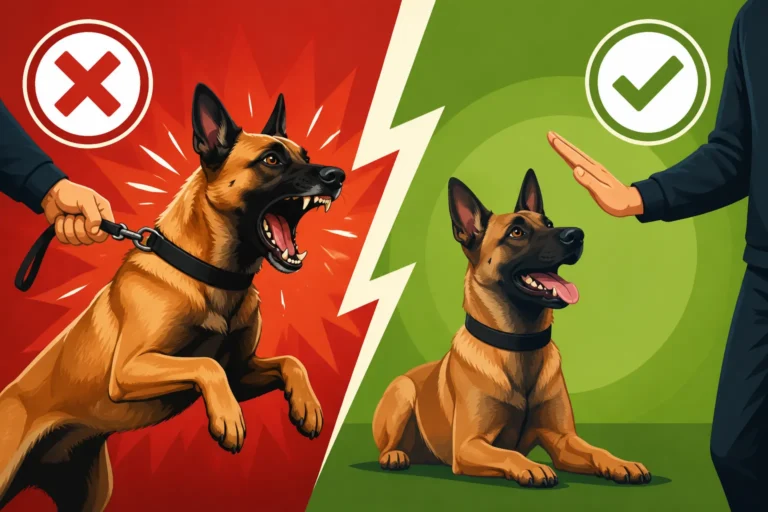
- Reactivity: If your Malinois reacts to other dogs or people, the first step is always management. Avoid triggers whenever possible during initial retraining to prevent rehearsing the unwanted behavior. Use a strong, secure leash and harness, and practice parallel walking or "look at that" exercises, where you reward your dog for calmly observing a trigger without reacting. This can be a long process, but it's vital for dogs like A Belgian Malinois That Reacts to Other Dogs. Muzzle training, as outlined in Muzzle Conditioning Before a Malinois Ever Needs One, can also be a crucial safety and management tool.
- Resource Guarding: This requires careful management to prevent incidents. Identify the items your dog guards. Instead of taking items away, practice trading for something higher value. For food guarding, teach your dog to be comfortable with you approaching their bowl by dropping extra tasty treats in it as you pass. Never challenge a guarding dog directly, as this can escalate the behavior. This is an area where professional guidance is paramount for safety.
- Separation Anxiety: This is tough. It often requires starting from scratch, teaching your Malinois that being alone is safe and even enjoyable. Begin with very short absences, even just stepping out of sight for a few seconds, and gradually increase the duration. Provide highly engaging, safe chew toys or puzzle feeders before you leave. Avoid making departures and arrivals a big deal. For severe cases, medication prescribed by a vet in conjunction with behavior modification can be a game-changer.
- House-Soiling: Rule out any medical issues with a vet visit first. Then, establish a rigorous potty schedule, taking your dog out frequently, especially after waking, eating, and playing. Reward heavily for successful outdoor elimination. If accidents happen indoors, clean them thoroughly with an enzymatic cleaner and avoid punishment, which only teaches the dog to hide accidents. Crating can be a very effective tool here, as most dogs won't soil their sleeping area.
For many of these behaviors, building a strong "off switch" is incredibly beneficial. Read Building an Off Switch Into a Belgian Malinois for more detailed strategies on teaching your Malinois to settle and relax on cue, which can directly counteract high-arousal reactions.
| Behavioral Issue | Common Manifestations | Initial Retraining Approach | Key Considerations |
|---|---|---|---|
| Reactivity | Lunging, barking, growling at triggers | Counter-conditioning at a distance, positive reinforcement, management. | Safety first, identify triggers precisely, slow and gradual exposure. |
| Resource Guarding | Protecting food, toys, space, people | Trade-up exercises, "scatter-and-feed" for food, professional guidance. | Never challenge directly, manage high-value items, build trust. |
| Separation Anxiety | Destructive chewing, barking, accidents when alone | Gradual desensitization to absence, high-value chew toys, calm departures/arrivals, vet consult. | Start small, avoid punishment, consider medication with vet advice. |
| Lack of Manners | Jumping, counter-surfing, excessive demand | Consistent basic obedience, clear boundaries, reward polite behavior, "place" command. | Every family member must be consistent, mental exercise helps. |
Patience, Persistence, and Realistic Expectations
Retraining a rescue Belgian Malinois is not for the faint of heart, but it is deeply rewarding. It's crucial to approach this journey with a strong sense of commitment and an understanding that results won't appear overnight.
The Marathon, Not a Sprint Mentality
You know how some people talk about losing weight or getting fit? They say it’s a marathon, not a sprint. Well, that applies tenfold to retraining a Belgian Malinois, especially one with a past. These dogs are incredibly intelligent and resilient, but they also have deeply ingrained behaviors and instincts that take time to reshape. You might see rapid progress in one area, only to hit a wall in another. There will be days when you feel like you've taken two steps forward and three steps back, and that's perfectly normal. It's okay to feel frustrated, to want to throw in the towel, but remember that consistency over weeks, months, and even years is what truly makes a difference.
Don't expect your rescue Malinois to be a perfectly behaved companion within a few weeks. Think about all the experiences, both good and bad, that have shaped them up until now. Undoing or re-routing those pathways takes dedication. Many owners find themselves embarking on this journey for the entire lifespan of the dog, continually refining and reinforcing desired behaviors. This is particularly true if you are dealing with a dog that was Rehabilitating a Belgian Malinois That Was Kenneled for an extended period, as they may have more ingrained habits to overcome.
Celebrating Small Victories
Given the long road ahead, it’s absolutely vital to celebrate every single small victory. Did your Malinois walk past another dog without a full-blown reaction today, even from a distance? That’s huge! Did they settle on their mat for five minutes longer than yesterday? Fantastic! Did they make eye contact with you when a squirrel darted by instead of launching into full prey drive? Absolutely worth a party! These small wins are not just good for your morale; they are indicators that your training is working, piece by piece.
Recognizing and celebrating these moments helps reinforce your own persistence and provides the motivation to keep going, especially on those tougher days. It helps you appreciate the incremental progress and keeps you focused on the positive changes, rather than dwelling on the remaining challenges. Acknowledging progress, no matter how minor, also reinforces to your dog that they are succeeding and makes them more willing to engage in training.
Knowing When to Seek Further Help
While you are the primary advocate and trainer for your rescue Malinois, there are times when your capabilities or your dog's needs might exceed what you can provide alone. If you've been working diligently with a qualified trainer and are still not seeing significant progress, or if the behaviors are escalating despite your best efforts, it's time to consider further specialized help. This might mean consulting a veterinary behaviorist, who is a veterinarian with advanced training in animal behavior and can prescribe medication to help manage anxiety, fear, or obsessive behaviors, if necessary. They can also provide a deeper understanding of any underlying medical conditions contributing to behavioral issues.
Don't view seeking additional professional help as a failure on your part. It's a sign of a responsible and dedicated owner who is putting their dog's well-being first. A team approach involving a good trainer, your veterinarian, and possibly a veterinary behaviorist offers the best chance for successful retraining and a happy, well-adjusted life for your rescue Malinois. Remember, some issues, especially those stemming from deep-seated trauma or neurological predispositions like The Seizure Disorder Running in Malinois Lines, might require ongoing professional input for the dog's entire life. Sometimes, despite all efforts, an individual Malinois might have needs that simply cannot be met in a typical home environment, and a professional can help you make difficult, but ultimately humane, decisions for their future.
Disclaimer
This article is for general informational purposes only and does not constitute professional advice. Laws, prices and regulations vary by location and change over time. Consult a qualified professional for guidance on your specific situation.