Whether a Belgian Malinois Lives With a Cat
The idea of bringing a sleek, energetic Belgian Malinois into a home that already has a resident feline can feel like a tightrope walk over a shark tank – thrilling for some, terrifying for most, and requiring extreme caution. Many Malinois owners grapple with the inherent prey drive of these incredible dogs and wonder if peaceful coexistence with a cat is even a realistic dream. This comprehensive guide will delve deep into the realities of housing a Belgian Malinois with a cat, covering everything from understanding their instincts to implementing careful introduction strategies and maintaining long-term safety.
Understanding the Malinois Prey Drive: A Formidable Instinct
Let's be brutally honest: the Belgian Malinois was bred for work, and a significant part of that work involves an incredibly strong prey drive. They're wired to detect, pursue, and engage with fast-moving objects, and unfortunately, a darting cat often fits that bill perfectly. This isn't about malice; it's about deeply ingrained instinct, and it's something every Malinois owner needs to understand, not dismiss.
Instinctual Behaviors and What They Mean for Small Animals
The Malinois prey drive isn't just about a desire to chase; it's a complex sequence of behaviors that includes orienting, eye-stalking, chasing, grabbing, and sometimes, a killing bite. When your Malinois spots a squirrel in the yard or a cat streaking across the floor, that sequence can be triggered in a split second. Their eyes lock on, their body tenses, and they're off. For a small, fast-moving animal like a cat, this can be incredibly dangerous. The Malinois isn't necessarily thinking "I want to hurt this cat"; it's often more about "I want to catch this fast-moving thing."
This instinct is a foundational part of what makes them such exceptional working dogs in detection, protection, and sport. It's the same drive that allows them to track a scent for miles or intensely focus on a decoy's sleeve. Trying to suppress this entirely is like trying to change the core nature of the breed. Instead, the goal is often to redirect it safely and manage the environment so that the cat isn't seen as a prey item. Without careful management, even a playful chase can quickly turn into a serious incident due to the sheer power and speed of a Malinois.
The Impact of a Malinois's Energy and Intensity
Beyond pure prey drive, the sheer energy and intensity of a Belgian Malinois complicate cat introductions. These dogs are always on, always looking for an outlet for their boundless energy and sharp minds. An under-exercised or under-stimulated Malinois is a destructive, chaotic force, and that chaos can easily spill over into interactions with a cat. A Malinois isn't just going to casually bat at a cat; they're likely to pursue with gusto, potentially overwhelming the cat with their size, speed, and relentless focus.
Their intensity means that even if they aren't intending harm, a Malinois can easily injure a cat accidentally. A quick nip that would be harmless to another dog could be fatal to a cat. A playful pounce could lead to broken bones. This isn't to say it's impossible for them to live together, but it means the stakes are incredibly high. Owners must be prepared to provide an immense amount of physical and mental exercise to temper this intensity, allowing the Malinois to have appropriate outlets for its energy before expecting it to share a home with a small, vulnerable animal. Think about Two Hours and a Job a Belgian Malinois Demands Daily – that's the baseline, not the maximum.
Assessing the Individual Malinois and Cat: It's Not a One-Size-Fits-All Answer
While breed characteristics give us a strong baseline, every dog and cat is an individual. What works for one Malinois-cat pairing might be a disaster for another. A thorough, honest assessment of both your Malinois and your cat's personalities, past experiences, and training levels is absolutely critical before attempting any introductions. This isn't a situation for wishful thinking.
Evaluating Your Malinois's Temperament and Training
First, consider your Malinois. Has your dog ever lived with small animals before? What was the outcome? Does your Malinois have a history of chasing squirrels, rabbits, or even deer with intense focus? Does it have a strong A Belgian Malinois That Fixates on Moving Things tendency? If your Malinois is a young puppy, remember they'll go through The Shark Phase Every Malinois Puppy Goes Through, which involves a lot of mouthing and biting that could easily be directed at a cat. A Malinois with a well-established "out" command, a strong "leave it," and an excellent "place" command will have a much better chance than one with inconsistent obedience.
An adult Malinois with a known high prey drive and no prior exposure to cats is a significant challenge. If your dog gets tunnel vision on moving objects, ignores commands when distracted, or has shown aggression towards smaller animals, you need to be realistic about the risks. Extensive, professional training will be non-negotiable, focusing on impulse control, redirection, and building an extremely reliable "off switch." It's about building a solid foundation where the dog consistently looks to you for direction, even when highly stimulated.
Considering the Cat's Personality and Escape Routes
Now, turn your attention to the cat. Not all cats are created equal when it comes to living with dogs, let alone a Malinois. A confident, dog-savvy cat that has lived with other large, energetic dogs might handle the Malinois's intensity better than a shy, fearful cat that has never seen a dog. Does your cat tend to stand its ground, or does it bolt at the first sign of trouble? A cat that runs is far more likely to trigger the Malinois's prey drive than one that calmly observes or even hisses a warning.
Crucially, your home must offer the cat ample escape routes and safe, dog-free zones. This means high shelves, cat trees, secure rooms with baby gates that allow the cat to pass but not the dog, and plenty of places where the cat can retreat and feel completely safe. If your cat feels trapped or constantly stressed, it's not a healthy living situation for anyone. Consider the cat's perspective: it needs to feel secure and have agency over its own safety, not live in perpetual fear.
Introduction Strategies and Training: Slow and Controlled is Key
Successfully introducing a Belgian Malinois to a cat requires an incredible amount of patience, strict management, and consistent training. This is not a process to rush. Think of it as a long-term project, not a single event. Your goal is to create positive associations and establish clear boundaries, ensuring the safety of both animals.
Safe and Controlled Initial Encounters
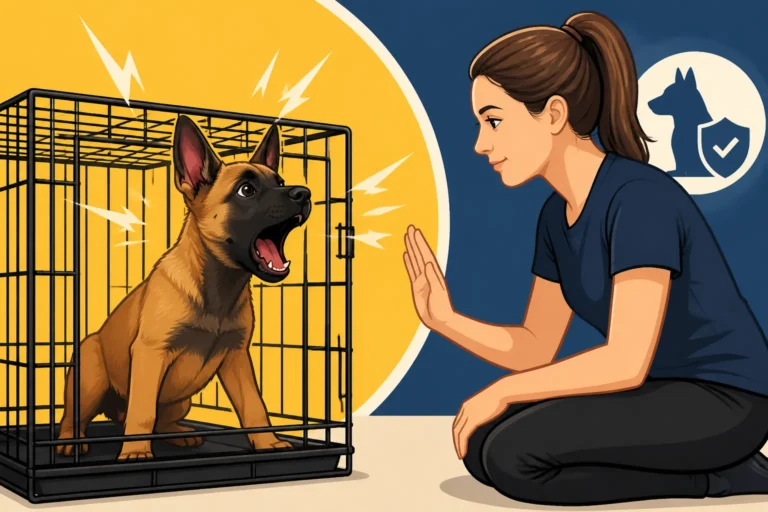
The first steps involve no direct physical contact. Start with scent swapping: allow them to smell each other's bedding or toys. This gets them accustomed to each other's presence without the visual stimulation. Next, move to visual introductions through a secure barrier, like a sturdy baby gate or a crate. Your Malinois should be on a leash, ideally with a second person holding it, and should be praised and rewarded for calm behavior. If the Malinois shows intense focus, lunging, or barking, calmly remove them from the situation and try again later, keeping sessions very short.
During these initial stages, the Malinois must be under complete control. This is where a strong Building a Malinois's Place Command will be invaluable. You want the Malinois to see the cat, but to remain calm and look to you for direction, not to launch into pursuit. High-value treats should be used generously to reward any quiet observation or disengagement from the cat. Remember that any tension or fear from your cat can escalate the situation, so make sure the cat also has an easy exit. It can be helpful to have your Malinois wear a basket muzzle during these early interactions, especially if you have any doubts about their impulse control. Muzzle Conditioning Before a Malinois Ever Needs One is a critical step for any Malinois owner, but especially for those with cats.
Consistent Reinforcement and Management Tools
Training and management are your best friends here. You need to teach your Malinois that being calm around the cat leads to good things, while chasing or fixating means the fun stops. This means consistent "leave it" commands, rewarding calm attention on you, and teaching the Malinois to Build an Off Switch Into a Belgian Malinois. For many Malinois, an e-collar, used correctly and humanely, can be a valuable tool for consistent communication, especially when dealing with high-drive responses to movement. If you choose this route, ensure you understand E-Collar Timing on a Belgian Malinois and work with a professional.
Always supervise interactions, and never leave your Malinois and cat alone together unsupervised until you are absolutely, 100% confident in their safety, which for a Malinois and a cat, might be never. A drag leash on the Malinois can provide an extra layer of control for quick interventions. You might also find products from brands like BAXTER & Bella useful for structured training, as their online resources and programs often focus on building a strong foundation of obedience and impulse control, which is vital in these scenarios. Investing in durable, high-quality toys, possibly from Amazon, that can help Channeling a Belgian Malinois's Prey Drive Into a Tug can also be beneficial, providing appropriate outlets for their drive.
Here's a quick look at factors that might influence success:
| Factor | High Likelihood of Success | Low Likelihood of Success |
|---|---|---|
| Malinois Age | Puppy (early, controlled exposure) or older, low-drive adult | Adolescent (peak prey drive) or untrained adult |
| Malinois Temperament | Calm, biddable, high impulse control, good obedience | High prey drive, easily over-aroused, inconsistent obedience |
| Cat Temperament | Dog-savvy, confident, stands ground, ignores dog | Shy, fearful, prone to bolting, hides constantly |
| Previous Experience | Malinois raised with cats; cat raised with dogs | No prior exposure for either animal |
| Home Environment | Ample vertical space, secure cat-only zones, owner dedicated to strict management | Limited escape routes, no cat-only zones, lax supervision |
| Owner Commitment | Willingness to invest in training, constant supervision, strict management | Believes "they'll figure it out," inconsistent training |
Long-Term Management and Safety: A Continuous Commitment
Even after successful initial introductions, living with a Malinois and a cat often requires ongoing vigilance and dedicated management. This isn't a "set it and forget it" situation. Your goal is to maintain a harmonious, safe environment for both animals, acknowledging the inherent differences in their nature.
Creating Separate Spaces and Boundaries
One of the most effective long-term strategies is to ensure both animals have their own, clearly defined safe spaces. For the cat, this means high perches, cat trees, and rooms that the Malinois cannot access. Baby gates are fantastic for this, allowing the cat to jump over or squeeze through while keeping the dog contained. A cat flap leading to a cat-only room or even an outdoor "catio" can provide an invaluable sanctuary. These dedicated spaces reduce stress for the cat and prevent situations where the Malinois might get overly excited.
For the Malinois, this means a comfortable, secure crate or a designated "place" where they can settle and be out of the cat's personal space. The Structure a Belgian Malinois Needs Every Day extends to their living environment. It teaches them boundaries and provides a sense of predictability, which is crucial for a breed that thrives on routine. These separate spaces aren't just for emergencies; they should be part of the daily routine, ensuring both animals can relax without feeling threatened or constantly on guard.
Ongoing Supervision and When to Reassess
As mentioned, constant supervision is almost always necessary when a Malinois and a cat share a home. This means never leaving them alone together, even for "just a minute." Accidents can happen in the blink of an eye. If you need to leave the house, the Malinois should be securely crated or confined in a separate, dog-proof area, and the cat should have free access to its safe zones. This might feel restrictive, but it's the responsible approach to prevent potential tragedy.
Regularly reassess the dynamic between your Malinois and your cat. Are there signs of stress in either animal? Is the Malinois becoming overly fixated, or is the cat constantly hiding? Pay attention to subtle cues. If tensions rise, or if a minor incident occurs, it's a sign that you need to re-evaluate your management strategies, potentially increase training, or even consider if this living arrangement is truly fair to both animals. Sometimes, despite all efforts, the personalities or drives simply aren't compatible, and making the difficult decision to find a more suitable home for one of them is the kindest option. While a Whether a Belgian Malinois Suits a Family Home question typically focuses on children, the considerations for cats are similar in terms of managing a high-drive dog in a sensitive environment.
Ultimately, living with a Belgian Malinois and a cat is a significant commitment. It's not impossible for some pairings, but it requires extraordinary dedication, proactive management, and an unwavering focus on safety and well-being for both your high-drive dog and your feline companion.
Disclaimer
This article is for general informational purposes only and does not constitute professional advice. Laws, prices and regulations vary by location and change over time. Consult a qualified professional for guidance on your specific situation.