Puzzle Work for a Belgian Malinois Indoors
If you've ever lived with a Belgian Malinois, you know their minds are just as active, if not more so, than their bodies. A tired Malinois is a good Malinois, but that 'tired' can't just come from running laps in the yard. Many owners face the frustration of a dog who's had plenty of physical exercise but still paces, whines, or finds their own (often destructive) ways to engage their powerful brains indoors. This guide is all about harnessing that incredible intelligence and drive through effective indoor puzzle work, offering practical strategies to keep your Malinois mentally stimulated, happy, and out of trouble, even when you can't be out training.
The Urgent Need for Mental Engagement in a Malinois
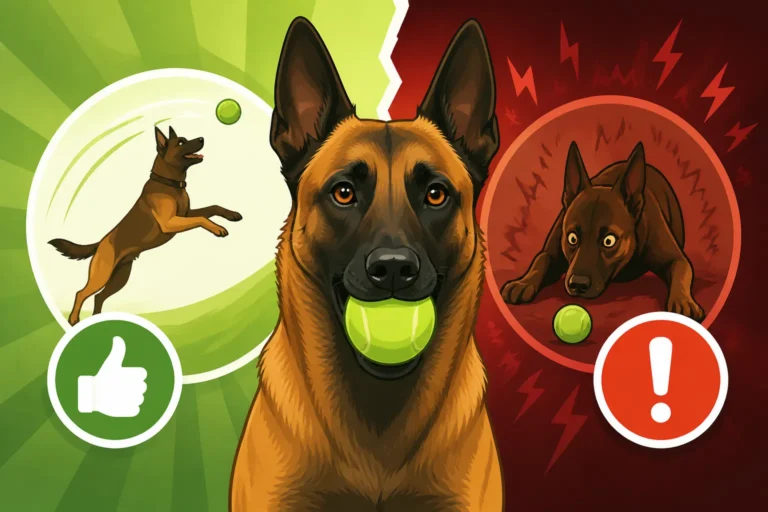
It's a common misconception that a Belgian Malinois, with their boundless energy, just needs an endless amount of physical exercise to be content. While they certainly need to run, jump, and work their muscles, focusing solely on physical output often leads to a dog who is physically exhausted but still mentally restless. This breed was developed for demanding jobs, requiring complex problem-solving, decision-making, and intense focus. When these innate needs aren't met, their incredible drive can easily manifest in undesirable ways indoors.
Why Physical Exercise Alone Falls Short for This Breed
Imagine hitting the gym for hours, lifting weights, running on the treadmill, but never really engaging your brain beyond counting reps. You'd be physically drained, sure, but your mind might still feel buzzing, perhaps even bored. That's often what happens with a Belgian Malinois. A long walk, a game of fetch in the park, or even a solid sprint can burn calories and tire their muscles, but it doesn't necessarily tap into the deep cognitive function they crave. They need to think, to strategize, to figure things out. Their heritage as herding and working dogs means their brains are wired for more than just movement; they're wired for purpose and intricate tasks. Simply letting them zoom around a fenced yard, while good for their physical health, won't fulfill the intellectual hunger of a Malinois. Two Hours and a Job a Belgian Malinois Demands Daily touches on this critical balance.
Without mental challenges, many Malinois become under-stimulated, leading to behavioral issues that owners often misinterpret as simply being "too high energy." It's not just about the quantity of exercise, but the quality of the engagement. A Malinois thrives on having a "job," even if that job is figuring out how to get a treat from a puzzle toy. This mental exertion consumes energy in a different, often more profound, way than physical exercise alone. Think of it like a challenging crossword puzzle versus a mindless jog – both use energy, but one engages the mind far more.
The Cost of Boredom: When Mental Energy Goes Sideways
An unemployed Malinois brain is often a destructive Malinois brain. When their mental energy isn't channeled productively, they will absolutely find their own outlets, and those outlets are rarely convenient or cost-effective for their human companions. This might look like incessant barking at every leaf that blows by the window, chewing through furniture legs, or meticulously dismantling their beds and toys. They're not being "bad" dogs; they're simply responding to an unmet need for engagement. What Happens to an Unemployed Belgian Malinois illustrates the unfortunate reality of this situation.
The frustration for owners is real. You might come home to find a cushion exploded across the living room, or discover that your prized hiking boots have become a new chew toy. This isn't spite; it's a Malinois attempting to create mental stimulation by interacting with their environment in the most engaging way they know how, which often involves destruction. Redirecting this energy proactively with structured mental work, like puzzles, can save your home, your sanity, and strengthen the bond with your dog by providing an acceptable and stimulating outlet for their incredible intelligence. The goal is to avoid that feeling of dread when you leave your Malinois alone, wondering what creative chaos they'll have invented by the time you return.
Types of Indoor Puzzle Challenges for Your Malinois
The world of dog puzzles has expanded significantly, offering a wide array of options to challenge even the smartest Malinois. It's not a one-size-fits-all approach, and what one dog loves, another might find too easy or too frustrating. The key is to experiment and find what truly engages your dog.
Food-Dispensing Puzzles: More Than Just a Treat
Food-dispensing puzzles are often the first introduction to mental enrichment for many dogs, and they're fantastic for Malinois because they tap into their strong food drive and natural problem-solving abilities. These aren't just toys; they're tools that make your dog work for their kibble or treats, slowing down mealtime and engaging their brain simultaneously.
- Classic Kongs and Stuffables: The venerable Kong is a staple for a reason. Its irregular bounce offers physical stimulation, but its real power lies in its ability to be stuffed with anything from kibble and peanut butter to wet food and then frozen. A frozen, stuffed Kong can keep a Malinois busy for a surprisingly long time, requiring them to lick, chew, and manipulate the toy to get their reward. Brands like Kong also offer specific puppy and extreme rubber options, so you can tailor the toughness to your Malinois's chewing power. This is an excellent way to teach a Malinois to settle and enjoy a quiet activity indoors, fostering that much-needed "off switch."
- Wobblers and Balls: These are durable toys that dispense kibble or small treats as your dog nudges, rolls, or bats them around. The challenge here is the continuous interaction and movement required. They're great for dogs who might get bored with a stationary chew, encouraging active play while they work for their food. Many brands offer different opening sizes or internal baffles to adjust the difficulty. You can often find a good selection of these on Amazon, making it easy to browse and compare options.
- Slow Feeder Bowls: While not strictly a puzzle, slow feeder bowls still add a mental component to mealtime. Their intricate designs force your Malinois to eat more slowly, navigating mazes and barriers to get to their food. This prevents gulping, aids digestion, and extends the mental engagement of eating. Some designs are quite challenging, requiring your dog to think about how to move their nose and tongue to access every piece of kibble.
| Puzzle Type | Description | Malinois Benefit | Ideal For |
|---|---|---|---|
| Stuffable Toys | Rubber toys (e.g., Kong) filled with food, often frozen. | Prolonged engagement, licking calms, teaches settle. | High chewers, dogs needing to learn calm, crate time. |
| Wobblers/Dispensers | Toys that release food when nudged or rolled. | Active problem-solving, converts mealtime to work. | Energetic dogs, those needing to slow down eating, independent play. |
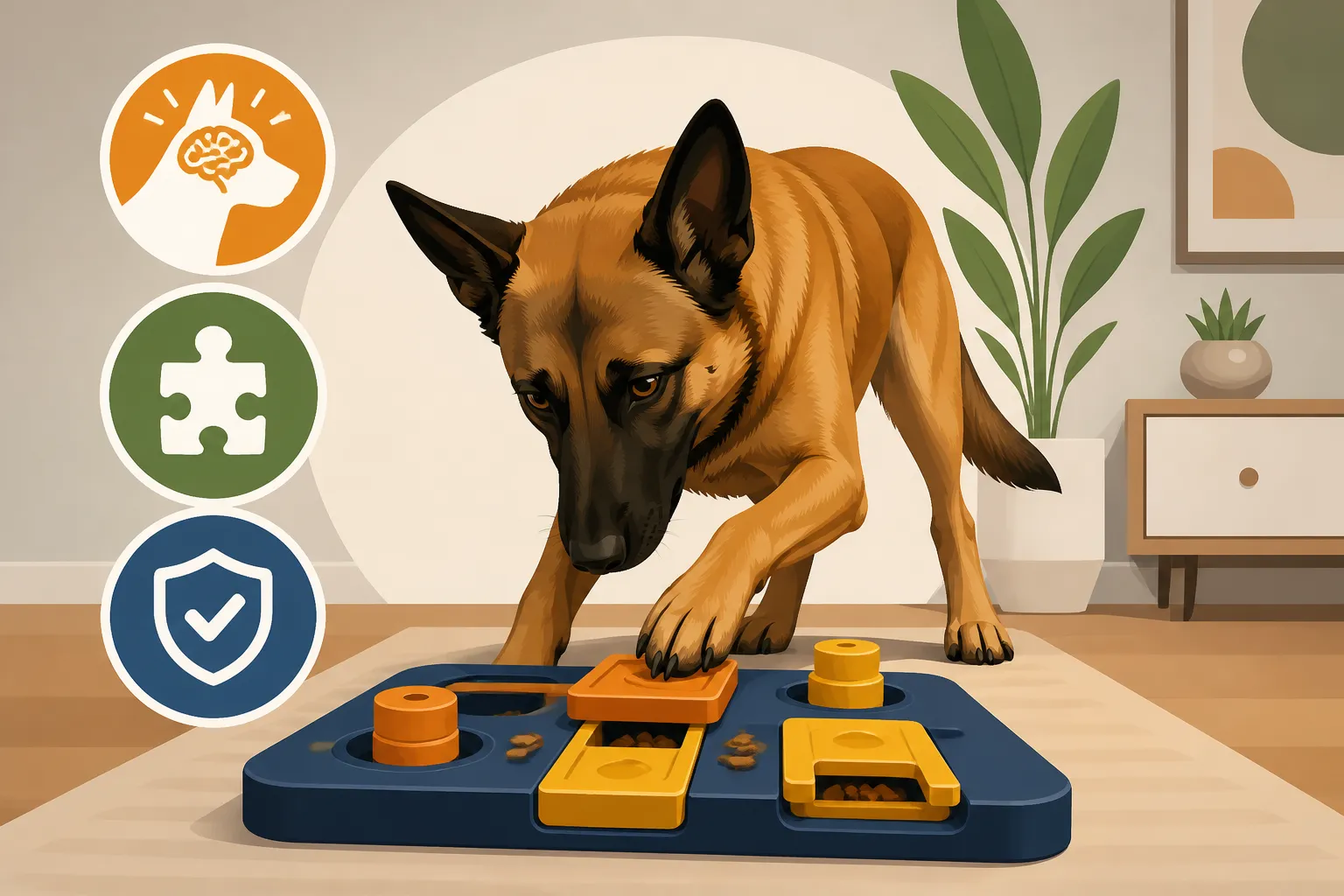
| Interactive Boards | Sliding parts, liftable lids, require paw/nose manipulation. | Complex thinking, fine motor skills, variety of challenges. | Intelligent dogs, those who enjoy figuring things out, supervised play. |
| Snuffle Mats | Fabric mats with nooks and crannies to hide kibble/treats. | Scent work, natural foraging, low impact mental task. | All dogs, especially seniors, puppies, or those recovering from injury. |
Interactive Brain Games: Engaging Their Problem-Solving Skills
Moving beyond simple food dispensing, interactive puzzles require more sophisticated problem-solving. These often involve sliding panels, lifting compartments, or manipulating levers to reveal hidden treats. They directly challenge your Malinois's cognitive abilities and can be incredibly rewarding.
- Sliding & Lifting Puzzles: These puzzles feature various compartments or covers that your dog must slide or lift with their nose or paw to access a treat. The difficulty can range from simple single-step puzzles to multi-step sequences. Brands like Nina Ottosson (available on Amazon) offer a fantastic range of these, from beginner to expert levels, ensuring you can scale the challenge as your Malinois gets smarter. The satisfaction your Malinois gets from successfully solving one of these puzzles is palpable and helps build their confidence.
- Hide-and-Seek Games: While not a physical puzzle toy, playing hide-and-seek with treats or toys is a fantastic interactive brain game. Start simple by hiding a treat under a cup, then progress to hiding it behind furniture, under blankets, or in another room. Your Malinois has to use their nose and brain to locate the reward. This not only engages their mind but also reinforces recall and builds incredible focus on you. The BAXTER & Bella online puppy school often emphasizes games like this to build engagement and problem-solving skills from a young age.
- Advanced Wooden Puzzles: For the true Malinois masterminds, there are more intricate wooden puzzles that combine multiple mechanisms – sliding, lifting, rotating. These require significant dexterity and sustained focus. They are typically best used under supervision, especially initially, to guide your dog and prevent them from getting frustrated or trying to chew through the puzzle instead of solving it. Starting with an empty puzzle to teach the mechanism, then adding a high-value treat, can ease the learning curve.
DIY Solutions: Creative Ways to Stimulate on a Budget
You don't always need to buy expensive toys to provide mental stimulation. Many household items can be repurposed into engaging puzzles, offering a budget-friendly way to challenge your Malinois's brain.
- Towel or Blanket Roll-Ups: This is a classic for a reason. Spread a towel or blanket flat, sprinkle some kibble or small treats across it, and then roll or fold it tightly. Your Malinois then has to unroll and unfold the fabric to get their reward. It's surprisingly engaging and uses their nose and paws. You can increase the difficulty by tying knots in the towel or using multiple layers.
- Muffin Tin Puzzles: Take a muffin tin, place a treat in each cup, and then cover each treat with a tennis ball or other small, safe toy. Your Malinois has to lift or remove each item to get the treat. This is a great way to encourage gentle manipulation with their nose and mouth. For an added challenge, use a smaller muffin tin and bigger balls, making it harder to extract them.
- Cardboard Box Shredding: This might sound counterintuitive if you're trying to prevent destruction, but controlled shredding can be incredibly satisfying for a Malinois. Take a cardboard box (remove all tape and labels), scatter some treats inside, and then loosely fill it with crumpled paper or other small, safe obstacles. Your dog gets to rip, tear, and "hunt" for the treats. Supervise closely to ensure they're not ingesting large pieces of cardboard. This taps into their natural instincts and offers a great sensory experience. Remember to keep it clean and safe!
Implementing Puzzle Work into Your Malinois's Daily Life
Integrating puzzle work shouldn't be a chore; it should be a fun and rewarding part of your Malinois's routine. Consistency and variety are key to keeping them engaged and ensuring they continue to benefit from the mental stimulation.
Introducing Puzzles: Starting Simple and Building Success
When introducing any new puzzle, the goal is always to set your Malinois up for success. Start incredibly easy, even if you think they're brilliant. A puzzle that's too hard initially can lead to frustration and your dog losing interest or even trying to destroy the toy out of exasperation.
- Make it Easy to Start: For a food-dispensing puzzle, make sure treats fall out almost immediately with minimal effort. For an interactive puzzle, leave some compartments partially open or visibly show your dog where the treats are. Let them get the reward easily a few times so they understand the concept: "If I do X, I get a treat!" This builds a positive association and encourages them to try again.
- Supervise Early Sessions: Always supervise your Malinois, especially with new puzzles. This allows you to offer guidance (like nudging a sliding piece to show them the mechanism) and prevent them from chewing parts of the puzzle instead of solving it. It also lets you intervene if they become overly frustrated. Once they understand the puzzle, you can gradually move to unsupervised play with durable, safe toys.
- High-Value Rewards: Initially, use high-value, tempting treats to ensure their motivation is high. As they get the hang of it, you can transition to using a portion of their regular kibble to turn mealtime into a mental workout. This is a fantastic way to stretch out feeding time and provide a daily dose of enrichment. The Job a Pet Belgian Malinois Can Be Given often refers to these types of constructive outlets.
Advanced Strategies: Keeping the Mental Game Fresh
A Malinois will quickly master any puzzle you throw at them, so it's crucial to keep increasing the challenge and offering variety. Stagnation leads to boredom, and boredom leads to chewed sofas.
- Increase Difficulty Gradually: Once your Malinois consistently solves a puzzle quickly, it's time to up the ante. For stuffable toys, freeze them solid or use stickier fillings. For interactive puzzles, close all compartments, require more steps, or even combine puzzles. The goal is to make them think a little harder each time, pushing their cognitive limits without pushing them to frustration.
- Rotate Puzzles: Don't let your Malinois get bored with the same few puzzles. Have a rotation of 5-10 different puzzles and bring out 2-3 new ones each week. Putting a puzzle away for a few weeks and then reintroducing it can make it feel "new" again, even if they've solved it before. This keeps them guessing and excited for their next mental challenge.
- Incorporate Training Cues: You can integrate basic obedience cues into puzzle work. For example, have your Malinois "sit" or "down" before presenting the puzzle, or "wait" until you give a release cue. This reinforces impulse control and good manners while they're eager to get their reward. It's another layer of mental work that a Malinois truly thrives on. Building an Off Switch Into a Belgian Malinois is all about these types of skills.
Safety First: Supervising Puzzle Play
While puzzle toys are designed to be safe, no toy is entirely indestructible, especially when faced with the power jaws of a determined Malinois. Always prioritize safety to prevent choking hazards or ingestion of non-food items.
- Choose Durable Materials: Opt for puzzles made from tough, non-toxic materials. Hard plastics, sturdy wood, and extreme-strength rubber are generally good choices. Avoid puzzles with small, easily detachable parts that could be swallowed. Regularly inspect all puzzles for damage, cracks, or loose pieces, and discard anything that's no longer safe.
- Appropriate Difficulty for Independence: While it's great to challenge your Malinois, some puzzles are better suited for supervised play. Intricate wooden puzzles or those with small parts should ideally be used when you can actively monitor your dog. Simpler, more robust food-dispensing toys like a sturdy Kong or a hard rubber wobbler are usually safer for periods of unsupervised enrichment, such as when you need to run errands.
- Monitor for Frustration or Over-Chewing: Watch your Malinois's body language. If they are getting excessively frustrated, panting heavily, or resorting to trying to chew through the puzzle rather than solving it, it might be too difficult, or they might need a break. Step in, simplify the puzzle, or put it away for a while and try again later. The goal is positive mental stimulation, not stress. If you notice your Malinois becoming destructive with toys, it’s worth reviewing What a Malinois Destroys in One Unsupervised Hour.
Beyond Puzzles: Complementary Indoor Mental Activities
While puzzle toys are fantastic, they are just one piece of the mental enrichment pie for a Belgian Malinois. Integrating other forms of indoor mental activity will provide a well-rounded approach to keeping their sharp minds engaged.
Scent Work: Tapping Into Their Primal Instincts
Scent work is a natural fit for Malinois, tapping into their incredible noses and innate drive to hunt and find. It's often mentally exhausting for dogs and can be done almost entirely indoors, making it perfect for bad weather days or when you need a calmer activity.
- Introduction to Nose Work: Start with simple "find it" games using high-value treats. Hide a treat in plain sight, say "find it," and let your Malinois sniff it out. Gradually increase the difficulty by hiding treats under a towel, behind a chair, or in a different room. You can also hide treats in a dedicated snuffle mat (easily found on Amazon), which makes them use their nose to forage. This builds their confidence and teaches them the game.
- Container Searches: Once they understand the concept, you can introduce container searches. Place a high-value treat in one of several identical boxes or containers (e.g., cardboard boxes, plastic tubs). Line them up, let your dog sniff, and reward when they indicate the correct container. Shuffle the containers around to increase the challenge. This is a structured way to harness their natural sniffing ability. Starting Scent Detection With a Belgian Malinois provides excellent insights into developing this skill.
- Advanced Scent Games: As your Malinois progresses, you can introduce specific target odors (like birch or anise, often available in scent work kits) and teach them to search for these rather than just food. You can also hide treats in more complex environments or multiple rooms, turning your entire house into a giant scent puzzle. The mental focus required for sustained scent work is immense and incredibly satisfying for a Malinois.
Trick Training: Reinforcing Engagement and Control
Trick training isn't just for entertainment; it's a powerful tool for mental stimulation, building communication, and strengthening your bond with your Malinois. It requires focus, memory, and problem-solving, all while burning mental energy.
- Building a Repertoire of Tricks: Start with simple tricks like "shake a paw," "high five," "spin," or "bow." Use positive reinforcement (treats and praise) to shape the behaviors. The process of learning new tricks, even simple ones, engages their brain and builds their confidence in understanding what you're asking. Many online platforms, like BAXTER & Bella, offer structured programs for teaching a wide array of tricks.
- Combining Tricks into Chains: Once your Malinois knows several individual tricks, start combining them into a sequence, or "chain." For example, "sit, stay, shake, bow." This requires even more memory and focus, as they have to remember the order of cues. This is a higher level of cognitive work and immensely rewarding for a smart Malinois.
- Practical Tricks for Daily Life: Beyond fun party tricks, consider teaching practical skills disguised as tricks. "Go to your mat" (place command), "put your toys away" (into a basket), or "find your leash" are all great examples. These tricks serve a functional purpose in your home while still providing valuable mental engagement. Teaching a Belgian Malinois to Lie Down and Do Nothing is a perfect example of a practical "trick" that builds essential calm behavior. The more ways you can engage their brilliant minds indoors, the less likely they are to invent their own, less desirable, forms of entertainment.
Disclaimer
This article is for general informational purposes only and does not constitute professional advice. Laws, prices and regulations vary by location and change over time. Consult a qualified professional for guidance on your specific situation.