Starting Scent Detection With a Belgian Malinois
One of the biggest frustrations for Belgian Malinois owners is finding a suitable outlet for their dog's incredible energy, intelligence, and relentless drive. Long walks just don't cut it, and an under-stimulated Malinois can quickly become a destructive force of nature in your home. This guide dives deep into the exciting world of scent detection, offering a fulfilling and mentally exhausting job that many Malinois were born to do, helping you channel that intense focus into a rewarding activity for both of you.
Why Scent Detection is a Game-Changer for a Belgian Malinois
Let's be honest, living with a Belgian Malinois is a commitment to managing a canine rocket ship with a built-in supercomputer. Their physical needs are immense, but it's the mental demands that often catch new owners off guard. A dog that can outthink its handler in a blink needs a job that truly engages its brain. Scent detection, also known as nose work, offers just that – a puzzle to solve using their most primal and powerful sense. It’s not just about exercise; it's about giving their minds a real workout, which is often far more tiring for a Malinois than any physical sprint.
Tapping into Natural Drives
Belgian Malinois possess an incredible innate prey drive and an intense focus that, when misdirected, can lead to problematic behaviors like chasing squirrels, lunging at cars, or excessive barking. Scent detection provides a structured, acceptable outlet for these powerful instincts. Instead of chasing something visible, they're "hunting" for a hidden odor, using their nose as their primary tool. This transforms a potentially chaotic drive into a highly refined and controlled skill. Think of it as intellectual hunting, where their reward is finding the "prey"—the specific scent you've asked them to locate. This engagement helps build a stronger bond between you and your Malinois, as you become a team working towards a common goal.
It’s often said that a tired dog is a good dog, but for a Malinois, it's more accurate to say a mentally satisfied dog is a good dog. Engaging their formidable olfactory senses can expend more energy and create a deeper sense of fulfillment than hours of physical exercise alone. When your Malinois is deeply engrossed in a scent puzzle, you'll see a level of calm focus that is rarely achieved otherwise. This focused mental work translates to a more settled and manageable dog around the house, reducing instances of destructive chewing or incessant demand barking. It’s about fulfilling their breed-specific needs in a way that truly resonates with their genetic makeup.
Building Focus and Independence
One of the beautiful aspects of scent detection is how it encourages independent problem-solving in your Malinois. Unlike obedience or protection work where the dog is constantly looking to the handler for direction, in scent work, once the search command is given, the dog is primarily responsible for using its nose to find the source. Your role shifts from director to supportive observer, learning to read your dog's subtle cues as they work through the scent puzzle. This independence can be incredibly empowering for a Malinois, giving them a sense of purpose and accomplishment.
This focus on independent work also helps to build their overall confidence. A dog that successfully solves a difficult scent problem, relying on its own abilities, gains a tremendous boost in self-assurance. This can be particularly beneficial for Malinois who might be environmentally sensitive or prone to stress in new situations. The sheer joy and self-satisfaction they exhibit when they pinpoint a scent source is truly amazing to behold. Furthermore, the systematic nature of scent training, even from the earliest stages, provides a predictable framework that these intelligent dogs thrive within, solidifying their trust in your guidance.
Foundation Skills: Building the Scenting Dog
Before you even introduce a specific target odor, laying a solid foundation of general training skills is paramount. A well-behaved, engaged Malinois will be much more successful and enjoyable to train in scent detection. These foundational elements aren't just good manners; they are the building blocks that allow your dog to focus on the task at hand without being overwhelmed by distractions or lacking motivation.
Developing Strong Engagement and Motivation
A Belgian Malinois needs to be engaged with you. Without that partnership, their incredible drive will be directed elsewhere – often to things you don't want them doing. Building engagement means being the most interesting thing in their world, at least when you're working. This often starts with play: using a favorite tug or ball to build value in working with you. Building Engagement With a Belgian Malinois is a critical step that should never be skipped. When your Malinois sees you as the gateway to all things fun and rewarding, they will be much more eager to participate in training.
Motivation is also key. For most Malinois, food or toy drive is incredibly high, and these can be harnessed effectively for scent work. High-value, tiny treats that are easy to eat quickly, or a favorite small tug toy, can be powerful motivators. You want your dog to feel a surge of excitement when they know a training session is about to begin. If they're not eager, you might need to re-evaluate your rewards or make the training more fun. Remember, this isn't just about giving them a treat; it's about marking the exact moment they perform the desired behavior and making that reward immediately accessible and incredibly satisfying.
Shaping a Reliable Indication
In scent detection, your dog needs a way to tell you, "I found it!" This is called an "indication" or "alert." It's the trained behavior your dog performs when they locate the target odor. For a Malinois, a solid, consistent indication is vital for clear communication. Common indications include freezing and staring at the source, sitting, lying down, or a nose poke. The key is that it must be a passive indication – they shouldn't try to dig or chew at the source, especially if it's hidden in a wall or an object.
Start by shaping this behavior with food. Place a treat under a cup. When your dog investigates the cup, as soon as their nose touches it, mark that behavior with a verbal cue like "yes!" or a clicker, and reward them by lifting the cup and letting them have the treat. Repeat this many times. Slowly, you'll want them to hold their nose there for a second, then two, before getting the reward. Consistency is crucial here. If you're working with a highly driven Malinois, this shaping exercise should be kept short and upbeat to maintain their enthusiasm and prevent frustration. The goal is a clear, reliable signal that leaves no doubt they've found the hide.
Getting Started: Basic Scent Introduction
Once you have a good handle on engagement and a nascent indication, it's time to introduce the actual target odor. This phase is all about making a strong positive association with the specific scent and teaching your Malinois that finding it leads to great things. The clearer and more consistent you are at this stage, the smoother your progress will be.
Choosing Your First Target Odor
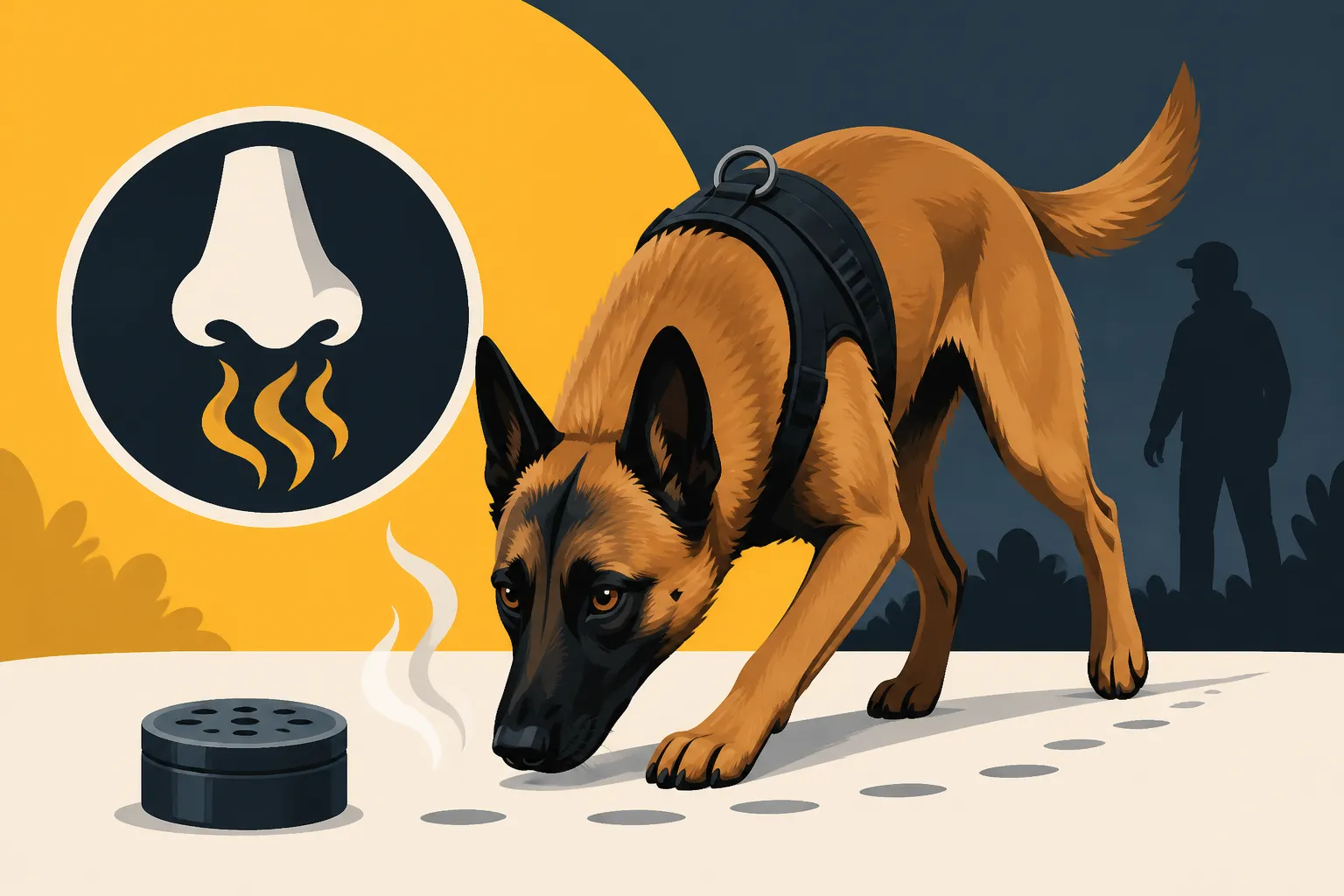
For beginners in detection work, essential oils are the standard. The most common first scent is Birch (specifically, Betula lenta). Other popular choices include Anise (Pimpinella anisum) and Clove (Syzygium aromaticum). These scents are distinct, easy for dogs to detect, and widely available. You'll typically use a small amount of the essential oil on a Q-tip or a cotton swab, which is then placed in a protective container (like an Altoids tin with holes, or a small glass jar) to become your "hide." You can find starter kits with these essential oils on platforms like Amazon, making it easy to gather your initial supplies.
It's vital to keep the target odor pure and uncontaminated. Store your essential oils separately from other strong scents. When handling the Q-tips with the target odor, use gloves or tweezers to avoid transferring your own scent. The goal is for your Malinois to learn that only the specific scent leads to a reward, not your human scent or the container itself. This meticulous approach from the very beginning helps prevent false alerts later on. Introduce only one scent at a time initially to avoid confusion for your dog.
The Paired Scent Game (Classical Conditioning)
This is where the magic truly begins. The paired scent game uses classical conditioning to create a powerful positive association with the target odor. Start by having your high-value reward ready (small, soft treats, or a favorite tug). In one hand, hold a Q-tip with your target odor (e.g., Birch) in a protective straw or holder. In the other hand, hold a treat. Present both simultaneously to your Malinois. As soon as their nose touches the Q-tip, say "yes!" and immediately give them the treat from your other hand. Remove both the Q-tip and the treat hand. Repeat this process many, many times in short, upbeat sessions.
The key here is repetition and speed. The dog needs to associate the smell with the reward. Over time, the scent itself becomes a predictor of good things. Eventually, you can start hiding the Q-tip in plain sight, always making sure that when your dog finds it, they get that immediate, high-value reward. This foundational work establishes the core principle: "Scent = Reward." For structured learning that you can follow at your own pace, many online programs, such as those offered by BAXTER & Bella, include modules on early scent introduction, often providing step-by-step video guidance to ensure you're getting it right from day one. This systematic approach is especially beneficial for a breed as discerning as the Malinois.
Progression and Proofing: Taking it to the Next Level
Once your Malinois reliably indicates on your chosen scent, it's time to gradually increase the complexity of the searches. This phase is about building their confidence, refining their skills, and teaching them to work through distractions and in various environments. It’s a slow and steady process, but crucial for developing a truly proficient detection dog.
Increasing Hide Difficulty
Initially, your hides should be obvious and easy to find. As your Malinois progresses, you can start making the hides more challenging. Begin by moving the Q-tip just out of immediate sight: under a table leg, behind a chair, or in a shallow box. The key is gradual progression. If your dog struggles, make it easier again. Think of it as a ladder – you only move up a rung when they are confidently standing on the current one. Don't rush this process; patience will pay off tenfold.
Next, you can introduce different heights: placing the hide low, then medium, then higher. Gradually increase the size of the search area. Start in one room, then move to two rooms, then an entire house. Vary the surfaces: from carpet to tile to concrete. Always ensure that the search ends successfully with a find and a reward. Avoid putting the hide in impossible places where your dog cannot possibly succeed, as this can lead to frustration and a loss of motivation. Remember, every successful find builds confidence, so set them up for success.
Working with Distractions and in New Environments
A true detection dog can work anywhere, under any circumstances. This means slowly introducing distractions into your training sessions. Start with mild distractions, like a familiar toy not associated with the reward, placed away from the hide. Observe how your Malinois handles it. If they are too distracted, you've moved too fast. Reward heavily when they ignore the distraction and stick to the scent. Gradually increase the intensity of distractions, such as other people moving around, other neutral smells, or even soft background noise. Building an Off Switch Into a Belgian Malinois is a vital concept that applies here – they need to be able to focus intensely on the task at hand despite their environment.
Moving to new environments is also essential. Start in a quiet, familiar room, then move to a different room, then an outdoor patio, then a park, then a friend's house. Each new environment presents unique challenges – different air currents, novel smells, and varying surfaces. Always begin in a new location with very easy hides to build confidence before increasing difficulty. Consistency in your praise and reward system, no matter the location, will help your Malinois generalize their scent detection skills. A sturdy, secure crate for transport, like those found on Amazon, can help your Malinois relax between searches in new places.
Common Challenges and Troubleshooting
Even with the most brilliant Belgian Malinois, scent detection training isn't always smooth sailing. There will be plateaus, moments of confusion, and perhaps even frustration for both you and your dog. Recognizing these common pitfalls and knowing how to address them is crucial for continued progress and a positive training experience.
False Alerts and Contamination
One of the most common issues is a "false alert," where your Malinois indicates a scent when no target odor is present. This can happen for several reasons. It might be that your dog is still indicating on residual odor from previous hides, or perhaps they are indicating on human scent from where you placed the hide, rather than the target odor itself. Contamination is a big one: if your hands smelled like your dog's favorite treat when you placed the Q-tip, they might be indicating on the treat smell, not the Birch. Always handle your Q-tips with gloves or tweezers, and ensure your containers are clean and free of other odors.
To troubleshoot false alerts, go back to basics. Make the hides incredibly obvious and easy. Ensure your indication criteria are clear. If your dog gives a false alert, simply move on; do not reward or acknowledge it. They need to learn that only the correct indication on the target odor gets the reward. Sometimes, it helps to introduce a "blank" search – an area where you've explicitly placed no odor – to see if they'll search, find nothing, and move on without indicating. This teaches them that it's okay not to find anything, and helps them discriminate between an actual scent and an absence of it.
Loss of Motivation or Drive
While Malinois are generally high-drive dogs, even they can lose motivation if the training isn't fun or if they experience too much failure. If your Malinois seems disengaged or unwilling to search, it's a clear sign you need to re-evaluate. Are your rewards high enough value? Are your sessions too long? Is the difficulty level too high? Remember, short, frequent, and highly successful training sessions are far more effective than long, frustrating ones.
To rekindle motivation, simplify everything. Go back to super easy hides, even placing the Q-tip right in front of them with the reward. Make sure every single search ends with a successful find and an enthusiastic reward. End the session on a high note, leaving them wanting more. Sometimes, changing up the reward (e.g., from food to a quick game of tug) can also help inject new enthusiasm. It’s also wise to ensure their overall well-being is addressed; The Mental Work That Finally Tires a Malinois Out confirms that balanced mental and physical stimulation outside of scent work is crucial for their overall drive and happiness.
| Challenge | Description | Troubleshooting Steps |
|---|---|---|
| False Alerts | Dog indicates presence of scent when none is there, or on wrong scent (e.g., handler scent). | 1. Go back to easy, obvious hides. 2. Ensure rigorous scent handling (gloves/tweezers). 3. Do not reward false alerts; ignore and reset. 4. Practice "blank" searches where no odor is present. |
| Contamination | Target odor mixed with other scents, leading to confusion for the dog. | 1. Store essential oils in airtight containers. 2. Use fresh Q-tips for each session. 3. Clean search area thoroughly between sessions if using strong "distractor" scents. |
| Lack of Drive | Dog appears disinterested, slow, or unwilling to search. | 1. Use higher value rewards (meat, cheese, favorite tug). 2. Shorten sessions significantly (1-3 minutes). 3. Make hides extremely easy to ensure success. 4. End sessions on a high note, leaving dog wanting more. |
| Frustration | Dog exhibits stress signals (lip licking, yawning, scratching, avoidance) or becomes overly frantic. | 1. Reduce difficulty of hides immediately. 2. Take a break; sometimes a day off helps. 3. Re-evaluate session length and intensity. 4. Ensure clear communication and predictable outcomes for the dog. |
Beyond the Basics: Different Avenues in Scent Work
Once your Belgian Malinois has a solid foundation in scent detection, a whole world of possibilities opens up. Scent work isn't just one thing; it encompasses a variety of disciplines, each with its own rules, challenges, and rewards. This allows you to tailor your training to your Malinois's specific strengths and your personal interests.
Competitive Nose Work and Detection Sports
For those who enjoy a bit of competition, organized nose work trials are a fantastic way to test your Malinois's skills. Organizations like the National Association of Canine Scent Work (NACSW) and American Kennel Club (AKC) offer titles and events ranging from Novice to Master levels. These trials often involve searching containers, vehicles, interiors, and exteriors for specific target odors (Birch, Anise, Clove, and Cypress/Vetiver are common). The challenge here isn't just finding the hide, but doing so efficiently and within a time limit, often under real-world pressure.
Competing in these sports offers a wonderful opportunity to hone your handling skills and deepen your bond with your Malinois. It also provides a structured path for progression, giving you clear goals to work towards. The community around nose work is incredibly supportive, and you'll learn a tremendous amount from watching other teams work. Your Malinois, with its inherent drive and focus, is a natural fit for these demanding competitions, and you'll likely find they thrive on the challenge. The Checkup Schedule a Sport Malinois Should Keep is a good reminder to ensure your dog is in peak physical condition for these activities.
Real-World Application and Advanced Concepts
Beyond competitive sports, the principles of scent detection can be applied to real-world scenarios. Many Malinois go on to excel in actual working roles such as search and rescue (SAR), or even specialized detection tasks for police or military. While these roles require extensive, highly specialized training and a particular temperament, the core skills you teach in foundational scent work are directly applicable. Search and Rescue Work With a Belgian Malinois highlights the immense capabilities these dogs possess when trained for such critical tasks.
Advanced concepts in scent work involve understanding how scent travels in different environments, known as "air currents," and training your dog to ignore environmental distractions even more effectively. This might include working in extremely windy conditions, heavy rain, or areas with a high concentration of confounding odors. You'll also learn to train for "source fidelity," ensuring your dog indicates precisely at the source of the odor, not just in the general vicinity. These higher levels of training push both handler and dog to their limits, fostering incredible teamwork and showcasing the true potential of the Belgian Malinois as an elite detection animal.
Disclaimer
This article is for general informational purposes only and does not constitute professional advice. Laws, prices and regulations vary by location and change over time. Consult a qualified professional for guidance on your specific situation.