Torn Cruciates in a Jumping Belgian Malinois
It’s a heart-stopping moment for any Belgian Malinois owner: one minute your dog is flying through the air, performing amazing feats of agility or bite work, and the next, they let out a yelp and come up limping, barely putting weight on a back leg. The fear that rushes through you is real, and often, that sudden lameness points to a torn cruciate ligament, a common and painful injury in our highly athletic dogs. This guide will delve deep into what a torn cruciate means for your jumping Malinois, how to recognize the signs, and what steps you can take for diagnosis, treatment, and ultimately, recovery.
Understanding the Canine Cruciate Ligament
Before we can talk about tears, let’s get a clear picture of what the cruciate ligament actually is and why it's so vital for your Malinois's powerful movements. It’s not just a fancy name for a knee injury; it’s a specific, crucial structure within the knee joint.
The Anatomy of a Canine Stifle Joint
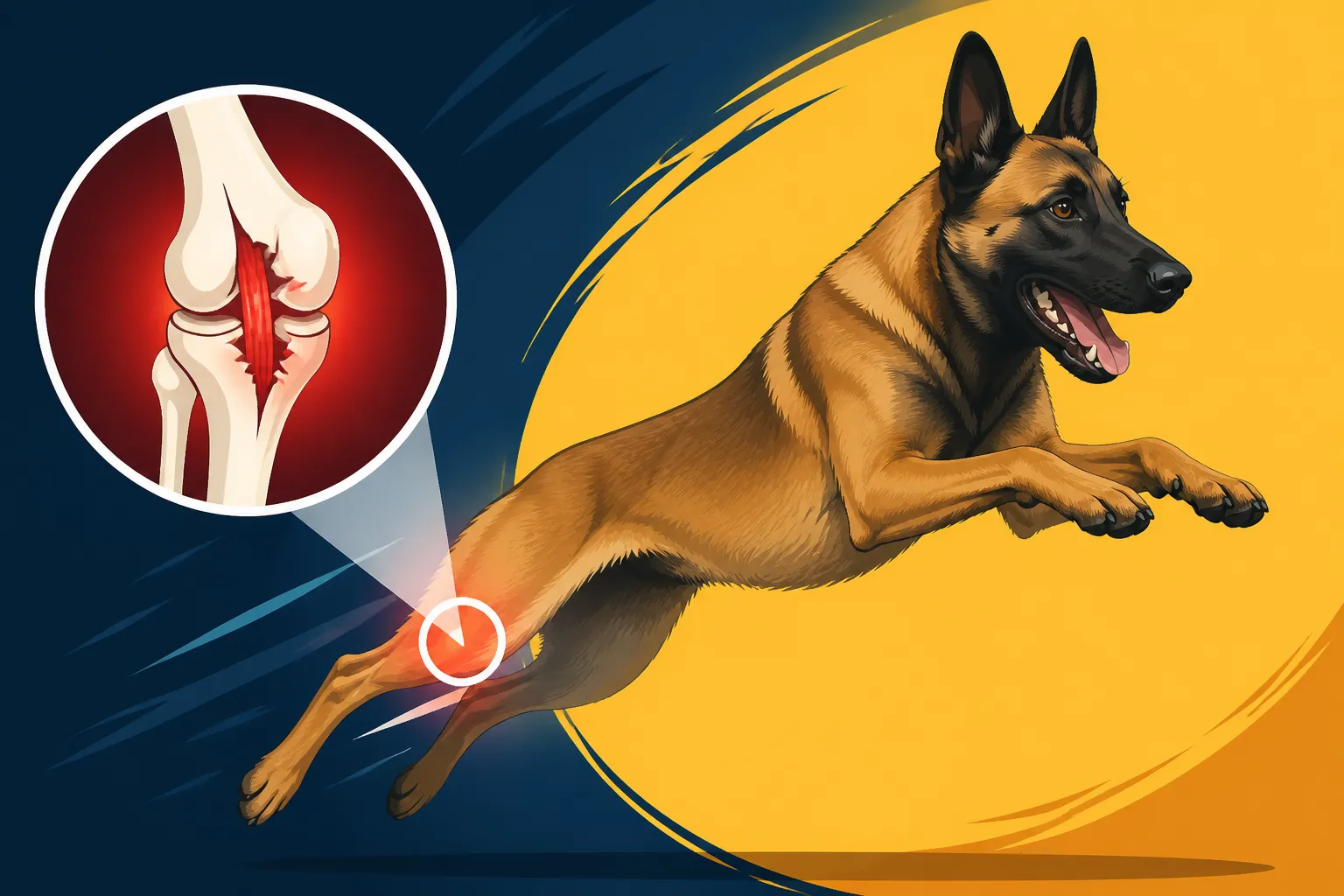
Imagine your Malinois’s knee, or "stifle" joint as it’s medically called. It’s a complex hinge connecting the femur (thigh bone) to the tibia (shin bone). For this hinge to move smoothly and stably, several strong ligaments are needed to hold everything in place. Among these, the cranial cruciate ligament (often shortened to CCL, and analogous to the anterior cruciate ligament or ACL in humans) is perhaps the most important. It runs diagonally through the inside of the knee, forming an "X" shape with the caudal cruciate ligament. Its primary job is to prevent the tibia from sliding forward excessively relative to the femur and to limit internal rotation of the joint.
Without a healthy CCL, the knee joint becomes unstable. Every time your Malinois tries to put weight on that leg, the tibia shifts forward abnormally, grinding against the femur. This isn't just uncomfortable; it causes pain, inflammation, and can rapidly lead to debilitating arthritis if left untreated. For a breed like the Belgian Malinois, whose life often revolves around intense physical activity, an unstable knee is a severe impediment.
How Ligaments Tear in Dogs
Unlike humans, who often tear their ACLs with a single, dramatic traumatic event (think a football player twisting their knee), dogs, especially highly active breeds like the Malinois, more commonly suffer from a degenerative process. This means the ligament weakens over time, fraying bit by bit due to chronic stress and micro-traumas. Each jump, each sudden stop, each tight turn puts a tiny amount of stress on the ligament. Eventually, a seemingly innocuous movement – a slightly awkward landing, a quick pivot, or even just stepping off a curb – can be the straw that breaks the camel's back, causing the already weakened ligament to fully rupture.
This isn't to say acute, sudden tears don't happen. A really bad fall, a collision during play, or landing hard from a very high jump can certainly cause an immediate rupture, even in a previously healthy ligament. However, the underlying degeneration is often a silent culprit, setting the stage for injury. This makes it particularly frustrating for owners, who often feel blindsided when their seemingly robust dog suddenly has a major injury from what appeared to be a minor incident.
Why Jumping Puts Malinois at Risk
Belgian Malinois are celebrated for their incredible athleticism, explosive power, and unwavering drive. These very qualities, while making them exceptional working and sport dogs, also unfortunately predispose them to certain types of injuries, with torn cruciates being high on that list.
The Mechanics of High-Impact Activities
Think about the forces at play when your Malinois performs a high jump, scales a wall, or lands after a long retrieve. There's immense pressure placed on their joints, particularly the knees. When a Malinois takes off, their powerful hindquarters generate incredible thrust. Upon landing, the impact absorption is handled by their legs, with the stifle joint taking a significant portion of the shock. If the landing is slightly off-kilter, if they pivot too quickly upon contact with the ground, or if their muscles are fatigued, the CCL can be strained beyond its capacity.
Frequent jumping, especially on unforgiving surfaces like concrete or asphalt, exacerbates this risk. Even soft surfaces can be problematic if they create uneven footing. Imagine your dog doing repeated jumps in agility or repeatedly engaging in protection work where they're hitting a sleeve with full force, then abruptly stopping or turning. These are all scenarios that can stress the cruciate ligament over time, contributing to the kind of cumulative damage that often precedes a full tear. The explosive nature of these activities, combined with the Malinois’s intense desire to please and push their physical limits, means they often don’t self-regulate, relying on their handler to ensure safe training practices and proper conditioning.
Breed Predisposition and Athleticism
While any dog can tear a cruciate, certain breeds, including the Belgian Malinois, seem to have a higher incidence. Part of this is undoubtedly due to their unparalleled drive and the demanding activities they excel at. A Malinois isn’t content with a leisurely stroll; they crave intense, challenging work that utilizes their entire body. This constant engagement in high-velocity, high-impact movements inherently puts more wear and tear on their joints.
Furthermore, there might be subtle anatomical predispositions. Some research suggests that the angle of the tibial plateau (the top surface of the tibia where it meets the femur) can play a role. A steeper slope might place more constant stress on the CCL. While a Malinois isn't often cited as having the same structural issues as, say, a Rottweiler or Akita, their sheer athletic output and bone structure mean their ligaments are constantly under load. It’s a double-edged sword: their amazing physical capabilities come with a higher risk of injuries like Elbow Problems in a Jumping Belgian Malinois or the dreaded cruciate tear. Owners must be vigilant in managing their dog's physical workload and ensuring proper support to mitigate these risks.
Recognizing the Signs of a Torn CCL
Spotting a torn cruciate ligament early can be crucial for a smoother treatment process and better long-term outcome. The signs can vary from dramatic and sudden to subtle and progressive, depending on whether the tear is acute or chronic.
Sudden Lameness and Pain
The most obvious sign of an acute, complete CCL rupture is sudden, non-weight-bearing lameness in one of the hind legs. Your Malinois might yelp, hold the leg up, and refuse to put any weight on it at all. This often happens during or immediately after a strenuous activity, like a hard landing from a jump or a quick turn. You might also notice swelling around the knee joint, though this can be harder to spot under their fur.
If your Malinois is usually stoic, even a slight limp is a red flag. Pay close attention to their gait immediately after exercise. Do they favor one leg? Are they hesitant to jump into the car or climb stairs? This kind of sudden onset lameness demands immediate veterinary attention. Ignoring it will only lead to further damage and increased pain for your dog. For many Malinois, their drive can mask pain, so even a subtle indication is significant. When you see your dog suddenly favoring a limb after an intense session, consider it an emergency. This is where having a good pet insurance plan, such as one from Healthy Paws, can really alleviate the financial stress of urgent diagnostics.
Subtle and Progressive Symptoms
Often, a CCL tear starts as a partial tear or a chronic degeneration, and the signs are far more insidious. You might notice your Malinois exhibiting:
- Intermittent limping: They might limp after exercise, but then seem fine after resting. The limp might come and go, making you wonder if you just imagined it.
- Difficulty rising or lying down: Stiffness in the affected leg can make these transitions painful and awkward.
- Reluctance to jump or play: They might hesitate before jumping onto the couch, into the car, or even for their favorite ball.
- Muscle atrophy: Over time, as they favor the injured leg, the muscles in that thigh will start to shrink. Compare the two hind legs; if one feels noticeably thinner, it's a concern.
- The "cruciate sit": This is a classic sign. Instead of sitting squarely with both hind legs tucked neatly underneath them, a dog with a torn CCL will sit with the affected leg extended out to the side, avoiding bending the painful knee.
- Swelling or thickening of the knee: You might feel a firm thickening on the inside of the knee joint, sometimes called a "medial buttress," which is the body's attempt to stabilize the unstable joint.
It’s crucial not to dismiss these subtle signs as simply "getting old" or "a minor sprain." For an active Malinois, any change in gait or reluctance to perform routine movements warrants investigation. Early intervention, even for partial tears, can sometimes help manage the condition before it progresses to a full rupture.
Diagnosing a Cruciate Injury
Once you suspect a cruciate injury, a trip to your veterinarian is the next critical step. Diagnosing a torn CCL involves a thorough physical examination, sometimes requiring sedation, and often includes imaging to confirm the diagnosis and rule out other issues.
The Physical Examination
Your veterinarian will perform a comprehensive orthopedic examination, focusing on the knee joint. The hallmark of a torn CCL is joint instability, and there are two key tests used to identify this:
- Cranial Drawer Test: This is the gold standard. The vet will stabilize the femur with one hand and attempt to slide the tibia forward, like a drawer opening. If the CCL is torn, the tibia will move forward abnormally, indicating instability.
- Tibial Compression Test: In this test, the vet holds the femur and presses on the ankle (hock) joint, causing the muscles of the calf to tighten and effectively pull the tibia forward. If the CCL is torn, the tibia will shift forward at the knee.
For a high-drive Malinois, especially one in pain, these tests can be challenging to perform accurately. Their immense muscle mass and their natural tendency to tense up or guard the painful area can sometimes mask the instability. In such cases, your vet might recommend light sedation to allow for a more thorough and accurate examination. This is often a necessary step to get a clear diagnosis, preventing misinterpretation of a tense or resistant dog. It's always a good idea to discuss What to Tell a Vet Before a Malinois Is Sedated to ensure they understand your dog's unique temperament.
Imaging and Further Assessment
While physical examination is usually diagnostic, imaging techniques are often used to confirm the tear, assess the extent of secondary changes (like arthritis), and rule out other potential problems.
- Radiographs (X-rays): X-rays won't directly show the ligament itself, as ligaments are soft tissue. However, they are invaluable for:
- Identifying secondary signs of a torn CCL, such as joint effusions (fluid buildup in the joint), inflammation, and early arthritic changes (bone spurs, joint space narrowing).
- Ruling out other orthopedic issues that can cause similar lameness, like fractures, bone tumors, or other ligament injuries.
- Assessing the tibial plateau angle, which can inform surgical planning.
- Advanced Imaging (MRI/CT): In rare cases, especially with partial tears or when the diagnosis remains unclear, an MRI (Magnetic Resonance Imaging) or CT (Computed Tomography) scan might be recommended. These provide much more detailed images of soft tissues, allowing for a precise visualization of the ligament and surrounding structures. However, these are significantly more expensive and often require referral to a specialist.
A clear diagnosis is the foundation for effective treatment. Once your vet has confirmed a torn CCL, they can discuss the various treatment options available, taking into account your Malinois’s age, activity level, and the severity of the injury.
Treatment Options for a Torn CCL
When your Malinois is diagnosed with a torn cruciate ligament, it can feel overwhelming. Fortunately, there are several effective treatment strategies, ranging from surgical interventions to conservative management, each with its own set of considerations.
Surgical Interventions
For active, medium-to-large breed dogs like the Belgian Malinois, surgical repair is almost always the recommended course of action for a complete CCL tear. Surgery provides the best chance for long-term stability, reducing pain and minimizing the progression of arthritis. There are several surgical techniques, but the most common ones you'll hear about are:
- Tibial Plateau Leveling Osteotomy (TPLO): This is one of the most popular and effective techniques. Instead of trying to repair the torn ligament, the TPLO procedure changes the biomechanics of the knee. The surgeon cuts and rotates the top part of the tibia (the tibial plateau) and then stabilizes it with a bone plate and screws. This essentially levels the tibial plateau, removing the forward thrust that makes the CCL necessary for stability. TPLO has excellent long-term success rates, allowing many Malinois to return to high-level activity.
- Tibial Tuberosity Advancement (TTA): Similar to TPLO, TTA also aims to neutralize the forces in the knee joint. The front part of the tibia (the tibial tuberosity) is cut and advanced forward, shifting the patellar ligament to a new position. This alters the forces acting on the knee, making the CCL functionally redundant. TTA is also a highly effective procedure, particularly for certain knee anatomies.
- Lateral Suture (Extracapsular Repair): This is an older, less invasive technique often used for smaller, less active dogs, or sometimes as a more budget-friendly option. It involves placing a strong suture material outside the joint capsule, mimicking the function of the torn CCL. This artificial ligament stabilizes the joint while scar tissue forms internally to provide more permanent stability. While less invasive, it generally has a higher risk of re-tear in large, active dogs like Malinois and may not provide the same long-term stability as TPLO or TTA for high-performance animals.
The choice of surgical procedure will depend on several factors, including your Malinois’s size, weight, age, activity level, the surgeon's experience, and your budget. It's crucial to have an in-depth discussion with your veterinary surgeon about the pros and cons of each option. While the upfront cost of cruciate surgery, often ranging from $3,000 to $6,000 per knee, can be daunting, having pet insurance like Healthy Paws can significantly reduce your out-of-pocket expenses.
Non-Surgical Management
While surgery is generally the gold standard for Malinois, non-surgical (conservative) management might be considered in very specific circumstances:
- Very small, sedentary dogs: If your Malinois is somehow a rare couch potato (unlikely!), or if they are very old with other significant health issues, non-surgical options might be discussed.
- Partial tears: In some cases of partial tears, particularly if the instability is minimal, a trial of conservative management might be attempted. This typically involves strict crate rest, anti-inflammatory medications, pain relief, and controlled rehabilitation exercises. However, it's vital to understand that a partial tear often progresses to a full tear over time, and the long-term success rates for non-surgical management in active, large breed dogs are generally much lower.
- Financial constraints: For some owners, the cost of surgery is simply prohibitive. In such cases, vets will work to create the best possible conservative plan, understanding the limitations. However, it's important to be realistic about the potential for progressive arthritis and a reduced quality of life for your Malinois without surgical stabilization.
Conservative management usually involves 8-12 weeks of strict rest, followed by a gradual increase in controlled exercise. This can be incredibly challenging for a high-drive Belgian Malinois, making compliance a significant hurdle. Regardless of the chosen path, careful attention to Rehabbing a Belgian Malinois After Knee Surgery is paramount for any chance of success.
Post-Surgery Recovery and Rehabilitation
Undergoing cruciate surgery is only the first step. The recovery and rehabilitation phase is equally, if not more, critical for your Belgian Malinois to regain full function and prevent future issues. This is a marathon, not a sprint, and requires immense dedication from you, the owner.
Immediate Post-Operative Care
The first 6-8 weeks post-surgery are the most crucial for healing and protecting the surgical site. During this time, your Malinois will need:
- Strict Rest and Confinement: This means crate rest or a small, enclosed area where they cannot run, jump, or play. Leash walks for bathroom breaks must be controlled and kept short, typically 5-10 minutes, 3-4 times a day. No stairs, no off-leash activity, and absolutely no roughhousing. This can be incredibly difficult for a Malinois, who will inevitably feel better long before they are fully healed. Mental stimulation through puzzle toys and short training sessions (e.g., teaching new tricks while lying down) will be vital to prevent cabin fever.
- Pain Management: Your vet will prescribe a combination of pain relievers and anti-inflammatory medications. Administer these exactly as directed to keep your dog comfortable and to reduce inflammation, which promotes healing.
- Incision Care: You'll need to monitor the incision site daily for any signs of redness, swelling, discharge, or opening. Prevent your Malinois from licking or chewing the incision using an Elizabethan collar (cone) or a surgical recovery suit.
- Cold and Warm Compresses: Your vet might recommend applying cold compresses to the joint for the first few days to reduce swelling, followed by warm compresses later to promote blood flow.
Consistency is key during this period. Even one uncontrolled jump or slip can compromise the surgical repair, leading to setbacks or even needing another surgery.
Structured Rehabilitation Exercises
Once the initial healing phase is complete (usually around 6-8 weeks, confirmed by X-rays), your vet or a certified canine rehabilitation therapist will guide you through a structured rehabilitation program. This progressive increase in activity is essential for strengthening muscles, improving joint range of motion, and restoring proprioception (the sense of where the body is in space).
Rehab often includes:
- Passive Range of Motion (PROM) Exercises: Gently flexing and extending the knee joint to maintain flexibility and prevent stiffness.
- Controlled Leash Walks: Gradually increasing the duration and intensity, focusing on proper gait.
- Therapeutic Exercises: Specific exercises designed to strengthen the quadriceps and hamstring muscles, improve balance, and build core strength. Examples include standing exercises, weight-shifting drills, and controlled climbs over low obstacles.
- Hydrotherapy (Underwater Treadmill or Swimming): This is often a fantastic option for Malinois. The buoyancy of water reduces weight-bearing stress on the joint while allowing for full range of motion and muscle strengthening. It's an excellent way to build strength and endurance without high impact.
- Balance and Proprioception Training: Using wobble boards, balance discs, or uneven surfaces to challenge your dog's balance and re-teach their body how to coordinate movement.
A typical rehabilitation program can last for several months, with weekly or bi-weekly sessions with a therapist and daily home exercises. The cost of Physical Therapy Prices for a Belgian Malinois can add up, but it's a worthwhile investment in your dog's future mobility. Organizations like Healthy Paws often cover rehabilitation therapy as part of their comprehensive pet insurance plans, which can be a huge relief.
Long-Term Prognosis and Return to Activity
With successful surgery and diligent rehabilitation, the prognosis for a Malinois to return to a good quality of life is generally excellent. Many dogs can resume most of their previous activities, including sport, albeit sometimes with modifications. However, it's important to understand a few things:
- Arthritis Management: Even with surgery, some degree of arthritis will develop in the joint. Long-term management might include Joint Supplements for a Working Belgian Malinois, anti-inflammatory medications, weight management, and continued moderate exercise.
- Gradual Return to Sport: A full return to high-impact sports will be a slow, carefully monitored process, potentially taking 6-12 months or even longer after surgery. Your rehab therapist will guide you on when it’s safe to reintroduce activities like jumping walls.
- Risk of Opposite Leg Injury: Dogs who tear one CCL have a significant chance (around 30-50%) of tearing the CCL in the other knee later in life, often within 1-2 years. This is thought to be due to underlying predispositions and the increased load placed on the healthy leg during recovery.
Patience, consistency, and a strong partnership with your veterinary team are the keys to successful recovery. Your Malinois has an incredible drive to work, and channeling that drive into their recovery will be essential.
Prevention Strategies for Joint Health
While you can't completely eliminate the risk of a cruciate tear in an active breed like the Belgian Malinois, you can certainly implement strategies to minimize the chances and support overall joint health. Proactive care is always better than reactive treatment.
Proper Conditioning and Warm-Up Routines
One of the biggest factors in injury prevention is ensuring your Malinois is properly conditioned for the work they do. Don't expect them to go from zero to sixty without preparation.
- Gradual Conditioning: Build up stamina, strength, and agility gradually. Don't start a young Malinois on intense, high-impact activities too early. The Age a Belgian Malinois Can Start Jumping Walls is a good indicator for when to introduce certain elements of training. Focus on foundational strength, body awareness, and coordination before demanding explosive movements.
- Warm-Up Before Work: Just like human athletes, Malinois need a warm-up. A 5-10 minute session of light trotting, stretching, and controlled movements helps increase blood flow to muscles and ligaments, making them more pliable and less prone to injury. Think about brisk walks or gentle play before a training session or trial.
- Cool-Down After Work: Equally important is a cool-down. A relaxed walk for 5-10 minutes after intense activity helps flush out metabolic waste products and brings the heart rate down gradually. Gentle stretching can also be beneficial, especially after hard work, to improve flexibility and prevent muscle soreness, reducing the risk of injuries like Muscle Cramping in a Belgian Malinois After a Trial.
Consistency in a structured exercise program, rather than sporadic bursts of intense activity, is vital for maintaining robust joint health.
Managing Weight and Nutrition
Maintaining an ideal body weight and providing appropriate nutrition are fundamental pillars of joint health for your Belgian Malinois.
- Lean Body Condition: Every extra pound puts additional stress on your dog's joints, especially the knees. Malinois are naturally lean, and it's crucial to keep them that way. You should be able to easily feel their ribs without seeing them protruding, and they should have a clear waistline when viewed from above. If your Malinois has gone soft, a regimen to achieve The Lean Condition a Belgian Malinois Should Carry is crucial. Regular monitoring of their weight, especially as they age or their activity level changes, is important.
- High-Quality Diet: Feed a balanced, high-quality diet appropriate for their age and activity level. For working Malinois, this often means a performance-formulated kibble or a carefully balanced raw diet that provides ample protein and healthy fats.
- Joint Supplements: While not a cure, certain joint supplements can support cartilage health and reduce inflammation. Ingredients like glucosamine, chondroitin, MSM, and Omega-3 fatty acids are commonly recommended. Discuss with your vet if Joint Supplements for a Working Belgian Malinois are appropriate for your dog, especially if they are heavily involved in sport or show early signs of joint wear.
Environmental Factors and Training Modifications
Consider the surfaces and environments where your Malinois trains and lives. These factors can significantly impact joint stress.
- Appropriate Surfaces: Avoid prolonged or intense work on hard, unforgiving surfaces like concrete or asphalt, which provide little shock absorption. Whenever possible, train on softer surfaces like grass, dirt, or specialized rubber matting.
- Safe Jumping Practices: When incorporating jumps, ensure they are appropriate for your dog's age and experience level. Avoid excessive heights or repetitive high-impact jumps, especially for young dogs whose growth plates haven't fully closed. Ensure landings are level and clear of obstacles.
- Slick Floors: Indoors, slick floors like hardwood or tile can be treacherous for dogs, leading to slips and falls that can stress joints. Use rugs or runners in high-traffic areas to provide better traction.
- Regular Veterinary Check-ups: Annual or bi-annual check-ups with your veterinarian are crucial for monitoring overall health, discussing any concerns about lameness or stiffness, and catching potential issues early. These routine visits can sometimes flag early signs of joint degeneration before a major injury occurs.
By being mindful of these preventative measures, you can give your athletic Belgian Malinois the best possible chance to enjoy a long, healthy, and active life, minimizing the risk of a debilitating cruciate tear.
Surgical Options for Torn Cruciates
| Surgical Technique | Primary Mechanism | Typical Recovery Time (Full Return to Activity) | Cost Range (USD) approx | Pros | Cons |
|---|---|---|---|---|---|
| TPLO (Tibial Plateau Leveling Osteotomy) | Changes knee biomechanics, neutralizing tibial thrust. | 4-6 months, up to 1 year for full sport | $3,500 – $6,000+ | Excellent long-term stability, high success rate in large/active dogs. Allows early weight-bearing. | More invasive (bone cut), higher cost, requires specialized surgeon. Potential for implant complications. |
| TTA (Tibial Tuberosity Advancement) | Advances tibial tuberosity, altering quadriceps angle. | 4-6 months, up to 1 year for full sport | $3,000 – $5,500+ | Also excellent stability, potentially less invasive than TPLO for some anatomies. Good for specific cases. | Also invasive (bone cut), high cost, specialized surgeon needed. Not suitable for all knee types. |
| Lateral Suture (Extracapsular Repair) | Places artificial ligament outside the joint. | 2-4 months, up to 6 months for full activity | $1,500 – $3,000+ | Less invasive, lower cost. Can be performed by many general practitioners. | Higher re-tear rate in large/active dogs. May not achieve full stability for high-performance animals. Can stretch out over time. |
Note: Cost ranges are estimates and can vary widely based on location, veterinary practice, surgeon's experience, and complexity of the case. They typically include surgery, anesthesia, hospitalization, and initial post-op medications, but not full rehabilitation.
Disclaimer
The information provided in this guide is for general educational purposes only and should not be considered a substitute for professional veterinary advice. Always consult with a qualified veterinarian regarding any health concerns or before making any decisions about your Belgian Malinois's medical care. Individual outcomes can vary, and what works for one dog may not be appropriate for another.