Redirecting a Biting Malinois Puppy Onto a Toy
That whirlwind of needle-sharp teeth that is a Belgian Malinois puppy can be an incredibly frustrating experience. You just want to cuddle your fluffy little land shark, but all you get is nips, chews, and gnawing on your hands, ankles, and clothing. This guide is here to walk you through exactly how to effectively redirect that powerful puppy bite drive onto appropriate toys, saving your skin and your sanity, while teaching your Malinois proper bite inhibition from the start.
Understanding the "Why" Behind the Bite
When your adorable Malinois puppy turns into a tiny, furry piranha, it’s easy to feel like you’ve made a terrible mistake. But before you despair, it’s crucial to understand that this behavior, while intense in a Malinois, is entirely normal for puppies. They aren't trying to be aggressive; they're exploring their world, communicating, and learning. The sheer intensity of a Malinois just means their "normal" is a whole different ballgame than other breeds.
Normal Puppy Development vs. Malinois Intensity
Every puppy, regardless of breed, goes through a phase where they use their mouths to interact with their environment. They nip at their littermates during play, they mouth their mothers, and they explore new objects by chewing. This is how they learn about textures, pressure, and the boundaries of interaction. For a standard puppy, this might be a mild annoyance, a few sharp nips here and there. For a Belgian Malinois, however, this phase, often referred to as The Shark Phase Every Malinois Puppy Goes Through, is amplified to an extreme degree. Their drives are naturally higher, their energy levels are off the charts, and their mouths are incredibly powerful for their size, even as tiny puppies. What feels like a playful nip from a Labrador puppy might feel like a serious attack from a Malinois puppy. They have an innate need to grip, hold, and pull, which is foundational for their working future, but challenging for human hands.
Because they are so driven, they tend to be relentless. A typical puppy might give up after a few gentle redirections, but a Malinois puppy will often persist, trying to get to whatever it wants to bite with incredible focus. This isn't naughtiness; it's simply their instinct playing out. You're essentially dealing with a miniature version of the powerful working dog they'll become, and those instincts manifest early and forcefully. They need clear guidance on what is and isn't acceptable to bite, and they need appropriate outlets for that intense mouth-driven energy. Ignoring it or hoping they'll grow out of it isn't an option for this breed; it needs active, consistent management and training.
Lack of Bite Inhibition
Bite inhibition is perhaps the most critical lesson a puppy learns in its early weeks. When puppies play with their littermates, they often bite each other too hard. The bitten puppy will yelp, and the play will stop. This immediate feedback teaches the biting puppy to moderate the pressure of its jaws. Without this crucial lesson, a dog grows up not understanding how much pressure it can exert before causing pain. For a Malinois, whose bite force can be considerable even as an adult, developing excellent bite inhibition is non-negotiable for safety.
Often, puppies are separated from their littermates and mothers too early, missing out on some of these vital lessons. Even with a good start, human skin offers different feedback than a furry sibling. Our hands are delicate, and those sharp puppy teeth can inflict painful nicks and scratches, which can sometimes be mistaken for aggression rather than a lack of understanding of pressure. The goal with redirection isn't just to stop the biting, but to teach your puppy that human skin is fragile and should never be gripped with force. We want them to understand that while a toy can be bitten hard, your hand cannot. This distinction is vital for a well-adjusted and safe adult Malinois. It's about teaching them self-control and respect for human boundaries, rather than simply suppressing a natural behavior.
Over-stimulation and Frustration
Another common reason for excessive puppy biting, particularly in a high-drive breed like the Malinois, is over-stimulation or frustration. Imagine a toddler who is overtired or overwhelmed; they might throw a tantrum. A Malinois puppy isn't so different. Too much activity, too many new experiences without adequate downtime, or even just being over-handled by excited family members can push a puppy past its coping threshold. When they get to this point, their natural drives take over, and biting becomes their default coping mechanism. They might be trying to tell you they're tired, overwhelmed, or simply don't know what else to do with all that pent-up energy and excitement.
Frustration can also manifest as biting. If a puppy wants something it can't have, or if it's struggling to understand a command, it might resort to nipping. This is especially true for Malinois, who are incredibly intelligent and persistent. If they feel like they're not getting through to you, or if they're bored and under-stimulated mentally, that energy has to go somewhere. Often, it goes straight to the nearest chewable object – which, unfortunately, is often a human hand or ankle. Learning to read your puppy's body language and recognizing the signs of impending over-stimulation or frustration can help you intervene before the biting starts, allowing you to proactively redirect their energy into a calm activity or a structured toy session.
Setting Up for Success: Environment and Tools
Successfully redirecting a biting Malinois puppy isn't just about what you do in the moment of a bite; it's about creating an environment that supports good behavior and provides ample, appropriate outlets for their energy. You can't just expect a high-drive Malinois puppy to magically stop biting your hands if you haven't given them better alternatives and a structured world to live in. Preparation is half the battle with this breed, especially when you're dealing with their intense mouthiness.
Selecting the Right Toys for a Malinois
Choosing the right toys for a Malinois puppy is paramount. They aren't going to be satisfied with flimsy plush toys or small, easily destroyed items. You need durable, engaging, and varied toys that can stand up to their powerful jaws and relentless drive. Think tough rubber chew toys, like those from KONG or Nylabone, which are designed for serious chewers and can often be stuffed with treats to provide mental stimulation. These are fantastic for solitary chewing sessions.
For interactive play and redirection, braided fleece tugs or heavy-duty rope toys are invaluable. Fleece tugs are softer on puppy teeth than hard ropes, making them ideal for teaching polite tug rules and building engagement. Tugs are critical because they allow you to safely engage with your puppy's natural desire to grip and pull without them mouthing your hands. When a puppy starts to get mouthy with you, having a readily available, exciting tug toy that you can immediately present for a game of tug can be a game-changer. Ensure the toys are appropriate for their size and age, and always supervise play with anything that could be ingested. Rotating toys can also keep them novel and exciting, preventing boredom. Remember, if you don't provide appropriate chew toys, your Malinois puppy will find their own — and it's almost guaranteed to be something you don't want them to chew!
Creating a Safe and Engaging Play Space
Your puppy's environment plays a huge role in managing their biting behavior. A safe, enriching play space is one where your puppy has access to appropriate toys and cannot get into trouble by chewing on forbidden items. This might mean using puppy pens, baby gates, or Crates, Kennels and Heat Alarms for a Belgian Malinois to create a designated "puppy zone" in your home. Within this space, remove anything valuable or dangerous that your puppy might be tempted to chew, such as electrical cords, shoes, furniture legs, or delicate rugs.
Beyond safety, consider enrichment. A Malinois puppy needs mental stimulation as much as, if not more than, physical exercise. Scatter some kibble in a snuffle mat, provide a puzzle toy, or hide a favorite chew toy for them to "hunt." This mental work can be incredibly tiring and can reduce their inclination to resort to biting out of boredom or frustration. A safe, mentally engaging space helps to channel their natural drives productively. It's about setting them up for success by minimizing opportunities for inappropriate biting and maximizing opportunities for appropriate chewing and play. Think of it as creating a structured playground where every interaction helps teach them better habits.
Managing Interactions with Family Members
This is where things can get tricky, especially if you have a bustling household with kids or other pets. Every member of the family needs to be on the same page when it comes to managing the puppy's biting. Inconsistency is a Malinois puppy's worst enemy, as it creates confusion and can inadvertently reinforce unwanted behaviors. Children, in particular, need careful supervision because their quick movements and high-pitched voices can easily over-stimulate a Malinois puppy, making them more prone to nipping. It's often difficult for young children to understand how to properly interact with a high-drive puppy, and they might accidentally reinforce biting by yelping or running, which can trigger a Malinois's prey drive.
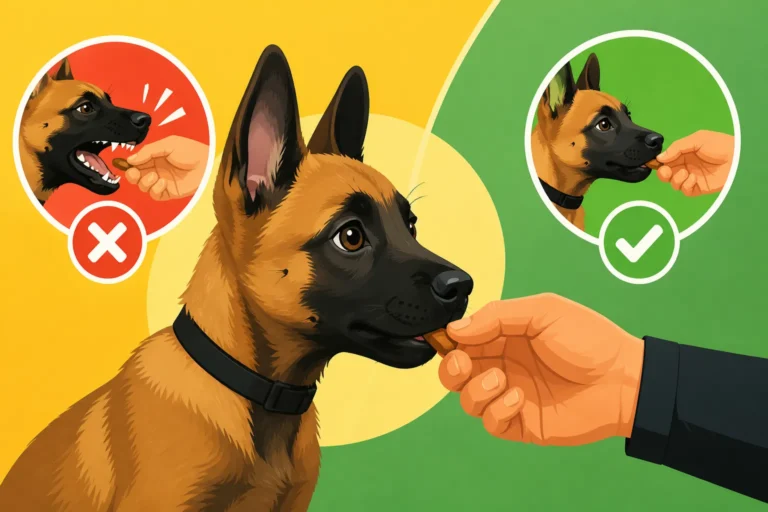
Establish clear rules for everyone: no hands-on play with the puppy, always redirect to a toy, and if the puppy starts biting skin, disengage immediately. Teaching children to offer a toy the moment the puppy mouths them is a great strategy. For adults, practicing Teaching a Malinois Puppy to Take Food Gently can extend to teaching gentle mouth manners overall. Consider enrolling in an online puppy program like BAXTER & Bella, which provides structured lessons for the whole family on how to interact with and train your puppy, emphasizing positive reinforcement and consistent redirection techniques. Consistency across all interactions will significantly speed up your puppy's learning and prevent them from developing preferences for biting certain people or certain body parts.
The Art of the Redirect: Techniques That Work
The moment your Malinois puppy's sharp teeth make contact with your skin, your reaction is critical. This isn't a time for anger or punishment, but for calm, immediate, and consistent redirection. The goal is to teach your puppy that biting human skin makes the fun stop, while biting an appropriate toy makes the fun continue. This clear cause-and-effect relationship is what your intelligent Malinois puppy will quickly learn.
Timing is Everything: Intervening Effectively
Successful redirection hinges on impeccable timing. You need to intervene the instant those puppy teeth touch your skin, or even better, just as you anticipate the bite. If you wait too long, your puppy might not associate your response with their biting behavior. The moment you feel teeth on skin, immediately yelp (like a puppy would) or say "ouch" loudly, and then immediately remove your hand or whatever body part is being bitten. This interruption needs to be swift and clear.
Once you've removed yourself, quickly offer an appropriate chew toy. This could be a tug toy, a durable rubber chew, or a hard ball. The key is to make the toy instantly available and more appealing than your hand. Engage them with the toy immediately. If they ignore the toy and try to bite you again, repeat the "ouch" and withdrawal, and then try again with the toy. If they still don't engage with the toy after a couple of tries, it might be a sign they are over-stimulated, and it's time for a short "time-out" by moving away from them or putting them in their Crates, Kennels and Heat Alarms for a Belgian Malinois for a few minutes to calm down. The clearer and more immediate your response, the faster your Malinois puppy will learn that the fun stops when they bite you, and starts when they bite the toy. This immediate feedback helps to build strong associations.
The "Swap" Technique
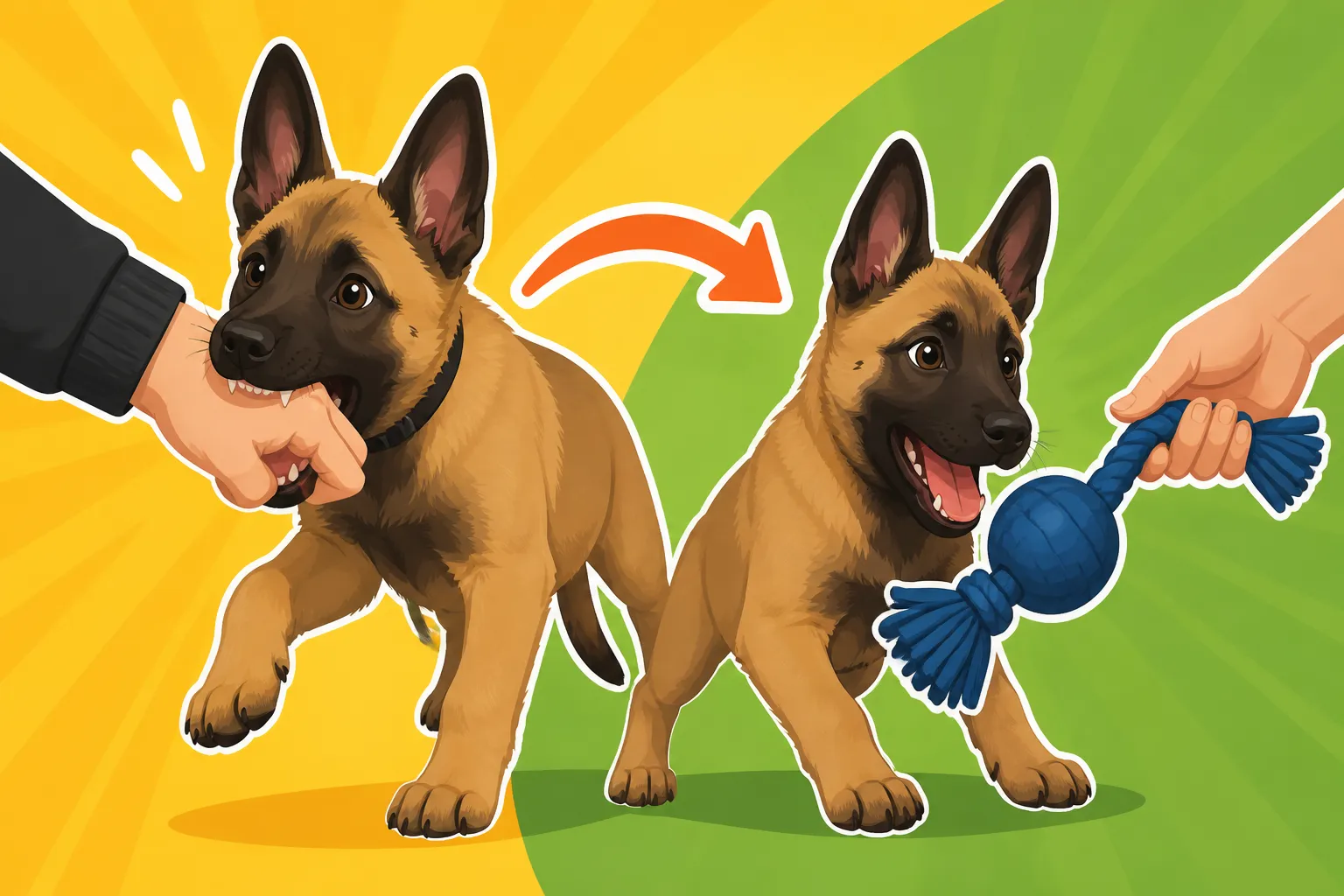
The "swap" technique is a cornerstone of redirecting a biting puppy and is incredibly effective for Malinois. It leverages their natural desire to chew and play by offering an irresistible alternative. When your puppy is mouthing your hand or clothing, the instant you feel pressure, say a firm but not angry "No bite!" or "Off!" (or whatever your chosen verbal cue is), and simultaneously shove an appropriate toy into their mouth. The idea is to quickly and smoothly swap your body part for the toy.
Make the toy exciting! Wiggle it, drag it, make it come alive to capture their attention. If they take the toy, praise them enthusiastically: "Good take!" or "Yes!" and engage in a brief, vigorous play session with the toy. This reinforces the idea that biting the toy leads to positive outcomes (fun play, praise), while biting you leads to undesirable outcomes (fun stops). The power of this technique is that you’re not just stopping the unwanted behavior; you’re immediately replacing it with a desirable one and making it rewarding. Over time, your Malinois puppy will learn to seek out the toy when they feel the urge to bite, rather than seeking out your hand. This is also how you start building Tug Rules for a Belgian Malinois properly.
Using Movement and Sound to Your Advantage
Malinois puppies are incredibly responsive to movement and sound, and you can use this to your advantage in redirection. Often, when a Malinois puppy is fixated on biting your hand or clothing, simply trying to pull away can make the situation worse, triggering their prey drive even further. Instead of pulling away, which often encourages them to latch on tighter, try pushing into their mouth gently while simultaneously offering the toy. This can sometimes disrupt their grip and make them release, at which point you immediately present the toy.
Sound can also be a powerful tool. The sharp "ouch" or "yelp" is effective because it mimics a littermate's reaction to pain. A sudden, surprising noise (like clapping your hands once, or a quick "eh-eh!") can also momentarily startle your puppy and break their focus on your hand, giving you a window to introduce the toy. Avoid continuous loud noises or angry yelling, as this can either escalate their excitement or make them fearful, neither of which is conducive to learning. The goal is a brief, startling interruption followed by a clear, positive redirection to a toy. Remember, your calm and consistent demeanor will speak volumes to your smart Malinois puppy.
Consistency is Key: Reinforcing Good Habits
Training a Belgian Malinois is never a "one and done" deal. Their intelligence and drive mean they thrive on consistency and clear boundaries. When it comes to redirecting biting behavior, every interaction is a teaching opportunity. If you're consistent, your Malinois puppy will quickly grasp what's expected; if you're inconsistent, you'll find yourself frustrated by their continued nipping.
Establishing Clear Rules and Boundaries
One of the most common pitfalls new Malinois owners face is a lack of clear rules. Your Malinois puppy needs to understand exactly what is and isn't acceptable to bite, and those rules need to apply 100% of the time, from everyone in the household. This means no playing with your hands, ever. Not even "gentle" mouthing is allowed, because it blurs the line for a puppy that struggles with impulse control. The rule is simple: human skin is off-limits. If teeth touch skin, the interaction stops immediately.
Establish a "zero tolerance" policy for biting skin. If your puppy bites, you yelp, say "no bite," remove your hand, and offer a toy. If they don't take the toy, you walk away for a moment, or they go into their crate for a brief cooldown. This teaches them that biting you makes the fun disappear. Conversely, when they engage appropriately with a toy, shower them with praise and continue the fun. This black-and-white approach is crucial for a breed that excels at pattern recognition and craves clear leadership. This consistency, enforced by all family members, builds a solid foundation for Building an Off Switch Into a Belgian Malinois. Without it, you'll find your puppy is confused and the biting habit will persist much longer than necessary.
The Role of Structured Play Sessions
Structured play sessions are invaluable for a Malinois puppy, especially when addressing biting. Instead of letting your puppy just run wild and engage in random, unstructured play (which often leads to over-stimulation and biting), schedule specific times for focused, interactive play using appropriate toys. These sessions aren't just for burning energy; they are powerful learning opportunities. During these sessions, you can actively practice redirecting their mouthiness onto toys.
For example, grab a sturdy tug toy. Encourage your puppy to grip the toy, not your hand. Teach them commands like "take it" (for gripping the toy) and "out" or "drop" (for releasing it). Praise and reward them lavishly when they release the toy on command and then immediately re-engage them in play with the toy. This teaches them impulse control and that releasing the toy means the game continues, not ends. These structured sessions are also perfect for Building Engagement With a Belgian Malinois and building a strong bond. They learn that you are the source of fun and appropriate outlets for their drives, rather than just another chew toy. Using a variety of toys, like those found on Amazon, can keep these sessions fresh and exciting.
Preventing Relapses and Reinforcing Alternatives
Even with consistent training, a Malinois puppy might occasionally revert to old habits, especially when tired, over-excited, or teething. This is not a failure of your training, but a reminder that learning is ongoing. Be prepared for these relapses and respond with the same consistent redirection techniques you've been using. Don't get discouraged, and certainly don't resort to punishment, which can damage your relationship and suppress behavior rather than truly changing it.
To prevent relapses, proactively ensure your puppy always has appropriate chew toys readily available. If you see them eyeing your hand or clothing with that familiar "sharky" look, immediately offer a preferred toy before they even make contact. Continue with structured play and mental enrichment. Provide plenty of designated chew time, perhaps with a stuffed Kong in their crate, especially when you can't actively supervise them. Remember the saying: "If you want a dog to stop doing something, you have to teach it what you do want it to do instead." For a Malinois puppy, that means constant reinforcement of the idea that toys are for biting and humans are for loving (and maybe the occasional gentle lick). Continuing to work on The Month a Malinois Puppy's Biting Eases will help you manage expectations.
Toy Options for Redirecting Malinois Puppy Bites
Choosing the right tools for redirection is just as important as the techniques themselves. Malinois puppies are incredibly powerful chewers, even at a young age, so durability and engagement are key factors in toy selection. A flimsy toy will be destroyed in minutes, offering little in the way of redirection or satisfaction.
| Toy Type | Description | Pros for Malinois Puppy | Cons for Malinois Puppy |
|---|---|---|---|
| Durable Rubber Chews | Solid rubber toys (e.g., KONG Extreme, GoughNuts) designed for power chewers. | Virtually indestructible, excellent for solitary chewing, can be stuffed with treats for mental stimulation, satisfies deep chewing. | Can be expensive, not ideal for interactive play like tugging, some puppies might initially ignore them if not stuffed or made exciting. |
| Fleece Tug Toys | Braided fleece strips, soft yet strong. | Gentle on puppy teeth, highly motivating for interactive tug games, easy for you and puppy to grip, great for building engagement. | Not for unsupervised chewing (can be shredded and ingested), less durable than rubber, may not satisfy the deepest chewing urges. |
| Hard Rubber Balls | Solid, heavy-duty rubber balls (e.g., Jive by West Paw, Planet Dog Orbee-Tuff). | Extremely durable, perfect for fetch and chase games, satisfies prey drive, difficult to destroy, floats. | Can be too hard for young puppy teeth if static chewing, not designed for tugging or holding in the mouth for extended periods. |
| Nylon Chew Bones | Hard nylon bones designed for aggressive chewers (e.g., Nylabone Power Chew). | Long-lasting, helps clean teeth, provides a hard chewing surface for teething puppies, comes in various shapes and flavors. | Can be very hard, potentially damaging to sensitive puppy teeth if pup chews too aggressively, some puppies lose interest quickly. |
| Puzzle Toys | Toys that dispense treats as the dog solves a puzzle (e.g., treat-dispensing balls, snuffle mats, slow feeders). | Provides mental enrichment, slows down eating, helps burn mental energy, great for calming an over-stimulated puppy. | Not suitable for active biting redirection during high-energy play, requires supervision, not meant for aggressive chewing. |
When to Seek Professional Help
While puppy biting is a normal developmental phase, the intensity and persistence of a Malinois puppy's mouthiness can sometimes be more than an owner can handle alone. Knowing when to reach out for professional guidance is a sign of a responsible owner, not a failure. Early intervention can prevent minor issues from escalating into major behavioral problems down the line.
Recognizing Red Flags in Biting Behavior
Most Malinois puppy biting is rooted in exploration, play, or over-stimulation. However, there are certain red flags that might indicate a deeper issue requiring professional attention. If your puppy’s bites are consistently hard enough to draw blood, even after weeks of consistent redirection, that's a concern. If your puppy growls, snarls, or snaps with stiff body language, erect hair, or a hard stare before or during a bite, especially when guarding resources (food, toys, resting spots), this could be a sign of true aggression or resource guarding, which is more serious than typical puppy nipping.
Another red flag is if the biting seems disproportionate to the situation, or if your puppy targets specific vulnerable areas like your face or throat. If your puppy actively seeks out your skin over toys even when appropriate toys are readily available and made exciting, or if they seem to be genuinely trying to hurt you rather than just play, it's time to get help. Similarly, if you feel genuinely afraid of your puppy, or if you're constantly covered in severe bite marks, these are indicators that you need expert intervention. While a certain level of intense mouthiness is expected in a Malinois, A Malinois Puppy That Bites Everything Including You shouldn't feel like an attack.
Finding a Qualified Malinois Trainer or Behaviorist
If you've identified any red flags or simply feel overwhelmed by your Malinois puppy's biting, the next step is to find a qualified professional. Crucially, don't just pick any trainer. A Belgian Malinois is a specialized breed with unique drives and needs. You need a trainer or behaviorist who has extensive experience working specifically with high-drive working breeds like Malinois. Look for trainers who use positive reinforcement and clear communication methods, and who understand the breed's working line tendencies. Avoid anyone who suggests harsh punishment-based methods, as these can easily backfire with a sensitive, intelligent Malinois, leading to fear, aggression, or a breakdown in trust.
Ask potential trainers about their experience with Malinois or similar breeds (like Dutch Shepherds or German Shepherds). Inquire about their philosophy on bite inhibition and puppy development. Many excellent trainers offer initial consultations where you can discuss your concerns and see if their approach aligns with your goals. Resources like the Association of Professional Dog Trainers (APDT) or the Certification Council for Professional Dog Trainers (CCPDT) can help you find certified professionals in your area. Don't hesitate to seek out recommendations from reputable Malinois breeders or working dog clubs. Some online programs, like BAXTER & Bella, also offer one-on-one coaching sessions that can be incredibly helpful. Remember, investing in professional help now can prevent years of frustration and ensure your Malinois grows into a well-adjusted companion.
Integrating Professional Guidance into Your Routine
Once you've found a qualified trainer or behaviorist, their guidance needs to be consistently integrated into your daily routine. Attending weekly classes or private sessions is only a small part of the solution; the real work happens at home, every single day. Your trainer will likely provide you with specific exercises, management strategies, and techniques tailored to your puppy's individual needs and your household dynamics. It's essential that everyone in the family commits to implementing these strategies consistently.
This might involve adjusting your puppy's schedule, implementing new play rules, refining your redirection techniques, or even modifying aspects of your home environment. Your trainer might also help you with Socializing a Belgian Malinois Puppy Safely to ensure they learn appropriate interactions with other dogs and people, reducing frustration or fear that could lead to biting. They may also suggest further training to help your Malinois burn off energy and gain confidence, like scent work or basic obedience that channels their drive productively. The key is to view the trainer as a guide who empowers you with the knowledge and tools to effectively manage your Malinois puppy's biting, turning a challenging phase into a rewarding journey of learning and bonding. Your consistency and dedication, combined with professional expertise, will pave the way for a well-behaved and happy Malinois.
Disclaimer
This article is for general informational purposes only and does not constitute professional advice. Laws, prices and regulations vary by location and change over time. Consult a qualified professional for guidance on your specific situation.