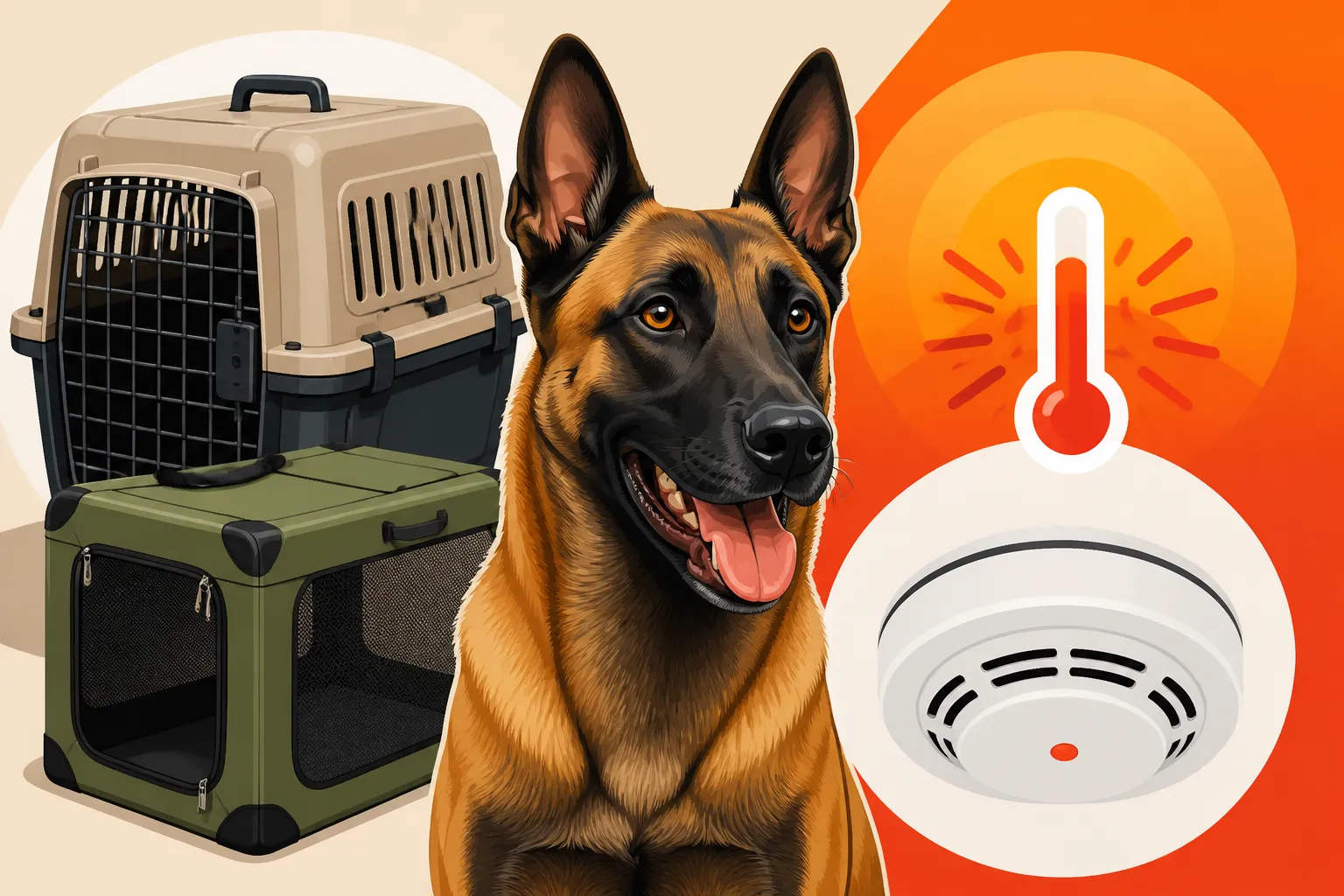
Crates, Kennels and Heat Alarms for a Belgian Malinois
Bringing a Belgian Malinois into your home means preparing for a dog unlike most others. Owners quickly discover that standard crates or flimsy backyard kennels simply won't cut it for these powerhouse dogs. The sheer intensity, intelligence, and physical prowess of a Malinois demand a robust, secure, and thoughtfully designed living space, along with crucial safety measures like heat alarms. This guide will meticulously walk you through selecting, setting up, and managing the essential crates, kennels, and safety equipment to ensure your Malinois is safe, contained, and comfortable.
Understanding the Belgian Malinois's Unique Housing Needs
When you welcome a Belgian Malinois into your life, you're not just getting a dog; you're getting a finely tuned athlete with a brilliant mind and an insatiable drive. This isn't a breed that's content with a soft dog bed in the corner and a quick walk around the block. Their housing needs are as specialized as their training, and understanding these requirements from day one can save you a world of frustration, damage, and potential heartache.
The Escape Artist Tendencies
Let's be real, a Belgian Malinois can often outsmart or out-muscle standard containment solutions. These dogs are incredibly agile, intelligent problem-solvers. A simple wire crate, designed for your average Labrador or Golden Retriever, might last about five minutes if a Malinois decides it wants out. They can unlatch doors, chew through thin plastic, bend weak metal bars, or even scale fences with surprising ease. I've heard countless stories of Malinois owners coming home to find their dog casually waiting in the living room, having completely dismantled a "secure" crate. It's not out of malice; it's often a combination of boredom, high drive, and an innate desire to be near their people or to find something to "do."
This innate ability to find a weakness in any barrier means that every crate, kennel, or enclosure you choose must be evaluated with a critical eye, always asking: "How would my Malinois get out of this?" It means looking for reinforced welds, heavy-gauge steel, secure latching mechanisms that require more than a paw swat, and materials that can withstand chewing and persistent attempts at escape. Neglecting this crucial aspect can lead to property damage, injury to your dog, or even worse, your Malinois escaping into an unsafe environment.
High Drive and Destructive Potential
Beyond escape artistry, the sheer energy and high drive of a Malinois can manifest as destructive behavior if not properly channeled. A bored, under-exercised, or anxious Malinois can and will wreak havoc on their immediate surroundings. This isn't just about chewing up a favorite pair of shoes; it can extend to destroying walls, flooring, furniture, and yes, even their own crates or kennels. They need outlets for their energy and mental stimulation. If their environment doesn't provide it, they'll create their own, often at your expense.
A flimsy crate or a poorly constructed kennel actually exacerbates this issue. If a Malinois perceives a weakness, they'll exploit it. They'll chew, dig, or push until they break through. This is why investing in truly robust containment solutions is not just about security; it's about respecting their power and drive. It's also about ensuring their safety, as a dog that ingests parts of a chewed-up crate can face serious health risks. When considering What a Year With a Working Belgian Malinois Costs, remember that preventative measures like quality housing can reduce future vet bills and replacement costs.
Sensitivity to Environment and Security
Despite their tough exterior and working dog reputation, Malinois can also be quite sensitive to their environment. They thrive on routine, predictability, and feeling secure. A crate or kennel isn't just a place of confinement; it should be their den, a safe haven where they can relax and feel protected. If their crate or kennel feels insecure, too small, or constantly exposed to stressors, it can actually heighten their anxiety and destructive tendencies.
Therefore, the location of their crate indoors, the layout and shelter within an outdoor kennel, and the overall feeling of safety are paramount. They need a place where they can truly decompress after intense training sessions or busy days. For a breed that forms such strong bonds with its handler, separation can be a significant challenge, making a secure and comfortable "home within a home" even more critical. Ensuring their housing provides both physical security and a sense of calm is fundamental to their well-being.
Choosing the Right Crate for Indoor Confinement
For many Belgian Malinois owners, a crate is an indispensable tool for house training, managing adolescent energy, and providing a safe space when supervision isn't possible. But not just any crate will do. The market is flooded with options, and navigating them to find one that can truly stand up to a Malinois requires careful consideration of materials, design, and size.
Heavy-Duty Steel Crates for Ultimate Security
Forget the lightweight, collapsible wire crates you might find at your local pet store for a smaller, less driven breed. For a Belgian Malinois, these are often just an expensive chew toy or a temporary puzzle. What you need is a heavy-duty steel crate. These are often marketed as "escape-proof," "industrial strength," or "tactical" crates, and for good reason. They're typically constructed from thick, welded steel bars or panels, with robust, multiple-point latching systems that a clever paw can't easily manipulate. Brands like Impact Dog Crates, Zinger Winger, or even some of the more robust models found on Chewy are designed with durability and security in mind.
These crates are built to withstand incredible force. They prevent bent bars, chewed-through plastic trays, and popped latches. Investing in one of these upfront can save you from replacing multiple cheaper crates, repairing damaged property, and, most importantly, prevent your Malinois from escaping into a potentially dangerous situation. While the initial cost is significantly higher than a standard wire crate, think of it as a long-term investment in your dog's safety and your peace of mind. Many are also powder-coated for rust resistance and easy cleaning, making them a hygienic choice for regular use.
Crash-Tested Crates for Vehicle Safety
If your Malinois travels with you, especially in a vehicle, the type of crate you use takes on another layer of importance: safety in the event of an accident. A standard wire or plastic crate offers virtually no protection in a collision and can even become a projectile itself, injuring your dog or other passengers. This is where crash-tested crates come in. These specialized crates are designed to absorb impact, prevent collapse, and keep your dog contained and protected during sudden stops or accidents.
Manufacturers like Gunner Kennels, Impact Dog Crates, and Ruffland Kennels are leaders in this space, often undergoing rigorous testing to meet specific safety standards. They are typically roto-molded plastic or heavy-duty aluminum, with reinforced walls and secure tie-down points. While they are bulky and come with a premium price tag, the peace of mind they offer is invaluable. If your Malinois is your constant companion, whether for work, sport, or just daily errands, then a Crash Tested Transport Crates for a Malinois is a non-negotiable investment. These crates aren't just about preventing escapes; they're about potentially saving your dog's life in a worst-case scenario on the road.
Sizing and Placement for Comfort and Training
Even the most robust crate won't be effective if it's the wrong size or placed in an inappropriate location. For a Belgian Malinois, the general rule is that the crate should be large enough for them to stand up, turn around comfortably, and lie down fully stretched out. It shouldn't be so large that they can designate a "bathroom" corner, especially during house training, but it also shouldn't be cramped. Remember, a Malinois can often weigh between 40 to 80 pounds, so a generously sized crate is usually required. Consider The Crate Dimensions a Grown Malinois Needs carefully before purchasing.
| Crate Type | Material | Key Feature | Malinois Suitability | Typical Cost Range |
|---|---|---|---|---|
| Standard Wire Crate | Thin Steel Wire | Collapsible, lightweight | Poor | $50 – $150 |
| Plastic Travel Crate | Molded Plastic | Airline approved, enclosed | Fair (for short trips) | $70 – $200 |
| Heavy-Duty Steel Crate | Thick Welded Steel | Escape-proof, chew-resistant | Excellent | $200 – $800 |
| Crash-Tested Crate | Roto-molded Plastic/Aluminum | Vehicle safety, impact absorption | Essential for travel | $500 – $1,500+ |
When it comes to placement, an indoor crate should be in a quiet, low-traffic area where your Malinois still feels like part of the family but isn't constantly disturbed. Avoid placing it in direct sunlight or in a drafty spot. A living room corner, a designated den, or a quiet bedroom can all work. The goal is to make the crate a positive, predictable space. During initial training, keeping the crate in your bedroom at night can help reduce anxiety and build a sense of security for a new puppy or rescue dog. As your Malinois grows and matures, their comfort in their crate will become a testament to consistent positive training.
Designing and Building Secure Outdoor Kennels
Sometimes, an indoor crate isn't enough, especially for working line Malinois, or for owners who need a secure outdoor space for their dog when they can't be supervised indoors. Building an outdoor kennel for a Belgian Malinois is a project that requires significant planning, investment, and an understanding of just how determined these dogs can be. This isn't just about putting up a fence; it's about creating a fortress.
Indestructible Materials and Escape-Proof Construction
When building an outdoor kennel for a Malinois, "good enough" is rarely good enough. You need materials that are truly indestructible and a design that anticipates every potential escape route. Standard chain-link fencing, even heavy gauge, can be climbed, bent, or dug under. For a Malinois, you should be looking at heavy-gauge welded wire panels, often 9-gauge or thicker, securely bolted together. Even better are solid steel or aluminum panels, though these come at a much higher cost. The height of the kennel walls is critical—at least 6-8 feet, and ideally with a secure roof panel to prevent climbing out. For added security, L-footed fencing (where the bottom of the fence extends outward along the ground) or burying the fence line several inches deep will deter digging. Concrete pads are also excellent for preventing digging and making cleaning easier.
The gate is often the weakest point. It must be as robust as the walls, with multiple secure latches that can't be nudged open or jumped on. Many professional kennels use double-latching systems or even padlocks for extra security. Remember, a Malinois has a strong drive to investigate and, if bored, will systematically test every weak point. Ignoring this leads to frustrating escapes and potentially dangerous situations. Consider this aspect meticulously, as Fencing That a Belgian Malinois Cannot Clear is a serious consideration for any owner.
Providing Shelter, Shade, and Enrichment in the Kennel
A secure kennel is essential, but it must also be a comfortable and stimulating environment. Leaving a high-drive Malinois in a bare, exposed kennel is an invitation for destructive behavior and psychological distress. Every outdoor kennel needs adequate shelter from the elements. This could be a solid roof over a portion of the kennel, a dedicated dog house (again, chosen for durability), or even an insulated kennel box. The shelter should protect from sun, rain, snow, and wind, offering a genuinely comfortable retreat in all seasons.
Shade is critical, especially in warmer climates, to prevent overheating. Natural shade from trees is ideal, but shade cloths or solid roofing can also provide relief. Inside the kennel, enrichment is key. Provide durable, chew-proof toys (like those from Kong or Goughnuts), and consider puzzle feeders to engage their minds. A clean, fresh water source is non-negotiable – consider an auto-refilling bowl or a heavy, tip-proof bucket that can be secured. Remember, an outdoor kennel for a Malinois isn't a prison; it's an extension of their living space where they can be safe and content while unsupervised.
Zoning Regulations and Neighbor Considerations
Before you even start digging, it's crucial to check local zoning laws and homeowner association (HOA) regulations regarding outdoor dog kennels. Many municipalities have rules about kennel size, placement (e.g., how close it can be to property lines), and even materials. Ignoring these can lead to fines, forced removal, or disputes with neighbors. It's always better to get permits and approvals upfront.
Beyond legalities, consider your neighbors. A vocal Malinois, prone to barking at every leaf or squirrel, can quickly become a neighborhood nuisance, especially if housed in a kennel that doesn't offer adequate visual barriers. Placing a kennel thoughtfully, perhaps away from shared property lines, and adding privacy screens to portions of the fencing can mitigate potential issues. Open communication with neighbors about your plans can also go a long way. After all, a happy Malinois is a well-contained Malinois, and that makes for a happier neighborhood too.
The Critical Role of Heat Alarms and Climate Control
For a Belgian Malinois, especially one that spends time in a vehicle or an outdoor kennel, temperature regulation isn't just a comfort issue—it's a matter of life and death. These high-energy dogs can overheat quickly, and their strong drive often means they'll push themselves to the brink without showing obvious signs of distress until it's too late. This is where heat alarms and proactive climate control become absolutely indispensable.
Preventing Heatstroke in Vehicles and Outdoor Kennels
Heatstroke is a real and terrifying risk for a Belgian Malinois. Their dense double coat, combined with their intense activity levels, makes them particularly susceptible to rapidly rising body temperatures. A parked car, even on a seemingly mild day, can become a death trap in minutes. The sun can quickly turn the interior of a vehicle into an oven, and leaving windows cracked offers minimal relief. Similarly, an outdoor kennel without adequate shade or ventilation can become dangerously hot. The tragic stories of dogs dying from heatstroke are a stark reminder of this danger.
This is why a reliable heat alarm is not just a good idea; it's a critical safety device for any Malinois owner who transports their dog in a vehicle or uses an outdoor kennel. These devices monitor the ambient temperature and often humidity, triggering an alarm to your phone or pager if conditions become unsafe. Even if you think you'll "only be a minute," the risks are too high to take chances. Prevention is the only cure for heatstroke, and these alarms provide a vital layer of protection. When discussing Whether a Belgian Malinois Overheats in a Car, the answer is a resounding yes, and alarms are your frontline defense.
Advanced Monitoring Systems and Alerts
Modern heat alarms go far beyond simple temperature readings. Many systems offer advanced monitoring capabilities that provide real-time data and multiple alert options. These can include:
- Temperature and Humidity Sensors: Giving you a comprehensive picture of the environmental conditions.
- GPS Tracking: Crucial if your vehicle is stolen or moved, allowing you to locate both your dog and the vehicle.
- Power Loss Alerts: Notifying you if the vehicle's engine or power source fails, potentially shutting down AC.
- Remote Paging/Text Alerts: Sending immediate notifications to your phone or multiple contacts if temperatures rise or fall outside safe parameters.
- Automatic System Activation: Some systems can even remotely activate fans or auxiliary cooling devices in your vehicle.
Brands like Hot Dog Down or Watchdog offer robust systems designed specifically for working dog handlers and pet owners. These devices might seem like an extravagance, but for a breed as susceptible to heat as the Malinois, they are a necessity. Imagine being at a trial or training event, engrossed in an activity, and receiving an alert that your dog's safety is compromised. That immediate notification can be the difference between a close call and a devastating loss. For example, a quality system from Ruff Wear, or similar brands available on Chewy, can provide this invaluable peace of mind.
Strategies for Year-Round Temperature Management
Climate control isn't just about avoiding heatstroke in summer; it's about maintaining a safe and comfortable environment for your Malinois year-round. While Malinois are generally hardy, they are still susceptible to extreme cold, especially if they are lean working dogs with shorter coats, or if kennel-kept without adequate insulation.
Summer Strategies:
- Ample Shade: Ensure outdoor kennels have full shade for the hottest parts of the day.
- Good Ventilation: Use fans in kennels or vehicles to ensure airflow.
- Cooling Mats/Pads: Provide these in crates or kennels.
- Plenty of Water: Always accessible, fresh, and consider adding ice.
- Timing of Exercise: Avoid the hottest parts of the day for strenuous activity.
- Vehicle AC Checks: Regularly service your vehicle's air conditioning system.
Winter Strategies:
- Insulated Shelters: Provide well-insulated dog houses or kennel boxes in outdoor setups.
- Heated Bowls: Prevent water from freezing in outdoor kennels.
- Elevated Beds: Keep dogs off cold concrete floors.
- Adequate Bedding: Provide thick, warm bedding.
- Warm-Up Period: Allow dogs to warm up indoors before outdoor exercise in extreme cold.
For those with multiple dogs or extensive outdoor kennels, consider a dedicated Vehicle Heat Alarms for a Belgian Malinois in a Car setup for each vehicle used for transport, and possibly even ambient temperature monitors for outdoor runs. Proactive management of their environment ensures your Malinois remains healthy, comfortable, and ready to work or play, no matter the season.
Essential Accessories for Crate and Kennel Life
Even the most secure crate or kennel can become a source of stress if it's not outfitted correctly. Beyond the structure itself, the accessories you choose for your Belgian Malinois's designated space are crucial for their comfort, mental well-being, and overall safety. Thinking through these details can transform a mere enclosure into a true sanctuary for your high-drive companion.
Durable Bedding and Chew-Proof Water Solutions
Let's face it, a standard fluffy dog bed often doesn't stand a chance against a determined Malinois. Many owners learn this the hard way, coming home to a snowstorm of shredded polyester fill. For a Malinois, you need bedding that can withstand chewing, digging, and general roughhousing. Look for brands that specialize in "chew-proof" or "indestructible" dog beds. These often feature ballistic nylon covers, heavy-duty canvas, or even aluminum frames with raised platforms. Kuranda beds, for example, are known for their elevated, chew-resistant design, preventing access to fabric edges. Other options include thick rubber mats or even a sturdy, old comforter that you're not precious about, which can be easily washed and replaced. The goal is comfort without tempting destruction.
Equally important is a secure and chew-proof water source. Again, standard bowls can be tipped, chewed, or batted around, creating a soggy mess or, worse, leaving your dog without water. For crates, consider Lixit-style water bottles with steel spouts that attach securely to the crate bars. For kennels, heavy, tip-proof stainless steel pails that can be clipped to the side or automatic waterers that connect to a hose line are excellent choices. Ensure these are positioned in a way that prevents them from being easily damaged or removed by a clever Malinois. Dehydration is a serious risk, especially for active dogs, so a reliable water source is non-negotiable.
Enrichment Toys to Combat Boredom and Anxiety
A significant cause of destructive behavior and escape attempts in Malinois is boredom. These dogs are thinkers and doers, and if their minds aren't engaged, they will find their own (often destructive) entertainment. Providing appropriate enrichment toys is paramount for any Malinois spending time in a crate or kennel. Don't just toss in a squeaky toy; think strategic engagement.
- Durable Chew Toys: Items from brands like Kong (the black extreme rubber line is best for Malinois), Goughnuts, or Benebone are built to last. Fill Kongs with peanut butter, kibble, or frozen treats to provide a long-lasting challenge.
- Puzzle Feeders: These require your dog to work for their food, stimulating their brains and slowing down mealtime. There are various levels of difficulty available, from simple treat dispensers to more complex interactive puzzles.
- Appropriate Bones/Chews: Ensure any chews are safe, non-splintering, and sized correctly for your Malinois. Always supervise new chews, especially rawhide, as they can pose choking hazards.
- Rotation: Keep a rotation of toys to maintain novelty and interest. When you bring a new toy out, it feels exciting and fresh.
The right toys can help channel that immense Malinois drive into appropriate outlets, reducing anxiety and preventing destructive behaviors. Even a few minutes of mental work from a puzzle toy can be surprisingly tiring for a Malinois. Chewy offers a vast selection of these types of durable and interactive toys, making it easy to keep your Malinois mentally stimulated.
Cameras and Remote Monitoring for Peace of Mind
For many Malinois owners, leaving their dog crated or kenneled can be a source of anxiety. Are they settling? Are they attempting to escape? Is the temperature safe? Modern technology offers some fantastic solutions for remote monitoring, providing invaluable peace of mind.
Pet cameras, often with two-way audio, night vision, and motion detection, can be installed to keep an eye on your Malinois from anywhere via your smartphone. Brands like Furbo or Wyze offer affordable options that can alert you to barking, movement, or other signs of distress. These are particularly useful during the initial stages of crate training or for dogs prone to separation anxiety.
Beyond visual monitoring, some systems integrate with environmental sensors (like the heat alarms discussed earlier) to give you a complete picture of your dog's safety and well-being. Knowing you can check in on your Malinois, offer a reassuring voice, or quickly respond to a safety alert, can significantly reduce your stress and allow you to make necessary adjustments to their environment or routine. This level of oversight can be especially helpful when you have A Malinois That Screams Rather Than Settles, allowing you to monitor their progress and intervene if needed.
Training Your Malinois for Crate and Kennel Acceptance
A secure crate or kennel is only as good as your Malinois's willingness to use it. Forcing a Malinois into an enclosure without proper introduction and training can lead to significant behavioral problems, including intense anxiety, fear, and increased destructive attempts. Building a positive association with their crate and kennel is a cornerstone of responsible Malinois ownership.
Positive Reinforcement for Crate Training Success
Crate training for a Belgian Malinois should always be approached with positive reinforcement. The crate needs to become their "den," a safe, comfortable, and rewarding space, not a punishment zone. Start slowly and make it a game:
- Introduce the Crate: Place the crate in a busy area of your home initially (then move it to a quieter spot later if desired). Leave the door open, put a soft bed inside, and drop high-value treats and toys near and then inside it. Let your Malinois explore at their own pace.
- Lure with Treats: Use a treat to lure your Malinois into the crate. As they step in, praise them quietly and give the treat. Repeat this many times, gradually increasing the time they spend inside.
- Short Stays, Door Open: Once they're comfortable entering, close the door for a few seconds while they're eating a treat, then open it. Gradually increase the duration, always staying nearby.
- Short Stays, Door Closed, You Leave: Once comfortable with the door closed for a few minutes, start leaving the room for very short periods (seconds initially), then return before they become anxious.
- Longer Stays: Slowly increase the time, always ensuring they have a stimulating chew toy or puzzle. Never make a big fuss when you leave or return. The goal is for them to see it as a normal part of their day.
This patient, positive approach helps build a strong, positive association with the crate. Avoid using the crate for punishment, as this will only create negative feelings and make future training much harder. For tips on managing a dog that struggles with confinement, refer to A Malinois That Screams Rather Than Settles.
Addressing Crate Anxiety and Destructive Behaviors
Despite your best efforts, some Malinois may still develop crate anxiety or engage in destructive behaviors when crated. It's important to differentiate between a dog that is simply testing boundaries and one genuinely experiencing distress.
Signs of Crate Anxiety:
- Excessive barking, howling, or whining.
- Panting, drooling, or trembling.
- Destructive chewing within the crate (beyond normal puppy chewing).
- Attempts to escape that result in injury.
- Urination or defecation in the crate when otherwise house-trained.
If you suspect anxiety, do not punish your dog. Punishment will only worsen their fear. Instead, re-evaluate your training, scale back to shorter, more positive sessions, and ensure the crate itself is comfortable and safe. High-value, long-lasting chews can help redirect anxious energy. Consider background noise (white noise, classical music) to help them relax. If the anxiety is severe and persistent, consulting with a certified professional dog trainer or veterinary behaviorist is crucial. They can help identify triggers and develop a tailored modification plan, which might include medication in severe cases. Sometimes, a Malinois needs more than just a crate; they need a solid understanding of structure and boundaries, which is covered in The Structure a Belgian Malinois Needs Every Day.
Transitioning from Crate to Kennel and Back
For Malinois that will utilize both an indoor crate and an outdoor kennel, it's important to create a consistent and positive experience across both environments. The principles of positive reinforcement remain the same.
- Consistency is Key: Use the same cues and rewards for entering both the crate and the kennel. Make sure both spaces offer similar comforts (e.g., a familiar bed or scent item) and enrichment.
- Gradual Introduction: Just like with crate training, introduce the outdoor kennel slowly. Start with short, supervised sessions, gradually increasing duration. Offer high-value treats and toys specifically reserved for kennel time.
- Positive Associations: Always ensure positive experiences in both places. If the kennel is primarily used when you're away, make sure you're still spending positive, interactive time with your Malinois in the kennel when you are present.
- Avoid Negative Associations: Never use either the crate or the kennel as a punishment. Your Malinois should view both as safe, predictable, and rewarding places to be.
- Routine: Establish a clear routine for when your Malinois goes into their crate versus their kennel. Predictability helps reduce anxiety and fosters acceptance. For example, morning kennel time while you're at work, evening crate time for quiet relaxation.
A well-trained Malinois will transition seamlessly between their indoor crate and outdoor kennel, viewing both as secure extensions of their personal space. This flexibility is vital for managing their needs and ensuring their safety in various situations. When considering Whether a Belgian Malinois Should Be Kenneled Outdoors, remember that proper training and a well-equipped kennel are paramount.
Common Mistakes to Avoid in Malinois Housing
Owning a Belgian Malinois is a commitment, and providing them with appropriate housing is one of the foundational aspects of their care. Unfortunately, common pitfalls can lead to frustration for owners and distress for the dog. Understanding and actively avoiding these mistakes will set you up for greater success and a happier, safer Malinois.
Underestimating Their Escape and Destruction Abilities
This is perhaps the most significant and frequent mistake new Malinois owners make. They might have experience with other dog breeds, or they simply don't grasp the sheer power, intelligence, and relentless drive of a Malinois. A Malinois isn't just a dog; it's an escape artist, a strategist, and a demolition expert wrapped in a sleek, fawn package.
- Believing "It won't happen to my dog": This mindset is dangerous. Assume your Malinois will try to escape or destroy something. Plan accordingly.
- Buying flimsy equipment: Standard wire crates, plastic kennels, or cheap fencing are invitations for disaster. They are designed for far less driven breeds.
- Ignoring early signs: If your Malinois is testing latches, bending bars, or chewing excessively, don't just dismiss it. These are clear signals that your current containment isn't sufficient or they are under-stimulated.
The financial cost of underestimating a Malinois can be staggering—damaged homes, vet bills from injuries sustained during escape attempts, and the constant need to replace inadequate equipment. But the emotional cost of a lost or injured dog is far worse. Investing in truly robust solutions from the start, as discussed in Building a Run a Malinois Cannot Escape, is not an optional luxury; it's a necessary expenditure for this breed.
Neglecting Climate Control and Ventilation
Another critical oversight is the neglect of proper climate control and ventilation, particularly in outdoor kennels and vehicles. As previously highlighted, Belgian Malinois are highly susceptible to heatstroke due to their metabolism and coat.
- Leaving a dog in a parked car without a heat alarm: Even on mild days, temperatures inside a car can rise rapidly. Assuming "I'll be quick" is a gamble with your dog's life.
- Outdoor kennels without adequate shade or shelter: Exposure to direct sun for extended periods, or lack of protection from rain or snow, is inhumane and dangerous.
- Poor ventilation: Stagnant air in a kennel or vehicle exacerbates temperature problems. Fans, proper air circulation, and strategically placed vents are essential.
It's not just heat. Extreme cold can also pose a threat, especially for lean, short-coated Malinois if they are left without adequate insulation and bedding. Year-round temperature management, aided by tools like the Vehicle Heat Alarms for a Belgian Malinois in a Car, is non-negotiable for their health and well-being. Thinking about their environment proactively, rather than reactively after an incident, is key. Many owners find that their pet insurance, like plans offered by Healthy Paws, might cover emergency vet visits for heatstroke, but prevention is always the best policy.
Relying on Flimsy or Unsafe Equipment
This mistake ties into underestimating the breed's capabilities but also extends to cutting corners on safety. Anything in your Malinois's crate or kennel must be safe and appropriate for their drive and strength.
- Unsecured items: Loose bowls, easily shredded bedding, or toys that can be swallowed whole can all pose hazards. A Malinois will chew or attempt to destroy almost anything if bored or anxious.
- Incorrect crate sizing: A crate that is too small causes discomfort and anxiety, potentially leading to escape attempts. One that's too large can allow for elimination in one corner, undermining house training.
- Lack of maintenance: Even the best equipment needs regular checks. Are latches still secure? Are there any sharp edges from chewing? Is the bedding clean and intact?
Every piece of equipment, from the crate itself to the chew toy inside it, should be vetted for its durability and safety in the hands (or jaws) of a Belgian Malinois. Don't be swayed by cheaper, less robust options if they won't stand up to the challenge. Your dog's safety and comfort should always be the priority, and cheaping out on essential equipment can have serious, costly repercussions down the line.
Disclaimer
The information provided in this article is for general informational purposes only and does not constitute professional veterinary advice. Always consult with a qualified veterinarian or certified dog trainer for specific advice regarding your Belgian Malinois's health, training, and housing needs. Individual dogs may have unique requirements and sensitivities.