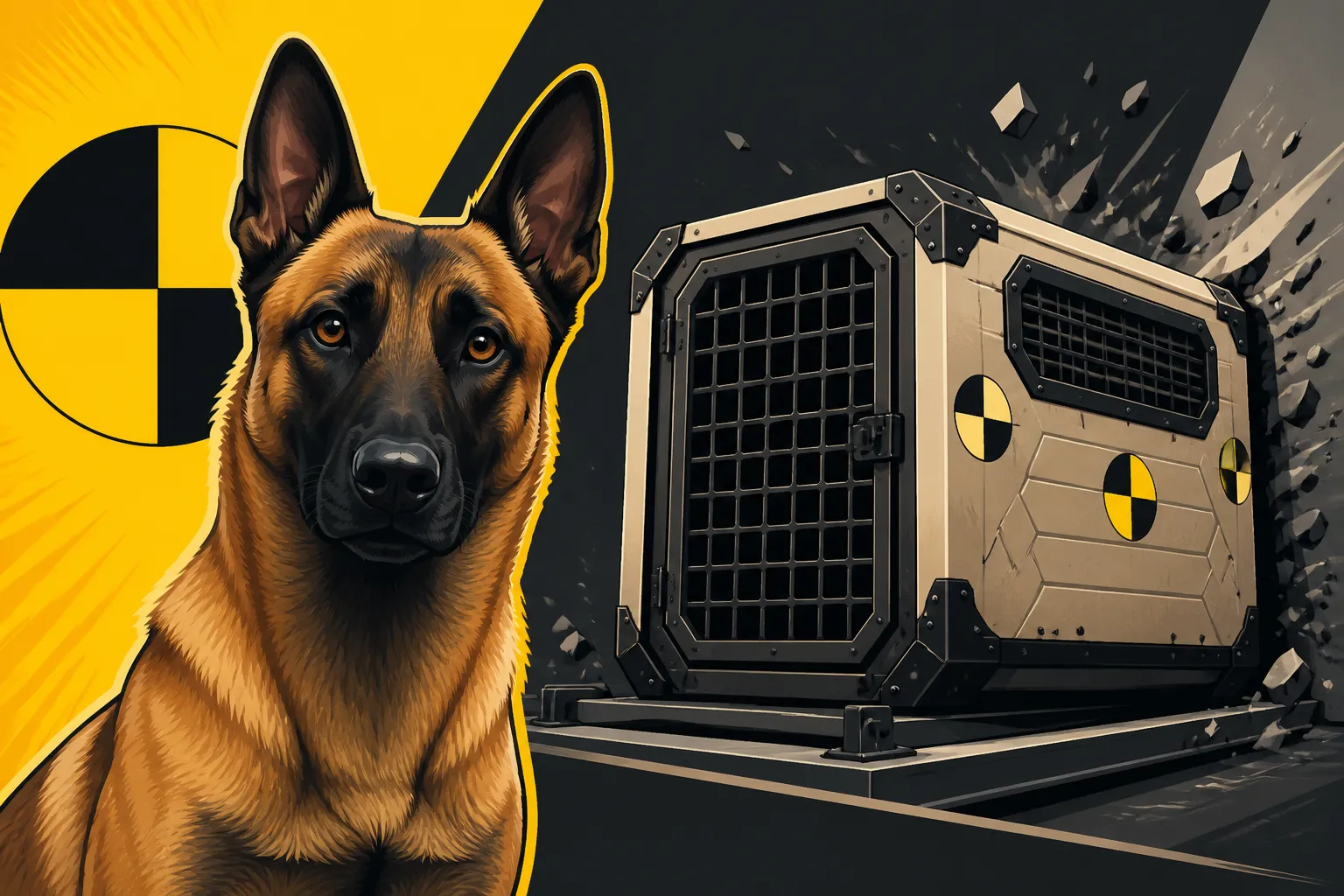
Crash Tested Transport Crates for a Malinois
It's a terrible thought, but accidents happen on the road. For those of us with a high-drive Belgian Malinois, securing them safely in the car isn't just about preventing distractions; it's about protecting them from serious injury in a collision. This guide dives deep into why crash-tested transport crates are essential for Malinois owners and how to choose the right one to keep your incredible partner safe.
Why Crash-Tested Crates Are Non-Negotiable for Malinois Owners
The bond we share with our Belgian Malinois is profound, often extending beyond pet ownership into a working partnership or a deeply integrated family member. Their safety is paramount, especially when we're on the move. Leaving a Malinois unsecured in a vehicle, even for short trips, poses a significant and often underestimated risk. These aren't just calm, cuddly lapdogs; they are powerful, agile animals with considerable mass, and that energy, unrestrained, can become a hazard in an emergency.
The Risks of Unsecured Transport
Imagine a sudden stop, a swerve, or, worse, a collision. An unsecured Malinois can be thrown forward, acting like a projectile within the vehicle. This isn't just a danger to the dog; it's a danger to every human occupant. A seventy-pound Malinois can exert hundreds, if not thousands, of pounds of force upon impact, depending on the speed. This force can cause severe, life-threatening injuries to the dog itself – fractures, internal bleeding, spinal trauma – and to anyone else in its path. We often think of our dogs as resilient, but the forces involved in a car accident are far beyond what their bodies are designed to withstand without proper protection.
Beyond the immediate physical danger, there's the psychological trauma. A Malinois involved in a crash, even if not physically injured, can be terrified, disoriented, or prone to escape. An injured or frightened Malinois might react defensively, making it difficult for first responders to provide aid. In the chaos of an accident scene, a loose dog can run into traffic, become lost, or further complicate an already stressful situation. The peace of mind that comes from knowing your dog is secured is invaluable, preventing potential escapes and ensuring that, in the worst-case scenario, your Malinois is contained and as safe as possible until help arrives.
The Malinois Drive and Its Implications in a Crash
Belgian Malinois are not just any dog; they possess an intense drive, remarkable athleticism, and often, an unwavering focus on their environment. This very drive, while a hallmark of the breed's working prowess, can become a liability in an unsecured vehicle. A Malinois might attempt to jump into the front seat, block the driver's view, or react impulsively to external stimuli like other dogs, cyclists, or wildlife outside the window. While we train for obedience, even the most disciplined Malinois can be unpredictable in novel, high-stress situations.
The constant movement, the desire to see and engage, and their inherent agility mean that seatbelts designed for humans are almost always inadequate for them. Harnesses, while better than nothing, are often not truly crash-tested to protect against the specific forces a dog's body endures, nor do they prevent the dog from becoming entangled or injuring itself on vehicle interiors. A crash-tested crate, on the other hand, is built to absorb and distribute impact forces, keeping your Malinois contained and protected within its shell, preventing it from being flung around or escaping the vehicle. This containment is crucial, particularly if you're regularly transporting your Malinois for sport, training, or work, where their energy levels are likely to be high before and after sessions.
Understanding Crash Test Certifications and Standards
When we talk about "crash-tested" crates, it's not just a marketing term. There are specific, rigorous tests and certifications that indicate a crate's ability to protect its occupant in the event of a collision. Navigating these certifications can feel overwhelming, but understanding them is key to making an informed decision for your Malinois's safety. Just like you wouldn't buy a car seat for a child without checking safety ratings, the same diligence applies to your dog's transport.
The Center for Pet Safety's Role
The Center for Pet Safety (CPS) is a non-profit organization that has done groundbreaking work in establishing safety standards for pet travel products. Before the CPS, there were no standardized, science-based safety tests for pet crates or harnesses. They developed stringent testing protocols, often mirroring those used for child safety seats, to evaluate how pet products perform in simulated crash scenarios. When a crate is "CPS Certified," it means it has undergone these rigorous tests and passed, demonstrating its ability to significantly reduce the risk of injury to pets and human passengers.
Their testing involves various crash simulations, including front and rear impacts, evaluating structural integrity, dynamic excursion (how far the pet moves during impact), and the potential for parts to break off and become projectiles. A crate that has earned the CPS certification has proven it can keep your Belgian Malinois contained and minimize the forces exerted on its body during a collision. It's a gold standard that provides an objective, third-party endorsement of a product's safety claims. When looking at options, prioritizing crates with this certification can offer immense peace of mind.
Different Certifications and What They Mean
While CPS certification is highly regarded, it's not the only standard you might encounter, though it is often considered the most comprehensive for pet travel. Some manufacturers conduct their own internal crash testing, but without an independent third-party verification, these claims can be harder to evaluate objectively. Always look for transparent reporting of test results, ideally from an independent source.
Here’s a quick overview of what to consider:
| Certification/Standard Type | Description | Key Benefit for Malinois Owners |
|---|---|---|
| While having our furry best friends in the car with us is undeniably one of life's simple joys, for Belgian Malinois owners, a car ride is often more than just a casual outing; it's a journey to training, to work, to a trial, or simply an adventure. But what happens if that journey is suddenly interrupted by an accident? Too many times, beloved dogs become tragic victims or contribute to the danger when they're not properly secured. This guide is all about choosing the absolute best crash-tested transport crates for your Malinois, ensuring they're as safe as possible on the road, no matter where your busy lives take you. |
Why a Crash-Tested Crate is Essential for Your Malinois
Let's face it, your Malinois isn't just a pet; they're a force of nature. Their power, agility, and sheer determination are what we love about them, but those very traits make safe transport a serious consideration. A regular plastic travel crate from a big box store, or even a wire kennel, simply won't cut it when it comes to protecting your dog – or you – in a vehicle collision.
The Dangers of Unsecured or Substandard Crates
You've seen the images online or maybe even experienced it yourself: a dog happily panting from the back seat, sometimes even sticking its head out the window. It looks idyllic, doesn't it? But imagine that car having to brake hard, swerve suddenly, or worse, get into an accident. An unsecured Malinois, even one that's usually perfectly behaved, becomes a projectile. A seventy-pound dog hitting a dashboard or seatback at just 30 mph can generate impact forces equivalent to several tons. This isn't just about your dog getting a bump or bruise; it can lead to catastrophic injuries like broken bones, internal organ damage, or spinal trauma. For us, the human occupants, that same seventy-pound projectile could cause severe, even fatal, injuries. The emotional aftermath of such an event, even if no humans are seriously hurt, is something no dog owner ever wants to face.
Furthermore, a crate that isn't crash-tested can fail spectacularly under impact. Its seams can burst, plastic can shatter, or wire can bend and twist, turning the crate itself into a collection of dangerous shards and sharp edges. Instead of protecting your Malinois, a flimsy crate can become part of the problem, causing more harm than if the dog had been loose. It's a sobering thought, but it highlights why investing in a truly crash-tested crate isn't a luxury; it's a necessity for any responsible Malinois owner who cares about the safety of everyone in the vehicle.
Malinois Specific Considerations for Travel Safety
Your Belgian Malinois is an animal of immense drive and intelligence. While this makes them incredible partners for work or sport, it also means they often have a heightened awareness and reactivity to their surroundings. In a moving vehicle, this can translate into a dog that wants to stand up, look out the window, or investigate every sound and movement. Even a perfectly trained Malinois can be startled or become agitated by something unexpected on the road. This isn't a flaw; it's just who they are, and it makes effective containment even more critical.
Without a secure, crash-tested crate, that drive can manifest as jumping between seats, distracting the driver, or even trying to get into their lap. This immediate distraction can be the cause of an accident itself, let alone the dangers if one occurs. A proper crate provides a calm, secure "den" for your Malinois during travel, a place where they feel safe and where their movements are safely restricted. This helps prevent driver distraction and ensures that, in the event of a sudden stop or collision, your powerful Malinois is contained within a structure designed to absorb impact and protect their strong, athletic body. Think of it as giving them their own personal safety capsule for every journey.
Understanding Crash Test Standards and Certifications
When you start looking at crash-tested crates, you'll quickly realize that not all "safety" claims are created equal. It can be confusing to decipher what truly makes a crate safe versus one that simply says it's "safe for travel." This is where independent testing and clear certifications come into play, giving you the confidence that a product lives up to its promises.
The Role of Independent Testing Organizations
In the world of pet products, independent organizations play a crucial role in verifying safety claims. Unlike self-reported tests by manufacturers, third-party testing provides an unbiased evaluation of how a product performs under specific, rigorous conditions. For pet travel, the gold standard for independent verification often comes from groups like the Center for Pet Safety (CPS). The CPS has developed scientifically validated crash-test protocols specifically for pet travel products, working with engineers and veterinarians to ensure tests are relevant to canine physiology and common vehicle accident scenarios.
When a crate is labeled as "CPS Certified," it means it has successfully passed these stringent tests. These tests assess multiple factors, including the structural integrity of the crate under impact, its ability to prevent the pet from escaping or becoming a projectile, and how well it protects the dog from injury by mitigating forces. Without such a certification, a manufacturer's claims of "safety" are difficult for consumers to evaluate. Always look for this kind of independent verification, as it represents a commitment to genuine safety beyond mere marketing. While there are costs associated with these certifications, they provide invaluable assurance, and many Malinois owners consider it a non-negotiable factor when making a purchasing decision.
Interpreting Crash Test Results and Labels
Beyond simply seeing a "crash-tested" label, understanding what the results signify is important. A true crash test will have a detailed methodology and clear performance criteria. For example, a CPS certification typically involves dynamic crash simulations at specific speeds, using weighted canine crash test dummies. The results will detail how well the crate maintained its structural integrity, how much "excursion" (movement) the dummy experienced, and whether there were any critical failures of components.
You might also come across terms like "kennel retention" or "impact protection." Kennel retention refers to the crate's ability to keep the dog contained within its structure and prevent it from breaking free during an accident. Impact protection describes how well the crate absorbs or distributes forces to minimize injury to the animal inside. When researching crates, look for transparency in their testing reports. Good manufacturers will often publish videos of their crash tests, detailed reports, and clear explanations of their safety features. Don't be shy about asking breeders or experienced Malinois trainers which brands they trust; they often have firsthand experience or recommendations for robust products suitable for a powerful dog like yours. Remember, you're looking for proof, not just a promise.
Key Features to Look For in a Malinois Crash-Tested Crate
Choosing the right crash-tested crate involves more than just finding one with a sticker. You need to consider construction, fit, and how it integrates with your vehicle. A Malinois is a powerhouse, and their crate needs to be equally robust, designed to handle not only their strength but also the immense forces of a collision.
Construction Materials and Durability
The materials used in a crash-tested crate are paramount to its effectiveness. You'll typically find high-quality aluminum or rotationally molded (roto-molded) plastic to be the primary choices. These materials are chosen for their superior strength-to-weight ratio and ability to absorb and distribute kinetic energy during an impact, rather than shattering or collapsing.
Aluminum crates, often seen in professional and sport circles, are prized for their light weight combined with incredible strength. They typically feature welded seams and reinforced corners, designed to withstand significant forces without buckling. Roto-molded crates, made from a single piece of high-density polyethylene, offer exceptional impact resistance and durability, as they lack seams that can weaken under stress. Both types significantly outperform standard plastic or wire crates. When evaluating, look for robust hardware, such as heavy-duty latches and hinges, that won't fail during an impact. Remember, your Malinois will also be testing these materials daily with their inherent drive and strength; a flimsy crate won't last long, even outside of an accident scenario. Many owners find value in brands that offer replacement parts for things like latches or handles, extending the lifespan of an already significant investment. You want a crate that feels solid, unyielding, and gives you confidence the moment you handle it.
Secure Mounting Systems
Even the strongest crate is only as safe as its weakest link – and often, that link is how it's secured within your vehicle. A crash-tested crate needs a robust and reliable anchoring system to prevent it from sliding, tipping, or becoming airborne during a collision. Most high-quality crash-tested crates come with integrated tie-down points or straps specifically designed to attach to your vehicle's cargo anchors. These aren't just flimsy clips; they're heavy-duty straps and connectors built to withstand immense forces.
Before purchasing, check your vehicle for cargo tie-downs in the trunk or cargo area. Most SUVs and trucks have them, but their placement and strength can vary. Ensure the crate you choose is compatible with your vehicle's existing anchor points. Some crates offer quick-release systems, which can be convenient, but always prioritize security. Learning how to properly secure the crate is just as important as choosing the right one. A correctly anchored crate will remain stable during abrupt stops and turns, providing a secure and comfortable ride for your Malinois while preventing it from becoming a dangerous projectile. It might take a few extra minutes to secure, but that time is a tiny investment for your dog's safety. For those who frequently travel to trials or training sessions, this is a critical detail to streamline your routine.
Proper Sizing for a Malinois
Sizing a crash-tested crate for a Belgian Malinois is a balance between providing enough space for comfort and movement, and ensuring the crate is not so large that your dog is thrown around inside it during an impact. The general rule of thumb for a crate is that your dog should be able to stand up, turn around, and lie down comfortably. However, for a transport crate, especially one that is crash-tested, a slightly snugger fit is often recommended. This minimizes the distance your dog can be propelled within the crate during a collision, reducing the risk of impact injuries from hitting the crate walls.
Measure your Malinois carefully:
- Length: From the tip of their nose to the base of their tail, and add about 4-6 inches.
- Height: From the top of their head (or ears, if erect) to the floor, and add about 3-4 inches.
Compare these measurements to the interior dimensions of the crate. A crate that's too large can allow your dog to build up momentum before hitting the sides, which can cause injury. One that's too small will be uncomfortable and could cause stress, especially on longer journeys. Remember that the crate will occupy a significant amount of space in your vehicle. Before buying, physically measure your car's cargo area (length, width, and height) to ensure the crate will fit, especially if you have a larger Malinois. You want a crate that fits your dog and your vehicle perfectly.
Maintaining and Inspecting Your Malinois's Safety Crate
Even the highest quality crash-tested crate won't provide optimal protection if it's not properly maintained and regularly inspected. Your Malinois is a powerful animal, and their day-to-day use of the crate, combined with exposure to varying temperatures and road conditions, can lead to wear and tear over time. A proactive approach to care ensures the crate remains a reliable safety device.
Regular Wear and Tear Checks
Your Malinois crate is a piece of safety equipment, and like any such equipment, it needs regular checks. Make it a habit to inspect the crate periodically, perhaps once a month or after any particularly strenuous use (like a long road trip or a rough training day where the crate might have been moved around a lot). Pay close attention to all structural components:
- Frame/Shell: Look for any cracks, dents, or deformities, especially on corners, seams, and impact points. For roto-molded crates, even small hairline cracks can compromise integrity. For aluminum, check for bent bars or broken welds.
- Latches and Hinges: These are critical for containment. Test them to ensure they operate smoothly and securely. Look for any signs of rust, bending, or excessive wear that might indicate they could fail. Your Malinois might test these with their nose or paws, so make sure they're holding up to their investigative nature.
- Tie-down Points/Straps: Inspect where the crate attaches to your vehicle. Are the D-rings or loops on the crate secure? Are the straps frayed, torn, or showing signs of stretching? The hardware on the straps should be robust and free from corrosion.
- Doors: Ensure the door opens and closes without sticking and that its locking mechanism engages fully. A door that pops open during a crash is as bad as no door at all.
If you find any significant damage, contact the manufacturer to see if replacement parts are available or if the entire crate needs to be replaced. Don't compromise on safety. Many reliable brands are available at retailers like Chewy, offering a good selection of crates that prioritize durability.
Cleaning and Hygiene for Long-Term Use
A clean crate isn't just about aesthetics; it's about hygiene and prolonging the life of the materials. Your Malinois spends a fair amount of time in their crate, and sweat, dirt, saliva, and even accidents can build up. This can not only create unpleasant odors but also degrade materials over time, especially plastics and metals. A damp, dirty environment can also be a breeding ground for bacteria or mildew, which isn't good for your dog's health or the crate's integrity.
Aim for a thorough cleaning regularly, depending on how often the crate is used and how dirty your Malinois gets.
- Basic Wipe-Down: After each use, especially if your dog has been muddy or wet, wipe down the interior with a damp cloth.
- Deep Clean: Every few weeks or months, remove any bedding and thoroughly clean the entire crate. Use a pet-safe cleaner or a solution of mild soap and water. Pay attention to crevices, corners, and under any removable mats. Rinse thoroughly and allow the crate to air dry completely to prevent mildew.
- Bedding: Wash any bedding, towels, or crate pads frequently. Consider durable, washable bedding options designed for working dogs.
Maintaining good hygiene also means being prepared for accidents. Even house-trained Malinois can get carsick or have an upset stomach, especially on long trips or due to stress. Always carry cleaning supplies, like paper towels and enzymatic cleaner, and a change of bedding. A clean, comfortable, and hygienic crate contributes to your Malinois's overall well-being and ensures the crate itself remains in top condition to provide reliable safety for years to come. Plus, a comfortable crate makes for a calmer traveler, which can be a huge benefit for a Malinois on the go.
Choosing the Right Crate for Your Malinois and Vehicle
Selecting the perfect crash-tested crate requires careful consideration of both your dog's needs and the specifics of your vehicle. It's not a one-size-fits-all purchase, especially with the unique demands of a Belgian Malinois. Taking the time to research and choose wisely will pay dividends in peace of mind and safety.
Assessing Your Vehicle's Compatibility
Before you even look at crate models, you absolutely must measure your vehicle's cargo area. This might sound obvious, but many owners have bought a top-tier crate only to find it doesn't fit in their car, SUV, or truck. Measure the width, depth (front to back), and height of the space where the crate will sit. Remember to account for any sloped rear windows or wheel wells that might reduce usable space.
Consider how the crate will enter and exit the vehicle. Can you slide it in easily? Will the door of the crate be accessible once installed? If you have a large SUV, you might be able to fit a bigger, single-door crate. If you have a smaller car, a more compact crate or one with multiple door options (e.g., side or top access) might be more practical. Think about how the crate interacts with your vehicle's tie-down points. Do they align? Will you need extension straps or specialized hardware? Some crates are designed to fit specific vehicle types or sizes, so check manufacturer recommendations. For those who frequently travel for competitions, a crate that can easily transfer between a daily driver and a larger show vehicle can be a huge convenience. Ensuring a snug fit within the vehicle itself, with minimal gaps around the crate, also helps prevent shifting and improves overall stability. Don't forget to account for any Vehicle Heat Alarms for a Belgian Malinois in a Car you might have, ensuring they aren't obstructed.
Features That Enhance Malinois Comfort and Safety
Beyond the crash-testing itself, several features can significantly improve your Malinois's comfort and overall safety during transport. While a crash-tested crate is built tough, it should also be a positive space for your dog.
- Ventilation: Good airflow is crucial, especially for active dogs like Malinois who can overheat quickly, particularly if crated after intense training or in warmer climates. Look for crates with ample ventilation holes or slats that allow air to circulate freely. This is especially important if you live in an area where your Whether a Belgian Malinois Overheats in a Car is a concern.
- Drainage/Cleaning: Accidents happen. Crates with drain plugs or easily removable floor panels make cleaning up messes a breeze. This is a practical feature for maintaining hygiene, especially after long trips or if your Malinois gets carsick.
- Non-Slip Interior: A non-slip floor or a textured interior surface can help your Malinois maintain their footing during transit, reducing anxiety and preventing minor slips or tumbles even during normal driving. You can also add a durable, non-slip mat or rubberized bedding for extra grip.
- Portability/Handles: If you frequently move the crate in and out of your vehicle, sturdy, integrated handles are a must. While crash-tested crates are inherently heavier due to their robust construction, good handles make them more manageable.
- Emergency Escape Hatches: Some advanced crates include emergency escape hatches, which allow for quick access to your dog from another angle if a vehicle collision deforms the primary door or blocks access. This is a higher-end feature but can be invaluable in a serious accident.
Investing in a high-quality crate is a significant expense, so considering pet insurance from providers like Healthy Paws might be a wise decision. While a crash-tested crate dramatically reduces risk, unforeseen incidents can still occur, and good insurance can help cover any necessary veterinary care. Remember that consistent Teaching a Belgian Malinois to Ride Calmly in a Vehicle also contributes to their comfort and safety in any crate. It's all part of a holistic approach to responsible Malinois ownership.
Long-Term Investment and Responsible Ownership
Choosing a crash-tested transport crate for your Belgian Malinois is more than just buying a piece of equipment; it's a profound statement of your commitment to their safety and your responsibility as an owner. These crates represent a significant upfront investment, but when you consider the alternatives – potential veterinary bills, property damage, or even tragic loss – the value becomes undeniable.
The Value of a Durable, Safe Crate
Think of your crash-tested Malinois crate as a long-term investment, much like a good quality vehicle or a well-built home kennel. These crates are engineered to last, often outliving several standard, flimsy crates. The robust materials and superior construction mean they can withstand the rigors of daily use by a powerful Malinois, resisting chewing, scratching, and general wear that would quickly destroy lesser options. This durability translates into fewer replacements over your dog's lifetime, ultimately saving you money in the long run.
Beyond the monetary savings, the true value lies in the safety it provides. You’re not just buying a box; you're buying peace of mind. Knowing that your Malinois is protected by a product designed specifically to mitigate crash forces allows you to focus on the road ahead, rather than worrying about what might happen to your dog in an emergency. This peace of mind is priceless, especially for those who transport their Malinois for demanding activities like police work, search and rescue, or intense sport training. It’s an integral part of budgeting each month – preparing for all aspects of responsible ownership, including safety. Furthermore, these crates often hold their resale value better than non-certified options, should you ever need to upgrade or rehome.
Integrating the Crate into Your Malinois's Routine
A crash-tested crate isn't just for emergencies; it should become a regular, positive part of your Malinois's life. Proper crate training ensures your dog views it as a safe, comfortable den, not a punishment. Start early, making the crate a place where they get high-value treats, enjoy quiet time, or sleep. Use it consistently for short periods at home before introducing it to the car. This positive association will make car travel less stressful and more accepting for your Malinois.
For dogs with high drive, the routine of entering their crate for travel can become a valuable "off switch," signaling a shift from active engagement to resting. This is especially true for working or sport Malinois who need to settle down before and after high-intensity activities. Remember that the crate can also be used outside the vehicle, as part of your general Housing a Belgian Malinois in a Kennel or a Crate strategy, offering a familiar safe space wherever you go. Don't forget that even within a crate, your Malinois will need proper hydration and temperature management, especially during warm weather. While these crates are incredibly safe, no piece of equipment can replace thoughtful, consistent training and responsible care. You can find many of these essential training aids and crates at reputable pet supply retailers, including online platforms like Chewy, which often stock a wide range of options suitable for a Malinois.
Disclaimer
This article is for general informational purposes only and does not constitute professional advice. Laws, prices and regulations vary by location and change over time. Consult a qualified professional for guidance on your specific situation.