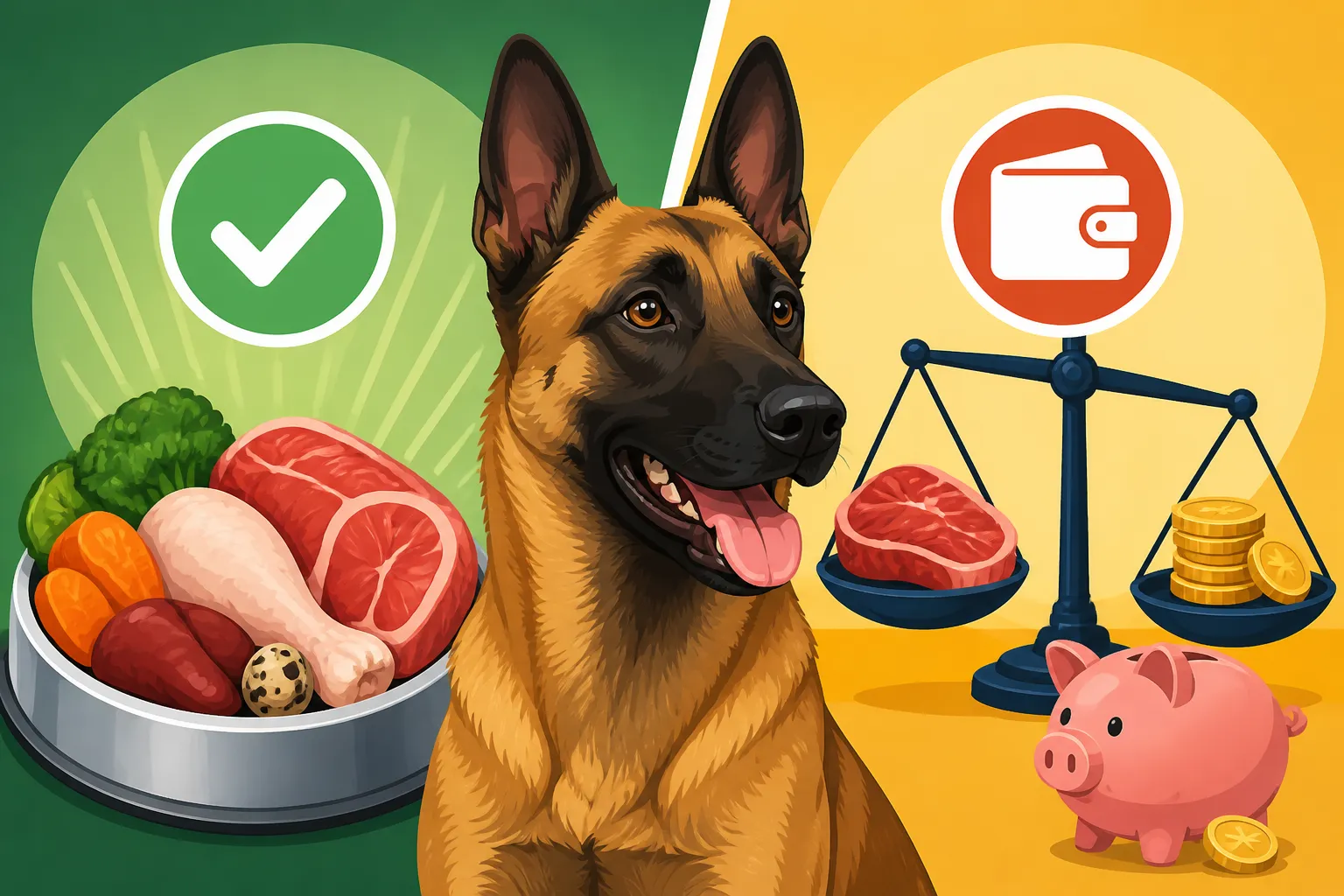
Whether Raw Feeding a Belgian Malinois Is Affordable
It’s a common scenario: you’re deeply committed to your Belgian Malinois's health and performance, always seeking the edge that can keep them in peak condition. You hear whispers, perhaps even shouts, about the incredible benefits of raw feeding – shinier coats, cleaner teeth, better digestion, sustained energy. It sounds like a dream, but then reality hits. The mental image of a mountain of expensive meat often makes you wonder if raw feeding a high-octane dog like a Malinois is financially viable for anyone outside of professional breeders or those with unlimited budgets. This guide is here to cut through the speculation and explore the true affordability of raw feeding for your Belgian Malinois, giving you a realistic picture of the costs and the various approaches that might work for your wallet.
The Core Financial Outlay of Raw Feeding for a Belgian Malinois
When we talk about raw feeding, we're essentially talking about providing a diet primarily composed of raw meat, bones, and organs. This immediately sets it apart from traditional kibble, both in composition and, crucially, in price. Understanding this fundamental difference is the first step in assessing affordability.
Why Raw Ingredients are Inherently More Expensive than Kibble
The primary reason raw ingredients often cost more than kibble boils down to processing and sourcing. Kibble is a highly processed product, often made from rendered animal by-products, grains, and various fillers that are inexpensive to acquire and combine. The ingredients themselves are typically commodities, bought in bulk and transformed into a shelf-stable, dry pellet. This industrial process drives down the per-calorie cost significantly.
In contrast, raw feeding, especially when aiming for high-quality, human-grade components, involves ingredients that are much closer to their original form. You're buying muscle meat, organs, and bones – items that have a higher market value and require less processing, meaning fewer steps to lower their cost. While your Malinois might thrive on such a diet, your grocery bill will certainly reflect the difference. Think about the cost of a pound of lean ground beef versus a bag of dry dog food; the disparity is immediately clear.
The Calorie Demands of a High-Drive Malinois
A Belgian Malinois isn't just any dog; it's a finely tuned athletic machine, often described as a canine Ferrari. These dogs are bursting with energy, constantly on the go, whether they're working a detection scent, running an agility course, or simply engaging in intense play in the yard. All that activity, all that drive, translates directly into a massive caloric expenditure. A working Malinois needs a significant amount of fuel to maintain its lean muscle mass and boundless energy.
This high metabolic rate means your Malinois will require a much larger volume of food than a less active breed, or even a more sedentary dog of similar size. More food, naturally, means higher costs, regardless of the diet type. When you’re raw feeding, this higher volume of food quickly magnifies the already elevated cost of the ingredients. You might be carefully portioning out meals, but a Malinois isn't going to be satisfied with small servings. They burn through calories at an astonishing rate, needing consistent and generous feeding to stay healthy and perform. For a deeper dive into just how much they eat, you might find The Daily Ration a Working Belgian Malinois Eats a useful read.
Different Raw Feeding Approaches and Their Impact on Your Wallet
Not all raw feeding is created equal, and the method you choose can drastically influence how much you spend. From pre-packaged convenience to hands-on preparation, there’s a spectrum of options, each with its own financial implications.
Commercial Raw Diets – Convenience at a Premium
For those who want the benefits of raw feeding without the hassle of sourcing and preparing ingredients, commercial raw diets are a popular choice. These diets, often found in frozen patties, chubs, or nuggets, are typically formulated to be nutritionally complete and balanced. You simply thaw and serve, which is incredibly convenient for busy Malinois owners. Brands like Ollie offer pre-portioned, subscription-based meals delivered right to your door. The quality is often high, with human-grade ingredients and careful attention to nutritional balance.
However, this convenience and quality come at a significant premium. The cost per pound for commercial raw diets is substantially higher than for most kibbles, and when you factor in the sheer volume a Belgian Malinois consumes daily, the monthly bill can quickly become astronomical. While it ensures your dog gets a well-rounded raw diet without you having to do the math or the messy prep work, it's often the least affordable option for a large, high-energy dog. You can often find a good selection of these pre-made diets on online retailers like Chewy, though the price point remains a key consideration.
DIY Raw (Prey Model Raw or BARF) – Potential Savings, More Work
The do-it-yourself approach to raw feeding, typically following either the Prey Model Raw (PMR) or Biologically Appropriate Raw Food (BARF) guidelines, offers the most potential for cost savings. PMR focuses on feeding whole prey animals or cuts of meat, bones, and organs in ratios that mimic a prey animal (e.g., 80% muscle meat, 10% bone, 5% liver, 5% other organs). BARF includes vegetables and fruits in addition to the meat, bone, and organ components.
With DIY raw, you have complete control over the ingredients. This means you can actively seek out more affordable sources, such as buying meat in bulk directly from farms, local butchers, or even hunting suppliers. You might find great deals on less popular cuts of meat, chicken backs, or organ meats that are significantly cheaper than human-grade steaks. The trade-off, however, is a substantial time commitment. You'll be responsible for sourcing, storing, weighing, grinding (if desired), and carefully balancing the diet to ensure your Malinois gets all the necessary nutrients. This requires research and dedication, as an improperly balanced DIY raw diet can lead to serious health issues down the line. If you're considering this for a Malinois, understanding Whether Raw Feeding Suits a Malinois in Training is crucial, as their specific needs are high.
Hybrid Approaches – Mixing Raw and Kibble
Some owners find a middle ground by adopting a hybrid feeding approach, mixing raw components with a high-quality kibble. The primary driver for this is often budget. By incorporating some raw food into the diet – perhaps as a topper, a snack, or just a few raw meals per week – owners can provide some of the perceived benefits of raw feeding without the prohibitive cost of an all-raw diet.
However, mixing raw and kibble isn't without its controversies. Some proponents of raw feeding argue against it, citing differences in digestion times between raw meat and processed kibble, which they claim can lead to digestive upset. Others find their dogs tolerate it perfectly well. If you choose this route, careful observation of your Malinois's digestion is key. It can certainly stretch your budget, allowing you to provide some fresh, nutrient-dense food without committing to the full expense and labor of a 100% raw diet. It's a way to give your Malinois some variety and potentially boost their nutrition without completely overhauling your budget or your routine.
Beyond the Plate – Hidden Costs and Practical Considerations
The cost of raw feeding extends beyond the price tag on the meat. There are several other practical and financial considerations that can add up, often surprising first-time raw feeders. These "hidden" costs are vital to factor into your overall budget.
Equipment and Storage Needs
One of the most significant initial investments for DIY raw feeders is adequate storage. Buying meat in bulk to save money is only feasible if you have somewhere to put it. This often means purchasing a dedicated chest freezer, which can be a substantial upfront cost. A Malinois eats a lot, so you’ll need a freezer large enough to hold several weeks or even months of food. Beyond the freezer, you might also need a meat grinder (especially if you're buying whole bones or larger cuts), heavy-duty knives, cutting boards, and numerous containers for portioning out meals.
These equipment costs are not insignificant, and they need to be factored into the overall affordability equation. While some items, like a grinder, might be optional if you source pre-ground meat or feed whole prey, a large freezer is almost a necessity for any budget-conscious DIY raw feeder. Without it, you’re limited to smaller, more expensive purchases from regular grocery stores or pet supply shops.
Supplementation and Balancing a DIY Diet
A truly balanced raw diet, especially if you’re preparing it yourself, is more complex than simply throwing meat into a bowl. Dogs need a precise ratio of calcium and phosphorus, along with a wide array of vitamins, minerals, and trace elements. While whole prey contains a natural balance, if you're assembling a diet from disparate cuts of meat, bones, and organs, you need to ensure every nutritional requirement is met. This often means adding specific supplements.
For example, a DIY raw diet might need additional omega fatty acids for skin and coat health, which you can read more about in Whether Omega Oils Calm a Malinois's Skin. You might also need to add specific vitamins or mineral mixes, or even a probiotic, which can be explored further in Whether a Probiotic Settles a Malinois's Gut, especially if your Malinois experiences digestive upset from new foods or stress, which can happen for a dog like a Malinois that sometimes struggles with Feeding a Belgian Malinois That Will Not Eat Under Stress. While commercial raw diets are typically pre-balanced, a DIY approach requires careful attention to these details, and the cost of quality supplements can add up over time, adding another layer to your overall expenses.
Time is Money – The Labor of Love
Perhaps the most overlooked "cost" of DIY raw feeding is the time investment. Sourcing ingredients, driving to various suppliers, portioning out meals, chopping, grinding, and then meticulously cleaning up afterward can consume a significant amount of your week. For a Belgian Malinois owner, whose dog already demands a considerable amount of time for training and exercise, adding several hours of food prep can be a real challenge.
This labor is a hidden cost because your time has value. If you're spending hours each week preparing your dog's food, that's time you could be spending on other activities, or even working to earn money. While it's a labor of love for many, it's essential to be realistic about your schedule and energy levels. If you're consistently exhausted or pressed for time, the "free" aspect of DIY raw might not feel so free after all, making the convenience of a commercial raw diet or even high-quality kibble a more appealing, albeit financially pricier, option.
Strategies for Making Raw Feeding More Attainable for Your Malinois
Despite the challenges, raw feeding a Belgian Malinois doesn't have to be an exclusive luxury. With smart planning and strategic sourcing, you can significantly reduce the financial burden and make it a more attainable goal for your high-performance companion.
Smart Sourcing and Bulk Buying
The biggest lever you have for reducing the cost of DIY raw feeding is intelligent sourcing and bulk purchasing. Instead of buying small quantities from regular grocery stores, seek out specialized suppliers. Local farms often sell meat directly to consumers, sometimes offering cuts or organs specifically for pet consumption at a lower price. Abattoirs can be a goldmine for offal and less common parts. Building relationships with local butchers can also be beneficial, as they might offer discounts on trimmings or less popular cuts that are perfect for a raw diet.
Joining a raw feeding co-op or group is another excellent strategy. These groups often band together to place large orders from wholesalers, securing much lower prices per pound than an individual could achieve. This communal buying power is a game-changer for budget-conscious raw feeders. Remember, the goal is to buy in large enough quantities to justify the initial investment in a chest freezer. Some owners even incorporate freeze-dried or dehydrated raw foods as a part of their stash, which while not always the cheapest per serving, can be convenient for travel or as emergency backups, and can be found on sites like Chewy.
Creative Protein Choices and Cuts
Don't limit your raw feeding vision to prime cuts of chicken breast or lean beef. To make raw feeding truly affordable for your Malinois, you need to get creative with your protein choices. Many less common and often cheaper meats are highly nutritious. Think duck, rabbit, or goat, which can sometimes be found at Asian markets or specialty butchers for competitive prices.
More importantly, explore cuts that are less desirable for human consumption but nutritionally excellent for dogs. Chicken backs, necks, and feet are fantastic sources of bone and connective tissue. Beef or pork hearts, livers, and kidneys are packed with nutrients and are often very inexpensive. Variety is not only key for providing a broad spectrum of nutrients but also for keeping costs down. Incorporating a rotation of different animal proteins and offal can significantly lower your average cost per pound, all while ensuring your Malinois gets a well-rounded diet, hitting the necessary The Protein a Working Malinois Actually Needs.
Understanding Your Malinois's Specific Needs
Every Belgian Malinois is an individual, and their dietary needs will vary based on their age, activity level, metabolism, and overall health. A young, growing Malinois puppy, for example, will have different nutritional requirements and calorie needs compared to a Retiring a Working Belgian Malinois From the Job. Similarly, a Malinois regularly Running a Belgian Malinois Beside a Bike or performing intense sport work will burn far more calories than a companion Malinois with a more relaxed routine.
By closely observing your dog, you can tailor their diet to their exact needs, preventing overfeeding (which wastes food and money) or underfeeding (which can impact their health and performance). Regular check-ups with a vet experienced in raw feeding can help you fine-tune the diet and ensure it's balanced. It's also wise to consider the long-term financial safety net. Unexpected health issues can arise with any diet, and having pet insurance, such as through Healthy Paws, can help manage those costs. For a comprehensive look at what to expect, consider What Pet Insurance Runs on a Working Malinois to budget for potential vet bills, including those for annual check-ups or unexpected issues like What Joint Support Costs a Sport Malinois Yearly if your working dog needs extra support.
| Raw Feeding Method | Initial Equipment Cost | Cost per Meal (Malinois) | Time Commitment | Nutritional Control | Convenience |
|---|---|---|---|---|---|
| Commercial Raw | Low (none extra) | High | Low (thaw & serve) | High (pre-balanced) | Very High |
| DIY Raw (PMR/BARF) | Medium to High | Low to Medium | Very High (prep, balance) | Very High (DIY) | Very Low |
| Hybrid (Kibble + Raw) | Low (none extra) | Medium | Low to Medium | Medium | Medium |
Disclaimer
This article is for general informational purposes only and does not constitute professional advice. Laws, prices and regulations vary by location and change over time. Consult a qualified professional for guidance on your specific situation.