Whether Children Can Be Around a Malinois Puppy
Bringing a Belgian Malinois puppy into a home with children can feel like trying to mix oil and water, or more accurately, trying to contain a tiny, fuzzy tornado in a house full of small, curious humans. Many families are drawn to the Malinois's incredible intelligence and loyalty, but they often underestimate the sheer intensity and specific behavioral quirks of a working-line puppy. This guide aims to thoroughly explore whether children can indeed be around a Malinois puppy safely and happily, offering realistic expectations, practical strategies, and crucial safety protocols to help foster a harmonious household for everyone involved.
The Unique Challenges of a Malinois Puppy and Children
Let's be brutally honest from the get-go: a Belgian Malinois puppy is not your average Golden Retriever or Labrador puppy. Their drive, their energy, and their inherent instincts are on an entirely different level, and these traits can create significant challenges when introduced to a household with children. It's not about malice; it's about breed-specific behaviors meeting a vulnerable population.
The Inevitable "Shark Phase" and Puppy Biting
Every puppy goes through a nipping, biting, and mouthing phase, often affectionately (or sometimes, exasperatedly) called the "shark phase." For a Malinois puppy, this phase is amplified significantly. Their mouths are how they explore the world, how they play, and how they test boundaries, and they do it with an intensity born from generations of working lines. When those needle-sharp puppy teeth connect with a child's delicate skin, it's not just uncomfortable; it can be painful and frightening.
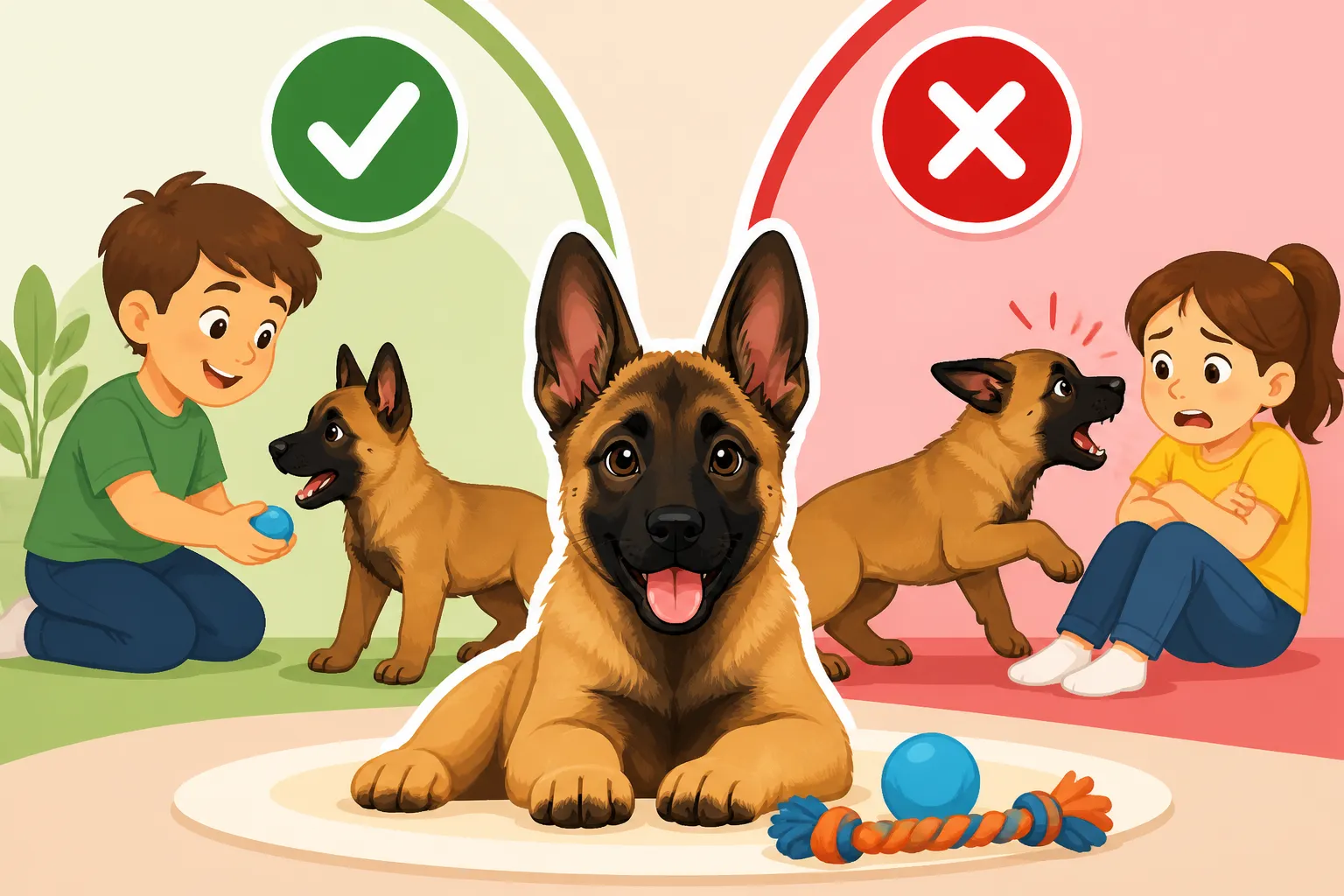
Children, with their quick movements, high-pitched voices, and often unpredictable actions, can inadvertently become irresistible moving targets for a Malinois puppy. The puppy doesn't mean to hurt them; it's simply reacting to the stimulation in a way that feels natural to its developing instincts. Without proper redirection and management, this can lead to a cycle of fear in the child and frustration for the puppy and parents alike. Understanding that this is a normal, albeit intense, part of Malinois puppy development is crucial, as is having a solid plan to manage it. We've talked extensively about The Shark Phase Every Malinois Puppy Goes Through, and for a good reason – it's a rite of passage, but one that needs careful navigation with kids around.
High Drive and Relentless Energy Levels
Belgian Malinois puppies are born with an insatiable drive and seemingly endless reserves of energy. They are perpetually "on," scanning their environment, looking for a job to do, or something to engage with. This isn't a breed that’s content with a couple of short walks and some playtime in the yard; they require intense mental and physical stimulation every single day, often for several hours.
This relentless energy can be overwhelming for children, who may not understand why the puppy won't settle down. A Malinois puppy might jump, mouth, or attempt to "play" with children in ways that are far too rough for their size and age. Even well-intentioned play from the puppy's perspective can knock a smaller child over or cause distress. It’s vital to acknowledge that a tired Malinois puppy is still often more energetic than many other breeds' awake adult dogs. This isn't a fault of the puppy, but a fundamental aspect of the breed that must be prepared for, especially when small, less resilient humans are part of the equation.
Herding Instincts at Play
The Belgian Malinois was originally bred for herding livestock, and that deep-seated instinct often manifests even in the youngest puppies. In a home environment, children can inadvertently become the "flock" a Malinois puppy feels compelled to manage. This can involve nipping at heels, bumping into legs, or circling children to direct their movement. While this behavior is rooted in instinct rather than aggression, it can be incredibly startling, painful, and confusing for children.
Imagine a toddler running across the living room, and a Malinois puppy, acting on pure instinct, darts after them, nipping at their ankles to "stop" or "redirect" them. This is a very real scenario that many Malinois owners with children face. We've delved into specific ways this manifests in A Malinois That Herds Children Around a Yard, highlighting just how natural, yet problematic, this behavior can be. These herding behaviors, if not managed and redirected appropriately, can quickly lead to children developing a fear of the puppy, creating a strained household dynamic.
Essential Safety Measures and Supervision Strategies
Given the intense nature of a Malinois puppy, safety isn't just a recommendation; it's an absolute necessity. Proactive management and rigorous supervision are the cornerstones of ensuring positive and safe interactions between your puppy and your children. Without these, you're rolling the dice, and that's a gamble no responsible pet owner should take.
Constant, Active Supervision
When a Malinois puppy and children are in the same space, 100% active supervision is non-negotiable. This isn't "supervision" while you're scrolling on your phone or cooking dinner; it means your eyes and attention are solely on the interactions between the puppy and the kids. You need to be ready to intervene immediately at the slightest sign of inappropriate play or discomfort from either party. This level of supervision requires immense dedication and can be exhausting, but it's the only way to genuinely prevent incidents.
Consider setting up a rotating schedule for supervision among adults in the household if possible, to avoid burnout. There will be times when focused supervision just isn't feasible, and that's when physical barriers become your best friend. Never assume "they'll be fine" for just a minute or two. Those minutes are often all it takes for an undesirable interaction to occur, potentially setting back your training and trust building by weeks or even months.
Creating Safe Zones for Both Puppy and Children
Physical separation is a critical tool in managing the interactions between a high-drive puppy and children. This means creating designated "safe zones" where each can relax without fear of interruption or unwanted attention from the other. For the puppy, this might be a crate or a sturdy playpen. These spaces aren't for punishment but for providing a secure den where the puppy can chew a toy, nap, or simply decompress from the constant stimulation of a busy household.
Baby gates are invaluable for cordoning off areas of the house, allowing the puppy to be in the same general vicinity as the family but preventing direct contact when you can't actively supervise. For children, a puppy-free zone is equally important. This could be their bedroom, a play area, or a quiet corner where they know they won't be jumped on or nipped at. We've talked about the importance of secure housing, including Crates, Kennels and Heat Alarms for a Belgian Malinois, and this principle extends directly to managing puppy-child interactions. Products available on Amazon, like heavy-duty playpens or extra-tall baby gates, can be incredibly helpful in establishing these crucial boundaries.
Teaching Children How to Interact (or Not Interact)
It's not just the puppy who needs training; children also need clear rules and guidance on how to behave around the Malinois puppy. This is often the hardest part, as young children lack the impulse control and understanding that adults possess. Key rules should include:
- No running or screaming around the puppy: These actions can trigger the puppy's prey drive or herding instinct.
- No teasing or poking: Teach respect for the puppy's space and body.
- Always ask an adult before approaching: This ensures an adult is ready to supervise.
- Gentle touch only: Show them how to pet gently on appropriate areas, avoiding the face or tail.
- Recognizing puppy body language: Teach them to understand when the puppy is uncomfortable (e.g., yawning, turning head away, lip licking) and to back off.
- Giving the puppy space, especially when eating or sleeping: This is where incidents often occur due to resource guarding or startling the puppy.
It's a continuous educational process, tailored to the child's age and understanding. For very young children, the interaction should be almost entirely managed by adults, focusing on teaching the child appropriate behavior rather than expecting the puppy to be tolerant of anything.
Proactive Training for Harmony
A Malinois puppy's high drive isn't something you can train out of them, but you can absolutely channel it and shape it into desirable behaviors that make living with children much safer and more enjoyable. This requires consistency, patience, and a solid understanding of positive reinforcement.
Building an "Off Switch" in Your Malinois Puppy
One of the most crucial things you can teach a Malinois puppy, especially in a family with children, is an "off switch." This means teaching them to settle down, relax, and be calm on command, even amidst distractions. Commands like "Place" (go to your mat/bed and stay there) or "Settle" are invaluable. This isn't about crushing their spirit or drive, but teaching them when it's appropriate to be "on" and when it's time to chill out.
Start training this in a low-distraction environment and gradually introduce more distractions, always rewarding calm behavior generously. Imagine being able to tell your puppy "Place" when children are playing rambunctiously, knowing the puppy will calmly go to its mat and observe rather than trying to join the fray inappropriately. This takes consistent effort, but the payoff for household peace is enormous. We've gone into detail about Building an Off Switch Into a Belgian Malinois and it's a topic worth revisiting constantly.
Redirecting Inappropriate Chewing and Biting
Since puppy biting is a given with a Malinois, teaching immediate and consistent redirection is paramount. The moment those sharp puppy teeth make contact with skin (or clothing, which kids often offer as a convenient target), redirect them onto an appropriate chew toy. Have a variety of sturdy chew toys readily available at all times. Tug toys, durable rubber chew toys, or puzzle toys are excellent choices.
When redirecting, make sure the toy is more appealing than whatever they're currently biting. You might even carry a toy in your pocket at all times. If the puppy continues to bite you or the children even after redirection, a brief "time out" (e.g., puppy goes into its crate for a minute or two) can help them understand that biting skin ends playtime. Never use harsh physical corrections, as this can damage the puppy's trust and potentially lead to fear-based aggression down the line. For ideas on appropriate chew items, check out options on Amazon; look for highly durable, Malinois-proof toys. The post Redirecting a Biting Malinois Puppy Onto a Toy offers even more strategies for this essential training.
Structured Obedience and Engagement
Beyond the basics, consistent, structured obedience training is vital for a Malinois puppy's well-being and for peaceful coexistence with children. This includes commands like sit, stay, down, and a reliable recall. A well-trained Malinois is a more confident and predictable Malinois. Regular training sessions also provide crucial mental stimulation, which is just as important as physical exercise for tiring out this intelligent breed.
Consider enrolling in puppy classes, either in-person or online. Online platforms like BAXTER & Bella offer comprehensive puppy training programs that can be incredibly helpful for families, as they often include modules on managing puppy behavior around children and integrate training into daily family life. The key is engagement: teach your Malinois that working with you is the most rewarding thing they can do. This bond and control will be invaluable when managing interactions with children. Also, ensure you are teaching them The Structure a Belgian Malinois Needs Every Day to prevent them from becoming destructive or overwhelming.
Managing Expectations and When to Seek Help
Bringing a Malinois puppy into a home with children isn't a passive process; it's an active, long-term commitment. Setting realistic expectations and knowing when to call in professional help can make all the difference between a successful integration and a challenging, potentially heartbreaking situation.
Understanding Normal Puppy Development vs. Red Flags
It's crucial to differentiate between normal, albeit intense, Malinois puppy behaviors and genuine red flags that might indicate a deeper issue. Nipping, mouthing, and boisterous play are normal for Malinois puppies. Growling over a toy, attempting to bite when cornered, or showing persistent fear-based reactions towards children are not normal and require immediate professional intervention. A puppy that consistently tries to bite and breaks skin, even when redirected, might need a more intensive management strategy.
One question many new owners ask is Whether a Malinois Puppy's Biting Is Aggression. Understanding the difference is paramount. Normal puppy biting is usually quickly redirected with a toy, or the puppy releases when a yelp is given. Aggressive biting, however, often lacks inhibition, may be accompanied by stiff body language, whale eye, or growling, and persists despite attempts at redirection. Trust your gut; if something feels off, it probably is.
The Role of a Professional Trainer or Behaviorist
If you find yourself struggling to manage your Malinois puppy's interactions with children, or if you observe any red flag behaviors, do not hesitate to seek help from a qualified professional. This isn't a sign of failure; it's a sign of responsible pet ownership. A certified professional dog trainer or a veterinary behaviorist can assess your specific situation, observe the puppy's behavior, and provide tailored strategies and training plans. They can also help you determine if specific behaviors are within the range of normal for the breed or indicative of something more serious.
Sometimes, an outside perspective is exactly what's needed to identify triggers or patterns you might have missed. They can also help you implement more advanced management techniques or fine-tune your training protocols to better suit your family's unique dynamics. Remember, the safety and well-being of both your children and your puppy are paramount, and sometimes, a professional is the best resource to ensure that.
Realistic Long-Term Commitment
Owning a Belgian Malinois is a long-term commitment, and owning one with children in the house is an even greater one. The puppy phase, while intense, eventually passes, but the need for management, training, and supervision doesn't completely disappear. As your Malinois grows, their strength and speed will increase dramatically, making even accidental bumps or jumps more impactful. Therefore, consistent training, engagement, and management are lifelong requirements.
It’s important to understand that a Malinois needs a "job" throughout its life. This could be sport training, advanced obedience, scent work, or even just highly structured daily activities. An under-stimulated Malinois is a recipe for behavioral issues, and those issues will invariably affect the children in the home. The article A Belgian Malinois in a House With Kids and Dogs covers the ongoing commitment required. Before committing to a Malinois, especially with children, honestly assess whether your family has the time, resources, and dedication for this significant undertaking for the next decade or more. It's not just about surviving the puppy stage, but thriving through every stage of their lives.
| Interaction Type | Safe for Malinois Puppy and Children? | Key Considerations |
|---|---|---|
| Supervised, Calm Play | Yes, with careful management | Adult must be 100% focused, ready to intervene. Toys are key for redirection. |
| Unsupervised Play | NO | Never leave a Malinois puppy and children alone. Accidents happen in seconds. |
| Feeding Time | No direct interaction | Always separate puppy and children during meals to prevent resource guarding. |
| Resting/Napping | No direct interaction | Teach children to respect puppy's quiet time in crate/bed. Do not disturb a sleeping puppy. |
| Running/Chasing | Generally NO | Can trigger prey drive or herding instinct. Teach children to walk calmly, avoid sudden movements. |
| Tug-of-War | Yes, with rules and adult | Teach "out" command. Adult must manage the game and ensure appropriate intensity. |
| Petting/Affection | Yes, with rules and adult | Teach gentle touch, avoiding face/tail. Child should approach slowly, with adult present. Puppy should initiate affection. |
Disclaimer
This article is for general informational purposes only and does not constitute professional advice. Laws, prices and regulations vary by location and change over time. Consult a qualified professional for guidance on your specific situation.