Meal Timing for a Malinois Puppy in Training
One of the most common headaches for new Belgian Malinois puppy owners, especially those diving into training early, is figuring out the feeding puzzle. It's not just what they eat, but when they eat that can make a monumental difference in their energy levels, their focus during training, and even their digestive health. That hyper-focused, energetic Malinois puppy needs consistent fuel, but poorly timed meals can lead to an over-aroused pup, an upset stomach, or a flat, unmotivated learner. This guide is here to walk you through the nuances of optimizing meal timing for your Malinois puppy, ensuring they get the most out of their food and their training.
The Rationale Behind Strategic Meal Timing for Malinois Puppies
When you bring home a Belgian Malinois puppy, you're not just getting a cute, furry companion; you're getting a small, high-octane athlete in the making. Their bodies are growing at an incredible rate, their brains are developing, and their energy expenditure is through the roof, especially if you're engaging in early training. Understanding why meal timing matters so much is the first step in setting your puppy up for success.
Fueling the Endless Energy and Growth Spurts
A Malinois puppy's metabolism is like a tiny, turbocharged engine that's constantly running. They're growing at an astonishing pace, putting on muscle, bone, and neurological connections daily. This intense developmental period requires a steady supply of energy, far more proportionally than an adult dog. If they go too long without food, their blood sugar can dip, leading to lethargy or, conversely, a "sugar rush" where they become over-stimulated and unable to focus. Imagine trying to concentrate on a complex task when you're ravenously hungry or experiencing a crash after a sugar high – it's no different for your pup.
Breaking their daily food ration into multiple, smaller meals helps maintain a more stable blood sugar level, providing consistent energy for their boundless play, exploration, and, most importantly, their training sessions. It also supports their physical development without putting undue stress on their system. We're not trying to push for maximum growth at an unnatural speed, which can actually be detrimental to their developing joints and bones. Instead, we want to provide consistent, healthy fuel. You want steady growth, not rapid spikes, because Why Pushing Growth Hurts a Malinois Puppy.
Optimizing Digestion and Nutrient Absorption
Malinois puppies, like all young dogs, have sensitive digestive systems. They're still learning to process different foods and their gut flora is establishing itself. Dumping a massive meal into their system once or twice a day can overwhelm it, leading to digestive upset, discomfort, and less efficient absorption of vital nutrients. Smaller, more frequent meals are much easier for their young digestive tracts to handle. This allows their bodies to properly break down the food, extract all the goodness, and prevent issues like gas, bloating, and diarrhea.
Proper meal timing can also reduce the risk of certain conditions, though thankfully bloat (Gastric Dilatation-Volvulus) is less common in puppies than in adult large breeds, it's still a good practice to avoid heavy exercise immediately after eating. Spacing out meals gives their stomach ample time to process the food before they're zooming around again. It’s all about creating an environment where their bodies can efficiently turn that high-quality puppy food into the healthy, robust Malinois they're meant to be. The kind of food you choose for them to grow on is also incredibly important. The Food a Malinois Puppy Should Grow On will provide the building blocks they need.
Establishing a Consistent Feeding Schedule for Young Malinois
Consistency is the golden rule when it comes to raising a well-adjusted and healthy Malinois puppy. Their internal clocks thrive on routine, and nowhere is this more evident than with their feeding schedule. A predictable routine helps regulate their digestion, establishes good potty habits, and creates a sense of security, which is foundational for effective training.
The 'How Often' and 'How Much' for Puppies
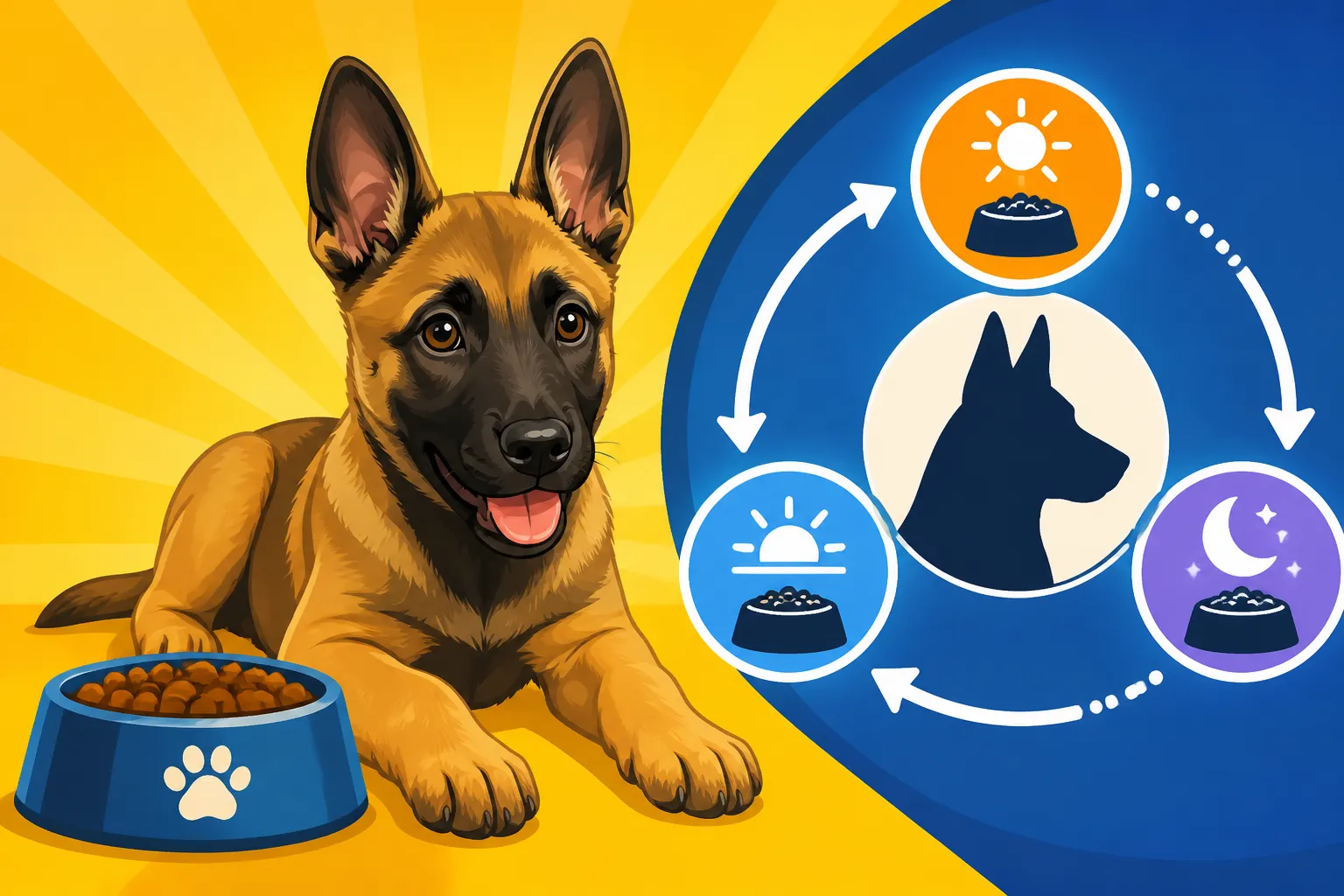
Generally, most Malinois puppies thrive on three to four meals a day when they are very young, typically up to around six months of age. As they grow and their digestive systems mature, this can often be reduced to two to three meals. However, these are just guidelines, and every puppy is an individual. A good starting point is to consult with your breeder, as they will have specific recommendations based on their lines and the individual puppy's development. Your veterinarian is another excellent resource for tailoring a schedule that fits your pup's unique needs, especially considering their activity level.
The "how much" aspect is equally crucial. Instead of free-feeding, which can lead to overeating or inconsistent intake, measure out their daily kibble ration according to the guidelines on your chosen food bag, adjusting for individual activity and body condition. Then, divide that total amount into the 3-4 meals. For instance, if your puppy needs 3 cups a day, you might give them 3/4 cup four times a day, or 1 cup three times a day. Observing your puppy's appetite, energy, and stool consistency will be your best guide for fine-tuning these amounts. Remember, this is a general guide to what a Malinois puppy eats in year one, and variations are common.
Here’s a general guide to feeding frequency for a Malinois puppy:
| Age of Puppy | Recommended Feeding Frequency (per day) | Notes on Activity & Growth |
|---|---|---|
| 8-12 Weeks | 4 meals | Peak growth, high energy. Focus on small, frequent meals for steady blood sugar and digestion. |
| 3-6 Months | 3-4 meals | Rapid growth continues. May begin to reduce to 3 meals as appetite consolidates. |
| 6-12 Months | 2-3 meals | Growth slows but still significant. Monitor body condition closely; adjust portions to prevent being too lean or too heavy. |
| 12+ Months | 2 meals | Generally transitioned to adult food and feeding schedule. Some very active working dogs may benefit from 3 smaller meals. |
Integrating Training Sessions Around Meal Times
The timing of your puppy's meals directly impacts their readiness for training. A puppy who is too full might be sluggish, uncomfortable, or prone to regurgitation if asked to do vigorous activity. Conversely, a puppy who is overly hungry might be distracted, anxious, or more interested in sniffing for crumbs than listening to your cues. The sweet spot is a puppy who is slightly hungry but not starving, or one who has had a couple of hours to digest a meal.
Most trainers recommend scheduling significant training sessions either before a meal or at least 1-2 hours after. This allows their stomach to be neither empty nor overly full. For instance, if your puppy eats at 7 AM, you might plan your morning training session for 6:30 AM (using a portion of their breakfast as rewards) or around 9:00 AM. Evening sessions could be before their dinner, or a couple of hours after their lunch if you're feeding three times a day. Avoiding strenuous exercise, jumping, or intense play immediately after meals is a wise precaution for any breed, helping to prevent digestive upset. The same principle applies when considering Whether a Malinois Should Rest Before Bite Work, even if your puppy isn't doing bite work yet, the concept of rest after food is vital.
Using Food as a Training Tool: Rewards and Motivation
For a Belgian Malinois, food is often a powerful motivator, second only perhaps to a favorite tug toy or ball. This makes meal timing an invaluable part of your training strategy, allowing you to leverage their natural drive and appetite to build engagement and solidify behaviors.
Leveraging Hunger Drive for Engagement
A slightly hungry Malinois puppy is a motivated Malinois puppy. This isn't about starving your dog, but rather using their natural drive for food to your advantage. Instead of feeding your puppy their entire meal in a bowl, consider setting aside a portion of their daily kibble to use exclusively for training. This means that when it's training time, they're eager and focused, knowing that good things (delicious kibble!) come from paying attention to you. This approach makes their regular kibble incredibly high-value during sessions, rather than just something that appears twice a day.
This strategy is particularly effective for new behaviors or in distracting environments where you need their undivided attention. By making you the source of their sustenance, you strengthen your bond and position yourself as the most rewarding thing in their world. This deepens their engagement and makes them incredibly responsive to your cues. It can be a game-changer for a high-drive breed like the Malinois. Many handlers find that a dog that is slightly keen to eat is much more receptive to learning. You'll find more on this in Whether to Train a Belgian Malinois Hungry.
Balancing Meals and High-Value Treats
While using kibble for training is fantastic, there will be times when you need an even higher value reward to cut through distractions or mark a truly exceptional effort. This is where high-value treats come in. The key is to remember that these treats still contribute to their caloric intake. If you're using a lot of treats, you'll need to slightly reduce their regular meal portions to prevent overfeeding and unwanted weight gain.
High-value treats can be anything from small pieces of cooked chicken, cheese, or specialized training treats. Many owners find freeze-dried meat treats, readily available from retailers like Chewy or Amazon, to be incredibly motivating. Just be sure to break them into tiny, pea-sized pieces to avoid giving too many calories or causing your puppy to become full too quickly. The goal is to reward without over-satiating them. Your puppy will burn through quite a few Training Treats a Belgian Malinois Burns Through, so having a strategy for balancing them with meals is critical for their overall health and weight management. Using a measuring scale can be really helpful for ensuring you're not inadvertently overfeeding. Brands like Ollie also offer fresh food options that can be divided into small, high-value training rewards.
Common Pitfalls and Troubleshooting Meal Timing Challenges
Even with the best intentions and a well-planned schedule, raising a Malinois puppy comes with its share of unique challenges. Their high drive and sensitive nature can sometimes throw a wrench into even the most carefully constructed meal timing routine. But don't worry, there are usually solutions!
The Puppy Who Refuses to Eat or Eats Too Fast
It’s disheartening when your Malinois puppy, known for their robust appetites, suddenly turns their nose up at food. This can often happen due to stress, a new environment, or even over-arousal. A Malinois at a new training venue or experiencing a new situation might be too focused on their surroundings to eat their usual meal. If your puppy is generally healthy but shows a temporary lack of appetite, try offering smaller, more enticing portions, or holding off until they’ve settled down. Sometimes, a bit of training or mental stimulation before offering food can help them relax and focus on eating. If this happens at an event, understanding A Belgian Malinois That Refuses Food at a Trial can be very insightful.
On the flip side, some Malinois puppies eat with such gusto that they inhale their food in seconds, which can lead to indigestion or even a risk of choking. For these speedy eaters, slow feeder bowls or puzzle feeders are a godsend. These tools force your puppy to slow down, work for their food, and engage their brains, turning mealtime into a mental exercise. Elevated bowls are another option that some owners find helpful, though the research on their universal benefit for all breeds is varied.
Digestive Upset and Timing Adjustments
Soft stools or intermittent diarrhea are not uncommon in puppies, especially those under the stress of training, new environments, or dietary changes. While a vet visit is always recommended to rule out underlying health issues, digestive upset can sometimes be a sign that your meal timing or frequency needs adjustment. Feeding too much at once, or feeding immediately before vigorous activity, can sometimes contribute to a less-than-solid stool.
If you notice persistent soft stools, consider reviewing your feeding schedule. Are the meals too large? Is there enough time between eating and high-intensity play? Sticking to a consistent feeding time, even if you adjust the amounts, can help regulate their digestive system. A sudden change in diet can also be a culprit, so always transition new foods slowly. Sometimes, a probiotic supplement (after consulting your vet) can also help settle a sensitive gut. Addressing Soft Stools in a Malinois Under Training Stress is crucial for their comfort and health.
Adapting Meal Schedules as Your Malinois Puppy Grows
Your Malinois puppy's nutritional needs and activity levels will shift dramatically as they grow from a tiny fluffball into a powerful, athletic adult. What worked at eight weeks might not be appropriate at eight months or a year. Adapting their meal schedule and portions is an ongoing process that requires keen observation and flexibility.
Transitioning from Puppy to Adolescent Rations
As your Malinois puppy approaches adolescence (typically between 6-12 months), their rapid growth phase begins to slow down, though they're still developing muscle and bone. This is generally the time when you'll transition them from puppy food to an adult formula. It's also usually when you'll reduce their meal frequency from three times a day to two. This transition should always be gradual, typically over 7-10 days, slowly mixing increasing amounts of the new food with decreasing amounts of the old.
Monitor their body condition closely during this time. While a Malinois should always be lean, you don't want them to be underweight or, conversely, to start carrying extra pounds. Their energy levels will still be incredibly high, but their caloric needs per pound of body weight may start to decrease slightly as they mature. The guidelines on your chosen adult dog food will provide a starting point, but remember, these are just averages. Your individual Malinois might need slightly more or less depending on their activity. Knowing when and how to manage Moving a Belgian Malinois to Adult Food is key to a smooth transition.
The Importance of Ongoing Observation
Perhaps the most critical aspect of effective meal timing for a Malinois, at any age, is the art of observation. Your dog can’t tell you in words if they’re feeling too hungry, too full, or if their current feeding schedule isn't quite right. You need to be their advocate and interpreter. Regularly assess their body condition by feeling their ribs – you should be able to feel them easily but not see them prominently. Their waist should tuck in behind the ribs when viewed from above. If you're unsure, Judging a Malinois's Condition by Hand is a skill worth mastering.
Pay attention to their energy levels. Are they crashing after meals? Are they overly frantic before meals? Observe their stool quality; it’s a direct indicator of digestive health. And, of course, watch their overall demeanor. A healthy, well-fed Malinois puppy in training should be engaged, energetic, and eager to learn, but also capable of settling down when the work is done. Don't be afraid to make small adjustments to meal times or amounts based on these observations. It's an evolving process that will ensure your Malinois thrives for years to come. For more on their early development, consider The First Week With a Belgian Malinois Puppy. Even for adult Malinois, the challenge of How Many Cups a Seventy Pound Belgian Malinois Eats will depend heavily on their daily activity.
Disclaimer
This article is for general informational purposes only and does not constitute professional advice. Laws, prices and regulations vary by location and change over time. Consult a qualified professional for guidance on your specific situation.