Weighing a Belgian Malinois Through a Training Year
It's a common struggle for Belgian Malinois owners to keep their high-octane partners at a healthy, functional weight. One week they seem to burn through everything you put in front of them, the next a minor tweak in routine or an unexpected lull in training sees them either packing on a little extra padding or, conversely, dropping weight faster than you can blink. This guide is here to walk you through the nuances of monitoring and managing your Belgian Malinois's weight throughout their demanding training year, ensuring they stay in peak condition for every challenge.
Why Monitoring Weight is Crucial for a Working Malinois
When you own a Belgian Malinois, you're not just managing a pet; you're often overseeing an elite canine athlete. Their bodies are finely tuned machines, and even slight deviations from their ideal weight can have significant repercussions on their performance, endurance, and overall health. For a breed known for its relentless drive and incredible athleticism, a few extra pounds can hinder agility, while being too lean can deplete energy reserves and compromise recovery.
The Demands of a High-Drive Lifestyle
Think about what we ask of these dogs. Whether it's the explosive power needed for a bite work apprehension, the sustained focus required for complex obedience routines, or the tireless searching demanded by detection work, a Malinois’s body is constantly under stress. This isn't your average dog's metabolism. They burn calories at an astonishing rate, often appearing to vibrate with unused energy even when resting. If their weight isn't right, every jump is harder, every sprint is slower, and every recovery takes longer. It impacts their joints, their cardiovascular system, and their ability to handle the physical demands we place on them daily.
Imagine your Malinois doing multiple reps of a wall climb, or sustaining a long track in varied terrain. Each movement requires efficient energy use and minimal strain. An overweight Malinois will struggle with the sheer physics of lifting its body or maintaining speed, leading to quicker fatigue and increased risk of injury. Conversely, a Malinois that is too thin might not have the muscle mass or fat reserves to sustain prolonged effort or recover effectively from intense sessions. It's a delicate balance, and constant vigilance is required to keep them in the optimal zone for their specific job. This is why understanding The Lean Condition a Belgian Malinois Should Carry is so important.
Early Warning Signs Through Weight Fluctuation
Weight changes are often the first tangible indicators that something in your Malinois's routine or health needs attention. It's not just about aesthetics; it's about internal efficiency and well-being. A sudden drop in weight, especially if accompanied by a decrease in energy or a change in appetite, could signal an underlying health issue, anything from dental pain making eating difficult to more serious concerns like gastrointestinal problems or even early stages of disease.
On the flip side, an unexpected gain could mean you're overfeeding for their current activity level, or perhaps their metabolism is slowing as they age, requiring dietary adjustments. Overlooking these subtle shifts can lead to more significant problems down the line. For example, if your Malinois is dealing with something like Pannus and the Sunlight That Drives It in Malinois, changes in medication or sun exposure could affect their appetite or energy expenditure, subtly impacting their weight. Regular weighing helps you catch these trends early, allowing for timely intervention before they escalate into serious performance issues or veterinary emergencies. It's about being proactive rather than reactive, always staying one step ahead with these sensitive, high-performing dogs.
Understanding the Ideal Condition of a Belgian Malinois
Defining the "ideal" weight for a Belgian Malinois isn't just about a number on a scale; it's about their body composition, muscle tone, and overall athletic condition. Unlike some breeds where a bit of extra cushion might be acceptable, a Malinois needs to be lean, hard, and agile. This requires a keen eye and a hands-on approach, as their short, dense coat can sometimes mask subtle changes.
The Visual and Tactile Assessment: What to Look For
You should be able to see and feel your Malinois's ideal condition. Visually, from above, they should have a distinct waistline, tucking up from the rib cage to the hips, like a greyhound but with more musculature. From the side, their abdomen should also tuck up. They should look athletic, not blocky or heavy. Their muscles, particularly over the hindquarters and shoulders, should be well-defined and firm.
However, the visual isn't enough. You need to use your hands. Run your fingers along their rib cage. You should be able to easily feel the individual ribs, but they shouldn't protrude sharply or be visibly distinct without applying pressure. There should be a thin layer of muscle and fat over them, much like the back of your hand. Feel along their spine and hip bones; these should also be palpable without being bony. A dog that feels soft or squishy over the ribs or loin, or one where you can't easily feel the ribs without deep palpation, is carrying too much weight. Conversely, if the ribs, spine, and hip bones are starkly visible and feel like sharp edges, your Malinois is likely too lean. This hands-on method is often more reliable than the scale alone, as muscle weighs more than fat.
Beyond the Scale: Muscle Mass vs. Fat
The number on the scale can be misleading. A Malinois at 65 pounds might be perfectly conditioned, while another at the same weight could be either too thin or too heavy, depending on its frame and muscle mass. What we're truly aiming for is optimal body condition, not just a specific weight. High-drive working dogs tend to be incredibly muscular, and muscle density is a significant factor in their overall weight. You might have a heavily muscled Malinois that weighs more than a "pet" Malinois of the same height, but is actually in far superior condition.
This is where the Body Condition Score (BCS) comes in. It's a standardized, objective way to assess your dog's fat reserves, usually on a scale of 1 to 9 (with 1 being emaciated and 9 being obese), where 4 or 5 is ideal for most active dogs. For a Malinois, we often aim for a lean 4 or even a strong 3 if they are in intense competition or work. A good BCS helps you distinguish between a healthy, muscular weight and excess body fat. Remember, building and maintaining muscle is crucial for these dogs, and you don't want to sacrifice muscle mass in an attempt to hit an arbitrary weight target. Sometimes, the goal isn't to lose weight, but to recompose their body, trading fat for muscle, which might mean the scale doesn't change much, but their condition drastically improves.
Here's a simplified look at the Body Condition Score:
| Score | Description | Ribs | Waistline | Abdominal Tuck |
|---|---|---|---|---|
| 1 | Emaciated | Ribs, spine, pelvis, prominent from distance | Severe abdominal tuck and obvious waist | Exaggerated |
| 2 | Very Underweight | Ribs, spine, pelvis, easily visible | Marked waist and abdominal tuck | Marked |
| 3 | Underweight | Ribs easily palpable, minimal fat covering | Easily noted waist and abdominal tuck | Noted |
| 4 | Ideal (Lean) | Ribs easily palpable, slight fat covering | Visible waist, slight abdominal tuck | Present |
| 5 | Ideal | Ribs palpable, thin fat covering | Proportional waist, abdominal tuck present | Present |
| 6 | Overweight | Ribs palpable with slight difficulty | Absent or barely visible waist, no tuck | Minimal |
| 7 | Moderately Obese | Difficult to feel ribs, noticeable fat | No waist, abdominal tuck absent | None |
| 8 | Severely Obese | Ribs very difficult to feel, heavy fat | Abdomen distended, very broad back | None |
| 9 | Morbidly Obese | Massive fat deposits, impossible to feel ribs | Massive abdomen, no distinct body shape | None |
An ideal Malinois will typically fall in the 4-5 range, sometimes a lean 3 during peak conditioning.
Growth Stages and Their Impact on Ideal Weight
A Malinois's ideal weight and body condition aren't static; they evolve significantly from puppyhood through adolescence and into mature adulthood. A growing puppy, for instance, has different nutritional and caloric needs than a fully grown adult working dog. Pushing a puppy to gain weight too quickly, or allowing them to become overweight during critical growth phases, can put undue stress on their developing joints and skeletal structure, potentially leading to orthopedic issues later in life. This is why Why Pushing Growth Hurts a Malinois Puppy is something every owner should understand.
During adolescence, roughly from 6 to 18 months, a Malinois often goes through awkward growth spurts. They might appear gangly and lean, all legs and angles, sometimes even looking a bit underweight, even if they're consuming a significant amount of food. This is often normal as their bones are lengthening rapidly before muscle mass fully catches up. However, even during this phase, you should still be able to feel a light covering over their ribs, not sharp protrusion. As they mature into their second and third years, they will typically start to fill out, gaining more muscle and body mass, settling into their adult working weight. Tracking milestones like What a Belgian Malinois Puppy Weighs at Four Months and The Weight a Malinois Hits by Six Months can provide helpful benchmarks, but always interpret these numbers in the context of their overall body condition and activity level. Their "ideal" will shift as they move through these developmental stages, requiring flexible management from you.
Factors Influencing a Malinois's Weight During Training
Managing a Malinois's weight is a dynamic process, not a "set it and forget it" task. Many variables contribute to their caloric needs and how efficiently their body uses fuel. Understanding these factors allows you to make informed adjustments and keep your dog performing at its best.
The Role of Diet and Caloric Intake
The food you feed your Malinois is, without a doubt, the primary lever you have for weight management. Not all dog foods are created equal, and for a high-performance breed, a diet tailored to their energy needs is paramount. Generic kibble might not provide the dense caloric content, protein levels, or specific nutrient profiles required by a working Malinois. Many owners opt for performance formulas, which are typically higher in protein and fat to support intense activity and muscle maintenance. For example, brands like Ollie offer fresh food options designed to be highly digestible and nutrient-dense, which can be beneficial for dogs burning a lot of calories.
You need to know How Many Pounds of Food a Belgian Malinois Eats on average, but understand that this is just a starting point. Environmental factors, stress levels, and individual metabolism all play a role. The amount of food your Malinois needs can fluctuate dramatically depending on their workload. A day of intensive tracking and bite work will demand far more fuel than a lighter training day focused on obedience. Skipping meals, or inadequate portion sizes, can quickly lead to weight loss, while consistently overfeeding, even slightly, can lead to creeping weight gain. The Daily Ration a Working Belgian Malinois Eats might look substantial, but it's often justified by their incredible energy output. Don't be afraid to adjust portions by a quarter or half cup at a time, observing the effects on their body condition over a week or two.
Training Intensity and Energy Expenditure
This is perhaps the most obvious factor, yet often the most misjudged. A Malinois isn't just "exercised"; they work. And the type and intensity of that work directly dictate their energy expenditure. A dog involved in IGP, Ring Sport, or police work might have days of explosive, anaerobic activity mixed with periods of sustained, aerobic exercise. Each demands different fuel sources and burns calories at different rates.
For instance, a Malinois doing intense, short bursts of bite work and agitation will burn a lot of energy, but might not feel as "tired" as one doing a long, slow track. Agility training involves quick movements and high impact, while detection work, though mentally demanding, can be less physically strenuous. The weather also plays a huge role; working in extreme cold or heat forces their bodies to expend more energy regulating temperature. If your Malinois is gearing up for a trial, their training intensity might spike, requiring a corresponding increase in their food intake. Conversely, during off-season or recovery periods, their caloric needs will drop, and failing to reduce their food will almost certainly result in weight gain. It's a constant recalibration, observing their output and adjusting their input. This is why Exercise a Belgian Malinois Needs Before Work isn't just about burning off steam, but about maintaining optimal physical condition.
Stress, Environment, and Metabolism
Beyond diet and activity, several less obvious factors can influence your Malinois's weight. Stress, for example, can manifest in various ways. Some Malinois might become so fixated or anxious that they burn more calories than usual, almost pacing off weight. Others, under chronic stress, might experience digestive upset or reduced appetite, leading to weight loss. Conversely, some dogs might hold onto weight when stressed, perhaps due to hormonal imbalances. It's a complex interplay. Feeding a Belgian Malinois That Will Not Eat Under Stress is a common challenge for owners preparing for a trial or handling a dog in a new environment, and understanding how to manage it can prevent unwanted weight loss.
Environmental factors like temperature, humidity, and even altitude can also affect caloric needs. Dogs working in colder climates need more calories to stay warm, while those in hot, humid conditions might have a reduced appetite due to discomfort, yet still be expending energy trying to cool themselves. Each Malinois also has an individual metabolism, much like people. Some are naturally "hard keepers" who struggle to maintain weight despite significant food intake, while others seem to gain weight at the drop of a hat. Age is another factor; as they get older and their metabolism naturally slows, you'll need to adjust their diet to prevent weight gain, even if their activity level remains high. Genetics can even play a role; some lines may naturally run leaner or have different metabolic rates. Observing these individual quirks is key to effective weight management.
Practical Strategies for Weight Management Through the Year
Staying on top of your Malinois's weight is an ongoing commitment. It requires consistency, good record-keeping, and a willingness to adapt your approach as their needs change. These practical strategies can help you maintain their peak condition.
Regular Weigh-Ins and Documentation
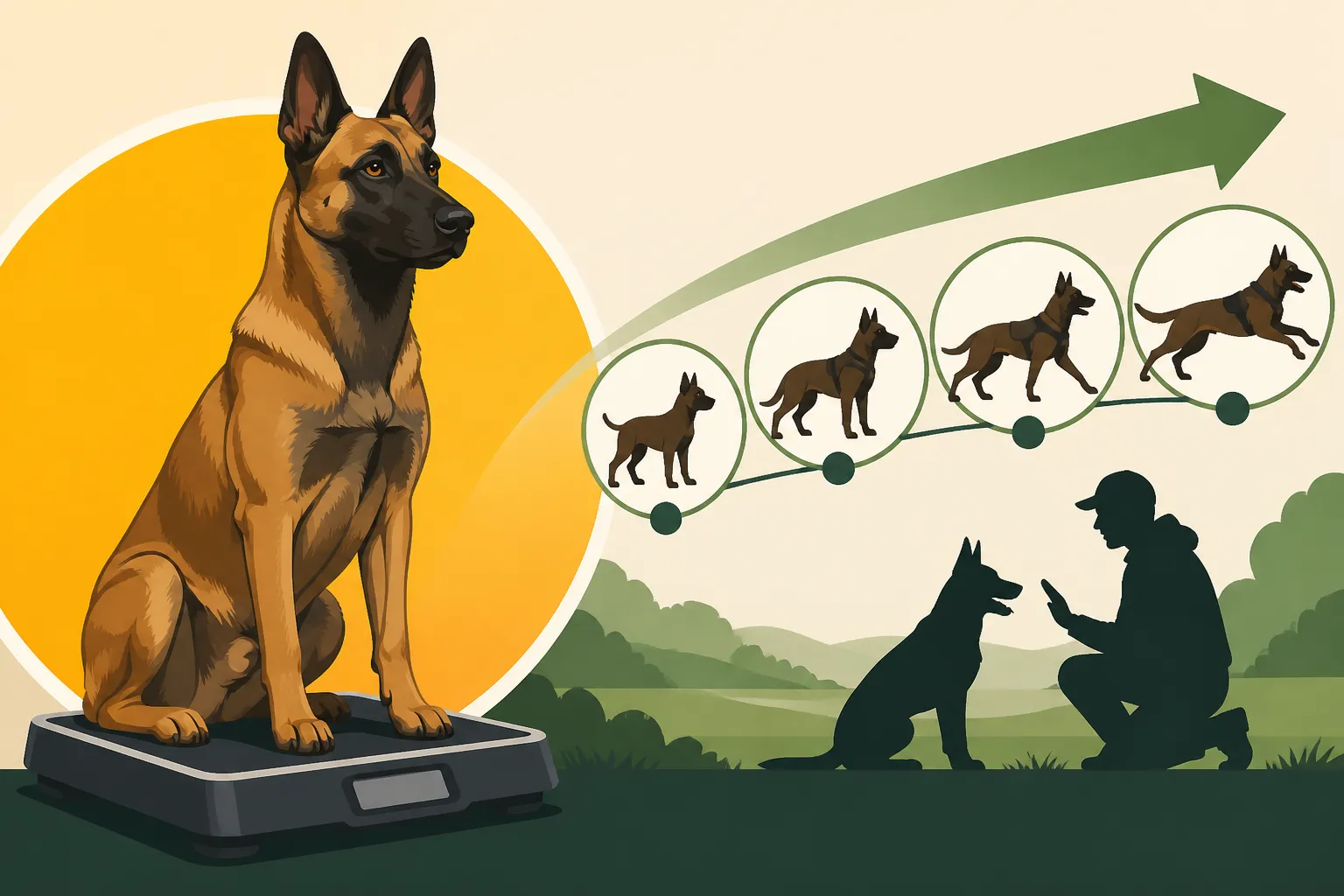
The scale is your friend, but it's only one piece of the puzzle. Regular weigh-ins, ideally once a week or every two weeks, are essential for tracking trends. Don't just weigh them; record the weight. A simple spreadsheet or even a notebook can show you patterns over time. You'll notice if they consistently drop half a pound after a heavy training week, or if they've slowly gained a pound over a month of reduced activity. This data helps you make objective decisions rather than relying on guesswork.
It's helpful to weigh your Malinois at the same time of day, perhaps first thing in the morning before breakfast, for consistency. Invest in a good quality dog scale if you can, or use your own bathroom scale by weighing yourself, then weighing yourself holding your dog, and subtracting the difference. Many veterinary clinics or even feed stores have scales available for public use, often for free. Documenting not only their weight but also a quick body condition score assessment (e.g., "BCS 4, ribs easily felt") alongside notes on their training intensity for that week can paint a very clear picture of their energy balance. This consistent tracking is the bedrock of proactive weight management, especially when trying to maintain Keeping a Belgian Malinois Sound Past Twelve.
Adjusting Food Rations for Changing Workloads
This is where the art meets the science. Once you have your baseline weight and condition, you'll need to learn to adjust their food portions based on their workload. It's not uncommon for a working Malinois to have significant caloric fluctuations. On a heavy training day or during a competition cycle, you might need to increase their food by 10-20% or even more. This could mean adding an extra half cup of kibble per meal, or incorporating calorie-dense supplements like raw meat, cooked eggs, or even a drizzle of healthy oil. For example, if you're using a reliable brand like Chewy for your kibble, you might simply order a larger bag to accommodate these fluctuating needs, or look for specific performance-focused options.
Conversely, if training is lighter, or they're having a rest week or recovering from a minor injury, you must decrease their food. Failing to do so will quickly lead to unwanted weight gain. Even a quarter cup less per meal can make a difference over a week. Some trainers advocate for feeding based on the next day's anticipated activity, while others prefer to adjust based on the previous day's output. Experiment to see what works best for your dog. The key is small, incremental changes, monitoring the effect, and not being afraid to tweak regularly. This flexible approach ensures your Malinois always has the right amount of fuel without carrying excess baggage. Don't forget, if you're trying a new food or supplement, you might also be looking at Running a Food Trial on an Itchy Malinois, which can impact weight, so introduce changes slowly.
Leveraging Nutrition for Peak Performance
Beyond just calories, the quality and composition of your Malinois's diet are critical for peak performance and optimal weight. They need high-quality protein for muscle repair and maintenance, healthy fats for sustained energy and skin/coat health, and carbohydrates for quick energy bursts. Many working dog owners opt for high-protein, high-fat performance kibbles. Consider brands that focus on these nutritional profiles. Some people also supplement their Malinois's diet with joint support, fish oil, or other performance-enhancing additives. You can often find a wide variety of these specialized foods and supplements on platforms like Amazon, making it easy to tailor their diet.
Hydration also plays a massive role. A dehydrated dog might appear lethargic, have a reduced appetite, and struggle with performance, which can indirectly affect weight. Always ensure fresh, clean water is available, especially during and after training. Electrolyte supplements can be beneficial during intense work in hot weather. Thinking about the overall nutritional strategy can make a huge difference in how your Malinois handles its workload and maintains its ideal weight. It's not just about filling the bowl; it's about fueling an athlete for consistent, high-level output. Understanding Whether a Sport Malinois Needs a Performance Formula can help guide your feeding choices.
Common Weight-Related Challenges and How to Address Them
Despite your best efforts, weight management isn't always smooth sailing. Malinois can present unique challenges, and recognizing common issues allows for targeted solutions.
The Malinois That Struggles to Hold Weight
It's a familiar scenario: you're feeding what seems like an enormous amount of food, and your Malinois still looks a bit too ribby, almost like Whether a Belgian Malinois Can Be Too Lean. This can be incredibly frustrating, especially for dogs with incredibly high metabolisms or those in intense training. Often, these are the "hard keepers" who burn through calories almost as fast as they consume them.
First, rule out any underlying medical issues. A vet check-up, including bloodwork and a fecal exam, is crucial to ensure there aren't parasites, malabsorption problems, thyroid issues, or other health concerns causing the weight loss. Once health is cleared, consider increasing the caloric density of their food, not just the volume. Switching to a higher-fat performance kibble or incorporating raw feeding might be beneficial; Whether Raw Feeding Suits a Malinois in Training is a question many owners consider for increasing nutrient absorption and calorie intake. You can also add calorie boosters like cooked eggs, cottage cheese, or small amounts of healthy oils (like salmon oil) to their regular meals. Some owners find success feeding smaller, more frequent meals throughout the day, which can improve digestion and nutrient absorption, especially for dogs that get stressed around mealtimes. Ensure they have adequate rest and recovery time, as chronic over-exercising without sufficient caloric intake will lead to weight loss.
When a Malinois Gets "Soft" or Overweight
On the other side of the coin is the Malinois that starts to get a bit "soft," losing that lean, athletic look. While less common in high-drive working lines, it can happen, especially if their workload decreases without a corresponding reduction in food, or as they age and their metabolism slows. Sometimes, owners don't realize that Whether a Ninety Pound Belgian Malinois Is Overweight is a possibility, especially if they have a larger framed dog.
The solution here is generally straightforward: reduce caloric intake and/or increase appropriate exercise. Start by reducing their daily food by 10-15% and monitor for a couple of weeks. If they're on a performance diet, you might need to switch to a maintenance formula that has fewer calories or less fat. Avoid feeding excessive treats, and if you do use treats for training, factor them into their daily caloric allowance. Increase structured exercise, focusing on activities that build muscle and endurance, not just random running around. Activities like swimming, biking (once conditioned appropriately), or more intense training sessions can help shed excess weight and rebuild muscle tone. Remember that weight gain can also sometimes be linked to underlying issues like hypothyroidism, so if diet and exercise changes aren't making a difference, a vet check is always recommended to rule out medical causes.
Inconsistent Weight: Troubleshooting the Root Causes
Perhaps the most baffling challenge is a Malinois whose weight constantly fluctuates. One week they're perfect, the next they're dropping weight, then gaining it back without any obvious changes in routine. This inconsistency can be a sign of several things that require careful investigation.
Firstly, look closely at your training schedule. Are there periods of extreme intensity followed by sudden lulls? This "feast or famine" approach to exercise can make weight management difficult. Try to create a more consistent, albeit flexible, training schedule that avoids dramatic peaks and valleys. Secondly, consider environmental factors. Is there a big temperature swing in your region that affects their outdoor activity or metabolic rate? Are they experiencing intermittent stress from new environments, strange dogs, or changes in their living situation? These stressors can lead to inconsistent eating or changes in energy expenditure. Thirdly, diet quality and consistency can play a role. Are you frequently changing brands or types of food? Is their appetite consistent? Some Malinois are notoriously picky eaters, especially under stress, and A Belgian Malinois That Refuses Food at a Trial can quickly lose condition.
Finally, and crucially, an inconsistent weight can sometimes be an early indicator of subtle, chronic health issues that aren't yet causing overt symptoms. For example, mild digestive upset, dental issues, or even early stages of conditions like A Malinois Whose Thyroid Has Given Out could cause intermittent appetite changes or nutrient malabsorption. Keeping detailed records of weight alongside notes on training, appetite, and any other observations (such as stool consistency or energy levels) will be invaluable for identifying patterns and discussing them with your veterinarian. Consistency in routine, diet, and monitoring is the best defense against erratic weight fluctuations in your Belgian Malinois.
Disclaimer
This article is for general informational purposes only and does not constitute professional advice. Laws, prices and regulations vary by location and change over time. Consult a qualified professional for guidance on your specific situation.