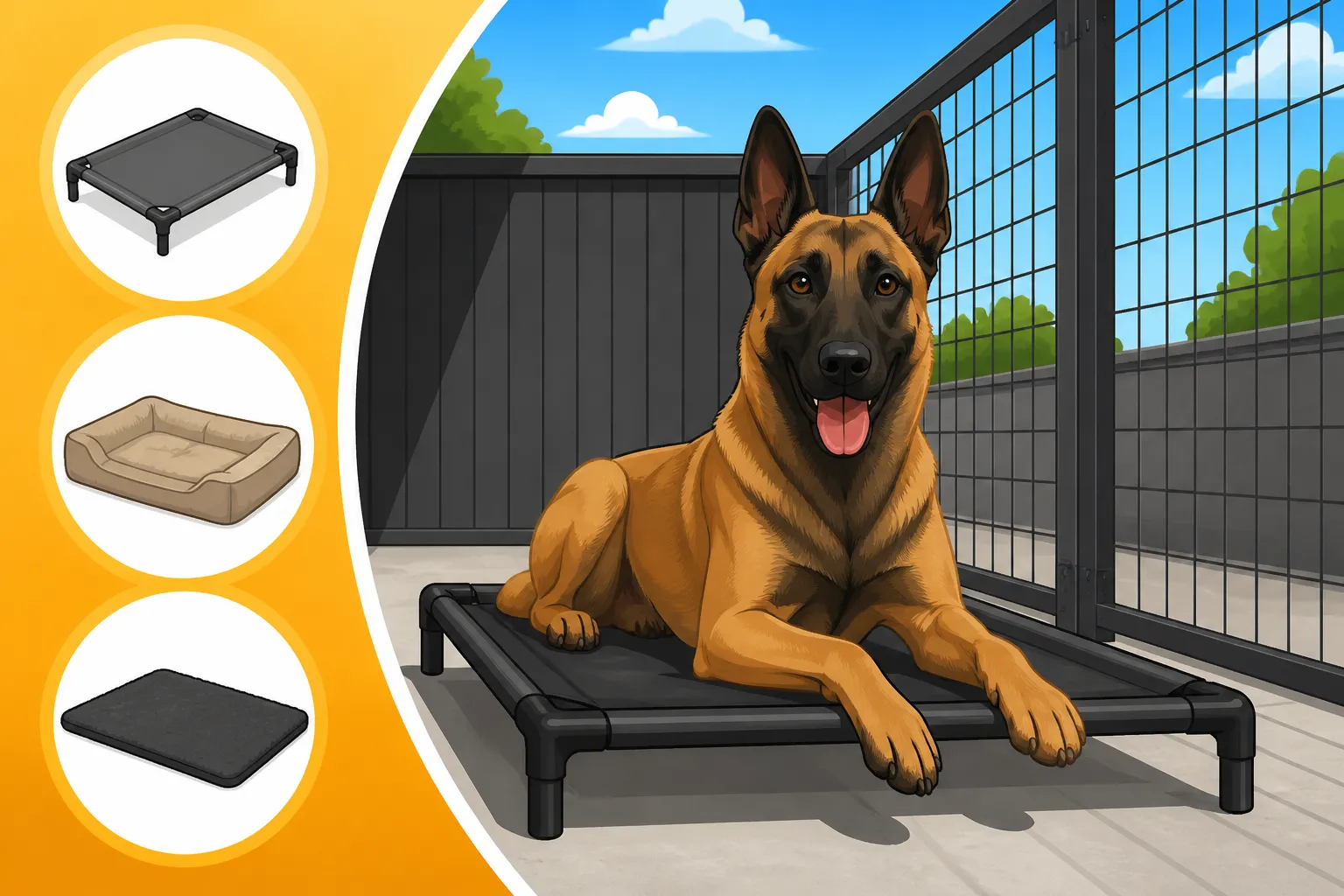
Bedding for a Belgian Malinois in a Kennel Run
If you've ever owned a Belgian Malinois, you know the struggle: finding bedding that can stand up to their incredible drive, powerful jaws, and endless energy, especially when they're in a kennel run. It feels like a constant battle against shredding, digging, and plain old destruction, not to mention keeping things clean and comfortable. This guide is here to help you navigate the often-frustrating world of kennel bedding for your Malinois, offering practical solutions that prioritize durability, hygiene, and your dog's well-being.
The Unique Challenges of Bedding for a Belgian Malinois in a Kennel Run
Let's be honest, a Belgian Malinois isn't just "any dog." They are a breed built for work, intensity, and relentless drive. This means that simply tossing an old blanket or a generic pet store bed into their kennel run is almost certainly going to end in tears—yours, probably, as you survey the shredded remains. Understanding why standard bedding fails is the first step to finding something that actually works for these incredible animals.
The Malinois Drive and Destructive Tendencies
A Malinois lives life at full throttle. Their intelligence and high prey drive, coupled with a need for constant engagement, can easily manifest as destructive behaviors when they're left without a clear job or sufficient mental and physical outlets. In a kennel run, particularly if it's an outdoor one where they might spend periods alone, this drive can turn any soft, squishy, or vulnerable object into a project. They aren't trying to be "bad;" they're simply channeling their immense energy and problem-solving skills into whatever is available. A plush dog bed, to a bored or under-stimulated Malinois, isn't a place for rest—it's a challenge, a puzzle, or perhaps a foe to be utterly dismantled. You might come back to find stuffing strewn across the run, the fabric torn to ribbons, and a Malinois looking quite pleased with their morning's work. It's incredibly frustrating to invest in what you think is a good bed, only to see it annihilated in a matter of hours or even minutes. This isn't just about cost; it's about finding a safe, comfortable space for your dog to rest. Imagine the sheer power of jaws capable of gripping and holding onto a bite sleeve during protection work being turned on a flimsy bed. It doesn't stand a chance. This destructive tendency is why choosing the right material and construction is absolutely paramount. What a Malinois Destroys in One Unsupervised Hour is often a testament to their incredible focus and strength, and bedding is no exception.
Weather Exposure and Hygiene in Outdoor Runs
Beyond the sheer destructive power of a Malinois, kennel runs, especially those that are partially or fully outdoors, present another layer of challenge: the elements. Traditional bedding materials are simply not designed to withstand rain, snow, direct sunlight, mud, and all the other delightful things an outdoor environment throws their way. A sudden downpour can turn a cozy fabric bed into a soggy, heavy, and unhygienic mess. Not only does this become incredibly uncomfortable for your dog, but it also creates a breeding ground for bacteria and odors. Keeping a kennel run clean is a constant endeavor, and if the bedding itself is porous and difficult to dry, you're fighting a losing battle. Nobody wants a perpetually damp, mildewy, or foul-smelling kennel run, and certainly, your Malinois doesn't deserve to rest in one. The goal is to provide a clean, dry, and comfortable space, which means bedding must be quick-drying, resistant to moisture absorption, and easily sanitized. Without these qualities, you'll find yourself constantly replacing soggy, smelly beds, which is not only costly but also a massive time sink. The frustration of dealing with a bedding material that absorbs every bit of dirt and moisture can truly make you question the whole setup. This is where specialized bedding options come into play, designed to tackle both the Malinois's intensity and Mother Nature's unpredictability. Why a Kenneled Malinois Develops an Odor often links directly to poor bedding choices and inadequate cleaning routines in an outdoor setup.
Essential Qualities of Ideal Kennel Bedding for Malinois
Given the unique challenges a Belgian Malinois presents, it's clear that their kennel bedding can't be an afterthought. We're looking for something that's less a "bed" and more a "fortress of slumber." The ideal solution balances incredible resilience with necessary comfort and, crucially, practicality for the human doing the cleaning.
Durability and Chew Resistance
When it comes to a Malinois, "durable" isn't just a buzzword; it's a non-negotiable requirement. Their jaws are powerful, their drive is intense, and their capacity for destruction is legendary. Standard fabric beds, even those marketed as "tough," are often no match for a determined Malinois. You need materials that can withstand gnawing, scratching, and vigorous attempts at demolition. Look for bedding made from heavy-duty materials like ballistic nylon, industrial-grade vinyl, or even aluminum frames. These aren't just thick fabrics; they're engineered to resist punctures, tears, and abrasive forces. It's important to understand the difference between "chew-proof" and "chew-resistant." Very few things are truly 100% chew-proof for a Malinois, especially if they are left bored and unsupervised for extended periods. However, "chew-resistant" means it's designed to deter chewing and survive determined attempts, lasting significantly longer than conventional options. Features like hidden zippers, reinforced seams, and solid, non-toxic frames are key indicators of robust construction. A bed with exposed seams or easily accessible edges is an open invitation for a Malinois to find a weakness and exploit it. Investing in a truly durable bed upfront, even if it seems more expensive initially, almost always saves money in the long run by avoiding constant replacements. It's about breaking that cycle of buying a new bed every few weeks because the last one was turned into confetti. This leads directly to the question of What a Chew Proof Malinois Bed Costs, and the answer is often "more, but worth it."
Comfort and Joint Support
Just because a Malinois is a tough working dog doesn't mean they don't deserve comfort. In fact, for dogs that are constantly active, whether in sport, work, or just daily high-energy antics, proper joint support is incredibly important. Their bodies take a beating, and a comfortable, supportive resting surface can aid in recovery, reduce muscle stiffness, and contribute to long-term joint health. As they age, or if they have existing orthopedic issues like hip or elbow dysplasia, this becomes even more critical. Think about the impact of repeated jumps, turns, and hard stops during training or daily play. A hard concrete or dirt floor in a kennel run offers no cushioning whatsoever. Elevated cot-style beds, for instance, not only get the dog off the cold, hard ground but also provide a taut, supportive surface that conforms slightly to their body without creating pressure points. For solid mats, dense foam or rubber materials can offer a good balance of durability and shock absorption. While a super plush bed might be instantly appealing, it might not offer the structural support needed for a Malinois's athletic build. Good bedding can significantly impact how well your Malinois recovers from strenuous activity and how comfortable they are during rest, contributing to their overall well-being and longevity. Even working dogs need their rest, and that rest should be restorative. Regular additions of Joint Supplements for a Working Belgian Malinois can help support their body, but good bedding complements this by offering external physical support.
Easy Cleaning and Maintenance
If you're dealing with a kennel run, you're dealing with dirt, mud, dust, and potentially accidents. This means that the bedding must be easy to clean. If it's a hassle to maintain, you're less likely to do it regularly, leading to an unhygienic environment. Materials that can be quickly wiped down, hosed off, or machine washed (if they fit in a commercial machine) are paramount. Forget anything that holds onto odors or takes days to dry. Look for non-porous surfaces that don't absorb liquids or trap dirt deeply within their fibers. Mesh or ballistic nylon surfaces on elevated beds allow dirt and hair to fall through, making cleanup as simple as a quick sweep or hose-down underneath. Solid vinyl or rubber mats can be scrubbed and rinsed with appropriate disinfectants. The ability to dry quickly is also a huge factor, especially in outdoor kennel runs where damp conditions can persist. You don't want your Malinois to be without a comfortable spot because their bed is still air-drying from a morning cleaning or a sudden rain shower. Think about the practicalities of your routine: how often do you clean the kennel run? How much time do you have for bedding maintenance? Your answers will help guide your choice toward materials and designs that fit seamlessly into your life, ensuring your Malinois always has a fresh, clean place to rest.
Popular Bedding Options for Belgian Malinois Kennel Runs
Now that we understand what we're up against and what qualities are non-negotiable, let's look at some of the most effective bedding solutions that Malinois owners often turn to for their kennel runs. Each has its own set of benefits and considerations, and what works best will often depend on your specific Malinois, your climate, and your setup.
Elevated/Cot-Style Beds
These beds are a perennial favorite among owners of working breeds and notorious chewers, and for good reason. They consist of a sturdy frame, usually made of aluminum or PVC, with a durable fabric stretched tightly across it. The key benefit here is that they lift your Malinois off the ground, which is a huge plus in many kennel run scenarios. Being off the ground provides excellent airflow, keeping your dog cooler in summer and warmer in winter by preventing direct contact with cold concrete or damp earth. This elevation also keeps them away from any puddles, dirt, or insects that might be on the kennel floor.
The fabric itself is usually a heavy-duty mesh or ballistic nylon, designed to be resistant to chewing and tearing. Brands like Kuranda are very popular and widely available on platforms like Amazon and Chewy, known for their "chew-proof" guarantee because the fabric is tucked into the frame, making the edges inaccessible to most chewers. Cleanup is incredibly simple: a quick wipe-down or a hose-off is usually all it takes. Dirt, hair, and debris tend to fall through the mesh, making the underlying kennel floor easy to clean as well. While they might not look as plush as a traditional stuffed bed, the taut surface provides excellent orthopedic support, which is great for active Malinois. However, some Malinois might take a bit of time to adjust to an elevated bed if they're used to softer surfaces. It's a trade-off, but for durability and hygiene in a kennel run, they are hard to beat.
| Bedding Type | Durability (Chewing) | Comfort/Support | Cleaning Ease | Pros | Cons |
|---|---|---|---|---|---|
| Elevated Cot | High (often chew-proof) | Medium (firm support) | High | Excellent airflow, off ground, easy to clean, orthopedic support | Less plush, some frames can be chewed (if not fully enclosed fabric) |
| Heavy-Duty Mat | Very High | Low to Medium | High | Very chew-resistant, insulating, simple design | Less cushioning, can be heavy, not elevated |
| Thick Rubber Mat | Extremely High | Low | Very High | Indestructible, excellent insulation, waterproof | Hard surface, requires additional top layer for comfort, heavy |
Heavy-Duty Chew-Resistant Mats
For Malinois that might try to get under an elevated bed or prefer a more grounded surface, heavy-duty chew-resistant mats are another excellent option. These are typically solid, dense mats made from incredibly tough materials like K9 Ballistics Chew Proof Armored Vinyl, thick composite foam with a tough outer shell, or industrial-grade rubber. They offer a significant barrier against chewing because there are no easily accessible edges or soft, appealing textures to tear into.
These mats provide a good layer of insulation from cold concrete floors and can offer a decent amount of cushioning, depending on their thickness and material composition. While they might not offer the plush comfort of a stuffed bed, their density provides solid, consistent support which is beneficial for joints. Cleaning is usually straightforward: most are waterproof and can be wiped down, hosed off, or scrubbed with a brush and appropriate cleaning solution. They dry quickly and don't absorb odors like fabric beds. The main drawback might be their weight and sometimes a lack of true "softness," but for a dog like a Malinois who values security and a firm place to brace, they can be ideal. They fit snugly into The Kennel Size a Belgian Malinois Needs, providing complete floor coverage without gaps for mischief. If your Malinois isn't a fan of elevated beds, or if you need a solution for a smaller, enclosed kennel space, these mats are often the go-to.
DIY Solutions and Innovations
Sometimes, traditional pet products just don't cut it, or you're looking for something even more robust and cost-effective. Many Malinois owners have turned to ingenious DIY solutions for kennel bedding. One of the most popular is using horse stall mats. These are incredibly dense, heavy rubber mats designed for equine stalls, making them virtually indestructible and completely waterproof. They provide excellent insulation from cold concrete, offer good cushioning, and are super easy to clean—just hose them down or scrub them. The main challenge is cutting them to size and their significant weight, but once installed, they are a permanent, incredibly durable solution. You can often find these at farm supply stores.
Another approach for ground-level comfort is a layer of pea gravel or sand in a dedicated dig-box area within a larger kennel run. While not "bedding" in the traditional sense, it provides a cool, drainable surface that many Malinois enjoy for digging and lounging, especially in warmer climates. It's naturally self-draining and can be regularly raked and refreshed. Of course, this isn't for every kennel setup, and it requires careful consideration of drainage and hygiene. For indoor sections of a kennel run, some owners opt for heavy-duty outdoor carpet remnants or durable utility mats, but these are generally more susceptible to chewing and harder to sanitize than rubber mats or elevated beds. When considering DIY options, always prioritize safety, ensuring no sharp edges, toxic materials, or entrapment hazards. The goal is to create a safe, durable, and comfortable resting area that your Malinois can't easily destroy, and sometimes, thinking outside the box with materials from other industries can yield surprisingly effective results.
Choosing the Right Bedding for Your Malinois and Kennel Setup
Selecting the perfect bedding isn't a one-size-fits-all situation, especially with a breed as particular and powerful as the Belgian Malinois. It requires a thoughtful assessment of your dog's individual traits, your specific living conditions, and your budget. Making the right choice upfront can save you a lot of headaches and money in the long run.
Assessing Your Malinois's Chewing Habits and Age
The first, and perhaps most critical, factor is understanding your Malinois's propensity for destruction. Is your dog an Olympic-level chewer who can dismantle a "tough" toy in minutes? Or are they more of a casual nibbler when bored? Observe their behavior: do they try to "nest" by digging at bedding, or do they simply enjoy shredding things for sport? Young Malinois puppies, especially during their What a Teething Malinois Puppy Should Chew phase, will test the limits of absolutely everything with their sharp puppy teeth. For these super chewers, you need to lean heavily towards truly chew-proof or ultra-heavy-duty options like an aluminum-framed elevated bed or an industrial rubber mat.
As your Malinois matures, their chewing might subside somewhat, or it might become even more focused if they are under-stimulated. An adult Malinois with a well-established "off switch" might be able to handle a more robust fabric bed, but don't underestimate their power. Consider their age too. An older Malinois, while potentially less destructive, will have greater needs for orthopedic support and pressure relief, which might guide you towards a denser, more cushioned mat or a specifically designed orthopedic elevated bed. Their joints are likely to be more sensitive, and lying on a hard surface without adequate padding can exacerbate discomfort or contribute to the development of pressure sores. Tailoring your choice to their current life stage and known habits is crucial for success.
Considering Your Kennel Environment and Climate
Your kennel setup and the local climate play a huge role in determining appropriate bedding. Is your kennel run entirely outdoors, exposed to the full range of weather conditions? Or is it a covered run, perhaps with an insulated indoor section?
For outdoor runs in areas with frequent rain or snow, waterproofing and quick-drying capabilities are paramount. You don't want bedding that absorbs moisture and stays damp, leading to mildew, odors, and an unhealthy environment for your dog. Elevated beds shine here, as they allow air circulation and prevent contact with wet ground. Heavy-duty rubber or vinyl mats also perform well in these conditions, as they can be hosed down and quickly dried. In hot climates, airflow is key to preventing overheating. Elevated beds again excel at this, allowing air to circulate around and under your Malinois. Conversely, in very cold climates, insulation from the ground is crucial. Thick rubber mats provide excellent thermal buffering from cold concrete or frozen earth. You might even consider additional layers like straw (though this requires frequent replacement and can be messy) or an insulated dog house within the run if your Malinois spends significant time outside in winter. Insulating a Belgian Malinois's Outdoor Kennel is a topic often considered in conjunction with bedding, especially for those in colder climates. Also consider Heat, Cold and a Belgian Malinois on the Job which emphasizes how important temperature regulation is for these working dogs, and their resting environment should reflect that.
Budget and Long-Term Value
It's tempting to go for the cheapest option, but with a Malinois, this often leads to a cycle of constant replacement, which ends up costing you more in the long run. Think of kennel bedding as an investment. A $30 fabric bed that gets shredded every month will cost you $360 a year, not to mention the frustration. A $150 heavy-duty elevated bed, on the other hand, might last for years, making its annual cost significantly lower.
When considering your budget, look at the overall value. Brands like Kuranda, known for their durability, can be found on Chewy or Amazon. While the initial outlay might be higher, the peace of mind knowing your Malinois has a safe, comfortable, and intact place to rest is invaluable. Factor in cleaning supplies and the time you'll save on maintenance. If your Malinois is particularly destructive, investing in the most robust option you can afford will almost certainly pay off. Sometimes, a combination approach works best: a nearly indestructible base layer like a horse stall mat for insulation and floor protection, topped with a more comfortable but still highly durable elevated bed. Prioritize solutions that withstand the test of time and your Malinois's determination.
Maintenance and Safety Tips for Kennel Bedding
Even the most durable bedding needs proper care to ensure it remains safe and effective for your Belgian Malinois. Regular maintenance isn't just about cleanliness; it's about prolonging the life of your investment and, most importantly, ensuring your dog's well-being.
Regular Cleaning and Inspection
No matter how chew-resistant your bedding is, consistent cleaning is non-negotiable, especially in a kennel run environment. For elevated beds or solid mats, this might involve a daily wipe-down or a weekly hose-off with a pet-safe disinfectant. Remove any hair, dirt, or debris that accumulates on or around the bedding. If your Malinois has an accident, immediate and thorough cleaning is essential to prevent odors and bacterial growth. Drying the bedding completely after cleaning is just as important, particularly for materials that can retain moisture.
Beyond routine cleaning, make it a habit to inspect the bedding regularly—at least weekly, if not daily. Look for any signs of wear, tears, loose threads, or structural damage. Even a small tear in a seemingly durable fabric can quickly become a large hole under the attention of a determined Malinois. Check the integrity of frames, seams, and any hardware. If you find damage, address it promptly. Small repairs can often prevent the need for full replacement. However, if the damage is significant, or if pieces are coming loose that could be ingested, it's time to replace the bedding. Ingesting fabric, plastic, or metal pieces can lead to serious digestive issues or even blockages, which are costly and potentially life-threatening. Proactive inspection ensures your Malinois's kennel space remains a safe haven, not a hazard. Even a seemingly minor tear can become a major problem if a Malinois decides to further unravel it.
Preventing Boredom and Destructive Chewing
While durable bedding is essential, it's not a substitute for proper mental and physical stimulation. A Belgian Malinois that is bored or under-exercised, even with the toughest bed, will still find ways to entertain themselves, often at the expense of their environment. Think of the bedding as a place for rest, not a toy or a chew object.
To prevent your Malinois from turning their attention to their bedding, ensure they receive adequate exercise and mental enrichment before being left in their kennel run. This might include a strenuous training session, a long run, or a focused game of fetch. Inside the kennel, provide them with appropriate, indestructible chew toys and puzzle feeders designed for power chewers. Rotate these toys to keep things interesting. A Kong filled with frozen peanut butter or a durable Nylabone can provide a safe, engaging outlet for their chewing instincts. Don't leave them with anything that can be easily destroyed and ingested. Consider puzzle toys from Chewy that require thought and effort to dispense treats, keeping their active minds engaged. Puzzle Work for a Belgian Malinois Indoors can be a great way to provide mental stimulation, especially when they need to be confined.
Ultimately, the goal is to set your Malinois up for success by meeting their intrinsic needs for activity and mental engagement, rather than solely relying on indestructible products to contain their energy. A well-exercised and mentally stimulated Malinois is far less likely to turn their destructive tendencies towards their bedding, ensuring a more peaceful and comfortable experience for everyone involved. For an old Malinois, keeping their mind busy is still crucial, even if their body is slowing down, as explored in Keeping an Old Belgian Malinois Mentally Busy.
Disclaimer
This article is for general informational purposes only and does not constitute professional advice. Laws, prices and regulations vary by location and change over time. Consult a qualified professional for guidance on your specific situation.