Whether a Malinois Is Finished at Twelve Months
It’s a common thing for Belgian Malinois owners to look at their energetic, fast-growing twelve-month-old and think, "Okay, we’ve made it! They’re done growing, right?" The truth is, while your Malinois might have hit a good chunk of their adult height by their first birthday, their physical development, especially when it comes to filling out, strengthening bones, and maturing their muscular structure, is far from over. This guide will walk you through what "finished" actually means for a Malinois and what to expect as your dog continues to mature well into their second year and beyond.
The Myth of the "Finished" Twelve-Month Malinois
When your Malinois turns one, it can feel like a huge milestone. You've navigated the puppy shark phase, survived the adolescent antics, and now you have what looks like a full-grown dog. They're tall, they're lean, and they're bursting with energy. It's perfectly natural to assume that this is the final form, the ultimate blueprint for your dog's physical presence. However, this is a pervasive myth in the dog world, especially with active breeds like the Malinois, and believing it can sometimes lead to misunderstandings about their needs.
Height Versus Width and Density
While a twelve-month-old Belgian Malinois will often be close to its mature height, you’ll notice they still have a certain lanky, almost "weedy" quality about them. They might be as tall as they're going to get, but they haven't "filled out" yet. Think of it like a human teenager who's shot up in height but still needs to broaden their shoulders and develop more muscle mass. Their bones, while long, are still solidifying, and the intricate network of ligaments, tendons, and muscles is still maturing and gaining density. You might find yourself running your hands over their ribcage and feeling every bone distinctly, even if they're eating well. This isn't necessarily a sign of malnourishment; it’s simply the natural, lean stage of a developing Malinois. The Sixty to Eighty Pounds a Male Malinois Carries or The Forty to Sixty Pounds a Female Malinois Carries are often not fully reached or maintained until later.
People often confuse raw size with complete development. Your Malinois might tower over other dogs at the dog park, leading you to believe they’re fully grown. But look closer at their proportions, their chest depth, the width of their skull, and the sheer muscle power in their hindquarters. These are all areas that will continue to develop and become more substantial over the next several months, sometimes even into their third year. Their athleticism at one year is incredible, but it's still largely powered by raw nerve and boundless energy, not fully mature, dense muscle mass.
Growth Plates and Joint Health
One of the most critical aspects of a Malinois's development past twelve months involves their growth plates. These are areas of cartilage located near the ends of long bones in puppies and young dogs, where new bone tissue is produced, allowing the bones to lengthen. While many growth plates begin to fuse around 12 to 18 months, some, particularly in larger or more active breeds like the Belgian Malinois, can remain open even longer. This is incredibly important for active owners to understand, because premature or excessive high-impact exercise can cause irreversible damage to these vulnerable areas.
Imagine an eager Malinois owner, seeing their one-year-old dog's impressive vertical leap and thinking they're ready for intense jump training in agility or protection sports. If those growth plates haven't fully closed, repeated concussive forces from jumping, hard stops, and sharp turns can lead to serious injuries, such as fractures or malformations, that could affect the dog's mobility and soundness for the rest of its life. This is why trainers and vets often advise caution with certain types of strenuous activities until a dog is closer to 18-24 months old. When a Malinois Puppy's Joints Can Take Impact and The Age a Belgian Malinois Can Start Real Conditioning delve deeper into these considerations. It’s a delicate balance, as you want to keep that high-drive brain busy, but you must respect the physical limits of their still-developing body.
The Extended Adolescence: Physical Maturation Beyond a Year
The period between twelve and twenty-four months, and sometimes even a bit beyond, is a fascinating and often challenging time for Malinois owners. It's when your dog is technically an "adult" in many ways—mentally sharper (though still prone to adolescent testing), but physically undergoing significant internal changes that aren't always obvious from the outside. This stage requires patience and a nuanced understanding of their evolving physical needs.
Filling Out: Muscle Development and Weight Gain
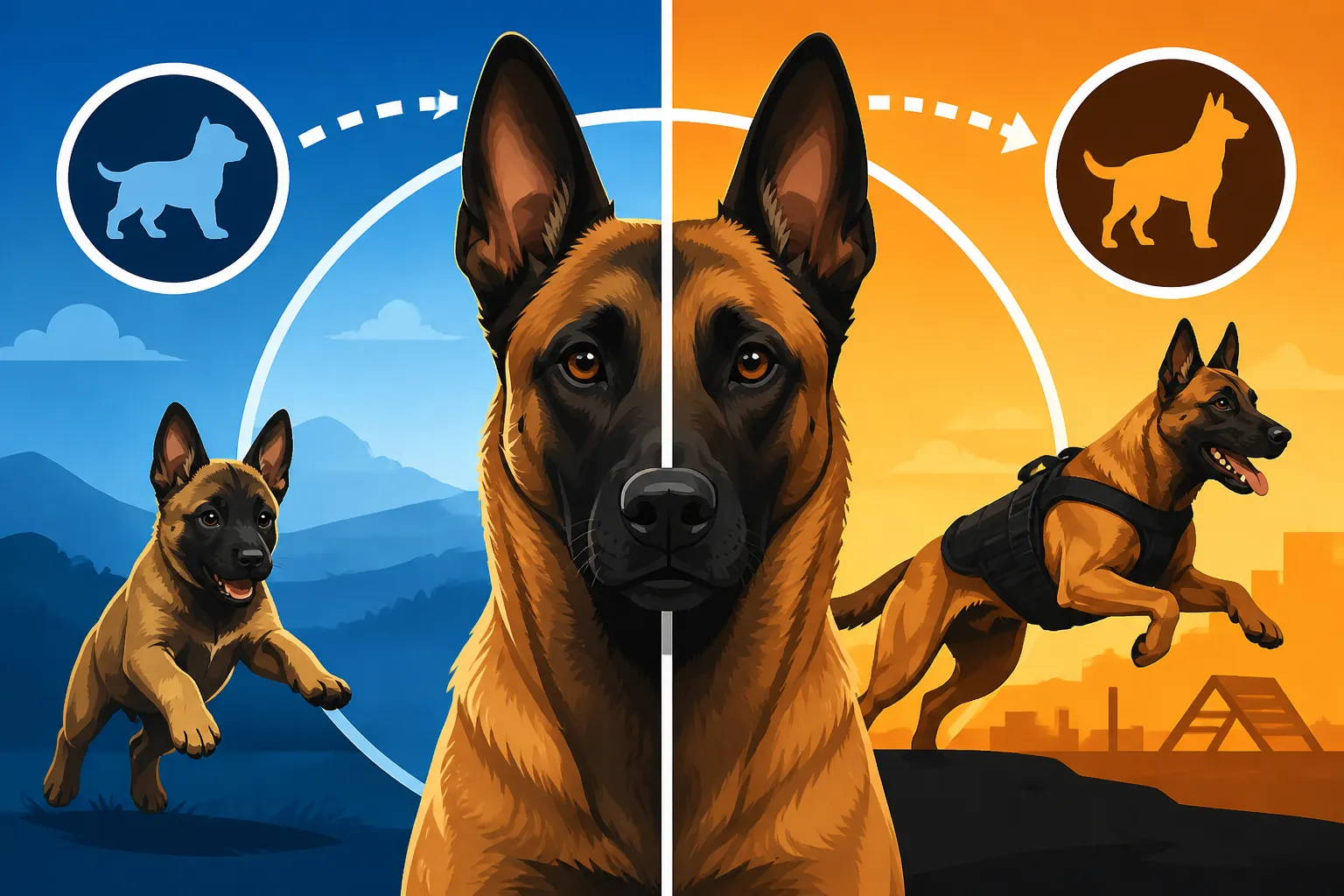
That gangly, lean look of a one-year-old Malinois gradually gives way to a more robust, athletic physique. This "filling out" process is largely about muscle development and increasing bone density. Over the next year, you'll notice their chest widening and deepening, their shoulders becoming more powerful, and their hindquarters gaining more definition and mass. They'll start to look less like a marathon runner and more like a sprinter – still lean, but with noticeable power and substance. When a Malinois Finishes Growing and Fills Out perfectly describes this transition.
This isn't about gaining excess fat; it's about building the dense, functional muscle that makes the Malinois such an incredible working dog. The ideal condition for a Belgian Malinois is still very lean, allowing you to easily feel their ribs but not see them prominently protruding. You'll observe a subtle yet significant increase in their overall weight as muscle replaces puppy fat and bones become denser. This gradual change is crucial for their long-term health and athletic performance. It also influences how they move and carry themselves, making them appear more confident and physically formidable. Consistent, appropriate exercise and a high-quality diet are paramount during this phase.
Hormonal Influences on Growth
The timing of spaying or neutering can also play a role in how a Malinois fills out. Hormones like estrogen and testosterone influence growth plate closure and bone development. Generally, studies suggest that dogs spayed or neutered before their growth plates naturally close tend to grow taller, as the absence of these hormones can delay closure, allowing the long bones to continue growing for a longer period. However, this increased length can sometimes come at the expense of proper joint development and overall bone density, potentially leading to a higher risk of certain orthopedic issues like hip and elbow dysplasia or cruciate ligament tears later in life. Whether Spay Timing Changes a Malinois's Joints offers more insight.
For a high-drive, athletic breed like the Malinois, ensuring optimal joint and bone development is critical. Many experienced breeders and veterinarians advocate for waiting until a Malinois is at least 18-24 months old, or even fully mature, before spaying or neutering, especially for males. This allows the dog to fully benefit from the natural hormonal processes that contribute to musculoskeletal maturity. It's a discussion worth having with your vet, weighing the behavioral and health benefits of early versus later sterilization against the specific needs and lifestyle of your individual Malinois.
Nutritional Needs for Continued Development
Even after twelve months, your Belgian Malinois is still a growing athlete, and their nutritional requirements remain high. You can’t just assume they can switch to a generic adult dog food and thrive. Their bodies are still metabolically active, building muscle, strengthening bones, and fueling that relentless drive. Paying close attention to their diet during this extended adolescence is as important as it was when they were tiny puppies.
Sustaining a Growing Athlete
A Malinois at 12-24 months, even if not gaining height, is still building muscle and bone density, and burning an incredible amount of energy. This isn't the time to cut back on quality nutrition. You need to continue feeding a high-quality diet, often one formulated for active adult dogs or even a performance formula, especially if they are involved in sport or working activities. Look for foods with good protein content to support muscle development, and appropriate fat levels for sustained energy. Brands that focus on whole, digestible ingredients are often a good choice. You might find yourself replenishing your dog's kibble from retailers like Chewy or exploring fresh food options from providers like Ollie that cater to the demanding needs of athletic dogs. The Daily Ration a Working Belgian Malinois Eats can be substantial, and it’s important to match their intake to their output.
This phase is critical for laying the foundation for a strong, healthy adult Malinois. Their digestive system needs to be able to efficiently extract nutrients from their food. Keep an eye on their stool quality and energy levels; these are good indicators of whether their diet is meeting their needs. Some owners consider adding joint supplements during this period, not because they are "old," but to provide extra support to rapidly developing joints under increasing activity levels. Whether a Sport Malinois Needs a Performance Formula details the importance of appropriate nutrition.
Avoiding Overfeeding and Underfeeding
Finding the right balance in feeding a still-developing Malinois can feel like walking a tightrope. Underfeeding can stunt their growth and prevent proper muscle development, leaving them too lean and lacking the necessary reserves for their high energy levels. On the other hand, overfeeding can lead to rapid, unhealthy weight gain, putting undue stress on still-developing joints and potentially contributing to orthopedic issues. Why Pushing Growth Hurts a Malinois Puppy is a concept that extends into this adolescent period. You want them to be lean, but not emaciated. You should be able to feel their ribs easily, but not see them clearly from a distance. A slight tuck in their waist is also a good indicator of appropriate weight.
Regularly weighing your Malinois and performing a body condition score check by hand can help you monitor their progress. Adjust their food intake based on their activity levels and individual metabolism. Remember, every Malinois is different; what works for one might not work for another. If you're unsure, consult with your veterinarian or a canine nutritionist. They can help you determine the appropriate caloric intake and specific nutrient ratios needed for your dog's continued, healthy development. This careful management will pay dividends in their long-term health and ability to perform.
Training and Conditioning Considerations for the Still-Developing Malinois
It's easy to get carried away with a one-year-old Malinois. They are bursting with drive, speed, and an incredible desire to work. However, pushing them too hard, too fast, can have lasting negative consequences on their physical health. Acknowledging that they are still physically developing, even if they look like adults, is crucial for responsible ownership and long-term soundness.
Smart Exercise and Impact Control
While your Malinois needs ample exercise, the type of exercise matters immensely during their extended adolescence. High-impact activities like repeated jumping over tall obstacles, intensive agility courses with sharp turns, or long, strenuous runs on hard surfaces should still be approached with caution. Instead, focus on building strength and endurance through controlled activities that put less stress on their developing joints. This includes brisk walks, swimming (an excellent low-impact option), controlled off-leash running on varied but forgiving terrain, and short, focused obedience sessions. Long line work in open fields, where they can run in straight lines and make gentle turns, is also ideal for burning energy without excessive joint strain.
Consider exercises that build core strength and body awareness without high impact. Think about walking over cavaletti poles or gentle incline work. Many owners find value in structured play that incorporates obedience, such as directed retrieves or controlled tug sessions, rather than simply letting their Malinois self-exercise to exhaustion. The goal is to condition their muscles and cardiovascular system gradually, allowing their skeletal system to catch up and fully mature. If you're involved in bite sports, discuss appropriate intensity and progression with your decoy and trainer, ensuring that The Age a Belgian Malinois Can Start Jumping Walls or other demanding exercises are delayed until appropriate.
Mental Maturity and Behavioral Changes
Beyond the physical, the period after 12 months is also one of significant mental and emotional maturation. While not strictly "physical growth," it absolutely impacts how an owner perceives their Malinois as "finished." The adolescent Malinois, often from 12 to 24 months, can still be prone to testing boundaries, pushing limits, and having bursts of intense, sometimes overwhelming energy. This isn't a sign of poor training; it's a natural developmental phase. You might find that your dog, who was so compliant at 10 months, suddenly acts like they've never heard a command before at 15 months.
This period requires consistent, clear, and fair training to solidify the foundation you've built. Continue to challenge their minds with puzzle toys (from Amazon, perhaps!) and complex obedience drills. Engage in scent work or tracking, which are mentally exhausting and don't involve high physical impact. Building an "off switch" is particularly important during this time, helping them learn to settle down even when they're physically capable of going non-stop. Your Malinois won't truly feel "finished" until their mental maturity aligns with their physical prowess, allowing them to channel their incredible drive effectively and appropriately.
Understanding the Malinois Growth Trajectory
Let's put some common ideas about Malinois growth side-by-side to highlight the reality.
| Feature | Common Perception at 12 Months | Biological Reality Beyond 12 Months |
|---|---|---|
| Height | Fully grown | Mostly achieved, but some minor lengthening can occur |
| Weight/Build | Lean but fully mature weight | Continues to gain muscle mass and bone density, "fills out" |
| Growth Plates | Mostly or fully closed | Often still open, especially in larger breeds like Malinois |
| Joint Readiness | Ready for all strenuous activity | Still vulnerable; high-impact work should be limited |
| Muscle Definition | Well-defined for age | Muscles will gain density and power over next year(s) |
| Mental Maturity | Nearing adult composure | Adolescence continues; testing boundaries is common |
| Energy Levels | High, but should be calming | Remains incredibly high; needs consistent channeling |
As you can see, the physical journey of a Belgian Malinois is an extended one. Patience and careful management are key to ensuring they grow into healthy, robust adults capable of performing at their peak, whether in working roles or as incredible companions. The First Year of a Belgian Malinois's Growth is merely the beginning of understanding their full developmental timeline.
Disclaimer
This article is for general informational purposes only and does not constitute professional advice. Laws, prices and regulations vary by location and change over time. Consult a qualified professional for guidance on your specific situation.