Whether a Malinois’s Nose Burns in Summer
It’s a common sight during the warmer months: our active, driven Belgian Malinois spending countless hours outdoors, whether training, working, or just enjoying their yard. But as much as they thrive in the sun, many of us find ourselves casting a worried eye at their noses, wondering if that sensitive, often exposed bit of skin is truly safe from the sun’s harsh rays. This guide is here to tackle that concern head-on, exploring how susceptible a Malinois's nose can be to sunburn and what you can do to keep it healthy and protected all summer long.
Understanding Your Malinois's Vulnerable Nose
The nose, or "nasal planum," of any dog is a unique part of their anatomy. Unlike the rest of their body, which is usually covered in fur, the nose is largely exposed. For a Belgian Malinois, this exposure, combined with their active lifestyles and sometimes lighter pigmentation, can make it a prime target for sun damage.
The Anatomy of a Malinois Nose and Sun Sensitivity
Think about your own nose – it's often the first place you get a sunburn, right? A Malinois's nose is no different in its vulnerability, though it's covered by a different kind of skin. The nasal planum is a highly specialized area, typically moist and covered in a keratinized layer. This layer, while tough, doesn't offer much in the way of UV protection. The amount of pigment present in your Malinois's nose can also play a huge role here. Dogs with very dark, black noses often have more melanin, which provides a natural, albeit limited, defense against the sun. However, many Malinois, especially as they age, might develop noses that are less uniformly pigmented, showing pinker spots or a general lightening. These areas are significantly more susceptible to burning.
It’s not just about the surface, either. The underlying tissues are delicate. Repeated sun exposure can damage these cells, potentially leading to long-term issues that go beyond a simple red nose. For a dog that spends as much time outside as a Malinois, understanding this inherent vulnerability is crucial. We often focus on their powerful muscles and sharp minds, but sometimes overlook these smaller, yet vital, parts of their physical well-being.
High Activity Levels and Increased Exposure Risk
Let's be real, a Belgian Malinois isn't lounging under a patio umbrella all day. These are dogs bred for work, for high drive, and for spending significant time engaged in demanding activities outdoors. Whether it's tracking through fields, running agility courses, or participating in protection sports, their natural inclination is to be out, moving, and often directly under the sun. This prolonged and often intense exposure naturally escalates their risk of sunburn.
Consider a typical training session: several hours of focused work in a field, perhaps with minimal natural shade. Your Malinois is too engaged in the task at hand to worry about finding a shady spot to rest their nose. They're driven to perform, and we, as their handlers, are focused on their performance, sometimes forgetting the basics of sun safety. Even daily walks or yard time, especially during peak sun hours, can add up. It’s a cumulative effect, much like how a human gets tanned or burned over repeated exposures. It's not just the intensity of the sun, but the sheer duration of time spent in it that puts their noses at risk. Remember, a Malinois often runs itself into Why a Malinois Runs Itself Into Heat Exhaustion, which means they are pushing themselves even harder, often outdoors.
Recognizing the Signs of a Sunburned Malinois Nose
Spotting a sunburn on your Malinois's nose might not be immediately obvious, especially if it’s mild. However, knowing what to look for can help you intervene quickly and prevent more serious complications. Your keen observation skills, which you undoubtedly apply to their training and behavior, are just as important here.
Early Warning Signs and Discomfort
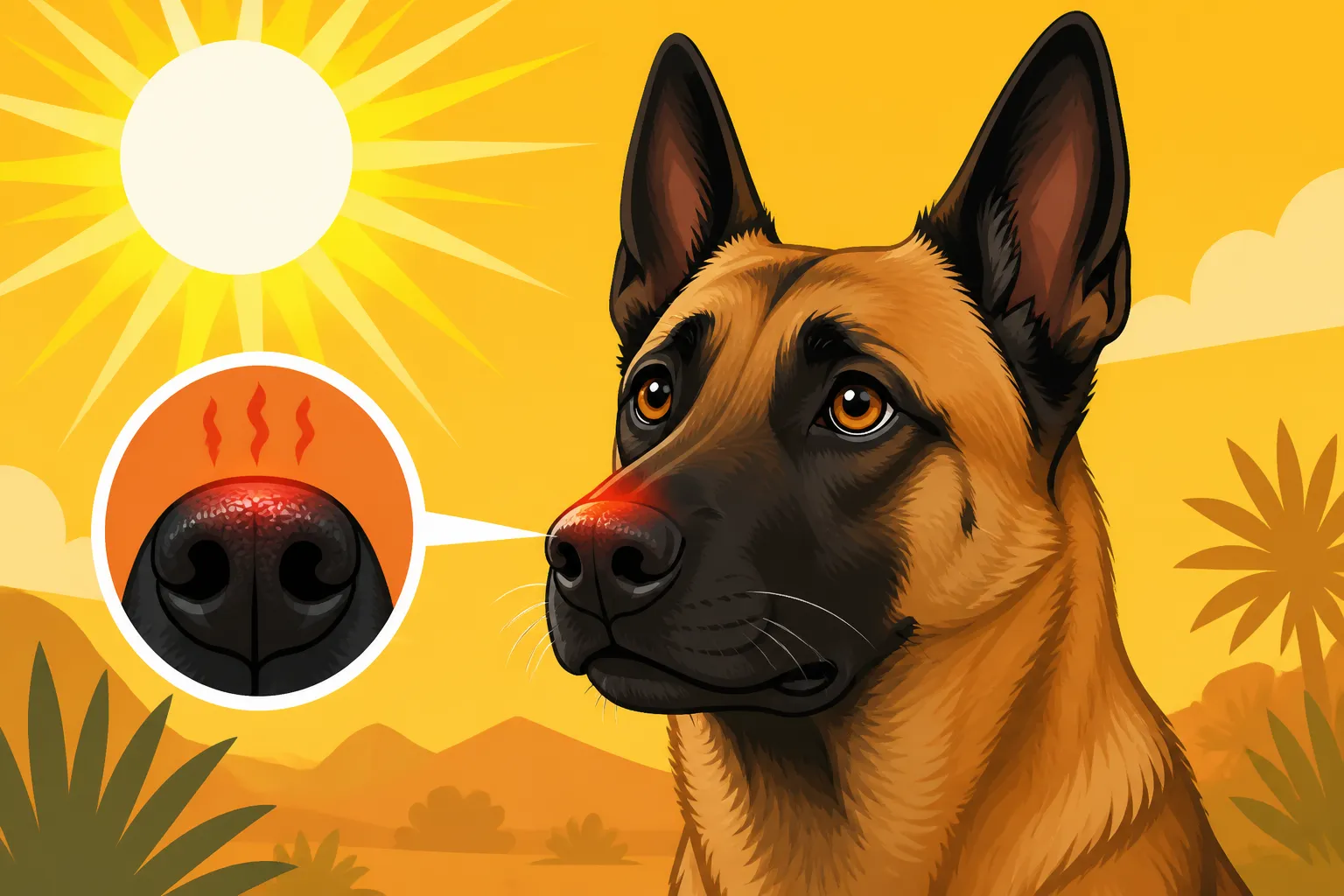
The initial signs of a mild sunburn on a Malinois's nose are very similar to what you’d see on human skin. You might notice the tip of their nose, particularly any lighter pigmented areas, appearing distinctly redder than usual. This redness might be accompanied by a slight warmth to the touch or even a bit of swelling. Your Malinois might also exhibit subtle signs of discomfort:
- Frequent licking of the nose: This is a common canine response to irritation or dryness.
- Pawing at their face or rubbing their nose: They might try to relieve the itching or tenderness.
- Reluctance to have their nose touched: If usually amenable to head pats, they might pull away or show sensitivity.
- Dryness or flakiness: The skin might start to look dry or develop fine flakes, indicating damage to the outermost layer.
It’s easy to overlook these subtle cues, especially if your dog is otherwise their usual energetic self. However, a quick check after a long day out in the sun, perhaps as part of your routine Checking a Belgian Malinois Over After a Session, can help you catch these early signs. It’s also important to distinguish this from other nasal irritations, but the context of recent sun exposure is a strong indicator.
More Severe Symptoms and the Need for Veterinary Care
Unfortunately, if a mild sunburn goes unnoticed or untreated, or if the sun exposure was particularly intense, the damage can escalate. More severe symptoms demand immediate attention and, very often, a visit to your veterinarian. These signs include:
- Blistering or open sores: This indicates a significant burn, much like a second-degree burn in humans. These are painful and highly prone to infection.
- Crusting, cracking, or bleeding: The delicate skin on the nose can break down, leading to painful cracks, scabs, and even bleeding, especially if your dog continues to lick or rub it.
- Peeling skin: While a mild peel might follow a light burn, extensive peeling often points to deeper damage and can leave raw, sensitive areas exposed.
- Color changes: Beyond redness, the nose might appear unusually pale or even develop a darker, bruised appearance in severely affected areas.
- Lethargy or loss of appetite: While less common for nose-specific sunburn, if the pain is significant or combined with general heat stress, your Malinois might show systemic signs of illness. For broader concerns about extreme heat, it's worth understanding situations like Heat Stroke in a Belgian Malinois in a Patrol Car.
Severe sunburn isn't just about immediate pain; it carries long-term risks, including an increased susceptibility to skin cancers. If you see any of these more serious symptoms, do not attempt to self-treat beyond a cool compress. Professional veterinary care is essential to manage pain, prevent infection, and assess the full extent of the damage.
Proactive Protection: Shielding Your Malinois's Snout
Prevention truly is the best medicine when it comes to sun protection for your Belgian Malinois's nose. Given their natural inclination for outdoor activity, it falls to us to implement strategies that minimize their exposure to harmful UV rays.
Strategic Timing and Providing Shade
One of the most effective ways to protect your Malinois from sunburn is to simply avoid the harshest sun of the day. This means adjusting your training schedule or outdoor play times to earlier mornings or later evenings. The sun’s UV rays are typically strongest between 10 AM and 4 PM. If your Malinois absolutely needs to be outside during these hours, ensure they have access to ample, consistent shade. This isn't just about a single tree; consider pop-up canopies for training fields, covered runs, or even just making sure the coolest, shadiest part of your yard is accessible.
Remember, a Malinois’s drive means they might ignore discomfort to continue working or playing. It's up to you to enforce breaks in the shade. Even five or ten minutes in a cooler, darker spot can make a difference. Make sure fresh, cool water is always available too; proper hydration supports overall skin health and helps combat heat. You might find valuable tips in Keeping a Belgian Malinois Out of Midday Sun for creating effective shade routines. Also, it’s not just the direct sun that can burn; reflective surfaces like concrete, sand, or water can amplify UV exposure, hitting your dog’s nose from multiple angles.
Canine-Specific Sunscreens and Balms
Just like humans, dogs can benefit from sunscreen, but it is absolutely critical to use products specifically formulated for canines. Human sunscreens often contain zinc oxide or para-aminobenzoic acid (PABA), both of which are toxic if ingested by dogs. Since your Malinois is very likely to lick their nose, selecting a safe product is non-negotiable.
Look for dog-safe sunscreens or balms that are non-toxic, fragrance-free, and ideally, water-resistant. Many reputable brands offer options with ingredients like titanium dioxide (which is generally considered safe) or natural oils and butters that provide a physical barrier. You can find these specialized products at pet supply stores or online retailers like Chewy or Amazon. Apply a thin layer to the exposed areas of the nose, particularly any lighter spots, about 15-20 minutes before going outside. Reapply every few hours, especially if your dog is swimming or licking frequently. A good balm can also help moisturize, which is key for preventing dryness and cracking, a process akin to Pad Toughening for a Belgian Malinois – you're protecting and strengthening a sensitive surface.
Protective Gear for Extreme Cases
While sunscreen and shade are the primary lines of defense, some Malinois, particularly those with very light pigmentation, certain medical conditions, or those required to work in extreme sun, might benefit from additional protective gear. Dog goggles, sometimes called Doggles, are often used for dogs with eye conditions like Pannus, but they can also offer incidental sun protection to the bridge of the nose. While they won't cover the very tip, they can shield a significant portion. Explore options discussed in Goggles for a Belgian Malinois With Pannus for ideas on how these might work.
Another less common option is a snood or a very lightweight dog hat, if your Malinois will tolerate it. These are more often used for ear protection or warmth, but some designs could be adapted to provide shade for the nose. The key here is comfort and ensuring it doesn't interfere with their vision or breathing, especially for a working dog. Always introduce any new gear slowly and with positive reinforcement to ensure your high-drive Malinois accepts it.
Here's a quick look at various protective strategies:
| Strategy | Description | Pros | Cons |
|---|---|---|---|
| Shade & Timing | Avoiding peak sun hours (10 am – 4 pm) and providing consistent shade. | Most natural, effective, no product cost. | Requires schedule adjustments, can be difficult in open areas. |
| Dog-Safe Sunscreen | Topical cream/spray applied to the nose to block UV rays. | Direct protection, allows flexibility in outdoor activity. | Must be dog-specific, requires reapplication, potential for licking. |
| Nose Balm/Moisturizer | Thick, protective balm (e.g., shea butter-based) to moisturize and protect. | Soothes existing dryness, provides a physical barrier. | Less UV protection than sunscreen, still requires reapplication. |
| Protective Gear | Dog goggles, snoods, or hats. | Can offer consistent, physical barrier for specific areas. | Acceptance by dog varies, may interfere with vision/comfort. |
What to Do If Your Malinois Gets a Sunburnt Nose
Even with the best preventative measures, sometimes a sunburn can still happen. Whether it’s a mild pink nose or something more severe, knowing how to react is crucial for your Malinois’s comfort and long-term health.
Gentle Immediate Care for Mild Burns
If you notice your Malinois’s nose is just a little pink or red, warm to the touch, and perhaps a bit flaky, you're likely dealing with a mild sunburn. The first thing to do is remove them from the sun immediately. Get them into a cool, shaded area, and offer plenty of fresh, cool water.
For soothing the affected area, a cool (not icy!) compress can provide immediate relief. Gently hold a damp cloth against their nose for a few minutes. Following this, you can apply a thin layer of a dog-safe, soothing balm. Look for ingredients like shea butter, coconut oil, or aloe vera (ensure it's pure aloe, not an additive-filled product that could be toxic). These can help moisturize the skin and promote healing. You can find many excellent options online through retailers like Chewy or Amazon. Avoid anything with perfumes, dyes, or harsh chemicals. The goal is to keep the skin hydrated and comfortable, preventing further dryness or cracking. Continue to monitor their nose for a few days, keeping them out of the sun as much as possible until it has fully healed. This is a bit like rinsing dust from a working Malinois's eyes – a simple, gentle act for a sensitive area.
When to Seek Veterinary Attention
There are definite signs that indicate a sunburn is beyond mild and requires professional veterinary care. Do not hesitate to contact your vet if you observe any of the following:
- Blistering, oozing, or open sores: These are signs of a more severe burn and carry a high risk of infection.
- Deep cracking or bleeding: Compromised skin barrier is an open invitation for bacteria.
- Signs of significant pain: Excessive pawing at the face, yelping when touched, or a refusal to eat due if the pain is too great.
- Swelling that spreads beyond the nose: This could indicate a more widespread inflammatory reaction or allergic response.
- Lack of improvement or worsening: If the mild burn isn't getting better after a couple of days of home care, or if it seems to be getting worse, it's time for a professional assessment.
- Any signs of infection: Redness, swelling, pus, or a foul odor.
Your vet can properly assess the severity of the burn, prescribe pain relief, antibiotics if an infection is present or likely, and provide specialized creams or ointments to aid healing. They can also rule out other conditions that might mimic sunburn but require different treatments. For broader health management and when to seek professional help for injuries, you might find Emergency Care After a Malinois Training Injury a helpful read.
Long-Term Management and Scarring Risks
Beyond immediate treatment, it's important to understand the long-term implications of sun damage to your Malinois's nose. Repeated sunburns, especially severe ones, can lead to chronic skin changes. The skin may become permanently thickened, discolored, or prone to recurring dryness and cracking. More critically, chronic sun exposure significantly increases the risk of certain skin cancers, particularly squamous cell carcinoma. This is a serious concern, and understanding conditions like The Cancers That Take a Belgian Malinois highlights the importance of consistent protective measures.
If your Malinois has experienced a sunburn, it should serve as a wake-up call to re-evaluate your sun protection routine. Make consistent use of dog-safe sunscreen a habit, especially for dogs with pinker noses. Continue to prioritize shade and adjust your activity schedule. Regular check-ups with your vet, mentioning any history of sunburn, can also help catch any potential long-term issues early. Your Malinois relies on their nose for so much – from tracking to simply experiencing the world – so keeping it healthy and protected is a small but vital part of their overall well-being.
Disclaimer
This article is for general informational purposes only and does not constitute professional advice. Laws, prices and regulations vary by location and change over time. Consult a qualified professional for guidance on your specific situation.