How Much Exercise a Belgian Malinois Puppy Should Get
It’s a common misconception that a Belgian Malinois puppy, with their boundless energy, needs endless physical exercise from day one to tire them out. In reality, pushing a young Malinois too hard can actually cause significant, irreversible damage to their developing bodies. This guide will walk you through safe, age-appropriate exercise strategies to ensure your Malinois puppy grows into a sound, well-adjusted adult without risking their precious joints.
The Critical Balance: Why Less is Often More for Malinois Puppies
When you bring home a Belgian Malinois puppy, their energy levels can be utterly astounding. It feels like they have an internal combustion engine that never quits. Naturally, as responsible owners, our first instinct is often to try and match that energy with rigorous exercise, believing it's the only way to achieve peace in the house. However, this approach, while well-intentioned, can be incredibly detrimental to a growing Malinois. Their bodies are not miniature adult dogs; they are delicate, developing structures that require careful handling.
Understanding Growth Plates and Injury Risk
Imagine tiny, unclosed seams in your puppy's bones – that’s essentially what growth plates are. These areas of cartilage are responsible for bone growth and are present in all young dogs, typically remaining open and vulnerable until they are anywhere from 12 to 18 months old, sometimes even later for larger breeds or individuals. High-impact activities like intense jumping, long-distance running on hard surfaces, or even prolonged, uncontrolled rough play can exert tremendous stress on these soft, uncalcified areas. A significant impact or repetitive strain can cause a growth plate to fracture or fuse prematurely, leading to painful lameness, improper bone development, and potentially lifelong orthopedic issues. It's a risk that often goes unnoticed until much later, by which point the damage is done.
Many owners, myself included, have felt the anxiety of wanting to do everything right for their high-drive puppy. The temptation to "burn off" that puppy energy with more and more physical activity is strong, but it's a trap. A Malinois puppy's body is designed for quick bursts of play and rest, not sustained, high-intensity workouts. Think of it less like training a marathon runner and more like nurturing a tiny, precious athlete. The focus should be on controlled, safe development, recognizing that their skeletal system is still incredibly fragile. Overdoing it in these crucial early months can set them back for life, impacting their ability to pursue the very activities they were bred for. The future soundness of your Malinois hinges on understanding and respecting this biological vulnerability. It’s why topics like Why Pushing Growth Hurts a Malinois Puppy are so vital for new owners to understand.
The Dangers of Forced Exercise
Forced exercise is any activity where the puppy isn't allowed to set their own pace or stop when they're tired. This includes things like running alongside a bicycle, jogging with you for extended periods, or repetitive retrieving sessions where they're compelled to continue. Their enthusiasm can often mask discomfort or fatigue, as their drive to please or play is so immense. They might keep going even when their body is screaming for a break, leading to exhaustion, strains, and stress on their developing joints. Unlike free play where a puppy can flop down and rest whenever they want, forced exercise dictates the duration and intensity, which is precisely what growth plates cannot handle.
Consider a scenario where you take your energetic six-month-old Malinois puppy for a brisk 30-minute jog on pavement. To you, it might seem like a moderate pace, but for a growing puppy, this is akin to a human child running a marathon. Their gait might look fine, and they might even seem eager, but the repetitive impact on their still-soft joints and ligaments can cause micro-traumas that accumulate over time. They aren't just getting tired; they're potentially compromising their future mobility. This kind of consistent, forced activity prevents their joints from developing correctly and can lead to conditions like early-onset arthritis or hip and elbow dysplasia, even in dogs with otherwise good genetics. This isn't just a concern for working lines; all Malinois puppies need this careful consideration.
Recognizing Signs of Over-Exercise
It's crucial to learn to read your Malinois puppy's body language for signs they've had too much. While they are famously tough, even a Malinois will show cues. Beyond obvious limping or favoring a limb, look for more subtle indicators. Excessive panting that doesn't quickly subside, even after a break, can be a sign. Are they lagging behind, suddenly losing interest in a game they usually love, or showing reluctance to jump onto the sofa? Do they seem unusually lethargic or irritable later in the day, snapping more easily than usual? These aren't just signs of a tired puppy; they can be warning signals that their body is struggling to cope.
Sometimes, the signs manifest behaviorally. A puppy that becomes unusually nippy, restless, or destructive after a long session might actually be overtired, not under-exercised. Think of a toddler who gets cranky when they've missed their nap. Malinois puppies, despite their drive, need significant sleep for physical and mental development. If your puppy seems to get more hyper or impossible to settle after a prolonged activity, it's often a sign they're overstimulated and exhausted, not energized. A good rule of thumb is that your puppy should be able to calm down and rest easily after an appropriate play session. If they're still wired and unable to settle, you might have pushed them too far.
Age-Appropriate Exercise Guidelines for Your Growing Malinois
So, if simply running them ragged isn't the answer, what is the right amount of exercise for a Belgian Malinois puppy? The key lies in understanding their developmental stages and providing activities that support, rather than hinder, healthy growth. This isn't about coddling them; it's about smart, strategic care that builds a strong foundation for their adult life.
The "Five-Minute Rule" and Early Puppyhood (8-16 Weeks)
For very young puppies, the "five-minute rule" is a widely recommended guideline. This rule suggests five minutes of structured exercise per day for each month of their age, spread throughout the day. So, a two-month-old puppy would get about 10 minutes of structured activity daily, a three-month-old 15 minutes, and so on. This doesn't include potty breaks or short bursts of zoomies in the yard, which are self-directed and natural. The five-minute rule applies to leash walks, short training sessions, or focused play. The goal is gentle, exploratory movement on varied surfaces, allowing them to build coordination and body awareness without excessive impact.
During this tender age, short, frequent sessions are far better than one long one. Think about introducing them to their leash for five minutes, then a short play session in the living room, followed by a nap. Exposure to different surfaces like grass, concrete, or even a short walk around the block (once fully vaccinated) helps them develop proprioception and confidence. These are also prime weeks for critical socialization, exposing them to new sights, sounds, and experiences in a positive, controlled manner. A trip to a local pet store like Chewy for some new, durable chew toys can be an adventure in itself, providing mental stimulation through new smells and sounds without strenuous physical activity. Focus on quality of movement and new experiences over sheer duration.
Gradual Increase for Adolescent Malinois (4-12 Months)
As your Malinois puppy moves into adolescence, typically from four months up to a year, you can begin to gradually increase the duration and intensity of their physical activity, always adhering to the "five-minute rule" as a baseline, but allowing for more free, self-directed play. This means longer walks, perhaps venturing into trails with softer footing, and more vigorous play sessions. However, "gradual" is the operative word. Don't jump from 20 minutes to an hour overnight. Listen to your puppy's cues, observe their stamina, and ensure they still have plenty of rest.
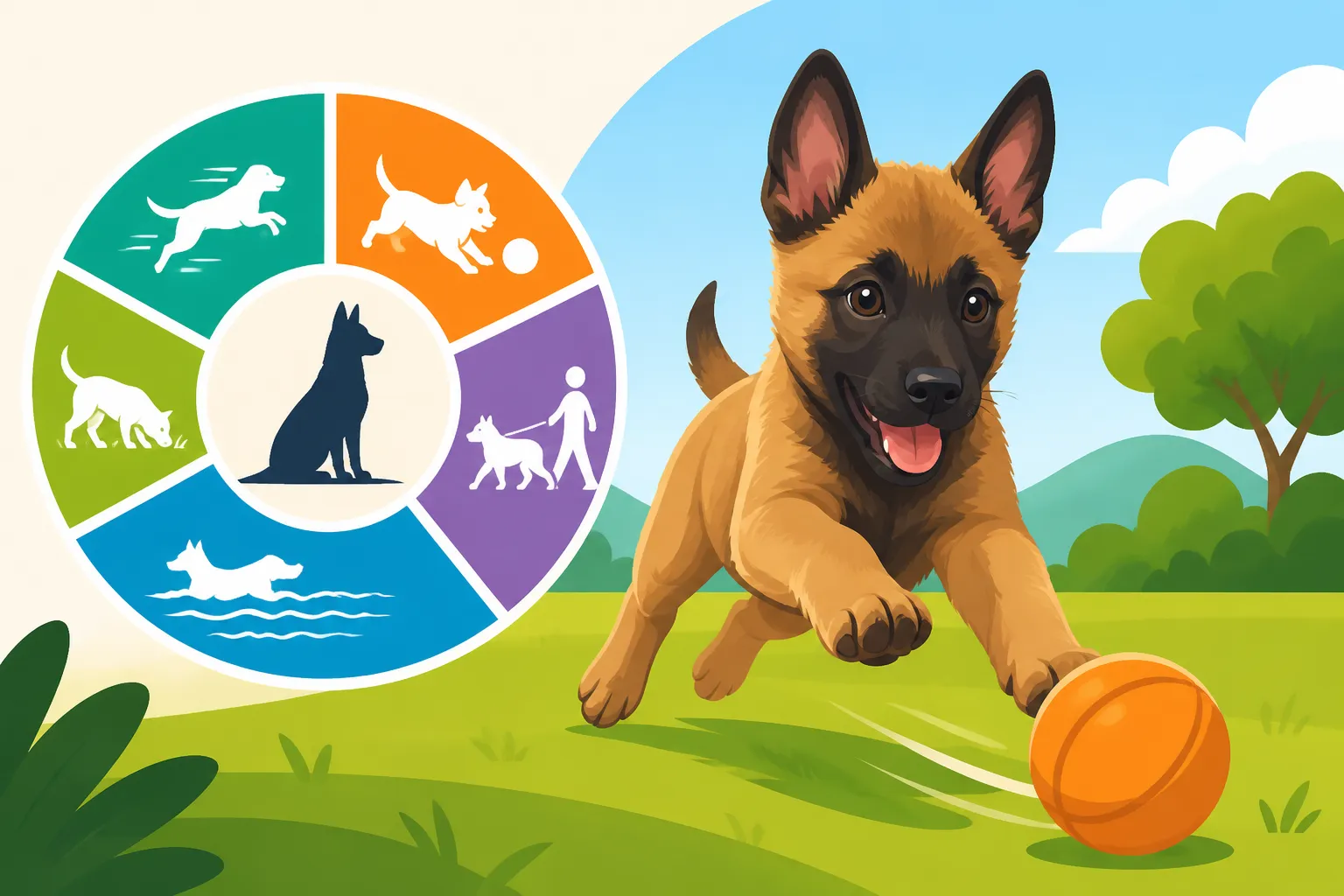
This is the age where they often hit their "second wind" and you might feel the urge to do more. This is also when some start dabbling in very light sport-specific foundations, such as short tracking sessions or introducing them to a tug in a very controlled manner. The emphasis remains on low-impact activities. Hill work, long stretches of pavement running, or high-flying jumps should still be avoided. Think about building stamina through brisk walks, maybe introducing them to swimming in a controlled environment, or engaging in fetch games on soft grass where they can self-regulate their speed and jumps. Remember that their growth plates are likely still open, so caution is paramount. Knowing When a Malinois Puppy's Joints Can Take Impact is vital for their long-term health.
When Can a Malinois Puppy Start Real Conditioning?
The general consensus among veterinarians and experienced sport dog handlers is that high-impact activities, intense conditioning, and rigorous sport training should be largely avoided until a Malinois is fully mature and their growth plates have closed. This typically occurs between 12 to 18 months of age, though individual dogs can vary. Some breeds, and even some Malinois lines, might take a bit longer. It’s always best to consult your veterinarian for an assessment, which sometimes involves X-rays to confirm growth plate closure, especially if you plan on engaging in demanding sports.
Once their growth plates are closed, you can slowly, incrementally, begin to introduce more demanding physical conditioning. This still doesn't mean jumping into intense work right away. Think of it as building an athlete from the ground up: a structured warm-up, gradual increase in duration and intensity, and a proper cool-down are all essential. Activities like advanced obedience, agility, protection work, or long-distance running can then be incorporated. Even then, consistency, proper nutrition (perhaps a high-quality performance food like those from Ollie, if it suits your dog), and regular veterinary check-ups are key to maintaining their athletic career. Rushing this stage, even when they're older, can lead to overuse injuries that can be just as debilitating as growth plate issues.
The Power of Mental Stimulation and Structured Play
It's easy to fall into the trap of thinking all Malinois energy must be burned off physically. However, the true secret to a calm, happy, and fulfilled Belgian Malinois, especially a puppy, often lies in mental stimulation and structured play, not just endless running. These dogs are incredibly intelligent and were bred to think and solve problems, not just move. Tiring their minds is often far more effective and safer than exhausting their bodies.
Brain Games and Puzzle Toys
Mental enrichment is a game-changer for Malinois puppies. Imagine giving their busy brains a job to do, instead of leaving them to find "work" in destructive ways around your home. Puzzle toys, snuffle mats, and feeder balls are fantastic for this. They require the puppy to figure out how to get their kibble or treats, engaging their problem-solving skills. Even simply scattering their meal across the lawn can turn dinner into a stimulating scent-detection game. Brands available on Chewy and Amazon offer a wide variety of these, from beginner to advanced levels.
Beyond toys, short, frequent training sessions are invaluable. Five to ten minutes of focused obedience work several times a day can tire a Malinois puppy more effectively than a long walk. Teaching new tricks, refining existing commands, or even starting basic scent work (like finding hidden treats) taps into their natural instincts and intellect. Puzzle Work for a Belgian Malinois Indoors is not just fun, it's a necessary component of their daily routine. This kind of mental engagement builds confidence, strengthens your bond, and teaches them how to focus and learn, all while protecting their growing joints.
Structured Play and Engagement Training
Structured play isn't just letting your puppy run wild; it involves rules, boundaries, and engagement with you. Games like tug-of-war, when played correctly, can be a fantastic outlet for their prey drive and energy. The key is structure: teach them "take it" and "out" commands, ensuring they release the toy on cue. This teaches impulse control and builds a stronger working relationship. Short, controlled fetch sessions on soft ground, where you alternate throws with obedience commands, also channel their drive purposefully.
These types of games teach your puppy to engage with you and to control their impulses, which is critical for a breed as intense as the Malinois. It's about building a language of communication and cooperation. Rather than just chasing a ball until they drop, they're learning to work in partnership. This kind of interaction is incredibly fulfilling for them and helps develop their drive in a healthy, manageable way. Understanding Tug Rules for a Belgian Malinois is a foundation for channeling their drive productively. Building this engagement early on is essential for a well-behaved and focused adult Malinois.
Socialization: Managed Play with Appropriate, Calm Dogs
While dog parks can be risky for growing puppies due to uncontrolled play and potential for injury, carefully managed socialization with appropriate, calm adult dogs can be very beneficial. A well-socialized adult dog can teach a puppy crucial canine social cues, bite inhibition, and how to interact respectfully. Look for friends or family members with stable, vaccinated adult dogs who are known to be good with puppies.
These interactions should be supervised closely and kept brief. The goal isn't to let them wrestle for an hour, but for the puppy to learn appropriate play behavior and confidence around other dogs. Always ensure the puppy has an escape route and can disengage if overwhelmed. A few minutes of polite interaction is far more valuable than prolonged, chaotic play. It contributes to their overall mental and emotional development, making them a more confident and resilient dog in the long run.
Avoiding Common Exercise Pitfalls
Raising a Belgian Malinois puppy is a marathon, not a sprint. Avoiding common mistakes in their exercise regimen can prevent future heartache and costly veterinary bills. It’s about being proactive and understanding the unique needs of this incredibly athletic and driven breed.
The Problem with Dog Parks and Endless Fetch
While dog parks seem like a great place for puppies to burn off energy, they often present more risks than benefits, especially for a young Malinois. The environment is frequently uncontrolled, with dogs of varying temperaments, sizes, and play styles. This can lead to rough play that stresses a puppy's delicate joints, fear-inducing interactions that can create lasting behavioral issues, or even exposure to illnesses. An enthusiastic but clumsy adult dog could easily injure a small, still-growing Malinois puppy. Whether a Belgian Malinois Needs Dog Park Time is a question many owners ask, and for puppies, the answer is generally a cautious "no" or "only under very specific, controlled circumstances."
Similarly, endless games of fetch can be detrimental. While fetch itself is a great game, repetitive, high-speed sprints and abrupt stops, especially on hard surfaces, put immense strain on joints, ligaments, and tendons. A Malinois's incredible drive means they will often continue chasing a ball until they are physically exhausted, pushing past their body's limits. It's better to engage in shorter, more varied play sessions, incorporating obedience or mental breaks, rather than continuous, high-impact retrieving.
Treadmills and Biking for Young Malinois
Forced exercises like running on a treadmill or alongside a bicycle are definite no-gos for Belgian Malinois puppies. As mentioned earlier, forced exercise prevents a puppy from self-regulating their activity level. On a treadmill, they cannot stop if they are tired or feeling discomfort. Running beside a bike also dictates their pace and duration, often at speeds and distances too high for their developing bodies. These activities place unnatural, repetitive stress on their joints, potentially leading to injuries that could impact their ability to work or play later in life.
I know the temptation is real, especially when facing a hyper puppy on a rainy day. You might think a controlled treadmill session would be harmless. However, the mechanics of a dog running on a treadmill are different from natural movement, and it doesn't allow for the varied terrain and stopping/starting that's crucial for healthy development. Instead of forced exercise, consider indoor puzzle games, training sessions, or even a brief, controlled walk during a break in the weather. If you're looking for guidance, articles like Whether a Treadmill Helps a Belgian Malinois or Running a Belgian Malinois Beside a Bike often delve into the specific risks for adult dogs, which are even more pronounced in puppies.
The Importance of Rest and Recovery
Just like human athletes, puppies need significant rest and recovery for proper development. Sleep is when their bodies grow, repair, and consolidate learning. A Malinois puppy, despite their high energy, needs between 18-20 hours of sleep a day. If your puppy isn't getting enough quality rest, they can become overtired, cranky, and even more prone to destructive behavior. It's a common frustration: "My puppy is crazy, I need to exercise them more!" when in reality, they might just need a quiet nap in their crate.
Enforcing quiet time, even if it's in a comfortable crate or a designated "place," is critical. This teaches them to settle and provides their body and mind with the necessary break. Don't underestimate the power of a good nap. Sometimes, what looks like endless energy is actually an overtired puppy struggling to self-regulate. Providing ample opportunity for undisturbed sleep will contribute significantly to their physical health, mental stability, and overall well-being. Knowing Sleep a Belgian Malinois Puppy Actually Needs can make a huge difference in managing their daily routine.
A Balanced Approach to Puppy Exercise
Finding the sweet spot for your Belgian Malinois puppy's exercise isn't about rigid rules, but about thoughtful observation and a balanced approach. It’s a dynamic process that changes as your puppy grows and develops. The table below offers a general guideline, but remember that every puppy is an individual, and flexibility is key.
| Age of Malinois Puppy | Recommended Daily Structured Physical Exercise | Focus Areas | Activities | What to Avoid |
|---|---|---|---|---|
| 8-16 Weeks | 5 minutes per month of age (e.g., 2 months = 10 mins total) | Exploration, Socialization (controlled), Short training | Multiple short play sessions (2-3 mins each), gentle leash introduction, exposure to various surfaces, very short walks in safe areas (once vaccinated), basic obedience. | Long walks, forced running, stairs (excessively), intense jumping, prolonged rough play with other dogs, dog parks. |
| 4-6 Months | 15-30 minutes total (broken up) | Body Awareness, Basic Obedience, Impulse Control | Longer (but still moderate) walks on soft surfaces, structured fetch with "out" command, light tracking, introduction to simple agility equipment (e.g., low tunnels, planks on ground), mental games. | Continued avoidance of high-impact jumping, hard surfaces for long periods, forced running. Be mindful of repetitive motions. |
| 6-12 Months | 30-60 minutes total (broken up) | Stamina Building (gradual), Advanced Obedience, Drive Development | Brisk walks, controlled hikes on varied terrain, swimming, structured tug/fetch, more complex obedience sequences, introduction to sport foundations (e.g., bite work on a rag, not sleeve, for short bursts), continued mental work. | Jumping from heights, extensive road running, demanding agility courses, excessive impact. Keep sessions varied and allow plenty of rest. |
| 12-18+ Months | Gradual increase based on growth plate closure and individual development | Full Conditioning, Sport Specific Training | Once vet-cleared: Gradual introduction to higher impact activities, sport-specific conditioning (agility, protection, advanced tracking, etc.), endurance building, still prioritize warm-up/cool-down and varied activities. | Pushing intensity too quickly, ignoring signs of fatigue or discomfort, neglecting rest and recovery. |
Remember, these are guidelines, not commandments etched in stone. Your Malinois puppy is an individual, and their development will have its own timeline. By prioritizing mental stimulation, structured play, and gradual physical development, you're not just raising a puppy; you're building a healthy, resilient, and well-adjusted partner ready for a lifetime of adventure. It's an investment in their future, ensuring they have the sound body and mind to excel in whatever path you choose together.
Disclaimer
This article is for general informational purposes only and does not constitute professional advice. Laws, prices and regulations vary by location and change over time. Consult a qualified professional for guidance on your specific situation.