Rinsing Dust From a Working Malinois’s Eyes
If you've spent any time working or training a Belgian Malinois, you know they live life at full throttle, nose to the ground, eyes scanning. This intensity often means they're diving into brush, churning up dust on a track, or getting grit kicked up into their eyes during an explosive bite work session. That moment you see them squinting or pawing at an eye, your heart sinks – is it just a bit of dust, or something more serious? This guide is here to walk you through exactly how to safely and effectively rinse dust and minor irritants from your working Malinois's eyes, helping you feel prepared for those inevitable "something's in my eye" moments.
The Daily Hazards Your Working Malinois Faces
Our Malinois are magnificent athletes, built for speed, agility, and relentless drive. But these very qualities, combined with their active lifestyles, often put them in situations where eye irritants are a constant threat. It's not a question of if it will happen, but when you'll need to deal with something in their eye.
Why Dust and Debris are Inevitable
Think about a typical day for a working Malinois. They might be tracking across an open field, nose to the ground, kicking up fine soil and dried grasses. A protection dog charging a decoy on a dusty training field stirs up a miniature sandstorm with every powerful stride. Even a police K9 working an urban search and rescue scenario can encounter construction debris, fine particulate matter from crumbling structures, or bits of insulation in the air. Their heads are often low to the ground when tracking or searching, making their eyes prime targets for whatever is swirling around.
It's not just dust and dirt, either. Tiny seeds from weeds, pollen, grass awns, or even small insects can become lodged in the delicate tissues of the eye. Imagine the sheer force and speed involved in a Malinois taking a bite; the sudden stop and pivot can send a plume of earth straight into their face. Their dedication to the task means they often won't stop for a minor irritant, continuing to work through discomfort, which only exacerbates the problem. This constant exposure to dynamic, often dirty environments makes regular eye checks and a readiness to rinse absolutely paramount.
Recognizing the Signs of Eye Irritation
Spotting something amiss with your Malinois's eyes can range from the incredibly obvious to a subtle hint that only a keen owner would pick up on. The immediate, classic sign is usually pawing at the face or rubbing their head along the ground or against furniture. This self-soothing behavior is a clear indicator of discomfort. You might also notice excessive blinking, or what looks like a prolonged, exaggerated squint as if they are trying to physically dislodge something.
Visually, look for redness in the white part of the eye (sclera) or along the inner eyelids. There might be an increase in clear, watery discharge, often running down the face, as the eye tries to naturally flush out the irritant. Sometimes, if the debris is larger or more irritating, the discharge can become thicker or discolored, though that often points to something more serious than just dust. Your Malinois might also become noticeably light-sensitive, trying to avoid bright areas or keeping the affected eye partially closed. Don't mistake a brief squint after coming indoors from bright sunlight for irritation, but rather look for persistent signs. Any changes in the normal, bright, alert appearance of your Malinois's eyes should prompt a closer look and immediate action if needed. This keen observation is part of Checking a Belgian Malinois Over After a Session.
Essential Supplies for Malinois Eye Rinsing
Being prepared is half the battle when it comes to any minor health concern with a working dog, and eye irritations are no different. Having the right supplies on hand means you can act quickly and confidently, potentially preventing a minor issue from escalating into a more serious problem. Don's just grab anything from the medicine cabinet; specific products are safer and more effective for canine eyes.
Saline Solutions: What to Look For
The cornerstone of safe eye rinsing is a sterile saline solution. When we talk about sterile saline, we mean a solution of purified water and sodium chloride (salt) that is specifically formulated to be isotonic with the eye's natural tears. This means it has the same salt concentration, making it gentle and non-irritating to the delicate eye tissues. Crucially, you need to look for saline solutions that are plain sterile saline, with no added medications, preservatives, or other ingredients. This rules out most contact lens solutions, which often contain disinfectants or lubricants that can actually irritate a dog's eye.
You can often find suitable sterile saline at your local pharmacy in the eye care section, typically labeled as "Eye Wash" or "Saline Solution for Sensitive Eyes" or even just "Sterile Saline Irrigation Solution." Brands like those found at a regular pharmacy, or general medical supply brands available on Amazon, are usually perfectly fine, as long as you double-check the ingredient list. Many veterinarians also carry and recommend specific veterinary eye wash solutions, which are a safe bet. Always choose a fresh, unopened bottle for eye rinsing, and once opened, note its expiration or discard date as sterility can be compromised over time. Keep a small bottle in your training kit and a larger one at home.
Tools for Effective Eye Care
Beyond the saline solution itself, a few simple, clean tools will make the rinsing process much easier and safer for both you and your Malinois. First and foremost are soft, lint-free cloths or sterile gauze pads. Regular cotton balls can be useful for initial wiping around the eye, but ensure they don't leave behind any stray fibers that could introduce more irritation. Microfiber cloths, while great for general cleaning, can sometimes have tiny hooks that might snag, so stick to smooth, soft materials. You can find these lint-free pads in the first-aid section of most stores or through online retailers like Chewy.
Sometimes, particularly if your Malinois is dealing with a lot of debris or a persistent irritant, a sterile eye cup can be helpful. These small, cup-shaped devices fit over the eye and allow you to create a small "bath" for thorough flushing. However, many Malinois find these quite intrusive and will resist their use, so they might not be practical for every dog or every situation. For most routine dust removal, simply a steady stream of saline and gentle wiping will suffice. The key is to ensure everything you use is impeccably clean to avoid introducing secondary infections. This means fresh cloths or individually packaged sterile pads every time.
Step-by-Step Guide to Rinsing Your Malinois's Eyes
When your Malinois is clearly uncomfortable, it's easy to feel flustered. But a calm, systematic approach is crucial. Your dog will pick up on your anxiety, making them more resistant. This step-by-step guide will help you manage the process smoothly, ensuring both your safety and your Malinois's comfort.
Preparing Your Malinois for Eye Care
First things first: you need to get your Malinois to cooperate. This breed is incredibly perceptive, and if you're tense, they'll be tense. Start by speaking to them in a calm, reassuring voice. Lead them to a quiet, well-lit area where you have good control and they feel relatively safe. For many Malinois, having them in a solid "down-stay" or "place" command position is ideal. If you've diligently worked on Building a Malinois's Place Command, this is where it truly shines. A secure hold, perhaps with an assistant, can be beneficial, especially if your dog is particularly wiggly or stressed.
If you don't have an assistant, you might need to gently brace their head against your body or a wall, but never use excessive force that could cause injury or break their trust. Offer a favorite high-value treat before you even start with the saline, to associate the experience with something positive. If your Malinois is truly agitated and resisting, a muzzle might be a necessary safety precaution, both for you and to prevent them from pawing and further injuring their eye. However, aim for a calm approach first. Remember, positive reinforcement throughout the process, even for small moments of stillness, will make future eye care much easier.
The Rinsing Technique
With your Malinois as calm and secure as possible, it's time to begin the actual rinse.
- Examine the Eye: Gently, but firmly, hold your Malinois's head. With one hand, use your thumb and forefinger to carefully open the eyelids, looking for the visible piece of dust or debris. Don't try to dig it out with your fingers – that can cause more harm than good. Just identify it.
- Position for Drainage: If possible, position your dog's head so that the affected eye is slightly lower than the other. This helps gravity assist in flushing the debris out and prevents the rinse water from contaminating the unaffected eye.
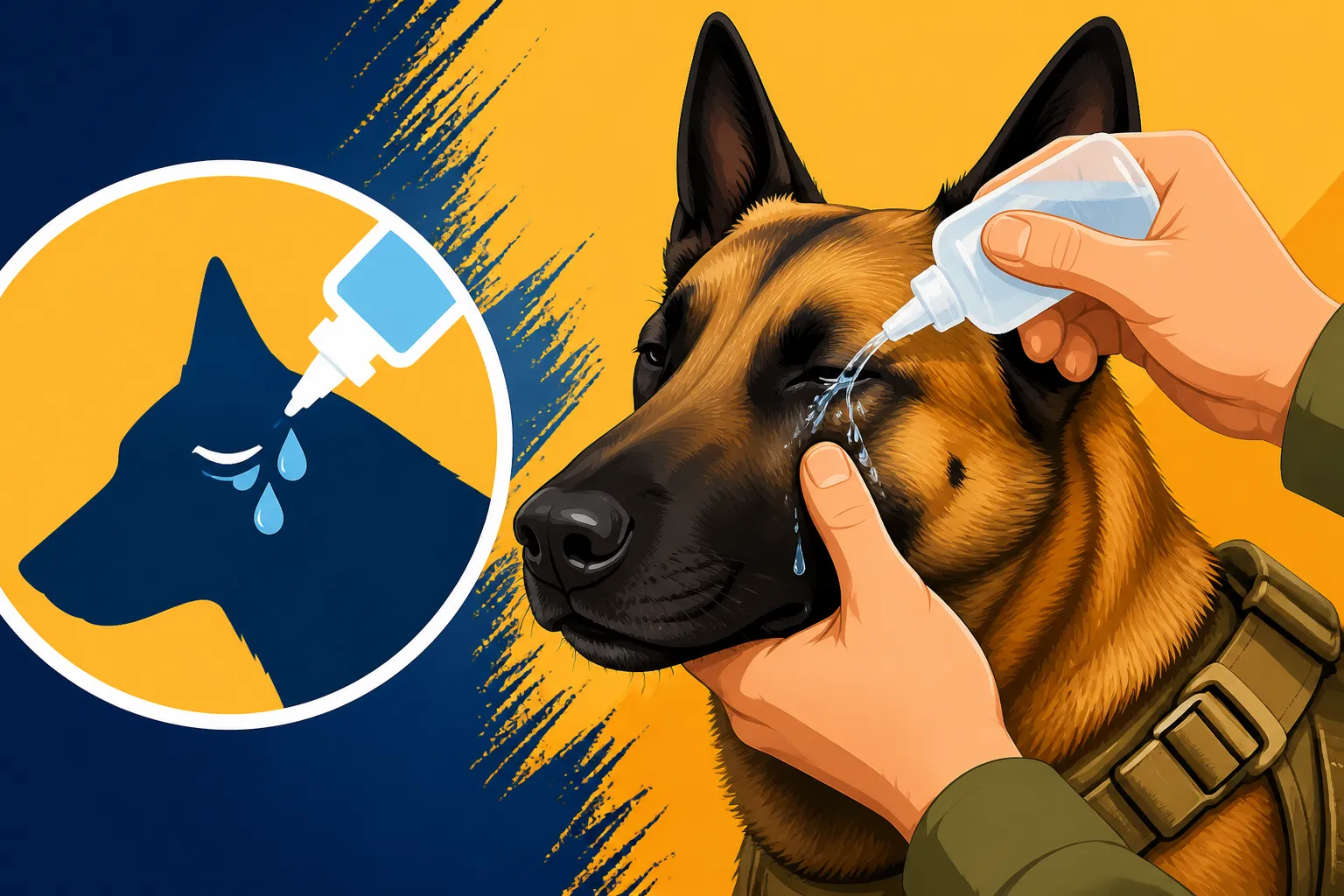
- Apply the Saline: Hold the sterile saline bottle a few inches away from the eye. Gently squeeze the bottle, allowing a steady stream of saline to flow across the surface of the eye, starting from the inner corner (near the nose) and moving towards the outer corner. You want a consistent flush, not just a few drops. The goal is to wash the foreign body out, allowing it to drain down the cheek. Don't be shy with the amount; a good flush is better than a timid one.
- Encourage Blinking: After a good flush, allow your Malinois to blink naturally. Blinking helps spread the saline and can aid in dislodging the particle.
- Wipe Away Debris: Use a fresh, lint-free cloth or sterile gauze pad to gently wipe away any visible debris or excess moisture from around the eye, working from the inner corner outwards. Do not rub the eye itself. Repeat the rinsing process if you can still see the irritant or if your dog is still showing signs of discomfort.
Post-Rinse Care and Observation
Once you believe the debris has been successfully flushed out, the job isn't quite finished. Immediately after the rinse, offer a generous reward – praise, a high-value treat, or a quick game of fetch with their favorite tug if they're up for it. This reinforces a positive association with the potentially stressful experience. Then, take a few minutes to observe your Malinois closely. Is the squinting reduced? Is the pawing less frequent? Does the eye look less red?
Continue to monitor the eye over the next few hours and even into the next day. Sometimes, a persistent irritant can cause lingering inflammation even after it's gone. Watch for any signs of worsening, such as increasing redness, swelling, cloudiness of the cornea, or a thick, colored discharge. If your Malinois continues to show significant discomfort or if the problem doesn't resolve quickly, it's time to elevate your concerns to a veterinary professional. Even a tiny piece of dust can cause a scratch, and you want to catch that before it develops into an infection.
When to Seek Professional Veterinary Help
While rinsing out a dusty eye is often a successful home remedy, it's crucial to know when the situation has moved beyond a simple irritant and requires professional veterinary intervention. Ignoring certain signs can lead to serious, long-term damage to your Malinois's vision.
Signs That Warrant an Immediate Vet Visit
Your Malinois is a tough dog, but their eyes are incredibly delicate. If, after rinsing, you observe any of the following symptoms, it's time to call your veterinarian immediately:
- Persistent or Worsening Redness: If the eye remains intensely red or becomes even redder after flushing, something more than simple irritation is likely at play.
- Swelling: Any swelling around the eye, particularly the eyelids, indicates inflammation that needs medical attention.
- Increased or Abnormal Discharge: While clear, watery discharge can be normal, if it becomes thick, yellow, green, or contains pus, it's a strong indicator of infection.
- Severe Pain: If your Malinois is constantly squinting, holding the eye tightly shut, or showing extreme sensitivity to touch around the eye, they are in significant pain, and the cause needs to be identified.
- Cloudiness of the Eye: A bluish or whitish film over the cornea can suggest serious injury or disease, such as a corneal ulcer.
- Vision Changes: If your Malinois appears to be bumping into things, seems disoriented, or struggles to track objects with the affected eye, their vision may be compromised.
- Visible Foreign Body You Can't Remove: If you can clearly see a piece of debris that won't flush out, or if it appears embedded in the eye tissue, do not attempt to remove it yourself. This could cause permanent damage.
- Third Eyelid Protrusion: If the nictitating membrane (third eyelid) is visibly covering a significant portion of the eye, it can be a sign of pain or underlying irritation that needs checking.
Never hesitate to contact your vet if you are unsure. When in doubt, it's always better to be safe, especially when it comes to vision.
Understanding Potential Complications
What might seem like a minor speck of dust can sometimes lead to more severe complications if not managed properly or if the initial injury was greater than it appeared. The most common and serious concern is a corneal abrasion or ulcer. Imagine a tiny piece of grit scratching the surface of your eye; it's painful and can easily become infected. The cornea, the clear outer layer of the eye, is highly susceptible to such injuries. If left untreated, a simple scratch can deepen into an ulcer, leading to significant pain, vision impairment, or even rupture of the eyeball in extreme cases. This is why addressing issues like Corneal Scratches on a Malinois Working Brush quickly is so important.
Bacterial or fungal infections can also set in if the eye's natural defenses are compromised by an irritant or abrasion. These infections can cause discharge, inflammation, and further damage. Sometimes, even after the foreign body is removed, a persistent inflammatory response can occur, leading to ongoing discomfort. Less common but still possible are more severe internal eye issues if a sharp object has penetrated deeper. These complications highlight why persistent symptoms, even after a thorough rinse, should never be ignored. Early diagnosis and treatment are critical for preserving your Malinois's eyesight and preventing chronic pain.
Preventative Measures and Regular Eye Checks
An ounce of prevention is worth a pound of cure, and this holds true for your Malinois's eye health. While you can't prevent every single speck of dust, you can certainly take proactive steps to reduce the risk of serious issues. Regular, daily eye checks should be a standard part of your grooming routine, especially after any intense training or exposure to dusty or brushy environments. Take a moment to gently open their eyelids, look at the whites of their eyes, and check for any redness, discharge, or visible foreign bodies. Catching something early can make all the difference.
Keeping the hair around your Malinois's face and eyes neatly trimmed can also help. While Malinois typically have short coats, sometimes stray hairs can wick debris into the eye or cause irritation themselves. Discuss appropriate trimming with your groomer or vet to ensure you're not cutting too close or creating new problems. For Malinois that frequently work in high-risk environments, like tracking through dense undergrowth or performing tactical operations, consider specialized dog goggles. Brands like Rex Specs are designed for working dogs and can offer excellent protection against dust, debris, UV light, and even blunt trauma. While some dogs resist them initially, proper conditioning can make them an accepted piece of equipment, just like a muzzle. You can also refer to Eye Care on a Malinois Prone to Pannus for more general advice on maintaining ocular health.
Advanced Considerations for Active Malinois
Our Malinois aren't just pets; they're often working partners, athletes, and protectors. This means their care often goes beyond the basics, especially when it comes to protecting their most valuable assets – their senses. When you ask so much of them, you owe it to them to provide the best possible protection and care.
Eye Protection for High-Risk Activities
For many working Malinois, especially those in military, police, or certain extreme sports roles, eye protection isn't a luxury; it's a necessity. Imagine a K9 fast-roping from a helicopter, riding in a vehicle with its head out the window, or performing search and rescue in a demolition zone. In these scenarios, dust, wind, flying debris, and even bright sunlight can pose significant threats to their eyes. This is where specialized dog goggles come into play.
Companies like Rex Specs design goggles specifically for the unique facial structure of dogs, ensuring a secure fit that protects the eyes without obstructing vision. They come with interchangeable lenses for various light conditions and are robust enough to withstand the rigors of working life. While not every Malinois will need them, and getting a dog accustomed to wearing them requires patience and positive reinforcement, they are an invaluable tool for preventing injuries in high-risk situations. Conditioning should begin long before they're needed, associating the goggles with positive experiences and rewards. They might feel awkward at first, but with consistent, calm training, many working Malinois learn to accept them as part of their "uniform" for the job.
Integrating Eye Care into Your Routine
For a truly active Malinois, eye care needs to be more than an emergency response; it needs to be an integral, almost subconscious part of your daily routine. Think about it like checking their paws after a run – it's just something you do. After every training session, particularly those involving dusty fields, dense brush, or high-speed maneuvers, make a habit of a quick eye check. A simple visual inspection for redness, squinting, or discharge can catch minor irritants before they become major problems.
Keep your sterile saline solution and lint-free wipes in your training bag, right alongside your leashes, collars, and treats. Make eye rinsing a non-event, something your Malinois associates with calm handling and positive reinforcement. Even if their eyes look perfectly fine, a quick, gentle wipe with a damp cloth around the eyes can help remove ambient dust and prevent build-up. Consider it another facet of their overall conditioning and health maintenance. The more you normalize these routine checks, the less stressed your Malinois will be if you ever need to perform a more thorough rinse or apply medication. This consistent attention to detail is crucial for Keeping a Belgian Malinois Sound Past Twelve and throughout their working life.
| Symptom Displayed by Malinois | Recommended Action | Urgency Level |
|---|---|---|
| Mild pawing, watery discharge | Gentle flush with sterile saline; observe | Low |
| Visible dust/debris in eye | Thorough flush with sterile saline; check for remaining irritant | Medium |
| Persistent redness after flush | Contact veterinarian | High |
| Swelling around eye | Contact veterinarian immediately | Critical |
| Thick, colored discharge | Contact veterinarian immediately | Critical |
| Squinting, severe pain | Contact veterinarian immediately | Critical |
| Cloudiness of eye | Contact veterinarian immediately | Critical |
| Embedded foreign body | Contact veterinarian immediately; do NOT attempt removal | Critical |
Disclaimer
This article is for general informational purposes only and does not constitute professional advice. Laws, prices and regulations vary by location and change over time. Consult a qualified professional for guidance on your specific situation.