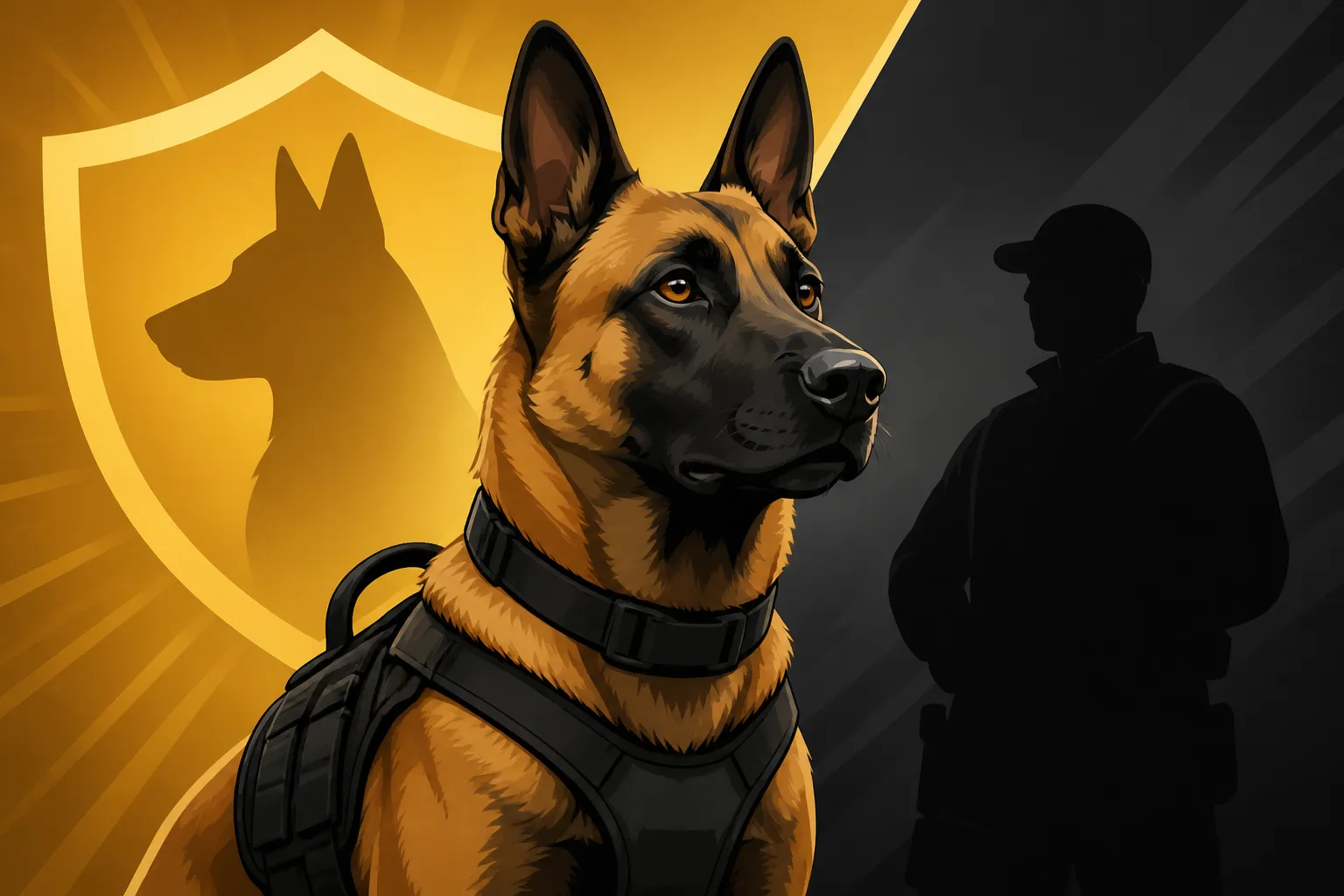
The Twenty Five Thousand Dollar Trained Belgian Malinois
It's quite a jolt when you first hear the price tag associated with a truly elite, highly trained Belgian Malinois. For many, the idea of a dog costing as much as a new car, or even a down payment on a house, seems utterly unbelievable, if not frankly irresponsible. This guide will meticulously break down why a trained Belgian Malinois can command a price of twenty-five thousand dollars or more, exploring the deep investments in time, expertise, and resources that culminate in such an extraordinary companion.
Unpacking the Twenty-Five Thousand Dollar Figure
When we talk about a Belgian Malinois reaching a twenty-five thousand dollar valuation, it's rarely about the cost of the puppy itself. This figure represents an accumulation of specialized breeding, intensive training, expert handling, and ongoing care that transforms a raw, high-drive dog into a highly specialized, reliable, and sometimes life-saving asset. It’s a sum that reflects immense dedication, countless hours of labor, and a level of skill that few possess.
More Than Just a Puppy Price Tag
Let's be clear: a well-bred Belgian Malinois puppy from a reputable working line breeder might start anywhere from $1,500 to $4,000, sometimes more for imported lines with exceptional pedigrees. But that’s just the very beginning of the journey. The twenty-five thousand dollar price tag isn't for a puppy; it's for a mature, fully developed, and extensively trained dog. This significant leap in cost accounts for all the efforts put in from the moment the puppy is selected until it reaches a level of proficiency that is, frankly, astounding.
Consider the initial selection process alone. Breeders who consistently produce dogs capable of reaching these elite levels often incur significant expenses in health testing, titling their breeding stock, and importing valuable genetics. Once a puppy is chosen, often based on specific temperamental traits and drives, the real work begins. It’s an investment in raw potential, carefully cultivated and honed by professionals over months, if not years. You're not just buying a dog; you're buying a meticulously crafted canine partner, whose capabilities far exceed those of an average pet.
The Spectrum of Trained Malinois
The term "trained" is incredibly broad, and understanding its nuances is key to grasping the significant price variations. On one end, you have dogs that have completed basic obedience, perhaps a few group classes, and can reliably sit, stay, and come. This level of training might add a few thousand dollars to a dog's value. However, a twenty-five thousand dollar Malinois sits at the far end of this spectrum, typically possessing advanced, specialized skills that go far beyond simple household manners.
These highly valued dogs might be certified in protection work (like those in IGP, Mondioring, or PSA), excelling in bite work, obedience, and tracking. They could be highly specialized detection dogs, capable of locating specific substances with incredible accuracy and speed, whether it's narcotics, explosives, or even accelerants at an arson scene. Alternatively, some might be extensively trained service dogs for individuals with severe disabilities, requiring years of nuanced public access and task-specific training. The higher the skill level, the more extensive and specialized the training, and consequently, the steeper the investment.
Understanding the Investment Versus Expense
For many, a dog is an expense: food, vet bills, perhaps a few training classes. But for those investing in a twenty-five thousand dollar Belgian Malinois, it's viewed as a profound investment. It’s an investment in safety, security, and the unparalleled capabilities this breed can offer when properly developed. This isn’t about luxury; it’s often about necessity for individuals or organizations who require a dog with a specific, high-stakes skill set.
Whether it’s a family seeking top-tier personal protection, a law enforcement agency needing a new K9 officer, or an individual with unique service dog needs, the price reflects the value of mitigating risk, providing essential assistance, or performing critical duties. The cost isn't merely for the dog itself, but for the proven reliability and performance under pressure that comes from such a thorough training regimen. Think of it as purchasing a highly specialized tool, custom-built and meticulously calibrated for a very specific, demanding job.
The Core Components of Training Costs
The journey to a twenty-five thousand dollar Belgian Malinois is a long and expensive one, primarily driven by the cumulative cost of its training. This isn't just about sending a dog to "boot camp" for a few weeks; it's a phased approach, starting from a very young age and escalating in intensity and specialization. Each stage adds layers of skill, confidence, and reliability, all of which come with a significant financial outlay.
Foundation and Early Socialization
The bedrock of any highly trained Malinois begins with an exceptional foundation, often starting from the moment the puppy leaves the breeder. Reputable trainers often work with puppies as young as eight to sixteen weeks, focusing on critical early socialization. This involves carefully exposing the puppy to a vast array of environments, sounds, people, and other animals in a positive, controlled manner. This isn't just casual play; it's intentional, structured exposure designed to build a bomb-proof temperament, crucial for a high-drive dog that will eventually work in complex situations. This early work helps prevent issues later in life, such as reactivity or fear, which can derail advanced training.
Beyond socialization, basic obedience starts immediately. We’re talking about consistent, positive reinforcement methods for house-training, crate training, leash manners, and fundamental commands like sit, down, and stay. For a Belgian Malinois puppy, known for its intense drive and intelligent, sometimes mischievous nature, this foundational period is paramount. Ignoring this stage or cutting corners here almost guarantees issues down the line. Trainers dedicated to producing top-tier dogs will often spend hundreds of hours during these early months, setting the stage for future complex behaviors. The cost of puppy classes, private coaching, and even structured "board and train" programs during this crucial developmental window can quickly add up, easily reaching several thousand dollars for the first few months alone.
Advanced Obedience and Specialized Skills
Once the foundation is solid, the training transitions into advanced obedience and, for many, specialized skill development. This is where the dog learns to perform reliably off-leash, respond to commands from a distance, and maintain focus amidst extreme distractions. Think about a Malinois performing a perfect recall while chasing a decoy, or remaining in a down-stay while explosions go off nearby. This level of reliability requires immense repetition, proofing in diverse environments, and a deep understanding of canine learning theory. Trainers employ various tools, from long lines to electronic collars, ensuring the dog understands and executes commands flawlessly, even when its natural drives are highly engaged.
For service dogs, this stage involves extensive public access training – teaching the dog to calmly navigate crowded stores, public transportation, and busy urban environments. They learn task-specific behaviors, such as retrieving dropped items, opening doors, or alerting to medical conditions. Each task is broken down into tiny steps and meticulously taught and proofed. This often involves thousands of hours of one-on-one instruction. If the dog is destined for detection work, it will be introduced to scent discrimination, learning to identify specific target odors among many distractions. The precision required for these tasks is incredibly demanding and pushes both dog and trainer to their limits. This intensive period of advanced training can easily span many months, with costs often in the range of $10,000 to $20,000, depending on the complexity of the desired skills.
Professional Protection and Sport Training
For a Belgian Malinois, particularly those destined for security, police, or high-level sport work, the protection phase is a significant investment. This isn't about fostering aggression; it's about channeling the dog’s natural prey and defensive drives into a controlled, callable response. The training focuses on developing a strong, full grip on a bite sleeve or suit, controlled aggression, and the ability to "out" (release the bite) on command, even under high pressure. This requires a highly experienced decoy—the person the dog bites—who understands canine behavior and can safely build the dog's confidence and skill.
Clubs and professional trainers offering this level of work are rare and expensive. A bite suit, decoys, and equipment for a Malinois can be a significant cost for the trainer, which is reflected in their fees. Sessions are often private or in small groups, with individualized attention to refine technique and ensure the dog is working safely and effectively. This specialized training requires hundreds of hours, often over several years, to ensure the dog is stable, confident, and reliable in real-world scenarios or competitive settings. For those interested in bite sports like IGP or Belgian Ring, there are ongoing club dues, training fees, and trial entry costs. Furthermore, the selection process for a dog suited for this work is rigorous; not every Malinois possesses the necessary nerve, drive, and temperament, making the initial search for such a prospect even more crucial. The depth of this training is what truly sets a $25,000 Malinois apart from a standard pet.
The Trainers Behind the Price Tag
A major portion of the twenty-five thousand dollar price tag for a trained Belgian Malinois is directly attributable to the caliber of the trainers involved. You’re not just paying for someone to teach commands; you’re paying for decades of accumulated knowledge, highly specialized skills, and an unparalleled understanding of canine behavior, particularly with a demanding breed like the Malinois. The investment here isn't just in time, but in expertise that is scarce and highly sought after.
Experience, Reputation, and Expertise
The trainers capable of producing a twenty-five thousand dollar Malinois are not your average local dog trainers. These individuals often have decades of experience, working exclusively with high-drive working breeds. They might have backgrounds in law enforcement K9 units, military working dog programs, or have achieved top titles in elite protection sports internationally. Their reputation precedes them, often built on a long track record of successful placements and competitive wins. They are frequently recognized as experts in their field, attending and speaking at seminars, and even training other trainers.
This level of expertise means they understand the subtle nuances of a Malinois’s temperament, how to safely channel its immense drives, and how to troubleshoot complex behavioral issues that would baffle less experienced professionals. They possess an intuitive understanding of canine learning theory, operant conditioning, and behavioral modification techniques. A trainer of this caliber has often invested hundreds of thousands of dollars in their own education, certifications, and development over their career. When you engage such a person, you are paying not just for their time, but for the profound depth of knowledge and skill that enables them to transform a dog into a true specialist. Their unique ability to discern a dog's potential and systematically develop it safely and effectively is what justifies their high fees.
Facilities and Resources
Producing a high-level working Malinois demands more than just a talented trainer; it requires top-tier facilities and extensive resources. These trainers often operate state-of-the-art training centers, complete with specialized equipment. This can include large, secure training fields for obedience and protection work, diverse environments for proofing (like urban settings, wooded areas, and buildings), and often indoor facilities for inclement weather. They might have obstacle courses for agility and conditioning, and dedicated areas for scent detection work with controlled airflow and hiding spots.
Beyond the physical space, there’s the specialized equipment: high-quality bite suits, sleeves, and protective gear for decoys; a range of leashes, collars (including remote e-collars from brands like E-Collar Technologies or Garmin, which require significant skill to use correctly), and harnesses. They often have dedicated climate-controlled kennels for board-and-train programs, ensuring the dogs are comfortable and safe. Many also employ full-time, highly skilled assistants and professional decoys, which are critical for bite work and specific training exercises. All these specialized resources, meticulously maintained and frequently updated, represent a significant overhead cost for the training operation, directly contributing to the overall price you pay.
Time Commitment and Customization
The sheer time commitment involved in training a twenty-five thousand dollar Malinois is staggering. This isn’t a one-size-fits-all, cookie-cutter program. Each dog is an individual, and a top trainer will conduct thorough evaluations to understand its specific drives, temperament, strengths, and weaknesses. They then develop a highly customized training plan, tailored to that dog's unique personality and the specific goals of the client. This bespoke approach means the training is incredibly efficient and targeted, maximizing the dog’s potential.
A high-level program often involves hundreds, if not thousands, of hours of direct, one-on-one training with the dog, spread out over many months or even a year or two. This includes initial shaping of behaviors, proofing in increasingly difficult environments, maintenance of learned skills, and constant assessment. For comparison, consider how much a private coach for a specialized human skill, like an elite athlete or musician, charges per hour for their expertise. Canine training at this level is no different. Furthermore, these trainers often include extensive handler education, teaching the new owner how to maintain the dog’s skills and properly manage its behavior, ensuring the long-term success of the placement. This personalized, intensive, and long-term commitment is a major driver of the total cost.
Operational Costs and Lifelong Maintenance
The financial commitment for a twenty-five thousand dollar trained Belgian Malinois doesn't stop once the dog is in your hands. These are high-performance animals, often requiring specialized care and ongoing attention to maintain their peak physical and mental condition. Just like a high-performance vehicle, they demand premium fuel and regular, expert servicing.
Nutrition and Health for High-Performance Dogs
A Malinois that has undergone such rigorous training, and is expected to maintain its capabilities, requires a diet tailored to its high energy output. We’re not talking about generic kibble. These dogs often thrive on premium, high-protein, high-fat performance formulas, or even carefully balanced raw or fresh food diets. Brands like Orijen, Acana, or specialized working dog kibbles are common choices. For those exploring fresh food options, services like Ollie deliver tailored, human-grade meals that cater to a high-drive Malinois's needs, though this comes with a higher price point than traditional kibble. The cost of feeding a Belgian Malinois that works every day can be substantial.
Beyond food, ongoing health care is paramount. These dogs are athletes, and their bodies endure significant stress during training and work. Regular veterinary check-ups are critical, as are preventative measures such as joint supplements, omega-3 fatty acids, and sometimes even physical therapy or chiropractic care to keep them sound. Many owners find peace of mind with pet insurance providers like Healthy Paws, which can help offset unforeseen medical costs that can quickly escalate, especially for a working dog. Early detection and treatment of minor issues are crucial to prevent them from becoming debilitating problems that could affect the dog's performance or longevity. These proactive health measures are an integral part of protecting the investment in a high-caliber Malinois.
Equipment, Gear, and Specialized Tools
The equipment necessary for a highly trained Malinois, especially one involved in protection or detection work, extends far beyond a basic collar and leash. High-quality, durable gear is essential, often designed specifically for the demands of working dogs. This can include tactical harnesses for various tasks, heavy-duty tracking lines, and robust muzzles for safe public training or veterinary visits. For protection work, specialized bite sleeves, bite pillows, and French linen tugs are needed for ongoing maintenance and refinement of skills. These items are not cheap, and they wear out, requiring regular replacement. The investment in bite suits, sleeves and tugs a Malinois owner buys for continued training alone can run into thousands of dollars over the dog's lifetime.
Transporting a trained Malinois safely is another consideration. Crash-tested crates, often custom-fitted for vehicles, are a must, providing security for the dog and peace of mind for the handler. For K9 officers or those who frequently travel with their dogs, vehicle heat alarms for a Belgian Malinois in a car are non-negotiable, protecting against potentially fatal heatstroke. These are highly specialized pieces of equipment that add significantly to the overall operational costs. Furthermore, for those training in certain sports, tools like quality E-collars (used correctly and humanely) are indispensable for precision and remote control in high-distraction environments. The total outlay for necessary, high-quality gear can easily run into thousands of dollars annually. Ordering high-quality performance kibble or specialized dietary needs from retailers like Chewy ensures a consistent supply of food and often provides access to specialized equipment, sometimes at competitive prices.
Continuing Education and Refreshers
Even a fully trained, twenty-five thousand dollar Malinois isn't a "set it and forget it" proposition. Their skills are perishable, and their drives need continuous outlets. Regular refresher training is essential to maintain peak performance and reliability. This might involve monthly sessions with their original trainer or a specialized club, practicing all learned commands and scenarios. For sport dogs, this means ongoing participation in club training and trials. For protection dogs, it’s critical to regularly work with skilled decoys to maintain their bite work and control. The costs associated with club dues, decoys and equipment for a Malinois, trial entry fees, and travel to training events can be considerable.
Furthermore, a working Malinois often benefits from cross-training in different disciplines to keep them mentally stimulated and physically conditioned. This could include scent work, agility, or even advanced obedience classes that introduce new challenges. These continued investments ensure that the dog remains sharp, engaged, and capable of performing at the highest level throughout its working life. Just like any elite athlete, a trained Belgian Malinois requires constant conditioning and practice to stay in top form, and this commitment to ongoing development is a lifelong financial responsibility.
The Specifics of Police and Military K9s
When discussing the twenty-five thousand dollar figure, it's often in the context of police or military K9s, where the investment is perhaps most clearly justified by the critical nature of their work. These dogs represent the pinnacle of selection and training, designed to perform life-saving tasks under extreme pressure.
Procurement and Initial Selection
The process of acquiring a police or military Belgian Malinois is incredibly rigorous, and it starts with selection. These agencies often source their dogs from highly reputable breeders in Europe, particularly the Netherlands, Belgium, and Germany, known for producing generations of dogs with exceptional working drives, health, and stable temperaments. These are often KNPV (Koninklijke Nederlandse Politiehond Vereniging) or FCI-titled dogs. The cost of these "green" (untrained, but highly prospect-ful) dogs alone can range from $8,000 to $15,000, not including the significant expense of importing them, which can add several thousand more for airfare, customs, and veterinary checks.
The selection isn't just about pedigree; it involves extensive temperament testing to ensure the dog possesses the necessary nerve, courage, fight drive, and environmental soundness required for police or military work. These dogs must be bold, confident, and highly intelligent, capable of independent thinking while remaining handler-focused. A significant amount of time and expertise goes into traveling to assess these dogs, ensuring they meet the exacting standards before they are even brought back for training. This initial investment in a genetically superior prospect is the crucial first step towards a twenty-five thousand dollar, or even higher, valuation.
Intensive K9 Academy Training
Once procured, these Malinois enter an intensive, multi-month K9 academy program, often lasting anywhere from 4 to 12 months, sometimes longer. This is a highly specialized curriculum designed to teach the dog and its handler to work as a cohesive team. Training covers a vast array of disciplines, depending on the unit's needs: patrol work (handler protection, suspect apprehension, area searches, building searches), narcotics detection, explosives detection, tracking/trailing, and sometimes even cadaver or currency detection.
The training environment simulates real-world scenarios, complete with distractions, loud noises, and varying terrains. The dog learns to bite and release on command, hold a suspect, and remain steadfast in the face of threats. Simultaneously, the handler undergoes intensive training themselves, learning how to read their dog, issue commands, deploy their dog effectively, and provide necessary first aid. This comprehensive program is taught by highly experienced instructors, many of whom are retired K9 officers or military dog handlers. The cost of instructor salaries, facilities, equipment, and the sheer duration and intensity of this specialized schooling pushes the total investment per K9 team well into the tens of thousands of dollars. Anesthesia protocols for a lean Belgian Malinois are also critical consideration during training and eventual deployment, especially for a working dog often exposed to higher risks.
Ongoing Unit Costs and Retirement
The investment in a police or military Malinois doesn't end after graduation. These K9 teams require continuous training throughout their service life to maintain their certifications and keep their skills sharp. This involves weekly or bi-weekly in-service training sessions, often simulating new and complex scenarios. There are also annual recertification processes. The cost includes handler overtime, specialized veterinary care tailored to working dogs, high-performance food, and replacement of gear (harnesses, tracking lines, vehicle inserts, muzzles). A common injury a bite sport Belgian Malinois collects includes broken teeth on a Malinois from bite work, which requires costly veterinary intervention.
When a police or military Malinois reaches the end of its career, usually around 8-10 years of age, it retires. While many are adopted by their handlers, the cost of retiring a working Belgian Malinois from the job often still includes lifelong veterinary care, which the agency might partially cover, or which falls to the adopting family. The total lifecycle cost of a military or police K9, from procurement through training and operational deployment to retirement, is a substantial financial commitment, often exceeding the $25,000 mark significantly, sometimes reaching $50,000 or even $100,000 over the dog's lifetime.
Is a $25,000 Malinois Worth It? Evaluating the Value
The question of whether a twenty-five thousand dollar Belgian Malinois is "worth it" is highly subjective and depends entirely on the buyer's needs, circumstances, and financial capacity. For some, it's an unimaginable luxury; for others, it's a justifiable, even critical, investment that offers unparalleled benefits.
The Peace of Mind and Capability
For individuals or families seeking top-tier personal protection, the peace of mind offered by a thoroughly trained Belgian Malinois is often invaluable. This isn't just a dog that barks at intruders; it's a dog capable of making independent decisions to protect its handler, performing controlled apprehension, and deterring threats with its presence. The reliability and predictability of a dog trained to this level are unparalleled. You can trust this dog to perform its job under pressure, whether that's protecting your home or accompanying you in public.
For those requiring a highly specialized service dog, the capabilities offered by a $25,000 Malinois can be life-changing. From alerting to medical crises to assisting with mobility, these dogs provide a level of independence and safety that no untrained animal could. For law enforcement and military, the capabilities of a K9 unit are critical in saving lives, locating evidence, and apprehending dangerous suspects. The ability of a Malinois to recall on a Belgian Malinois in full drive, even off a moving target, is a testament to the training investment and the peace of mind it provides the handler. In these high-stakes scenarios, the cost is a direct reflection of the dog's ability to perform tasks that human counterparts cannot, or to do so with greater efficiency and safety.
Long-Term Savings and Avoided Problems
While the upfront cost is significant, investing in a comprehensively trained Malinois can lead to long-term savings and the avoidance of costly problems. An untrained or poorly trained Malinois, with its immense drive and intelligence, can be a destructive force, leading to thousands of dollars in property damage, potential liability issues (such as bites or escapes), and severe behavioral problems that require expensive rehabilitation. The shark phase every Malinois puppy goes through, if not managed correctly, can develop into serious issues.
A properly trained Malinois, on the other hand, is a well-integrated member of the household, a reliable partner, and an asset. The comprehensive training minimizes the risk of behavioral issues, reduces the need for constant supervision, and prevents situations that could lead to injury or legal complications. Furthermore, the longevity and sound health that typically come with a well-bred and conditioned working Malinois mean fewer unexpected veterinary bills compared to a dog from unknown origins. In essence, you're paying to prevent problems and ensure a harmonious, functional relationship, rather than constantly reacting to issues.
The Right Fit for the Right Owner
Ultimately, a twenty-five thousand dollar Belgian Malinois is not for everyone. It requires an owner who understands the breed's demanding nature, is committed to maintaining its training, and can provide the structured work a Belgian Malinois demands daily. It's a significant financial outlay, but also a massive commitment of time and lifestyle adaptation. The kind of owner a Belgian Malinois requires is someone with deep knowledge and dedication.
For those with the specific need, the resources, and the dedication, the investment yields a partner of extraordinary capability, loyalty, and companionship. For others, exploring options like starting with a well-bred puppy and working closely with local trainers for basic obedience or sport dog clubs might be a more suitable and financially accessible path. This article aims to inform, not to advocate for or against such an investment, but to fully explain the depth and breadth of what goes into creating a canine partner worthy of such a substantial price.
| Training Level | Estimated Cost (Dog + Training) | Key Characteristics | Typical Owner |
|---|---|---|---|
| Pet Quality (Basic Obedience) | $2,000 – $8,000 | Basic commands (sit, stay, leash manners), house-trained, socialized. | Families, active individuals seeking a well-behaved companion. |
| Advanced Companion Dog | $8,000 – $15,000 | Off-leash reliability, public access manners, specific household tasks. | Owners wanting a highly obedient dog for public outings, stable in various environments. |
| Specialized Sport Dog | $15,000 – $25,000+ | Proficient in a specific dog sport (e.g., IGP, PSA, Mondioring) – includes advanced obedience, bite work, tracking. | Experienced handlers passionate about competition, seeking a high-performing athlete. |
| Personal Protection Dog | $20,000 – $45,000+ | Elite obedience, controlled protection (bark, hold, out on command), trained for real-world threats. | Individuals/families seeking high-level security, understanding the commitment required. |
| Police/Military K9 | $25,000 – $100,000+ (lifetime) | Patrol work (apprehension, detection), tracking, handler protection; extensive academy training. | Law enforcement agencies, military units, governmental organizations. |
| Service Dog | $25,000 – $50,000+ | Extensive public access, task-specific training for disabilities (medical alert, mobility assistance, etc.). | Individuals with specific medical or physical needs, often through specialized organizations. |
Disclaimer
The information provided in this guide is for general informational and educational purposes only and is not a substitute for professional veterinary advice, training consultation, or financial planning. The costs mentioned are estimates and can vary significantly based on location, specific trainer, bloodline, and the individual needs of the dog and owner. Always consult with qualified professionals before making decisions about purchasing or training a Belgian Malinois.