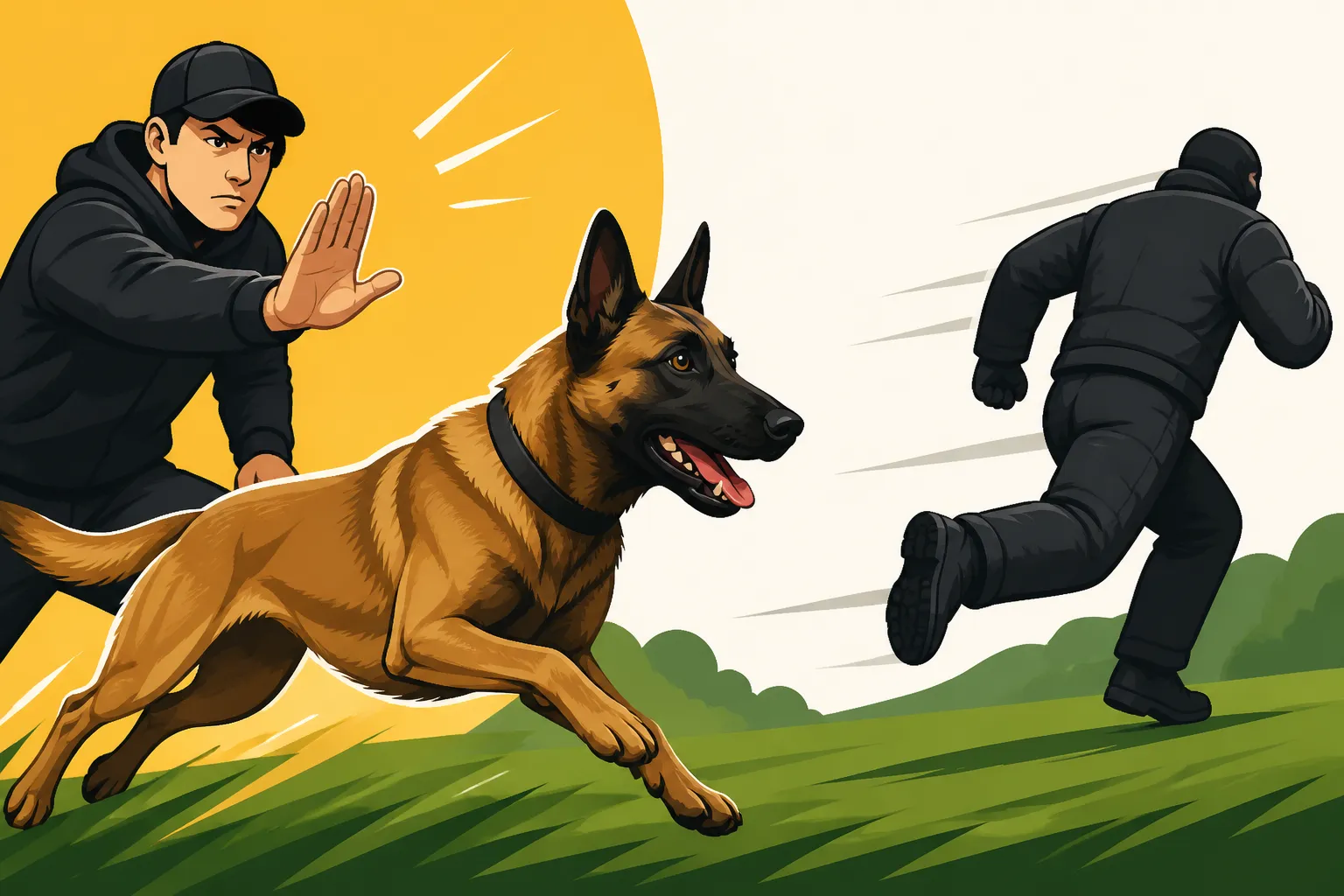
Recalling a Belgian Malinois Off a Moving Target
One of the most terrifying moments for any Belgian Malinois owner is seeing their highly driven dog lock onto a moving target – a squirrel darting across the park, a distant jogger, or even another dog in play – and feel that utter panic as your calls fall on deaf ears. It feels like your dog has suddenly gone deaf, every ounce of their focus laser-locked on that fast-moving object, leaving you scrambling. This guide will walk you through building and proofing a recall strong enough to bring your Malinois back, even when their deepest instincts are screaming at them to chase.
The Unique Challenge of Recalling a Malinois from a Moving Target
Let's be real, a Belgian Malinois isn't your average dog. Their intensity, their drive, their sheer speed – it’s what we love about them, but it’s also what makes recall from a high-value, moving target such a monumental challenge. It's not just about teaching them "come"; it's about competing with their very nature.
Understanding the Malinois Prey Drive
From the moment a Malinois puppy opens its eyes, that incredible prey drive is bubbling just beneath the surface, waiting for the right stimulus. It’s what makes them phenomenal working dogs – whether tracking a suspect, finding narcotics, or excelling in bite sports. But for the pet owner, or even the sport handler during an off-leash walk, that same drive can turn a peaceful stroll into a frantic dash when a rabbit bolts across the path.
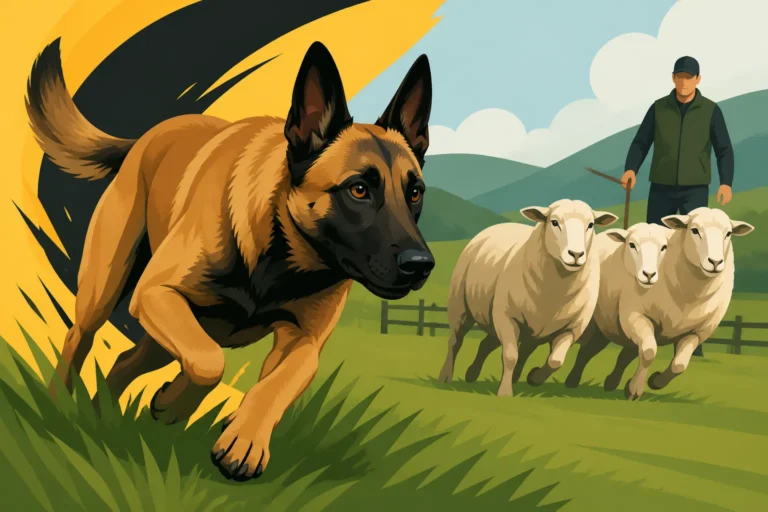
This drive isn't just a simple desire to chase; it's a deeply ingrained behavioral sequence. First, there’s the orienting phase, where their head snaps up, ears swivel, and eyes fixate. Then comes the eye-stalking, where they might crouch low, moving slowly and deliberately. Next is the chase, often accompanied by frantic barking or an eerie silence as they give pursuit. Finally, if they catch it, there’s the grab-bite and the kill-bite, though with something like a jogger or another dog, it usually stops at the chase. When your Malinois is in full prey drive, their brain is literally flooded with chemicals that make chasing feel like the most rewarding thing on earth. It's an instinct that overrides almost everything else, making your voice seem like background noise compared to the thrill of the hunt.
The Difference Between a Dog Park Recall and a High-Value Target Recall
Many owners feel they have a "good" recall because their Malinois comes when called at home or even in a relatively calm dog park. But let's be honest, that's often a low-stakes scenario. A dog park, while having other dogs, usually features predictable play. The dogs aren't typically running away in a high-speed, unpredictable fashion that triggers the deep chase instinct like a wild animal would.
A high-value, moving target is an entirely different beast. This isn't just a distraction; it's a trigger. Think about it: a squirrel darting up a tree or another dog sprinting full-speed across a field isn't just "interesting" to your Malinois; it simulates the very thing their ancestors were bred to do – pursue and capture. The speed, the erratic movement, the sheer distance that some targets can cover before your dog even registers your voice – these factors combine to create a perfect storm where their primal instincts often win out over learned obedience. We're talking about overriding centuries of selective breeding for drive and pursuit, not just asking them to stop sniffing a bush.
Building a Rock-Solid Foundation for Recall
Before we even think about moving targets, we need to ensure your Malinois's basic recall is absolutely, unequivocally bulletproof in less distracting environments. This isn't a quick fix; it's a long-term investment in safety and peace of mind.
Reinforcing Basic Recall in Low-Distraction Environments
Start small, start simple, and start in a place where you have absolute control and no real-world distractions. Your living room or a securely fenced backyard are perfect. Begin by using a clear, consistent recall word – something positive and enthusiastic. "Come!" or "Here!" are common, but make sure it’s a word you only use for this specific command, not when you’re just chatting with your dog.
Every single time you call your Malinois, you must make sure they succeed and are rewarded handsomely. This means if they hesitate, you might need to move closer, make exciting noises, or even gently guide them in. When they get to you, it's a party! High-pitched praise, enthusiastic petting, and a jackpot of the absolute best treats they can imagine. Think cooked chicken, hot dogs, cheese – not just their kibble. You want them to associate coming to you with the most incredible things ever. Practice this dozens of times a day in short, fun sessions. Think of it like building a bank account for good behavior; the more deposits you make, the more reliable that behavior becomes.
As they get better, gradually introduce very mild distractions. Maybe a family member walks by slowly, or a quiet toy is placed in the corner of the room. Always set your Malinois up for success, never call them if you suspect they won’t come. Remember, every time they ignore your recall, that behavior is being reinforced, and you’re actively weakening your command.
The Critical Role of High-Value Rewards
When dealing with a Belgian Malinois and their intense drives, "high-value" isn't just a suggestion; it's a non-negotiable requirement. For many dogs, a piece of kibble or a dry biscuit might be a fine reward for sitting, but it simply won’t cut it when you’re asking them to disengage from something far more inherently rewarding like a chase. You are literally competing with their instincts, and your reward needs to be more valuable than that instinctual drive in the moment.
Imagine this: your Malinois is locked onto a squirrel. The squirrel represents the ultimate lottery win for their prey drive. If you offer a single piece of dry kibble, it's like asking someone to give up a winning lottery ticket for a penny. It's just not going to happen. You need to offer them a reward that feels like a bigger lottery win. This means soft, smelly, irresistible treats. Cooked chicken breast, bits of hot dog, cheese sticks, or even specialized training treats from brands like BAXTER & Bella that are designed to be highly palatable and motivating.
Don't be afraid to use a "jackpot" reward for truly stellar recalls – a handful of treats, one after another, as they arrive at your side. This makes the experience overwhelmingly positive and memorable. The goal is to create such a powerful positive association with coming to you that it literally outweighs the pull of any distraction, even a moving one. This is also where understanding your dog's individual preferences comes in; some Malinois are food motivated, others are toy motivated, so a favored tug or ball might be their ultimate reward. The key is to find what truly ignites their desire and reserve it exclusively for recall success.
Introducing Distractions: The Gradual Escalation
Once your Malinois is reliably coming to you in low-distraction settings, it's time to slowly turn up the dial. This is where patience and careful planning become paramount. Rushing this stage will only set you back.
Starting with "Stationary but Engaging" Distractions
Before you even think about movement, introduce distractions that are engaging but not actively moving away. This helps your Malinois learn to disengage from something interesting without the added difficulty of pursuit. A helper can be invaluable here. Have them stand a distance away with a favorite toy, or even just another calm dog on a leash. Your Malinois is on a Long Line Work With a Malinois in Open Ground in a secure area.
Start with your Malinois focused on the distraction, then call them back to you. The moment they break their focus and start towards you, mark that behavior with a clear "Yes!" or a clicker, and reward them enthusiastically. If they don't respond, gently reel them in with the long line while still using your recall word, then reward them when they reach you. Gradually decrease the distance to the distraction, increase its appeal (e.g., the helper subtly wiggles the toy), and demand higher levels of disengagement before rewarding. The goal is for your Malinois to understand that even when something fascinating is present, coming to you is still the best option. Think of it as building their willpower muscle.
Controlled Introduction of Moving Targets
This is where many owners make the mistake of going from zero to sixty too quickly. Your first "moving target" should be highly controlled and predictable, with minimal escape potential for the target, and maximum control over your Malinois. Again, a trusted helper is essential.
Start with your Malinois on a long line. Have your helper walk slowly across the yard with a low-value, boring object. As soon as your Malinois notices it but before they can fully engage in a chase, call them back. Reward heavily. The key is to intervene at the earliest sign of fixation. Gradually, over many, many sessions, increase the speed of the helper and the appeal of the "target." This might be the helper jogging, then running, then running with a ball, then a soft tug toy that your Malinois enjoys.
Remember, the goal is to make your recall more rewarding than the chase itself. Never allow your Malinois to succeed in chasing the target without recalling first. If they get to chase, even once, without coming back, you've just reinforced the wrong behavior. This is a slow, methodical process of proofing and building a counter-instinct. It might take weeks or months to get to a truly running target.
Utilizing a Long Line for Safety and Control
For a Belgian Malinois, a long line isn't just a training tool; it's a safety device that bridges the gap between controlled environments and real-world challenges. When you're introducing any form of distraction, especially a moving target, your Malinois should always be on a long line until their recall is absolutely flawless in that specific scenario.
Imagine you're practicing with a helper jogging across the park. If your Malinois blows off your recall and chases them, they've just had an incredibly rewarding experience that will make it harder to recall them next time. The long line prevents this. It allows you to physically interrupt the chase sequence, reminding your dog that your command means they must come, regardless of their internal desire to chase.
When selecting a long line, choose one that's appropriate for your Malinois's size and strength – typically 15 to 30 feet. Nylon or biothane lines are durable and easy to clean. You can find excellent options on Amazon. The line should be attached to a well-fitting harness, not directly to their collar, to prevent neck injury if you have to check them firmly. Practice handling the long line safely, letting it drag behind your dog and only picking it up when you need to enforce a recall. The goal is for the line to be a subtle insurance policy, not a constant tether. Its presence allows you to practice in more realistic environments, giving your Malinois the illusion of freedom while you maintain ultimate control.
Advanced Strategies for Real-World Scenarios
Once you've built a strong foundation and begun introducing controlled moving targets, it's time to layer on more advanced techniques to truly proof that recall for any situation.
The Power of an Emergency Recall Word
A regular "Come!" might be solid for everyday situations, but when a Malinois is fully engaged with a high-stakes moving target, sometimes you need a nuclear option. This is where an emergency recall word comes in. This word should be completely separate from your daily recall, used only in dire situations, and always, always paired with the highest possible reward.
Think of a word or phrase that you rarely use, perhaps "Front!" or "Touchdown!" or even a distinct whistle. This word needs to carry immense weight and positive association. The training for this is similar to basic recall, but the rewards are exponentially greater. For example, instead of a few treats, it's an entire handful of cooked chicken, or their absolute favorite squeaky toy followed by a vigorous game of tug. The key is that this word is never diluted by everyday use or by being ignored. If you use it, you must ensure your dog comes, even if you have to physically retrieve them (which is why practicing on a long line is crucial).
This emergency recall is your ultimate safety net. It’s for those moments when the stakes are incredibly high – perhaps your Malinois is heading towards a busy road after a deer, or engaging in unwanted interaction with an unfamiliar dog. By reserving it for emergencies and always pairing it with an overwhelming positive consequence, you create a powerful cue that can cut through even the most intense prey drive.
Proofing in Different Environments and With Varied Targets
A recall that works perfectly in your backyard might crumble in a new park with novel smells and sounds. Your Malinois needs to learn that "come" means "come" everywhere, and from anything. This is called proofing, and it's a critical step.
Start by gradually changing your training locations. Move from your backyard to a quiet park, then to a slightly busier park, then to an open field with distant distractions. In each new environment, dial back the intensity of the moving target until your Malinois is consistently successful, then slowly build it back up. The distractions will vary immensely from location to location – children playing, bicycles, other dogs, wildlife, or even just blowing leaves. Each presents a unique challenge to your Malinois's focus.
Moreover, vary the type of moving target. Start with your helper, then move to a remote-controlled car (under strict control), then a distant, predictable jogger. Eventually, if possible, work around other dogs on leash, then off-leash, with their owners' permission. The goal is to generalize the recall command so that no matter what fast-moving, high-value object appears, your Malinois automatically disengages and returns to you. This requires immense patience and countless repetitions, always ending on a positive note.
When to Use an E-Collar for Reliability (and How to Do It Ethically)
For many highly driven Belgian Malinois, especially those destined for working roles or those with particularly intense prey drive that poses a safety risk, an e-collar (electronic collar) can be a powerful tool for achieving reliable off-leash recall from moving targets. However, its use is controversial and must be done ethically, correctly, and under the guidance of an experienced professional.
An e-collar is not a punishment device; it's a communication tool that acts as a consistent, remote tap on the shoulder. When introduced correctly, it creates a reliable association between a low-level stimulation and the recall command. The dog learns that the "tap" means "come," just like a leash tug or a vocal cue. The goal is to use the lowest possible stimulation level that your dog perceives – often just a slight muscle twitch or head turn, not a yelp or a jump.
The ethical use of an e-collar involves:
- Professional Guidance: Never attempt e-collar training without hands-on guidance from a reputable trainer experienced with working-line dogs and e-collars. They will help you find the correct working level for your dog.
- Conditioning: The dog must first be thoroughly conditioned to the e-collar in a calm environment, understanding that the stimulation precedes the recall command, and that responding correctly turns the stimulation off and earns a reward. This is often done by pairing the stimulation with a leash pressure or a lure, teaching them what it means. For more on this, check out E-Collar Timing on a Belgian Malinois.
- Proofing: Once conditioned, the e-collar is used to reinforce the recall in increasingly distracting environments and with moving targets. If your Malinois ignores your verbal recall, a low-level e-collar stimulation is applied simultaneously with your verbal command, and sustained until they turn towards you, then immediately released and rewarded. This teaches them that ignoring your voice will lead to the stimulation, making your voice more important.
- Phasing Out: The goal is to eventually rely primarily on the verbal command, with the e-collar only as a backup for high-stakes situations. It should never be used to punish but to consistently communicate and reinforce.
When used correctly, an e-collar can be a game-changer for a Malinois, providing the reliability needed for safe off-leash adventures where their natural drives could otherwise put them in harm's way. However, incorrect use can be detrimental, causing fear and confusion, so guidance is non-negotiable. Many e-collars, such as those sold on Amazon, come with detailed instructions, but personal coaching is always best for a Malinois.
Common Pitfalls and Troubleshooting
Even with the best intentions and training, you're bound to hit some snags when recalling a Malinois off a moving target. It's not always smooth sailing, and knowing how to troubleshoot is key.
Overcoming a Malinois That Ignores the Recall
It's a familiar scenario: your Malinois is locked onto that distant jogger, ears closed to your increasingly desperate pleas. When your dog actively ignores your recall, it means one of two things: either the distraction is too high for their current training level, or your recall command simply isn't valuable enough in that context.
First, don't keep repeating the command. Every time you say "Come!" and they don't, you're teaching them that "Come!" is optional. Instead, use your recall word once, clearly and happily. If they don't respond, you need to intervene physically to ensure they come. This is where your long line or e-collar comes in. Gently reel them in with the long line, or apply the low-level e-collar stimulation (if they've been properly conditioned), until they start moving towards you. The moment they comply, stop the physical intervention and reward them lavishly as they reach you. This teaches them that the command means "come," and that coming turns off the pressure and brings amazing rewards.
Second, re-evaluate your training setup. Is the distraction too intense? Are you asking too much too soon? Go back a step to a level where they can succeed. Maybe it means practicing with a much slower target, or in a less stimulating environment. Remember, every successful recall builds confidence and reinforces the behavior, while every failed recall erodes it. Always aim for success.
Avoiding Punishment and Building Positive Associations
This is absolutely crucial for a Belgian Malinois. These dogs are sensitive and can shut down or become avoidant if training is too harsh or inconsistent. Punishment, especially in the context of recall, is almost always counterproductive. If your Malinois associates coming to you with getting in trouble (e.g., you're angry they chased, so you scold them upon their return), they will quickly learn that not coming to you is actually the safer option, or they might develop "drive-by" recalls where they run past you to continue playing rather than fully engaging.
The goal is to make coming to you the most reinforcing event possible. If your Malinois finally returns after a long chase, do not punish them. Instead, celebrate their return with praise and a reward, even if you’re internally seething. Your emotion should always be positive when they finally get to you. The lesson you want them to learn is "coming to mom/dad is amazing," not "coming to mom/dad means bad things happen."
Any corrections, especially with tools like an e-collar, should be clean, clear, and immediately followed by the opportunity to do the right thing and be rewarded. The e-collar, for example, is meant to interrupt an undesirable behavior or gain attention for a command, not to instill fear or pain. It’s about building a consistent communication system that leads to success and positive reinforcement. If you find yourself consistently frustrated or resorting to punishment, it’s a clear sign to seek professional help.
The Importance of Consistent Practice and Patience
Training a Belgian Malinois for a rock-solid recall off a moving target isn't a weekend project; it's an ongoing commitment. These dogs are intelligent, but their drives are incredibly powerful. Consistency is the bedrock of all successful Malinois training.
- Practice Daily: Even short, five-minute recall sessions in various environments add up.
- Be Patient: There will be setbacks. Your Malinois might have a perfect recall for weeks, then blow you off for a particularly tempting squirrel. Don't get discouraged. Re-evaluate, go back a step if needed, and keep practicing.
- Proof, Proof, Proof: Never assume your recall is "done." Continuously test and reinforce it in new places, with new people, and new distractions. The more varied the scenarios, the stronger the recall becomes.
- Maintain High Standards: Don't let your Malinois get away with half-hearted recalls. Demand a full, enthusiastic return to your side every single time.
- Keep Rewards High: Always be ready with those amazing treats or favorite toys. Don't get complacent and start offering lower-value rewards once you think they "get it." You are competing with their instincts, so your rewards always need to be competitive.
Recalling a Malinois from a moving target is one of the ultimate tests of handler-dog communication and trust. It asks them to go against their genetic programming. With dedication, the right tools, and an unwavering commitment to positive reinforcement, you can achieve a level of reliability that ensures both your peace of mind and your Malinois's safety.
Here's a quick look at how to approach different stages of recall training:
| Training Stage | Environment | Distraction Level | Typical Target | Key Training Tool | Primary Reward Strategy |
|---|---|---|---|---|---|
| Foundation | Home, quiet backyard | None to very low (e.g., quiet toy) | Owner moving away | Collar/Leash, Lure | High-value food jackpot, enthusiastic praise |
| Mild Distraction | Fenced yard, quiet park | Stationary person, calm dog on leash | Helper walking slowly | Long line, treats/toys | High-value food, favorite tug toy, verbal praise |
| Moderate Distraction | Park with some activity, open field | Helper jogging, distant non-dog animal | Remote-controlled car, helper running with toy | Long line, e-collar (conditioned) | High-value food jackpot, intense play with favorite toy |
| High Distraction | Busy park, woods with wildlife | Jogger, cyclist, off-leash dog | Real-world moving targets | E-collar (conditioned), long line | Supreme jackpot, prolonged play, emergency reward word |
Starting Malinois Recall the Week It Comes Home is a great resource to begin your journey. Remember, building this level of recall is a journey, not a destination. It involves consistent effort, understanding your dog's unique drives, and adapting your training as you go.
Disclaimer
This article is for general informational purposes only and does not constitute professional advice. Laws, prices and regulations vary by location and change over time. Consult a qualified professional for guidance on your specific situation.