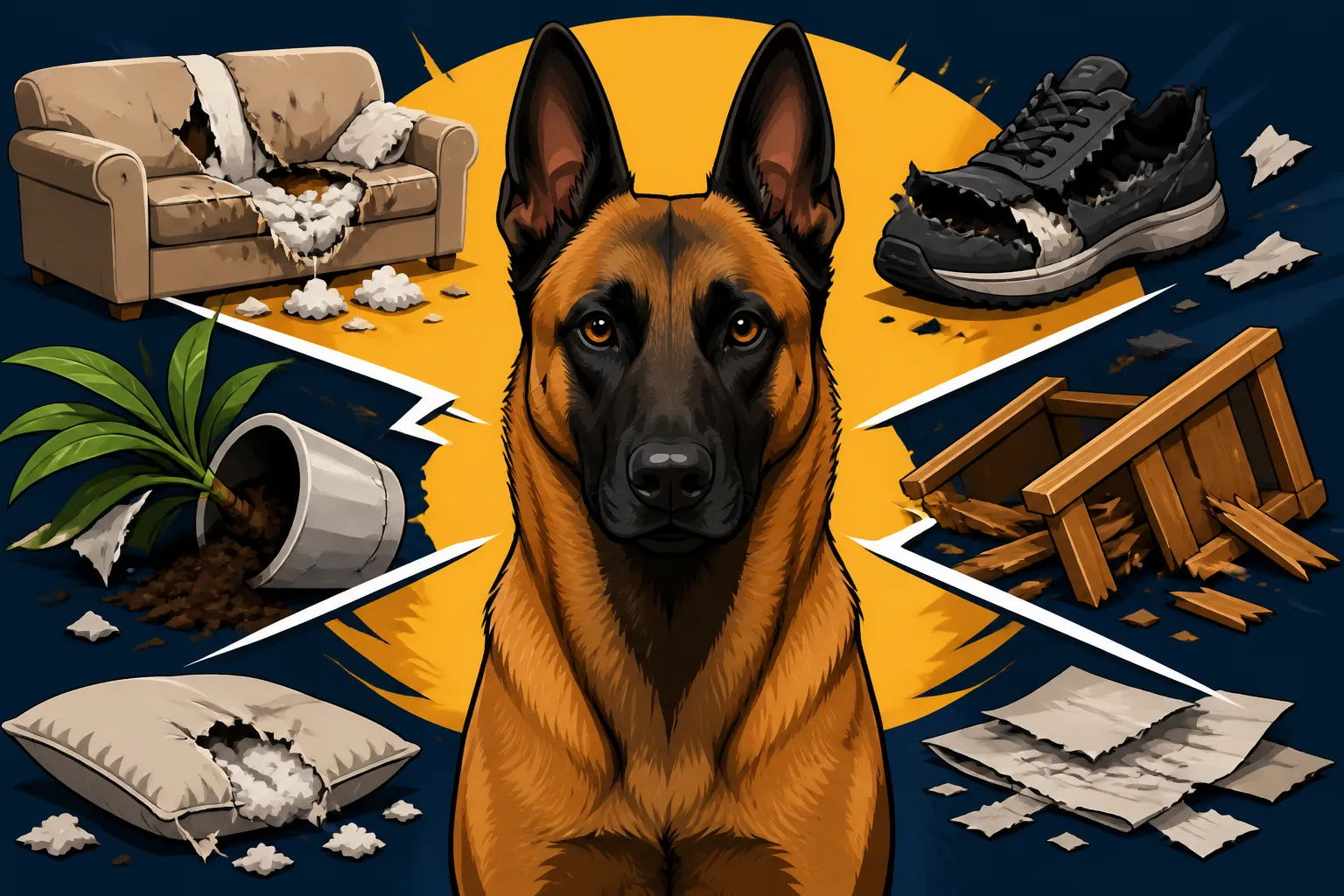
What a Belgian Malinois Destroys in a Year
If you've welcomed a Belgian Malinois into your home, you've likely already discovered that their boundless energy and intense drive aren't just for impressive training routines; they can also manifest as astonishingly effective demolition expertise. Many owners find themselves staring at a chewed doorframe or a crater in the backyard, wondering if their home will ever be the same. This guide aims to shed light on exactly what a Belgian Malinois often destroys in a year, unraveling the 'why' behind the wreckage, and offering realistic strategies to protect your sanity and your belongings.
The Why Behind the Wreckage: Understanding Malinois Drive
It's easy to look at a torn-up couch or a mangled shoe and feel a surge of frustration, maybe even anger. But to truly manage a Malinois's destructive tendencies, we first need to understand that this isn't usually born out of malice. It's often a direct result of their deeply ingrained working dog genetics and high-octane temperament. These dogs are purpose-bred, intelligent animals, and their destructive behaviors are almost always a symptom of unmet needs.
Unchanneled Energy and Mental Under-stimulation
Imagine having an engine built for speed, power, and endurance, but being stuck idling in a parking lot all day. That's often the reality for a Malinois who isn't given appropriate outlets for their energy and intelligence. These dogs aren't content with a leisurely stroll around the block or a casual toss of the ball for five minutes. They need substantial physical exertion, yes, but even more critically, they crave mental engagement that challenges their keen minds. Without it, that incredible drive doesn't just disappear; it finds other, less desirable ways to express itself.
We see this play out in various scenarios. A Malinois left alone for hours with nothing but a few plush toys might resort to "redecorating" your living room by chewing through the legs of your coffee table or meticulously stripping wallpaper. The sheer intensity of their focus, which makes them such incredible working dogs, can be turned with equal fervor to dismantling your home piece by piece. They need a job, a purpose, something to chew on that isn't your property, or somewhere to dig that isn't your prize-winning petunias. This isn't just about physical tiredness; it’s about mental fatigue. Without enough structured work, they simply don't know how to turn off. Two Hours and a Job a Belgian Malinois Demands Daily emphasizes the sheer volume of output these dogs are designed for, and when that output isn't channeled, destruction fills the void.
Anxiety, Stress, and Barrier Frustration
Beyond simple boredom or excess energy, destruction can also be a clear indicator of underlying stress or anxiety in a Malinois. These highly sensitive and handler-focused dogs can develop significant separation anxiety if they aren't properly acclimated to being alone or if their bond with their owner is insecure. When this happens, the destruction isn't a casual act; it's a frantic effort to cope with distress, a desperate attempt to rejoin their person, or to relieve overwhelming internal pressure. You might see evidence of escape attempts – shredded crate pads, bent kennel bars, claw marks on doors, or chewed-through window sills.
Another common driver for destruction is barrier frustration. This occurs when a Malinois is confined, perhaps in a crate or a yard, and becomes intensely frustrated by their inability to reach a perceived stimulus, such as a person walking by, another dog, or even a leaf blowing in the wind. This frustration can then be redirected onto whatever is within reach – the crate itself, the fence, or anything nearby that can be torn apart. It’s not aggression, but an explosion of pent-up energy and stress. A Malinois who screams rather than settles when confined might be experiencing this, and their attempts to break out can be incredibly destructive. A Malinois That Screams Rather Than Settles explores this behavior, highlighting the intensity of their emotional responses.
Common Targets of Malinois Destruction
Let's get down to the brass tacks: what exactly are these canine wrecking balls likely to go after? The list can be surprisingly comprehensive, ranging from everyday household items to significant structural damage, reflecting their powerful jaws, relentless drive, and incredible physical capabilities.
Household Items and Furniture
Inside the house, almost nothing is truly safe from a bored, anxious, or under-stimulated Malinois. They are masters of creative destruction, often focusing on items that offer interesting textures, scents, or simply the satisfaction of being torn apart.
Your pristine couch, for instance, might become an archaeological dig site. They'll start with a small tear, perhaps at a seam, and then systematically proceed to pull out all the stuffing, reduce cushions to mere fabric husks, and even gnaw on the wooden frame underneath. Wooden trim around doors and windows is another common target; the splintering wood provides both a satisfying chew and a perceived "escape" route. Shoes, especially those with your scent, are irresistible chew toys, often found in pieces by the end of the day. Remote controls, eyeglasses, cell phones, and anything left on a low table can quickly become unrecognizable plastic fragments. Carpets and rugs often bear the brunt of digging instincts, especially near doorways or windows. Even kitchen cabinets have been known to fall victim to persistent chewers, particularly around handles or corners. Providing appropriate, durable chew toys from reliable sources like Chewy can sometimes redirect this behavior, but the underlying drive still needs addressing.
Yard and Outdoor Property Damage
A fenced yard, while essential for safety, isn't a guarantee against Malinois destruction; it simply expands their canvas. Many owners are shocked to discover the extent of damage a Malinois can inflict outdoors.
Digging is perhaps the most iconic form of outdoor destruction. Malinois, with their strong prey drive and natural inclination to dig, can turn a well-manicured lawn into a lunar landscape in a surprisingly short amount of time. They'll dig to bury treasures, to create cool spots in the heat, to chase imagined critters, or simply out of sheer enjoyment and excess energy. This can lead to holes deep enough to break ankles, uprooted plants, and irrigation systems completely destroyed. Landscaping elements like garden beds, small trees, and decorative rocks are often casualties. Furthermore, fences themselves are not always impervious. A Malinois determined to escape or simply bored can chew through wooden pickets, bend wire fencing, or even dig under chain link. Outdoor furniture, particularly plastic or wicker pieces, offers another opportunity for shredding and demolition. The level of ingenuity they show in dismantling outdoor spaces can be truly impressive, requiring robust solutions like those discussed in Fencing That a Belgian Malinois Cannot Clear.
Mitigating the Mayhem: Strategies for Malinois Owners
Preventing destruction in a Belgian Malinois isn't about punishment; it's about proactive management, diligent training, and ensuring their fundamental needs are met. These strategies aim to channel their immense energy and intelligence into constructive rather than destructive outlets.
Exercise and Mental Enrichment as Preventative Measures
The cornerstone of managing a Malinois's destructive tendencies lies in providing adequate exercise and, crucially, mental enrichment. For a Malinois, "exercise" doesn't just mean letting them out in the yard. They need structured, high-intensity physical activity – think long runs, biking alongside you, agility training, or intense games of fetch. A tired Malinois is far less likely to destroy your home. However, physical exercise alone is often not enough. Their minds need to be engaged.
Mental stimulation is paramount. Incorporate daily training sessions that challenge them with new commands, complex sequences, or problem-solving tasks. Puzzle toys, especially those that dispense food and require significant manipulation, can keep their minds busy. Scent work, such as nose work classes or even simple "find it" games around the house, taps into their natural instincts and is incredibly tiring. Teaching your Malinois an "off switch" or how to relax on command is also critical. Building an Off Switch Into a Belgian Malinois is not easy, but essential. Without this dual approach of physical and mental exertion, you're setting yourself up for trouble; What a Malinois Destroys in One Unsupervised Hour can be truly astounding if they are not adequately stimulated. Consider enriching their diet with high-quality foods like those from Ollie, which are formulated to support the sustained energy levels of active dogs, helping to regulate their energy rather than leaving them with unspent reserves that lead to frustration.
Management, Training, and Safe Spaces
Even with plenty of exercise and mental work, management and clear boundaries are vital. Crates and secure kennels are not just for house-training; they are indispensable tools for keeping your Malinois, and your home, safe. A well-conditioned crate or kennel, especially one that is crash-tested for vehicle safety, provides a secure "den" for your dog when you can't supervise them directly. This is not a place for punishment, but a safe retreat. Crates, Kennels and Heat Alarms for a Belgian Malinois highlights the importance of choosing the right containment for these powerful dogs.
"Malinois-proofing" the areas they have access to is another crucial step. Remove anything chewable, breakable, or valuable from reach. Secure cabinets, cover electrical cords, and invest in heavy-duty, chew-resistant dog beds and toys. When it comes to training, focus on foundational commands like "leave it" and "out" with utmost consistency. These aren't just polite manners; they are safety commands that can prevent your dog from ingesting something harmful or destroying something irreplaceable. Redirecting inappropriate chewing onto designated toys requires vigilance and consistency, often using high-value training treats. Understanding if a puppy's intense biting is normal exploratory behavior or something more concerning is also key, as discussed in Whether a Malinois Puppy's Biting Is Aggression.
The Financial Toll and How to Prepare
Let's be brutally honest: owning a Belgian Malinois can be financially demanding, and a significant portion of that expense can come from replacing or repairing things they've destroyed. It's not just the initial cost of the dog; it's the ongoing reality of living with such an intense and powerful animal.
Repair and Replacement Costs
The damage a Malinois can inflict isn't cheap to fix. That shredded sofa? A new one could easily set you back a hefty sum, and replacing custom upholstery can be even more. Chew marks on wooden doors, baseboards, or window frames might require a carpenter and painter, or at minimum, a significant DIY effort. Replumbing an irrigation system after a zealous digging spree in the yard adds to the burden. Beyond structural damage, think about the smaller, but still costly, items: countless pairs of shoes, eyeglasses, children's toys, remote controls, or even wiring for electronics.
The costs accumulate surprisingly quickly. What starts as a small patch of torn carpet can become a full room replacement. A "fixable" chew mark on a piece of furniture can lead to its complete discard if the integrity is compromised. And these are just the tangible costs. The emotional toll of constantly tidying up, fixing, and worrying about what your dog will destroy next is also significant. Being financially prepared for these eventualities is simply part of Malinois ownership.
The Value of Insurance and Professional Help
Given the potential for substantial damage, both to property and sometimes even themselves (from ingesting foreign objects), comprehensive preparation is key. Pet insurance, such as policies offered by Healthy Paws, can be an absolute lifesaver. While it won't replace your couch, it will help cover the often astronomical veterinary bills if your Malinois decides to eat something they shouldn't, leading to blockages, internal injuries, or other emergencies. Considering What Pet Insurance Runs on a Working Malinois is a critical step in responsible ownership, especially for a breed prone to these kinds of accidents.
Beyond insurance, don't underestimate the value of professional help. If your Malinois's destructive behaviors are severe, persistent, or accompanied by other concerning issues like intense separation anxiety or aggression, investing in a qualified dog trainer or veterinary behaviorist is crucial. They can help identify the root cause of the behavior and develop a tailored modification plan. This isn't a cheap solution, but it can save your home, your relationship with your dog, and potentially even their life if their destruction puts them at risk. Sometimes, the right training tools, like a quality e-collar used responsibly, can aid in teaching boundaries and recall, as explored in articles like What a Quality E-Collar Costs for a Belgian Malinois. Remember, proper training and management are investments in a harmonious future with your high-drive companion.
| Destructive Behavior | Common Targets | Potential Underlying Cause | Suggested Intervention & Prevention |
|---|---|---|---|
| Chewing | Furniture, doors, shoes, remotes, cords | Boredom, excess energy, anxiety, teething | High-value chew toys (from Chewy), mental games, "leave it" command, supervision, crate training |
| Digging | Yard, garden beds, carpets | Boredom, prey drive, heat relief, anxiety, escape | Designated digging pit, increased exercise, scent work, secure fencing, supervision |
| Shredding/Tearing | Cushions, bedding, paper, curtains | Frustration, anxiety, excess energy, habit | Durable bedding, puzzle toys, structured play, "out" command, secure crate |
| Pacing/Scratching | Door frames, windows, walls | Separation anxiety, barrier frustration, escape | Desensitization to alone time, calming routine, strong crate, professional behaviorist help |
| Ingesting Objects | Any small item, fabric, plastic | Boredom, exploration, anxiety, pica | Strict "Malinois-proofing," "leave it" command, vet check for pica, pet insurance (Healthy Paws) |
Disclaimer
This article is for general informational purposes only and does not constitute professional advice. Laws, prices and regulations vary by location and change over time. Consult a qualified professional for guidance on your specific situation.