What a Malinois Crossed With a Shepherd Becomes
A Malinois crossed with a German Shepherd is usually described as a Belgian Malinois–German Shepherd mix, but the label does not predict exactly what the dog will look or act like. The puppy may inherit either parent’s build, coat, energy level, and sensitivities—or a blend of both. This guide explains what to expect and how to assess an individual dog.
What a Malinois German Shepherd mix may look like
Build, coat, and coloring can vary
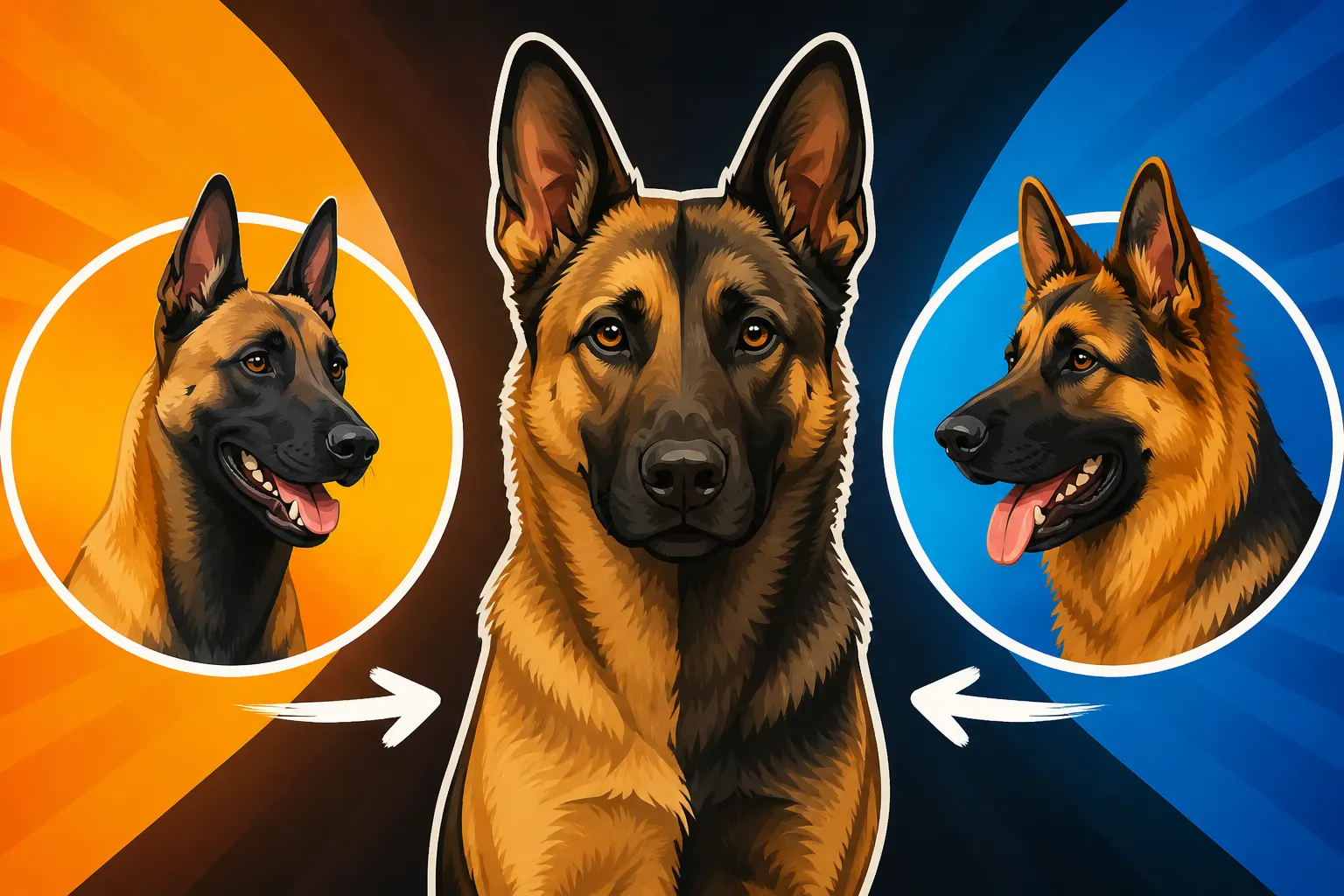
A Malinois–German Shepherd mix is not a standardized breed with one reliable appearance. One dog may look like a lean Malinois, with a short fawn coat and dark mask. Another may have the German Shepherd’s longer outline, heavier coat, or more pronounced rear angulation. Littermates can look surprisingly different, even with the same parents.
Many have erect ears, but ears may take time to stand or may remain partly folded. Coat length, shedding, color, and body size depend on the traits the puppy inherits. A breeder’s description of the parents can offer clues, but it cannot guarantee a puppy’s adult appearance. For background on typical Malinois proportions, see The Weight Range a Belgian Malinois Falls In and The Harsh Outer Coat a Malinois Should Carry.
| Trait | What you might see in the mix | Why it is hard to predict |
|---|---|---|
| Size and build | A lean, athletic dog or a larger, heavier-bodied one | Each parent contributes a different mix of growth and body-shape traits |
| Coat | Short to medium length, sometimes with a thicker undercoat | Coat length and density are inherited traits that can vary within a litter |
| Color | Fawn, sable, black and tan, or other combinations | Color depends on the parents’ inherited coat-color genes |
| Ears | Erect, partly erect, or slower to stand in puppyhood | Ear cartilage develops with age and does not follow a guaranteed pattern |
| Shedding | Light to substantial, often with seasonal increases | Undercoat density and coat type vary between individual dogs |
Parentage matters more than the mix label
“Malinois crossed with a Shepherd” usually means a Belgian Malinois crossed with a German Shepherd Dog, but people sometimes use “shepherd” loosely. It could refer to a German Shepherd, another herding breed, or a dog with an uncertain background. If you are considering a puppy, ask what the other parent’s breed is and whether there is reliable documentation.
Even when both parents are known, breed ancestry does not work like a recipe. A puppy does not necessarily inherit half of every visible or behavioral trait from each parent. A Malinois–German Shepherd mix may resemble one side strongly, while its temperament and energy level show a different combination.
That is why it helps to learn about both breeds rather than assume the cross will fall neatly between them. The Belgian Town the Malinois Is Named After offers context on the Malinois, while Telling a Belgian Malinois From a German Shepherd can help clarify what people mean when they compare the two.
Temperament and exercise needs
High energy is possible, not guaranteed
Both Belgian Malinois and German Shepherds are working breeds, but individual dogs vary widely. A mix may be alert, active, quick to learn, and strongly interested in interacting with its handler. Some are eager to chase a ball or tug; others are more watchful, reserved, or easily distracted. The parents’ temperaments and the puppy’s early experiences matter alongside breed ancestry.
It is easy to hear “crossbreed” and assume the dog will be calmer than a purebred Malinois. That is not a safe assumption. A mixed-breed dog can still have intense exercise needs, a strong chase response, or difficulty settling when its day lacks structure. Conversely, a particular dog may be less driven or more relaxed than its breed mix suggests.
Look at what the dog does, not only what it is called. Can it recover after excitement? Does it take food gently? Can it settle behind a gate or on a bed? How does it respond to everyday sounds, unfamiliar people, and other dogs? Those observations offer more useful information than expecting a predictable “average” personality. For more on the Malinois side of that equation, see The Kind of Owner a Belgian Malinois Requires.
Training should include calm skills
A smart, energetic dog still needs to learn how to rest. Training can include basic cues, leash manners, recall foundations, handling practice, and simple games that use scent or problem-solving. Short, consistent sessions often work better than trying to exhaust a dog with nonstop fetch or running. The goal is not simply to create a tired dog; it is to build useful habits and a workable routine.
Teach calm behaviors early: settling on a mat, waiting at doors, relaxing in a crate or safe area, and taking breaks between activities. If the dog is constantly stimulated but never taught how to switch off, it may become harder to settle rather than easier. A predictable pattern—activity, water, a chance to decompress, then rest—can help make daily life more manageable.
For a dog that fixates on moving objects or lunges toward distractions, distance and careful management matter. Avoid repeatedly exposing the dog to situations that overwhelm it in the hope that it will “get used to” them. A qualified trainer who uses humane, reward-based methods can help tailor a plan. The Mental Work That Finally Tires a Malinois Out and Building an Off Switch Into a Belgian Malinois cover related training needs.
Socialization is about safe exposure
Socialization does not mean letting a puppy greet every dog or person. It means helping the dog experience ordinary sights, sounds, surfaces, and handling at a pace it can cope with. A puppy can watch people from a comfortable distance, hear traffic without being pulled toward it, and practice calm observation in quiet settings before facing busier ones.
With adult rescues, move even more thoughtfully. You may not know what the dog has experienced, and a confident-looking dog can still be uncomfortable in a particular situation. Use secure equipment, avoid crowded introductions, and give the dog space to choose whether to approach. If it stiffens, freezes, barks, or tries to retreat, treat that as useful information rather than disobedience.
Health, grooming, and everyday care
Ask about both sides of the family
A mixed breed is not automatically free from inherited health concerns. A Malinois–German Shepherd mix can inherit health risks from either parent, and a dog’s ancestry alone cannot tell you whether it will develop a particular condition. Ask about the parents’ veterinary history, mobility, and relevant health screening, and request records rather than relying only on a verbal assurance.
If you are adopting, ask the rescue or previous caregiver what is known about the dog’s medical background. A veterinary examination can establish a baseline and help you plan follow-up care. For a puppy from a breeder, ask which health tests were performed and what the results mean. Responsible answers should be specific, understandable, and supported by documentation.
Pay attention to changes after bringing the dog home. Persistent limping, reluctance to rise, unusual gait, recurring skin problems, or changes in vision deserve a veterinary conversation. Do not assume that athletic dogs will simply “work through” discomfort; early assessment may help prevent a small issue from becoming a more serious one.
Coat care and practical supplies
Coat maintenance depends on the individual dog. A short coat still sheds, and a dog with a denser undercoat may leave hair on furniture, clothing, and car seats. Regular brushing can remove loose hair and give you a chance to check the skin, ears, paws, and coat for irritation or debris. Bathing is usually occasional rather than constant unless the dog gets dirty or a veterinarian recommends a specific routine.
Choose supplies for the dog in front of you, not the breed name. A brush that works for a short coat may not be ideal for a thicker one, and collars, harnesses, and crates need to fit the dog’s actual measurements. Chewy can be one place to compare grooming tools and everyday supplies, but check the product details and fit carefully before buying.
Food needs are individual, too. Age, body condition, activity, and medical history all affect what is appropriate. Keep an eye on the dog’s waist and ribs rather than relying on a fixed amount for every Malinois–Shepherd mix. If you are comparing foods through Chewy or another retailer, use your veterinarian’s guidance to narrow the choices, especially for a puppy or a dog with a health concern.
Choosing and living with the right dog
Evaluate the individual, not the promise
If you are buying a puppy, spend time asking about the parents’ behavior in everyday settings, not only their titles or working achievements. Ask how the puppies respond to handling, new surfaces, household sounds, and brief periods away from littermates. A breeder should be willing to discuss the demands of the cross honestly and help match a puppy to a suitable home.
If you are adopting, ask for specific examples of the dog’s behavior: how it walks on leash, how it handles visitors, whether it has lived with other animals, and what happens when it is left alone. “Good with dogs” is less useful than knowing whether the dog has calmly shared space with a dog of a similar size, or only met dogs briefly outdoors. Ask what management has helped and what situations the dog finds difficult.
A meet-and-greet can be informative, but it is not a full temperament assessment. Dogs may behave differently in a shelter, foster home, training facility, or new household. Take time to understand the dog’s needs and arrange professional support if there are concerns. For a broader look at household fit, see Whether a Belgian Malinois Belongs in a Pet Home and Whether a Rescue Belgian Malinois Is a Realistic Option.
Plan for structure, space, and a long-term commitment
A large yard can be useful, but it does not replace supervision, training, and interaction. A secure fence is important for many energetic dogs, yet the dog still needs a routine and appropriate outlets. Plan for walks, training, rest, veterinary care, and safe management around visitors and other animals. If the dog will be home alone for long stretches, think through how its needs will be met rather than assuming it will simply entertain itself.
The first weeks should be calm and predictable. Set up a resting area, use gates or a crate if appropriate, and introduce household routines gradually. Avoid giving the dog free access to the entire home before you know how it behaves when unsupervised. Chewy may help you compare basics such as food storage, beds, leashes, or enrichment toys, but the most useful “equipment” is a realistic plan for daily care.
There is no single answer to what a Malinois crossed with a German Shepherd becomes. It becomes an individual dog whose inherited traits, early experiences, health, and training all matter. The safest expectation is that the mix may be athletic and demanding, while recognizing that careful observation—not a breed label—should guide decisions about exercise, training, and home fit.
Disclaimer
This article is for general informational purposes only and does not constitute professional advice. Laws, prices and regulations vary by location and change over time. Consult a qualified professional for guidance on your specific situation.